
As this is the final lesson in our comprehensive Category A motorcycle theory course, we focus on the vital importance of continuous learning and skill maintenance. Obtaining your license is just the beginning; staying sharp and safe on the road requires ongoing effort and development. This lesson will guide you on how to maintain your skills and adapt to new challenges throughout your riding career, ensuring you are well-prepared for the Dutch CBR exam and beyond.

Obtaining your Category A motorcycle license through the Dutch CBR is a significant achievement, marking the beginning of your journey as a motorcyclist. However, it is crucial to understand that this milestone is not the culmination of your rider education, but rather the foundation upon which lifelong learning and skill development must be built. The dynamic nature of traffic, evolving legislation, and the inherent human tendency for skills to degrade over time necessitate a proactive approach to continuous learning and skill maintenance.
This lesson, part of your Dutch Motorcycle Theory – Category A Comprehensive Preparation, emphasizes why ongoing education is vital for safety, legal compliance, and the sustained enjoyment of motorcycling. We will explore the theoretical underpinnings, practical strategies, and legal obligations that ensure your riding competence remains high throughout your riding career in the Netherlands.
Motorcycling demands a unique blend of technical mastery, sharp cognitive processing, and constant risk assessment. Unlike enclosed vehicles, motorcyclists are inherently more vulnerable, and errors can have severe consequences. Continuous learning directly addresses several critical factors that impact rider safety and proficiency.
Firstly, it combats skill degradation – the natural decline of abilities without regular, focused practice. Secondly, it allows riders to adapt to an evolving traffic environment, including new road designs, changes in vehicle technology, and the behaviour of other road users. Lastly, for riders of high-performance Category A motorcycles, maintaining peak skills is paramount to safely managing the capabilities of their machines and mitigating the heightened risks involved. This proactive stance ensures you remain a safe, competent, and legally compliant rider on Dutch roads.
Motorcycle riding involves complex motor skills, cognitive processes, and perceptual abilities. Without reinforcement, these skills naturally diminish over time, a phenomenon known as skill degradation or motor-skill decay. Understanding this process is the first step towards preventing it.
The Skill Retention Curve is a neurological concept that illustrates how acquired motor skills are lost without regular practice. Initially, after intensive training (like preparing for your Category A exam), skills are at their peak. However, if not actively reinforced, performance gradually declines. This curve typically shows an initial rapid drop, followed by a slower, more gradual decay. The goal of continuous learning is to stay within the "plateau" region of this curve, where skills remain sharp and readily accessible.
For a motorcyclist, this means that even after mastering emergency braking or cornering techniques, a period of inactivity—such as a long winter break or an extended illness—will inevitably lead to a reduction in proficiency. Timely and deliberate practice is essential to prevent this decline.
Skill degradation isn't uniform; it affects different aspects of riding competence in distinct ways:
Practical Impact: Imagine a rider returning to the road after a six-month break. They might notice delayed clutch engagement, poorer judgment of corner entry speeds, or even forget to perform regular blind-spot checks. These seemingly minor lapses are symptoms of skill decay and directly increase the probability of a crash.
"I can ride safely after a long break because I passed the exam." This is a common and dangerous misunderstanding. Competence fades irrespective of your prior test score; the exam is a snapshot of skill at one point in time.
To counteract skill degradation and ensure continuous improvement, motorcyclists must adopt structured approaches to learning and practice. These strategies convert riding experience into actionable knowledge and reinforce critical abilities.
Deliberate practice is a structured, goal-oriented approach to training that involves specific objectives, immediate feedback, and progressively increasing difficulty. Unlike casual riding, which might maintain basic proficiency, deliberate practice actively targets specific performance deficits and accelerates skill improvement.
Practical Meaning: Instead of just going for a casual ride, a motorcyclist might dedicate a two-hour session on a closed circuit or quiet industrial estate to solely focus on rear-brake modulation on a damp surface. This would be followed by an immediate debrief from a coach or self-analysis of recorded data, ensuring specific learning objectives are met.
The Reflective Learning Cycle, developed by David Kolb, is a four-stage process that transforms concrete experiences into actionable knowledge. It's an invaluable tool for motorcyclists to learn from every ride.
Practical Meaning: After a city ride, a rider might recall three instances of near-misses. Through reflection, they analyze why these occurred (e.g., "I was distracted," "I didn't scan far enough ahead"). They then formulate a plan, such as "On my next ride, I will consciously increase my glance frequency at intersections and actively scan for potential hazards." This plan is then put into practice during the next ride, completing the cycle.
The PDCA (Plan-Do-Check-Act) Loop is a continuous improvement framework that can be seamlessly applied to motorcycle riding practice and knowledge acquisition. It provides a systematic method for ongoing adaptation and refinement.
This iterative process enables riders to continuously adapt to new traffic conditions, legislative changes, personal health variations, and maintain optimal performance.
While your initial Category A license provides the foundational skills, Advanced Rider Training (ART) and refresher courses are structured programs designed to build upon these basic skills, taking your riding to a higher level of proficiency and safety. In the Netherlands, institutions like the CBR (Centraal Bureau Rijvaardigheidsbewijzen) endorse such programs, often referred to as "Rijvaardigheidstrainingen voor Motorrijders."
Practical Meaning: Enrolling in a two-day ART program might involve circuit work to practice high-speed handling, off-road sections to understand traction limits, and classroom sessions to analyze complex risk scenarios. This intensive training provides skills that casual riding simply cannot replicate.
Don't fall into the trap of thinking, "Once I pass the exam, I never need more training." Advanced training is a proven method to reduce crash risk and enhance your lifelong enjoyment of motorcycling.
For modern motorcyclists, self-assessment combined with ride-log analytics offers a powerful tool for objective performance evaluation and continuous improvement. This systematic approach moves beyond subjective feelings to reveal concrete areas for development.
Practical Meaning: Using a smartphone app to capture your ride data, you might review metrics weekly. An analysis might reveal a consistent pattern of late braking at a specific intersection type or a tendency to over-lean in certain corners. This objective data then informs your deliberate practice plan, allowing you to focus on targeted brake timing drills or cornering technique refinement.
A ride-log, whether digital or paper-based, serves as a crucial documentation tool for your riding journey. It records details like distance, duration, weather conditions, road types, and crucially, your personal observations and reflections. By regularly reviewing your ride-log, you can:
Continuous learning for motorcyclists extends beyond skill enhancement; it also encompasses maintaining legal compliance and ensuring personal fitness to ride. Dutch law places specific responsibilities on all license holders to ensure their ongoing competence and suitability to operate a vehicle.
In the Netherlands, the Reglement Verkeersregels en Verkeerstekens 1990 (RVV 1990), particularly Article 8, outlines the requirements for driver fitness. This article states that drivers must possess the mental and physical fitness necessary to operate their vehicle safely. For motorcyclists, this translates into specific obligations, especially regarding age and medical conditions.
medische keuring) becomes a legal prerequisite for continued license validity. This certificate must be submitted to the CBR (Centraal Bureau Rijvaardigheidsbewijzen) before the license renewal deadline, and typically needs to be renewed every five years thereafter.Practical Meaning: A 71-year-old rider must proactively obtain a GP-signed medical certificate and submit it to the CBR well in advance of their license expiring. Failure to do so means riding without a legally valid license, which can lead to severe penalties, including license suspension or even confiscation of the motorcycle by police.
Traffic laws, road signs, and vehicle equipment standards are not static; they evolve over time. Legislative update vigilance is the ongoing responsibility of every motorcyclist to monitor amendments to national traffic law (RVV 1990), European Union directives, and CBR rider-education regulations.
Staatscourant), or reputable road safety organizations for changes to the Dutch traffic code.Practical Meaning: A rider might need to adjust their helmet usage to comply with new EN standards if they become mandatory or update their mental map of speed limits if a new regulation lowers them on certain urban roads. Non-compliance, even if unintentional, can lead to fines, legal penalties, or even the denial of insurance claims in the event of an accident.
Beyond specific medical and legislative updates, the overarching RVV 1990 Article 5 continuously applies to all road users. It broadly states that a driver must possess the necessary knowledge, mental and physical fitness, and ability to operate the vehicle safely. This article serves as a general legal framework for continuous competence.
Legal Implications: If police officers observe a motorcyclist riding in a demonstrably unsafe or incompetent manner (e.g., severe lack of control, erratic lane changes, inappropriate speed for conditions), they can invoke Article 5. This allows for immediate intervention, potentially leading to a police stop, assessment of competence, and even temporary license suspension or confiscation of the vehicle if the rider is deemed unfit to continue.
Continuous learning also involves the ability to adapt your riding style and techniques to a wide array of contextual variations. A truly competent motorcyclist understands that "safe riding" is not a fixed state but a dynamic process that must constantly adjust to the environment.
These conditional variations highlight the need for Risk Management Adaptation – an ongoing re-evaluation of perceived versus actual risk, adjusting your riding style accordingly to align with current abilities and environmental factors. This reduces over-confidence and keeps behaviour aligned with reality.
Ignoring the principles of continuous learning can lead to common violations, dangerous situations, and increased risk. Understanding these pitfalls can help you avoid them.
Becoming a competent Category A motorcyclist in the Netherlands is an ongoing commitment, not a one-time achievement. The principles of continuous learning and skill maintenance are the bedrock of safe, enjoyable, and legally compliant riding for life. By actively embracing deliberate practice, reflective learning, advanced training, and legislative vigilance, you not only protect yourself and others but also deepen your mastery and appreciation for the art of motorcycling.
Remember that skill decay is inevitable without reinforcement, and traffic environments are constantly changing. Your responsibility as a license holder is to continuously adapt, learn, and refine your abilities.
Lesson content overview
Explore all units and lessons included in this driving theory course.
Explore search topics learners often look for when studying Continuous Learning and Skill Maintenance. These topics reflect common questions about road rules, driving situations, safety guidance, and lesson level theory preparation for learners in the Netherlands.
Browse additional driving theory lessons that cover connected traffic rules, road signs, and common driving situations related to this topic. Improve your understanding of how different rules interact across everyday traffic scenarios.
Understand how motorcycle riding skills naturally fade over time and learn structured strategies to prevent skill decay. Essential theory for maintaining competence and safety on Dutch roads beyond initial licensing.

This lesson prepares you to deal with sudden changes in road surface that can cause a loss of traction. You will learn to scan for these hazards and, if they cannot be avoided, how to ride over them safely. The key technique is to keep the motorcycle upright and maintain smooth, steady control inputs—no abrupt braking, accelerating, or steering—to minimize the risk of a skid.

This lesson focuses on the unique demands of riding at sustained high speeds on motorways ('snelwegen'). It covers essential topics such as strict lane discipline, safe overtaking procedures, and maintaining a greater following distance to compensate for higher reaction and braking times. The content also addresses the physical and mental challenges, including managing wind blast, increased noise levels, and maintaining heightened situational awareness over long distances to combat fatigue.

This lesson revisits the concept of following distance, emphasizing its heightened importance in the high-speed motorway environment. It explains how increased speeds dramatically lengthen both reaction and braking distances, making a minimum two-to-three-second gap absolutely critical for safety. The content also stresses the importance of maintaining a space cushion to the sides, creating potential escape routes in case of sudden incidents in adjacent lanes.

This lesson teaches the crucial skill of assessing road surfaces and adjusting speed accordingly to maintain maximum traction. It covers a variety of hazardous conditions, including wet asphalt, loose gravel, oil patches, metal manhole covers, and painted road markings, all of which can significantly reduce grip. Riders will learn to constantly scan the road ahead, identify potential traction-reducing surfaces, and proactively manage their speed to prevent slides and loss of control.

This lesson provides critical instruction on managing blind spots ('dode hoek') to prevent collisions, particularly during lane changes. It covers the correct setup and use of mirrors, but stresses their limitations and the absolute necessity of the 'lifesaver' shoulder check before any lateral movement. Furthermore, it teaches riders how to be aware of the large blind spots around cars and especially trucks, and how to position themselves on the road to remain visible to other drivers at all times.

This lesson provides a detailed guide to riding in wet and low-visibility conditions. You will learn to make all your control inputs—braking, accelerating, and steering—exceptionally smooth to avoid breaking traction on slippery surfaces. The content covers the dangers of painted lines and manhole covers when wet, and the importance of increasing your following distance dramatically to account for longer braking distances.

This lesson reinforces the fundamental rule of Dutch highway driving: use the rightmost lane available and use the lanes to the left only for overtaking. You will learn the complete, safe overtaking procedure: check mirrors, signal, perform a shoulder check for the blind spot, smoothly move over, accelerate past the vehicle, and then return to the right lane when safe.

This lesson teaches you to be a proactive rather than a reactive rider by developing superior hazard perception skills. You will learn to scan your environment constantly—near, far, and to the sides—and to identify potential risks, such as a car waiting to turn or a pedestrian looking to cross. The content focuses on asking 'what if?' to predict the actions of others and position yourself for safety in advance.

This lesson provides an overview of the most important routine maintenance tasks a rider should be aware of. It covers the why and how of regularly checking and lubricating the drive chain to prevent premature wear. Additionally, it explains how to check the engine oil level and recognize the signs that brake pads or fluid need attention, empowering riders to keep their motorcycles in a safe and reliable condition between professional services.

This lesson introduces the Dutch concept of 'voorspellend rijgedrag,' or anticipatory riding, a proactive approach to safety. It teaches motorcyclists how to look beyond the immediate vehicle in front and scan for clues that predict the actions of other road users, such as turn signals, wheel direction, and driver head movement. By anticipating potential conflicts before they happen, riders can position themselves to avoid danger and ensure a smoother, safer journey through complex traffic.
Explore advanced rider training options and understand the ongoing legal and health requirements, including medical fitness certificates, for maintaining your Dutch Category A motorcycle license.

This lesson provides a definitive list of the documents a motorcyclist must carry at all times when riding in the Netherlands. It specifies the requirement for a valid driving license ('rijbewijs') for the correct category, the vehicle registration card ('kentekenbewijs'), and proof of valid third-party liability insurance ('verzekeringsbewijs'). The content clarifies that failure to produce these documents during a police check can result in significant fines and legal complications.

This lesson explains the precise legal definition of a Category A1 motorcycle, including the maximum 125cc displacement and 11 kW power output. It outlines the entire CBR licensing pathway, from meeting the minimum age requirement to passing both the theory and practical exams. Key administrative obligations such as vehicle registration (kenteken), mandatory insurance, and roadworthiness inspections (APK) are also detailed, ensuring a full understanding of legal compliance.

This lesson covers the mandatory lighting and signaling equipment for A2 motorcycles under Dutch law, ensuring you remain visible and communicate your intentions correctly. You will learn the rules for using headlights, taillights, turn signals, and brake lights in various conditions, including daytime and adverse weather. The content also addresses the importance of maintaining this equipment and using hand signals as a valid secondary method of communication in traffic.

This lesson addresses the crucial topic of insurance validity for international motorcycle travel. It explains the purpose of the International Motor Insurance Card (Green Card) and clarifies in which countries it is mandatory versus recommended. The content guides riders on how to check their existing policy for territorial limits and what steps to take to ensure they have the necessary third-party liability coverage required to ride legally and be protected financially when traveling outside the Netherlands.

This lesson covers the universal Dutch road rules with a specific focus on their application to light motorcycles. It details the various speed limits for different road types, from urban areas to motorways, and explains the correct procedures for overtaking and lane positioning. The legal aspects of lane filtering in congestion are also examined, alongside mandatory equipment use like daytime running lights, to ensure riders can integrate safely and legally into traffic flow.

This lesson outlines the precise age requirements for obtaining and holding a Category AM driving license in the Netherlands. It details the minimum age for operating various AM vehicles and explains the validity period of the license and the renewal process. Furthermore, the content clarifies how an AM license relates to other categories like B (car) or A (motorcycle), and what age-related restrictions may apply to novice riders. This knowledge is crucial for ensuring full legal compliance from the start of your riding journey.

This lesson examines the statutory duties imposed on motorcyclists, with a strong emphasis on the 'duty of care' (zorgplicht) and the conditions under which legal liability arises after a traffic incident. It clarifies the relationship between personal responsibility, mandatory insurance coverage, and the legal expectation for proactive risk mitigation to prevent accidents. The content also analyzes scenarios to illustrate how liability is typically determined within Dutch traffic jurisprudence, preparing riders for their legal responsibilities.

This lesson explains the legal framework for the mandatory periodic technical inspection (APK) as it applies to motorcycles in the Netherlands, although noting its specific applicability rules. It outlines the key safety and environmental components that are scrutinized during the inspection, such as brakes, tires, lighting, and exhaust emissions. Understanding these criteria helps riders maintain their vehicle in a constant state of roadworthiness and prepare for the formal inspection when required.
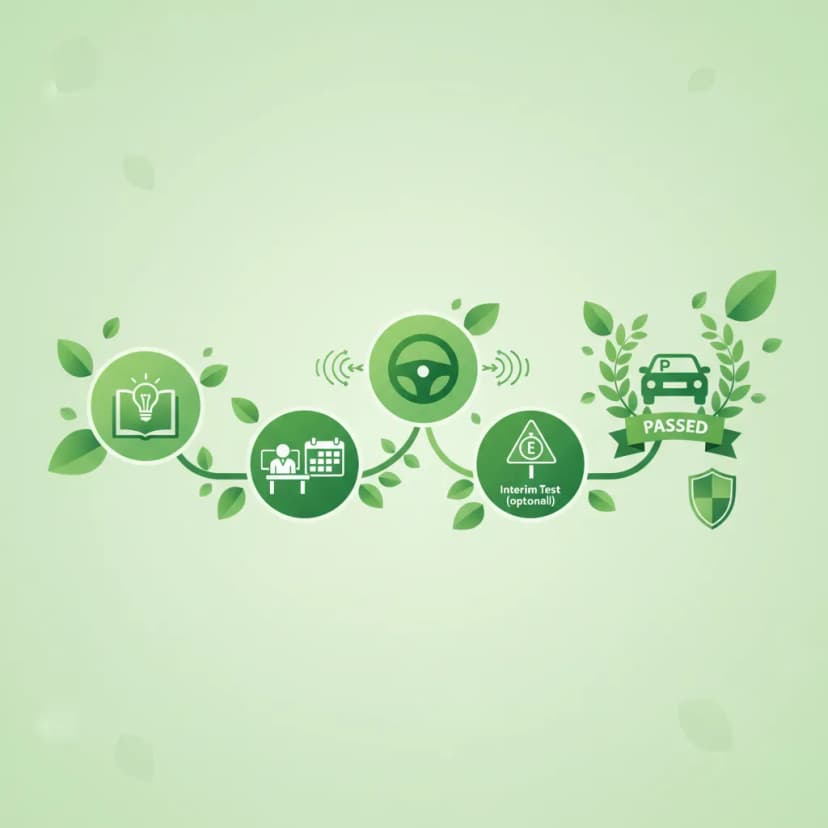
This lesson outlines every stage of the motorcycle licensing pathway, from the initial application to the successful completion of the CBR theory and practical examinations. It explains the mandatory documentation, exam scheduling procedures, and the specific composition of the theory test, including hazard perception and knowledge questions. The content also covers important procedural details such as re-examination policies, time limits for completion, and the legal validity of the final issued driver's license.

This lesson details the legal requirements for personal protective equipment in the Netherlands, with a primary focus on the mandatory use of an approved helmet meeting ECE 22.05 or 22.06 standards. It explains the different types of helmets and the pros and cons of each. While other gear like jackets, gloves, and boots may not be legally mandatory, the lesson strongly emphasizes their critical role in injury prevention.
Find clear answers to common questions learners have about Continuous Learning and Skill Maintenance. Learn how the lesson is structured, which driving theory objectives it supports, and how it fits into the overall learning path of units and curriculum progression in the Netherlands. These explanations help you understand key concepts, lesson flow, and exam focused study goals.
Obtaining your Category A license is just the start. Skills naturally fade without practice, and traffic situations evolve. Continuous learning ensures you maintain proficiency, adapt to new challenges, and operate your motorcycle safely and effectively for your entire riding career, which is crucial for compliance with Dutch traffic laws and CBR standards.
Beyond the basic CBR exam, consider advanced riding courses focusing on techniques like hazard perception, emergency braking, cornering, or riding in adverse conditions. Many Dutch motorcycle schools offer specialized training to help you refine skills and build confidence.
After rides, reflect on your decisions, reactions, and any challenging situations. Consider using a riding journal to note what went well and what could be improved. Be honest about your comfort levels with different speeds, road conditions, and maneuvers. This self-awareness is key to identifying areas for further training.
While the CBR exam tests your knowledge at a specific point in time, maintaining your skills is vital for passing the practical exam and, more importantly, for safe riding afterward. Exam questions may also touch upon the importance of ongoing rider development and responsible licensing.
Yes, look for official motorcycle training organizations, riding clubs, and specialized instruction providers in the Netherlands. Many offer workshops, refresher courses, and advanced riding programs designed to enhance skills and promote a culture of lifelong learning among motorcyclists.