
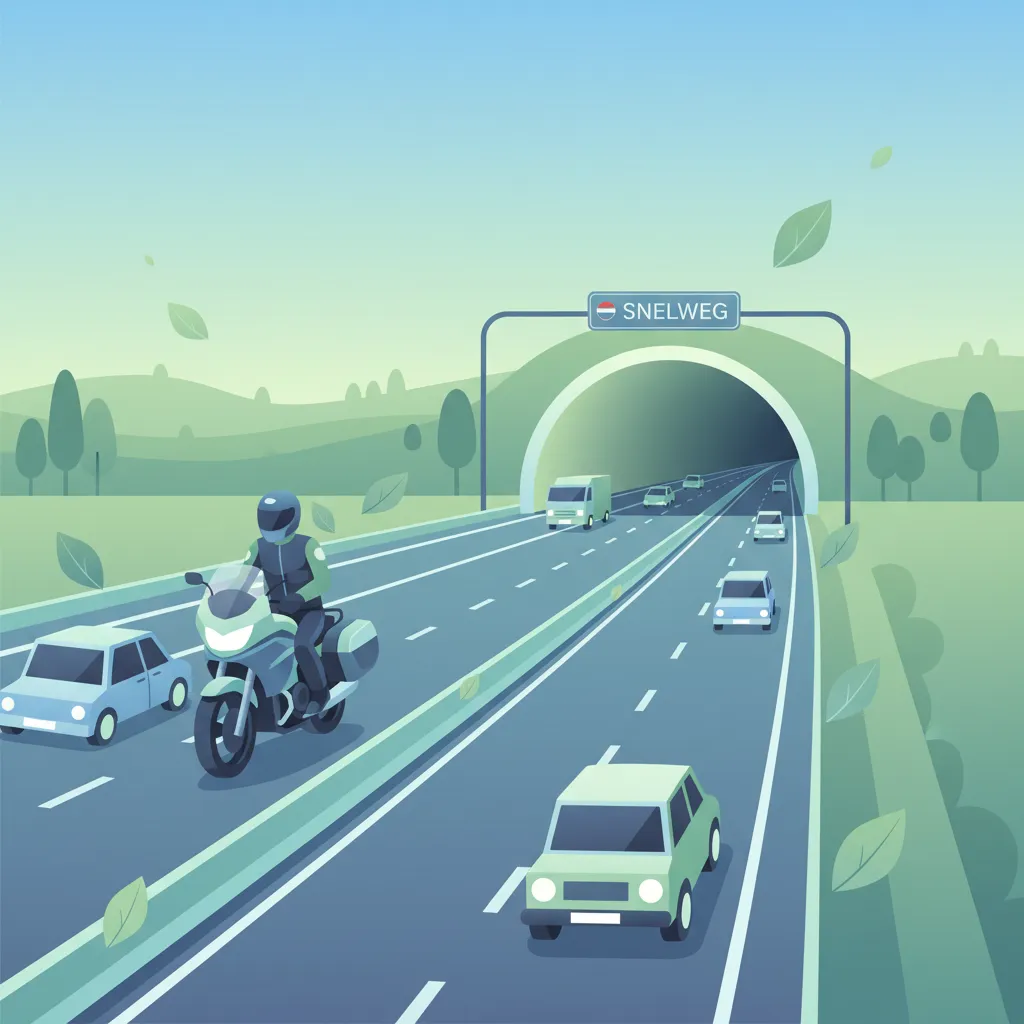
This unit focuses on the specific challenges and regulations of riding on Dutch motorways ('snelwegen') and through tunnels. We will cover essential techniques for high-speed riding, including safe merging, lane discipline, and maintaining appropriate distances, alongside crucial safety procedures for tunnel environments.
Browse all lessons that make up Highway and Tunnel Riding Strategies. Each lesson focuses on specific topics, learning objectives, and core concepts, helping you build essential knowledge and follow a clear, structured progression toward your study goals in the Netherlands.
This lesson covers the specific articles of the Dutch Road Traffic Act that apply to motorways, with a primary focus on the strict rule of keeping to the rightmost available lane unless overtaking. It explains the legal and safety reasons for only passing on the left and discusses the correct positioning within a lane for maximum visibility and safety. The content also addresses the nuances of lane usage during heavy congestion, ensuring riders comply with the law and contribute to smooth traffic flow.
This lesson provides a step-by-step guide to safely navigating entry ('opritten') and exit ramps ('afritten'). It focuses on the critical skill of using the acceleration lane to match the speed of motorway traffic before merging, and the importance of finding a safe gap using mirrors and shoulder checks. For exiting, it covers the correct use of the deceleration lane to slow down safely without disrupting the flow of traffic on the main carriageway.
This lesson revisits the concept of following distance, emphasizing its heightened importance in the high-speed motorway environment. It explains how increased speeds dramatically lengthen both reaction and braking distances, making a minimum two-to-three-second gap absolutely critical for safety. The content also stresses the importance of maintaining a space cushion to the sides, creating potential escape routes in case of sudden incidents in adjacent lanes.
This lesson details the specific regulations ('tunnelvoorschriften') and best practices for riding through tunnels in the Netherlands. It covers key rules such as removing sunglasses before entry, maintaining a safe following distance, and understanding tunnel-specific signage and traffic lights. The curriculum also explains the location and purpose of emergency exits and refuges, and the importance of tuning into the indicated radio frequency for emergency broadcasts.
This lesson provides clear, life-saving instructions for handling an emergency stop inside a tunnel. It outlines the correct procedure: pull into an emergency bay if possible, activate hazard lights, turn off the engine, and leave the key. The content emphasizes the importance of moving to a safe location, using the emergency telephones to report the incident, and following all instructions from tunnel operators, including evacuation procedures if necessary.
This lesson details the systematic process for safely overtaking on a multi-lane motorway, leveraging the acceleration capabilities of a Category A motorcycle. It covers the 'mirror, signal, maneuver' sequence, with a strong emphasis on the critical shoulder check to clear the blind spot before moving out. The content also discusses how to judge closing speeds, ensure adequate space before returning to the lane, and how to handle situations involving multiple lanes and slower-moving heavy vehicles.
This lesson focuses on the specific hazards and techniques for safely sharing the road with heavy goods vehicles (HGVs) and buses. It provides a detailed explanation of their extensive blind spots ('dode hoek') and teaches riders where to position themselves to remain visible. The curriculum also covers how to manage the significant air turbulence created by these vehicles when overtaking and how to anticipate their wide turning circles at junctions and roundabouts.
Explore high-intent keywords and long-tail search topics learners use when researching Highway and Tunnel Riding Strategies. These terms reflect how people search for reliable study materials, structured explanations, and unit-level theory preparation support in the Netherlands.
Find clear answers to the most common questions learners ask about Highway and Tunnel Riding Strategies. Understand how the unit is organized, what learning goals it supports, and how it contributes to your study progression with structured explanations and practical guidance tailored for learners in the Netherlands.
On Dutch motorways ('snelwegen'), motorcyclists must generally follow standard lane discipline. This means staying in their lane and using designated lanes for overtaking. It's crucial to maintain sufficient space between yourself and other vehicles, especially large trucks, and to be aware of your blind spots. The principle of 'right of way' applies when changing lanes, so always check thoroughly before moving.
Merging onto a Dutch motorway requires careful planning and execution. Accelerate on the entry ramp to match the speed of the traffic on the motorway as closely as possible. Check your mirrors and blind spot, signal your intention, and find a safe gap to merge into. Be prepared for other vehicles to adjust their speed, but do not assume they will make space for you.
Riding through Dutch tunnels requires heightened awareness due to changes in light, potential for reduced visibility, and specific safety regulations. Always ensure your headlights are on. Be aware of potential changes in road surface, speed limits, and the presence of emergency equipment. Familiarize yourself with tunnel-specific signage indicating safety procedures or emergency exits. Maintain a safe distance as traffic can suddenly slow down.
If your motorcycle breaks down in a Dutch tunnel, your priority is safety. Do not attempt to repair it. Turn on your hazard lights, switch off the engine, and if possible, try to move your motorcycle to a designated emergency area or the right shoulder. Evacuate the tunnel immediately via the nearest emergency exit if instructed or if there is immediate danger. Never stop in a traffic lane. Follow instructions from tunnel personnel or emergency services.
General speed limits on Dutch motorways ('snelwegen') apply to motorcycles, typically 130 km/h during daytime hours unless otherwise indicated by signage. However, it is crucial to always adhere to posted speed limits, which can be lower due to traffic, road conditions, or specific tunnel regulations. Always ride at a speed that is safe for the current conditions and your motorcycle's capabilities.
The 'tunnel symbol' road sign typically indicates the entrance to a tunnel. It serves as a warning to prepare for the specific conditions within the tunnel, such as abrupt light changes, potential speed limit reductions, and specific safety regulations or emergency procedures. Always pay attention to any additional signs or variable message signs that may provide further instructions.
All included lessons
Lessons in Highway and Tunnel Riding Strategies
See who benefits most from studying Highway and Tunnel Riding Strategies. This overview explains how the unit supports different learning needs, what level of knowledge is helpful before starting, and how it fits into the overall study path in the Netherlands.
This unit is crucial for all Category A motorcycle learners in the Netherlands preparing for their CBR theory exam. It is particularly beneficial for riders who may not have extensive experience with high-speed road environments or who want to solidify their understanding of specific safety protocols for motorways and tunnels.

See how Dutch Motorcycle Theory A is structured, with key topics, learning objectives, and a step-by-step path for theory preparation in the Netherlands.
Explore all units and lessons included in this driving theory course.