
This unit focuses on understanding the unique rules and procedures for various types of Dutch roads and infrastructure. We will cover essential distinctions between motorways and expressways, navigate complex features like tunnels and level crossings, and decode the meaning of electronic signs and special lanes. Mastering these concepts is crucial for safe driving and passing your CBR theory exam.
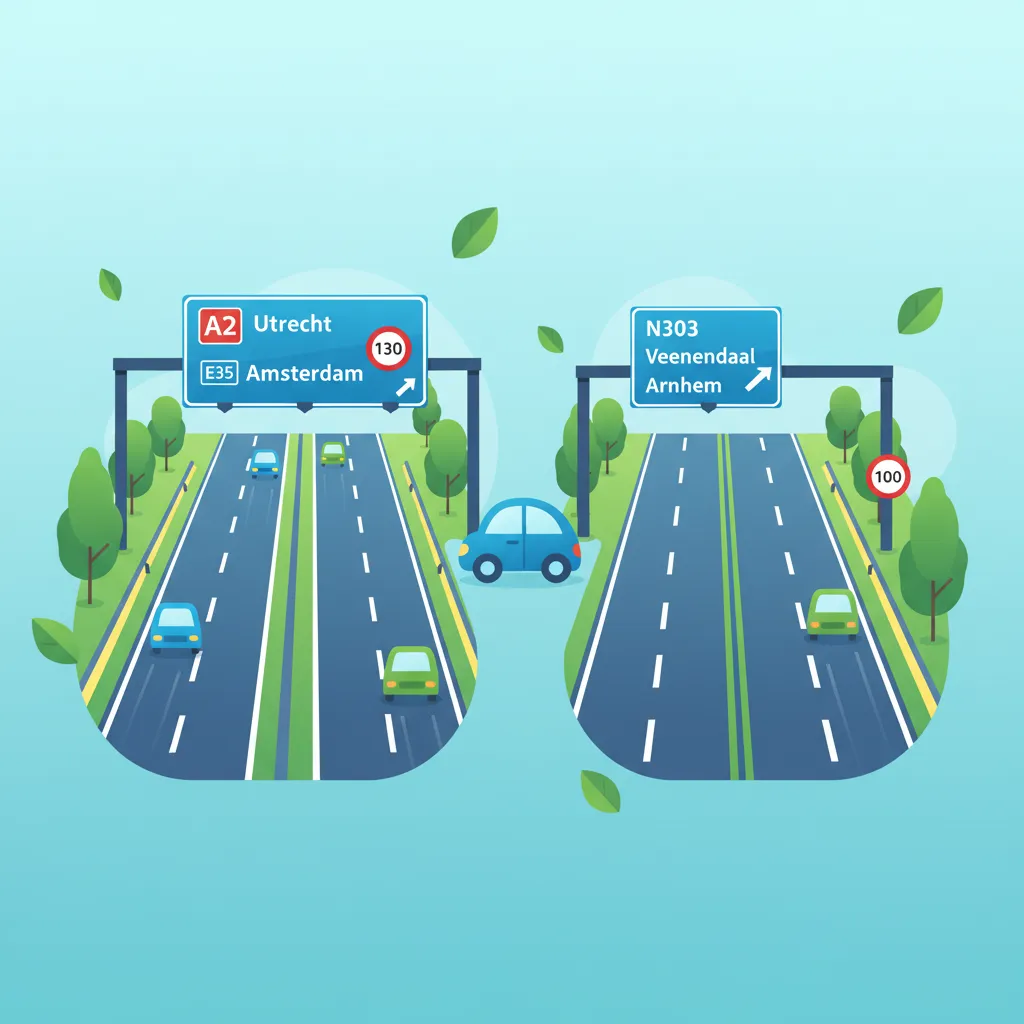
Browse all lessons that make up Infrastructure and Special Roads. Each lesson focuses on specific topics, learning objectives, and core concepts, helping you build essential knowledge and follow a clear, structured progression toward your study goals in the Netherlands.
This lesson details the specific regulations for driving on Dutch motorways, identifiable by the G1 sign. You will learn the correct procedure for joining the flow of traffic using the acceleration lane and for leaving via the deceleration lane. The curriculum reinforces the 'keep right unless overtaking' rule for lane discipline. It also explains that stopping is strictly forbidden, and the hard shoulder (vluchtstrook) may only be used for genuine emergencies.
This lesson clarifies the features of an 'autoweg,' indicated by the G3 sign. Unlike motorways, autowegen can have intersections at the same level (crossroads and traffic lights) and generally lack a hard shoulder. You will learn to recognize different types of autowegen by their central road markings, which indicate the speed limit and whether overtaking is permitted. Understanding these distinctions is crucial for applying the correct speed and driving behavior on these high-speed roads.
This lesson covers safety procedures for specific infrastructure. You will learn the importance of using dipped headlights in tunnels and what to do in case of a breakdown or fire inside a tunnel. The curriculum explains how to respond to the warning lights and barriers at movable bridges and railway level crossings, emphasizing that you must always stop for flashing red lights. The meaning of the St. Andrew's Crosses, indicating the number of railway tracks, is also covered.
This lesson prepares you for encountering road works, a common feature on any road network. You will learn that signs and markings related to road works are often yellow and that they temporarily override permanent white markings and signs. The curriculum stresses the importance of adhering to temporary speed limits, being alert for workers and machinery, and navigating narrowed lanes. It also covers how to follow diversion routes ('omleiding') and obey instructions given by traffic controllers.
Explore high-intent keywords and long-tail search topics learners use when researching Infrastructure and Special Roads. These terms reflect how people search for reliable study materials, structured explanations, and unit-level theory preparation support in the Netherlands.
Find clear answers to the most common questions learners ask about Infrastructure and Special Roads. Understand how the unit is organized, what learning goals it supports, and how it contributes to your study progression with structured explanations and practical guidance tailored for learners in the Netherlands.
An 'autosnelweg' (motorway) generally has higher speed limits and more stringent rules, such as a minimum speed and no stopping allowed except in emergencies. An 'autoweg' (expressway) is similar but may have slightly lower speed limits and fewer access restrictions. Both are designed for fast-moving traffic and have limited access points compared to regular roads.
In Dutch tunnels, you must always drive with your dipped headlights on. Stopping is generally prohibited unless indicated by traffic signs or in an emergency. Electronic matrix signs will provide specific instructions regarding speed limits or lane closures. Always maintain a safe following distance, as visibility can be reduced.
Electronic matrix signs, often displayed above the road, provide real-time information and instructions. You must always obey these signs, as they can indicate changes in speed limits, lane closures, diversions, or traffic jams. Treat them with the same importance as permanent road signs.
A 'spitsstrook' is a lane that is only open during peak traffic hours, usually indicated by red 'X' or green arrow signs above the lane. You may only use it when the green arrow is illuminated. When the red 'X' is displayed, the lane is closed and must not be entered.
Yes, at level crossings with barriers or flashing lights, you must stop if the barriers are down or if the lights are flashing. Always look and listen for approaching trains before crossing. If a train is coming, do not attempt to cross, even if the barriers are not yet down. Never stop on a level crossing.
If you see a temporary sign displaying '30' on a motorway or autoweg, it indicates a reduced speed limit to 30 km/h. This is usually implemented for safety reasons in areas with road works, temporary lane changes, or other potentially hazardous conditions. Always adhere to these temporary limits.
All included lessons
Lessons in Infrastructure and Special Roads
See who benefits most from studying Infrastructure and Special Roads. This overview explains how the unit supports different learning needs, what level of knowledge is helpful before starting, and how it fits into the overall study path in the Netherlands.
This unit is designed for all learners preparing for the Dutch Category B driving theory exam. It is particularly beneficial for those who need to clarify the specific regulations concerning motorways, expressways, and other complex road infrastructure, ensuring they can confidently answer exam questions related to these topics.

See how Dutch Driving Theory B is structured, with key topics, learning objectives, and a step-by-step path for theory preparation in the Netherlands.
Explore all units and lessons included in this driving theory course.