
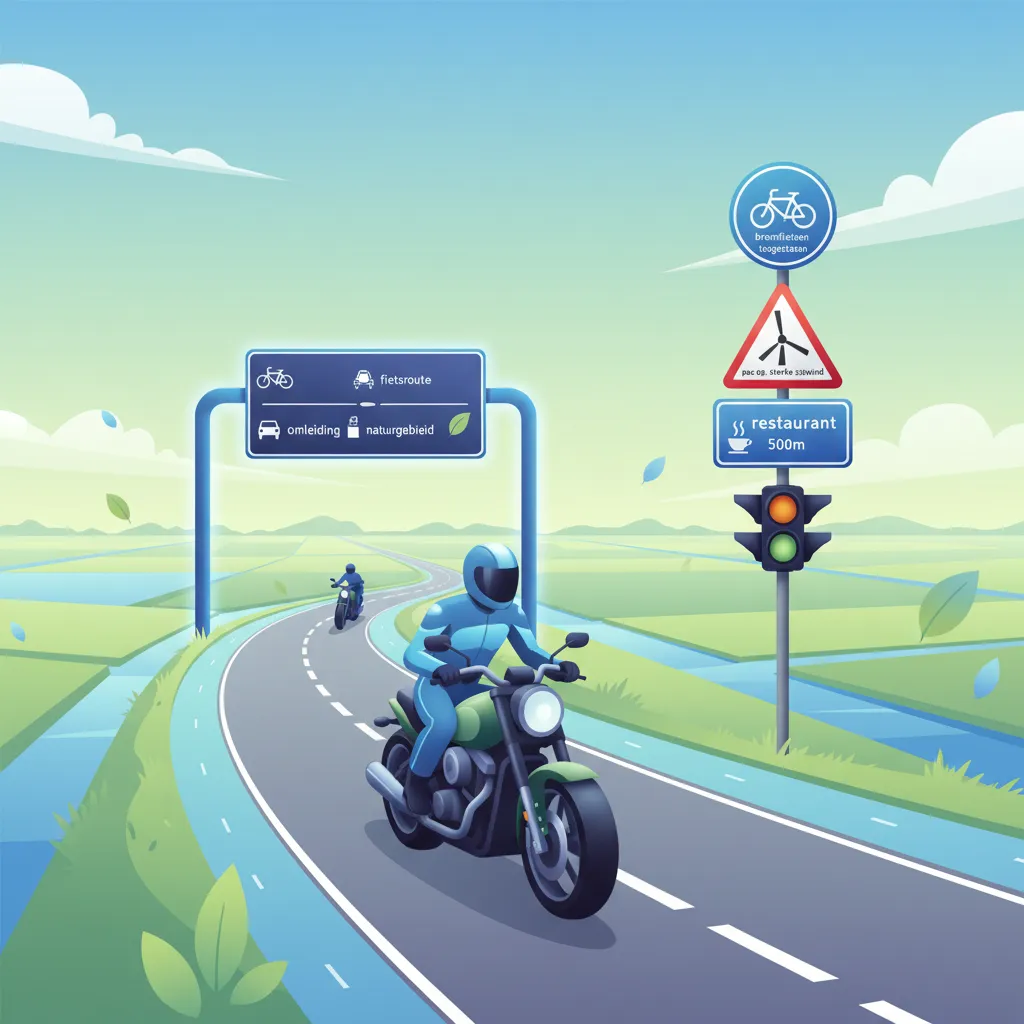
This unit dives deep into the essential road signs, signals, and markings every Category A motorcyclist must master for the Dutch CBR theory exam. You'll learn to interpret regulatory, warning, and informational signs, understand light signals and road markings, and respond correctly to dynamic displays, ensuring you're prepared for any traffic situation on Dutch roads.
Browse all lessons that make up Road Signs and Signals for Motorcyclists. Each lesson focuses on specific topics, learning objectives, and core concepts, helping you build essential knowledge and follow a clear, structured progression toward your study goals in the Netherlands.
This lesson offers an in-depth study of Dutch regulatory signs, which impose mandatory actions or prohibitions on road users, with a specific focus on their impact on motorcyclists. It explains the visual language of prohibition symbols ('verbodsborden') and obligation symbols ('verplichtingsborden'), the contexts in which they appear, and the strict statutory consequences of non-compliance. Real-world examples are used to illustrate how these signs directly influence route planning, overtaking decisions, and speed management.
This lesson details the purpose and visual design of Dutch warning signs ('gevarendriehoeken') that alert riders to potential hazards ahead. It covers a wide range of scenarios, from road narrowing and dangerous curves to construction zones and the risk of falling rocks, emphasizing the need for early anticipation and speed adaptation. The content also explains how these warning signs integrate with other traffic information to help a rider form an accurate risk assessment and make safer decisions.
This lesson focuses on informational signs that guide motorcyclists in navigation, route planning, and locating essential services while on the road. It examines the standardized symbols and color-coding for directions ('richtingsborden'), destinations, distances, and amenities, explaining how these signs support efficient and safe travel. Learners will understand how to use this information for strategic route selection, especially on long journeys or in unfamiliar areas, ensuring a smooth and predictable trip.
This lesson explores the legal meaning of various road surface markings, including solid and broken lane delimiters, directional arrows, and special-purpose lane indicators. It describes how markings dictate permitted maneuvers, such as overtaking and lane changes, and alert riders to upcoming hazards or changes in road layout. The content also examines the relationship between markings and road design in the Netherlands, emphasizing how a motorcyclist must interpret these visual cues for safe positioning.
This lesson provides a comprehensive overview of all light and audible signals mandated by Dutch traffic law, detailing when and how each must be used for optimal visibility and communication. It covers the correct use of headlights, turn signals, and hazard lights, as well as the legally appropriate situations for using the horn to alert other road users. The curriculum clarifies legal requirements for lighting equipment and the potential penalties for misuse, ensuring riders can signal their intentions clearly and legally.
This lesson examines the function and interpretation of variable message signs (VMS) and other digital displays that provide real-time traffic information on Dutch roads. It explains how these systems communicate dynamic speed limits, congestion alerts, lane closures, and diversion routes, and how motorcyclists must legally comply with these instructions. Understanding these 'matrixborden' is critical for adapting to changing road conditions and ensuring safety on motorways and in tunnels.
This lesson provides essential guidance on recognizing and interpreting traffic signs that may differ from Dutch standards but are commonly encountered when riding across borders within the European Union. It highlights key differences based on the Vienna Convention on Road Signs and Signals, helping riders understand variations in regulatory, warning, and informational signs. This knowledge is crucial for maintaining legal compliance and safety when navigating foreign road systems, ensuring a confident international riding experience.
Explore high-intent keywords and long-tail search topics learners use when researching Road Signs and Signals for Motorcyclists. These terms reflect how people search for reliable study materials, structured explanations, and unit-level theory preparation support in the Netherlands.
Find clear answers to the most common questions learners ask about Road Signs and Signals for Motorcyclists. Understand how the unit is organized, what learning goals it supports, and how it contributes to your study progression with structured explanations and practical guidance tailored for learners in the Netherlands.
While most road signs are universal for all road users, some signs or their interpretation have particular relevance for motorcyclists due to the nature of riding. This unit covers how common signs, such as those indicating road surface changes or tight curves, require specific considerations for motorcycle handling and stability. We also explore how information signs might guide route choices beneficial for motorcyclists.
This unit directly addresses the 'Signs and Signals' section of the CBR Category A theory exam. By thoroughly covering all relevant Dutch road signs, light signals, and road markings, you will gain the knowledge needed to answer exam questions accurately. We focus on the types of signs and scenarios most frequently tested for motorcycle riders.
Warning signs (like a triangle with a symbol) alert you to potential hazards ahead, such as sharp bends or slippery surfaces, allowing you to prepare. Regulatory signs (often circular with a red border) impose mandatory rules, like speed limits or prohibitions (e.g., no entry for motorcycles). Understanding this distinction is key to safe riding and passing your exam.
Road surface markings are critically important for motorcyclists. They provide guidance for lane positioning, indicate priority at intersections, warn of potential hazards like slippery areas, and denote pedestrian crossings. This unit details how to interpret these markings, especially when they might indicate reduced grip or specific hazards for two-wheeled vehicles.
Dynamic message signs (DMS) are electronic displays, often found on motorways and in tunnels, providing real-time information about traffic conditions, diversions, or speed limits. As a motorcyclist, you must pay close attention to these signs as they can indicate unexpected dangers, changes in traffic flow, or required actions, much like static signs but with up-to-the-minute relevance.
While the Netherlands primarily uses its own standardized road signage, which is the focus of this unit, international travellers may encounter variations. This unit covers the core Dutch signage system. For international travel, it's advisable to familiarize yourself with common international sign conventions, though the CBR exam focuses exclusively on Dutch rules and signs.
All included lessons
Lessons in Road Signs and Signals for Motorcyclists
See who benefits most from studying Road Signs and Signals for Motorcyclists. This overview explains how the unit supports different learning needs, what level of knowledge is helpful before starting, and how it fits into the overall study path in the Netherlands.
This unit is specifically designed for individuals preparing for the Dutch CBR Category A motorcycle theory exam. It's ideal for new motorcyclists needing a comprehensive understanding of road signage and for experienced riders looking to ensure their knowledge is up-to-date with current Dutch regulations and signage specific to motorcycle operation.

See how Dutch Motorcycle Theory A is structured, with key topics, learning objectives, and a step-by-step path for theory preparation in the Netherlands.
Explore all units and lessons included in this driving theory course.