
This lesson delves into the crucial world of Dutch road markings and surface indicators, essential for safe Category A motorcycle riding. You'll learn to interpret all types of lane delimiters, directional arrows, and special road markings. Understanding these visual cues is vital for making correct decisions on the road and passing your CBR theory exam.
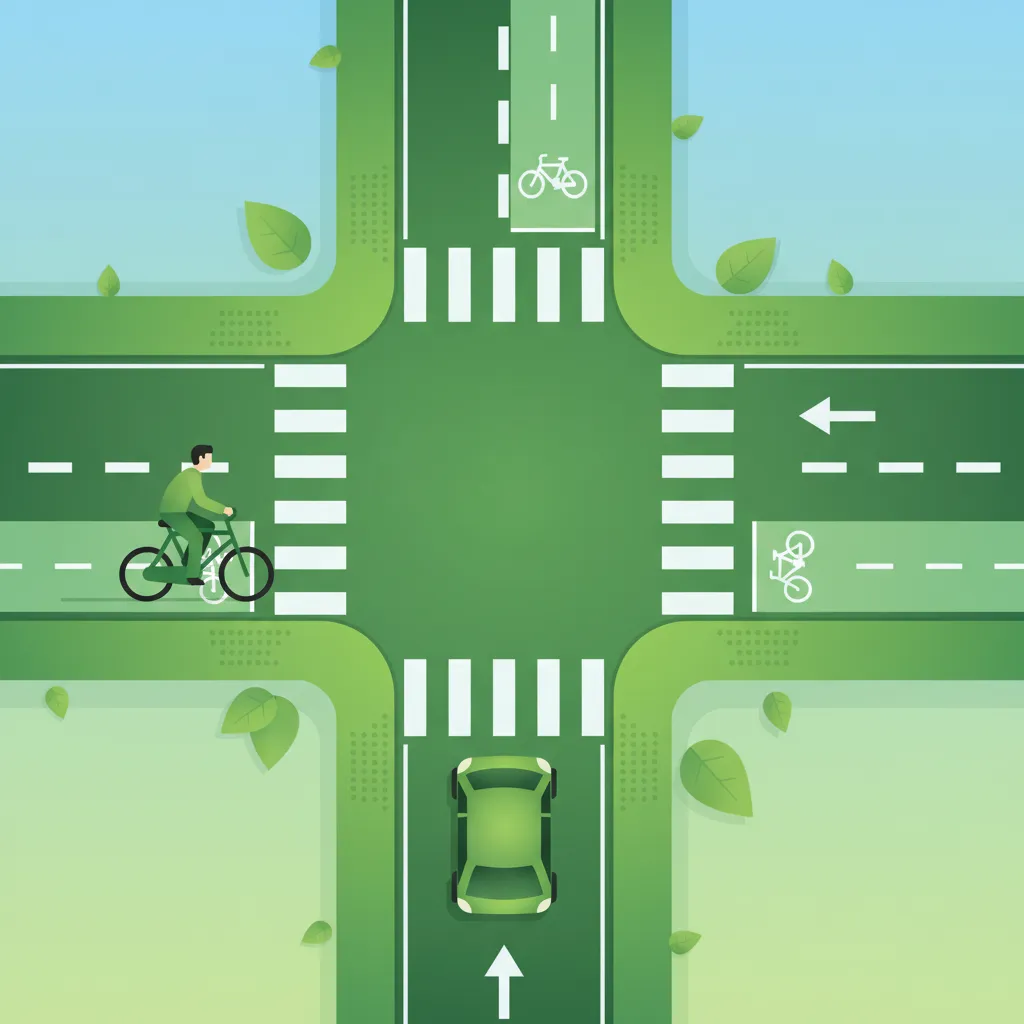
Road markings in the Netherlands are not mere suggestions; they are legally binding instructions painted directly onto the road surface. As a motorcyclist, your ability to correctly interpret these lines, arrows, and symbols is fundamental to your safety and legal compliance. They form a visual language that dictates lane discipline, permitted maneuvers, and upcoming hazards, working in concert with road signs to manage traffic flow. This lesson provides a comprehensive overview of the road markings you will encounter, explaining their meaning under the Dutch Traffic Regulations (RVV 1990).
Every permanent and temporary marking on the road is an enforceable traffic control measure. Ignoring a solid line or a stop line carries the same legal weight as disobeying a physical road sign. The system is designed for safety and predictability; when all road users understand and follow the same visual cues, the traffic environment becomes safer for everyone. For a motorcyclist, whose position on the road is more dynamic, a deep understanding of these markings is crucial for maintaining a safe buffer and making predictable, legal decisions.
Longitudinal lines run parallel to the direction of travel and are the most common type of road marking. They define lanes, separate traffic streams, and indicate where overtaking is permitted or forbidden. Their style—solid or broken—is the primary indicator of their meaning.
A solid, continuous line is a definitive boundary that you must not cross with your motorcycle. Its purpose is to separate traffic where lane changes or overtaking would be hazardous due to poor visibility, approaching intersections, or other dangers.
You may only cross a solid line in exceptional circumstances, such as to avoid a sudden obstruction or to allow an emergency vehicle to pass. You must do so with extreme caution and return to your lane as soon as it is safe.
A broken or dashed white line indicates that you are permitted to cross it, for example, to change lanes or to overtake another vehicle. However, this permission is always conditional on the maneuver being safe. You must check your mirrors, perform a shoulder check, and ensure there is sufficient space and time before crossing.
The length of the dashes and the gaps between them can provide additional information. Shorter dashes with smaller gaps—a "warning line"—indicate that a solid line or a hazard is approaching. This is your cue to complete any overtaking maneuver and return to your lane promptly.
On many two-way roads, you will encounter a combination of a solid line and a broken line running parallel to each other. This marking provides different rules for traffic moving in opposite directions.
The rule is simple: you must obey the line that is on your side of the road.
Directional arrows painted on the road surface, known as voorsorteerstroken (pre-sorting lanes), are not advisory; they are mandatory. When you enter a lane marked with an arrow, you are legally obligated to follow the direction indicated by that arrow.
Choosing a lane early and correctly is essential for smooth traffic flow and safety. Changing your mind at the last second and cutting across lanes with different directional arrows is illegal and dangerous, as other drivers expect you to follow the marking.
Certain lanes are marked for specific types of vehicles. As a motorcyclist, it's vital to know which ones you can and cannot use.
Bus lanes are typically marked with the word "BUS" or "LIJNBUS" on the road surface and are often bordered by a thick solid line. In the Netherlands, the general rule is that motorcycles are permitted to use most bus lanes, unless a specific sign explicitly prohibits it. This sign would be a round regulatory sign (C-series) with a red border showing a motorcycle symbol. If no such sign is present, you may use the bus lane, which can be a significant advantage in dense city traffic.
Cycle lanes are reserved for cyclists and, in some cases, mopeds (snorfietsen). They are often distinguished by red-coloured asphalt. Motorcyclists are not permitted to ride in standard cycle lanes. However, you may encounter a fiets/bromfietspad, a lane for both cyclists and mopeds, indicated by a blue round sign. Motorcycles are also excluded from these lanes. Always stay in the main carriageway unless markings specifically direct you elsewhere.
While not a "lane" in the traditional sense, the area around tram tracks presents a unique hazard. The tracks themselves are slippery, especially when wet, and your motorcycle's tire can get caught in the groove, causing a loss of control. Cross tram tracks as close to a 90-degree angle as possible to minimize this risk. Avoid riding directly on or alongside the tracks.
Transverse markings are painted across the direction of travel and are typically found at intersections and pedestrian crossings.
A thick, solid white line across your lane at an intersection is a stop line. If you are required to stop by a traffic light, a stop sign (Sign B7), or a police officer, you must bring your motorcycle to a complete halt before your front wheel crosses this line. Creeping over the line while waiting for a green light is a violation.
A series of broad white triangles painted across the road, resembling shark's teeth (haaientanden), indicates that you must give way to all traffic on the intersecting road. While you are not required to come to a complete stop if the way is clear, you must be prepared to do so. These markings reinforce the priority rules established by signs or the default "priority to the right" rule.
Some markings are designed not to give a command, but to warn you of a potential danger.
Rumble strips are raised or grooved patterns on the road surface, usually along the shoulder or centerline of motorways. When a vehicle's tires drive over them, they produce a loud, rumbling noise and a distinct vibration. Their purpose is to alert a driver who may be drowsy or distracted that they are drifting out of their lane.
For a motorcyclist, rumble strips can be unsettling and may momentarily destabilize the bike. Avoid riding on them intentionally. If you must cross them, do so smoothly, without abrupt steering or braking inputs.
Hatched or chevron-marked areas, bordered by a solid line, indicate a space that is not intended for traffic. These are often used to separate traffic streams, such as at the start of an exit ramp on a motorway, or to guide traffic around an obstruction. You must not enter or drive on these areas.
During road works or special events, temporary road markings are used to guide traffic safely through the revised layout. In the Netherlands, these markings are typically yellow or orange.
A critical rule to remember is that temporary markings always supersede permanent markings. If you see a yellow broken line directing you into what is normally the oncoming lane, you must follow the yellow line, not the original white markings. These situations are usually accompanied by temporary signs and cones, so stay alert and reduce your speed.
Yellow lines painted along the edge of the road regulate parking and stopping.
Interpreting road markings correctly also involves considering the current conditions.
In heavy rain, markings can be obscured by surface water, and their retroreflective properties are diminished. At night, your headlight is crucial for illuminating the lines ahead. In both cases, increase your following distance to give yourself more time to see and react to markings, especially warning lines that signal an upcoming change.
Autosnelwegen): Expect clear, wide lanes, extensive use of rumble strips on the shoulders, and mandatory directional arrows for exits.Misinterpreting road markings can lead to fines and dangerous situations. Common violations include:
Failing to adhere to road markings is not just a legal issue; it undermines the predictability that keeps our roads safe. By treating every line and symbol as a clear instruction, you contribute to a safer environment for yourself and all other road users.
Lesson content overview
Explore all units and lessons included in this driving theory course.
Explore search topics learners often look for when studying Road Markings and Surface Indicators. These topics reflect common questions about road rules, driving situations, safety guidance, and lesson level theory preparation for learners in the Netherlands.
Browse additional driving theory lessons that cover connected traffic rules, road signs, and common driving situations related to this topic. Improve your understanding of how different rules interact across everyday traffic scenarios.
Understand the legal meaning of road surface markings in the Netherlands. This lesson covers lane delimiters, directional arrows, and special indicators, explaining how they guide maneuvers like overtaking and lane changes for motorcyclists.

This lesson provides a detailed explanation of the various markings painted on the road surface, which are as legally binding as physical signs. It clarifies the rules associated with solid and broken white lines, including restrictions on crossing them, and the function of arrows, chevrons, and text painted in lanes. A thorough understanding of these markings is fundamental for correct lane discipline, positioning, and safe maneuvering on a motorcycle.
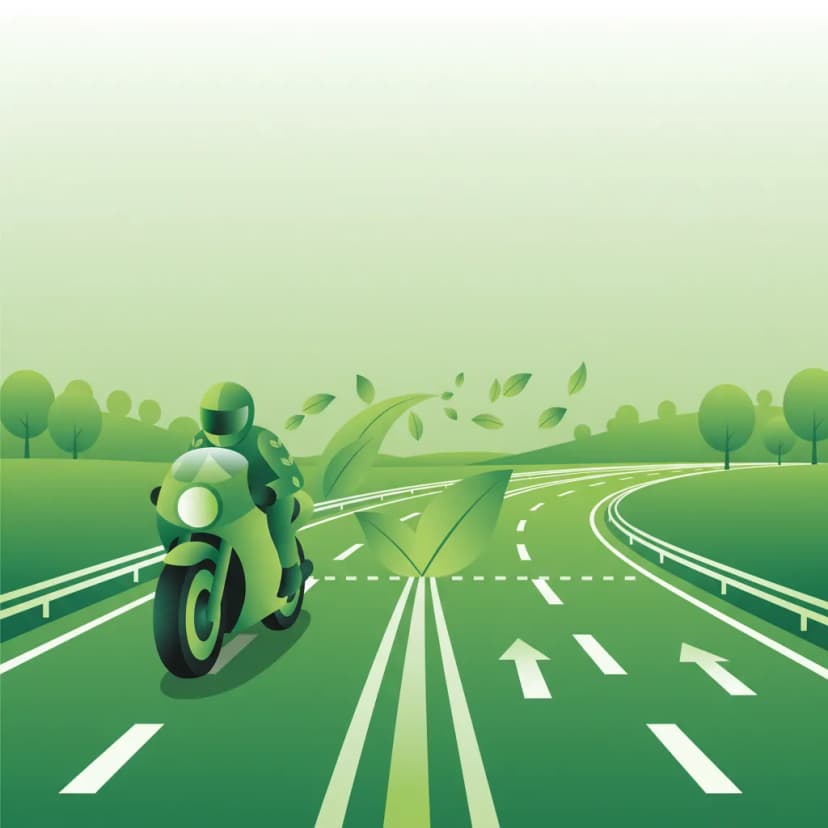
This lesson focuses on the meaning of different road markings and their implications for motorcycle lane discipline. You will learn the legal distinction between solid and broken lines regarding overtaking, how to interpret directional arrows for lane choice, and the rules for using special lanes. The content emphasizes maintaining a safe and strategic position within the lane to maximize visibility and create a safety buffer from other vehicles.

Road surface markings are a crucial part of the traffic regulation system. This lesson covers the meaning of various lines, including solid versus broken center lines, edge lines, and stop lines. You will also learn to interpret symbols like 'shark's teeth' (yield markings), bicycle pictograms, and directional arrows, all of which provide essential information about priority, lane usage, and upcoming turns, directly impacting your riding decisions.

Understand the meaning of various road markings and how they dictate your position on the road. This lesson covers the rules associated with solid and broken white lines, bicycle lane symbols, suggestion strips, and arrows painted on the road surface. Proper lane discipline, including when overtaking is permitted and how to position yourself correctly within a lane or on a cycle path, is a fundamental skill for safe and predictable riding that is tested by the CBR.
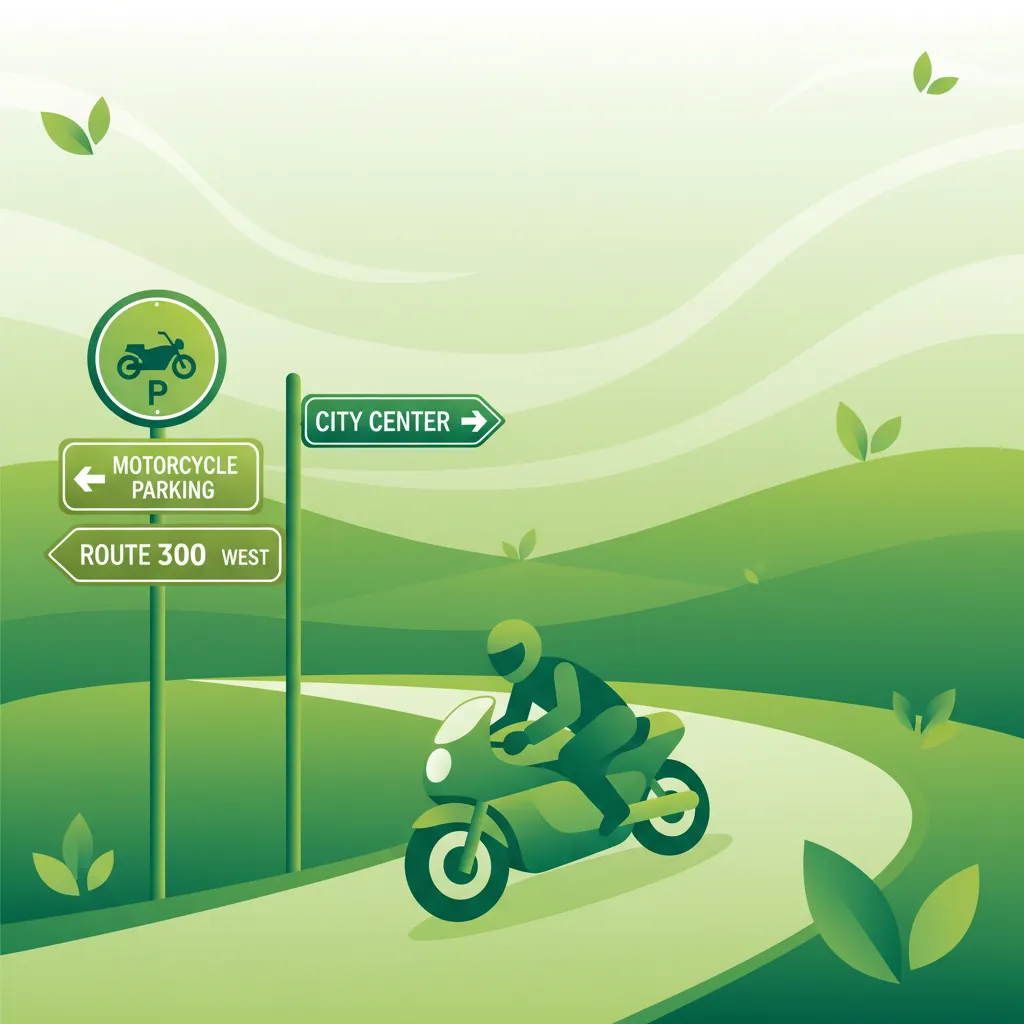
This lesson explains how to interpret directional and informational signs to navigate the Dutch road network effectively. You will learn to read route signs on highways, understand lane guidance arrows for complex intersections, and identify panels indicating services like fuel stations or rest areas. The content focuses on how motorcyclists can use this information for safe and efficient route planning, including adapting to real-time information from electronic signs.
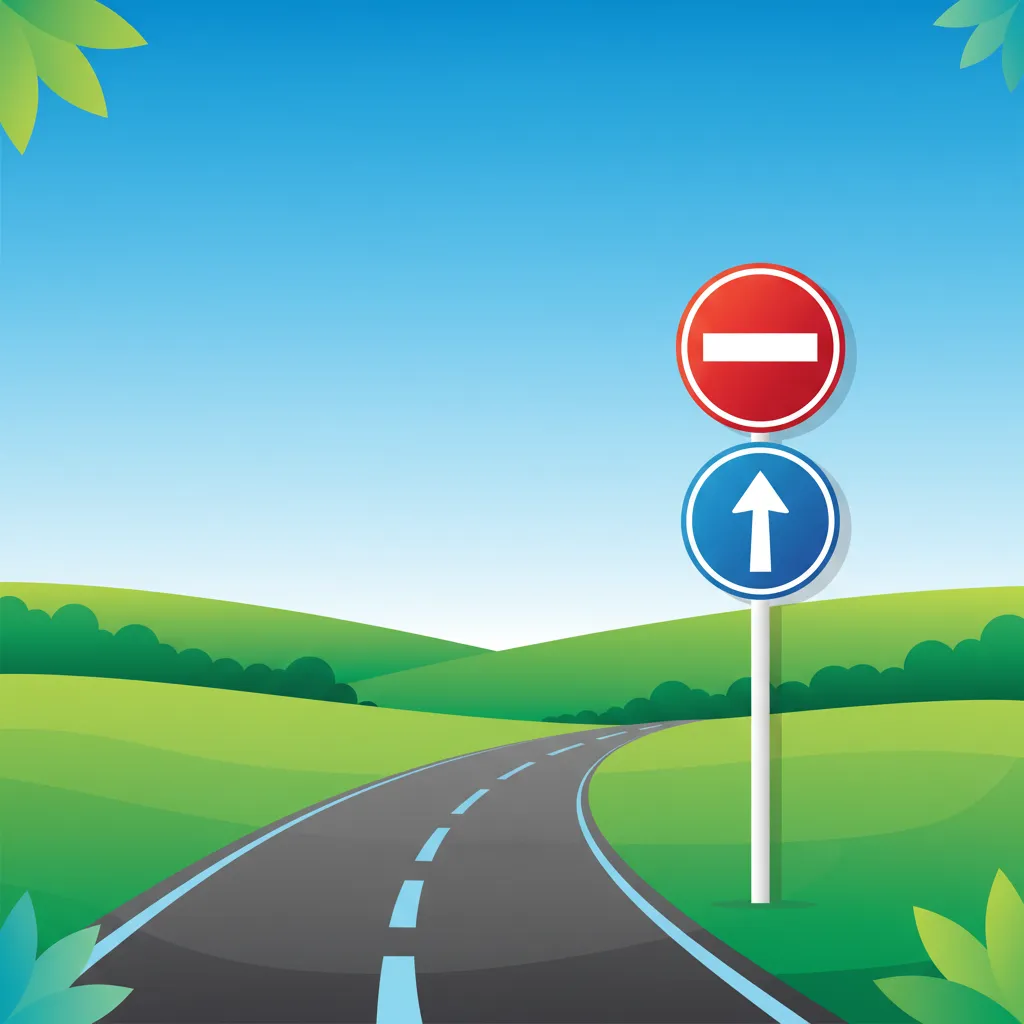
This lesson offers an in-depth study of Dutch regulatory signs, which impose mandatory actions or prohibitions on road users, with a specific focus on their impact on motorcyclists. It explains the visual language of prohibition symbols ('verbodsborden') and obligation symbols ('verplichtingsborden'), the contexts in which they appear, and the strict statutory consequences of non-compliance. Real-world examples are used to illustrate how these signs directly influence route planning, overtaking decisions, and speed management.

This lesson focuses on informational signs that guide motorcyclists in navigation, route planning, and locating essential services while on the road. It examines the standardized symbols and color-coding for directions ('richtingsborden'), destinations, distances, and amenities, explaining how these signs support efficient and safe travel. Learners will understand how to use this information for strategic route selection, especially on long journeys or in unfamiliar areas, ensuring a smooth and predictable trip.
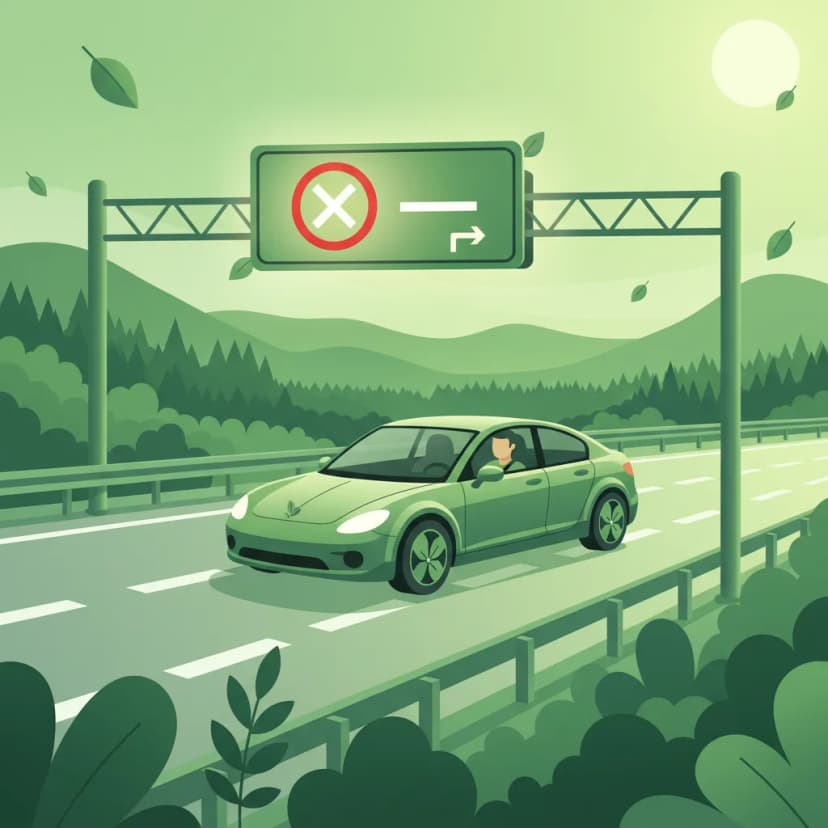
This lesson examines the function and interpretation of variable message signs (VMS) and other digital displays that provide real-time traffic information on Dutch roads. It explains how these systems communicate dynamic speed limits, congestion alerts, lane closures, and diversion routes, and how motorcyclists must legally comply with these instructions. Understanding these 'matrixborden' is critical for adapting to changing road conditions and ensuring safety on motorways and in tunnels.
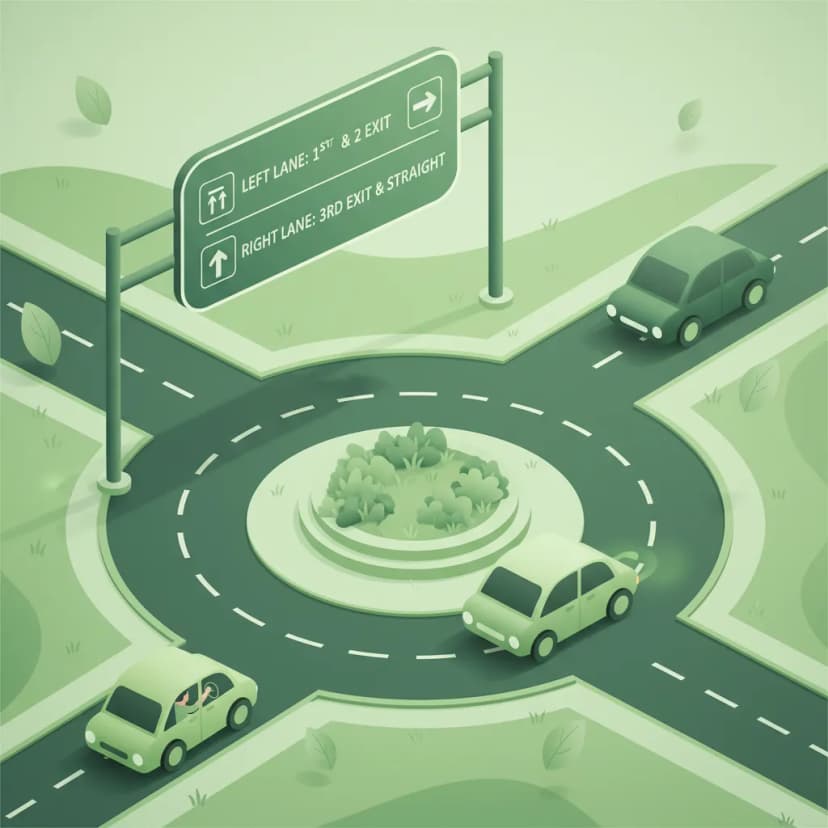
This lesson provides a detailed guide to navigating Dutch roundabouts ('rotondes'), including single-lane, multi-lane, and 'turbo' designs. It clarifies the specific priority rules that apply when entering the roundabout and the critical importance of correct signaling when changing lanes or exiting. Special attention is given to the vulnerable position of motorcyclists and the need to be aware of other vehicles' blind spots and the priority rules concerning cyclists on or near the roundabout.
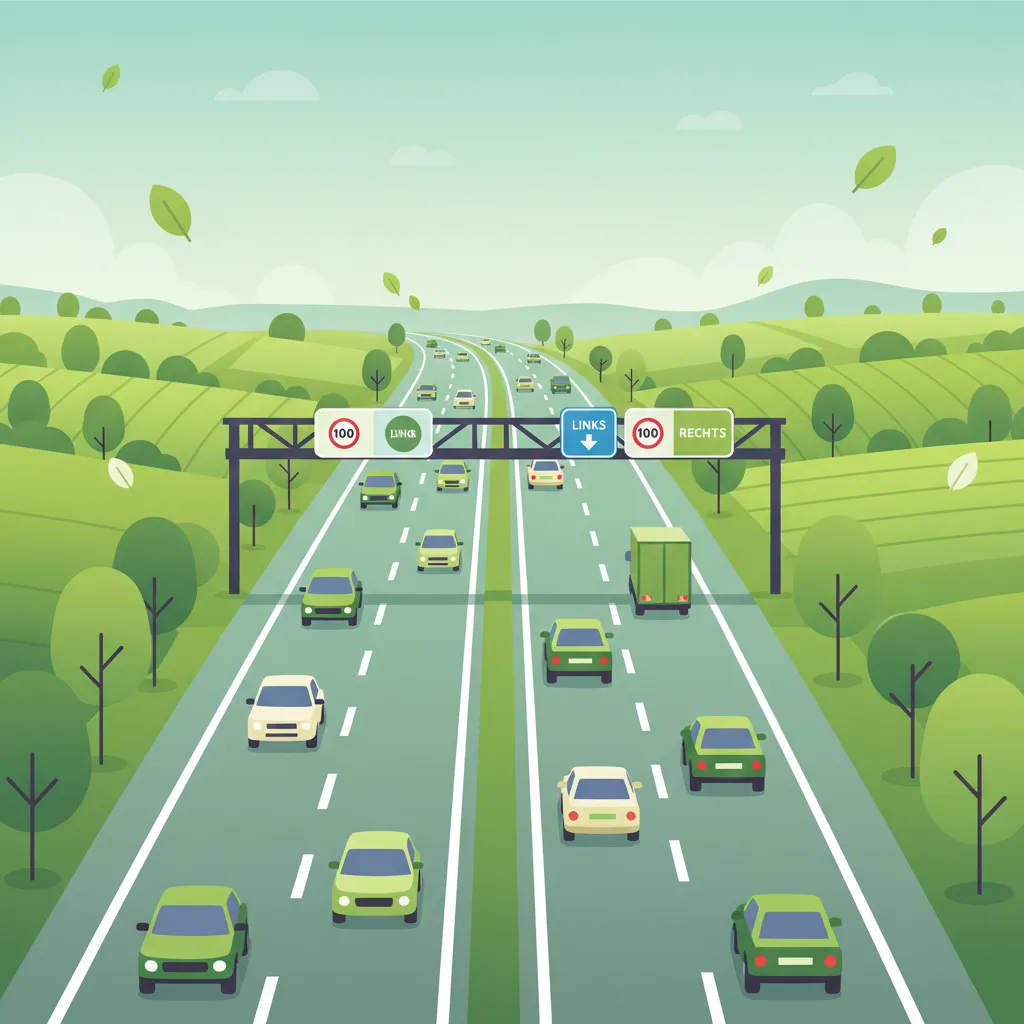
This lesson covers the specific articles of the Dutch Road Traffic Act that apply to motorways, with a primary focus on the strict rule of keeping to the rightmost available lane unless overtaking. It explains the legal and safety reasons for only passing on the left and discusses the correct positioning within a lane for maximum visibility and safety. The content also addresses the nuances of lane usage during heavy congestion, ensuring riders comply with the law and contribute to smooth traffic flow.
Explore the connection between road surface markings and priority rules in Dutch traffic law. Learn how lines, arrows, and symbols on the road surface affect yielding and right-of-way situations for motorcyclists.

This lesson establishes the foundational rule of priority in Dutch traffic law: yielding to traffic from the right at intersections of equal roads unless otherwise indicated. It explains how to identify an unmarked or 'equal' junction and the correct procedure for approaching, assessing, and proceeding safely. The content also introduces the primary signs and markings, such as 'shark's teeth,' that override this default rule, forming the basis for all other priority scenarios.
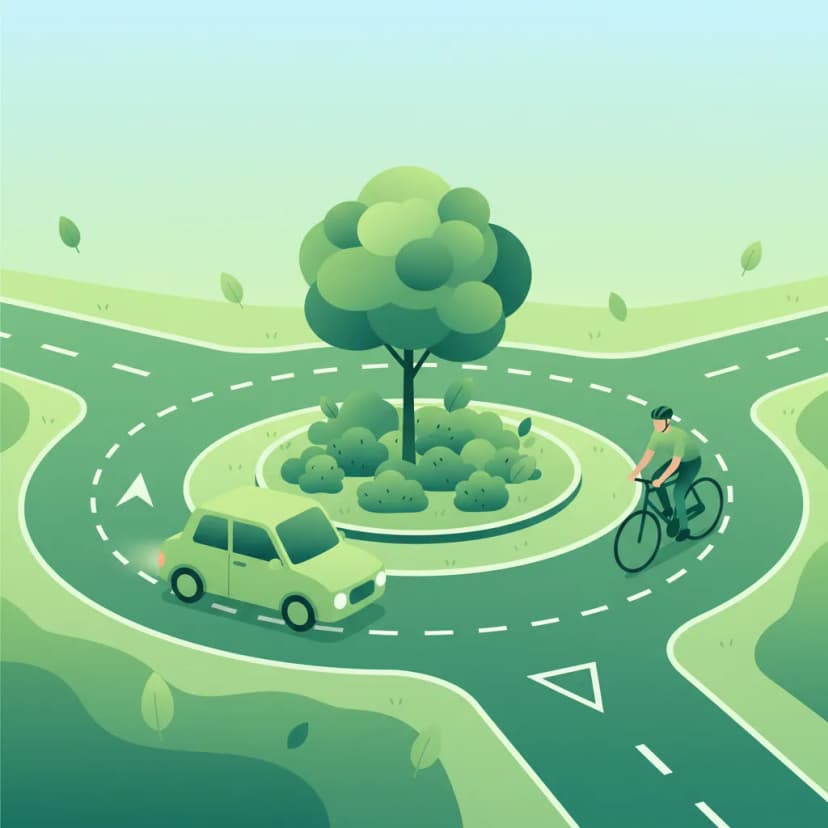
This lesson delves into the hierarchy of priority rules on Dutch roads, clarifying who has the right-of-way in various intersection scenarios. It explains the meaning of signs like 'voorrangsweg' and road markings such as shark's teeth ('haaientanden'). Special attention is given to the correct procedure for entering, navigating, and exiting roundabouts on a motorcycle, including proper signaling and lane choice to ensure safe and efficient passage.
This lesson introduces the foundational principles of right-of-way in the Netherlands, starting with the road user hierarchy and the default rule of giving priority to traffic from the right at equal intersections. You will learn to identify a priority road, marked by sign BORD 30, and understand how this designation overrides the default rule. The content establishes the legal framework for making priority decisions in the absence of specific signs or signals.
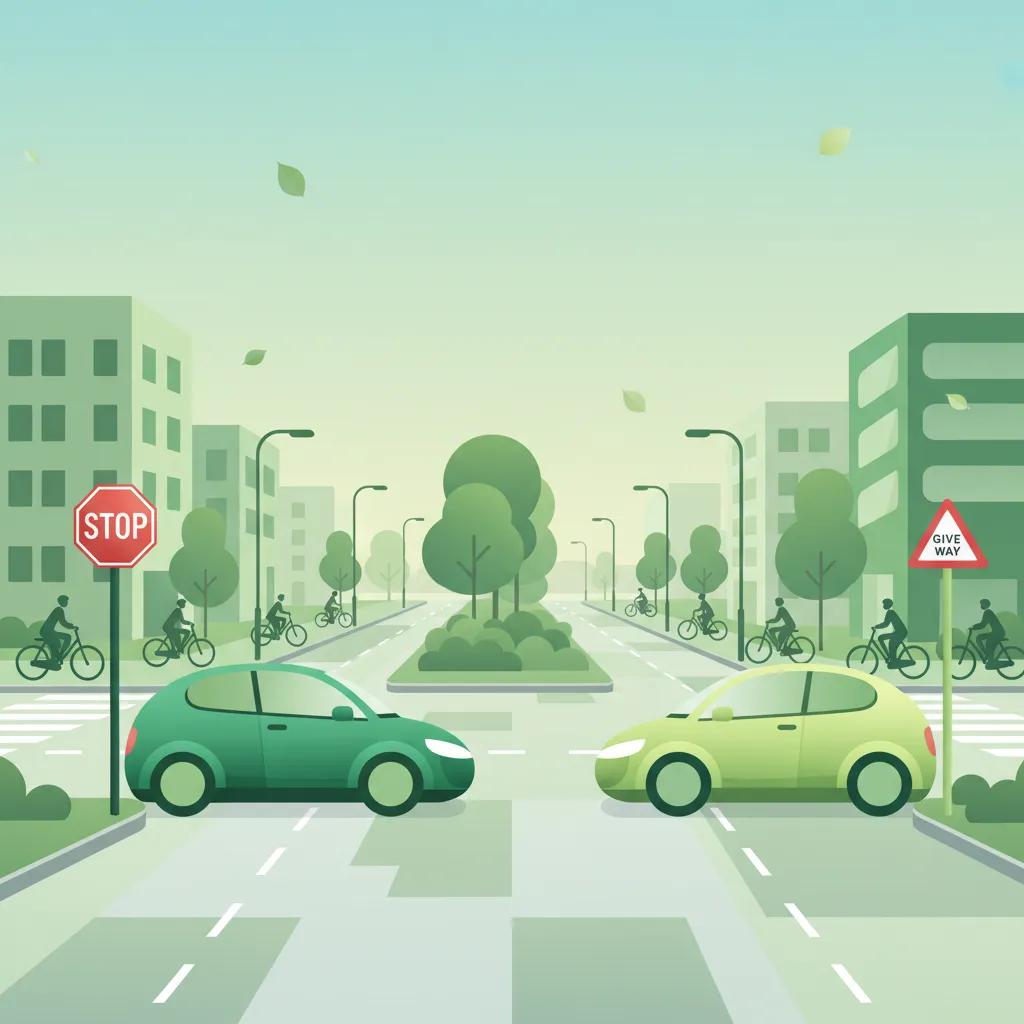
This lesson details the specific actions required at intersections controlled by 'Stop' and 'Give Way' signs. You will learn the legal requirement to come to a complete stop at a stop line (BORD 44) and the obligation to yield to all crossing traffic when encountering give-way markings ('haaientanden'). The content covers safe approach speeds and effective scanning techniques for motorcyclists to accurately assess gaps in traffic before proceeding.
This lesson focuses on the meaning of different road markings and their implications for motorcycle lane discipline. You will learn the legal distinction between solid and broken lines regarding overtaking, how to interpret directional arrows for lane choice, and the rules for using special lanes. The content emphasizes maintaining a safe and strategic position within the lane to maximize visibility and create a safety buffer from other vehicles.
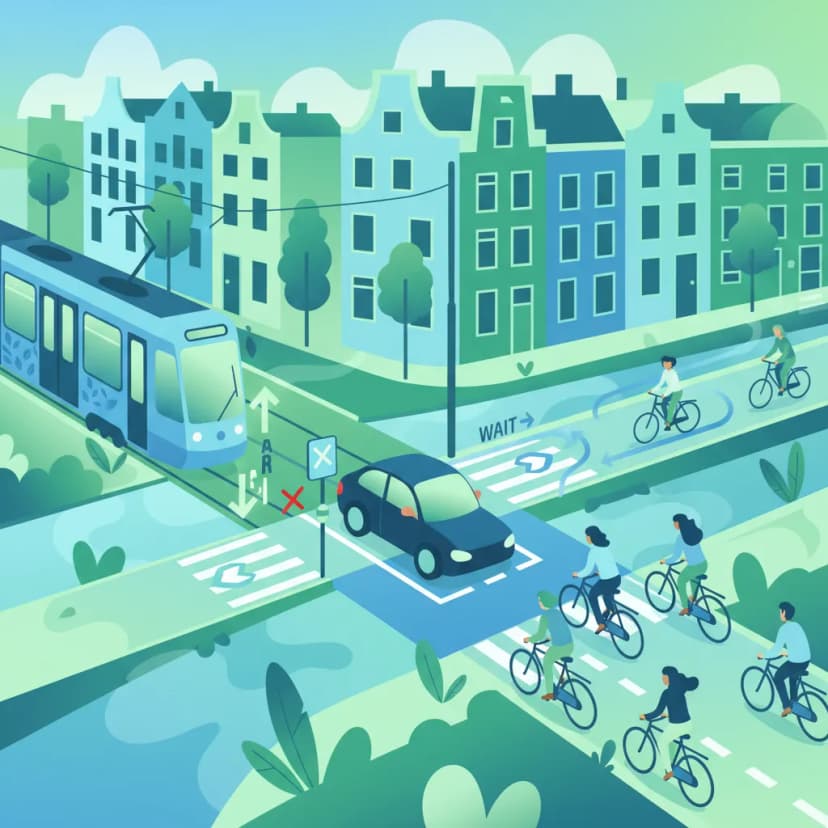
This lesson breaks down the rules of priority at intersections. You will learn to identify an 'equal' intersection where the default rule of giving way to traffic from the right applies. It also explains how priority is regulated by signs (such as the B6 Stop sign and B7 priority road sign) and road markings ('shark's teeth'). Understanding these hierarchies is crucial for making safe and correct decisions when crossing or turning at any junction.
This lesson explains the critical rules of priority involving pedestrians and cyclists to ensure the safety of vulnerable road users. You will learn the absolute requirement to stop for pedestrians on or waiting to use a 'zebrapad' (zebra crossing). The content also covers situations where you must yield to cyclists crossing your path, such as when turning across a dedicated bicycle lane (fietspad).
This lesson provides a detailed explanation of the various markings painted on the road surface, which are as legally binding as physical signs. It clarifies the rules associated with solid and broken white lines, including restrictions on crossing them, and the function of arrows, chevrons, and text painted in lanes. A thorough understanding of these markings is fundamental for correct lane discipline, positioning, and safe maneuvering on a motorcycle.
Understand the meaning of various road markings and how they dictate your position on the road. This lesson covers the rules associated with solid and broken white lines, bicycle lane symbols, suggestion strips, and arrows painted on the road surface. Proper lane discipline, including when overtaking is permitted and how to position yourself correctly within a lane or on a cycle path, is a fundamental skill for safe and predictable riding that is tested by the CBR.
This lesson focuses on the rules and techniques for safely navigating Dutch roundabouts, a common feature of the road network. You will learn that traffic circulating on the roundabout typically has priority and that you must yield before entering. The content covers correct lane selection for your intended exit, proper use of turn signals, and maintaining awareness of cyclists who may have priority on adjacent paths.
Find clear answers to common questions learners have about Road Markings and Surface Indicators. Learn how the lesson is structured, which driving theory objectives it supports, and how it fits into the overall learning path of units and curriculum progression in the Netherlands. These explanations help you understand key concepts, lesson flow, and exam focused study goals.
A solid white line indicates that crossing it is generally prohibited, for example, when changing lanes or overtaking. A broken white line, however, permits crossing, provided it is safe to do so. This distinction is crucial for both road safety and your CBR motorcycle theory exam.
Directional arrows indicate the only permitted directions of travel from that lane. As a motorcyclist, you must position yourself in the correct lane well in advance, according to your intended direction, and follow the arrow's instruction to avoid sudden maneuvers or obstructing other traffic.
While there aren't many markings exclusively for motorcycles, you must be aware of markings for bus lanes (busbaan), cycle paths (fietspad), or tram tracks, which are generally prohibited or require extra caution for motorbikes. Understanding these ensures you don't inadvertently enter restricted areas.
No, a solid white line typically means overtaking is prohibited. Even if it seems safe, crossing a solid white line to overtake is a traffic offense in the Netherlands. You must wait for a broken line or a section of road where overtaking is explicitly permitted.
Shark teeth markings on the road indicate that you must give priority to traffic on the intersecting road, often in combination with a 'give way' (voorrang verlenen) sign. You must be prepared to stop and yield to traffic coming from the road you are joining or crossing.