
This lesson delves into the crucial topic of road markings and lane discipline, specifically for A2 motorcyclists on Dutch roads. You'll learn how to correctly interpret solid and broken lines, understand directional arrows, and navigate special lanes. Mastering these rules is vital for safe riding, maintaining proper road position, and excelling in your CBR theory exam, building upon your knowledge of road signs.
Road markings are silent instructors, guiding traffic flow, preventing collisions, and ensuring an orderly system on Dutch roads. For motorcyclists, understanding and strictly adhering to these markings is not merely about obeying the law; it is fundamental to safety, visibility, and accident prevention. This lesson, part of your Complete CBR Theory Course for the Dutch Motorcycle License (Category A2), will equip you with the essential knowledge to interpret all relevant road markings and adopt optimal lane discipline, critical skills for both your theory exam and real-world riding.
Road markings define the permissible boundaries for vehicles, dictating where you can drive, when you can change lanes, and how you can overtake. Unlike larger vehicles, a motorcycle's smaller profile means that any deviation from these rules can have magnified consequences. Proper interpretation of these markings prevents illegal maneuvers, reduces conflict with other road users, and creates a crucial safety buffer around your motorcycle.
Lane discipline is more than just staying between the lines; it's a strategic approach to riding that maximizes your visibility to other drivers, provides you with more reaction time, and offers an escape route in emergencies. A motorcyclist's position within a lane significantly impacts how they are perceived by surrounding traffic, particularly in blind spots. Mastering lane discipline helps prevent "punch-through" incidents where larger vehicles might inadvertently encroach on your space.
The legal framework for road markings in the Netherlands is primarily set out in the Reglement Verkeersregels en Verkeerstekens 1990 (RVV 1990), which defines their meaning and legal implications. These regulations are designed to allocate road space efficiently, protect vulnerable users, and control dangerous maneuvers like overtaking to prevent head-on or side collisions. Familiarity with RVV 1990 is a prerequisite, as it underpins many of the rules discussed here.
Road lines are the most common form of road marking and carry significant legal weight regarding overtaking and lane changes. Distinguishing between them is paramount for safe riding.
A solid white line is a continuous white line painted along the carriageway. It serves one of two primary purposes:
The practical meaning of a solid white line is absolute: no crossing and no overtaking are permitted. Motorcyclists must stay on their side of the line. RVV 1990, article 33-2, explicitly prohibits overtaking where a solid white line exists. The only exception is if a solid line is part of a lane-changing marking where a dashed segment appears ahead; in such cases, overtaking may commence only after the dashed segment begins. It's a common misunderstanding to believe a solid line can be crossed if traffic is slow or that it applies only to cars. This rule applies equally to motorcycles.
A broken white line consists of a series of short white dashes along the centre or lane boundary. This marking signifies permission to:
RVV 1990, article 33-2, permits overtaking where a broken line is present, provided there is no oncoming traffic within a safe sight distance. A good rule of thumb is to ensure you can see at least twice the distance required to complete your overtaking maneuver safely. Do not assume overtaking is always safe simply because the line is broken; always assess speed differentials and oncoming traffic.
A double solid white line consists of two parallel continuous white lines, typically marking the centre of a multi-lane road or a particularly hazardous section. The presence of a double solid white line indicates that overtaking or lane changes are strictly prohibited in both directions. This restriction is even more stringent than a single solid line, emphasizing increased danger. Misinterpreting this as a temporary restriction that can be ignored is a serious and dangerous mistake.
A solid yellow line painted on the road surface is primarily used on one-way streets or in specific urban areas to indicate the edge of the travelled lane. It can also indicate parking restrictions. For motorcyclists, the practical meaning is that riders must stay on the side of the line indicated by the road's direction; crossing is prohibited. This is common in city centres and it is illegal to drive on the opposite side of such a line. Do not confuse yellow lines with lane-change permission; they serve as boundaries.
Painted arrows on the road surface, known as directional arrows or lane-use arrows, provide crucial instructions about the permitted direction of travel for that specific lane.
Directional arrows are typically found approaching intersections or junctions and dictate maneuvers such as:
The rider must follow the indicated direction; using a lane for any other maneuver is illegal and highly dangerous. For instance, riding straight through a left-turn arrow lane, even if traffic seems clear, creates unpredictable situations and risks collisions with vehicles that are correctly turning. These markings are often supplemented by regulatory signs, as per RVV 1990, article 26-2.
Certain lanes are designated for specific types of traffic, and it's imperative for motorcyclists to understand the restrictions associated with them.
Bus lanes are marked with a solid white line and the word "BUS" or a bus symbol painted on the road surface. They are typically reserved for buses and sometimes taxis. Motorcycles are generally NOT permitted to use bus lanes unless a supplementary sign explicitly allows it. RVV 1990, article 24-2, governs special lane usage. A common misunderstanding is that motorcycles, being small, can use bus lanes to avoid congestion. This is incorrect and can result in fines and disrupt public transport schedules.
Cycle lanes are identified by a continuous white line and a prominent bicycle symbol. They are often separated from motor vehicle lanes by a double solid line for added safety. Motorcycles are NOT permitted to ride in a cycle lane under any circumstances, unless a specific sign permits mixed traffic (which is very rare, typically only in parking areas or shared zones). Riding a motorcycle in a cycle lane endangers vulnerable cyclists and violates RVV 1990, article 24-2, and the Dutch Road Traffic Act (Wegverkeerswet 1994). Your thin profile does not justify this illegal and unsafe action.
Motorcycle-specific lanes are quite rare in the Netherlands. If present, they would be marked with a specific label (e.g., "Motorfiets") and a solid line, indicating a lane reserved exclusively for motorcycles. These are typically experimental or found on specific test tracks and require confirmation via official signposts and local municipality regulations. Should you encounter one, it would mean only motorcycles are allowed, and other motor vehicles must stay out.
Lane positioning, or where you ride laterally within your chosen lane, is a critical safety strategy for motorcyclists. It's not about adherence to a legal rule but about proactive hazard management.
A motorcyclist should always aim to maintain a lateral offset that maximizes visibility to surrounding drivers while staying safely within the lane boundaries. This creates a safety buffer that reduces the risk of incidents, especially those involving the "right-blind-spot" of other vehicles. Maintaining sufficient space allows for more reaction time and provides an escape route if necessary. As a general rule, aim for at least 1 metre from the lane edge when riding alongside larger vehicles.
Your optimal lane position can vary based on conditions:
There is no explicit law dictating precise lane positioning, but the principle of "reasonable care" under RVV 1990 (article 5-1 of the Road Traffic Act) implicitly requires riders to adopt positions that enhance safety. Drivers tend to focus on larger vehicles, so a motorcycle positioned centrally is more likely to appear in their scan pattern, reducing "inattentional blindness."
Overtaking is a dynamic maneuver that requires careful judgment and strict adherence to road markings.
The rules for overtaking are directly tied to the type of line encountered:
RVV 1990, articles 33-2 and 36, explicitly define these overtaking restrictions. Always ensure you have adequate clearance and can complete the maneuver safely before committing.
Lane splitting refers to the act of a motorcyclist riding between two parallel moving vehicles within the same lane, or between lanes of congested traffic. In the Netherlands, lane splitting is strictly prohibited. RVV 1990, article 36-1, states that overtaking must be performed within the lane and not between vehicles. Any attempt to weave through a traffic jam by riding between cars is illegal and extremely unsafe. It exposes the rider to unpredictable movements from other vehicles, sudden door openings, and general disregard for their safety. Always remain fully within your chosen lane boundaries.
The interpretation and application of road markings and lane discipline must dynamically adapt to changing conditions.
Understanding the rules also means knowing the penalties for breaking them. Violating road marking rules not only endangers yourself and others but also carries significant legal consequences in the Netherlands.
These consequences highlight the importance of disciplined riding. Correct adherence to road markings leads to smoother traffic flow, reduced collision risk, and increased rider confidence, while violations significantly increase the probability of severe accidents.
Applying these principles will not only help you pass your CBR A2 theory exam but, more importantly, will make you a safer and more confident motorcyclist on Dutch roads.
Lesson content overview
Explore all units and lessons included in this driving theory course.
Explore search topics learners often look for when studying Road Markings and Lane Discipline for Motorcyclists. These topics reflect common questions about road rules, driving situations, safety guidance, and lesson level theory preparation for learners in the Netherlands.
Browse additional driving theory lessons that cover connected traffic rules, road signs, and common driving situations related to this topic. Improve your understanding of how different rules interact across everyday traffic scenarios.
Understand the specific restrictions and rules for using bus lanes and cycle lanes as a motorcyclist in the Netherlands. Learn what signs permit motorcycle access and the safety implications of incorrect lane usage according to Dutch traffic legislation.
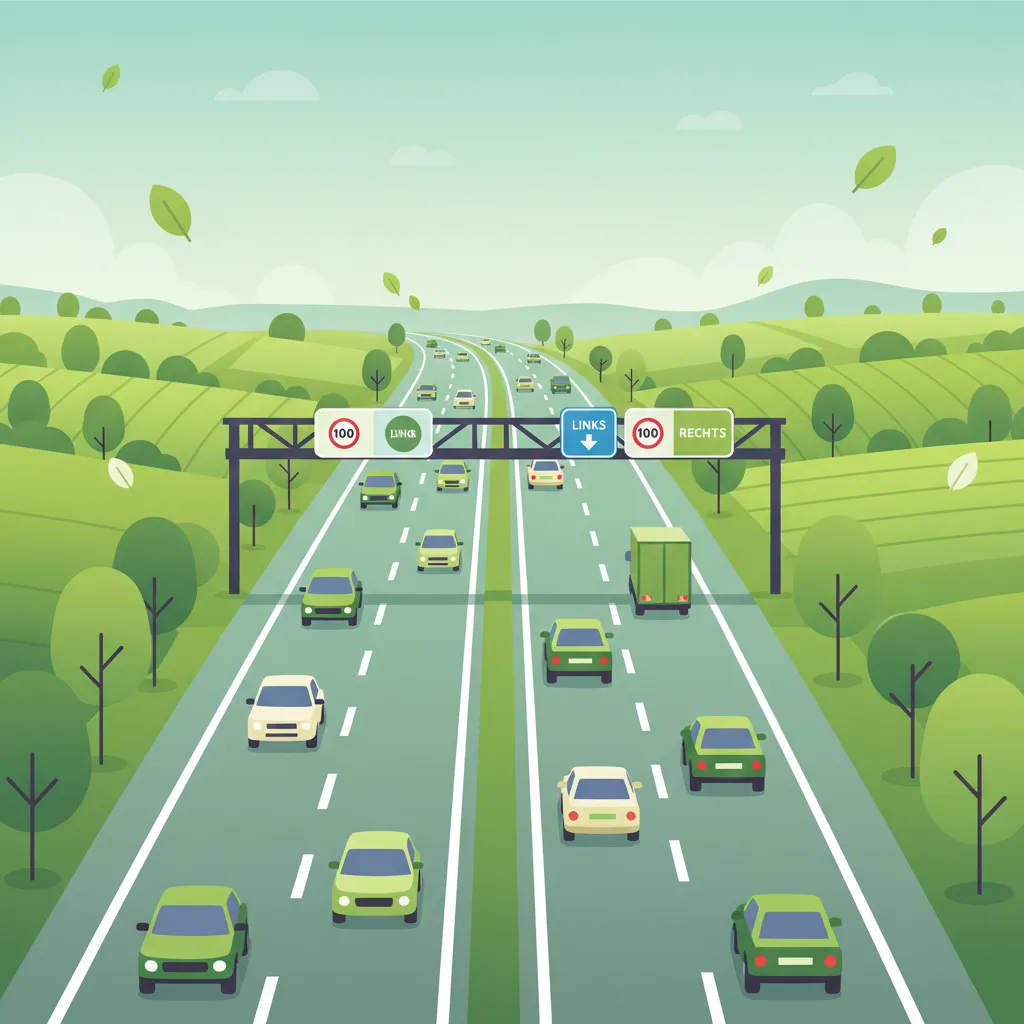
This lesson covers the specific articles of the Dutch Road Traffic Act that apply to motorways, with a primary focus on the strict rule of keeping to the rightmost available lane unless overtaking. It explains the legal and safety reasons for only passing on the left and discusses the correct positioning within a lane for maximum visibility and safety. The content also addresses the nuances of lane usage during heavy congestion, ensuring riders comply with the law and contribute to smooth traffic flow.
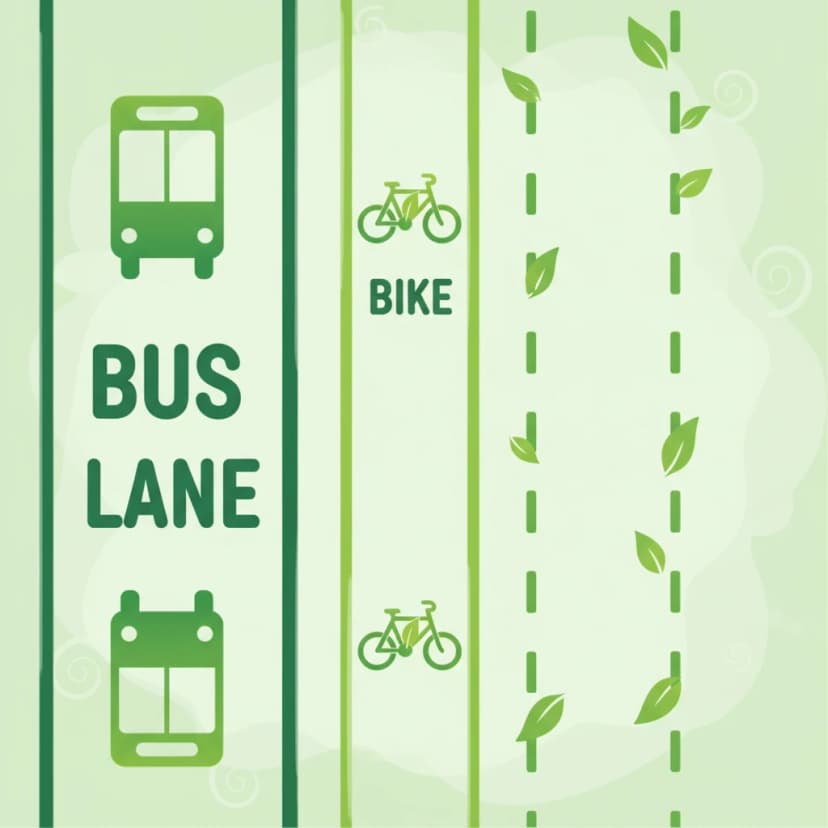
This lesson covers a variety of lanes and markings with specific rules. You will learn to recognize and respect bus lanes, which are reserved for public transport, and rush-hour lanes (spitsstrook), which are only open during busy periods as indicated by electronic signs. The curriculum also explains the meaning of different line types (solid, broken, double lines) that dictate whether lane changes or overtaking are permitted. Understanding these special lanes and markings is key to navigating Dutch infrastructure correctly.

This lesson reinforces the fundamental rule of Dutch highway driving: use the rightmost lane available and use the lanes to the left only for overtaking. You will learn the complete, safe overtaking procedure: check mirrors, signal, perform a shoulder check for the blind spot, smoothly move over, accelerate past the vehicle, and then return to the right lane when safe.

Safely merging and changing lanes requires a systematic approach known as 'mirror-signal-blind spot'. This lesson explains the correct procedure for entering a carriageway from an acceleration lane, ensuring you match the speed of the traffic flow and find a safe gap. It also covers the technique for changing lanes, emphasizing the critical importance of checking your blind spot with a shoulder check (dode hoek) before making any lateral movement to prevent collisions.
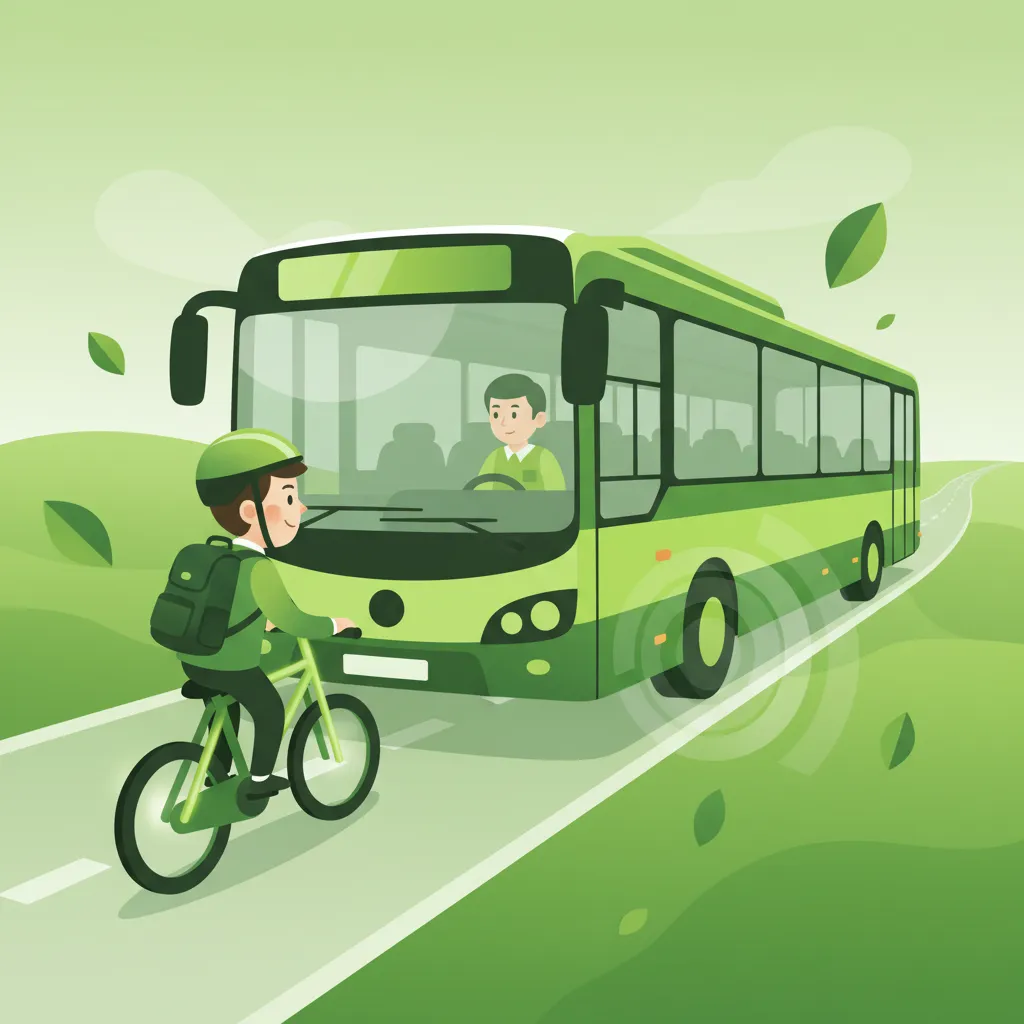
This lesson focuses on the specific hazards and techniques for safely sharing the road with heavy goods vehicles (HGVs) and buses. It provides a detailed explanation of their extensive blind spots ('dode hoek') and teaches riders where to position themselves to remain visible. The curriculum also covers how to manage the significant air turbulence created by these vehicles when overtaking and how to anticipate their wide turning circles at junctions and roundabouts.

This lesson explains the concept of strategic lane positioning, moving beyond simply staying in the center of the lane. It details how to select a position—typically in the left or right wheel track of cars—to be more visible in other drivers' mirrors, avoid the slippery center strip, and maintain a space cushion. The content emphasizes constantly adjusting position based on traffic, road conditions, and potential hazards.
This lesson covers strategies for safely navigating around vehicles at both ends of the size spectrum. It details the large blind spots ('no-zones') around trucks and buses and advises on where to position a motorcycle to remain visible. Equally, it emphasizes the duty of care towards vulnerable road users, teaching riders to anticipate the movements of pedestrians and cyclists and to always provide them with ample space when passing.

Understand the meaning of various road markings and how they dictate your position on the road. This lesson covers the rules associated with solid and broken white lines, bicycle lane symbols, suggestion strips, and arrows painted on the road surface. Proper lane discipline, including when overtaking is permitted and how to position yourself correctly within a lane or on a cycle path, is a fundamental skill for safe and predictable riding that is tested by the CBR.
This lesson covers the universal Dutch road rules with a specific focus on their application to light motorcycles. It details the various speed limits for different road types, from urban areas to motorways, and explains the correct procedures for overtaking and lane positioning. The legal aspects of lane filtering in congestion are also examined, alongside mandatory equipment use like daytime running lights, to ensure riders can integrate safely and legally into traffic flow.

This lesson clarifies the regulations determining where each type of Category AM vehicle is allowed to travel. It explains the rules for using mandatory cycle paths (fietspad) and combined moped/cycle paths (bromfietspad), identified by specific road signs. You will also learn the conditions under which a bromfiets must use the main carriageway. Understanding these positioning rules is essential for legal compliance and for ensuring safety in mixed traffic environments with cyclists and cars.
Learn how optimal lane positioning on Dutch roads enhances motorcycle visibility and safety. Understand how to adapt your position to avoid hazards, interact with other road users, and manage dynamic traffic conditions based on official driving theory.
This lesson explains the concept of strategic lane positioning, moving beyond simply staying in the center of the lane. It details how to select a position—typically in the left or right wheel track of cars—to be more visible in other drivers' mirrors, avoid the slippery center strip, and maintain a space cushion. The content emphasizes constantly adjusting position based on traffic, road conditions, and potential hazards.
This lesson reinforces the fundamental rule of Dutch highway driving: use the rightmost lane available and use the lanes to the left only for overtaking. You will learn the complete, safe overtaking procedure: check mirrors, signal, perform a shoulder check for the blind spot, smoothly move over, accelerate past the vehicle, and then return to the right lane when safe.
This lesson covers the specific articles of the Dutch Road Traffic Act that apply to motorways, with a primary focus on the strict rule of keeping to the rightmost available lane unless overtaking. It explains the legal and safety reasons for only passing on the left and discusses the correct positioning within a lane for maximum visibility and safety. The content also addresses the nuances of lane usage during heavy congestion, ensuring riders comply with the law and contribute to smooth traffic flow.

This lesson explains that where you ride in your lane is a critical safety choice. You will learn to avoid lingering in the blind spots ('dode hoek') of cars and trucks, and how to position yourself to be clearly visible in their mirrors. The content teaches you to constantly adjust your lane position to create a space cushion and ensure you always have a planned escape path in case of an emergency.
This lesson covers the core principle of road positioning in the Netherlands: drive as far to the right as is safely possible. You will learn why this rule is critical for maintaining traffic flow and preventing conflicts with oncoming and overtaking vehicles. The curriculum explains how to apply this rule on different road types, from single-lane rural roads to multi-lane motorways. It also discusses maintaining a safe lateral distance from the edge of the road, parked cars, and vulnerable road users like cyclists.
Safely merging and changing lanes requires a systematic approach known as 'mirror-signal-blind spot'. This lesson explains the correct procedure for entering a carriageway from an acceleration lane, ensuring you match the speed of the traffic flow and find a safe gap. It also covers the technique for changing lanes, emphasizing the critical importance of checking your blind spot with a shoulder check (dode hoek) before making any lateral movement to prevent collisions.
This lesson covers the universal Dutch road rules with a specific focus on their application to light motorcycles. It details the various speed limits for different road types, from urban areas to motorways, and explains the correct procedures for overtaking and lane positioning. The legal aspects of lane filtering in congestion are also examined, alongside mandatory equipment use like daytime running lights, to ensure riders can integrate safely and legally into traffic flow.
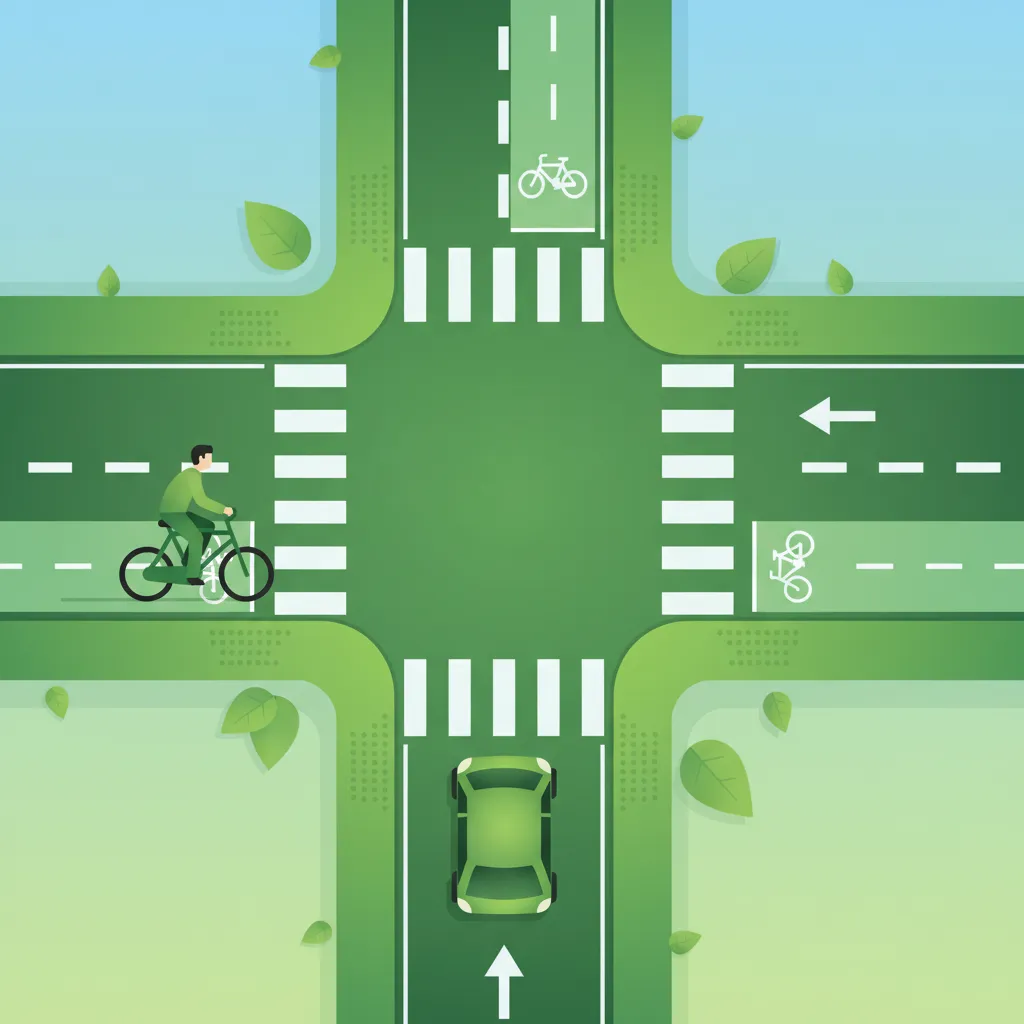
This lesson explores the legal meaning of various road surface markings, including solid and broken lane delimiters, directional arrows, and special-purpose lane indicators. It describes how markings dictate permitted maneuvers, such as overtaking and lane changes, and alert riders to upcoming hazards or changes in road layout. The content also examines the relationship between markings and road design in the Netherlands, emphasizing how a motorcyclist must interpret these visual cues for safe positioning.
Understand the meaning of various road markings and how they dictate your position on the road. This lesson covers the rules associated with solid and broken white lines, bicycle lane symbols, suggestion strips, and arrows painted on the road surface. Proper lane discipline, including when overtaking is permitted and how to position yourself correctly within a lane or on a cycle path, is a fundamental skill for safe and predictable riding that is tested by the CBR.

This lesson explains the specific rules and best practices for lane filtering in traffic jams ('file rijden') in the Netherlands. You will learn the conditions under which it is permitted, such as the limited speed difference between you and the cars. The content emphasizes heightened awareness, watching for drivers changing lanes unexpectedly, and the importance of performing this manoeuvre at a low, controlled speed.
Find clear answers to common questions learners have about Road Markings and Lane Discipline for Motorcyclists. Learn how the lesson is structured, which driving theory objectives it supports, and how it fits into the overall learning path of units and curriculum progression in the Netherlands. These explanations help you understand key concepts, lesson flow, and exam focused study goals.
A solid white line indicates a strict prohibition against crossing it, meaning you cannot overtake or change lanes across it. A broken white line, however, permits crossing for purposes like overtaking or turning, provided it's safe to do so. Understanding this distinction is fundamental for safe lane changes and avoiding fines on Dutch roads for your A2 motorcycle.
Generally, no. Bus lanes and bicycle lanes are specifically reserved for their designated users, and crossing a solid line to enter them is illegal for general traffic, including A2 motorcycles. Always look for specific signage that might permit motorcycles under certain conditions, but otherwise, assume these lanes are off-limits.
Motorcyclists should typically position themselves in a lane to maximize visibility and maintain a safety buffer. Often, this means riding slightly to one side, like the left wheel track of a car, to be seen in mirrors and avoid oil slicks or potholes in the centre. Adapt your position based on traffic, road conditions, and hazards to ensure you have space to react.
Yellow road markings in the Netherlands often indicate temporary situations, such as roadworks or diversions. When present, yellow lines override white lines. This means you must follow the temporary yellow markings, even if they contradict permanent white lines, until the temporary situation ends. This is a common point tested in the CBR A2 theory exam.