
Logo
Dutch Driving Theory Courses

Lesson 1 of the Roadway Access & Navigation unit

Dutch Driving Theory AM: Cycle Paths, Bromfietspad, and Carriageways

This lesson clarifies crucial rules for Category AM vehicles regarding roadway access in the Netherlands. You'll learn to distinguish between fietspaden, bromfietspaden, and general carriageways, understanding where your specific vehicle type is permitted to travel. Mastering these positioning rules is vital for safe riding and passing your Dutch theory exam.
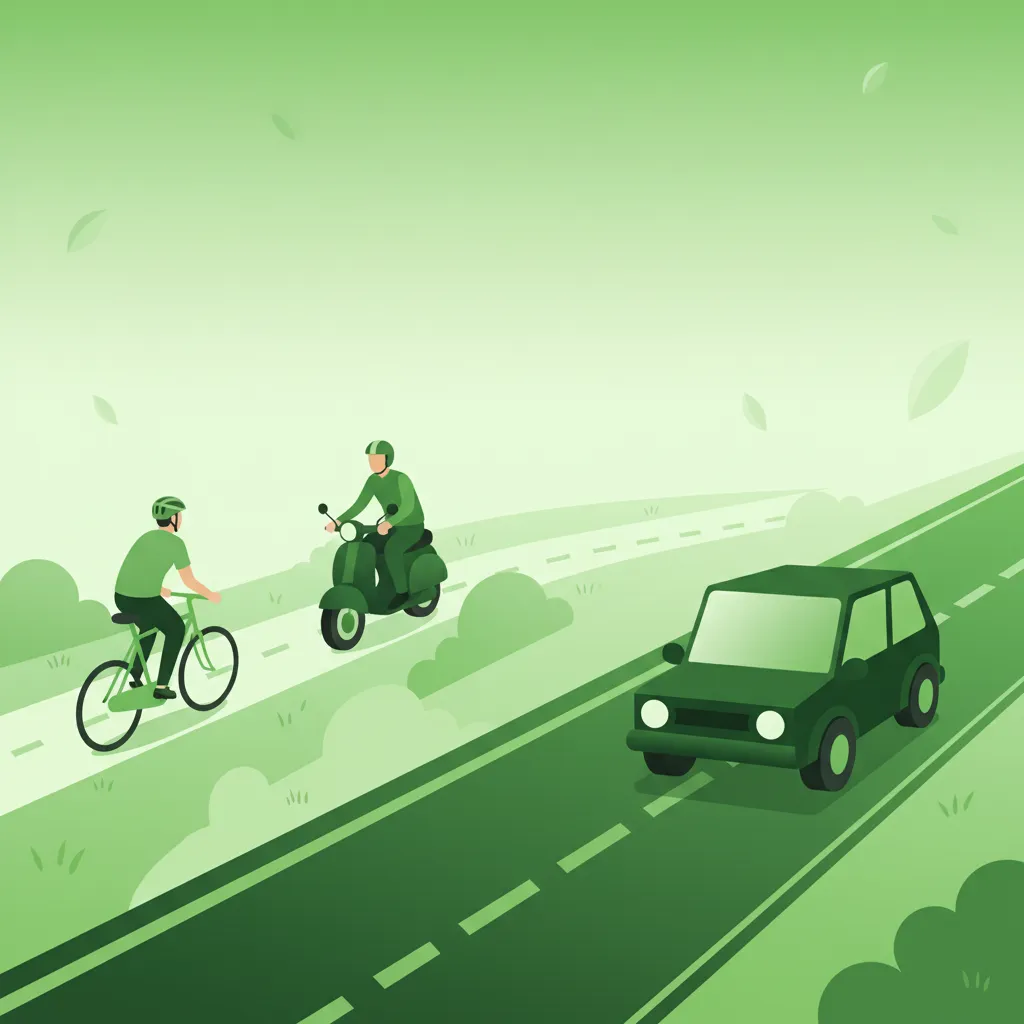
roadway accesscycle pathbromfietspadcarriagewaypositioning
Dutch Driving Theory AM: Cycle Paths, Bromfietspad, and Carriageways
Dutch Driving Theory AM

Cycle Paths, Bromfietspad, and Carriageways: Navigating Dutch Roads on a Moped or Scooter

Understanding Roadway Access for Category AM Vehicles in the Netherlands

Navigating the diverse road network of the Netherlands requires a clear understanding of where your Category AM vehicle (such as a bromfiets, snorfiets, or speed pedelec) is permitted to travel. This lesson clarifies the specific regulations governing the use of mandatory cycle paths (fietspad), combined moped/cycle paths (bromfietspad), and the main carriageway (rijbaan). Knowing these rules is not just about legal compliance; it is fundamental for ensuring your safety and the safety of others in various traffic environments, from bustling city centers to quiet rural roads.

Correct positioning on the road directly impacts right-of-way situations, your visibility to other road users, and the overall risk of collisions. Failure to adhere to these rules can result in significant fines and, more critically, increase your vulnerability in traffic. This module builds upon your foundational knowledge of Dutch road signs and vehicle classifications, establishing the basis for safe and legal movement on any road.

Key Concepts in Dutch Moped Traffic: Fietspad, Bromfietspad, and Carriageway

The Dutch traffic system is designed to separate different modes of transport, particularly lower-speed motorised two-wheelers like Category AM vehicles, from faster motor vehicles. This separation is achieved by assigning them to specific traffic spaces: mandatory cycle paths, dedicated combined paths, or the main carriageway. This underlying logic is driven by several critical principles:

  • Safety: Lower-speed vehicles are inherently more vulnerable in collisions with larger, faster vehicles. Separated infrastructure reduces potential conflict points and mitigates the severity of accidents.
  • Predictability: Uniform rules, such as "use the mandatory path unless prohibited," create consistent expectations for all road users. This predictability is vital for smooth and safe traffic flow, as everyone knows where certain vehicle types are expected to be.
  • Legal Intent: The Dutch traffic law, specifically the Reglement Verkeersregels en Verkeerstekens 1990 (RVV 1990), explicitly defines which spaces a vehicle may occupy. Compliance with these regulations is not optional; it is a legal requirement designed to ensure order and safety.

Understanding these foundational concepts is crucial for all Category AM riders, connecting directly to how you interact with traffic signs, manage your speed, and navigate right-of-way situations, which will be covered in greater detail in subsequent lessons.

Mandatory Cycle Paths (Fietspad): Rules for Mopeds and Scooters

A mandatory cycle path, or fietspad, is a designated route primarily for bicycles, identifiable by a specific blue road sign. These paths are designed to provide a separated space for cyclists, enhancing their safety and encouraging active transport.

Identifying a Fietspad and Moped Usage

The presence of this sign indicates that cyclists are legally obligated to use this path. For Category AM vehicles, the rule is conditional: you may use a standard fietspad, but it is not always mandatory. However, if a fietspad is present and there is no sign prohibiting mopeds, you must not ride on the parallel carriageway. The key is to look for additional signage that might alter this permission.

Fietspad with Moped Prohibition

A crucial variation is a fietspad where mopeds are explicitly forbidden. This is indicated by a separate sign.

When you encounter sign 6.62 alongside a fietspad, it means that Category AM vehicles must not use that path. In such cases, you are legally required to merge onto the main carriageway, provided it is safe and allowed for mopeds. Ignoring this sign can lead to fines and dangerous encounters with cyclists who do not expect mopeds on their dedicated path.

Practical Implications and Rules for Fietspad Use

When riding on a fietspad where mopeds are permitted, you must:

  • Stay within its marked boundaries, which are often painted lines or a physically separated strip of road.
  • Be mindful of cyclists, as they are the primary users. Overtaking is allowed if safe and if local markings do not prohibit it, but always with caution and an audible warning if necessary.
  • Understand that at intersections, you typically follow the path's continuity. You may only cross onto the carriageway if the path officially ends or if specific crossing signs are in place.

Warning

Do not assume any cycle path is automatically open to mopeds. Always look for the 'No Mopeds' sign (C15, formerly 6.62). If it's present, you must use the carriageway.

Combined Moped and Cycle Paths (Bromfietspad): Shared Space Regulations

The bromfietspad is a unique feature of Dutch infrastructure, designed to accommodate both cyclists and Category AM vehicles safely on a shared, dedicated path. This approach allows for separation from faster motor traffic while acknowledging the similar speed profiles of mopeds and bicycles in certain environments.

Identifying a Bromfietspad and Mandatory Usage

When you see sign 6.61, it means that the path is mandatory for both cyclists and Category AM vehicles. You must use this path and are not allowed to ride on the main carriageway where this sign applies. This rule is crucial for maintaining order and safety on roads with mixed traffic.

Speed Limits and Rules on a Bromfietspad

The design and shared nature of a bromfietspad necessitate specific speed regulations to ensure the safety of all users.

Tip

The default speed limit on a bromfietspad is 30 km/h, unless different local signage indicates otherwise. Always prioritize safety and adjust your speed to conditions and the presence of other users, especially cyclists.

This 30 km/h limit (or lower if posted) reflects the mixed-user environment and the need for ample reaction time. Even if your Category AM vehicle is capable of higher speeds, you must adhere to this lower limit on a bromfietspad. Overtaking on a bromfietspad is permissible if safe, but always give ample space and an audible warning to cyclists.

Other Rules for Bromfietspad Use

  • No Carriageway Riding: As long as sign 6.61 is in effect, you are prohibited from riding on the adjacent carriageway.
  • Path Endings: When the bromfietspad ends or is blocked (e.g., due to construction), you must safely merge onto the carriageway at a designated crossing or safe point.
  • No Sidewalk Usage: Bromfietspaden are distinct from sidewalks. Riding on a sidewalk is strictly prohibited unless an explicit sign permits it.

While rare, you might encounter sign 6.71, which indicates a path exclusively for mopeds. If present, it mandates your use of that path, but you will not share it with cyclists.

Using the Main Carriageway with a Moped (Rijbaan): When and How

The main carriageway, or rijbaan, consists of the traffic lanes reserved for motor vehicles. Category AM vehicles must use the carriageway in specific circumstances, treating themselves as any other motorised vehicle.

When Carriageway Use is Mandatory

You are required to ride on the main carriageway when:

  • There is no mandatory cycle path (fietspad) or combined moped/cycle path (bromfietspad) present.
  • A fietspad is present, but a "no mopeds" sign (C15, formerly 6.62) prohibits Category AM vehicles from using it.
  • A dedicated path ends, and you must merge onto the carriageway to continue your journey.
  • You are specifically permitted or directed to use the carriageway at complex intersections or under special circumstances.

Lane Discipline and Speed Limits on the Carriageway

When riding on the carriageway, Category AM vehicles must adhere to the same general rules as other motor vehicles, with some specific considerations:

  • Keep to the Rightmost Lane: Always stay in the rightmost lane or a lane specifically designated for mopeds (if present). You should only move out of the rightmost lane to safely overtake a slower vehicle, and you must return to the rightmost lane as soon as possible.
  • Speed Limits: On the carriageway, you must observe the posted speed limits for motorised traffic. However, your vehicle's maximum design speed will also be a limiting factor. For bromfietsen, the maximum speed on the carriageway is typically 45 km/h. Snorfietsen and speed pedelecs have their own specific maximum speeds which apply. Always refer to local signage, as limits can vary (e.g., 30 km/h in residential zones).
  • Signaling and Overtaking: Use your indicators for all turns and lane changes. When overtaking, do so safely, ensuring sufficient clearance and visibility, and return to your lane promptly.

Prohibited Carriageway Use: Motorways and Special Zones

There are strict prohibitions on where Category AM vehicles may travel on the carriageway:

  • Motorways (Autosnelweg): Category AM vehicles are never allowed on motorways (sign C16, formerly 34.05). These roads are designed for high-speed traffic, which far exceeds the capabilities and safety parameters of mopeds. Entering a motorway on a moped is a serious offense.
  • "Bromfiets Verboden" Zones: You may encounter specific roads or areas marked with a "bromfiets verboden" sign (C9, formerly 8.53) which prohibits Category AM vehicles. These are often found in pedestrian zones, busy city centers, or near schools to enhance safety for vulnerable road users.
  • Shoulder (Vluchtstrook): You must not ride on the shoulder of the carriageway unless explicitly authorized (e.g., during specific road works or emergencies).

Crucial Road Signs for Moped Path Usage in the Netherlands

Understanding these specific road signs is paramount for all Category AM riders in the Netherlands. They dictate your legal obligations and guide your movement through the traffic network.

Path Termination and Safe Merging Procedures

A common situation for Category AM riders is when a mandatory cycle path or bromfietspad comes to an end. This requires a safe and smooth transition back onto the main carriageway.

The end-of-path sign (like G11-end, formerly 6.32) signals that you must safely merge with the traffic on the main carriageway. This maneuver requires careful attention and adherence to standard merging protocols to avoid sudden movements that could cause collisions.

Safe Merging Procedure at Path Termination

  1. Reduce Speed: Adjust your speed to match the flow of traffic on the carriageway you are about to enter.
  2. Signal Intent: Activate your left indicator well in advance to signal your intention to merge onto the carriageway.
  3. Check Mirrors and Blind Spots: Thoroughly check your mirrors and perform a head check (looking over your shoulder) to ensure no vehicles are in your blind spot.
  4. Identify a Safe Gap: Wait for a sufficient and safe gap in the carriageway traffic. Do not force your way in or expect other drivers to automatically yield.
  5. Smoothly Merge: Gradually steer into the carriageway, maintaining your signal until fully established in the lane.

Warning

Failing to merge safely can lead to serious rear-end collisions or other accidents. Always give yourself ample time and space.

Special Scenarios and Exceptions for Moped Riders

While general rules apply, traffic situations can be complex. Understanding conditional logic and exceptions is vital for safe and legal riding.

Intersections and Roundabouts

At junctions, roundabouts, and traffic islands, strict adherence to a mandatory path might create an unsafe situation. In these instances, Category AM vehicles may temporarily use the carriageway to execute the maneuver, provided it is safe and permitted by the context.

This flexibility balances strict path adherence with the practical necessity of navigating complex traffic nodes. Riders must still signal their intentions, observe all right-of-way rules, and yield to other traffic as required.

Adverse Weather and Visibility Conditions

The legal obligation to use a designated path (fietspad or bromfietspad) generally remains, even in poor weather. However, personal safety is paramount.

  • Heavy rain, fog, or ice can make these paths extremely slippery or reduce visibility dramatically. While the law still obliges path use, riders are expected to exercise "reasonable safety." This means reducing speed significantly, increasing following distances, and using appropriate lighting (headlights, fog lights if equipped).
  • If a path becomes demonstrably unsafe (e.g., severe ice patches, debris, or flooding) such that continued use poses an immediate danger, a justified temporary use of the carriageway may be defensible under the principle of "necessary measures to avoid danger" (RVV 1990 article 27). This should only be a last resort and executed with extreme caution.

Vehicle State and Equipment

  • Heavily Laden or with Trailer: If your Category AM vehicle is heavily laden or pulling a small trailer, its effective width, maneuverability, and braking distance increase. On narrow bromfietspaden, you must take extra caution and ensure you don't impede or endanger cyclists. If a path is too narrow for safe passage with a trailer, temporary carriageway use might be considered in very specific, justified situations.
  • Damaged Lighting: Riding at night or in poor visibility without proper illumination (e.g., a broken headlight or taillight) is highly dangerous and often illegal. If your lighting is damaged, you must take immediate steps to repair it. Until then, riding on dark bromfietspaden, which may lack street lighting, is extremely hazardous. You may be forced to use a carriageway that is better lit, but legal implications may still apply if the vehicle is not roadworthy.

Special Zones: School Zones and Pedestrian Areas

Certain zones are designed with heightened safety for vulnerable users.

  • School Zones: Often feature "bromfiets verboden" (C9) signs or explicitly reduced speed limits (e.g., 30 km/h). Category AM vehicles must respect these prohibitions and speed limits, showing heightened vigilance due to the presence of children.
  • Sidewalks/Footpaths: These are strictly reserved for pedestrians. Category AM vehicles are never allowed on sidewalks unless an explicit sign, such as "bromfiets toegestaan," permits it, which is extremely rare and typically only for specific access routes or temporary diversions. Violating this rule endangers pedestrians and results in heavy fines.

Common Violations and Their Consequences for Moped Riders

Ignoring the regulations for path usage can lead to significant legal penalties and, more importantly, increase the risk of accidents.

  • Riding on the carriageway when a bromfietspad (G12a) is present: This violates the mandatory path rule and endangers cyclists on the combined path.
    • Consequence: Fine (potentially €100-€250), increased risk of collision due to speed differential with cars.
  • Ignoring a "no-moped" sign (C15) on a cycle path: You are riding where you are legally prohibited, creating a hazard for cyclists.
    • Consequence: Fine, potential for accident with cyclists who do not anticipate a moped.
  • Exceeding 30 km/h on a bromfietspad: This exceeds the specific speed limit for mixed-user paths, increasing braking distance and collision risk.
    • Consequence: Fine, potential forced stop by police, significant safety hazard.
  • Riding on a motorway (C16) with a Category AM vehicle: Motorways are fundamentally unsafe and illegal for mopeds.
    • Consequence: Heavy fine (e.g., €350), possible points on license, vehicle impoundment.
  • Failing to merge safely at path termination (G11-end): Abrupt lane changes or sudden stops cause dangerous situations for following traffic.
    • Consequence: Fine for traffic violation, high risk of rear-end collision.
  • Riding on a sidewalk without explicit permission: This endangers pedestrians and is a direct violation of traffic law.
    • Consequence: Fine, high risk of pedestrian injury.
  • Riding in the leftmost lane on a carriageway unnecessarily: Violates lane discipline and creates confusion for other drivers.
    • Consequence: Fine for improper lane usage, increased risk of collisions, especially when being overtaken.

Why These Rules Matter: Safety and Traffic Flow Principles

The strict regulations concerning cycle paths, bromfietspaden, and carriageway use are not arbitrary; they are deeply rooted in traffic engineering principles and safety research.

  • Visibility and Reaction Time: By separating lower-speed mopeds from higher-speed motor vehicles, the system reduces the velocity differential, which is a major factor in accident severity. On a bromfietspad, a 30 km/h speed limit provides both cyclists and mopeds sufficient reaction windows. For example, at 30 km/h, a vehicle travels approximately 8.3 meters per second. A typical reaction time of 1.5 seconds means a driver would travel over 12 meters before even starting to brake, highlighting the importance of lower speeds in mixed environments.
  • Conflict Point Reduction: The design of segregated paths significantly reduces the number of "conflict points" where vehicle paths cross or merge. On a typical mixed-traffic intersection, there can be dozens of potential conflict points. Dedicated paths dramatically lower this number, leading to a much lower probability of collisions.
  • Human Factors and Predictability: Drivers and riders alike subconsciously make assumptions about the behavior of other road users based on their location. Clear signage and mandatory path rules provide psychological cues, activating a "stay on path" mental model, which enhances overall compliance and predictable behavior.
  • Data-Driven Insights: Traffic safety research consistently demonstrates the effectiveness of segregated infrastructure. Studies in the Netherlands have shown a significantly lower injury rate for Category AM incidents when riders use designated bromfietspaden compared to when they ride on main carriageways. This empirical evidence underpins the design and enforcement of these regulations.

Adhering to these rules is therefore a direct contribution to your personal safety and the efficiency of the entire Dutch traffic system.

Essential Moped & Scooter Vocabulary for Dutch Roads

Category AM
Vehicle classification for mopeds, scooters, and speed-pedelecs with a maximum design speed typically up to 45 km/h.
Bromfietspad
A mandatory combined path for both bicycles and Category AM vehicles, indicated by road sign G12a (formerly 6.61).
Fietspad
A mandatory cycle path primarily for bicycles, indicated by road sign G11 (formerly 6.33). Mopeds may use it unless prohibited.
Carriageway (Rijbaan)
The main traffic lanes reserved for motor vehicles. Category AM vehicles use it when no mandatory path is available or permitted.
End-of-Path Sign
A road sign, such as G11-end (formerly 6.32), indicating the physical termination of a cycle or bromfietspad, requiring safe merging onto the carriageway.
No-Moped Sign (C15)
A sign (formerly 6.62) placed alongside a cycle path prohibiting mopeds from using it, thus obligating them to use the carriageway.
Bromfiets verboden (C9)
A sign (formerly 8.53) prohibiting Category AM vehicles from entering a specific road segment or area.
Motorway (Autosnelweg)
High-speed roads (sign C16, formerly 34.05) strictly prohibited for Category AM vehicles.
Rightmost Lane
The lane closest to the curb on a multi-lane carriageway, which Category AM vehicles must primarily use when on the carriageway.
Merging
The act of safely transitioning from a cycle path or bromfietspad onto the main carriageway, requiring signaling, speed adjustment, and gap checking.
Lane Discipline
The practice of maintaining correct positioning within traffic lanes and on designated paths.
Sidewalk / Footpath
An area reserved exclusively for pedestrians, generally prohibited for Category AM vehicles.
RVV 1990
The Reglement Verkeersregels en Verkeerstekens 1990, the primary Dutch traffic rules and signs regulation.

Practical Application: Moped Road Situations in the Netherlands

Here are some real-world scenarios illustrating the rules discussed in this lesson.

Scenario 1: Urban Street with Changing Path Regulations

  • Situation: You are riding your bromfiets on an urban residential street. Initially, a blue sign (G11) indicates a mandatory cycle path, and you are using it. After the first intersection, you encounter a second sign (C15) mounted on the cycle path.
  • Correct Action: You continue on the fietspad until you reach the C15 sign. At this point, you reduce your speed, activate your left indicator, check your mirrors and blind spot, and safely merge onto the main carriageway, entering the rightmost lane.
  • Why: This demonstrates compliance with the mandatory path rule until a specific prohibition overrides it, necessitating a safe transition to the carriageway.

Scenario 2: Navigating a Suburban Bromfietspad Ending at a Roundabout

  • Situation: You are on a bromfietspad (G12a) in a suburban area, approaching a large roundabout. Just before the roundabout, you see an 'End of Path' sign (G11-end).
  • Correct Action: Upon seeing the G11-end sign, you begin to reduce speed. You signal your intention to merge left, carefully check for traffic on the carriageway, and merge into the rightmost lane to navigate the roundabout. After exiting the roundabout, if a new bromfietspad sign appears, you would merge back onto the path.
  • Why: Path termination requires safe merging. At complex junctions like roundabouts, temporarily using the carriageway is often necessary and permitted for safe navigation.

Scenario 3: Rural Road Without Dedicated Moped Infrastructure

  • Situation: You are riding on a rural collector road with a posted speed limit of 60 km/h. There are no signs indicating a fietspad or bromfietspad. You encounter a slow-moving tractor ahead.
  • Correct Action: You stay in the rightmost lane of the carriageway, maintaining a safe distance from the tractor. When it is safe to overtake (no oncoming traffic, clear view), you signal left, carefully move into the left lane, pass the tractor, and then signal right to return to the rightmost lane as soon as it is safe and practical.
  • Why: When no dedicated path is present, Category AM vehicles must use the carriageway, adhering to standard lane discipline and overtaking rules like any other motorized vehicle.

Summary for Moped Riders: Key Takeaways for Dutch Road Use

Mastering the rules for cycle paths, bromfietspaden, and carriageway use is crucial for your safety and legal compliance on Dutch roads. Here is a checklist of essential points to remember:

  • Identify Signs: Always be vigilant for road signs G11 (Fietspad), G12a (Bromfietspad), C15 (No Mopeds), G11-end (End of Path), C9 (No Motor Vehicles), and C16 (Motorway).
  • Mandatory Bromfietspad Use: If a G12a sign is present, you must use the combined path and must not ride on the parallel carriageway.
  • Conditional Fietspad Use: You may use a G11-marked fietspad unless a C15 sign prohibits it, in which case you must use the carriageway.
  • Carriageway Discipline: When on the carriageway, stay in the rightmost lane and obey all standard traffic rules, including speed limits, signaling, and safe overtaking.
  • Speed Limits: Observe the 30 km/h speed limit on bromfietspaden (unless otherwise posted), and the general carriageway speed limits for Category AM vehicles (typically 45 km/h, but always check local signs).
  • Safe Merging: At path terminations (G11-end), always merge safely onto the carriageway by reducing speed, signaling, checking blind spots, and waiting for a clear gap.
  • Prohibited Areas: Never ride on motorways (C16) or roads marked with a C9 sign (No Motor Vehicles) or a C15 sign.
  • Sidewalks are Off-Limits: Do not ride on sidewalks or footpaths unless explicitly allowed by a specific sign, which is extremely rare.
  • Adapt to Conditions: Adjust your speed and riding style for adverse weather, low visibility, or hazardous road conditions. Prioritize safety above all else.
  • Interact Safely: Be mindful of cyclists and pedestrians on shared paths and at crossings, giving audible warnings when overtaking and yielding when necessary.

Note

Consistent application of these rules will make you a safer, more confident, and legally compliant Category AM rider in the Netherlands.

Learn more with these articles

Check out these practice sets


Search topics related to Cycle Paths, Bromfietspad, and Carriageways

Explore search topics learners often look for when studying Cycle Paths, Bromfietspad, and Carriageways. These topics reflect common questions about road rules, driving situations, safety guidance, and lesson level theory preparation for learners in the Netherlands.

where can a bromfiets ride in the netherlandsfietspad rules netherlandsbromfiets speed pedelec road access rulesam category theory test cycle pathcan a scooter ride on the road in netherlandsdifference between fietspad and bromfietspaddutch driving theory positioning on road amwhich path for snorfiets netherlands

Related driving theory lessons for Cycle Paths, Bromfietspad, and Carriageways

Browse additional driving theory lessons that cover connected traffic rules, road signs, and common driving situations related to this topic. Improve your understanding of how different rules interact across everyday traffic scenarios.

Navigating Complex Moped Path Situations in the Netherlands

Explore advanced scenarios and exceptions for Category AM vehicles on Dutch roads. Understand how to handle tricky situations involving mandatory cycle paths, bromfietspaden, and carriageways in mixed traffic environments with cyclists and cars.

bromfietspadfietspadcarriagewaycomplex situationsmixed trafficNL driving theory
Interacting with Cyclists and Mopeds lesson image

Interacting with Cyclists and Mopeds

This lesson is critical for driving in the Netherlands, a country with more bicycles than people. You will learn about the different types of cycle paths and how priority rules apply, especially at junctions. The content stresses the importance of checking the blind spot for cyclists before turning right ('dode hoek'). It also covers the rules for different types of mopeds (snorfiets and bromfiets) and the importance of giving all two-wheeled road users ample space when overtaking.
Dutch Driving Theory BVulnerable Road Users
View lesson
Merging and Lane Changes on Carriageways lesson image

Merging and Lane Changes on Carriageways

Safely merging and changing lanes requires a systematic approach known as 'mirror-signal-blind spot'. This lesson explains the correct procedure for entering a carriageway from an acceleration lane, ensuring you match the speed of the traffic flow and find a safe gap. It also covers the technique for changing lanes, emphasizing the critical importance of checking your blind spot with a shoulder check (dode hoek) before making any lateral movement to prevent collisions.

Dutch Driving Theory AMRight‑of‑Way & Priority Situations
View lesson
Use of Road Markings and Lane Discipline lesson image

Use of Road Markings and Lane Discipline

Understand the meaning of various road markings and how they dictate your position on the road. This lesson covers the rules associated with solid and broken white lines, bicycle lane symbols, suggestion strips, and arrows painted on the road surface. Proper lane discipline, including when overtaking is permitted and how to position yourself correctly within a lane or on a cycle path, is a fundamental skill for safe and predictable riding that is tested by the CBR.
Dutch Driving Theory AMRoadway Access & Navigation
View lesson
Roundabouts and Mini‑Roundabouts lesson image

Roundabouts and Mini‑Roundabouts

Roundabouts are a common feature of Dutch roads, and they have specific priority rules. This lesson teaches the standard rule of yielding to traffic already circulating on the roundabout before you enter. It also covers correct lane positioning, the importance of signaling your intention to exit, and the specific rules that often apply to cyclists who may have priority when crossing the exits. These skills ensure smooth and safe passage through both large and mini-roundabouts.

Dutch Driving Theory AMRight‑of‑Way & Priority Situations
View lesson
Seasonal Road Conditions and Maintenance Awareness lesson image

Seasonal Road Conditions and Maintenance Awareness

Each season brings unique challenges for riders. This lesson discusses common seasonal hazards, such as wet autumn leaves that are as slippery as ice, the risk of black ice in winter, and increased agricultural traffic in the summer. It also highlights the importance of seasonal vehicle maintenance. For example, after winter, it is crucial to wash away corrosive road salt, and before winter, to check antifreeze and battery health, ensuring your vehicle is prepared for the conditions ahead.

Dutch Driving Theory AMEnvironmental & Weather Influences
View lesson
Overtaking and Passing Safely lesson image

Overtaking and Passing Safely

Overtaking is a high-risk maneuver that must be executed correctly. This lesson provides a step-by-step guide: assess if it is safe and legal, check mirrors and blind spots, signal your intention, accelerate smoothly past the other vehicle, and return to your lane leaving adequate space. You will also learn to identify situations where overtaking is prohibited, such as before a pedestrian crossing or when approaching a blind corner.
Dutch Driving Theory AMVehicle Control & Maneuvers
View lesson
Roundabouts and Traffic Circles lesson image

Roundabouts and Traffic Circles

This lesson provides a detailed guide to navigating Dutch roundabouts ('rotondes'), including single-lane, multi-lane, and 'turbo' designs. It clarifies the specific priority rules that apply when entering the roundabout and the critical importance of correct signaling when changing lanes or exiting. Special attention is given to the vulnerable position of motorcyclists and the need to be aware of other vehicles' blind spots and the priority rules concerning cyclists on or near the roundabout.
Dutch Motorcycle Theory APriority Rules and Intersection Navigation
View lesson
Roundabout Navigation and Right-of-Way lesson image

Roundabout Navigation and Right-of-Way

This lesson focuses on the rules and techniques for safely navigating Dutch roundabouts, a common feature of the road network. You will learn that traffic circulating on the roundabout typically has priority and that you must yield before entering. The content covers correct lane selection for your intended exit, proper use of turn signals, and maintaining awareness of cyclists who may have priority on adjacent paths.
Dutch Motorcycle Theory (A2)Rights of Way and Priority Situations
View lesson
Preparing for Police Checks and Spot Inspections lesson image

Preparing for Police Checks and Spot Inspections

This lesson prepares riders for the possibility of a routine police check ('verkeerscontrole'). It explains what officers typically inspect, which includes the required documentation, the roadworthiness of the motorcycle (e.g., tire tread depth, exhaust legality), and the rider's sobriety. The curriculum provides guidance on how to interact calmly and cooperatively with law enforcement, ensuring the stop proceeds smoothly and efficiently while being aware of one's basic rights.
Dutch Motorcycle Theory AVehicle Inspection, Maintenance, and Documentation
View lesson
Tunnels, Level Crossings, and Road Works lesson image

Tunnels, Level Crossings, and Road Works

This lesson equips you with the knowledge to safely navigate special traffic situations. It covers the rules for riding through tunnels, including mandatory lighting, and the absolute priority of trains at level crossings, indicated by warning lights and barriers. You will also learn to recognize and react to the temporary signage and altered lane configurations typically found in road work zones, ensuring you can adapt your riding to maintain safety in these potentially hazardous environments.

Dutch Driving Theory AMRoadway Access & Navigation
View lesson

Dutch Road Signs and Path Rules for Mopeds

Learn the specific meanings of road signs governing cycle paths (fietspad), combined moped/cycle paths (bromfietspad), and carriageway use for Category AM vehicles in the Netherlands. Understand your positioning obligations based on official signage.

road signspositioningpath rulesAM categorybromfietspadfietspadDutch traffic law
Use of Road Markings and Lane Discipline lesson image

Use of Road Markings and Lane Discipline

Understand the meaning of various road markings and how they dictate your position on the road. This lesson covers the rules associated with solid and broken white lines, bicycle lane symbols, suggestion strips, and arrows painted on the road surface. Proper lane discipline, including when overtaking is permitted and how to position yourself correctly within a lane or on a cycle path, is a fundamental skill for safe and predictable riding that is tested by the CBR.

Dutch Driving Theory AMRoadway Access & Navigation
View lesson
Road Surface Markings and Their Meaning lesson image

Road Surface Markings and Their Meaning

Road surface markings are a crucial part of the traffic regulation system. This lesson covers the meaning of various lines, including solid versus broken center lines, edge lines, and stop lines. You will also learn to interpret symbols like 'shark's teeth' (yield markings), bicycle pictograms, and directional arrows, all of which provide essential information about priority, lane usage, and upcoming turns, directly impacting your riding decisions.
Dutch Driving Theory AMTraffic Signs & Signals
View lesson
Regulatory Signs (verbodsborden, verbods- en verplichtingsborden) lesson image

Regulatory Signs (verbodsborden, verbods- en verplichtingsborden)

This lesson offers an in-depth study of Dutch regulatory signs, which impose mandatory actions or prohibitions on road users, with a specific focus on their impact on motorcyclists. It explains the visual language of prohibition symbols ('verbodsborden') and obligation symbols ('verplichtingsborden'), the contexts in which they appear, and the strict statutory consequences of non-compliance. Real-world examples are used to illustrate how these signs directly influence route planning, overtaking decisions, and speed management.

Dutch Motorcycle Theory ARoad Signs and Signals for Motorcyclists
View lesson
Warning Signs Relevant to Two‑Wheelers lesson image

Warning Signs Relevant to Two‑Wheelers

Warning signs are designed to enhance your safety by alerting you to potential hazards. This lesson focuses on signs of particular relevance to moped and scooter riders, such as warnings for sharp bends, slippery road surfaces, crosswinds, and level crossings. You will learn to recognize the standard triangular shape of Dutch warning signs and understand how to adjust your speed and positioning in response to these alerts, a key skill in hazard perception.
Dutch Driving Theory AMTraffic Signs & Signals
View lesson
Information Signs and Directional Indicators lesson image

Information Signs and Directional Indicators

This lesson explains how to interpret informational signs that provide guidance and navigational aid. You will learn to read directional signs indicating cities and locations, understand route numbering on major roads, and recognize signs for services like fuel stations or parking areas. It also covers the signs that mark the beginning and end of a built-up area ('bebouwde kom'), which have important implications for speed limits and traffic rules.

Dutch Driving Theory AMTraffic Signs & Signals
View lesson
Information Signs (richtings- en bestemmingstekens) lesson image

Information Signs (richtings- en bestemmingstekens)

This lesson focuses on informational signs that guide motorcyclists in navigation, route planning, and locating essential services while on the road. It examines the standardized symbols and color-coding for directions ('richtingsborden'), destinations, distances, and amenities, explaining how these signs support efficient and safe travel. Learners will understand how to use this information for strategic route selection, especially on long journeys or in unfamiliar areas, ensuring a smooth and predictable trip.
Dutch Motorcycle Theory ARoad Signs and Signals for Motorcyclists
View lesson
Regulatory Signs (e.g., B6 Stop, C2 No entry) lesson image

Regulatory Signs (e.g., B6 Stop, C2 No entry)

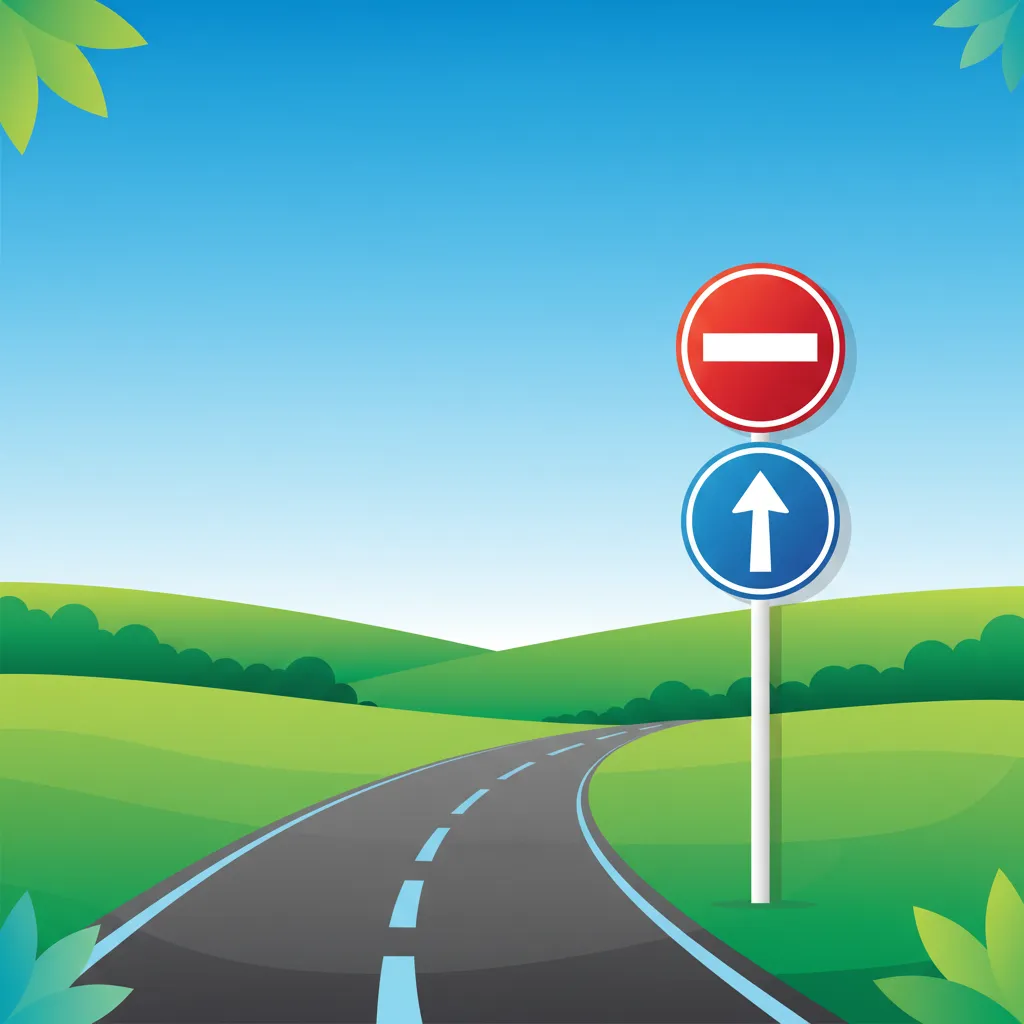
This lesson covers the most critical category of traffic signs: regulatory signs, which impose a legal obligation or prohibition. You will learn the precise meaning and required action for essential signs such as the B6 Stop sign, which mandates a full stop, and the C2 No Entry sign, which forbids access. Understanding the shapes, colors, and symbols of these signs is fundamental to safe driving and a major focus of the official CBR theory test.

Dutch Driving Theory AMTraffic Signs & Signals
View lesson
Signal Lights, Horns, and Reflectors lesson image

Signal Lights, Horns, and Reflectors

Effective communication with other road users is vital for safety. This lesson details the legal requirements and proper use of your vehicle's signaling equipment, including headlights, brake lights, and turn signals (indicators). It also explains the specific situations in which using the horn is permitted to avert danger. Finally, it covers the mandatory placement and type of reflectors that ensure your vehicle remains visible to others, especially in low-light conditions.
Dutch Driving Theory AMTraffic Signs & Signals
View lesson
Regulatory Signs and Motorcycle Restrictions lesson image

Regulatory Signs and Motorcycle Restrictions

This lesson focuses on Dutch regulatory signs that enforce mandatory rules and restrictions, particularly those impacting A2 motorcyclists. You will learn to recognize and obey prohibition signs, such as those indicating a motorcycle ban (BORD 40), speed limits, and overtaking restrictions (BORD 21). The content explains the legal consequences of non-compliance and how to apply these rules in practical riding scenarios to ensure full adherence to Dutch traffic law.
Dutch Motorcycle Theory (A2)Road Signs and Motorcycle-Specific Indicators
View lesson
Registration, Plates, and Insurance lesson image

Registration, Plates, and Insurance

Explore the essential administrative requirements for any Category AM vehicle owner. This lesson covers the mandatory vehicle registration process, the distinction between yellow plates for bromfietsen and blue plates for snorfietsen, and the legal obligation for third-party liability insurance (WA-verzekering). You will learn what documentation is required, the consequences of non-compliance, and how these elements are verified during traffic enforcement, ensuring your vehicle is always road-legal.

Dutch Driving Theory AMLegal Foundations & Vehicle Types
View lesson

Frequently asked questions about Cycle Paths, Bromfietspad, and Carriageways

Find clear answers to common questions learners have about Cycle Paths, Bromfietspad, and Carriageways. Learn how the lesson is structured, which driving theory objectives it supports, and how it fits into the overall learning path of units and curriculum progression in the Netherlands. These explanations help you understand key concepts, lesson flow, and exam focused study goals.

What is the difference between a fietspad and a bromfietspad?

A fietspad is exclusively for cyclists. A bromfietspad is a path designated for both cyclists and mopeds (bromfietsen). Specific signage will indicate which type of path it is. Always check the signs carefully.

When must my bromfiets use the main carriageway instead of a cycle path?

You must use the main carriageway if there is no fietspad or bromfietspad available, or if a sign explicitly requires it. Also, if you are riding a speed pedelec (which has different rules), you generally must use the carriageway unless a specific sign permits otherwise.

Are there different rules for snorfietsen and bromfietsen regarding path usage?

Yes, snorfietsen (blue license plate) are generally treated more like bicycles and are often allowed on fietspaden where bromfietsen (yellow license plate) are not. Bromfietsen specifically need a bromfietspad or the main carriageway. Speed pedelecs have their own set of rules, often requiring carriageway use.

What does a shark's teeth marking mean in relation to cycle paths?

Shark's teeth markings (Driehoekige onderbroken strepen) primarily indicate a yield (give way) situation at an intersection or junction. While they can be present near cycle paths, their main function is to signal priority rules, not to dictate path usage itself. You must yield to traffic that has priority.

Can I ride on pavements (sidewalks) with my Category AM vehicle?

No, riding on pavements is strictly forbidden for all Category AM vehicles (bromfiets, snorfiets, speed pedelec). Pavements are reserved for pedestrians only. Always use the designated cycle paths, bromfietspaden, or the main carriageway as permitted by signs and traffic rules.

Continue your Dutch driving theory learning journey

Dutch road signsDutch article topicsSearch Dutch road signsDutch driving theory homeDutch road sign categoriesSearch Dutch theory articlesDutch driving theory coursesDutch Driving Theory B courseDutch driving theory articlesDutch driving theory practiceDutch practice set categoriesDutch Driving Theory AM courseDutch Motorcycle Theory A courseDutch A1 Motorcycle Theory courseDutch Motorcycle Theory (A2) courseSearch Dutch driving theory practiceTowing, Trailers, and Loads unit in Dutch Driving Theory BRoadway Access & Navigation unit in Dutch Driving Theory AMVehicle Positioning and Lane Use unit in Dutch Driving Theory BHuman Factors & Risk Management unit in Dutch Driving Theory AMInfrastructure and Special Roads unit in Dutch Driving Theory BLegal Foundations & Vehicle Types unit in Dutch Driving Theory AMSpeed Limits per Vehicle Category lesson in Roadway Access & NavigationLegal Responsibilities & Incident Procedures unit in Dutch Driving Theory AMUse of Road Markings and Lane Discipline lesson in Roadway Access & NavigationTunnels, Level Crossings, and Road Works lesson in Roadway Access & NavigationInteraction with Public Transport (Trams) lesson in Roadway Access & NavigationHighway (Autosnelweg) Rules for Motorcycles unit in Dutch Motorcycle Theory (A2)Cycle Paths, Bromfietspad, and Carriageways lesson in Roadway Access & NavigationAdvanced Riding Techniques and High-Speed Control unit in Dutch Motorcycle Theory AAccident Management, Legal Responsibilities & Substance Use unit in Dutch A1 Motorcycle Theory