
This lesson focuses on the essential signaling and visibility equipment for your AM-category vehicle. You'll learn the correct usage of lights, horns, and reflectors as mandated by Dutch law and crucial for passing your theory exam. Understanding these components is vital for communicating your intentions to other road users and ensuring you are seen, especially in challenging conditions.
Effective communication with other road users is paramount for safety, especially when operating a moped or scooter within the Netherlands. This comprehensive lesson, part of your Dutch Driving License Theory Course for Category AM (Moped & Scooter), delves into the legal requirements and proper use of your vehicle's signaling equipment. Understanding and correctly using headlights, brake lights, turn signals, the horn, and reflectors ensures you can clearly convey your intentions and maintain visibility under all conditions, preventing misunderstandings and collisions.
Road safety in the Netherlands heavily relies on the predictable interactions between all traffic participants. As a moped or scooter rider, you are often a more vulnerable road user, making your ability to be seen and to signal your intentions crucial. Proper signalling minimizes surprises for others, allowing them to anticipate your actions and react safely. Conversely, incorrect or absent signalling is a significant factor in many traffic incidents.
Beyond merely fulfilling legal obligations, mastering your vehicle's communication tools contributes directly to hazard prevention. This lesson builds upon your existing knowledge of basic traffic rules and road signs, integrating dynamic vehicle signals as a vital component of safe road navigation.
All vehicle signals—visual (lights, reflectors) and acoustic (horn)—are designed around fundamental principles to ensure clarity and safety. These principles guide both their design and their legal application:
The ability of a vehicle to be seen by other road users at appropriate distances, significantly reducing collision risk, especially in low-light or adverse weather.
Visibility: Your moped or scooter must be easily seen by others. This is achieved through active lighting systems like headlights and brake lights, and passive devices such as reflectors. Adequate visibility is crucial for all road users to assess your presence and distance, especially in varying light and weather conditions.
Conveying a rider’s intended manoeuvre (e.g., turning, stopping, changing lanes) through standardized signals, enabling others to anticipate actions and prevent surprise.
Intent Communication: Signaling your intentions clearly and early allows other drivers, cyclists, and pedestrians to react appropriately. Turn signals indicate a directional change, while brake lights warn of deceleration. This foresight is critical for maintaining a smooth and safe traffic flow.
The use of the horn to emit a sound signal only when required to avert immediate danger, providing a rapid alert when visual signals might be insufficient or delayed.
Acoustic Warning: The horn serves as an urgent alert system. Its use is strictly regulated to situations where immediate danger needs to be averted, distinguishing it from casual communication or expressions of annoyance. Misuse can lead to confusion and is illegal.
Adherence to the Reglement Verkeersregels en Verkeerstekens (RVV 1990) and other relevant traffic laws for signalling equipment.
Regulatory Compliance: The Dutch traffic laws, particularly the RVV 1990, stipulate precise requirements for all signalling equipment, including their type, color, intensity, and usage. Adhering to these regulations ensures uniformity and legal enforceability, protecting all road users.
The mandatory condition that all signalling devices must be fully functional, correctly mounted, and regularly maintained to guarantee their reliability.
Equipment Integrity: All lights, the horn, and reflectors must be in perfect working order. Regular checks are not only a legal obligation but a crucial safety measure. A faulty brake light, for instance, can render your most critical warning system ineffective.
Your moped or scooter is equipped with various lights, each serving a distinct purpose to ensure you can see and be seen. Understanding the function and correct application of each is fundamental for safe riding in the Netherlands.
Headlights are at the front of your vehicle, primarily to illuminate the road ahead and make you visible to oncoming traffic.
Low-beam headlights are your standard driving lights for normal night conditions. They project light downwards and slightly to the side to illuminate the road surface without dazzling oncoming drivers or those ahead of you.
In the Netherlands, low-beam headlights are mandatory from sunset to sunrise and during any period of reduced visibility, such as tunnels, heavy rain, or fog (RVV 1990 art. 6.2).
Using low-beam lights correctly is crucial to your safety and the safety of others. Failing to switch them on when required not only makes you less visible but is also a traffic violation.
High-beam headlights offer a longer, more intense light beam, designed for illuminating unlit roads when traveling at higher speeds. Their purpose is to provide maximum visibility over a greater distance.
High-beam lights must only be used when there is no oncoming traffic or vehicles ahead of you within 150 metres (RVV 1990 art. 6.4). Using them inappropriately can temporarily blind other road users, leading to dangerous situations.
Always be prepared to dim your high-beams to low-beams promptly when you encounter other traffic to avoid dazzling them. This demonstrates responsible and courteous road behaviour.
Daytime Running Lights (DRL) are low-intensity front lights that automatically switch on when your vehicle is operating during daylight hours. Their primary purpose is to increase your moped or scooter's conspicuity to others, making you more visible even in bright conditions.
DRL are mandatory for mopeds and scooters with an engine displacement of 50 cc or more in the Netherlands (RVV 1990 art. 14.1). They should always be on when you are riding during the day.
It is a common misunderstanding to believe that DRL replace low-beam headlights at night or in conditions of reduced visibility. DRL are not powerful enough to illuminate the road effectively and do not substitute for mandatory low-beam usage during darkness or adverse weather.
Fog lights are positioned lower on the vehicle than standard headlights and emit a wide, flat beam designed to cut through fog, heavy rain, or snow without reflecting glare back to the driver.
Front fog lights are permitted only when visibility is less than 50 metres due to fog, heavy rainfall, or snowfall (RVV 1990 art. 6.5). Using them in clear weather can confuse or dazzle other drivers and is illegal.
Rear fog lights, which are much brighter than standard rear lights, are primarily found on cars and are rarely equipped on mopeds or scooters. If your scooter does have one, it also should only be used when visibility drops below 50 metres, and should be switched off as soon as visibility improves.
Brake lights are crucial red lights located at the rear of your moped or scooter. Their function is to warn following traffic that you are decelerating or stopping. They activate instantly when you apply either the front or rear brake lever/pedal.
Brake lights must be red and clearly visible from a distance of at least 150 metres behind your vehicle (RVV 1990 art. 7.2). They must activate instantly and remain on consistently while braking.
It is vital to regularly check that your brake light is functioning correctly and is not dim. A non-functional or weak brake light can significantly increase the risk of a rear-end collision, as following traffic will not receive timely warning of your deceleration. Some scooters may integrate the brake light with the rear position light, but the brake function must still be distinctly brighter when activated.
Turn signals, often called indicators, are flashing amber lights located at both the front and rear of your vehicle. They are your primary means of visually communicating an intended change in direction.
Turn signals must be activated at least 3 seconds before you initiate any manoeuvre that involves changing direction, such as turning left or right, changing lanes, overtaking, or entering/exiting a roundabout (RVV 1990 art. 10.1-10.2).
The 3-second rule provides other road users with sufficient time to perceive your signal, process it, and react safely. It's not just about showing an indicator; it's about signaling your intent early enough to allow for anticipation. Always remember to cancel your indicator after completing the manoeuvre to avoid confusing other traffic. Using indicators for gestures like "thank you" is inappropriate and can lead to misunderstandings.
While rare on traditional mopeds and scooters, some models, particularly electric scooters or those with specific mobility features, may be equipped with a reverse gear or function. In such cases, a white reversing light at the rear of the vehicle is mandatory.
The reversing light illuminates automatically when reverse gear is engaged, signaling to others that your vehicle is moving backward. This warns pedestrians or other vehicles behind you of your rearward movement. If your scooter has this feature, ensure it is always functional.
The horn on your moped or scooter is an acoustic signal designed for one specific, critical purpose: to avert danger. It is not a tool for expressing frustration, greeting friends, or hurrying other traffic.
The use of the horn in the Netherlands is strictly regulated:
Your horn may only be used to avert immediate danger (RVV 1990 art. 12.1). This means using it only when there is a risk of an accident and a visual signal would be insufficient or too late.
Examples of appropriate horn use include:
The horn should be sounded briefly and sharply. Prolonged or repeated honking is considered abuse, can cause unnecessary noise pollution, and may lead to fines. It is essential to distinguish between a situation of danger and mere annoyance or impatience. Always prioritize visual signals (like indicators or headlights) for communication when danger is not imminent.
Reflectors are passive safety devices that do not emit their own light but return light from an external source (like another vehicle's headlights) back towards that source. They are critical for ensuring your moped or scooter remains visible, especially in low-light conditions or when your active lights are off.
All mopeds and scooters in the Netherlands are legally required to have specific reflectors:
Reflectors must be clean, unobstructed, and correctly oriented to function effectively. A dirty or covered reflector is a significant safety hazard as it reduces your passive visibility. They are mandatory regardless of the time of day or whether your DRL or headlights are on.
The Reglement Verkeersregels en Verkeerstekens 1990 (RVV 1990) forms the backbone of Dutch traffic law regarding vehicle equipment and usage. As a rider in the Dutch Driving License Theory Course for Category AM (Moped & Scooter), understanding these regulations is crucial.
Even experienced riders can sometimes make mistakes with signalling. Being aware of common pitfalls can significantly enhance your safety on Dutch roads:
The effective use of your moped or scooter's signals is not static; it must adapt to the prevailing conditions.
The consistent and correct use of your moped or scooter's signal lights, horn, and reflectors is directly proportional to your safety and the safety of others.
This lesson on signal lights, horns, and reflectors is not just about memorizing rules; it's about internalizing the critical role these tools play in safe and responsible riding. They are your voice on the road, speaking clearly and effectively to everyone around you.
Lesson content overview
Explore all units and lessons included in this driving theory course.
Explore search topics learners often look for when studying Signal Lights, Horns, and Reflectors. These topics reflect common questions about road rules, driving situations, safety guidance, and lesson level theory preparation for learners in the Netherlands.
Browse additional driving theory lessons that cover connected traffic rules, road signs, and common driving situations related to this topic. Improve your understanding of how different rules interact across everyday traffic scenarios.
Understand the precise legal requirements in the Netherlands for your moped or scooter's headlights, brake lights, indicators, horn, and reflectors as dictated by RVV 1990. Ensure full compliance with Dutch driving theory standards for safe visibility and communication.
This lesson covers the full range of lights and signals required on a vehicle for visibility and communication. You will learn about the mandatory requirements for headlights, taillights, brake lights, indicators, and reflectors. The curriculum emphasizes the driver's legal responsibility to ensure all lights are clean and functional before every journey. The correct use and function of the horn as an audible warning device in case of imminent danger are also explained.

Your vehicle's lights and horn are your primary tools for seeing, being seen, and communicating warnings. This lesson guides you through a simple but vital check of all electrical components before you ride. You will learn how to verify the function of your headlight (high and low beam), taillight, brake light (using both front and rear brake levers), and turn signals. It also covers checking the horn's operation and ensuring all mandatory reflectors are clean and intact.
This lesson provides a comprehensive overview of all light and audible signals mandated by Dutch traffic law, detailing when and how each must be used for optimal visibility and communication. It covers the correct use of headlights, turn signals, and hazard lights, as well as the legally appropriate situations for using the horn to alert other road users. The curriculum clarifies legal requirements for lighting equipment and the potential penalties for misuse, ensuring riders can signal their intentions clearly and legally.
This lesson details the functions of the various lights on a car and the legal requirements for their use. You will learn the difference between dipped beams (dimlicht), which are the standard headlights for night driving and poor visibility, and main beams (grootlicht), which can only be used when they won't dazzle other road users. The content also covers the use of sidelights (stadslicht) for parking and the automatic function of Daytime Running Lights (DRLs). Correct usage is vital for visibility and avoiding blinding other drivers.
This lesson focuses on the use of specialized lights for specific situations. You will learn the strict conditions under which fog lights may be used: the rear fog light is only permitted when visibility from fog or snow is less than 50 meters, and not in rain. The lesson also explains the correct use of hazard warning lights, which are intended to warn other drivers of a stationary obstruction (like a breakdown or the tail end of a sudden traffic jam) or while being towed.
This lesson covers the mandatory lighting and signaling equipment for A2 motorcycles under Dutch law, ensuring you remain visible and communicate your intentions correctly. You will learn the rules for using headlights, taillights, turn signals, and brake lights in various conditions, including daytime and adverse weather. The content also addresses the importance of maintaining this equipment and using hand signals as a valid secondary method of communication in traffic.

Riding at night presents two main challenges: seeing the road and being seen by others. This lesson covers the legal requirements for your vehicle's lighting system and how to use it effectively, including when to use high beams. It also emphasizes strategies to increase your own conspicuity, such as wearing bright or reflective clothing. You will learn how darkness affects your perception of speed and distance and how to adapt your riding to compensate for these limitations.

This lesson provides a detailed breakdown of the official classifications for Category AM vehicles under Dutch law. You will learn to distinguish between a bromfiets, snorfiets, speed pedelec, and brommobiel based on technical criteria like maximum speed and engine power. Understanding these definitions is fundamental, as they determine which traffic rules, licensing requirements, and road access permissions apply to each vehicle type, forming the basis for the entire CBR theory exam.
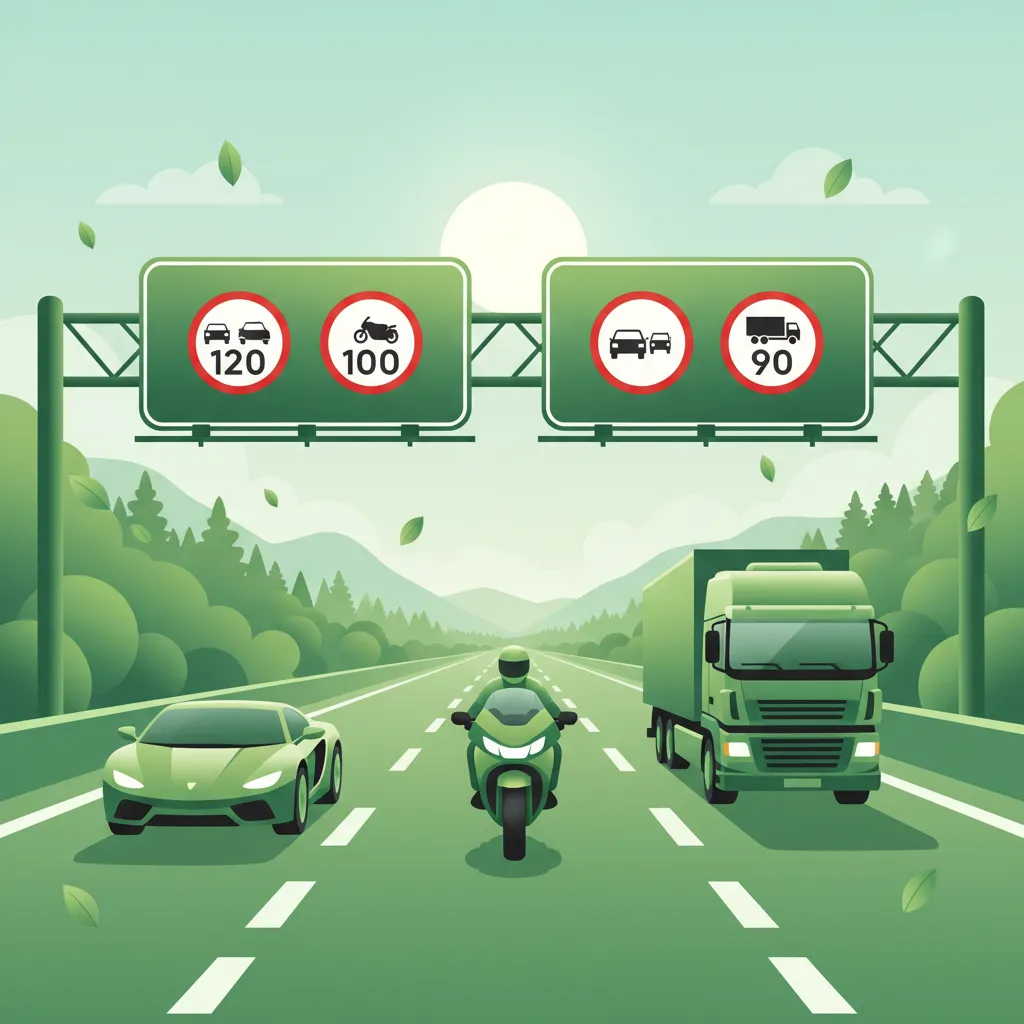
This lesson details the statutory maximum speeds for each Category AM vehicle: 25 km/h for snorfietsen, and 45 km/h for both bromfietsen and speed pedelecs on the carriageway. It explains how these limits apply within built-up areas, outside built-up areas, and on specific road types like residential zones ('woonerf'). The content covers how to interpret speed limit signs and the legal consequences of exceeding these strict limits, which is a key component of the CBR theory exam.
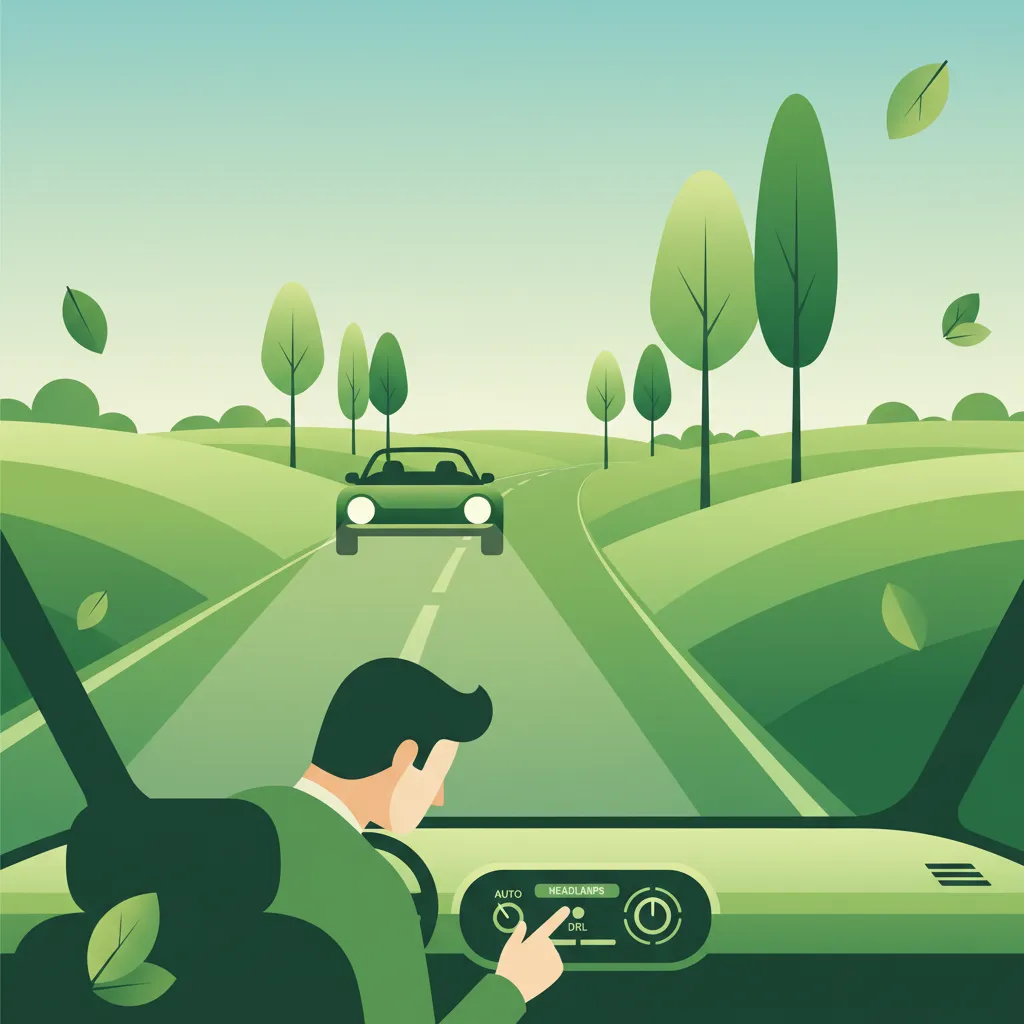
This lesson focuses on the dual challenge of visibility: seeing the road ahead and ensuring other drivers see you. It covers the legal requirements and tactical use of headlights ('koplampen'), including when to use high and low beams, and the importance of daytime running lights. Additionally, it explores strategies for enhancing personal conspicuity through high-visibility and reflective clothing, and using lane positioning to stand out in traffic and avoid blind spots.
Learn how to effectively use your moped or scooter's lights, horn, and reflectors to communicate with other road users and enhance your visibility in various Dutch traffic situations, focusing on safety and accident prevention.
Your vehicle's lights and horn are your primary tools for seeing, being seen, and communicating warnings. This lesson guides you through a simple but vital check of all electrical components before you ride. You will learn how to verify the function of your headlight (high and low beam), taillight, brake light (using both front and rear brake levers), and turn signals. It also covers checking the horn's operation and ensuring all mandatory reflectors are clean and intact.
This lesson covers the full range of lights and signals required on a vehicle for visibility and communication. You will learn about the mandatory requirements for headlights, taillights, brake lights, indicators, and reflectors. The curriculum emphasizes the driver's legal responsibility to ensure all lights are clean and functional before every journey. The correct use and function of the horn as an audible warning device in case of imminent danger are also explained.
This lesson covers the mandatory lighting and signaling equipment for A2 motorcycles under Dutch law, ensuring you remain visible and communicate your intentions correctly. You will learn the rules for using headlights, taillights, turn signals, and brake lights in various conditions, including daytime and adverse weather. The content also addresses the importance of maintaining this equipment and using hand signals as a valid secondary method of communication in traffic.
Riding at night presents two main challenges: seeing the road and being seen by others. This lesson covers the legal requirements for your vehicle's lighting system and how to use it effectively, including when to use high beams. It also emphasizes strategies to increase your own conspicuity, such as wearing bright or reflective clothing. You will learn how darkness affects your perception of speed and distance and how to adapt your riding to compensate for these limitations.
This lesson provides a comprehensive overview of all light and audible signals mandated by Dutch traffic law, detailing when and how each must be used for optimal visibility and communication. It covers the correct use of headlights, turn signals, and hazard lights, as well as the legally appropriate situations for using the horn to alert other road users. The curriculum clarifies legal requirements for lighting equipment and the potential penalties for misuse, ensuring riders can signal their intentions clearly and legally.
This lesson details the functions of the various lights on a car and the legal requirements for their use. You will learn the difference between dipped beams (dimlicht), which are the standard headlights for night driving and poor visibility, and main beams (grootlicht), which can only be used when they won't dazzle other road users. The content also covers the use of sidelights (stadslicht) for parking and the automatic function of Daytime Running Lights (DRLs). Correct usage is vital for visibility and avoiding blinding other drivers.
This lesson focuses on the dual challenge of visibility: seeing the road ahead and ensuring other drivers see you. It covers the legal requirements and tactical use of headlights ('koplampen'), including when to use high and low beams, and the importance of daytime running lights. Additionally, it explores strategies for enhancing personal conspicuity through high-visibility and reflective clothing, and using lane positioning to stand out in traffic and avoid blind spots.
This lesson focuses on the use of specialized lights for specific situations. You will learn the strict conditions under which fog lights may be used: the rear fog light is only permitted when visibility from fog or snow is less than 50 meters, and not in rain. The lesson also explains the correct use of hazard warning lights, which are intended to warn other drivers of a stationary obstruction (like a breakdown or the tail end of a sudden traffic jam) or while being towed.
This lesson details the systematic procedure for checking the functionality of all lights and indicators before a ride. This simple but critical safety check includes verifying the operation of the high and low beam headlight, the taillight, the brake light (using both front and rear brake activators), and all four turn signals. Ensuring all lights are working is a legal requirement and fundamental for visibility and communicating intentions to other road users.
Find clear answers to common questions learners have about Signal Lights, Horns, and Reflectors. Learn how the lesson is structured, which driving theory objectives it supports, and how it fits into the overall learning path of units and curriculum progression in the Netherlands. These explanations help you understand key concepts, lesson flow, and exam focused study goals.
In the Netherlands, the horn on your AM-category vehicle (bromfiets, snorfiets, speed pedelec) is intended for use only in situations where it is necessary to warn other road users of immediate danger. It is not for greeting, expressing impatience, or other non-emergency situations. Misusing the horn can lead to fines.
Dutch law requires AM vehicles to have specific reflectors. Typically, this includes at least one red reflector at the rear. Some vehicles may also require additional reflectors, depending on their classification and original equipment. Always ensure your reflectors are clean and securely attached, as they are crucial for visibility to other road users, especially at night or in poor weather.
Yes, speed pedelecs often have slightly different or additional requirements due to their higher speed capabilities. While they must have functioning headlights, brake lights, and indicators like other mopeds, ensure you are aware of any specific lighting or reflector mandates for speed pedelecs as defined by Dutch legislation, which are covered in this lesson.
If your brake light or indicator is not functioning, your vehicle is not roadworthy. You should not ride it until the issue is repaired. In the context of the theory exam, you will be expected to know that all lights must be in working order. Ensure you perform regular checks as described in Unit 8.
The CBR theory exam for Category AM frequently includes questions about the correct function and usage of vehicle lights, horns, and reflectors. You might be asked to identify correct signaling actions in traffic scenarios or recognize faulty equipment. Mastering this lesson ensures you can answer these practical questions accurately.