
Welcome to the Vehicle Control & Maneuvers unit for your Dutch AM (Moped & Scooter) theory course. This section focuses on the practical skills essential for confident and safe riding on Dutch roads. You'll learn how to expertly handle your vehicle through various maneuvers, critical for both passing your CBR practical exam and navigating everyday traffic situations.
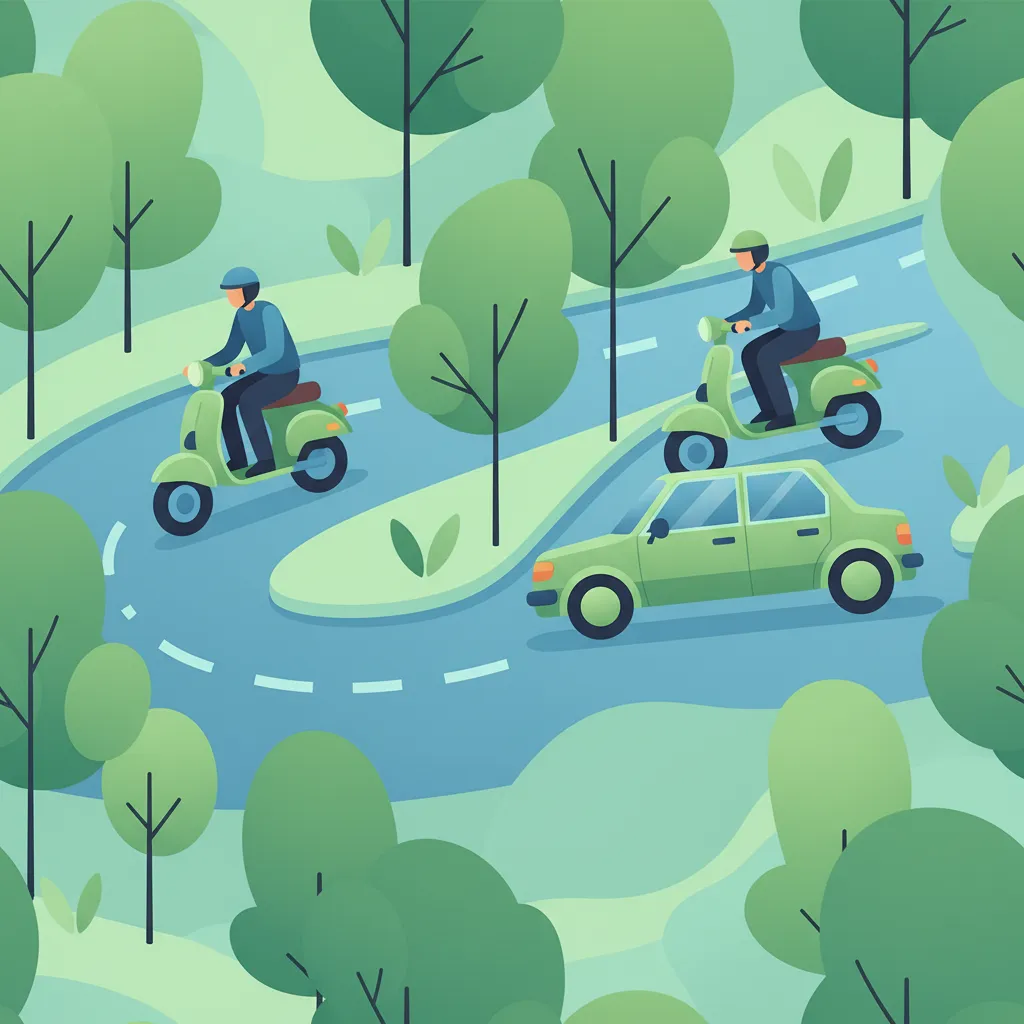
Browse all lessons that make up Vehicle Control & Maneuvers. Each lesson focuses on specific topics, learning objectives, and core concepts, helping you build essential knowledge and follow a clear, structured progression toward your study goals in the Netherlands.
Controlling a two-wheeled vehicle at very low speeds is a challenging but essential skill. This lesson focuses on the delicate interplay between the clutch, throttle, and rear brake to maintain balance and control without putting your feet down. You will learn the techniques for a smooth take-off from a standstill and how to come to a gentle, controlled stop, which are fundamental skills for navigating city traffic and junctions safely.
Proper cornering technique is vital for safety and stability on a two-wheeler. This lesson explains the physics of turning, including the concepts of lean angle and counter-steering. You will learn the importance of adjusting your speed before the turn, looking where you want to go, and maintaining a smooth throttle through the corner. These techniques help you maximize grip and maintain control, ensuring you can navigate bends safely.
This lesson focuses on advanced low-speed control required for maneuvers like making a U-turn on a narrow road. It covers the correct procedure, which involves comprehensive observation (checking all around for traffic), signaling, and using a combination of steering input and controlled power to execute the turn smoothly. Mastering these skills is a requirement for the practical test and is useful in many real-world riding situations.
Overtaking is a high-risk maneuver that must be executed correctly. This lesson provides a step-by-step guide: assess if it is safe and legal, check mirrors and blind spots, signal your intention, accelerate smoothly past the other vehicle, and return to your lane leaving adequate space. You will also learn to identify situations where overtaking is prohibited, such as before a pedestrian crossing or when approaching a blind corner.
Properly parking and securing your vehicle is the final step of any journey. This lesson covers how to park legally, choosing a location that does not obstruct pedestrians or other traffic. It explains the use of both side stands and center stands, emphasizing the importance of parking on firm, level ground. Finally, it provides essential advice on vehicle security, including using the built-in steering lock and an additional high-quality chain or disc lock to deter theft.
Explore high-intent keywords and long-tail search topics learners use when researching Vehicle Control & Maneuvers. These terms reflect how people search for reliable study materials, structured explanations, and unit-level theory preparation support in the Netherlands.
Find clear answers to the most common questions learners ask about Vehicle Control & Maneuvers. Understand how the unit is organized, what learning goals it supports, and how it contributes to your study progression with structured explanations and practical guidance tailored for learners in the Netherlands.
Balancing at low speeds is fundamental for overall vehicle control and safety. It's a key skill assessed in the practical exam to ensure you can maneuver your moped or scooter predictably and safely in situations like traffic lights, intersections, or slow-moving traffic. Mastering this reduces the risk of falls and demonstrates your command of the vehicle.
Executing a U-turn requires careful assessment of traffic, space, and visibility. You must ensure you can complete the maneuver safely without obstructing traffic or endangering yourself or others. Always check for oncoming traffic, turning vehicles, and pedestrians. Understand specific road marking and signage that might restrict U-turns, as these are often tested.
When cornering, a scooter or moped requires leaning into the turn to counteract centrifugal force and maintain balance. The lean angle depends on speed and turning radius. Understanding this helps you control your speed before the corner, lean appropriately, and maintain stability throughout the turn, crucial for safe riding on varying road surfaces and curves.
Overtaking must only be done when safe and permitted. Check your mirrors, signal your intention, and ensure there is sufficient space on the right side of the road or in the adjacent lane to pass without conflict. Be aware of speed limits and road conditions. Avoid overtaking at intersections, blind corners, or when visibility is poor.
Yes, parking rules vary. Generally, you should park your vehicle in designated parking areas for mopeds or scooters, or in a way that does not obstruct pedestrians, cyclists, or other traffic. Always ensure the vehicle is stable, often using a center stand if available, and secure it properly to prevent theft. Some areas may have time limits or require payment.
This unit directly prepares you for the practical exam by covering the core maneuvers that examiners will assess. It builds your understanding of the techniques and safety considerations needed to demonstrate confident vehicle control, including low-speed handling, cornering, and executing specific maneuvers safely and efficiently according to CBR standards.
All included lessons
Lessons in Vehicle Control & Maneuvers
See who benefits most from studying Vehicle Control & Maneuvers. This overview explains how the unit supports different learning needs, what level of knowledge is helpful before starting, and how it fits into the overall study path in the Netherlands.
This unit is designed for all learners preparing for the Dutch Category AM theory and practical driving exams. Whether you're new to mopeds and scooters or need a refresher on essential vehicle handling skills, this unit provides the foundational knowledge and specific techniques required for safe operation and exam success in the Netherlands.

See how Dutch Driving Theory AM is structured, with key topics, learning objectives, and a step-by-step path for theory preparation in the Netherlands.
Explore all units and lessons included in this driving theory course.