
Welcome to the 'Vehicle Control & Maneuvers' unit! This lesson, 'Starting, Stopping, and Balancing at Low Speeds,' is crucial for mastering your AM category vehicle. We'll focus on the delicate control needed for smooth take-offs and gentle stops, skills vital for city traffic and passing your CBR theory exam.
Controlling a two-wheeled vehicle, such as a moped or scooter (Category AM vehicle), at very low speeds is a fundamental skill for safe and confident riding on Dutch roads. This ability is crucial for navigating urban environments, safely traversing junctions, and maneuvering in congested areas. Without proper low-speed control, riders risk losing balance, stalling the engine, or executing unsafe stops that can endanger themselves and others.
This lesson delves into the delicate interplay between the clutch, throttle, and rear brake, which are essential for maintaining balance and precise control without having to put your feet down. You will learn the correct techniques for a smooth take-off from a standstill, how to execute a gentle and controlled stop, and the art of maintaining stability at crawling speeds. These skills are not only vital for everyday riding but also for complying with specific Dutch traffic regulations.
Mastery of low-speed control is the bedrock of safe and efficient riding for moped and scooter operators. In the Netherlands, where cities are often densely populated and traffic can be slow-moving, the ability to control your vehicle at speeds typically below 10 km/h is indispensable. This skill enables you to navigate pedestrian zones, adjust to slow-moving traffic, or wait at traffic lights and crossings without losing balance or putting a foot down unnecessarily.
Poor low-speed technique often leads to a loss of balance, which can result in unexpected falls or collisions. It can also cause the engine to stall at critical moments, such as when starting on an incline, creating a hazardous situation for both the rider and surrounding traffic. Furthermore, controlled stopping is vital to avoid rear-ending vehicles or overshooting stop lines, ensuring the safety of all road users and pedestrians.
Before delving into the specifics of low-speed control, it is helpful to have a basic understanding of your vehicle's anatomy. This includes knowing the location and function of the clutch lever, throttle grip, rear brake pedal, and footrests. Familiarity with the Dutch traffic law principle, specifically the "foot-rest discipline" (RVV 1990, article 23), which prohibits placing a foot on the ground while the vehicle is in motion, is also assumed. Finally, understanding the concept of the balance point – the minimal speed at which the vehicle can be held steady without rolling forward or backward – will greatly aid your learning.
Achieving smooth, controlled starts, precise crawling, and gentle stops hinges on the coordinated use of three primary controls: the clutch, throttle, and rear brake. Each plays a distinct role, but their effective operation relies on their delicate interplay.
The clutch bite point is a critical sensation for any rider. It's the moment you feel the engine's power beginning to connect with the rear wheel, resulting in a slight forward pull or a subtle change in engine vibration. This point must be identified and utilized with precision to avoid either stalling the engine (if released too quickly without enough throttle) or causing jerky, uncontrolled starts (if released too abruptly).
There's a subtle difference between the static bite point, felt when the vehicle is stationary, and the dynamic bite point, which applies when the vehicle is already moving slowly. Mastering the gradual engagement and disengagement of the clutch lever allows for smooth power delivery, preventing stalls and regulating forward thrust at low speeds. Holding the clutch partially engaged for too long, however, can lead to unnecessary clutch wear over time.
Throttle feathering is the art of applying just the right amount of engine power to maintain momentum without accelerating too quickly. This skill is continuously employed during low-speed crawling and while holding the balance point. It involves subtle twists of the wrist: positive feathering means slightly increasing throttle to maintain speed or overcome resistance, while negative feathering means slightly reducing throttle to avoid unwanted forward creep.
Ignoring the need to adjust throttle, particularly when combined with brake application, can lead to instability. For example, if you apply the rear brake on a downhill without reducing throttle, the engine might fight the brake, leading to an unpredictable response or increased brake wear. The key is smooth, anticipatory throttle adjustments, always coordinated with your clutch and brake inputs.
While the front brake provides significant stopping power, the rear brake is the primary tool for fine-tuning speed and maintaining stability at low speeds, particularly on mopeds and scooters. Rear brake modulation allows you to "hold" the vehicle stationary on an incline without putting a foot down, or to prevent forward creep during a slow crawl. It offers a static friction source that can be delicately balanced against engine torque.
Applying the rear brake too suddenly or with excessive force can cause the wheel to lock, leading to a loss of traction and potential instability. Conversely, insufficient rear brake on an incline can cause the vehicle to roll backward or forward unintentionally. Practice gentle, progressive pressure to ensure smooth deceleration and controlled stops.
The balance point is the ultimate goal of low-speed control. It's the magical moment when your moped or scooter can move at a barely perceptible crawl, or even remain stationary, while you keep both feet firmly on the footrests. This equilibrium is achieved through the precise coordination of clutch, throttle, and rear brake.
Maintaining the balance point is essential for complying with Dutch traffic laws, which mandate that riders keep their feet on the footrests while the vehicle is in motion. It's a continuous act of adjustment, where you are constantly balancing engine power against frictional resistance. This skill is critical for navigating crowded city streets, waiting in slow queues, or making tight turns.
Dutch traffic regulations are designed to ensure safety and prevent obstructions on the road. Several articles of the Reglement Verkeersregels en Verkeerstekens (RVV 1990) directly impact how Category AM vehicle operators must perform low-speed maneuvers.
The most pertinent rule for low-speed control is often referred to as "foot-rest discipline."
RVV 1990 Article 23: This regulation states that riders of two-wheeled vehicles must keep both feet on the designated footrests while the vehicle is in motion.
This rule is mandatory for all AM-category vehicles, including mopeds (bromfietsen) and scooters (snorfietsen). Its rationale is straightforward: keeping both feet on the footrests maximizes rider stability and prevents accidental contact or obstruction of other road users or pedestrians. Placing a foot on the ground while still moving, even at crawling speeds, is a violation and significantly increases the risk of losing control, especially on slippery surfaces.
Correct Application Example: A rider is slowly approaching a pedestrian crossing at 3 km/h. They maintain the balance point, keeping both feet on the footrests, ready to stop smoothly if a pedestrian steps onto the crossing. Incorrect Application Example: A rider, feeling unsteady during a slow crawl in traffic, places their left foot on the ground to "stabilize" the scooter, even though the vehicle is still moving forward.
Stopping on an incline requires specific attention to prevent unintended roll-back or forward creep.
RVV 1990 Article 29: This regulation generally mandates that vehicles must be brought to a controlled stop, especially on gradients, to prevent rolling back and endangering traffic behind.
When stopping on a gradient, particularly one greater than 2%, it is mandatory to prevent your vehicle from rolling backward (on an uphill) or forward (on a downhill) after coming to a stop. This rule is crucial for safety, as uncontrolled movement can lead to collisions with other vehicles or pedestrians. Proper use of the rear brake is paramount here to maintain your position once stopped.
RVV 1990 Article 8: This article generally outlines that all braking actions must be performed in a controlled and predictable manner to reduce speed or stop.
While less specific to low-speed balancing, this rule underscores the importance of smooth and predictable brake application in all situations. At low speeds, this translates to modulated use of the rear brake to avoid sudden stops that could lead to instability or wheel lock. It reinforces the idea that braking should be a controlled action, not an abrupt reaction.
Developing muscle memory for these techniques is essential. Practice in a safe, open area before applying them in real-world traffic.
A smooth start prevents jerking, reduces clutch wear, and maintains your balance.
Starting uphill requires careful coordination to prevent roll-back.
Stopping downhill can cause unwanted forward creep if not managed correctly.
Beyond basic starts and stops, the principles of clutch, throttle, and rear brake coordination are vital for more intricate low-speed situations.
Urban traffic often necessitates crawling at speeds just above a standstill. This is where mastering the balance point becomes critical. Riders must continuously adjust their clutch, throttle, and rear brake to maintain a steady, upright position without putting their feet down. This continuous adjustment prevents the vehicle from falling over and allows for immediate, smooth acceleration when traffic moves.
Navigating narrow alleys, parking lanes, or congested areas requires exceptional low-speed precision. Here, the rear brake modulation becomes a key player, often used in conjunction with a steady clutch bite point and minimal throttle feathering to "inch" the vehicle forward or hold it momentarily. This allows for precise positioning, preventing contact with obstacles or other vehicles.
The techniques discussed are foundational, but they must be adapted to varying conditions.
When operating at low speeds around pedestrians or cyclists, maintaining absolute control is paramount.
Even experienced riders can make errors, but awareness is the first step to prevention.
Understanding the underlying principles of low-speed control goes beyond simply knowing how to operate the levers and pedals.
Mastery of low-speed control is a cornerstone of safe and lawful moped and scooter riding in the Netherlands. It requires a nuanced understanding and coordinated application of your vehicle's primary controls:
Lesson content overview
Explore all units and lessons included in this driving theory course.
Explore search topics learners often look for when studying Starting, Stopping, and Balancing at Low Speeds. These topics reflect common questions about road rules, driving situations, safety guidance, and lesson level theory preparation for learners in the Netherlands.
Browse additional driving theory lessons that cover connected traffic rules, road signs, and common driving situations related to this topic. Improve your understanding of how different rules interact across everyday traffic scenarios.
Understand the crucial interplay of clutch, throttle, and brakes for smooth starts, controlled stops, and maintaining balance at low speeds, as required by Dutch traffic law. Essential for safe urban navigation.
This lesson focuses on the fine art of throttle control ('vermogenbeheer'), which is critical for managing the power of a Category A motorcycle and maintaining chassis stability. It explains how smooth, progressive throttle application stabilizes the suspension and maximizes rear-wheel traction, particularly when exiting a corner. The concept of 'maintenance throttle' through a turn and the use of engine braking for speed regulation are also covered in detail.

This lesson covers braking techniques beyond simply applying the brake levers. You will learn about the concept of engine braking (decelerating by releasing the throttle or downshifting) for controlled slowing. It also explains the function of an Anti-lock Braking System (ABS), a safety feature on some models that prevents wheels from locking during hard braking, allowing you to maintain steering control and reduce the chance of a skid.
Learn about essential Dutch traffic regulations such as foot-rest discipline (RVV 1990 Article 23) and rules for stopping on inclines. Ensure safe and legal operation of your moped or scooter at low speeds.
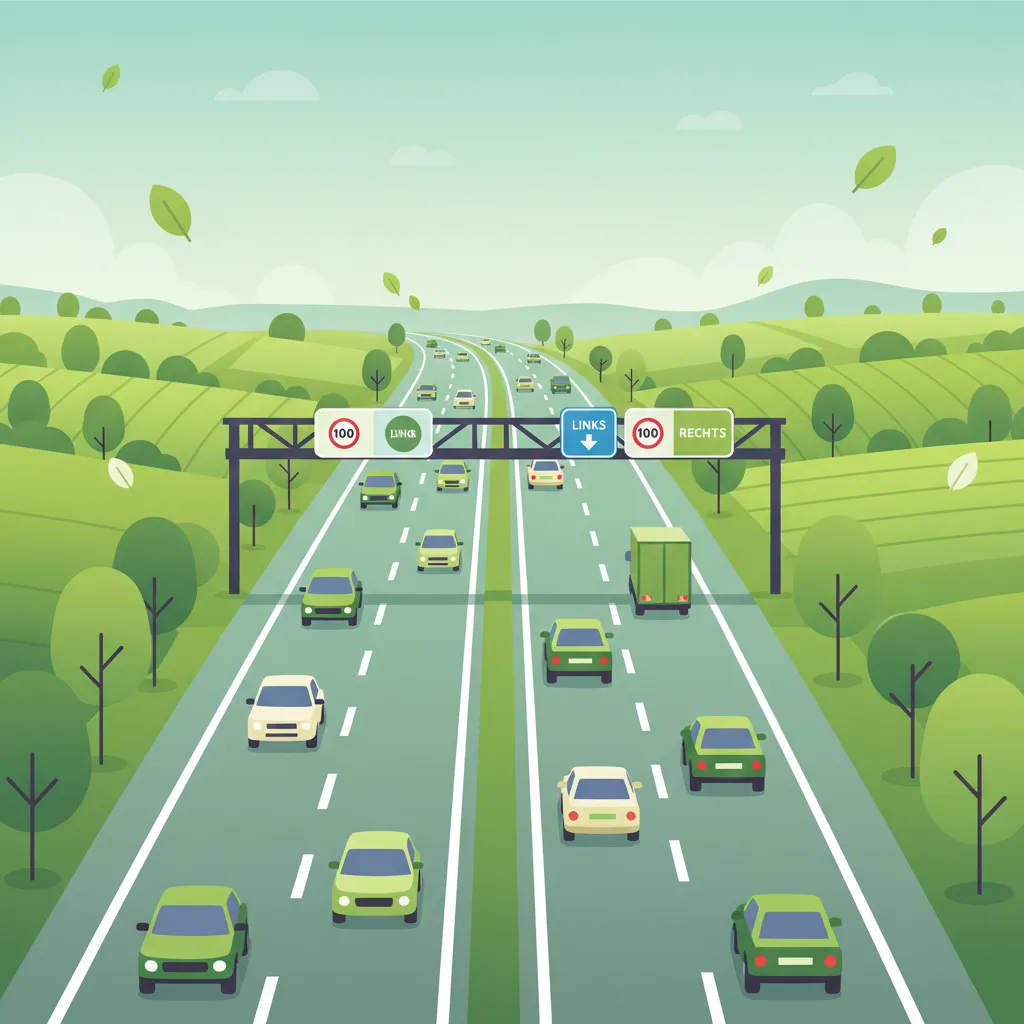
This lesson covers the specific articles of the Dutch Road Traffic Act that apply to motorways, with a primary focus on the strict rule of keeping to the rightmost available lane unless overtaking. It explains the legal and safety reasons for only passing on the left and discusses the correct positioning within a lane for maximum visibility and safety. The content also addresses the nuances of lane usage during heavy congestion, ensuring riders comply with the law and contribute to smooth traffic flow.
Carrying a passenger or heavy luggage significantly changes how your vehicle handles. This lesson covers the legal regulations for carrying a passenger, including the requirement for proper seating and footpegs. It also explains the importance of adhering to the vehicle's maximum load limit. You will learn how extra weight, especially when positioned high up, raises the center of gravity and affects balance, steering, and braking distances, requiring adjustments to your riding style.

Riding at night presents two main challenges: seeing the road and being seen by others. This lesson covers the legal requirements for your vehicle's lighting system and how to use it effectively, including when to use high beams. It also emphasizes strategies to increase your own conspicuity, such as wearing bright or reflective clothing. You will learn how darkness affects your perception of speed and distance and how to adapt your riding to compensate for these limitations.
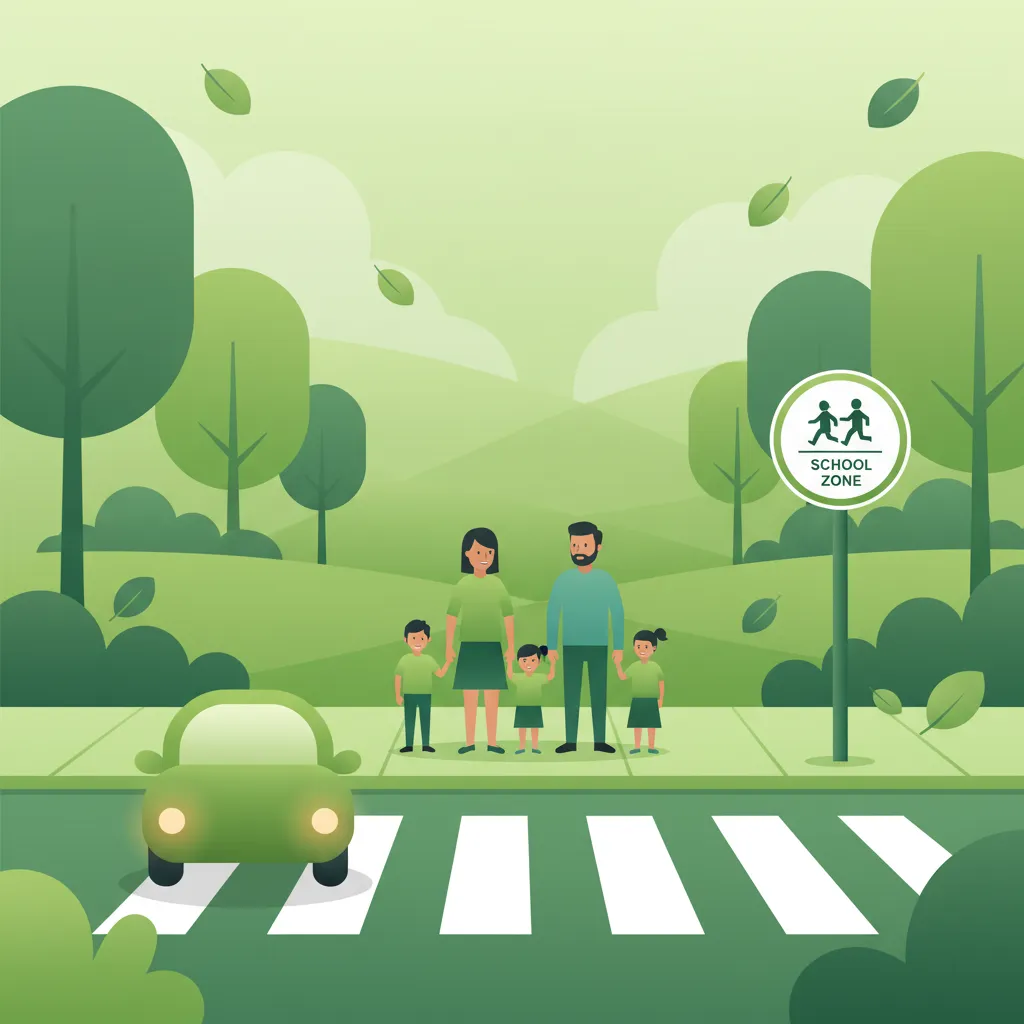
This lesson focuses on the legal requirements and safe practices for riding near pedestrian crossings ('zebrapaden') and designated school zones. It details the absolute obligation to yield to pedestrians on or about to use a crossing and the need for significantly reduced speeds and heightened vigilance in areas with children. The content underscores the importance of anticipation and being prepared for unpredictable movements from vulnerable road users to prevent serious incidents.

Riding on two wheels requires special care on surfaces with reduced grip. This lesson teaches you how to handle challenging conditions like rain, ice, wet leaves, or tram tracks. Key principles include reducing speed significantly, making all control inputs (braking, accelerating, steering) much more smoothly and gradually, and increasing your following distance to allow for much longer stopping distances. Recognizing potentially slippery areas is a critical part of proactive hazard perception.
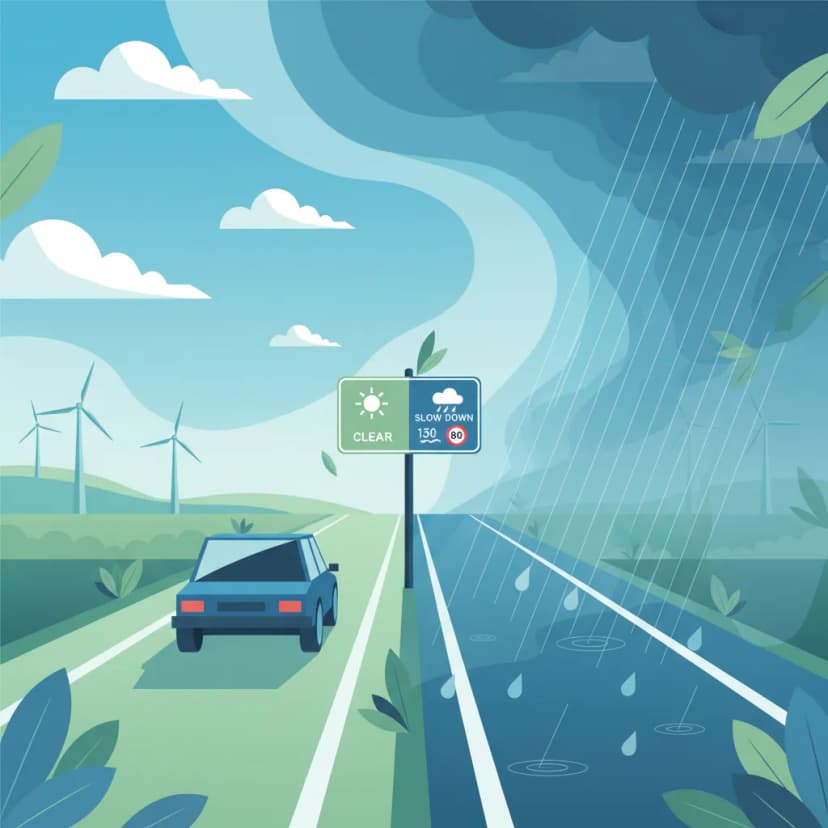
The posted speed limit is a maximum, not a target. This lesson teaches the crucial skill of adapting your speed to prevailing conditions. You will learn how to assess factors like traffic density, poor weather (rain, fog), limited visibility (at night), and slippery road surfaces. Adjusting your speed downwards in these situations provides you with more time to react to hazards and significantly reduces the risk of losing control or being involved in a collision.
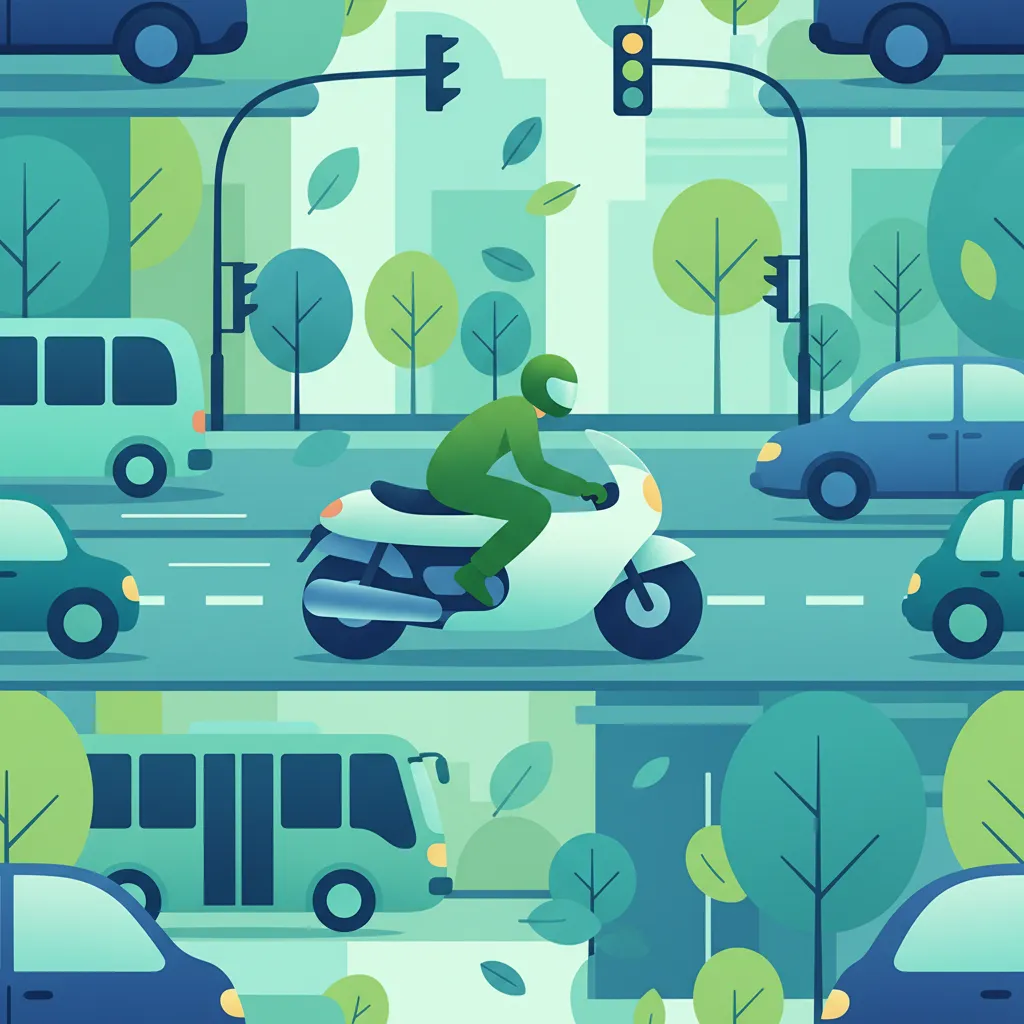
This lesson covers the universal Dutch road rules with a specific focus on their application to light motorcycles. It details the various speed limits for different road types, from urban areas to motorways, and explains the correct procedures for overtaking and lane positioning. The legal aspects of lane filtering in congestion are also examined, alongside mandatory equipment use like daytime running lights, to ensure riders can integrate safely and legally into traffic flow.

Properly parking and securing your vehicle is the final step of any journey. This lesson covers how to park legally, choosing a location that does not obstruct pedestrians or other traffic. It explains the use of both side stands and center stands, emphasizing the importance of parking on firm, level ground. Finally, it provides essential advice on vehicle security, including using the built-in steering lock and an additional high-quality chain or disc lock to deter theft.

This lesson covers the critical topic of driving under the influence, explaining the legal blood alcohol concentration (BAC) limits for Category AM riders. It highlights the distinction between the lower limit for novice drivers and the standard limit for experienced drivers. The lesson also addresses the zero-tolerance policy for driving under the influence of drugs, the types of police tests conducted, and the severe legal penalties, including fines, license suspension, and mandatory courses, for any violations.

This lesson details the statutory helmet regulations applicable to all Category AM vehicles. It clearly defines the mandatory helmet use for bromfiets and speed pedelec riders and the specific rules for snorfiets riders, including the required ECE safety certification for all approved helmets. The content also provides information on recommended protective gear, such as gloves and sturdy footwear, explaining how proper equipment enhances rider safety and is a key part of responsible riding culture in the Netherlands.
Find clear answers to common questions learners have about Starting, Stopping, and Balancing at Low Speeds. Learn how the lesson is structured, which driving theory objectives it supports, and how it fits into the overall learning path of units and curriculum progression in the Netherlands. These explanations help you understand key concepts, lesson flow, and exam focused study goals.
While the theory exam is written, understanding vehicle control is fundamental. Questions often relate to safe execution of maneuvers like starting, stopping, or navigating slow traffic. Demonstrating this knowledge shows you comprehend the physics and risks involved, which translates to safer riding and better exam performance.
With a scooter, you have engine power and often distinct front and rear brakes, plus potentially a clutch. Unlike a bicycle, abrupt braking can be more dangerous, and smooth modulation of both brakes and throttle is key to maintaining balance and control during a stop.
Stalling occurs when the engine doesn't get enough power or the clutch is released too quickly. To avoid this, gently apply throttle while simultaneously and smoothly releasing the clutch until you feel the 'bite point' where the engine engages. Hold it there for a moment before fully releasing.
While you can, it's generally safer and more effective to use both brakes. The rear brake is particularly useful for fine control at very low speeds and during the final stages of stopping. Using only the front brake can destabilize the vehicle if applied too aggressively.
The instinct might be to put your feet down, which is often the correct immediate action. However, practice helps you anticipate and correct minor balance issues by slightly adjusting throttle or steering input. This lesson focuses on building that anticipation and control to minimize the need for foot-down interventions.