
Welcome to the lesson on Pedestrian Crossings and School Zones, a vital component of your Dutch Category A motorcycle theory preparation. Building on general priority rules, this section specifically addresses your obligations around crossings and in zones where children are present, ensuring you can navigate these sensitive areas safely and confidently during your CBR exam and beyond.
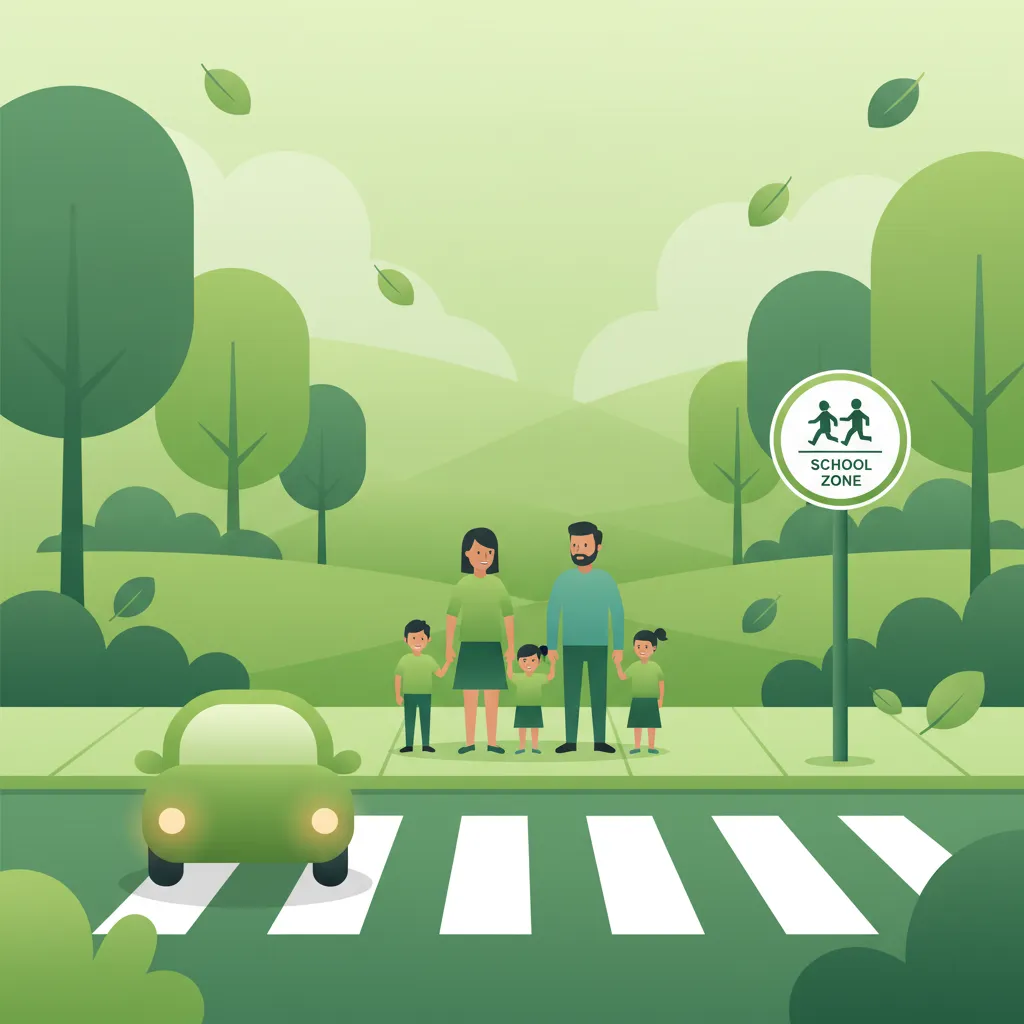
Motorcycling in the Netherlands demands not only mastery of your machine but also a profound understanding of traffic regulations, especially concerning vulnerable road users. This chapter of the Dutch Motorcycle Theory course focuses on the critical legal requirements and safe practices when approaching and traversing pedestrian crossings, known as 'zebrapaden', and designated school zones. These areas are high-risk environments where errors can lead to severe consequences for both the motorcyclist and pedestrians, particularly children. Understanding and applying these rules is paramount for passing your CBR Category A theory exam and for ensuring safety on the road.
The protection of pedestrians and children in traffic is a cornerstone of Dutch traffic law. This principle is deeply embedded in the Reglement Verkeersregels en Verkeerstekens 1990 (RVV 1990), which outlines specific duties for all road users. For motorcyclists, the inherent vulnerability of pedestrians and children means that a collision, even at low speeds, can result in serious injury or fatality. Therefore, a proactive and defensive riding approach is essential in these sensitive areas.
Failure to comply with regulations regarding pedestrian crossings and school zones is a leading cause of traffic incidents involving severe injuries. It also carries significant legal penalties under Dutch law, including substantial fines and penalty points on your driving license. This lesson builds upon your existing knowledge of basic Dutch traffic signs, general right-of-way rules (voorrangsregels), and speed limits, preparing you for safe and responsible riding.
A pedestrian crossing, commonly referred to as a 'zebrapad' in the Netherlands, is a specific area of the road designated for pedestrians to cross. These crossings are designed to provide a safe passage for pedestrians and impose a strict yielding obligation on motorized traffic.
A zebrapad is easily identifiable by its distinct markings: a series of alternating white stripes painted across the road surface. It is often accompanied by a white stop line for motorists, positioned before the stripes. Some crossings may also feature pedestrian islands in the middle, or be integrated with traffic lights for signal control. The presence of these markings signifies that pedestrians have an absolute priority.
The concept of "absolute priority" at a zebrapad means that pedestrians on the crossing, or those clearly indicating their intention to cross, have the unconditional right-of-way. This is enshrined in RVV 1990 article 33, which mandates that all motorized traffic must stop and allow pedestrians to cross safely. This rule applies regardless of traffic from the opposite direction or the presence of a stop line; if a pedestrian is present or about to cross, you must stop.
Do not assume a pedestrian sees you or will wait. Always be prepared to stop. Their right-of-way is absolute.
This obligation requires you to bring your motorcycle to a complete stop before the stop line, or before the crossing if no stop line is present. You must wait until the pedestrian has completely cleared your lane of travel before proceeding. This unwavering commitment to yielding removes ambiguity and safeguards the most vulnerable road users.
Some busy intersections feature pedestrian crossings that are regulated by traffic lights. At these "signal-controlled crossings," pedestrians have their own dedicated signal (a green walking figure or a red standing hand). While the zebrapad markings still indicate a crossing, the traffic lights govern the flow. If the pedestrian signal shows a green walking figure, pedestrians have priority, even if your vehicle's signal is green for proceeding. You must yield to them. Conversely, if the pedestrian signal shows a red hand, pedestrians must wait, and you may proceed if your vehicle signal allows it.
School zones are specially designated areas surrounding schools where children are frequently present, increasing the potential for unpredictable movements near the road. These zones demand exceptional caution and strict adherence to reduced speed limits.
A school zone, or 'schoolzone', is typically marked by a distinctive rectangular blue sign with a red border and the word “SCHOOL” written on it. This sign is often accompanied by a supplementary sign indicating a specific speed limit, such as 30 km/h.
Within a school zone, a lower speed limit is legally enforced. This is usually 30 km/h, but some zones may have time-restricted limits, where the speed limit is further reduced to 20 km/h during specific school hours (e.g., during drop-off and pick-up times). These time-restricted limits are indicated by supplementary panels below the main school zone sign, specifying the active hours.
The rationale behind these reduced speeds is to provide drivers with more time to react to unexpected situations, thereby significantly reducing stopping distances and the severity of any potential impact. You must adjust your speed before entering the designated zone and maintain it throughout, until you pass the sign indicating the end of the school zone.
Children, due to their developmental stage, often have limited road sense, poor impulse control, and may not accurately judge speed or distance. They can dart onto the road unexpectedly, emerge from between parked cars, or behave unpredictably. Therefore, in school zones, maintaining heightened vigilance and practicing anticipation are not merely suggestions but mandatory components of safe riding.
Increase your scanning frequency: Actively look for children on sidewalks, driveways, and near parked cars. Listen for sounds like shouting or school bells, as these can be early indicators of children nearby.
Anticipation means proactively expecting unpredictable behavior. Even if no children are immediately visible, assume they might be present and adjust your riding accordingly. This includes being prepared to brake instantly and taking evasive action if necessary.
Several fundamental principles guide safe conduct in pedestrian crossings and school zones, ensuring the protection of vulnerable road users.
This principle dictates that pedestrians on a marked zebra crossing, or clearly intending to cross, have an unconditional right of way. This means all motorized traffic must stop, irrespective of other traffic conditions, to allow them to cross safely. It eliminates any ambiguity about who has the right of way in these crucial areas.
A designated area where a lower speed limit is legally enforced, such as 30 km/h in many school zones, or sometimes 20 km/h during school hours. The purpose is to give you more time to react to hazards and drastically reduce the kinetic energy involved in a potential collision, thereby mitigating injury severity.
This describes the proactive mental state required when riding near vulnerable road users. It involves continuously scanning the environment, predicting potential pedestrian or child movements, and preparing your motorcycle for an immediate response. It is crucial for compensating for limited visibility and the unpredictability of children.
This is the explicit legal requirement to bring your vehicle to a complete stop before the stop line (or before the crossing) when a pedestrian is present or clearly intending to use the crossing. This obligation is central to RVV 1990 article 33, ensuring pedestrian safety.
This principle extends beyond simply obeying posted speed limits. It means adjusting your speed based on prevailing contextual factors such as weather, lighting, road surface conditions, and traffic density, even if it means riding slower than the legally prescribed limit. This ensures you maintain full control and the ability to stop safely within the visible distance ahead.
Adhering to Dutch traffic law (RVV 1990) in pedestrian crossings and school zones is non-negotiable. Here are the specific rules and regulations every motorcyclist must know:
Stop for Pedestrians at Zebra Crossings: You must come to a complete stop before the stop line (or the crossing itself if no stop line is present) when a pedestrian is on the zebra crossing, or clearly indicates an intention to step onto it. This applies even if the pedestrian is on the opposite side of the road but is clearly moving towards and intends to use your half of the crossing.
RVV 1990 Article 33 (1-3): This article explicitly grants absolute priority to pedestrians at zebra crossings. Failure to comply is a serious offense.
Yield at Signal-Controlled Crossings with Pedestrian Green: Even if your vehicle's traffic light is green, if the pedestrian signal at a signal-controlled crossing shows a green walking figure, you must stop and allow pedestrians to cross. Proceed only when the pedestrian signal turns red.
Observe School Zone Speed Limits: Upon entering a designated school zone, you are legally obliged to reduce your speed to the posted limit (e.g., 30 km/h). This speed must be maintained throughout the zone until you pass the sign indicating its end.
RVV 1990 Article 36: Governs adherence to speed limit signs. Local municipal ordinances often dictate specific school zone limits.
Adhere to Time-Restricted School Zone Limits: If a school zone sign has a supplementary panel indicating a further reduced speed limit (e.g., 20 km/h) during specific school hours (e.g., 07:00-16:00), you must obey this lower limit during those times.
Maintain Heightened Vigilance: In school zones, even when no pedestrians are immediately visible, you are legally expected to exercise "reasonable care" as per RVV 1990 articles 25 and 38. This means constantly scanning, anticipating, and being prepared for sudden movements from children.
Clearing Signal-Controlled Crossings: If you are already within a signal-controlled zebra crossing when the traffic light changes to red for vehicles, you may continue to clear the crossing. However, you must never enter a crossing if your light is red, even if it appears empty.
Do Not Overtake Vehicles Stopped at a Crossing: It is strictly prohibited to overtake a vehicle that has stopped at a zebra crossing or in a school zone to yield to pedestrians or children. This rule, supported by RVV 1990 article 31 on overtaking, prevents you from obstructing or colliding with pedestrians who may be hidden by the stopped vehicle. Wait until the vehicle ahead has fully cleared the crossing and no pedestrians are present before considering overtaking safely.
Yield to Stopped School Buses: If a school bus is stopped to load or unload children and is displaying warning signs or flashing lights, you must stop and wait. This rule, covered by RVV 1990 article 38, is crucial for protecting children as they board or alight the bus, as they may cross the road without looking.
Ignorance of the law is no excuse. Awareness of common mistakes can help you prevent serious incidents and legal penalties.
Safe riding in pedestrian crossings and school zones is not a one-size-fits-all approach. You must dynamically adapt your riding style based on prevailing conditions.
The stringent rules surrounding pedestrian crossings and school zones are rooted in fundamental principles of physics, human behavior, and proven safety data.
Children have limited peripheral vision, difficulty judging speed and distance, and often lack the impulse control to wait patiently before crossing. Their behavior is inherently unpredictable, making "anticipation" a vital skill for drivers in their vicinity. Relying on a child to make the correct decision is irresponsible and dangerous.
Statistics from the Netherlands and other developed countries consistently show that a significant percentage of pedestrian collisions occur at or near marked crossings, with a disproportionate number involving children in school zones. The primary contributing factors are typically drivers failing to yield or exceeding appropriate speeds. This data underpins the legal framework designed to mitigate these risks.
Drivers may experience "risk homeostasis," where they unconsciously adjust their risk-taking based on perceived safety. While lower speeds can increase focus, higher speeds can induce "tunnel vision," where the rider's peripheral awareness diminishes, further increasing the risk in complex environments like school zones. Conscious effort is required to counteract these psychological tendencies.
Beyond explicit rules, Dutch law upholds the principle of "reasonable care" (RVV 1990 articles 25 and 38). This means even if a specific rule isn't codified for a given situation (e.g., adjusting speed for heavy rain outside a posted limit), a rider is expected to act as a prudent and responsible road user would, demonstrating foresight and caution.
Navigating pedestrian crossings and school zones safely and legally is a critical aspect of being a responsible motorcyclist in the Netherlands. It requires a combination of strict adherence to rules, dynamic adaptation to conditions, and a proactive mindset.
zebrapad).Understanding and applying these principles ensures not only your compliance with Dutch traffic law but, more importantly, the safety of the most vulnerable road users.
Lesson content overview
Explore all units and lessons included in this driving theory course.
Explore search topics learners often look for when studying Pedestrian Crossings and School Zones. These topics reflect common questions about road rules, driving situations, safety guidance, and lesson level theory preparation for learners in the Netherlands.
Browse additional driving theory lessons that cover connected traffic rules, road signs, and common driving situations related to this topic. Improve your understanding of how different rules interact across everyday traffic scenarios.
Learn to identify and mitigate risks around pedestrian crossings and school zones in the Netherlands. This lesson focuses on anticipating unpredictable child behavior and understanding the severe consequences of failing to yield, promoting defensive riding techniques.
Defensive riding means riding to prevent collisions, despite the actions of others or the conditions around you. This lesson teaches the core principles of this proactive safety strategy. Key techniques include managing the space cushion around your vehicle, positioning yourself in your lane for maximum visibility, constantly planning an escape route, and communicating your intentions clearly to other road users. This mindset acknowledges your vulnerability and empowers you to take control of your own safety.
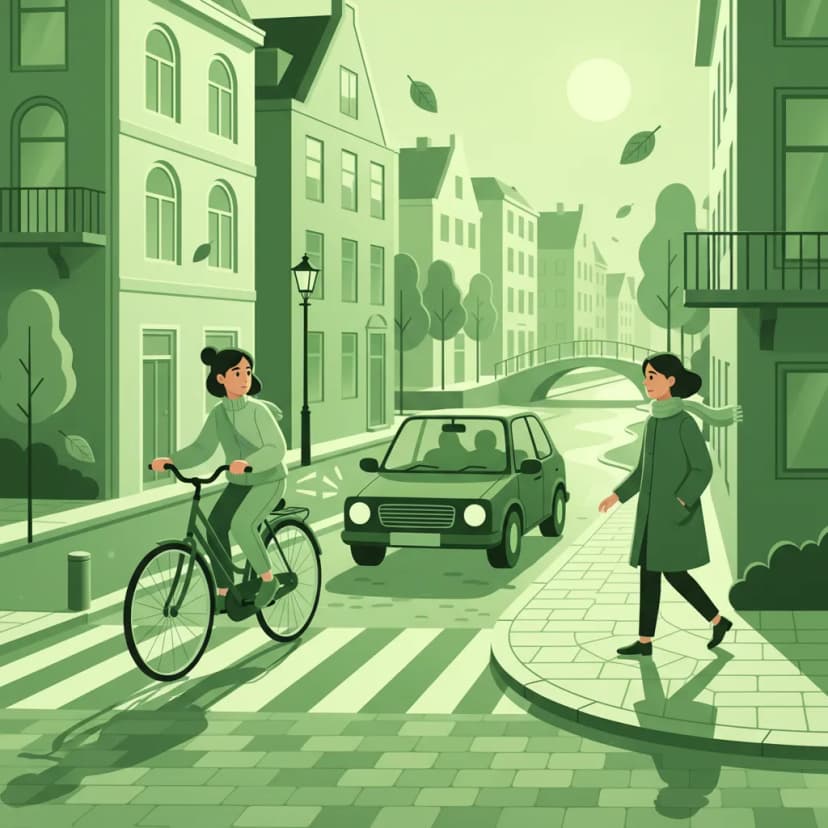
This lesson focuses on the unique and densely packed hazards found in urban traffic environments. It teaches riders to develop a systematic scanning pattern to identify potential risks from multiple sources simultaneously, such as pedestrians stepping off curbs, car doors opening unexpectedly, and buses pulling out. The content also emphasizes the importance of managing speed and always having an 'escape route' planned in case a hazard suddenly materializes in the complex city landscape.

This lesson introduces the Dutch concept of 'voorspellend rijgedrag,' or anticipatory riding, a proactive approach to safety. It teaches motorcyclists how to look beyond the immediate vehicle in front and scan for clues that predict the actions of other road users, such as turn signals, wheel direction, and driver head movement. By anticipating potential conflicts before they happen, riders can position themselves to avoid danger and ensure a smoother, safer journey through complex traffic.

This lesson equips riders with cognitive strategies for managing ambiguous or conflicting traffic situations where priority rules may be misinterpreted by other road users. It focuses on the principles of defensive riding, such as making eye contact, using clear signals, and being prepared to yield the right-of-way to avoid a collision. The content teaches how to resolve uncertainty safely by prioritizing hazard avoidance over asserting one's legal right-of-way, a critical skill for motorcyclist survival.

This lesson synthesizes many of the course's concepts into the overarching philosophy of advanced defensive riding ('verdedigend rijden'). It defines this as a proactive mindset where the rider constantly scans for potential hazards, anticipates the worst-case scenario from other road users, and positions themselves to have time and space to react. This approach moves beyond simply following the rules to actively managing the environment to ensure personal safety at all times.
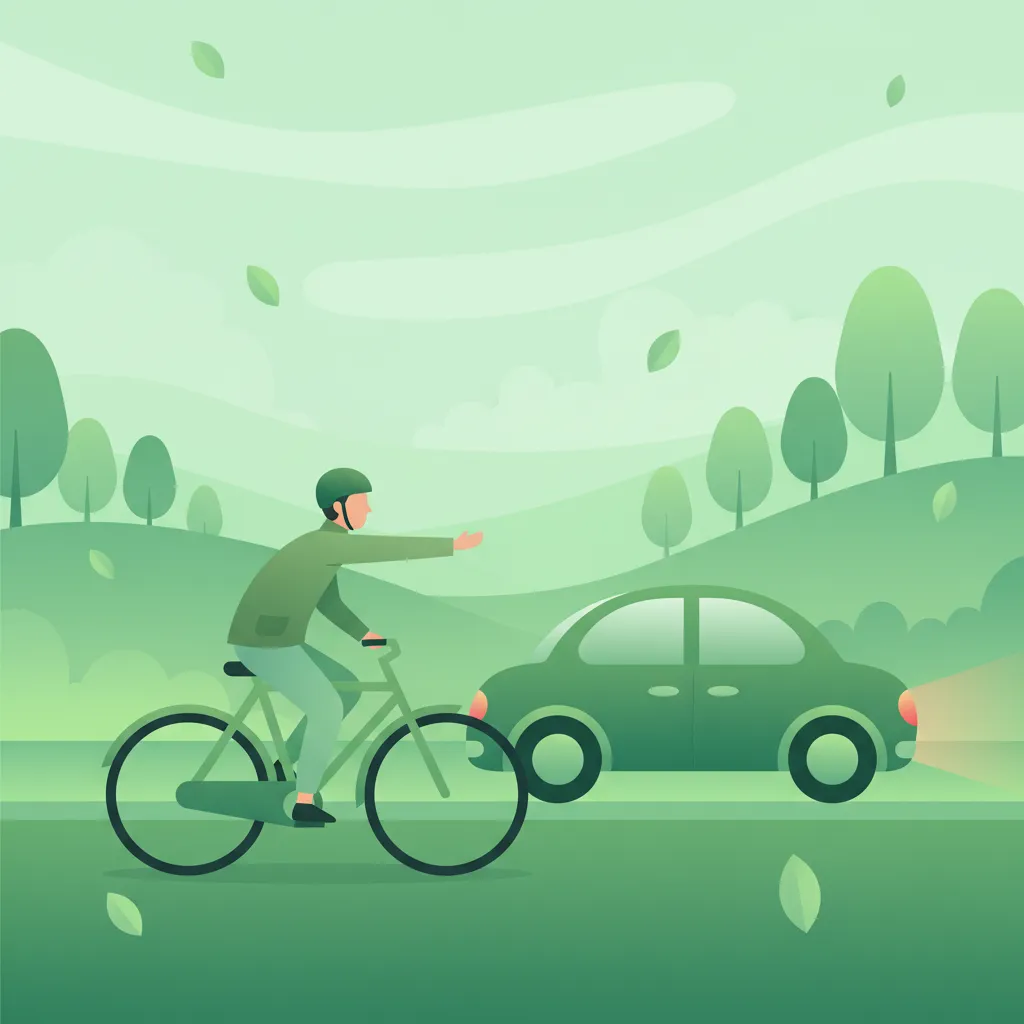
This lesson provides a detailed framework for how motorcyclists must safely and legally interact with diverse road users, including cars, trucks, cyclists, and pedestrians. It covers the required communication signals, anticipatory behaviors, and specific positioning techniques necessary to coexist in complex traffic environments like urban centers and shared spaces. Emphasis is placed on legal expectations and practical methods that actively reduce collision risk and promote smooth traffic flow.

This lesson provides critical instruction on managing blind spots ('dode hoek') to prevent collisions, particularly during lane changes. It covers the correct setup and use of mirrors, but stresses their limitations and the absolute necessity of the 'lifesaver' shoulder check before any lateral movement. Furthermore, it teaches riders how to be aware of the large blind spots around cars and especially trucks, and how to position themselves on the road to remain visible to other drivers at all times.
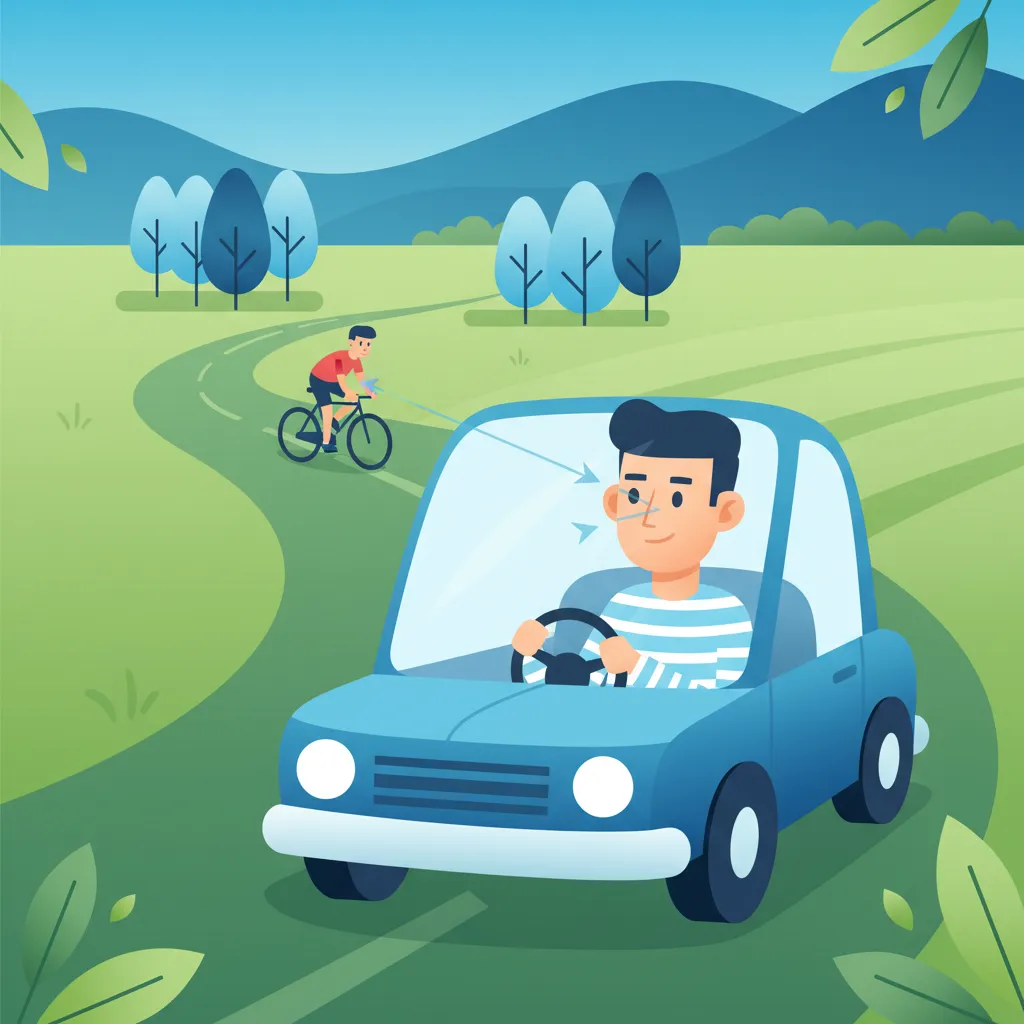
This lesson focuses on training the brain to become a more effective hazard detection system. It introduces psychological techniques like 'commentary riding,' where the rider verbalizes all perceived hazards and their planned responses, which enhances focus and processing. The practice of constantly running 'what-if' scenarios helps to pre-plan reactions to potential events, reducing the time it takes to respond if a real hazard materializes, turning anticipation into a deeply ingrained habit.
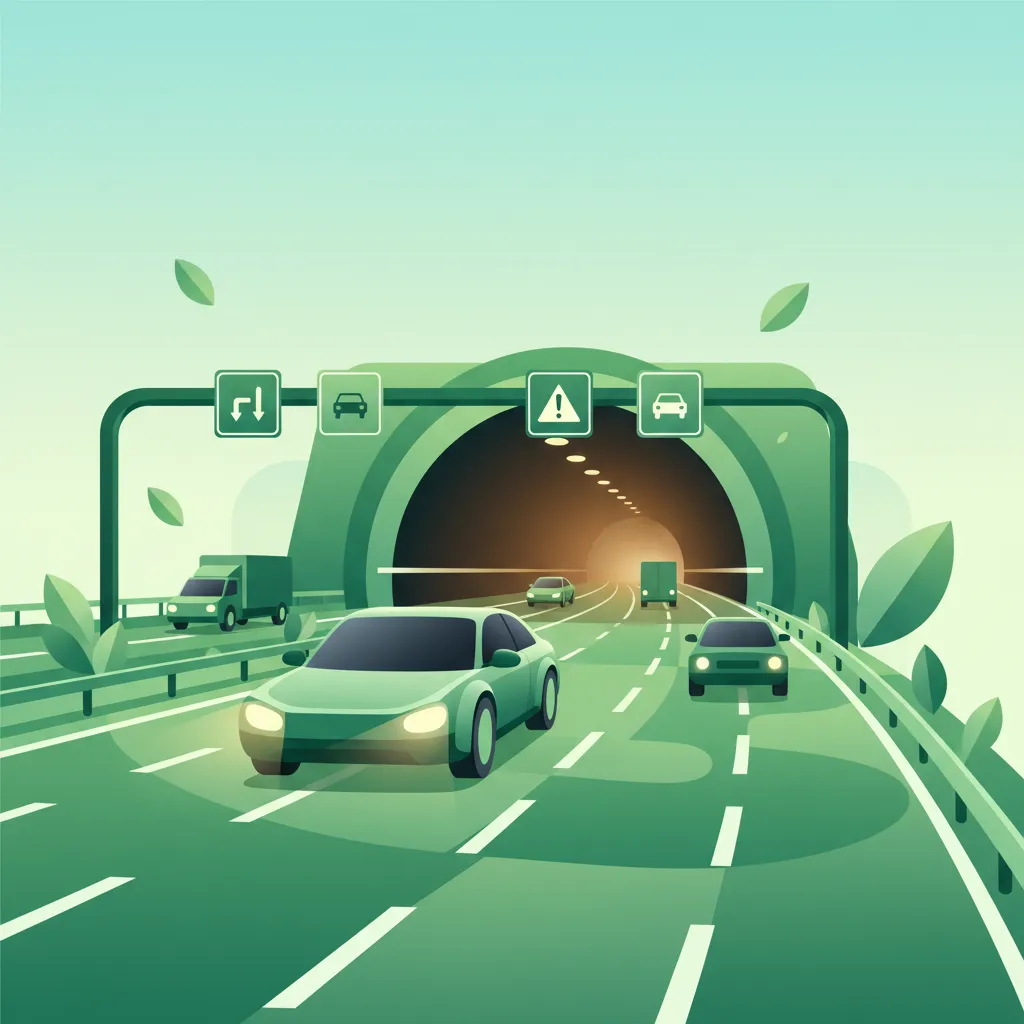
This lesson transitions hazard perception skills to the high-speed environment of motorways and tunnels. It covers specific risks such as vehicles merging at different speeds, sudden braking and congestion ahead, road debris, and the aerodynamic effects of crosswinds and large trucks. The curriculum also addresses the challenges of riding in tunnels, including changes in light and surface conditions, and the importance of identifying emergency exits and procedures in case of an incident.
How you perceive risk directly influences your riding behavior. This lesson encourages you to honestly assess your own attitude towards risk, highlighting the dangers of overconfidence, especially in new riders. It teaches you to move beyond simply seeing hazards to actively anticipating them. By asking 'what if?' questions (e.g., 'What if that car pulls out?'), you can mentally prepare for potential dangers and create a safer space cushion around yourself at all times.
Understand critical Dutch traffic laws for motorcyclists regarding pedestrian crossings (zebrapaden) and school zones. This lesson covers absolute priority rules, reduced speed limits, and enhanced vigilance required to protect vulnerable road users.
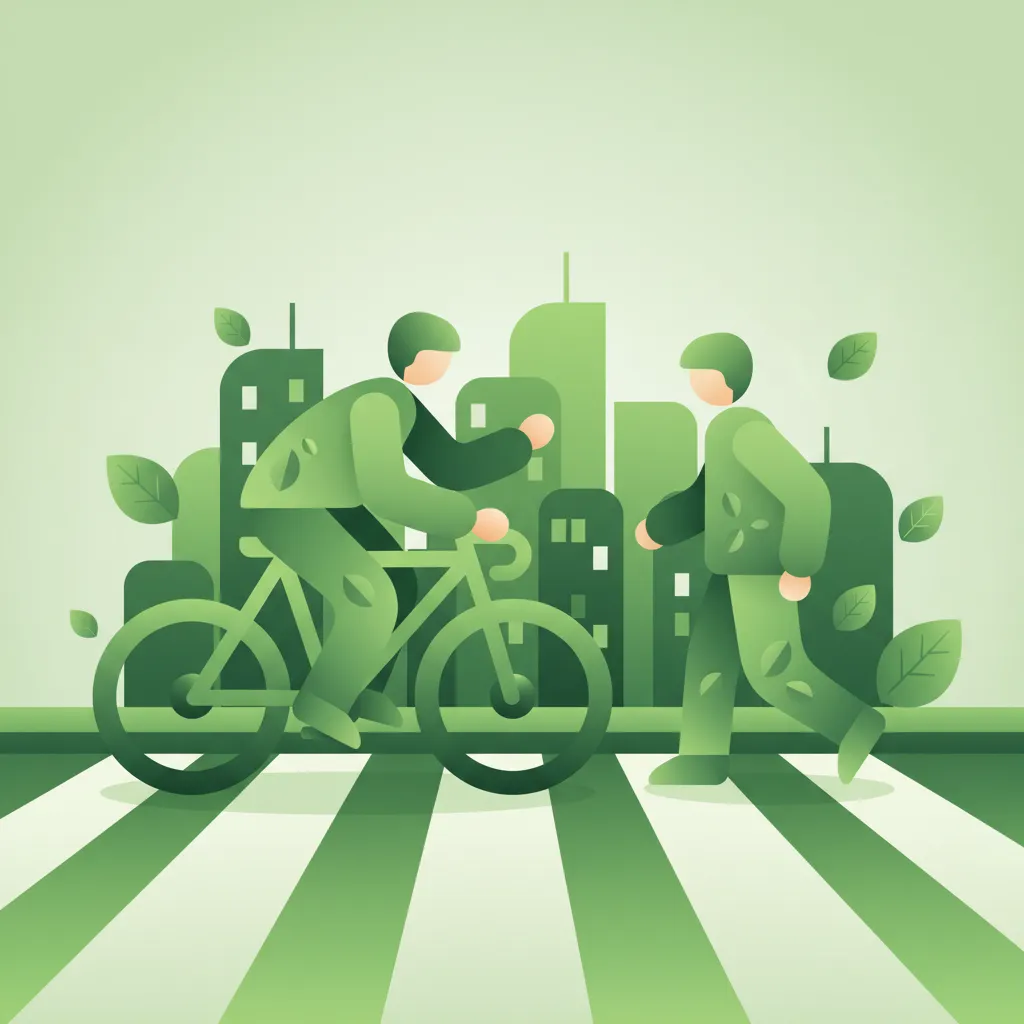
This lesson explains the critical rules of priority involving pedestrians and cyclists to ensure the safety of vulnerable road users. You will learn the absolute requirement to stop for pedestrians on or waiting to use a 'zebrapad' (zebra crossing). The content also covers situations where you must yield to cyclists crossing your path, such as when turning across a dedicated bicycle lane (fietspad).
As a motorized road user, you have a special responsibility towards more vulnerable participants. This lesson focuses on the rules giving priority to pedestrians at marked zebra crossings and the importance of anticipating the movements of cyclists, children, and the elderly. You will learn about maintaining a safe lateral distance when overtaking cyclists and how to navigate shared spaces with heightened awareness, a key component of social and safe driving behavior.
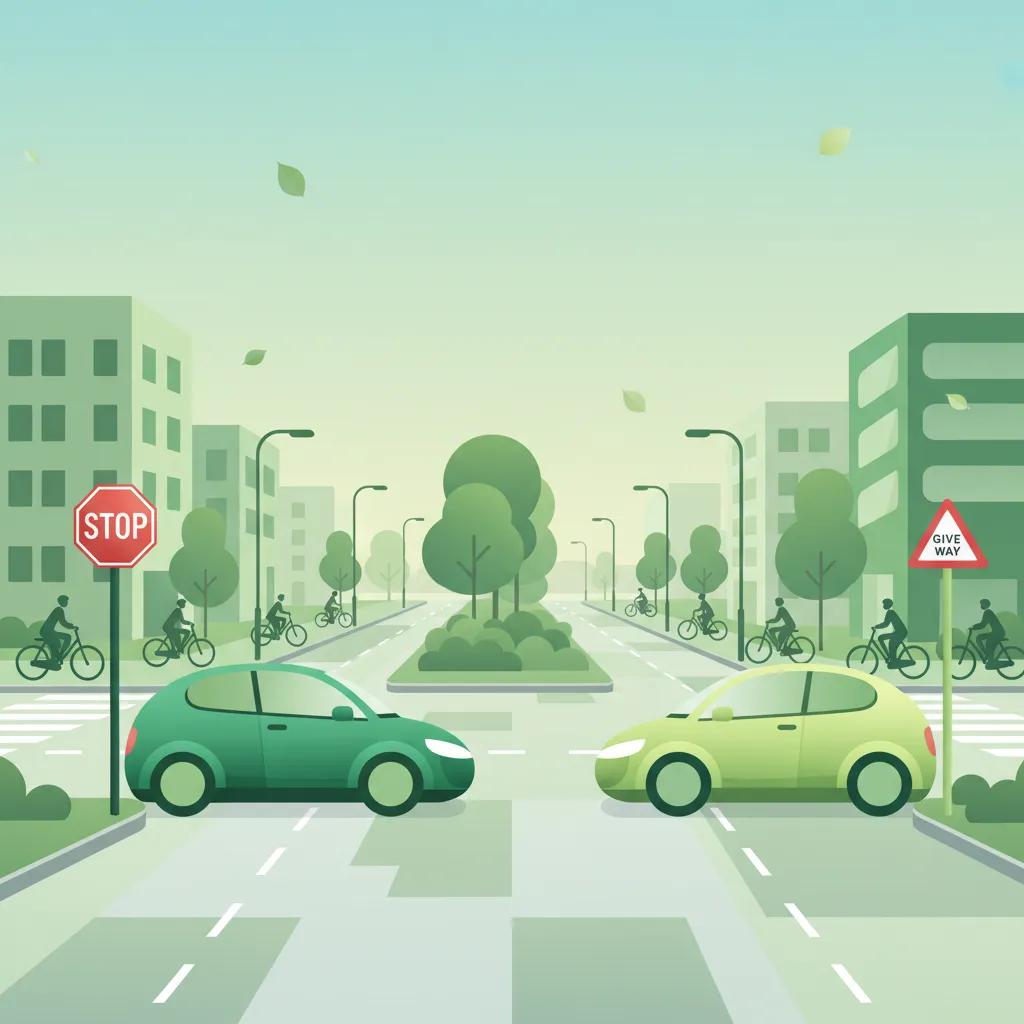
This lesson details the specific actions required at intersections controlled by 'Stop' and 'Give Way' signs. You will learn the legal requirement to come to a complete stop at a stop line (BORD 44) and the obligation to yield to all crossing traffic when encountering give-way markings ('haaientanden'). The content covers safe approach speeds and effective scanning techniques for motorcyclists to accurately assess gaps in traffic before proceeding.
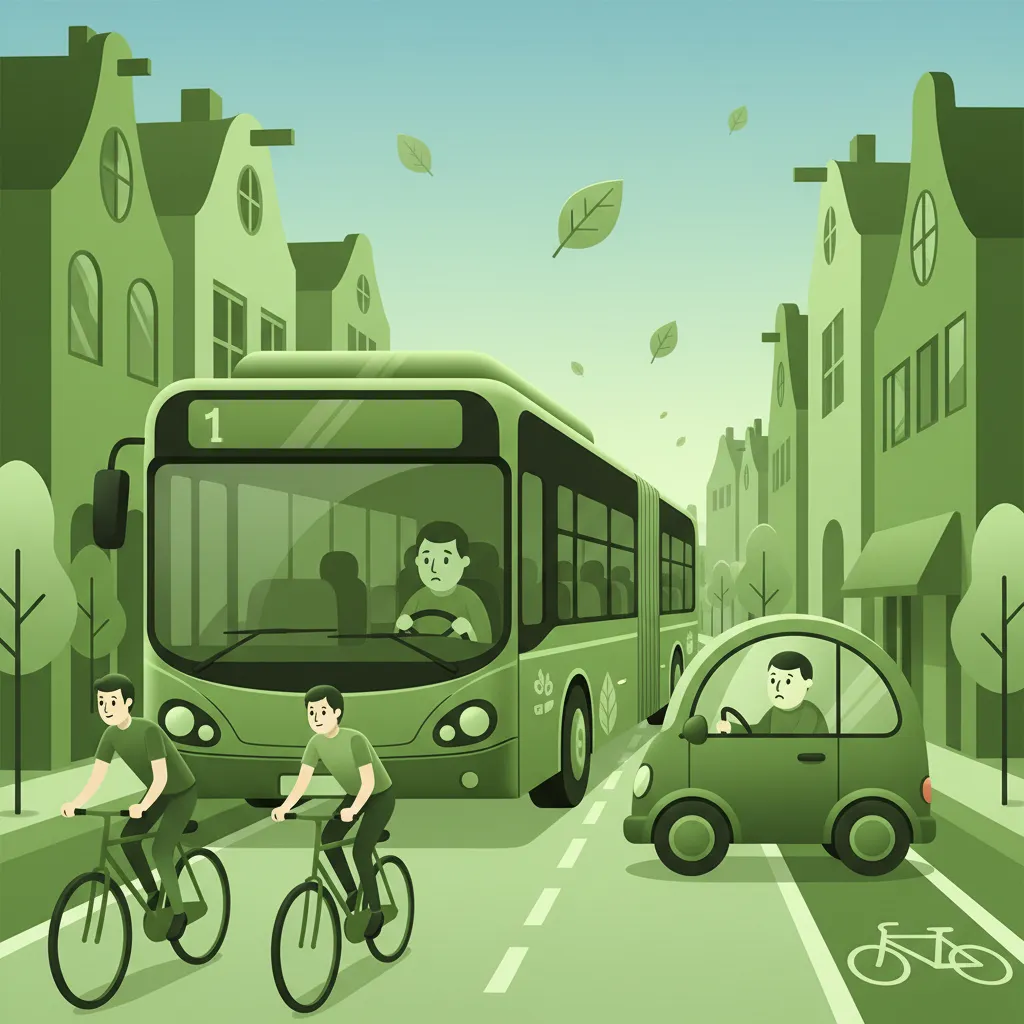
This lesson covers strategies for safely navigating around vehicles at both ends of the size spectrum. It details the large blind spots ('no-zones') around trucks and buses and advises on where to position a motorcycle to remain visible. Equally, it emphasizes the duty of care towards vulnerable road users, teaching riders to anticipate the movements of pedestrians and cyclists and to always provide them with ample space when passing.

This lesson focuses on the rules governing interactions with pedestrians. You will learn the absolute requirement to stop for pedestrians who are on or clearly intending to cross at a designated zebra crossing. The curriculum also covers how to share the road in a 'woonerf' (home zone) where pedestrians have priority. It emphasizes being particularly cautious around children, the elderly, and disabled pedestrians, who may require more time or behave unpredictably.
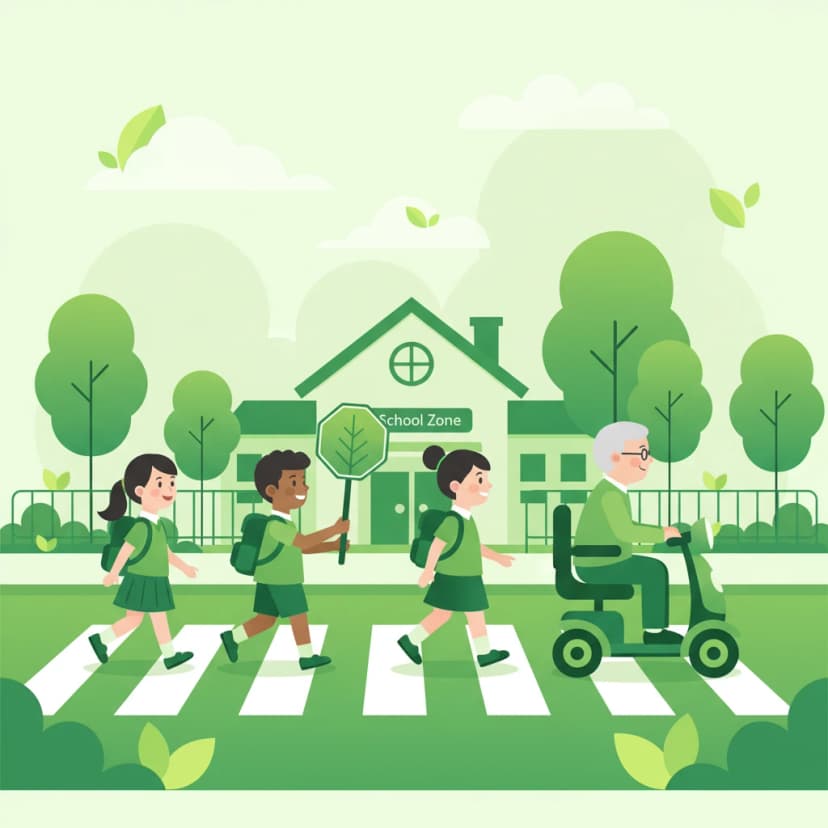
This lesson focuses on the legal and moral responsibility to be extra vigilant around certain groups of vulnerable road users. You will learn that children can be impulsive and have poor traffic awareness, requiring drivers to be prepared to stop suddenly, especially near schools and playgrounds. The content also discusses the need for patience with elderly or disabled road users, who may move more slowly. You will learn to recognize signs of disability, like a white cane or a guide dog, and give these individuals extra space and time.
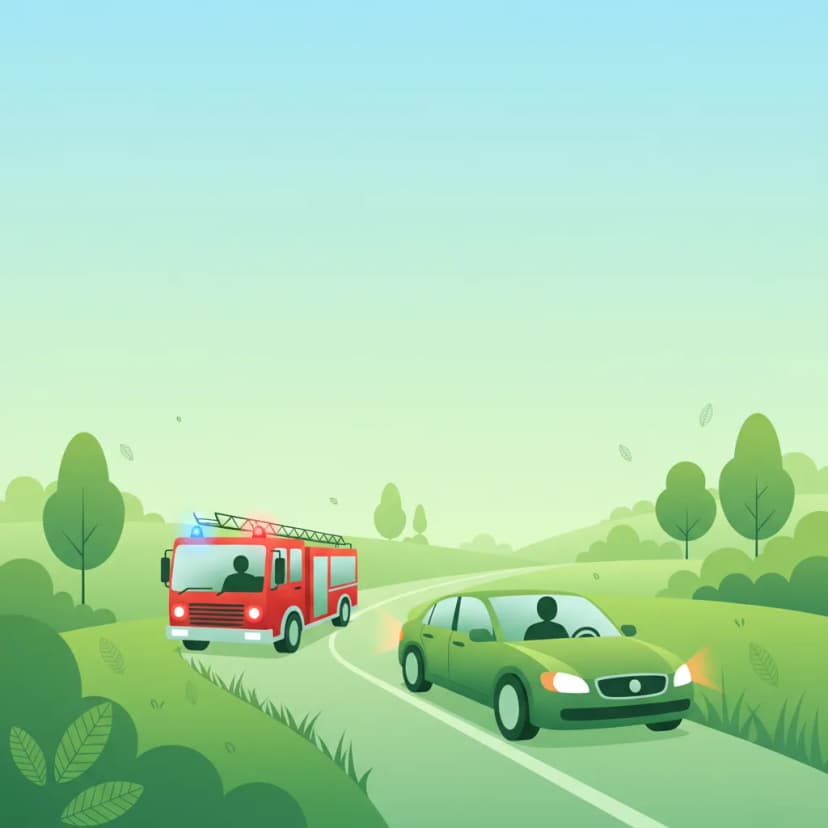
This lesson details the legal obligation and safe procedures for yielding to emergency vehicles ('noodvoertuigen' or 'voorrangsvoertuigen') that are using audible and visual warnings. It provides clear guidance on how to safely create space, whether by pulling over, adjusting speed, or clearing an intersection, without causing a secondary hazard. The content emphasizes maintaining composure and making predictable maneuvers to allow emergency services to pass quickly and safely.
This lesson provides a detailed framework for how motorcyclists must safely and legally interact with diverse road users, including cars, trucks, cyclists, and pedestrians. It covers the required communication signals, anticipatory behaviors, and specific positioning techniques necessary to coexist in complex traffic environments like urban centers and shared spaces. Emphasis is placed on legal expectations and practical methods that actively reduce collision risk and promote smooth traffic flow.
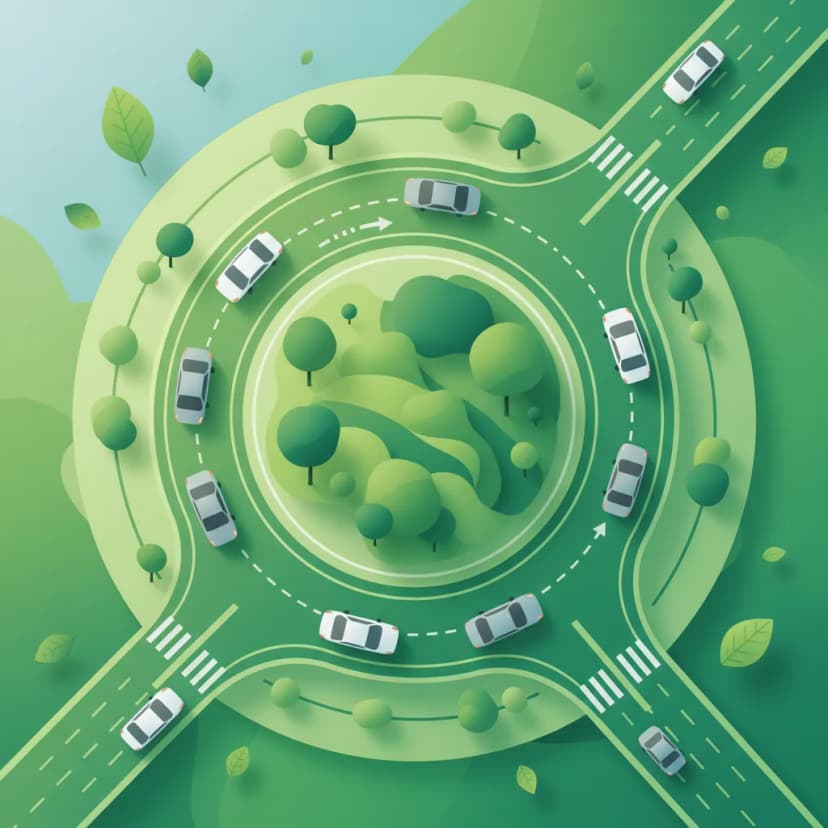
This lesson focuses on the rules and techniques for safely navigating Dutch roundabouts, a common feature of the road network. You will learn that traffic circulating on the roundabout typically has priority and that you must yield before entering. The content covers correct lane selection for your intended exit, proper use of turn signals, and maintaining awareness of cyclists who may have priority on adjacent paths.
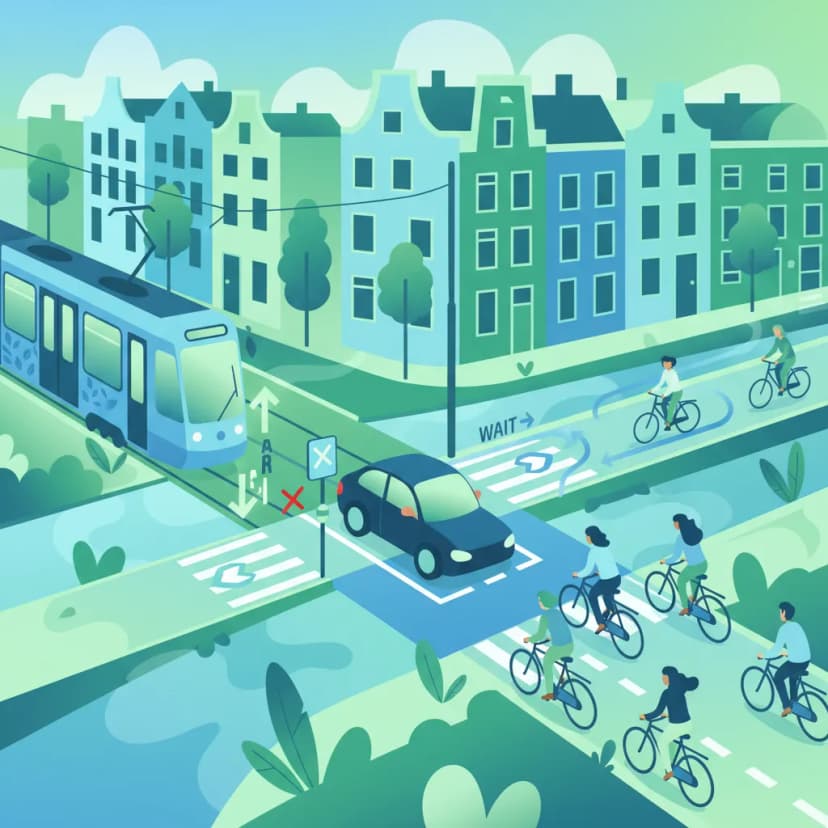
This lesson breaks down the rules of priority at intersections. You will learn to identify an 'equal' intersection where the default rule of giving way to traffic from the right applies. It also explains how priority is regulated by signs (such as the B6 Stop sign and B7 priority road sign) and road markings ('shark's teeth'). Understanding these hierarchies is crucial for making safe and correct decisions when crossing or turning at any junction.
Find clear answers to common questions learners have about Pedestrian Crossings and School Zones. Learn how the lesson is structured, which driving theory objectives it supports, and how it fits into the overall learning path of units and curriculum progression in the Netherlands. These explanations help you understand key concepts, lesson flow, and exam focused study goals.
As a motorcyclist in the Netherlands, you must always yield to pedestrians who are on or about to enter a 'zebrapad' (pedestrian crossing). This means you should be prepared to stop and allow them to cross safely before you proceed.
Yes, school zones require extreme caution. You must significantly reduce your speed and be exceptionally vigilant for children, who may behave unpredictably. Always be prepared to stop immediately if a child enters the road.
You should maintain a safe distance and be ready to stop as soon as a pedestrian shows intent to cross. It's better to err on the side of caution and stop even if there's a slight doubt. The exact distance is less important than your readiness to yield.
Yes, the fundamental rules regarding pedestrian crossings and school zones apply to all categories of motorcycle licenses (A1, A2, A) under Dutch law. Safety for vulnerable road users is paramount regardless of the motorcycle category.
Even with a green light, pedestrians on a 'zebrapad' always have priority. Your green light indicates you may proceed, but only when it is safe to do so and you do not impede pedestrians who have the right of way on the crossing.
The CBR exam frequently includes questions scenario-based questions that assess your understanding of priority rules at crossings and your ability to identify and react to hazards in areas like school zones. You might be shown an image and asked how you would proceed.