
This lesson provides a detailed framework for how motorcyclists must safely and legally interact with diverse road users in the Netherlands. It covers essential communication signals, anticipatory behaviours, and specific positioning techniques. Building on your understanding of fundamental traffic law, this module is crucial for reducing collision risk and promoting smooth traffic flow, preparing you for complex scenarios on your Category A CBR exam.
As a motorcyclist in the Netherlands, safely and legally interacting with all other road users is paramount. This lesson, part of your Dutch Motorcycle Theory – Category A Comprehensive Preparation, provides a detailed framework for navigating complex traffic environments, ensuring both your safety and the smooth flow of traffic. Proper interaction is not just a courtesy; it is a legal obligation and the cornerstone of collision avoidance, directly impacting your ability to ride safely and pass your CBR theory exam.
This comprehensive guide will delve into the required communication signals, anticipatory behaviors, and specific positioning techniques necessary to coexist with diverse road users, including cars, trucks, buses, cyclists, mopeds, and pedestrians. We will emphasize Dutch legal expectations (RVV 1990) and practical methods that actively reduce collision risk and promote harmonious traffic flow.
Interaction with other road users involves a precise set of behaviors, positioning strategies, and communication methods that a rider must consistently employ to safely integrate within any mixed traffic environment. These principles are rooted in safety, physics, and legal intent, all designed to minimize conflict and protect everyone on the road.
Right-of-way, or voorrang, is the legal entitlement to proceed before other road users. This is dictated by road signs, markings, and general traffic rules, as outlined in the Reglement Verkeersregels en Verkeersborden (RVV 1990). Understanding and respecting these rules prevents collisions by establishing a clear hierarchy. As a motorcyclist, you must yield when required (e.g., to pedestrians at zebra crossings) and may proceed when entitled, always ensuring safe gaps.
Predictive positioning involves selecting a lane position that maximizes your visibility to other road users, allows for early detection of potential hazards, and provides sufficient space for maneuvering. This approach significantly reduces your exposure to blind spots and improves your reaction time. For instance, riders should generally stay as far right as practical in single-lane traffic when not overtaking, but use the center of the lane for optimal visibility and safety when preparing for maneuvers.
Communicative signalling is the mandatory use of your motorcycle's lights, indicators, horn, and, when appropriate, hand signals to clearly convey your intended actions. This enables other road users to anticipate your movements, thereby reducing surprise and the risk of sudden maneuvers. Signals must always be given well in advance, typically at least 3 seconds before a lane change or turn, and must be conspicuous.
Gap selection and distance management refer to the crucial process of determining and maintaining a safe temporal and spatial gap to surrounding traffic. This is vital when overtaking, merging, or crossing intersections. Ensuring adequate braking distance for both yourself and other road users is key. A minimum 2-second temporal gap is generally recommended in standard dry conditions, with longer distances required in adverse weather, when carrying heavy loads, or when interacting with more vulnerable users.
Vulnerability awareness means recognizing that pedestrians, cyclists, and even motorcyclists themselves have a significantly lower chance of crash survivability compared to occupants of enclosed vehicles. These users also often have limited visibility. This awareness should drive you to adopt more conservative and cautious behaviors around them, such as adjusting speed, increasing distance, and enhancing your signaling.
Adherence to specific RVV articles, CBR guidelines, and road markings that govern interaction behaviors is not optional; it is mandatory. Legal compliance avoids fines, potential license penalties, and critical liability in the event of an accident. Failure to comply can trigger severe legal consequences and may adversely affect insurance claims.
Situational anticipation involves continuously assessing traffic flow, observing the behavior of other drivers, and evaluating environmental conditions to predict potential conflicts before they arise. This skill is developed through vigilant scanning ahead, consistent use of mirrors, and mentally modeling the likely actions of other road users around you. Proactive decision-making is a hallmark of a safe and skilled rider.
Motorcyclists encounter a wide range of road users daily, each with unique characteristics and needs. Understanding these distinctions is crucial for safe interaction.
Pedestrians are among the most vulnerable road users. At designated pedestrian crossings (zebrapaden), they have absolute priority (RVV Art. 8.5). This means you must stop when a pedestrian steps onto or is about to step onto the crossing. In shared spaces like woonerfs, pedestrians often have informal priority, and motorized traffic must adapt its speed to their presence. Always reduce speed when approaching areas where pedestrians might be present, such as near bus stops, schools, or parked cars.
Cyclists and moped riders, like motorcyclists, are less protected than car occupants. They often use dedicated bike lanes (fietspaden) or shared cycle tracks. When encountering cyclists, you must maintain a minimum lateral clearance of 1.5 meters when overtaking (RVV Art. 30.4). If the lane is not wide enough to safely provide this distance, you must wait behind the cyclist. Be aware that cyclists can sometimes weave or make sudden movements, especially children. Moped riders generally share the main carriageway or specific moped lanes, and should be treated similarly to cars in terms of signaling and gap management, but with increased awareness of their vulnerability.
Cars, trucks, and buses represent the majority of other motorized traffic. When interacting with these vehicles:
You must always give way to emergency vehicles (police, ambulance, fire brigade) that are using flashing lights and sirens (RVV Art. 10). When you hear or see an emergency vehicle approaching, pull over to the right and slow down or stop, creating a clear path for them to pass safely. In special situations, such as road works or accidents, police officers may direct traffic; their instructions override standard traffic rules and signals.
Effective communication is critical for motorcycle safety. Your signals must be clear, timely, and unambiguous.
Your indicator lights are your primary means of communicating turns and lane changes. According to RVV Art. 25.1, you must activate the appropriate indicator at least 3 seconds before initiating a lane change or turn. This lead-time provides other road users with sufficient warning to anticipate your maneuver and react accordingly. Always remember to switch off your indicator after completing the maneuver.
Always check your mirrors and perform a head-turn (shoulder check) after signalling but before executing a maneuver to confirm the path is clear, especially in blind spots.
Your brake light provides immediate visual warning to following traffic that you are decelerating. It must be fully functional and visible from at least 150 meters to the rear (RVV Art. 30). Ensure your brake light is always clean and bright. In situations requiring sudden heavy braking, quickly tapping your brake lever a few times before firm application can cause your brake light to flash briefly, drawing extra attention to your deceleration.
The horn on your motorcycle is a safety device, not a tool for expressing frustration or impatience. RVV Art. 13 explicitly states that the horn may be used only to avoid danger or to warn other road users of an imminent hazard. For example, a short, sharp honk might be appropriate if a car suddenly drifts into your lane or a pedestrian unexpectedly steps onto the road. Misusing the horn for intimidation or to rush other drivers can lead to fines.
Your headlight flash (high-beam flash) can be used to briefly alert other drivers of your presence, especially in situations where you might be less visible or to signal an intention when appropriate. For example, a quick flash might be used before overtaking on a rural road to ensure the driver in front is aware of you, or to signal your presence at a complex junction, especially in low-light conditions. However, avoid prolonged high-beam use or flashing that could intimidate or temporarily blind other drivers.
Strategic positioning on the road is a dynamic process that continuously adapts to traffic, road conditions, and the behavior of other users.
Within a lane, a motorcyclist has several optimal positions.
Every vehicle has blind spots – areas not visible through mirrors. For motorcyclists, critical blind spots exist to the rear and sides. Overcoming these requires a combination of:
Overtaking must only be performed when it is absolutely safe and legal. RVV Art. 30 governs overtaking maneuvers, emphasizing safety and sufficient space.
Understanding the specific articles of the RVV 1990 is crucial for legal and safe motorcycle riding in the Netherlands.
The fundamental rule for unmarked intersections is that traffic approaching from the right has priority (voorrang van rechts). However, this rule is overridden by road signs, traffic lights, and police directions. Always be prepared to yield if there's any doubt about who has priority.
As mentioned, at marked pedestrian crossings (zebrapaden), pedestrians who are on the crossing or clearly intending to step onto it have absolute priority. You must stop before the crossing line to allow them to pass safely.
RVV Art. 10 requires all road users to yield to emergency vehicles with flashing lights and audible sirens. This means moving to the side of the road and stopping or slowing down to create a clear path.
RVV Art. 7.31 dictates that you must maintain a safe following distance, allowing you to stop within the visible distance ahead. The general rule of thumb is a 2-second temporal gap in dry conditions. This distance needs to be increased in poor weather, reduced visibility, or when following larger vehicles.
Motorcycles must use the main carriageway and keep to the right side, unless overtaking or turning. RVV Art. 7.24 outlines general rules for using lanes and prohibits riding on sidewalks or bicycle lanes unless specifically permitted by signage. Incorrect lane usage can lead to fines and dangerous situations.
In woonerfs (residential areas designed as shared spaces), RVV Art. 9 dictates that pedestrians and playing children have primary rights. Motorized traffic must travel at very low speeds, typically 20 km/h or less, and always be prepared to stop for other users. These zones are not for fast transit but for careful co-existence.
Failing to adhere to proper interaction principles and legal regulations can have serious consequences. Here are common violations and how to prevent them:
Safe interaction is highly dependent on adapting your riding style to changing conditions.
Every decision you make on the road has a direct consequence.
Environmental Influences: Wet weather can amplify braking distance by approximately 30%, requiring significantly larger gaps. Low visibility reduces perception range, necessitating earlier and more pronounced signaling.
This lesson on interaction with other road users is foundational and builds upon several earlier topics while setting the stage for more advanced concepts in your Dutch Motorcycle Theory – Category A Comprehensive Preparation.
This lesson directly uses knowledge from:
It provides essential groundwork for future lessons such as:
Understanding theory is crucial, but applying it in real-world situations is what makes a safe rider.
Setting: A busy city intersection. The traffic lights are red for vehicles, but the pedestrian light is green, and a pedestrian is stepping onto the zebra crossing. Relevant Rule: Pedestrian priority at zebra crossing (RVV Art. 8.5). Correct Behavior: The rider stops their motorcycle well before the white line of the pedestrian crossing, patiently waiting for all pedestrians to clear the crossing before proceeding only when the traffic light turns green for vehicles. Explanation: This behavior respects the absolute priority of pedestrians, preventing collisions and adhering to mandatory law.
Setting: A two-lane rural road with light rain, reduced visibility, and sparse oncoming traffic. The rider is behind a slow-moving car. Relevant Rule: Overtaking gap (RVV Art. 30), increased gap for wet surface. Correct Behavior: The rider checks mirrors, signals left for at least 3 seconds, and waits for a minimum 4-second gap from oncoming traffic. They then accelerate gently to overtake, maintaining a minimum 1.5-meter lateral clearance from the overtaken car, and return to their lane smoothly. Explanation: Wet roads reduce tire grip and increase braking distances. The extended gap and gentle maneuvers account for these reduced friction conditions, minimizing the risk of skidding or losing control.
Setting: A city street with a dedicated bike lane to the right of the main carriageway. Signage indicates that motorized traffic may use the bike lane only to turn right, not for through traffic or overtaking. The rider is traveling straight. Relevant Rule: No overtaking cyclists in bike lane unless permitted and wide enough (RVV Art. 30.4), and correct lane usage (RVV Art. 7.24). Correct Behavior: The rider stays firmly in the main carriageway, even if it means moving slower than the cyclists in the adjacent bike lane. They would only enter the bike lane if they were preparing for a right turn, following specific markings, and yielding to any cyclists already present. Explanation: This ensures the safety of cyclists and complies with specific lane usage regulations, preventing dangerous interactions in confined spaces.
Setting: A residential woonerf with dim street lighting, where children are playing near the edge of the road. Relevant Rule: Speed limit ≤ 20 km/h, priority to pedestrians (RVV Art. 9, Local Municipal Ordinance). Correct Behavior: The rider reduces their speed to a maximum of 15 km/h well before entering the woonerf. They continuously scan the area for pedestrians and cyclists, yielding to anyone already in the shared space, and proceed slowly and cautiously. Explanation: Low speed drastically reduces kinetic energy, giving the rider ample time to react to unpredictable movements from pedestrians, especially children, in low visibility.
Setting: A multi-lane highway in dry weather. The rider is traveling at 80 km/h in the left lane when a vehicle from the right lane suddenly merges into their lane without signaling. Relevant Rule: Signal Obligation (RVV Art. 25.1), safe following distance (RVV Art. 7.31). Correct Behavior: The rider immediately applies progressive braking, uses hazard lights (if time permits or after initial braking), and, if safe, attempts to create space by moving to the right within their lane or into the adjacent right lane if it is clear. Their priority is to avoid a collision. Explanation: The sudden, unsignaled merge removes the rider's expectation of the other vehicle's movement, necessitating an immediate and defensive reaction to prevent a collision caused by the other driver's violation of the signal obligation.
Mastering interaction with other road users is fundamental to safe and legal motorcycling in the Netherlands. It encompasses a blend of legal adherence, strategic riding techniques, and proactive communication. Always prioritize right-of-way, especially for vulnerable users, and maintain predictive positioning to maximize your visibility and reaction time. Use communicative signalling (indicators, brake light, horn) early and clearly to convey your intentions. Practice meticulous gap selection and distance management, adjusting for weather, road type, and traffic conditions. Develop strong vulnerability awareness around pedestrians, cyclists, and mopeds. Finally, ensure complete legal compliance with all relevant RVV articles and local ordinances.
By consistently applying these principles and understanding the cause-and-effect relationships of your actions, you will not only reduce your risk of collisions and legal penalties but also contribute to a safer, more harmonious traffic environment for everyone. Your ability to ride defensively, anticipate hazards, and communicate effectively is the hallmark of a skilled and responsible motorcyclist.
Lesson content overview
Explore all units and lessons included in this driving theory course.
Explore search topics learners often look for when studying Interaction with Other Road Users. These topics reflect common questions about road rules, driving situations, safety guidance, and lesson level theory preparation for learners in the Netherlands.
Browse additional driving theory lessons that cover connected traffic rules, road signs, and common driving situations related to this topic. Improve your understanding of how different rules interact across everyday traffic scenarios.
Focuses on specific Dutch traffic rules and best practices for motorcyclists interacting safely with pedestrians, cyclists, and other vulnerable road users. Covers priority at crossings, lane sharing, and defensive riding techniques to prevent collisions in mixed traffic environments.
This lesson focuses on the legal and moral responsibility to be extra vigilant around certain groups of vulnerable road users. You will learn that children can be impulsive and have poor traffic awareness, requiring drivers to be prepared to stop suddenly, especially near schools and playgrounds. The content also discusses the need for patience with elderly or disabled road users, who may move more slowly. You will learn to recognize signs of disability, like a white cane or a guide dog, and give these individuals extra space and time.
As a motorized road user, you have a special responsibility towards more vulnerable participants. This lesson focuses on the rules giving priority to pedestrians at marked zebra crossings and the importance of anticipating the movements of cyclists, children, and the elderly. You will learn about maintaining a safe lateral distance when overtaking cyclists and how to navigate shared spaces with heightened awareness, a key component of social and safe driving behavior.

This lesson focuses on the rules governing interactions with pedestrians. You will learn the absolute requirement to stop for pedestrians who are on or clearly intending to cross at a designated zebra crossing. The curriculum also covers how to share the road in a 'woonerf' (home zone) where pedestrians have priority. It emphasizes being particularly cautious around children, the elderly, and disabled pedestrians, who may require more time or behave unpredictably.
This lesson is critical for driving in the Netherlands, a country with more bicycles than people. You will learn about the different types of cycle paths and how priority rules apply, especially at junctions. The content stresses the importance of checking the blind spot for cyclists before turning right ('dode hoek'). It also covers the rules for different types of mopeds (snorfiets and bromfiets) and the importance of giving all two-wheeled road users ample space when overtaking.

This lesson explains the critical rules of priority involving pedestrians and cyclists to ensure the safety of vulnerable road users. You will learn the absolute requirement to stop for pedestrians on or waiting to use a 'zebrapad' (zebra crossing). The content also covers situations where you must yield to cyclists crossing your path, such as when turning across a dedicated bicycle lane (fietspad).
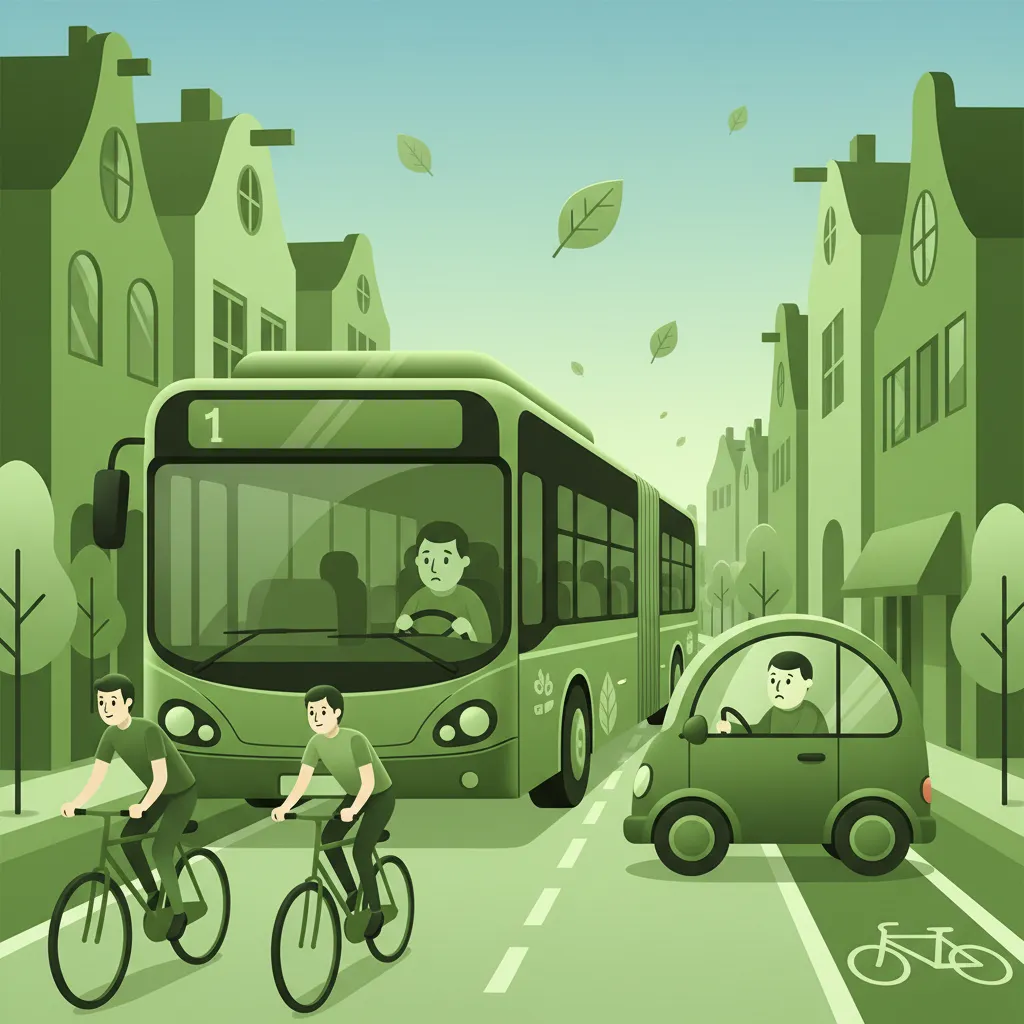
This lesson covers strategies for safely navigating around vehicles at both ends of the size spectrum. It details the large blind spots ('no-zones') around trucks and buses and advises on where to position a motorcycle to remain visible. Equally, it emphasizes the duty of care towards vulnerable road users, teaching riders to anticipate the movements of pedestrians and cyclists and to always provide them with ample space when passing.
This lesson addresses interactions with other types of road users. You will learn about motorcyclists, who can accelerate and brake quickly and may filter through slow traffic. The curriculum explains how to anticipate their movements and check for them carefully at junctions. It also covers how to safely approach and overtake slow-moving vehicles, such as agricultural tractors, and how to behave around horse riders, which requires slowing down and giving a very wide berth.
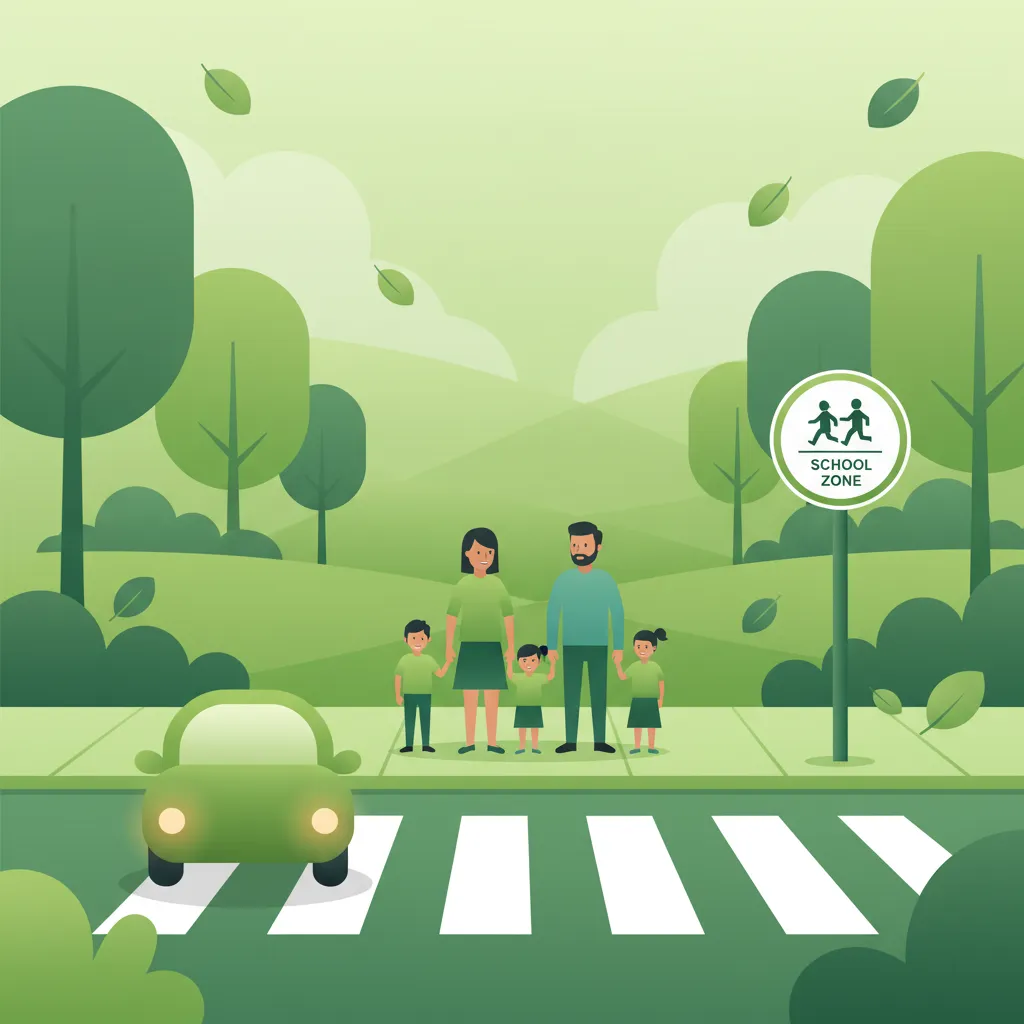
This lesson focuses on the legal requirements and safe practices for riding near pedestrian crossings ('zebrapaden') and designated school zones. It details the absolute obligation to yield to pedestrians on or about to use a crossing and the need for significantly reduced speeds and heightened vigilance in areas with children. The content underscores the importance of anticipation and being prepared for unpredictable movements from vulnerable road users to prevent serious incidents.
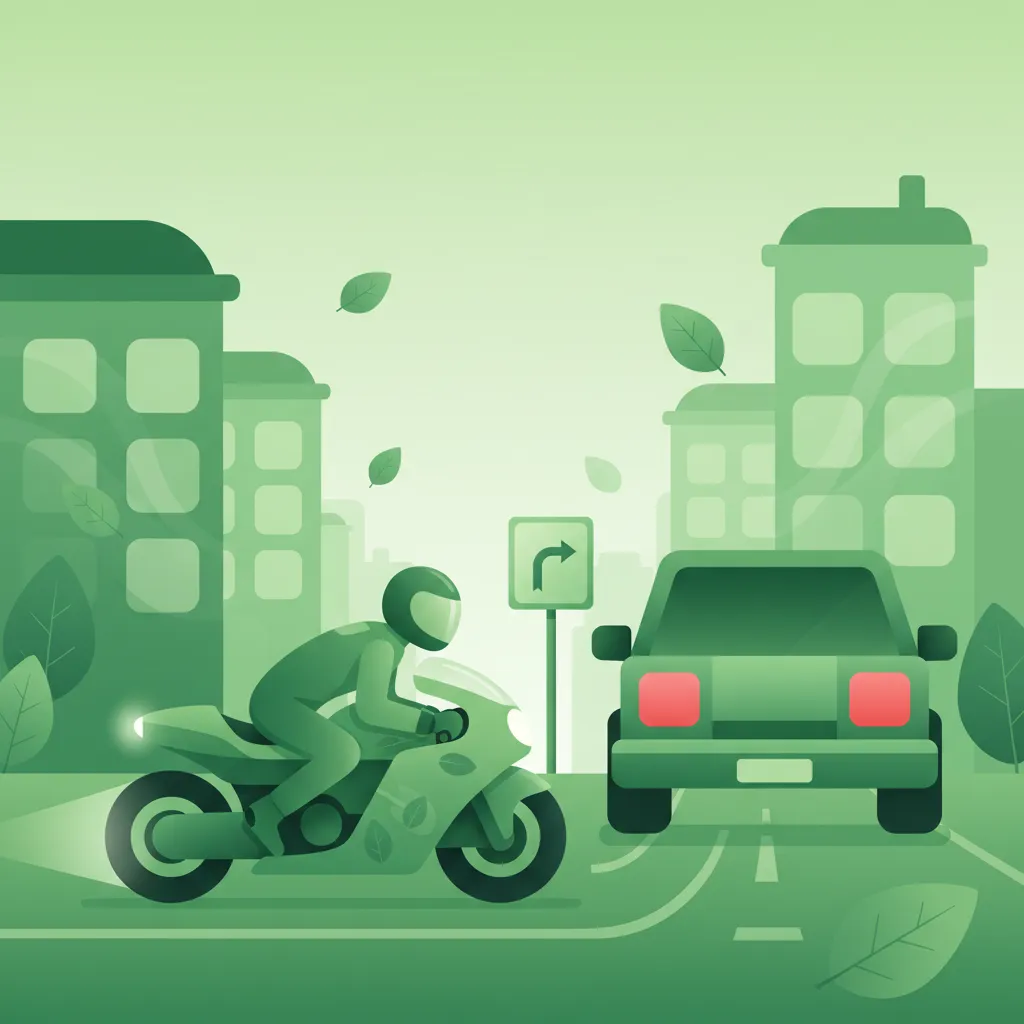
Defensive riding means riding to prevent collisions, despite the actions of others or the conditions around you. This lesson teaches the core principles of this proactive safety strategy. Key techniques include managing the space cushion around your vehicle, positioning yourself in your lane for maximum visibility, constantly planning an escape route, and communicating your intentions clearly to other road users. This mindset acknowledges your vulnerability and empowers you to take control of your own safety.

This lesson introduces the Dutch concept of 'voorspellend rijgedrag,' or anticipatory riding, a proactive approach to safety. It teaches motorcyclists how to look beyond the immediate vehicle in front and scan for clues that predict the actions of other road users, such as turn signals, wheel direction, and driver head movement. By anticipating potential conflicts before they happen, riders can position themselves to avoid danger and ensure a smoother, safer journey through complex traffic.
Explores effective communication strategies for motorcyclists, including indicator use, horn signals, and visual cues, alongside optimal lane positioning techniques. Learn how to enhance visibility and anticipate the actions of other road users to ensure safe and lawful interaction.
This lesson introduces the Dutch concept of 'voorspellend rijgedrag,' or anticipatory riding, a proactive approach to safety. It teaches motorcyclists how to look beyond the immediate vehicle in front and scan for clues that predict the actions of other road users, such as turn signals, wheel direction, and driver head movement. By anticipating potential conflicts before they happen, riders can position themselves to avoid danger and ensure a smoother, safer journey through complex traffic.
This lesson details the interpretation of Dutch warning signs, which alert riders to potential dangers and changing road conditions. You will study signs indicating sharp curves, road narrowing (BORD 30), and temporary hazards like road works (BORD 36), learning to adjust speed and road position proactively. The content emphasizes how the A2 motorcycle's characteristics require earlier hazard recognition and response compared to other vehicles for maintaining control.
This lesson teaches you to be a proactive rather than a reactive rider by developing superior hazard perception skills. You will learn to scan your environment constantly—near, far, and to the sides—and to identify potential risks, such as a car waiting to turn or a pedestrian looking to cross. The content focuses on asking 'what if?' to predict the actions of others and position yourself for safety in advance.
This lesson focuses on the unique and densely packed hazards found in urban traffic environments. It teaches riders to develop a systematic scanning pattern to identify potential risks from multiple sources simultaneously, such as pedestrians stepping off curbs, car doors opening unexpectedly, and buses pulling out. The content also emphasizes the importance of managing speed and always having an 'escape route' planned in case a hazard suddenly materializes in the complex city landscape.
This lesson explains that where you ride in your lane is a critical safety choice. You will learn to avoid lingering in the blind spots ('dode hoek') of cars and trucks, and how to position yourself to be clearly visible in their mirrors. The content teaches you to constantly adjust your lane position to create a space cushion and ensure you always have a planned escape path in case of an emergency.

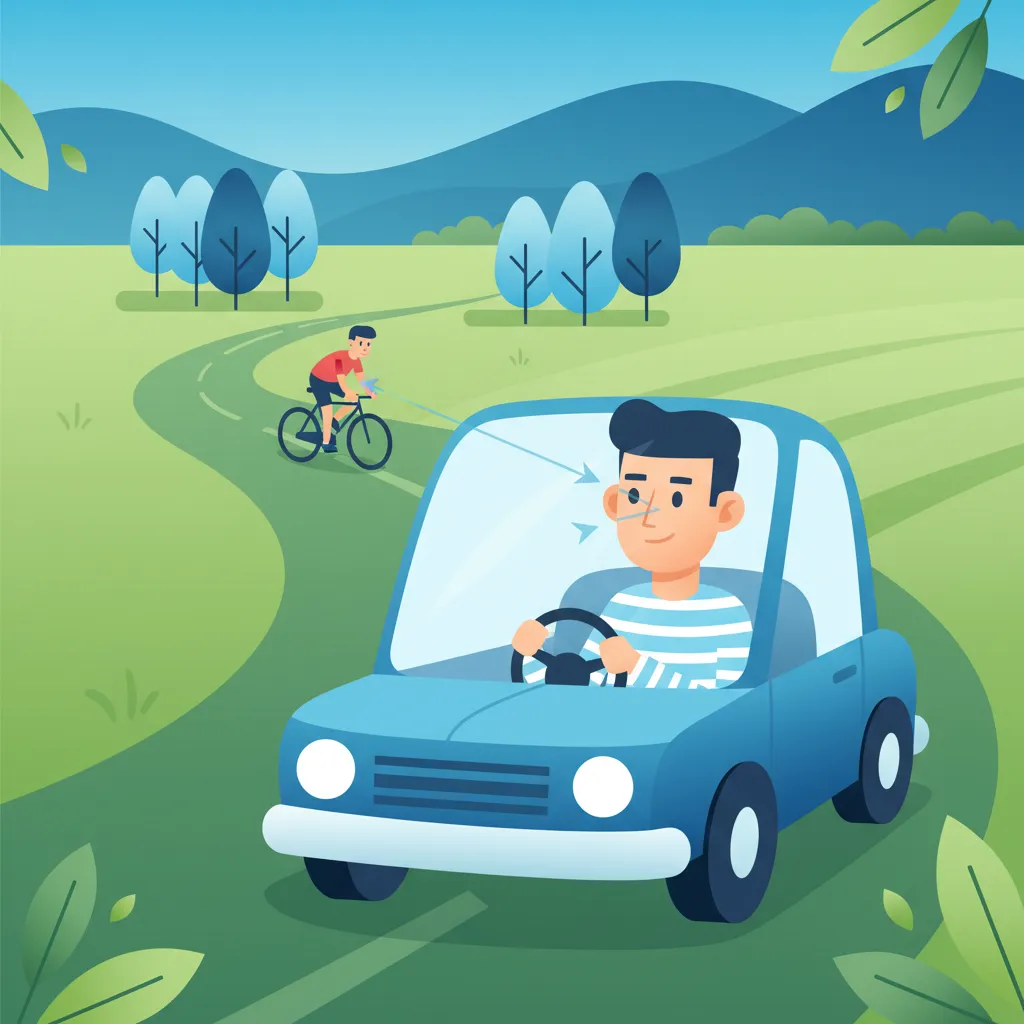
This lesson equips riders with cognitive strategies for managing ambiguous or conflicting traffic situations where priority rules may be misinterpreted by other road users. It focuses on the principles of defensive riding, such as making eye contact, using clear signals, and being prepared to yield the right-of-way to avoid a collision. The content teaches how to resolve uncertainty safely by prioritizing hazard avoidance over asserting one's legal right-of-way, a critical skill for motorcyclist survival.
This lesson focuses on training the brain to become a more effective hazard detection system. It introduces psychological techniques like 'commentary riding,' where the rider verbalizes all perceived hazards and their planned responses, which enhances focus and processing. The practice of constantly running 'what-if' scenarios helps to pre-plan reactions to potential events, reducing the time it takes to respond if a real hazard materializes, turning anticipation into a deeply ingrained habit.
Defensive riding means riding to prevent collisions, despite the actions of others or the conditions around you. This lesson teaches the core principles of this proactive safety strategy. Key techniques include managing the space cushion around your vehicle, positioning yourself in your lane for maximum visibility, constantly planning an escape route, and communicating your intentions clearly to other road users. This mindset acknowledges your vulnerability and empowers you to take control of your own safety.

This lesson covers A-code signs, which are designed to warn drivers of potential hazards on the road ahead. For motorcyclists, warnings about sharp bends, slippery surfaces, crosswinds, or falling rocks are especially critical for maintaining control and stability. The content explains how to interpret these triangular signs to anticipate changing conditions, adjust speed, and adopt a defensive riding posture well in advance of the hazard.

This lesson explains the concept of strategic lane positioning, moving beyond simply staying in the center of the lane. It details how to select a position—typically in the left or right wheel track of cars—to be more visible in other drivers' mirrors, avoid the slippery center strip, and maintain a space cushion. The content emphasizes constantly adjusting position based on traffic, road conditions, and potential hazards.
Find clear answers to common questions learners have about Interaction with Other Road Users. Learn how the lesson is structured, which driving theory objectives it supports, and how it fits into the overall learning path of units and curriculum progression in the Netherlands. These explanations help you understand key concepts, lesson flow, and exam focused study goals.
The most crucial aspect is visibility and anticipation. As a motorcyclist, you are more vulnerable and less visible. Always assume other road users might not see you, and actively work to be seen through your positioning, use of lights, and making eye contact. Anticipate their movements, especially when approaching junctions or changing lanes.
Motorcyclists generally do not belong in cycle lanes unless specifically indicated. In shared spaces, maintain extra distance, reduce your speed significantly, and be prepared for unpredictable movements. Cyclists often have priority in certain situations, and their smaller profile makes them harder to spot. Always give them ample room and signal your intentions clearly.
Yes, large vehicles have significant blind spots, especially on their right side. As a motorcyclist, always avoid riding in these blind spots. Maintain a safe following distance so the driver can see you in their mirrors, and be cautious when overtaking. They also require more space for turns, so never cut in front of a turning truck or bus.
Beyond standard indicators for turning, effective communication includes maintaining good lane positioning to signal your intentions, using your horn briefly to alert if necessary (but not aggressively), and making eye contact with other drivers. Body language, such as a slight head turn, can also signal awareness. Ensure your brake light is always working to clearly indicate when you are slowing down.
Adverse weather significantly reduces visibility and braking distances for all vehicles, especially motorcycles. In rain, fog, or strong winds, you must increase your following distance, reduce speed, and be even more vigilant. Other road users might also have reduced visibility and reaction times, so assume less predictable behaviour and increase your safety margins considerably.