
Welcome to the 'Core Legal Terminology' lesson within the 'Fundamentals of Motorcycle Theory & Dutch Traffic Law' unit. This lesson is crucial for understanding the basis of your Category A motorcycle license preparation in the Netherlands. It defines key terms like 'verkeerswet', 'CBR', and 'rijbewijs', which are fundamental to interpreting traffic laws and succeeding in your theory exam.

Navigating the roads safely and legally in the Netherlands, especially as a motorcyclist, requires a solid grasp of its unique traffic laws and administrative procedures. This lesson, part of the Dutch Motorcycle Theory – Category A Comprehensive Preparation course, will familiarize you with the essential Dutch legal terminology you'll encounter throughout traffic legislation, road signs, and the Centraal Bureau Rijvaardigheidsbewijzen (CBR) examination materials. A precise understanding of these terms is not just academic; it's vital for correctly interpreting statutes, avoiding legal pitfalls, and ensuring your safety and compliance on Dutch roads.
By the end of this chapter, you will have a clear understanding of terms such as 'verkeerswet' (Road Traffic Act), 'CBR' (the national driving test organization), and 'rijbewijs' (driving licence), along with their associated regulations and practical implications for Category A motorcyclists.
The cornerstone of Dutch traffic legislation is the Verkeerswet (Wet verkeersregels en verkeerstekens), often translated as the Road Traffic Act or the Road Traffic Regulations and Traffic Signs Act. This primary statutory act establishes the overarching legal framework that governs all aspects of road traffic in the Netherlands. It defines the rights, duties, and obligations of all road users, sets the legal basis for vehicle registration, driver licensing, and enforcement powers.
The Verkeerswet isn't just a collection of rules; it's a foundational legal document designed to ensure road safety and order. It codifies essential risk-reduction measures, such as general duties of care for all road users, requirements for vehicle equipment standards, and the fundamental framework for driver fitness. Every traffic situation you encounter, from stopping at a red light to the legal definition of a "road user," traces its authority back to the principles laid out in this Act.
It's crucial to understand that the Verkeerswet provides the high-level legal principles. Its detailed implementation often occurs through subordinate statutory instruments. The most prominent of these is the Reglement Verkeersregels en Verkeerstekens 1990 (RVV 1990), which translates the general provisions of the Verkeerswet into concrete traffic rules and the meanings of traffic signs. Other related decrees, like the Vehicle Inspection Act or the Road Traffic Decree, further specify technical standards and administrative procedures.
Common Misunderstandings: Many learners mistakenly assume the Verkeerswet is the only source of traffic law. While it is the highest authority, specific rules are found in the RVV 1990 and other regulations. Confusing "statutory" (from the Verkeerswet) with "regulation" (from RVV 1990) can lead to misinterpretations of legal severity and precedence.
The CBR (Centraal Bureau Rijvaardigheidsbewijzen) is the independent governmental agency responsible for assessing the competence of Dutch road users. Its primary role is to ensure that everyone who obtains a driving licence has demonstrated the necessary knowledge, understanding, and practical skills to operate a motor vehicle safely and responsibly. For motorcyclists, the CBR is your gateway to obtaining a Category A, A1, or A2 rijbewijs.
The CBR's responsibilities are multifaceted, covering all stages from initial assessment to ongoing licence validity.
Practical Meaning for Motorcyclists: The CBR directly determines whether you can legally obtain your desired motorcycle licence category (A1, A2, or A). All exam outcomes, licence issuances, revocations, and suspensions originate from CBR decisions, making it the central figure in your licensing journey.
Common Misunderstandings: It's common for learners to confuse the CBR with a driving school. The CBR is a testing and regulatory body, not an educational institution. While driving schools prepare candidates, the CBR independently evaluates their readiness.
The rijbewijs is more than just a plastic card; it is the official, government-issued document and associated electronic record that certifies a holder’s legal right to operate a motor vehicle of a specific category on public roads in the Netherlands. For motorcyclists, understanding the different categories and their associated restrictions is paramount.
The Dutch system employs a graduated licensing approach for motorcycles, reflecting varying levels of power and rider experience.
Beyond the standard categories, two other types of licences are crucial to understand:
Legal Validity: A rijbewijs is only valid when it accurately reflects your current legal status. This means it must not be expired, revoked, or superseded by a higher category that you haven't yet obtained. Standard Dutch driving licences are typically valid for 10 years, though those with certain medical conditions may require more frequent renewal (e.g., every 5 years). It is your responsibility to monitor expiry dates and initiate renewal procedures.
Common Misunderstandings: A frequent error is confusing "Category A" with the right to ride "any motorcycle." Category A has specific age and progression requirements. Another common pitfall is assuming a foreign licence is automatically valid without conversion, which is often not the case for long-term residents.
Obtaining a motorcycle rijbewijs in the Netherlands involves a structured procedural workflow established by the CBR and detailed within the Verkeerswet. This process ensures that every candidate meets the necessary standards for safe motorcycle operation.
Associated Rules: There are minimum waiting periods between exam attempts (e.g., often two weeks for practical exams), and re-booking fees apply for failures. For those whose licences have been suspended, mandatory refresher training or re-examination may be required.
The medical fitness requirement is a critical component of Dutch licensing, stipulated in Article 11 of the Verkeerswet and operationalized by detailed CBR guidelines. This ensures that a driver’s physical and mental condition allows for the safe operation of a vehicle, thereby significantly reducing the risk of accidents caused by medical incapacity.
The CBR assesses several key health aspects:
Practical Meaning: If you have a medical condition, such as diabetes, severe allergies, or a neurological disorder, you might need to submit a medical certificate from a specialist to the CBR. This certificate will confirm whether your condition is stable and does not pose an undue risk to road safety. In some cases, a conditional licence might be issued, requiring periodic re-assessment (e.g., annually) to ensure ongoing fitness.
Common Misunderstandings: Many believe a standard eye test at an optician is sufficient. However, the CBR often requires specific ophthalmological reports tailored to driving standards. Also, taking medication does not automatically disqualify a driver; the key is whether the medication impairs driving ability and if it has been properly declared and assessed.
Beyond the standard categories, the Dutch licensing system includes conditional licences and probationary licences to manage risk, especially for new drivers or those with specific circumstances. These licences carry explicit restrictions that must be adhered to.
A conditional licence is a rijbewijs issued with specific, legally binding restrictions. These can be related to the vehicle, the driver's medical status, or a graduated learning process.
Violation of any condition results in immediate legal consequences, which can include fines, licence suspension, or even a forced re-examination. These conditions are recorded in the national licence register and are visible on the electronic licence data accessible to authorities.
The probationary licence period applies to all new drivers (including motorcyclists) during the first two years after they obtain their full driving licence. This period is designed to encourage safe driving habits among inexperienced road users by imposing stricter rules and penalties.
Common Misunderstandings: Many probationary riders assume conditions cease automatically after two years. While some do, others (especially medical ones) may require continuous adherence or periodic reassessment. Always check your licence for coded restrictions and stay informed about updates to CBR guidelines.
Compliance with specific rules and regulations is non-negotiable for motorcyclists in the Netherlands. These are primarily derived from the Verkeerswet and its implementing regulations, like the RVV 1990.
| Rule / Regulation | Rule Statement | Applicability | Legal Status | Rationale |
|---|---|---|---|---|
| RVV 1990 – Article 3 (Driver’s Licence Requirement) | “Every road user must possess a valid licence for the vehicle category they operate.” | All public-road operation; motorcycles of any category. | Mandatory (penal code). | Guarantees that drivers have demonstrated competence for their vehicle type. |
| RVV 1990 – Article 4 (Minimum Age) | “Minimum age for Category A is 24; can be reduced to 21 after successful conversion from A2.” | New applicants for Category A; progression between categories. | Mandatory. | Aligns maturity and experience with the risks of operating high-power motorcycles. |
| RVV 1990 – Article 11 (Medical Fitness) | “Drivers must be medically fit as defined by the CBR through its assessment criteria.” | All licence holders; requires periodic renewal for certain medical conditions. | Mandatory. | Prevents accidents caused by sudden medical incapacitation or impaired driving ability. |
| RVV 1990 – Article 12 (Conditional Licences) | “Conditional licences may be issued with restrictions stipulated by the CBR and must be adhered to.” | Learners, probationary licence holders, medically conditioned drivers. | Mandatory. | Allows graduated exposure to risk and mitigates risks associated with specific driver conditions. |
| CBR Regulation – § 2 (Theory Exam Pass Mark) | “A minimum of 35 correctly answered questions, including all mandatory danger-perception items, is required to pass the theory exam.” | Theory exam for all motorcycle categories (A, A1, A2). | Mandatory. | Ensures candidates possess sufficient theoretical knowledge of traffic rules and hazard identification. |
| Vehicle Inspection Act – Article 9 (Periodic Technical Inspection - APK for Motorcycles) | “Motorcycles must pass a periodic technical inspection (APK) every 4 years after the first 4 years of registration.” | All motorcycles on public roads that are 4 years or older. | Mandatory. | Ensures that vehicles maintain minimum safety and environmental standards throughout their operational life. |
| Alcohol Law – Article 5 (BAC Limit for Probationary Licence) | “The maximum blood-alcohol concentration (BAC) is 0.2‰ for probationary licence holders.” | All riders under probationary period (first 2 years after licence issuance). | Mandatory. | Significantly reduces crash risk among inexperienced riders, who are more susceptible to alcohol's effects. |
| RVV 1990 – Article 8 (Mandatory Lighting) | “Drivers must use appropriate lighting (e.g., low beam) during reduced visibility conditions (darkness, fog, heavy rain, snow).” | All road users; particularly critical for motorcycles due to their smaller profile. | Mandatory. | Enhances visibility of the motorcycle to other road users, preventing collisions. |
Ignoring the specific legal terminology and regulations can lead to significant penalties, licence suspensions, and safety risks. Here are some common violations and how to avoid them:
Driving with an Expired Rijbewijs:
Riding a Motorcycle Exceeding Your Licence Category Power:
Using a Learner Licence (Voorrijbewijs) Without Mandatory Supervision:
Neglecting Mandatory Medical Re-assessment for Conditional Licences:
Ignoring Conditional Licence Restrictions (e.g., No Passengers):
Riding a Motorcycle with a Foreign Licence Without Proper Conversion:
Failing to Carry Your Physical Rijbewijs When Requested:
Traffic laws are dynamic, adapting to varying conditions. Motorcyclists, being more vulnerable, must pay extra attention to these contextual variations.
Weather Conditions:
Road Type:
Vehicle State:
Interaction with Vulnerable Road Users:
Temporal Variations:
Legal Age Shifts (Conversion Routes):
Understanding the direct consequences of actions and inactions is crucial for responsible motorcycling.
| Scenario | Correct Follow-Through | Result (Positive) | Violation | Result (Negative) |
|---|---|---|---|---|
| Obtaining a valid rijbewijs | Pass theory & practical exams → apply for licence | Legal road access, insurance eligibility, lower fine rates for minor infractions | Driving without a valid licence | Criminal offence, heavy fines, possible imprisonment (up to 2 years for repeat offenses), complete insurance claim denial. |
| Adhering to CBR medical fitness requirements | Submit required medical reports on time | Licence remains valid, reduced accident risk from medical causes | Ignoring medical reassessment | Licence suspension, forced re-test, increased risk of accidents due to unaddressed medical issues. |
| Complying with conditional licence restrictions | No passengers during probationary period (if restricted) | Avoidance of penalties, smooth progression to an unrestricted licence | Carrying a passenger when prohibited | Fine (approx. €140-€230), possible points on licence, potential licence revocation. |
| Using a motorcycle within the correct category | Ride a bike within the power limits of your A2 licence | Legal compliance, appropriate insurance coverage, riding within proven skill level | Exceeding power limit of A2 licence (riding an A bike) | Significant fine, loss of licence points (leading to suspension), high risk of severe accident due to insufficient skill and experience, insurance invalidation. |
| Displaying required lighting in poor visibility | Turn on low beam headlights and fog lights (if equipped) in heavy rain/fog | Increased visibility to other road users, reduced collision risk, legal compliance | Riding without lights in heavy rain/fog | Penalty under RVV 1990 Article 8, significantly higher crash probability due to reduced visibility. |
This lesson has provided a comprehensive overview of the core legal terminology essential for any motorcyclist in the Netherlands, particularly those preparing for the Dutch Category A theory exam.
By thoroughly grasping these fundamental terms and their implications, you are well-equipped to interpret legal language accurately, adhere to all licensing obligations, and confidently navigate the Dutch road system, forming a solid basis for your success in the Dutch Motorcycle Theory – Category A Comprehensive Preparation.
Lesson content overview
Explore all units and lessons included in this driving theory course.
Explore search topics learners often look for when studying Core Legal Terminology (verkeerswet, CBR, rijbewijs). These topics reflect common questions about road rules, driving situations, safety guidance, and lesson level theory preparation for learners in the Netherlands.
Browse additional driving theory lessons that cover connected traffic rules, road signs, and common driving situations related to this topic. Improve your understanding of how different rules interact across everyday traffic scenarios.
Understand the essential Dutch legal vocabulary used in traffic laws, such as Verkeerswet and CBR definitions. This lesson clarifies key terms crucial for your driving theory exam and safe navigation in the Netherlands.
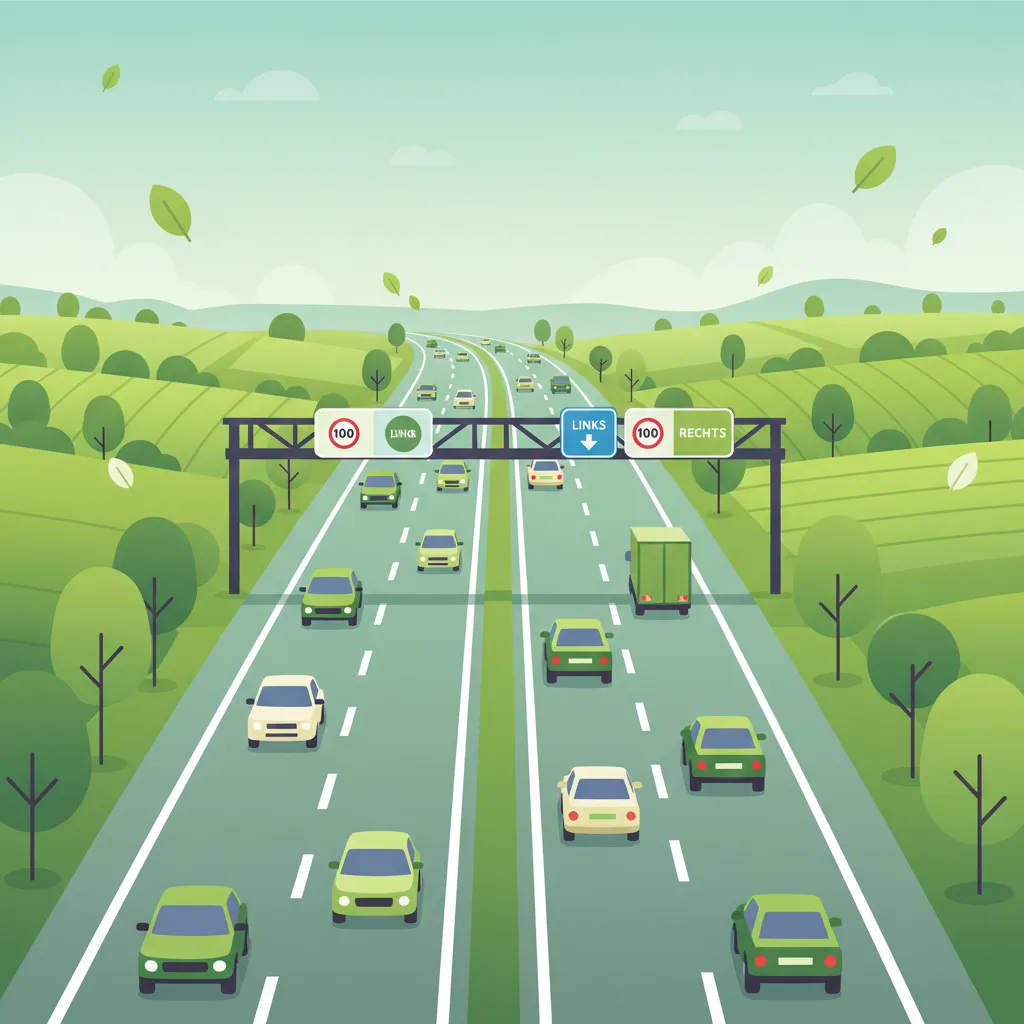
This lesson covers the specific articles of the Dutch Road Traffic Act that apply to motorways, with a primary focus on the strict rule of keeping to the rightmost available lane unless overtaking. It explains the legal and safety reasons for only passing on the left and discusses the correct positioning within a lane for maximum visibility and safety. The content also addresses the nuances of lane usage during heavy congestion, ensuring riders comply with the law and contribute to smooth traffic flow.

This lesson provides a detailed overview of the structure of Dutch traffic legislation, focusing on the Road Traffic Act (Wegenverkeerswet 1994) and its relationship with CBR regulations. It explains the hierarchy from national statutes to local ordinances and how these rules govern rider behavior in various traffic situations. Furthermore, the lesson clarifies the mechanisms for enforcement, the types of sanctions for non-compliance, and the legislative goal of ensuring road safety for all participants.
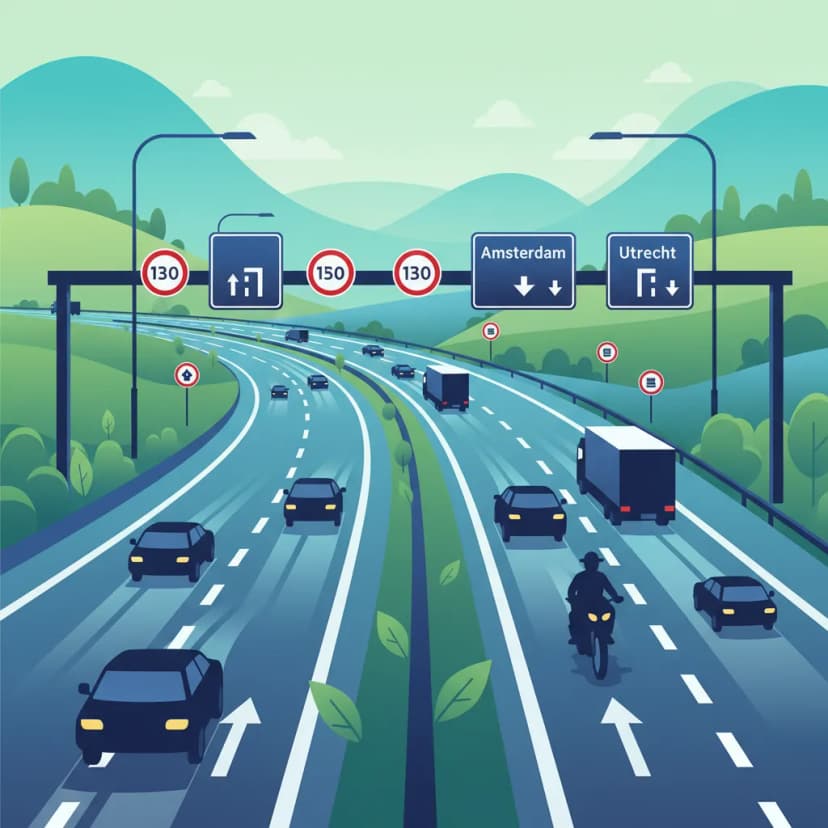
This lesson details the specific regulations for driving on Dutch motorways, identifiable by the G1 sign. You will learn the correct procedure for joining the flow of traffic using the acceleration lane and for leaving via the deceleration lane. The curriculum reinforces the 'keep right unless overtaking' rule for lane discipline. It also explains that stopping is strictly forbidden, and the hard shoulder (vluchtstrook) may only be used for genuine emergencies.

This lesson offers an in-depth study of Dutch regulatory signs, which impose mandatory actions or prohibitions on road users, with a specific focus on their impact on motorcyclists. It explains the visual language of prohibition symbols ('verbodsborden') and obligation symbols ('verplichtingsborden'), the contexts in which they appear, and the strict statutory consequences of non-compliance. Real-world examples are used to illustrate how these signs directly influence route planning, overtaking decisions, and speed management.

This lesson covers prohibition signs, which are used to forbid specific maneuvers or restrict access for certain vehicles. You will study the characteristics of these signs, typically circular with a red border, such as the C2 'No Entry for any vehicle' or the F1 'No Parking' sign. The content details the legal consequences of ignoring these prohibitions and explains how they contribute to traffic flow and safety in congested or sensitive areas. Recognizing these signs is fundamental to avoiding fines and dangerous situations on the road.

This lesson provides a detailed explanation of the various markings painted on the road surface, which are as legally binding as physical signs. It clarifies the rules associated with solid and broken white lines, including restrictions on crossing them, and the function of arrows, chevrons, and text painted in lanes. A thorough understanding of these markings is fundamental for correct lane discipline, positioning, and safe maneuvering on a motorcycle.
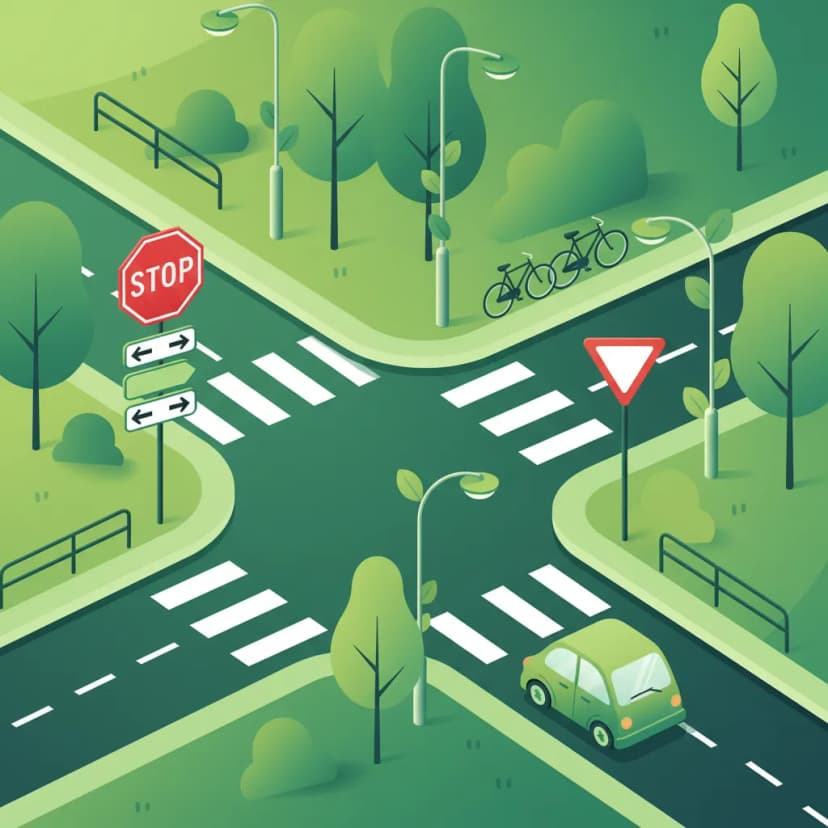
This lesson focuses on regulatory signs, which impose legal obligations on drivers and are essential for maintaining traffic order. You will learn to identify and act upon fundamental signs such as the octagonal B6 Stop sign, the diamond-shaped B1 Priority Road sign, and various compulsory direction arrows. The content explains the legal implications of these signs, detailing when a driver must stop completely, when they have priority, or the required path they must follow. Understanding these commands is crucial for safe and lawful driving at intersections and on designated routes.

This lesson focuses on C-code regulatory signs, which impose legal obligations and prohibitions on road users. Learners will study signs that establish speed limits, forbid entry, mandate specific directions, and restrict overtaking or parking. Understanding these signs is non-negotiable for legal compliance and safety, as they form the basis of traffic regulation and are a major component of the CBR theory exam for motorcyclists.
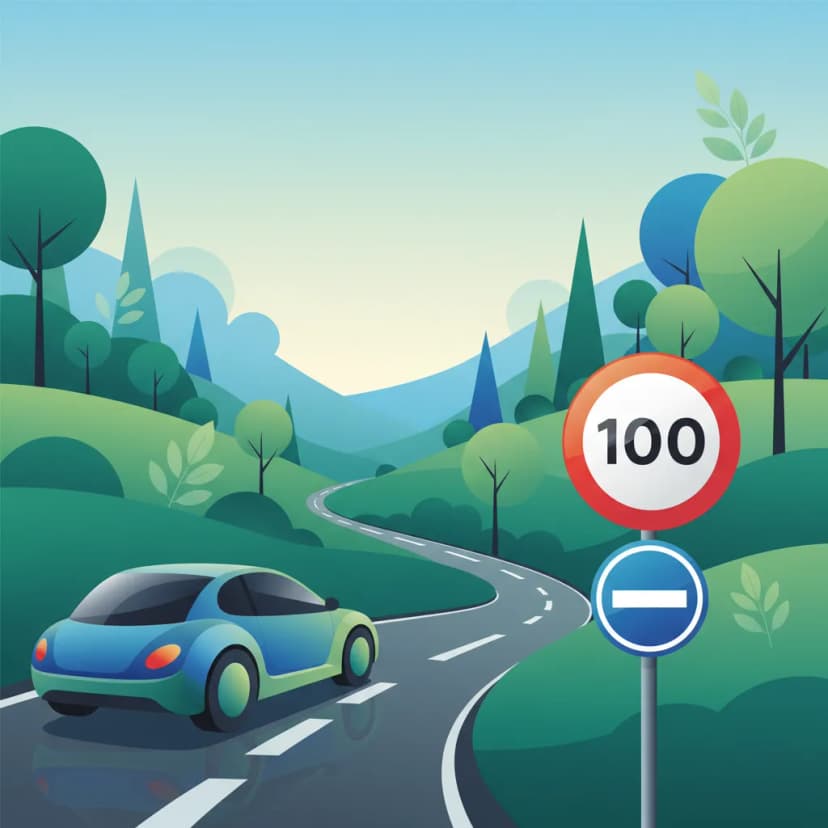
This lesson provides a detailed overview of fixed speed limits on the Dutch road network and the signs that indicate them. You will learn to identify signs for maximum speed (BORD 50) and understand the default limits that apply within built-up areas, on rural roads, and on motorways. The content emphasizes the importance of constant awareness and legal compliance to avoid penalties and ensure road safety for yourself and others.

This lesson focuses on Dutch regulatory signs that enforce mandatory rules and restrictions, particularly those impacting A2 motorcyclists. You will learn to recognize and obey prohibition signs, such as those indicating a motorcycle ban (BORD 40), speed limits, and overtaking restrictions (BORD 21). The content explains the legal consequences of non-compliance and how to apply these rules in practical riding scenarios to ensure full adherence to Dutch traffic law.
Explore the Dutch driving licence system, including category requirements (A1, A2, A), the role of the CBR, and understanding conditional and probationary licences. Learn about rider obligations and legal compliance in NL traffic.

This lesson explains the precise legal definition of a Category A1 motorcycle, including the maximum 125cc displacement and 11 kW power output. It outlines the entire CBR licensing pathway, from meeting the minimum age requirement to passing both the theory and practical exams. Key administrative obligations such as vehicle registration (kenteken), mandatory insurance, and roadworthiness inspections (APK) are also detailed, ensuring a full understanding of legal compliance.
This lesson provides a definitive list of the documents a motorcyclist must carry at all times when riding in the Netherlands. It specifies the requirement for a valid driving license ('rijbewijs') for the correct category, the vehicle registration card ('kentekenbewijs'), and proof of valid third-party liability insurance ('verzekeringsbewijs'). The content clarifies that failure to produce these documents during a police check can result in significant fines and legal complications.

This lesson outlines the precise age requirements for obtaining and holding a Category AM driving license in the Netherlands. It details the minimum age for operating various AM vehicles and explains the validity period of the license and the renewal process. Furthermore, the content clarifies how an AM license relates to other categories like B (car) or A (motorcycle), and what age-related restrictions may apply to novice riders. This knowledge is crucial for ensuring full legal compliance from the start of your riding journey.

This lesson examines the statutory duties imposed on motorcyclists, with a strong emphasis on the 'duty of care' (zorgplicht) and the conditions under which legal liability arises after a traffic incident. It clarifies the relationship between personal responsibility, mandatory insurance coverage, and the legal expectation for proactive risk mitigation to prevent accidents. The content also analyzes scenarios to illustrate how liability is typically determined within Dutch traffic jurisprudence, preparing riders for their legal responsibilities.

Holding a license and owning a vehicle comes with continuous legal responsibilities. This lesson reminds you of the importance of renewing your driving license before it expires and ensuring your vehicle's insurance policy remains active. It also covers your duty to inform the relevant authorities (like the RDW) of any changes, such as a change of address. Fulfilling these administrative obligations is essential to remaining a legal and responsible road user in the Netherlands.

This lesson outlines every stage of the motorcycle licensing pathway, from the initial application to the successful completion of the CBR theory and practical examinations. It explains the mandatory documentation, exam scheduling procedures, and the specific composition of the theory test, including hazard perception and knowledge questions. The content also covers important procedural details such as re-examination policies, time limits for completion, and the legal validity of the final issued driver's license.
This lesson covers the mandatory lighting and signaling equipment for A2 motorcycles under Dutch law, ensuring you remain visible and communicate your intentions correctly. You will learn the rules for using headlights, taillights, turn signals, and brake lights in various conditions, including daytime and adverse weather. The content also addresses the importance of maintaining this equipment and using hand signals as a valid secondary method of communication in traffic.
This lesson covers the specific articles of the Dutch Road Traffic Act that apply to motorways, with a primary focus on the strict rule of keeping to the rightmost available lane unless overtaking. It explains the legal and safety reasons for only passing on the left and discusses the correct positioning within a lane for maximum visibility and safety. The content also addresses the nuances of lane usage during heavy congestion, ensuring riders comply with the law and contribute to smooth traffic flow.

This lesson covers the universal Dutch road rules with a specific focus on their application to light motorcycles. It details the various speed limits for different road types, from urban areas to motorways, and explains the correct procedures for overtaking and lane positioning. The legal aspects of lane filtering in congestion are also examined, alongside mandatory equipment use like daytime running lights, to ensure riders can integrate safely and legally into traffic flow.

This lesson serves as a critical reinforcement of the legal requirement to carry specific documents ('verkeersdocumenten') while riding. It explicitly lists the mandatory items—driving license, vehicle registration, and proof of insurance—and explains the legal consequences of failing to produce them on demand during a police stop. The content stresses that having these documents readily accessible is a basic and non-negotiable aspect of legal motorcycling in the Netherlands.
Find clear answers to common questions learners have about Core Legal Terminology (verkeerswet, CBR, rijbewijs). Learn how the lesson is structured, which driving theory objectives it supports, and how it fits into the overall learning path of units and curriculum progression in the Netherlands. These explanations help you understand key concepts, lesson flow, and exam focused study goals.
The 'verkeerswet' refers to the overarching body of Dutch traffic legislation that governs all road users. The 'rijbewijs', on the other hand, is the official document, or license, that permits you to legally operate a specific type of vehicle, such as a Category A motorcycle, after passing the required exams.
The CBR is the official examination institute responsible for conducting your theory and practical driving tests in the Netherlands. Knowing its role helps you understand the examination process, the standards you need to meet, and the context of official study materials and exam questions.
Yes, the Netherlands has different categories of motorcycle licenses (A1, A2, A) based on engine power and rider age. This lesson focuses on the terminology generally applicable, but your Category A rijbewijs allows you to ride unrestricted motorcycles.
Absolutely. Many theory exam questions are based on legal terminology and require you to understand terms like 'verkeerswet', 'CBR', and 'rijbewijs' within their proper context. A solid grasp of these basics prevents misinterpretations and increases your chances of answering correctly.
While this lesson introduces the term, the full Dutch Road Traffic Act ('Wegenverkeerswet 1994') is the official source. However, for your exam preparation, understanding the core concepts and definitions provided in this course will be sufficient.