
Your driving licence and vehicle ownership come with ongoing administrative duties. This lesson clarifies the essential steps for renewing your licence and maintaining your vehicle's legal status, including insurance and official notifications. Staying on top of these responsibilities ensures you remain a compliant and safe road user in the Netherlands.
Driving a moped or scooter on Dutch roads requires more than just knowing traffic rules and handling your vehicle; it also demands diligent administrative compliance. As a holder of a Dutch Category AM driving licence, you have continuous legal responsibilities regarding your licence, your vehicle's registration, and its insurance. Fulfilling these record-keeping, renewal, and notification duties is crucial for remaining a legal and responsible road user in the Netherlands. This lesson outlines all essential administrative obligations, explaining their importance and the consequences of non-compliance.
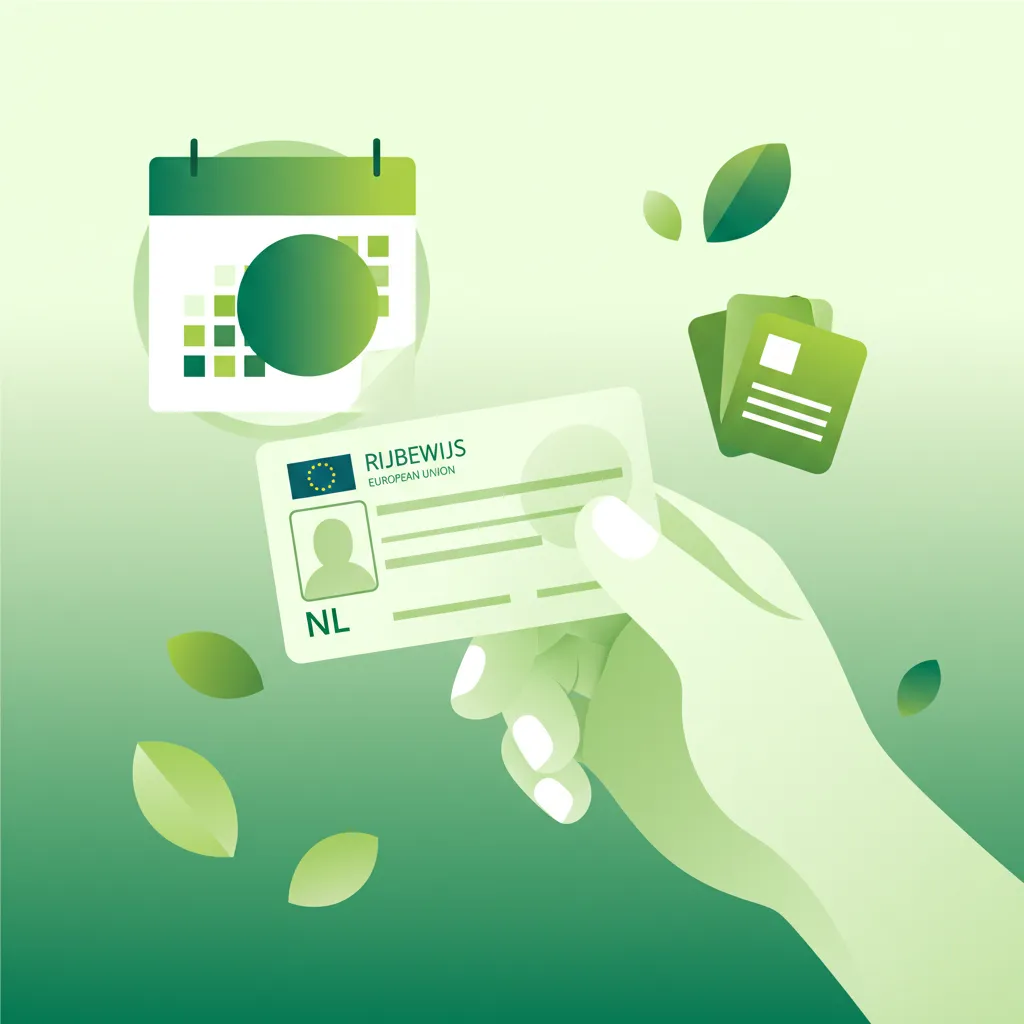
Your Dutch Category AM driving licence is not valid indefinitely. It has a specific expiry date, after which it must be renewed. This system is in place to ensure that all drivers continue to meet the necessary age, health, and competency standards throughout their driving careers.
The validity period of your Dutch Category AM driving licence depends primarily on your age at the time of issuance:
The expiry date is clearly printed on your physical driving licence card. It is your responsibility to monitor this date and initiate the renewal process well in advance.
Always check the expiry date on your Dutch driving licence immediately after receiving it and make a note to start the renewal process several weeks before it expires.
Renewing your Dutch driving licence is a straightforward process, but it requires timely action. The primary authority for driving licence issuance and renewal in the Netherlands is the Centraal Bureau Rijvaardigheidsbewijzen (CBR).
To renew your Category AM licence, you will typically need to:
It is crucial to understand that merely submitting a renewal application does not automatically extend the validity of your existing licence. You must have a valid licence in your possession to legally ride your moped or scooter. In some cases, a provisional permission might be granted while awaiting your new card, but this is not guaranteed and requires explicit confirmation.
Riding with an expired Category AM driving licence is a serious offence in the Netherlands and carries significant penalties:
In the Netherlands, it is a legal requirement for every motorised vehicle used on public roads, including mopeds and scooters (bromfietsen and snorfietsen), to have at least third-party liability insurance. This is mandated by the Wet aansprakelijkheidsverzekering motorrijtuigen (WAM), or Motor Vehicle Liability Insurance Act.
WA insurance is the minimum compulsory third-party liability insurance required by Dutch law for all motorised vehicles. It covers damages (both personal injury and property damage) that you cause to other road users or their property. It does not cover damage to your own vehicle.
This insurance is fundamental to protecting victims of road accidents. Without it, a person injured or whose property is damaged by your vehicle might not receive compensation, creating significant social and financial hardship.
Your WA insurance policy must be continuous, meaning there should be no lapse in coverage. Even a single day without active insurance can lead to penalties. Insurance companies typically send renewal notices, but it is ultimately your responsibility to ensure your policy remains active.
Common reasons for insurance lapse include:
Never assume your insurance policy will automatically renew without verifying it. Always confirm the renewal and retain proof of your active policy.
While riding, you must be able to prove that your vehicle is insured. This proof is typically in the form of an insurance certificate, sometimes referred to as a "green card" (although the physical green card is now often digital and primarily for international travel).
Failure to present valid proof of insurance during a police stop can result in a fine. More critically, if you are involved in an accident and your insurance has lapsed, you will be personally responsible for all damages caused to third parties, which can amount to hundreds of thousands of euros in severe cases.
Every motorised vehicle in the Netherlands, including your Category AM moped or scooter, must be officially registered with the Rijksdienst voor het Wegverkeer (RDW). The RDW is the national vehicle authority responsible for vehicle registration, licensing, and technical inspections.
The RDW is the Dutch national vehicle registration authority. It is responsible for vehicle registration, issuing number plates and registration certificates, maintaining the national vehicle database, and conducting vehicle inspections.
The RDW's database is critical for identifying vehicles, enforcing traffic laws, collecting vehicle-related taxes, managing safety recalls, and ensuring accurate ownership records. Keeping your vehicle's data accurate with the RDW is a fundamental legal obligation.
When your moped or scooter is registered, it receives a unique registration number (kenteken) and a corresponding number plate. You will also be issued a Registration Certificate (Kentekenbewijs). This certificate is proof of your vehicle's registration and contains vital information about the vehicle and its registered owner.
The number plate must be clearly visible, securely affixed to your vehicle, and kept clean. Riding with a missing, damaged, or obscured number plate is an offence.
It is your legal duty to ensure that the data associated with your vehicle's registration is always current. This includes:
Beyond renewing your licence and insuring your vehicle, you have a continuous "notification duty" to inform the RDW (and indirectly the CBR) of any significant changes in your personal details or vehicle status. This ensures that official records accurately reflect reality for enforcement and communication purposes.
If you move to a new address within the Netherlands, you are legally required to notify the RDW.
You must report a change of address to the RDW within 14 days of moving.
This can typically be done easily online through the RDW portal or via an authorised post office. While your municipality automatically updates your address in the Basic Registration of Persons (BRP), this update does not automatically transfer to the RDW's vehicle registration records. Failure to update your address can mean you miss important correspondence, such as renewal notices for your driving licence or insurance, potentially leading to unintentional non-compliance.
When you buy or sell a second-hand moped or scooter, the overdrachtsbewijs (transfer of ownership document) is crucial. Both the seller and the buyer must complete this process at an authorised RDW service point (often a post office or garage). The seller receives a proof of release (vrijwaringsbewijs), which releases them from further administrative obligations for that vehicle. The buyer then receives the new registration certificate.
The transfer of ownership must be formally recorded with the RDW before the new owner rides the vehicle on public roads. Failing to do so can leave the former owner legally and financially liable for any incidents or fines associated with the vehicle.
Timely notification of changes is vital for several reasons:
As a moped or scooter rider in the Netherlands, you must always be prepared to provide proof of your legal compliance upon request by law enforcement.
When operating a Category AM vehicle on public roads, you are legally obligated to carry and be able to present the following documents:
These documents serve as immediate verification of your legal authorisation to drive and your vehicle's legal status.
During a routine traffic stop, a police officer or a CBR enforcement officer (boa) may ask you to present these documents. You must comply with this request promptly. If you cannot produce any of the required documents, even if they are valid but simply not with you, it will lead to an administrative fine.
While digital copies of documents (e.g., a photo of your licence on your phone) might seem convenient, they are generally not officially accepted as a replacement for the physical documents in the Netherlands.
To avoid fines and complications, always ensure you have your physical Dutch driving licence, the vehicle's registration certificate, and a physical (or easily accessible digital) proof of insurance with you when riding your moped or scooter.
Many drivers inadvertently fall foul of administrative rules, leading to unnecessary fines and legal complications. Understanding common pitfalls can help you avoid them.
One of the most frequent violations is riding with an expired driving licence. A common misunderstanding is that submitting a renewal application or having a "renewal receipt" automatically grants permission to continue driving. This is generally not the case. Unless you receive explicit provisional permission from the CBR, you are legally not allowed to drive with an expired licence.
Another critical error is allowing your WA insurance to lapse or driving an unregistered vehicle. The RDW's systems regularly check for continuous insurance coverage. If your vehicle is registered but uninsured, you will receive fines directly from the RDW. Similarly, driving an unregistered vehicle means it is untraceable and uninsured, making it illegal.
Failing to report changes such as your address or vehicle ownership to the RDW within the stipulated timeframe is a common oversight. This can lead to official correspondence being missed, incorrect records, and potential legal issues.
The Dutch legal system takes administrative compliance seriously. Non-compliance with record-keeping, renewal, and notification obligations can result in a range of penalties, from financial fines to more severe legal consequences.
In addition to fines, repeated administrative violations or serious breaches (e.g., riding with a very long-expired licence, causing an accident while uninsured) can lead to:
One of the most devastating consequences of administrative non-compliance relates to insurance. If you are involved in an accident while:
Your insurance policy may be deemed invalid. This means the insurance company can refuse to cover any damages. You would then be personally liable for all costs, including medical expenses for injured parties, property repairs, and legal fees. Such costs can be astronomical and financially ruinous.
Lesson content overview
Explore all units and lessons included in this driving theory course.
Explore search topics learners often look for when studying Record‑Keeping, Renewal, and Continuing Obligations. These topics reflect common questions about road rules, driving situations, safety guidance, and lesson level theory preparation for learners in the Netherlands.
Browse additional driving theory lessons that cover connected traffic rules, road signs, and common driving situations related to this topic. Improve your understanding of how different rules interact across everyday traffic scenarios.
Understand the essential administrative tasks for Dutch drivers including licence renewal, maintaining continuous vehicle insurance, and updating your details with the RDW to remain compliant with traffic law.
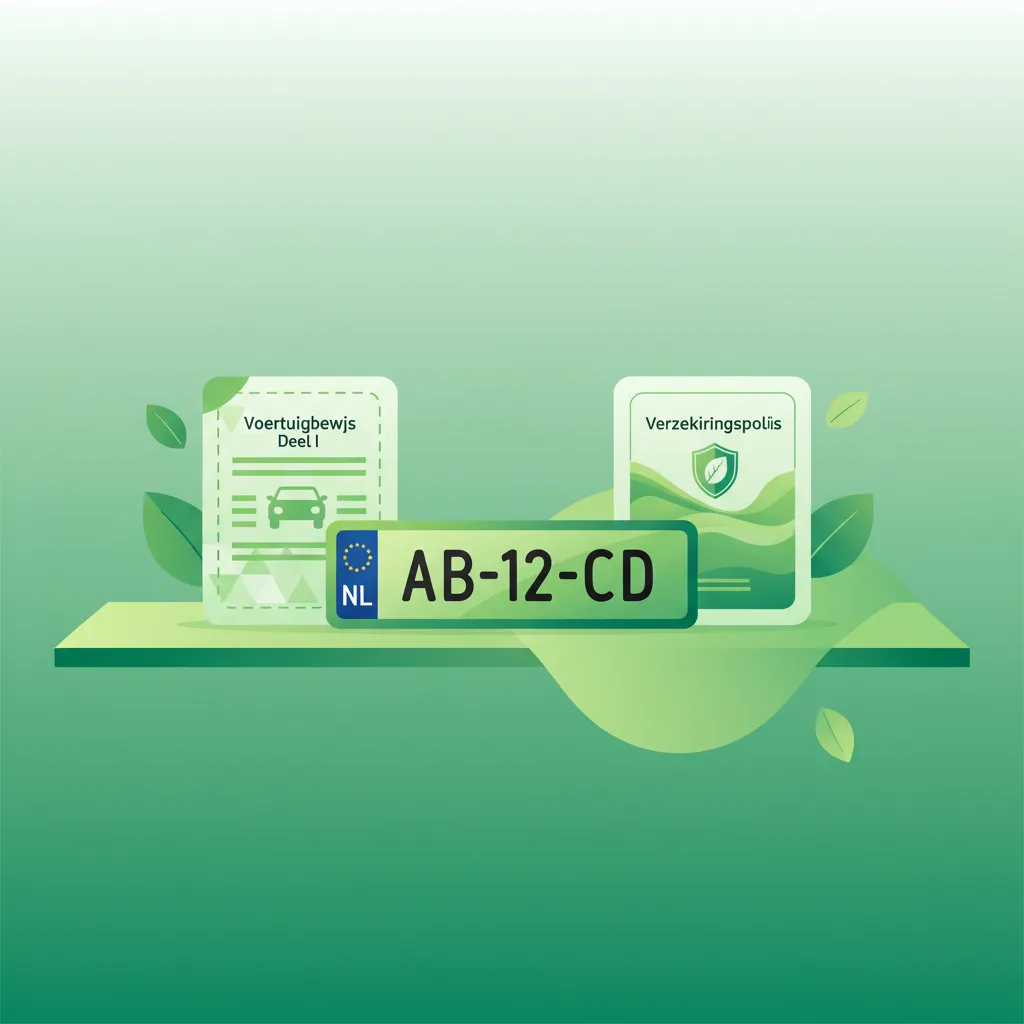
Explore the essential administrative requirements for any Category AM vehicle owner. This lesson covers the mandatory vehicle registration process, the distinction between yellow plates for bromfietsen and blue plates for snorfietsen, and the legal obligation for third-party liability insurance (WA-verzekering). You will learn what documentation is required, the consequences of non-compliance, and how these elements are verified during traffic enforcement, ensuring your vehicle is always road-legal.
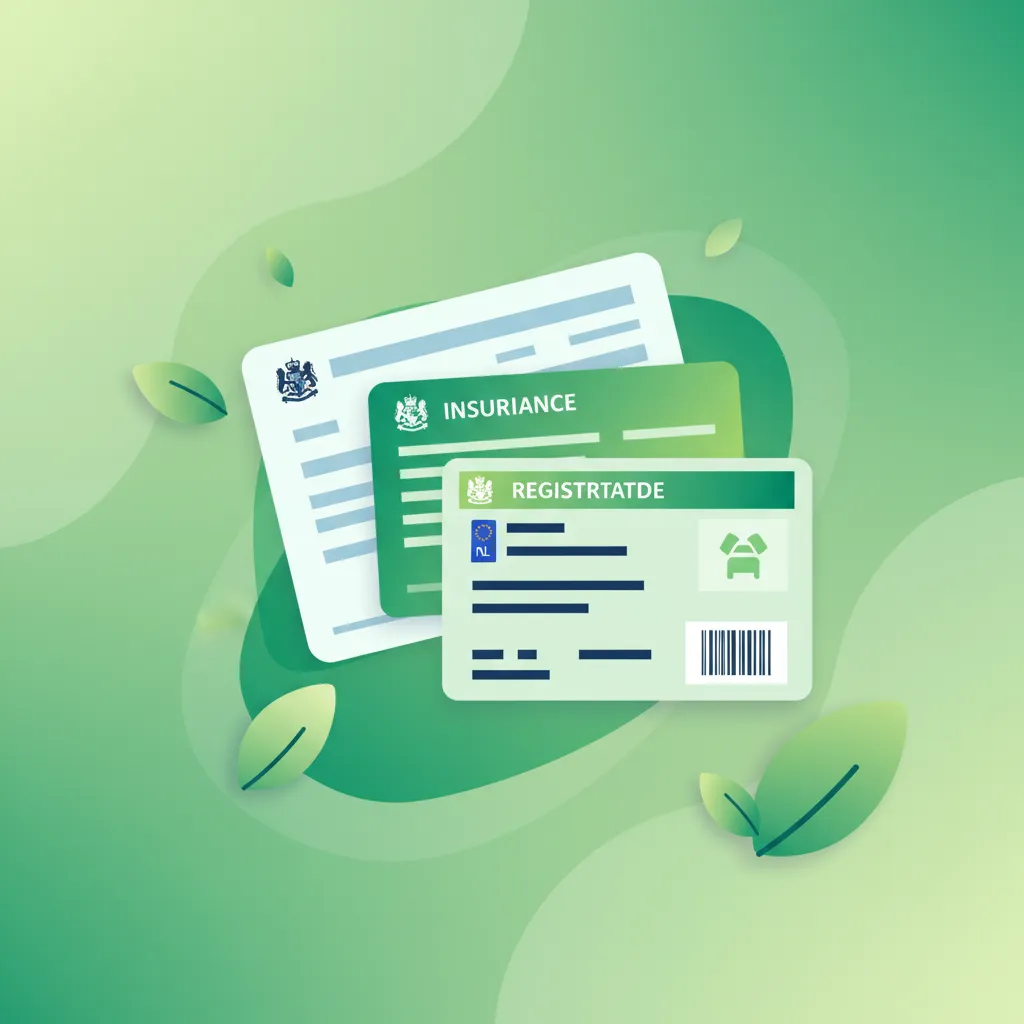
This lesson provides a definitive list of the documents a motorcyclist must carry at all times when riding in the Netherlands. It specifies the requirement for a valid driving license ('rijbewijs') for the correct category, the vehicle registration card ('kentekenbewijs'), and proof of valid third-party liability insurance ('verzekeringsbewijs'). The content clarifies that failure to produce these documents during a police check can result in significant fines and legal complications.
This lesson covers the full range of lights and signals required on a vehicle for visibility and communication. You will learn about the mandatory requirements for headlights, taillights, brake lights, indicators, and reflectors. The curriculum emphasizes the driver's legal responsibility to ensure all lights are clean and functional before every journey. The correct use and function of the horn as an audible warning device in case of imminent danger are also explained.
This lesson explains the purpose and frequency of the APK (Algemene Periodieke Keuring), the mandatory periodic safety and emissions inspection for vehicles in the Netherlands. You will understand what aspects of the car are checked, including brakes, steering, lights, and tires. The curriculum also details the essential documents you must have with you when driving, including the vehicle registration certificate (kentekenbewijs) and proof of insurance. Failure to comply with these requirements can result in significant fines.
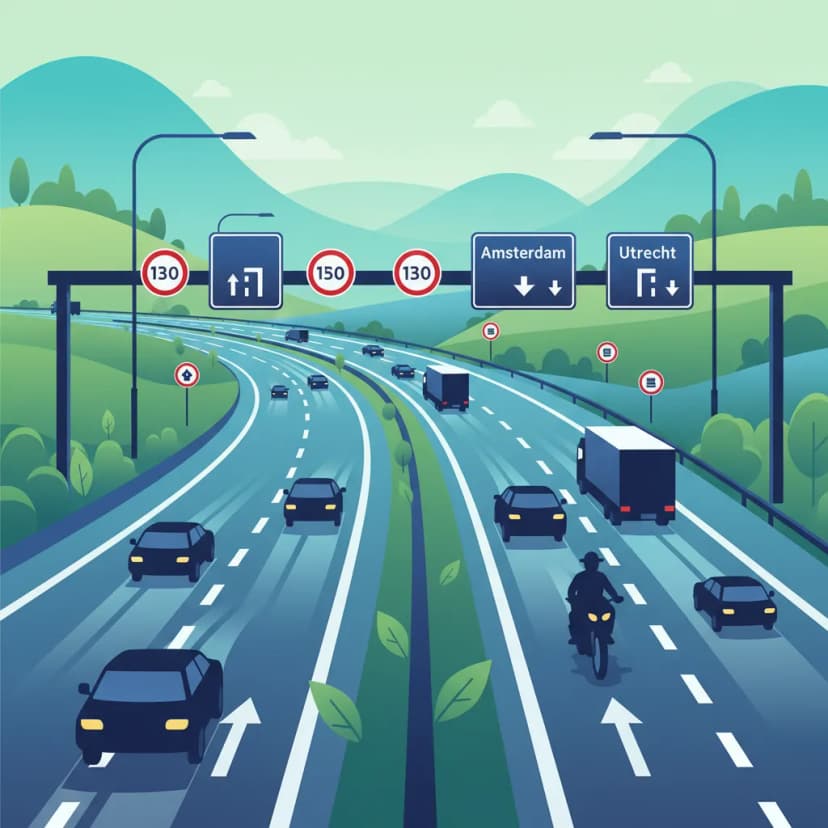
This lesson details the specific regulations for driving on Dutch motorways, identifiable by the G1 sign. You will learn the correct procedure for joining the flow of traffic using the acceleration lane and for leaving via the deceleration lane. The curriculum reinforces the 'keep right unless overtaking' rule for lane discipline. It also explains that stopping is strictly forbidden, and the hard shoulder (vluchtstrook) may only be used for genuine emergencies.
This lesson covers the procedures and safety considerations for driving in reverse and turning around. You will learn that reversing should only be done over short distances and when it does not endanger or obstruct other road users. The curriculum details techniques for turning in the road and identifies situations and locations where U-turns are prohibited. The importance of all-around observation, checking blind spots, and yielding to all other traffic is a central theme.

This lesson outlines the precise age requirements for obtaining and holding a Category AM driving license in the Netherlands. It details the minimum age for operating various AM vehicles and explains the validity period of the license and the renewal process. Furthermore, the content clarifies how an AM license relates to other categories like B (car) or A (motorcycle), and what age-related restrictions may apply to novice riders. This knowledge is crucial for ensuring full legal compliance from the start of your riding journey.
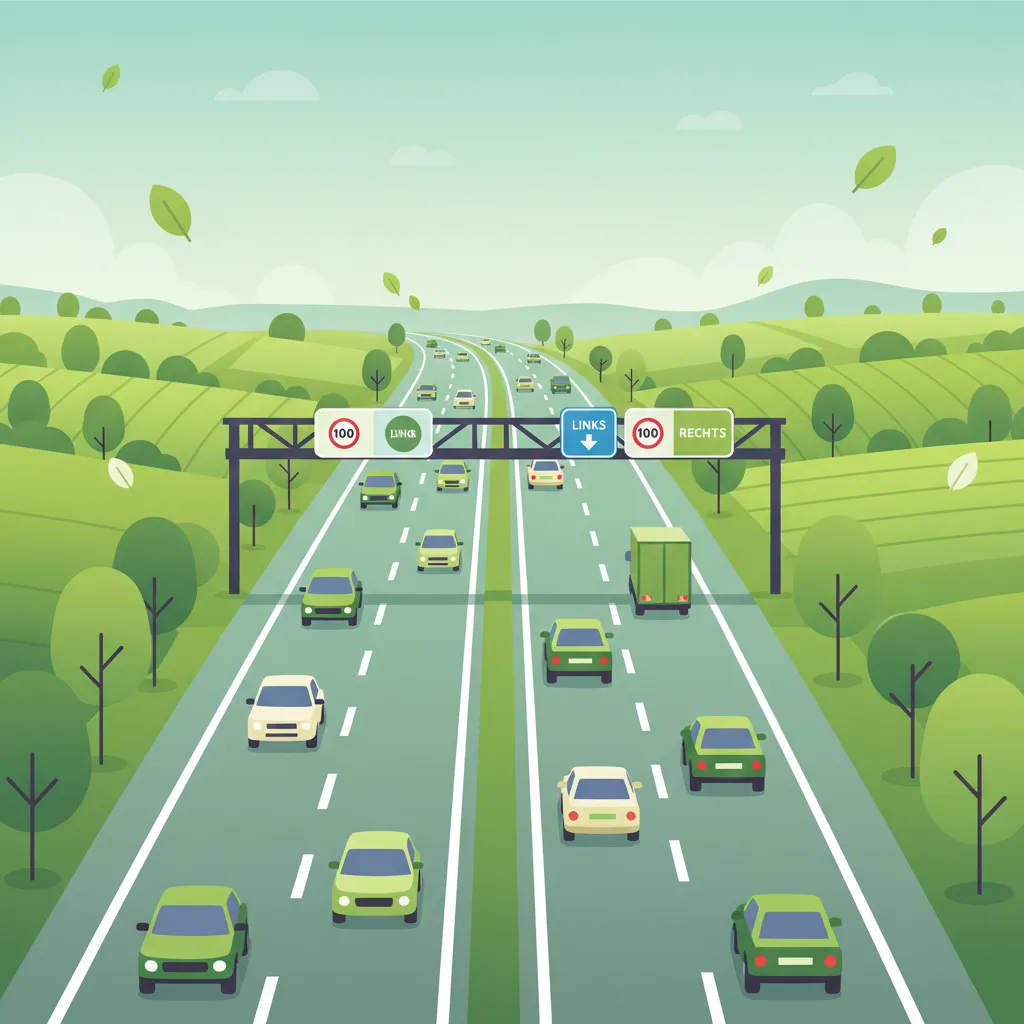
This lesson covers the specific articles of the Dutch Road Traffic Act that apply to motorways, with a primary focus on the strict rule of keeping to the rightmost available lane unless overtaking. It explains the legal and safety reasons for only passing on the left and discusses the correct positioning within a lane for maximum visibility and safety. The content also addresses the nuances of lane usage during heavy congestion, ensuring riders comply with the law and contribute to smooth traffic flow.
This lesson serves as a critical reinforcement of the legal requirement to carry specific documents ('verkeersdocumenten') while riding. It explicitly lists the mandatory items—driving license, vehicle registration, and proof of insurance—and explains the legal consequences of failing to produce them on demand during a police stop. The content stresses that having these documents readily accessible is a basic and non-negotiable aspect of legal motorcycling in the Netherlands.
This lesson details the functions of the various lights on a car and the legal requirements for their use. You will learn the difference between dipped beams (dimlicht), which are the standard headlights for night driving and poor visibility, and main beams (grootlicht), which can only be used when they won't dazzle other road users. The content also covers the use of sidelights (stadslicht) for parking and the automatic function of Daytime Running Lights (DRLs). Correct usage is vital for visibility and avoiding blinding other drivers.
Learn about the significant fines, legal penalties, and insurance invalidity risks associated with failing to meet Dutch administrative obligations for driving licences and vehicle ownership.
This lesson provides a definitive list of the documents a motorcyclist must carry at all times when riding in the Netherlands. It specifies the requirement for a valid driving license ('rijbewijs') for the correct category, the vehicle registration card ('kentekenbewijs'), and proof of valid third-party liability insurance ('verzekeringsbewijs'). The content clarifies that failure to produce these documents during a police check can result in significant fines and legal complications.
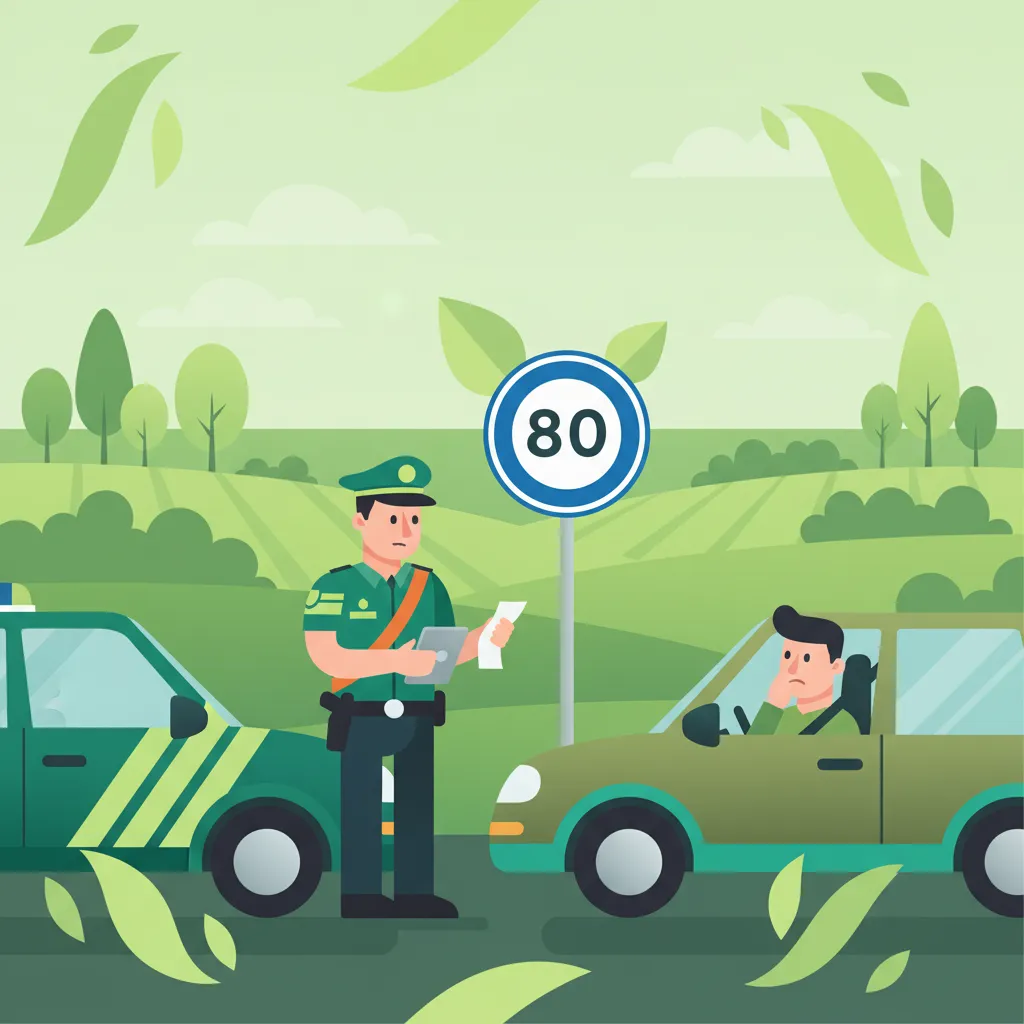
This lesson outlines the significant penalties for driving under the influence in the Netherlands. You will learn about the scale of fines, the potential for an immediate driving ban (rijverbod), and the circumstances under which a driver's license can be suspended or revoked. The curriculum also covers the mandatory and costly educational courses (like LEMA or EMG) that convicted drivers may be forced to attend to regain their driving privileges. A DUI conviction results in a criminal record, which can have long-lasting personal and professional consequences.
This lesson explains the purpose and frequency of the APK (Algemene Periodieke Keuring), the mandatory periodic safety and emissions inspection for vehicles in the Netherlands. You will understand what aspects of the car are checked, including brakes, steering, lights, and tires. The curriculum also details the essential documents you must have with you when driving, including the vehicle registration certificate (kentekenbewijs) and proof of insurance. Failure to comply with these requirements can result in significant fines.
This lesson serves as a critical reinforcement of the legal requirement to carry specific documents ('verkeersdocumenten') while riding. It explicitly lists the mandatory items—driving license, vehicle registration, and proof of insurance—and explains the legal consequences of failing to produce them on demand during a police stop. The content stresses that having these documents readily accessible is a basic and non-negotiable aspect of legal motorcycling in the Netherlands.
This lesson covers the full range of lights and signals required on a vehicle for visibility and communication. You will learn about the mandatory requirements for headlights, taillights, brake lights, indicators, and reflectors. The curriculum emphasizes the driver's legal responsibility to ensure all lights are clean and functional before every journey. The correct use and function of the horn as an audible warning device in case of imminent danger are also explained.

This lesson explains the fundamental concepts of legal liability in traffic accidents and the role of mandatory third-party insurance (WA-verzekering) in the Netherlands. You will learn how insurance companies use the accident statement form and other evidence to determine fault and process claims for damages. Understanding this process helps you appreciate the financial responsibilities associated with riding and the importance of having correct and valid insurance cover at all times.
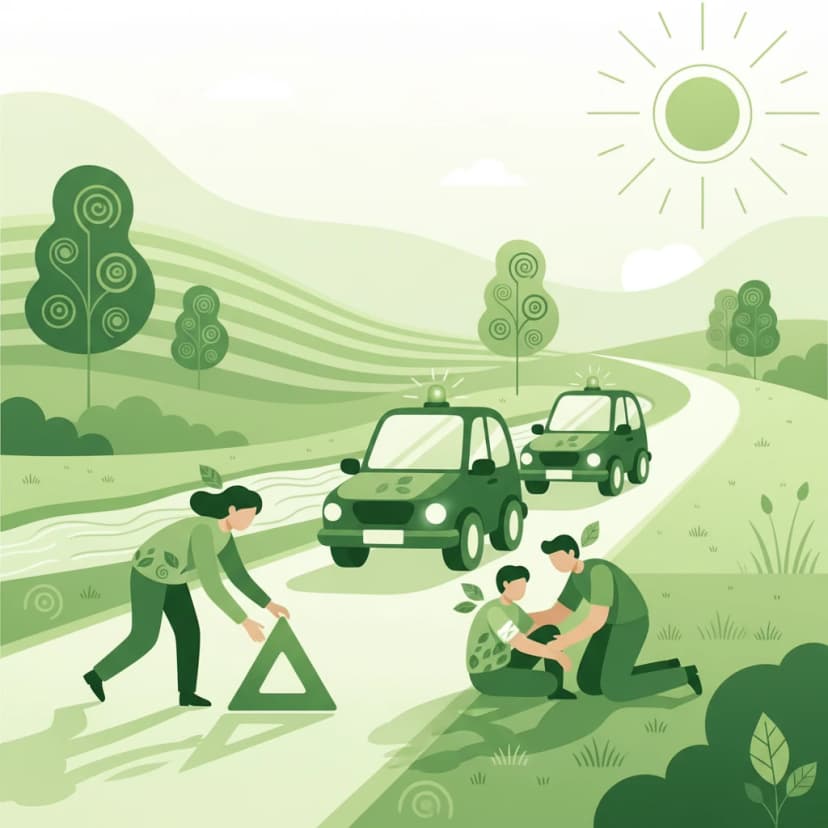
This lesson outlines the correct protocol to follow after a traffic accident. The first priority is to ensure the safety of everyone involved by securing the scene and checking for injuries. You will learn when it is mandatory to call the emergency services (112), such as when there are injuries or significant road blockage. The curriculum also explains the legal requirement to stop and exchange insurance and contact details with other parties involved. The use of the European Accident Statement form to record the details is also covered.
This lesson outlines the precise age requirements for obtaining and holding a Category AM driving license in the Netherlands. It details the minimum age for operating various AM vehicles and explains the validity period of the license and the renewal process. Furthermore, the content clarifies how an AM license relates to other categories like B (car) or A (motorcycle), and what age-related restrictions may apply to novice riders. This knowledge is crucial for ensuring full legal compliance from the start of your riding journey.
Explore the essential administrative requirements for any Category AM vehicle owner. This lesson covers the mandatory vehicle registration process, the distinction between yellow plates for bromfietsen and blue plates for snorfietsen, and the legal obligation for third-party liability insurance (WA-verzekering). You will learn what documentation is required, the consequences of non-compliance, and how these elements are verified during traffic enforcement, ensuring your vehicle is always road-legal.
This lesson focuses on the use of specialized lights for specific situations. You will learn the strict conditions under which fog lights may be used: the rear fog light is only permitted when visibility from fog or snow is less than 50 meters, and not in rain. The lesson also explains the correct use of hazard warning lights, which are intended to warn other drivers of a stationary obstruction (like a breakdown or the tail end of a sudden traffic jam) or while being towed.
Find clear answers to common questions learners have about Record‑Keeping, Renewal, and Continuing Obligations. Learn how the lesson is structured, which driving theory objectives it supports, and how it fits into the overall learning path of units and curriculum progression in the Netherlands. These explanations help you understand key concepts, lesson flow, and exam focused study goals.
You can typically renew your Category AM driving licence from two months before its expiry date. It is advisable to initiate the renewal process well in advance to avoid any lapse in validity and potential issues with insurance or riding legally.
Riding with an expired Category AM driving licence is illegal. You could face fines, and if you are involved in an accident, your insurance may be invalidated, leaving you personally liable for all damages and costs. It can also impact future licence applications.
Yes, you are legally required to inform the RDW (Dienst Wegverkeer) of any change of address within the Netherlands. This ensures that official correspondence, including any reminders for licence renewal or vehicle-related matters, reaches you promptly.
Operating a vehicle without valid insurance is illegal. If your insurance lapses, you cannot legally ride your vehicle. This can result in fines, and crucially, if you cause an accident without insurance, you will be personally responsible for all financial consequences, which can be severe.
Yes, the CBR theory exam for Category AM includes questions testing your knowledge of ongoing legal obligations. These questions assess your understanding of licence validity, insurance requirements, and administrative duties necessary for legal operation of your vehicle.