
Before you can legally ride your bromfiets or snorfiets on Dutch roads, it needs to be registered and insured. This lesson covers the crucial administrative requirements, including understanding different licence plates and the mandatory third-party liability insurance (WA-verzekering). Mastering these details is key to understanding vehicle legality and avoiding fines.
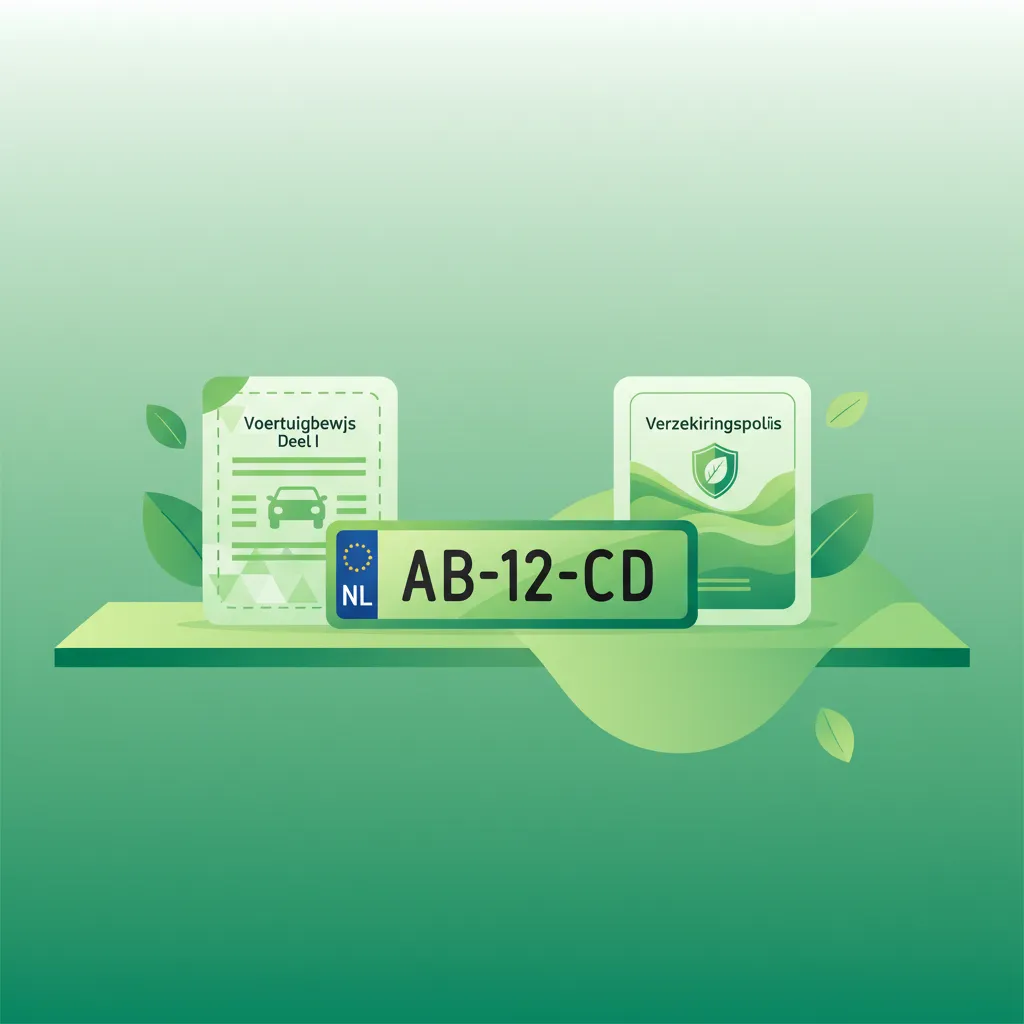
Operating any motorised two-wheel vehicle in the Netherlands, including bromfietsen (mopeds), snorfietsen (light mopeds), and speed-pedelecs (fast e-bikes), requires strict adherence to specific administrative regulations. This lesson delves into the mandatory processes of vehicle registration (kentekenregistratie), the distinct colour-coded license plates, and the legal obligation for third-party liability insurance (WA-verzekering). Mastering these requirements is fundamental for any Category AM vehicle owner, ensuring legal road use, personal safety, and financial protection.
Without proper registration, the correct license plate, and valid insurance, your vehicle is considered road-illegal. This exposes you to significant fines, potential vehicle seizure by authorities, and severe personal liability for any damages caused in an accident. These administrative elements are also the primary checks conducted by Dutch police and automated traffic enforcement systems, making compliance crucial for smooth and lawful navigation on Dutch roads.
Kentekenregistratie ExplainedKentekenregistratie is the formal process of entering a motorised vehicle into the Dutch national vehicle register, managed by the Rijksdienst voor het Wegverkeer (RDW), the Dutch Vehicle Authority. This registration assigns a unique alphanumeric identifier, known as a kenteken (license plate number), to your vehicle. This kenteken is paramount for traceability, enabling authorities to link the vehicle to its owner, verify technical compliance with Dutch standards, and enforce traffic regulations effectively.
When acquiring a Category AM vehicle, you will encounter different registration scenarios:
bromfiets or snorfiets, the ownership must be transferred to your name. This process updates the RDW database, issuing a new registration certificate (kentekenbewijs) in the new owner's name, while the kenteken number itself usually remains the same for the vehicle.The physical registration certificate that serves as official proof of your vehicle's registration in the national RDW system. You are legally required to carry this document when operating your vehicle.
It is a legal requirement that your vehicle must be registered and possess a valid kentekenbewijs before it can be used on any Dutch public road. This is enshrined in Article 14 of the Road Traffic Regulations (RVV 1990). The assigned kenteken number must then be permanently affixed to a physical license plate in a clearly legible manner. Failure to comply can result in immediate penalties during traffic enforcement.
Do not assume that an electric bike or a low-speed moped is exempt from registration. Only non-motorised e-bikes (max 25 km/h, max 250 W motor assistance) do not require registration. All other motorised two-wheelers in Category AM, regardless of speed, must be registered.
KentekenplatenThe Netherlands employs a distinctive system of colour-coded license plates (kentekenplaten) for different vehicle categories, providing an instant visual cue about a vehicle's classification and its applicable traffic rules. For Category AM vehicles, the plate colour is a crucial indicator for both other road users and law enforcement, signaling the vehicle's maximum design speed and where it is permitted to ride.
BromfietsenYellow plates are specifically reserved for bromfietsen. These are motorised two-wheel vehicles with a maximum design speed of up to 45 km/h. When you see a yellow plate, it immediately identifies the vehicle as a bromfiets to other road users and police. This visual distinction helps in enforcing speed limits and determining road access, as bromfietsen have different rules regarding the use of cycling paths compared to snorfietsen.
Snorfietsen and Speed-PedelecsBlue plates are designated for snorfietsen and speed-pedelecs.
snorfiets is a motorised two-wheel vehicle with a maximum design speed of up to 25 km/h.speed-pedelec is an electrically assisted bicycle with motor assistance that can reach up to 45 km/h. While they can go fast, they are often regulated similarly to snorfietsen in terms of road access in some areas, but always require a helmet designed for mopeds and a blue license plate.The blue plate signifies that these vehicles generally adhere to lower speed limits and may have different road access rules, such as being permitted on certain bicycle paths (fietspaden) where bromfietsen (yellow plates) are not.
The colour of your license plate must precisely match your vehicle's legal classification as registered with the RDW (RVV 1990, Article 57). Any change to your vehicle that alters its classification (e.g., modifying a snorfiets to exceed 25 km/h, effectively turning it into a bromfiets) requires a re-registration with the RDW and the acquisition of the correct plate colour. Displaying an incorrect plate colour will lead to fines and can affect how authorities perceive your vehicle's compliance.
A common misconception is that all mopeds have yellow plates. This is incorrect. While many mopeds are bromfietsen, faster electric bikes (speed-pedelecs) and slower mopeds (snorfietsen) use blue plates.
WA-verzekeringOne of the most critical legal requirements for operating any motorised Category AM vehicle in the Netherlands is having an active Third-Party Liability Insurance, known as Wettelijke Aansprakelijkheidsverzekering or WA-verzekering. This insurance is compulsory and serves as a fundamental safeguard for victims of road accidents.
WA-verzekering CoversWA-verzekering specifically covers damages (both bodily injury and property loss) that your vehicle inflicts on third parties. This means that if you are involved in an accident and are deemed at fault, your insurance policy will compensate the other party for their losses. This protection is vital, as it ensures that victims receive compensation even if the at-fault rider does not have the personal financial means to cover the damages. This mechanism is a cornerstone of the social contract of road use, spreading risk and protecting all road users.
WA-verzekering component must always be present.Your insurer plays a crucial role beyond just issuing your policy. They are responsible for registering your active policy with the national traffic enforcement database, linking it directly to your vehicle's licence plate number. This ensures that authorities can verify your insurance status automatically.
It is a strict legal requirement that your WA-verzekering must be valid and active at the precise moment your vehicle is in use on public roads (RVV 1990, Article 13). Law enforcement has access to the central RDW database, which contains up-to-date information on your vehicle's insurance status. This means that even without a physical stop, your vehicle's plate can be scanned, and if no valid insurance is found, a fine can be issued automatically.
Driving a Category AM vehicle without a valid WA-verzekering is a serious criminal offense in the Netherlands. It carries severe penalties, including substantial fines and potential vehicle seizure.
As a Category AM vehicle rider, you are legally obligated to be able to demonstrate that your vehicle meets all registration, plate, and insurance requirements. This involves having specific physical or digital evidence readily available.
Kentekenbewijs deel I: This is your physical registration certificate. It proves your vehicle is formally registered with the RDW. You must always carry this document with you when riding.kenteken in the RDW database, law enforcement may still request proof of an active policy. This could be a paper copy of your insurance certificate or, increasingly, a valid digital confirmation via your insurer's app. Ensure any digital proof is genuinely verifiable and up-to-date.kenteken number.During a routine traffic stop or at a police checkpoint, officers will verify your compliance. They may:
kentekenbewijs deel I.WA-verzekering.Failure to produce any of these required items, or if the information in the RDW database indicates non-compliance, can lead to immediate penalties, including fines and potential vehicle impoundment.
Dutch traffic enforcement is highly sophisticated, leveraging technology to ensure compliance with vehicle regulations. The integration of vehicle data with enforcement systems means that non-compliance can be detected rapidly, often automatically, throughout the national road network.
ANPR cameras are widely deployed across the Netherlands, on highways, urban roads, and at strategic checkpoints. These camera systems automatically read license plates as vehicles pass by. The scanned kenteken is then instantly cross-referenced with the national RDW database. This database contains real-time information about a vehicle's registration status, its classification, and crucially, its WA-verzekering status.
The RDW database (RDW-KYC system) is the central hub for all vehicle-related data in the Netherlands. When you register a vehicle, transfer ownership, or obtain WA-verzekering, the relevant data is updated in this database. This continuous updating ensures that ANPR systems and police officers have access to the most current information.
If an ANPR camera scans a plate that is linked to a lapsed insurance policy, an expired registration, or a vehicle that has been reported as stolen, the system can automatically trigger an alert to enforcement officers or, in many cases, directly issue an automated citation (fine) to the registered owner. This automated monitoring significantly enhances the efficiency of compliance checks and acts as a strong deterrent against non-compliance.
Always ensure your vehicle’s data is up-to-date in the RDW system, especially after selling a vehicle or changing your insurance provider. Delays in updating can lead to unwarranted fines or legal complications.
Compliance with registration, plate, and insurance rules is not merely an administrative formality; it is legally enshrined in Dutch traffic law. Several key articles from the Road Traffic Regulations (RVV 1990) and the Vehicle Registration Act (Kentekenwet) govern these requirements.
Mandatory Registration (RVV 1990, Article 14):
All Category AM vehicles must be registered with the RDW before they are used on public roads. This ensures traceability and technical conformity.
Riding an unregistered vehicle is illegal and will result in penalties.
Plate Colour Coding (RVV 1990, Article 57):
bromfietsen (max 45 km/h).snorfietsen (max 25 km/h) and speed-pedelecs.
The plate colour must match the vehicle's legal classification.Using the incorrect plate colour can result in a fine.
Mandatory Third-Party Liability (WA) Insurance (RVV 1990, Article 13):
Every Category AM vehicle must have an active WA-verzekering policy covering damages to third parties. This protects victims and ensures financial responsibility.
Driving without valid WA-verzekering is a criminal offense with severe penalties.
Proof of Compliance (RVV 1990, Article 15):
The rider must be able to present proof of registration (kentekenbewijs deel I) and insurance upon request by law enforcement officers during any traffic stop or checkpoint.
Failure to produce valid documentation on demand can lead to immediate penalties.
RDW Database Updates (Kentekenwet, § 8):
If a vehicle's registration or insurance status changes (e.g., due to an ownership transfer, change of insurer, or re-classification), the owner must ensure the RDW database is updated, typically within 5 days. This keeps enforcement data current and accurate.
Temporary Plate Validity (Kentekenwet, § 10):
Temporary plates are issued for limited periods, usually for testing or export purposes. They have explicit expiry dates and must be replaced with a permanent plate before this period ends.
Even experienced riders can sometimes inadvertently fall foul of the regulations. Understanding common violations can help you avoid costly penalties and ensure continuous compliance.
bromfiets with a blue plate: This is a direct mismatch between vehicle classification and visual identifier. The vehicle's registered speed class (up to 45 km/h) requires a yellow plate. Using a blue plate, meant for slower snorfietsen, creates confusion for other road users and law enforcement.snorfiets after insurance has lapsed: WA-verzekering is mandatory for all motorised Category AM vehicles. Forgetting to renew your policy means you are uninsured for third-party damages, exposing you to significant financial and legal risk.bromfiets but failing to notify the RDW: If you sell your vehicle, it's your responsibility to ensure the transfer of ownership is registered with the RDW, usually within 5 days. Failure to do so means the vehicle remains registered in your name, potentially linking you to violations committed by the new owner.speed-pedelec doesn't need a plate or insurance: Many assume that because it resembles a bicycle, a speed-pedelec (even those that assist up to 25 km/h, if the motor power exceeds 250W continuously) is exempt. This is incorrect; all speed-pedelecs must be registered, have a blue plate, and WA-verzekering.snorfiets to go faster than 25 km/h) changes its classification. You must re-register the modified vehicle and obtain the correct plate colour and corresponding insurance. Failure to do so leads to riding an incorrectly classified vehicle, with severe consequences.The general rules for registration, plates, and insurance apply consistently, but certain conditions can influence their practical interpretation or the consequences of non-compliance.
The license plate colour is directly linked to road access rules:
Snorfietsen (blue plate) are generally permitted on designated bike lanes, sometimes even on fietspaden (cycle paths). Bromfietsen (yellow plate) are typically not allowed on cycle paths and must use the main roadway, except where specific signs indicate otherwise.Snelwegen): Neither bromfietsen nor snorfietsen are permitted on motorways. These roads are reserved for faster motor vehicles.snorfiets to bromfiets) requires immediate re-registration with the RDW and obtaining the correct license plate colour. Your insurance policy may also need to be updated to reflect the new classification.The plate colour provides a quick visual cue about the vehicle's speed potential, which can subconsciously influence how pedestrians and cyclists react. However, the presence of a yellow or blue plate does not alter fundamental right-of-way rules. All Category AM riders must exercise caution and respect the vulnerability of pedestrians and cyclists.
The administrative requirements for Category AM vehicles are not arbitrary; they are meticulously designed to enhance safety, ensure accountability, and manage risks on Dutch roads.
WA-verzekering formalises the principle that anyone who operates a vehicle capable of causing damage must be able to compensate victims. This aligns with the "polluter-pays" concept, protecting individuals from the financial burdens of accidents caused by uninsured drivers.kenteken to a specific owner, facilitating accountability. In cases of traffic violations, accidents, or criminal activity, authorities can quickly identify and locate the responsible party. Data suggests a correlation between high registration compliance and lower overall accident rates for two-wheelers.Here are a few scenarios illustrating the importance of registration, plates, and insurance for Category AM vehicles:
Bromfiets OwnerJan has just bought a brand new bromfiets (Category AM).
kentekenregistratie, obtains a yellow license plate AB-12-CD, and secures a WA-verzekering policy. He keeps his kentekenbewijs deel I in his scooter's compartment. During a routine police check, Jan presents his documents, and after verification, he continues his journey without issue.bromfiets on the road with a temporary plate that expired last week and no WA-verzekering yet. An ANPR camera flags his plate for lapsed registration and missing insurance. A patrolling officer stops him, resulting in severe fines for both violations and potential impoundment of his new bromfiets.Snorfiets with Expired InsuranceLisa rides her snorfiets daily for her commute.
WA-verzekering renewal. She promptly renews her policy online before its expiry date. The insurer updates the RDW database. When an ANPR camera scans her blue plate IJ-56-KL, her insurance status is confirmed as active, and no action is taken.Speed-PedelecEva owns a speed-pedelec with a blue plate, initially registered for assistance up to 25 km/h. She decides to modify it to reach 35 km/h.
speed-pedelec to the RDW for re-inspection and re-registration as a bromfiets. She then obtains a yellow license plate and updates her WA-verzekering to reflect the new vehicle class. She can now legally ride at higher speeds where permitted.snorfiets insurance. A traffic warden, noticing her speed-pedelec exceeding 25 km/h on a road where only bromfietsen are permitted or upon a technical check, identifies the mis-classification. Eva receives a fine for riding with an incorrect plate and potentially for not having the correct insurance for her modified vehicle.Lesson content overview
Explore all units and lessons included in this driving theory course.
Explore search topics learners often look for when studying Registration, Plates, and Insurance. These topics reflect common questions about road rules, driving situations, safety guidance, and lesson level theory preparation for learners in the Netherlands.
Browse additional driving theory lessons that cover connected traffic rules, road signs, and common driving situations related to this topic. Improve your understanding of how different rules interact across everyday traffic scenarios.
Understand the specific Dutch legal articles governing vehicle registration, mandatory license plate colours (yellow vs. blue), and the requirement for third-party liability (WA) insurance for Category AM vehicles. Essential knowledge for road legality and compliance.

This lesson outlines the precise age requirements for obtaining and holding a Category AM driving license in the Netherlands. It details the minimum age for operating various AM vehicles and explains the validity period of the license and the renewal process. Furthermore, the content clarifies how an AM license relates to other categories like B (car) or A (motorcycle), and what age-related restrictions may apply to novice riders. This knowledge is crucial for ensuring full legal compliance from the start of your riding journey.

Holding a license and owning a vehicle comes with continuous legal responsibilities. This lesson reminds you of the importance of renewing your driving license before it expires and ensuring your vehicle's insurance policy remains active. It also covers your duty to inform the relevant authorities (like the RDW) of any changes, such as a change of address. Fulfilling these administrative obligations is essential to remaining a legal and responsible road user in the Netherlands.

This lesson explains the precise legal definition of a Category A1 motorcycle, including the maximum 125cc displacement and 11 kW power output. It outlines the entire CBR licensing pathway, from meeting the minimum age requirement to passing both the theory and practical exams. Key administrative obligations such as vehicle registration (kenteken), mandatory insurance, and roadworthiness inspections (APK) are also detailed, ensuring a full understanding of legal compliance.

This lesson provides a detailed breakdown of the official classifications for Category AM vehicles under Dutch law. You will learn to distinguish between a bromfiets, snorfiets, speed pedelec, and brommobiel based on technical criteria like maximum speed and engine power. Understanding these definitions is fundamental, as they determine which traffic rules, licensing requirements, and road access permissions apply to each vehicle type, forming the basis for the entire CBR theory exam.

This lesson details the statutory helmet regulations applicable to all Category AM vehicles. It clearly defines the mandatory helmet use for bromfiets and speed pedelec riders and the specific rules for snorfiets riders, including the required ECE safety certification for all approved helmets. The content also provides information on recommended protective gear, such as gloves and sturdy footwear, explaining how proper equipment enhances rider safety and is a key part of responsible riding culture in the Netherlands.
Effective communication with other road users is vital for safety. This lesson details the legal requirements and proper use of your vehicle's signaling equipment, including headlights, brake lights, and turn signals (indicators). It also explains the specific situations in which using the horn is permitted to avert danger. Finally, it covers the mandatory placement and type of reflectors that ensure your vehicle remains visible to others, especially in low-light conditions.
Carrying a passenger or heavy luggage significantly changes how your vehicle handles. This lesson covers the legal regulations for carrying a passenger, including the requirement for proper seating and footpegs. It also explains the importance of adhering to the vehicle's maximum load limit. You will learn how extra weight, especially when positioned high up, raises the center of gravity and affects balance, steering, and braking distances, requiring adjustments to your riding style.
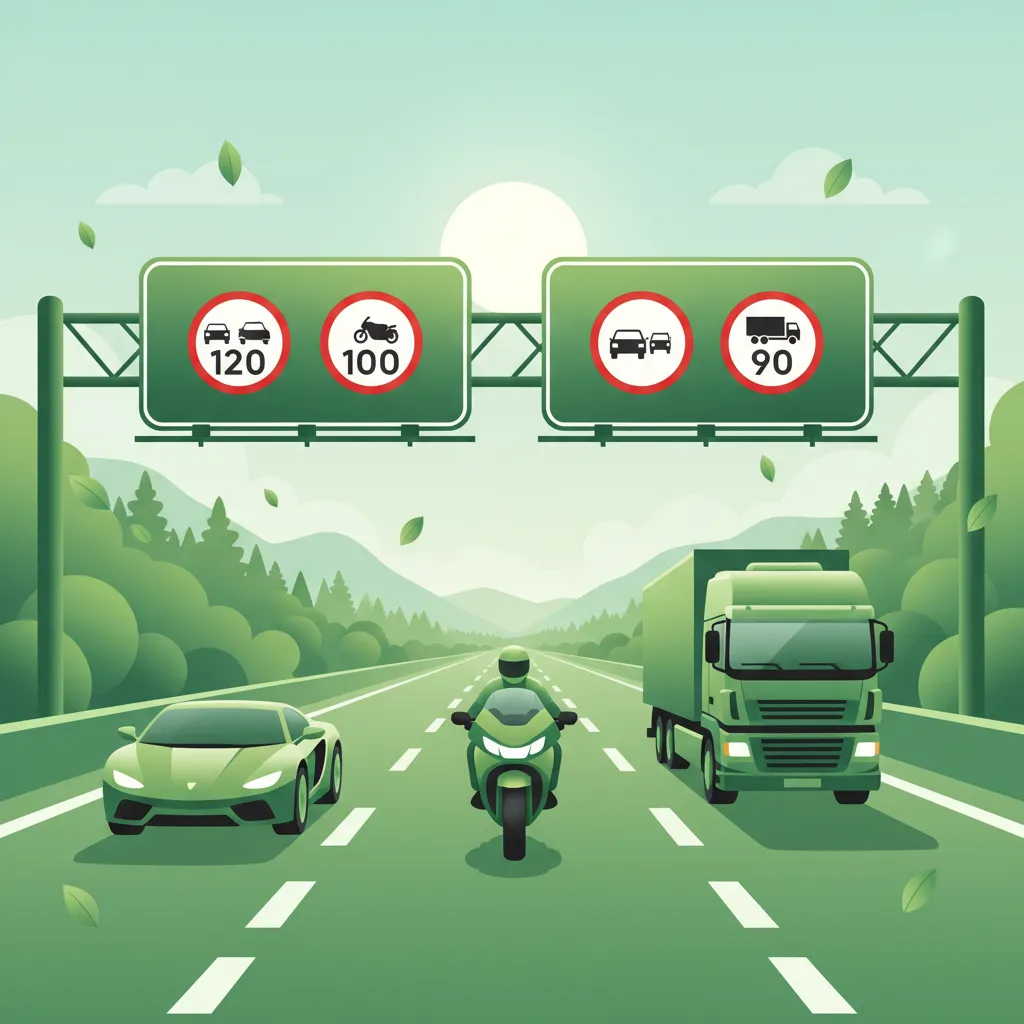
This lesson details the statutory maximum speeds for each Category AM vehicle: 25 km/h for snorfietsen, and 45 km/h for both bromfietsen and speed pedelecs on the carriageway. It explains how these limits apply within built-up areas, outside built-up areas, and on specific road types like residential zones ('woonerf'). The content covers how to interpret speed limit signs and the legal consequences of exceeding these strict limits, which is a key component of the CBR theory exam.
This lesson explains the purpose and frequency of the APK (Algemene Periodieke Keuring), the mandatory periodic safety and emissions inspection for vehicles in the Netherlands. You will understand what aspects of the car are checked, including brakes, steering, lights, and tires. The curriculum also details the essential documents you must have with you when driving, including the vehicle registration certificate (kentekenbewijs) and proof of insurance. Failure to comply with these requirements can result in significant fines.
This lesson provides a definitive list of the documents a motorcyclist must carry at all times when riding in the Netherlands. It specifies the requirement for a valid driving license ('rijbewijs') for the correct category, the vehicle registration card ('kentekenbewijs'), and proof of valid third-party liability insurance ('verzekeringsbewijs'). The content clarifies that failure to produce these documents during a police check can result in significant fines and legal complications.
Learn practical steps and documentation needed to comply with Dutch vehicle registration, license plate display, and WA insurance requirements. Understand how ANPR systems and RDW checks enforce these rules and avoid common violations.
Holding a license and owning a vehicle comes with continuous legal responsibilities. This lesson reminds you of the importance of renewing your driving license before it expires and ensuring your vehicle's insurance policy remains active. It also covers your duty to inform the relevant authorities (like the RDW) of any changes, such as a change of address. Fulfilling these administrative obligations is essential to remaining a legal and responsible road user in the Netherlands.
This lesson explains the purpose and frequency of the APK (Algemene Periodieke Keuring), the mandatory periodic safety and emissions inspection for vehicles in the Netherlands. You will understand what aspects of the car are checked, including brakes, steering, lights, and tires. The curriculum also details the essential documents you must have with you when driving, including the vehicle registration certificate (kentekenbewijs) and proof of insurance. Failure to comply with these requirements can result in significant fines.
This lesson covers the full range of lights and signals required on a vehicle for visibility and communication. You will learn about the mandatory requirements for headlights, taillights, brake lights, indicators, and reflectors. The curriculum emphasizes the driver's legal responsibility to ensure all lights are clean and functional before every journey. The correct use and function of the horn as an audible warning device in case of imminent danger are also explained.
This lesson provides a definitive list of the documents a motorcyclist must carry at all times when riding in the Netherlands. It specifies the requirement for a valid driving license ('rijbewijs') for the correct category, the vehicle registration card ('kentekenbewijs'), and proof of valid third-party liability insurance ('verzekeringsbewijs'). The content clarifies that failure to produce these documents during a police check can result in significant fines and legal complications.
This lesson prepares riders for the possibility of a routine police check ('verkeerscontrole'). It explains what officers typically inspect, which includes the required documentation, the roadworthiness of the motorcycle (e.g., tire tread depth, exhaust legality), and the rider's sobriety. The curriculum provides guidance on how to interact calmly and cooperatively with law enforcement, ensuring the stop proceeds smoothly and efficiently while being aware of one's basic rights.
This lesson serves as a critical reinforcement of the legal requirement to carry specific documents ('verkeersdocumenten') while riding. It explicitly lists the mandatory items—driving license, vehicle registration, and proof of insurance—and explains the legal consequences of failing to produce them on demand during a police stop. The content stresses that having these documents readily accessible is a basic and non-negotiable aspect of legal motorcycling in the Netherlands.
This lesson prepares you for a routine traffic stop by law enforcement. It outlines your legal obligation to stop when signaled to do so and to provide your driving license, vehicle registration certificate, and proof of insurance upon request. The lesson covers expected procedures, such as breathalyzer tests, and advises on maintaining a respectful and cooperative attitude. Understanding the process ensures any interaction with police is handled correctly and without unnecessary complications.
This lesson outlines the rider's responsibility for ensuring their motorcycle's engine and exhaust system comply with Dutch legal standards. It covers basic but vital pre-ride checks, such as verifying engine oil and coolant levels. A significant focus is placed on exhaust compliance, explaining the regulations regarding noise levels ('geluidseisen') and the rules surrounding aftermarket exhaust systems, including the requirement for approved markings and the use of 'dB-killers'.
This lesson details the procedures of a typical traffic stop ('verkeerscontrole') from a rider's perspective. It outlines the authority of police officers to check documents, inspect the vehicle, and administer sobriety tests, while also explaining the basic rights of the rider during such an interaction. The goal is to demystify the process and encourage a calm, cooperative, and respectful demeanor, which facilitates a more positive and efficient roadside encounter for both parties.
This lesson offers an in-depth study of Dutch regulatory signs, which impose mandatory actions or prohibitions on road users, with a specific focus on their impact on motorcyclists. It explains the visual language of prohibition symbols ('verbodsborden') and obligation symbols ('verplichtingsborden'), the contexts in which they appear, and the strict statutory consequences of non-compliance. Real-world examples are used to illustrate how these signs directly influence route planning, overtaking decisions, and speed management.
Find clear answers to common questions learners have about Registration, Plates, and Insurance. Learn how the lesson is structured, which driving theory objectives it supports, and how it fits into the overall learning path of units and curriculum progression in the Netherlands. These explanations help you understand key concepts, lesson flow, and exam focused study goals.
The license plate colour indicates the vehicle's classification. Yellow plates are for bromfietsen, which have a maximum speed of 45 km/h. Blue plates are for snorfietsen, which have a maximum speed of 25 km/h and typically require riding in bicycle lanes where permitted. This classification affects road access and speed limits.
Yes, third-party liability insurance (WA-verzekering) is legally mandatory for all motor vehicles, including bromfietsen, snorfietsen, and speed pedelecs, operating on public roads in the Netherlands. This insurance covers damages you might cause to others.
Typically, you will need the vehicle's purchase agreement or certificate of origin, and proof of identity. The RDW (Netherlands Vehicle Authority) website provides the most up-to-date details, but understanding these principles is key for your theory exam.
Riding an unregistered or uninsured vehicle can lead to significant fines, impounding of the vehicle, and complications in case of an accident. For the theory exam, expect questions that test your knowledge of these legal obligations and their consequences.
Yes, the transfer of ownership must be officially registered with the RDW. The seller is responsible for deregistering the vehicle, and the new owner must then register it under their name. This process is crucial for legal compliance.