
This lesson fully prepares you for routine police checks in the Netherlands. You'll learn what officers typically inspect, from required documentation and motorcycle roadworthiness to sobriety checks. Understanding these procedures and your rights ensures smooth interactions and builds confidence for both your CBR theory exam and real-world riding.
For every motorcyclist in the Netherlands, understanding routine police checks, known as "verkeerscontroles," is an essential part of safe and legal riding. These inspections are a vital tool for traffic safety, ensuring that both vehicles and riders meet strict safety, environmental, and legal standards. Being prepared for a stop can significantly reduce stress, prevent penalties, and ensure the process is smooth and efficient.
This lesson provides comprehensive guidance for Category A motorcycle riders on what to expect, how to interact with law enforcement, and your fundamental rights during a roadside inspection. It connects crucial legal obligations with the practical aspects of motorcycle maintenance and responsible riding.
A police check, or verkeerscontrole, is a systematic action performed by Dutch law enforcement to verify that road users and their vehicles comply with traffic legislation. The primary goals are safety, environmental protection, and maintaining legal order. By regularly checking vehicles and riders, police aim to reduce the likelihood of accidents caused by mechanical failures or impaired driving, curb excessive noise pollution, and prevent unregistered or uninsured riding.
Police stops can occur for several reasons. They might be part of a pre-planned, random spot check targeting specific areas or times, authorized under RVV 1990 article 20. Alternatively, an officer might pull you over if they have reasonable suspicion of a traffic violation, such as speeding, erratic riding, or an obvious technical defect. Understanding these underlying reasons helps you approach the interaction with appropriate awareness.
When stopped by police, the first thing an officer will typically request is your documentation. It is a legal obligation to carry and present these valid papers upon demand. Failure to do so can lead to significant fines.
Always carry the original physical documents or legally recognized digital versions. Photocopies or screenshots are generally not accepted unless specifically via an authorized app.
Your rijbewijs (driving licence) is proof of your authorization to operate a specific class of vehicle. For motorcycle riders, this will be a Category A licence, indicating your qualification to ride powerful motorcycles. It must be valid, current, and correspond to the motorcycle you are riding.
Every vehicle on Dutch public roads must have at least third-party liability insurance, known as Wet Aansprakelijkheidsverzekering Motorrijtuigen (WAM) insurance. Your verzekeringsbewijs is the certificate proving this insurance coverage. It must clearly state the insurer's name, your policy number, and the valid dates of coverage. The police will verify that your insurance is active and covers the motorcycle you are operating.
The kentekenbewijs is the vehicle registration document, proving that your motorcycle is legally registered with the Rijksdienst voor het Wegverkeer (RDW). It contains crucial information such as your plate number, Vehicle Identification Number (VIN), and sometimes the technical specifications of your motorcycle. In the Netherlands, this is often a registration card or accessed electronically via the RDW app.
If you hold a foreign driving licence that is not issued in Dutch, English, French, or German, you are required to carry an International Driving Permit (IDP) alongside your original licence. The IDP serves as a translation of your licence, enabling law enforcement to understand your driving qualifications. This is a crucial requirement for international riders to ensure legal compliance.
Police officers are authorized to inspect the mechanical condition of your motorcycle on the spot to ensure it meets safety and environmental standards. While the Algemene Periodieke Keuring (APK), a mandatory periodic technical inspection, covers many aspects, it does not exempt your motorcycle from roadside spot checks.
One of the most critical safety checks is the condition of your tires. Police will inspect:
Your motorcycle's braking system is paramount for safety. During a check, police may visually inspect:
Environmental regulations, particularly concerning noise pollution, are strictly enforced in the Netherlands. Police officers are equipped with decibel meters to check your exhaust noise levels.
The legal noise limit for motorcycles is typically 80 dB(A), measured at a distance of 50 cm from the exhaust outlet when the engine is running at a specified RPM. Ensure your exhaust system, whether original or aftermarket, complies with these limits. Modifications that increase noise beyond the legal threshold will result in a fine and an order to replace the exhaust.
All lights and indicators on your motorcycle must be fully functional and compliant with regulations. Police will check:
Faulty lighting not only reduces your visibility to others but can also be a direct cause for a police stop and subsequent fine.
If your motorcycle is heavily loaded with cargo or carrying a passenger, police might inspect the vehicle's load and weight distribution. Exceeding the manufacturer's specified maximum load can severely affect your motorcycle's handling, braking efficiency, and stability, creating a significant safety hazard. This is particularly relevant for tourers or riders carrying extensive luggage.
Operating a motorcycle under the influence of alcohol or drugs is strictly prohibited and carries severe penalties due to the dramatic increase in accident risk. Police have the authority to test riders if they suspect impairment.
The legal blood alcohol concentration (BAC) limit for private riders in the Netherlands is 0.5‰ (equivalent to 0.25 milligrams of alcohol per liter of breath). For professional drivers or novice riders (those with a licence for less than five years), the limit is even stricter at 0.2‰. Police typically administer a roadside breath test using a ademtester (breathalyzer).
Beyond alcohol, driving under the influence of psychoactive substances (illicit drugs or certain prescription medications) is also illegal. Police may request an oral fluid (saliva) test if they suspect drug use. If this test yields a positive result, or if the rider refuses, a blood sample may be taken for more definitive analysis. Refusal of a blood test can also carry penalties.
Under the Wet Bevordering 21e-eeuwse veiligheid, refusing to submit to a lawful breath or drug test is itself a punishable offense. This refusal is treated as a serious breach of law enforcement cooperation and often leads to an administrative fine and penalty points on your licence. In essence, refusing the test can be interpreted as an admission of possible impairment.
Your interaction style during a police stop can significantly influence the experience. A calm, cooperative demeanor helps de-escalate any potential tension, speeds up the process, and reduces the likelihood of additional penalties for non-compliance.
When the officer approaches, greet them politely. When they request your documents, calmly retrieve and hand them over. Keep your movements slow and deliberate.
You have a right to be informed about the reason for the stop and any alleged infractions. If you receive a fine or a penalty, police must provide you with a written report, known as a proces-verbaal. This report details the reason for the stop, the findings, and any penalties issued. It serves as an official record and is crucial if you decide to contest the decision. You should receive this document within 24 hours.
Knowing your rights empowers you to navigate police interactions confidently and ensures procedural fairness. While cooperation is key, understanding your legal safeguards is equally important.
If you face criminal charges (e.g., for serious impairment or reckless driving), you have the right to request legal assistance. For administrative fines (e.g., for a technical defect or documentation issue), you have the right to appeal the decision. This is typically done through the Rechtbank or via an administrative complaint to the Rijksoverheid. Ensure you keep all documentation related to the stop if you intend to appeal.
Police officers may stop any vehicle either as part of a random spot check (RVV 1990 article 20) or if they have reasonable suspicion that a violation has occurred. While you must comply with a lawful stop, if you believe a stop was unlawful or that you were treated improperly, you can file a formal complaint after the interaction. It is not advisable to challenge the officer's authority on the spot, as this can lead to additional charges like obstruction.
Being aware of common pitfalls can help you avoid unnecessary fines and complications:
The specific focus of a police check can vary depending on various contextual factors. While your legal obligations remain constant, the priority of what officers look for might shift.
During night riding, lighting becomes paramount for safety. Police checks in the dark will intensely focus on the functionality, alignment, and brightness of your headlamp (both dipped and high beam), taillight, brake light, and turn indicators. License plate illumination and any auxiliary lights must also be compliant. Failure in these areas is a common reason for a stop at night.
Every action you take (or fail to take) regarding your motorcycle's compliance and your interaction with police has direct and secondary effects:
| Action (Cause) | Direct Effect | Secondary Effects | Overall Impact |
|---|---|---|---|
| Presenting valid documentation | Police can quickly verify legal status. | No interruption of traffic flow; rider avoids fines. | Maintains road safety and legal certainty. |
| Failing to present licence | Officer issues a citation for missing documentation. | Rider may be prohibited from continuing until documentation is produced, possible vehicle impound. | Increased risk of unlicensed riding and associated accidents. |
| Riding with worn tires (< 1.6 mm) | Reduced grip, longer braking distances. | Higher probability of skidding, especially in wet conditions, leading to crashes. | Elevated crash risk, potential for injury or fatality. |
| Exceeding exhaust noise limit | Police record a noise violation. | Community complaints, possible enforcement escalation, order to replace exhaust. | Promotes environmental compliance and reduces public nuisance. |
| Refusing a breath or drug test | Immediate administrative fine and penalty points. | Potential criminal investigation if suspected severe impairment, licence suspension. | Deters avoidance behavior, reinforcing sober riding. |
| Cooperative demeanor during stop | Faster processing, less likelihood of additional checks. | Maintains mutual respect, reduces stress for rider and officer. | Improves overall compliance culture on the road. |
| Aggressive or hostile behaviour | Officer may conduct a more thorough inspection, potentially impounding the bike. | Potential escalation to criminal charges (e.g., obstruction), harsher penalties. | Leads to harsher penalties and possible legal ramifications. |
| Riding after successful police check | Confirmation of compliance. | Rider confidence and legal clearance for continued riding. | Reinforces safe riding habits and adherence to regulations. |
These scenarios illustrate how the concepts discussed play out in real-world police checks.
| Scenario | Setting | Relevant Rule / Decision Point | Correct Behaviour | Incorrect Behaviour | Reasoning |
|---|---|---|---|---|---|
| This lesson covers routine police checks for Dutch motorcyclists, a critical part of the Dutch Motorcycle Theory curriculum. It's a key enforcement tool for road safety. |
This course provides essential knowledge for the Dutch CBR Category A motorcycle theory exam. It covers Dutch traffic legislation, road sign interpretation, priority rules, advanced riding techniques, risk psychology, emergency handling, and legal responsibilities, ensuring thorough preparation for safe and legal riding in the Netherlands.
Police roadside checks, commonly known as verkeerscontroles, are fundamental to upholding traffic safety and legal standards in the Netherlands. These inspections are not merely about catching offenders but serve as a proactive measure to ensure the continuous safety and environmental compliance of all vehicles and riders on public roads. Their presence acts as a deterrent, encouraging ongoing vigilance and adherence to regulations.
The core reasons for conducting these checks revolve around:
Police officers can conduct these stops in two main ways: either as part of a randomized spot check, which allows for general verification without specific initial suspicion, or based on reasonable suspicion of a traffic violation observed by the officer. In both instances, as a rider, you are legally obligated to comply.
Carrying the correct and valid documentation is a fundamental legal requirement for every motorcyclist in the Netherlands. Failure to present these documents upon an officer's request can lead to fines and potentially further complications. It is imperative that all documents are current, legible, and correspond to the motorcycle and rider.
Your rijbewijs is your official proof of driving competence. For motorcyclists, this will be a Category A licence, granting you the legal authority to operate high-performance motorcycles without restriction. The licence must be physically present or available via a legally recognized electronic format (e.g., through an official app). An expired licence is considered invalid and can result in penalties.
In the Netherlands, every motor vehicle must be insured for third-party liability, as mandated by the Wet Aansprakelijkheidsverzekering Motorrijtuigen (WAM). Your verzekeringsbewijs serves as proof of this mandatory insurance. This document must clearly display the name of your insurer, your policy number, and the period of its validity. Police will cross-reference this information with the national vehicle registration database to confirm active coverage.
The kentekenbewijs is the official registration document for your motorcycle. It links your vehicle to its unique registration number and identifies the legal owner. This document includes vital details such as the vehicle identification number (VIN) and the registration expiry date. While physical cards are common, electronic registration accessible via the RDW app is increasingly accepted. It confirms your motorcycle is legally allowed on public roads.
For riders holding a foreign driving licence, an International Driving Permit (IDP) may be required. An IDP is a multi-language translation of your domestic driving licence and is mandatory if your original licence is not issued in Dutch, English, French, or German. It must always be carried alongside your original foreign driving licence to be valid. This ensures that police can quickly understand your driving entitlements.
Before riding, always perform a quick check to ensure your physical driving licence, insurance certificate, and vehicle registration card are in your possession and are valid. For digital documents, ensure your device is charged and the official app is accessible.
Beyond documentation, police officers conduct on-the-spot inspections to verify your motorcycle's technical roadworthiness. These checks are crucial for preventing accidents caused by mechanical failure and for enforcing environmental standards. While the APK (General Periodic Inspection) is a mandatory annual or biennial check for older motorcycles, it does not provide immunity from police spot checks at any time.
The condition of your tires is paramount for safety, especially given the varying weather conditions in the Netherlands. Police checks will specifically focus on:
A fully functional brake system is non-negotiable for safe riding. Officers may perform quick visual and operational checks:
Noise pollution is a significant concern, especially in residential areas. The Wet milieubeheer (Environmental Management Act) sets strict limits on vehicle noise. For most motorcycles, the exhaust noise limit is set at 80 dB(A) when measured 50 cm from the exhaust outlet at a specified engine speed. Officers are equipped with decibel meters for on-the-spot measurements. Using aftermarket exhausts that exceed this limit, or having a defective original exhaust, will result in a fine and an order to restore compliance.
Your motorcycle's lighting system is vital for your visibility to other road users and for signaling your intentions. Police checks will include:
Any non-functional or damaged light can result in a fine and a directive to repair the defect immediately.
If you are carrying a passenger or significant cargo, police may inspect the load on your motorcycle. It is crucial not to exceed the manufacturer's maximum permissible weight for your specific motorcycle model, which includes the rider, passenger, and luggage. Overloading can severely compromise handling, stability, and braking performance, leading to a dangerous riding situation and potential penalties.
Driving under the influence of alcohol or drugs is one of the most serious traffic offenses due to its profound impact on judgment, reaction time, and coordination. Dutch law enforcement is vigilant in enforcing sobriety requirements through roadside testing.
The legal blood alcohol concentration (BAC) limit for most private motorists and motorcyclists in the Netherlands is 0.5‰ (parts per thousand). This corresponds to 0.22 milligrams of alcohol per litre of exhaled breath. However, for novice riders (those who have held their driving licence for less than five years) and professional drivers, a stricter limit of 0.2‰ applies. Police will use a ademtester (breathalyzer) to conduct preliminary tests if impairment is suspected.
Beyond alcohol, it is illegal to operate a vehicle under the influence of any substance that impairs your driving ability, including illicit drugs and certain prescription medications. If an officer suspects drug impairment (e.g., based on erratic behavior, dilated pupils, or observed paraphernalia), they may request an oral fluid (saliva) test. A positive result from this preliminary test or a refusal may lead to a blood test, which provides a definitive analysis of drug presence.
Refusing to comply with a lawful request for a breath, oral fluid, or blood test is a specific offense under the Wet Bevordering 21e-eeuwse veiligheid. This refusal is not merely exercising a right to silence without consequence; it is treated as an obstruction of justice and carries significant penalties, including a substantial administrative fine and the imposition of penalty points on your driving licence. These penalties are often comparable to, or even more severe than, those for actually being over the limit, underscoring the legal expectation of cooperation.
Your behavior and communication style during a police stop are crucial. A calm, respectful, and cooperative approach can significantly streamline the process and minimize potential complications. Knowing the recommended protocol helps you remain in control and ensures a swift resolution.
Once the officer approaches your motorcycle:
Should any infraction be found or a penalty issued, you are entitled to receive a clear explanation. Furthermore, for administrative penalties (such as fines), you have the right to a written official record, known as a proces-verbaal. This document details the incident, the findings, and the penalty. It must be provided to you, often electronically, within 24 hours of the stop. This official report is crucial if you later decide to appeal the decision.
While cooperation is essential, it is equally important to understand the legal safeguards afforded to you as a rider during a police stop. These rights ensure fairness and provide avenues for recourse if you believe a mistake has been made or your rights have been violated.
If the situation escalates beyond a routine traffic infraction to a criminal investigation (e.g., serious drink-driving charges or dangerous riding), you have the right to request legal counsel. For any administrative penalty (e.g., a fine for a technical defect or missing document), you have the right to appeal the decision. This involves submitting an objection to the relevant authority, usually the Officier van Justitie (Public Prosecutor), within a specified timeframe (typically six weeks). Providing evidence, such as independent expert reports (e.g., a certified noise measurement or tire inspection from a garage), can support your appeal.
Under RVV 1990 article 20, police officers have the authority to stop any vehicle for either a specific observed violation or as part of a random traffic check. Therefore, a "random" stop is generally lawful. You must comply with a lawful stop. However, if you believe the stop was conducted illegally (e.g., based on discriminatory reasons without any observed violation or random check mandate), or if the officer's conduct was unprofessional, you can file a formal complaint after the interaction. It is critical to cooperate during the stop itself and pursue any grievances through official channels later.
Attempting to argue the legality of the stop with an officer on the roadside is generally unproductive and can lead to increased scrutiny or additional charges like obstruction of justice. Always remain polite and cooperative, and address legal challenges later through the proper administrative or judicial process.
Being aware of the frequent reasons riders face penalties can help you proactively avoid them. Many violations stem from simple oversight or a misunderstanding of regulations.
The circumstances surrounding a police stop can influence which aspects of your motorcycle and riding are prioritized for inspection. While core legal obligations remain constant, the specific focus can adapt to prevailing conditions.
Night-time riding naturally places a greater emphasis on your motorcycle's lighting system. Police checks during hours of darkness will thoroughly inspect:
Any defect in your lighting at night is a high-priority reason for a stop due to the severe safety implications.
Understanding the direct and secondary consequences of your actions (or inactions) is key to appreciating the importance of compliance during police checks. Each aspect of readiness contributes to overall road safety and your personal legal standing.
Presenting Valid Documentation:
Failing to Present Licence:
Riding with Worn Tyres (< 1.6 mm):
Exceeding Exhaust Noise Limit:
Refusing a Breath or Drug Test:
Cooperative Demeanor During Stop:
Aggressive or Hostile Behaviour:
These scenarios offer practical examples to solidify your understanding of how to apply the knowledge gained in real-world police checks.
| Scenario | Setting | Relevant Rule / Decision Point | Correct Behaviour | Incorrect Behaviour | Reasoning |
|---|
Lesson content overview
Explore all units and lessons included in this driving theory course.
Explore search topics learners often look for when studying Preparing for Police Checks and Spot Inspections. These topics reflect common questions about road rules, driving situations, safety guidance, and lesson level theory preparation for learners in the Netherlands.
Browse additional driving theory lessons that cover connected traffic rules, road signs, and common driving situations related to this topic. Improve your understanding of how different rules interact across everyday traffic scenarios.
Learn precisely which documents you must carry during motorcycle police checks in the Netherlands. Understand the requirements for your driving licence, insurance proof, and vehicle registration to ensure compliance and avoid fines during traffic stops.
This lesson provides a definitive list of the documents a motorcyclist must carry at all times when riding in the Netherlands. It specifies the requirement for a valid driving license ('rijbewijs') for the correct category, the vehicle registration card ('kentekenbewijs'), and proof of valid third-party liability insurance ('verzekeringsbewijs'). The content clarifies that failure to produce these documents during a police check can result in significant fines and legal complications.

Holding a license and owning a vehicle comes with continuous legal responsibilities. This lesson reminds you of the importance of renewing your driving license before it expires and ensuring your vehicle's insurance policy remains active. It also covers your duty to inform the relevant authorities (like the RDW) of any changes, such as a change of address. Fulfilling these administrative obligations is essential to remaining a legal and responsible road user in the Netherlands.
Explore the essential administrative requirements for any Category AM vehicle owner. This lesson covers the mandatory vehicle registration process, the distinction between yellow plates for bromfietsen and blue plates for snorfietsen, and the legal obligation for third-party liability insurance (WA-verzekering). You will learn what documentation is required, the consequences of non-compliance, and how these elements are verified during traffic enforcement, ensuring your vehicle is always road-legal.
This lesson details the procedures of a typical traffic stop ('verkeerscontrole') from a rider's perspective. It outlines the authority of police officers to check documents, inspect the vehicle, and administer sobriety tests, while also explaining the basic rights of the rider during such an interaction. The goal is to demystify the process and encourage a calm, cooperative, and respectful demeanor, which facilitates a more positive and efficient roadside encounter for both parties.
This lesson serves as a critical reinforcement of the legal requirement to carry specific documents ('verkeersdocumenten') while riding. It explicitly lists the mandatory items—driving license, vehicle registration, and proof of insurance—and explains the legal consequences of failing to produce them on demand during a police stop. The content stresses that having these documents readily accessible is a basic and non-negotiable aspect of legal motorcycling in the Netherlands.

This lesson explains the precise legal definition of a Category A1 motorcycle, including the maximum 125cc displacement and 11 kW power output. It outlines the entire CBR licensing pathway, from meeting the minimum age requirement to passing both the theory and practical exams. Key administrative obligations such as vehicle registration (kenteken), mandatory insurance, and roadworthiness inspections (APK) are also detailed, ensuring a full understanding of legal compliance.
This lesson covers the mandatory lighting and signaling equipment for A2 motorcycles under Dutch law, ensuring you remain visible and communicate your intentions correctly. You will learn the rules for using headlights, taillights, turn signals, and brake lights in various conditions, including daytime and adverse weather. The content also addresses the importance of maintaining this equipment and using hand signals as a valid secondary method of communication in traffic.
This lesson outlines every stage of the motorcycle licensing pathway, from the initial application to the successful completion of the CBR theory and practical examinations. It explains the mandatory documentation, exam scheduling procedures, and the specific composition of the theory test, including hazard perception and knowledge questions. The content also covers important procedural details such as re-examination policies, time limits for completion, and the legal validity of the final issued driver's license.
This lesson covers the full range of lights and signals required on a vehicle for visibility and communication. You will learn about the mandatory requirements for headlights, taillights, brake lights, indicators, and reflectors. The curriculum emphasizes the driver's legal responsibility to ensure all lights are clean and functional before every journey. The correct use and function of the horn as an audible warning device in case of imminent danger are also explained.
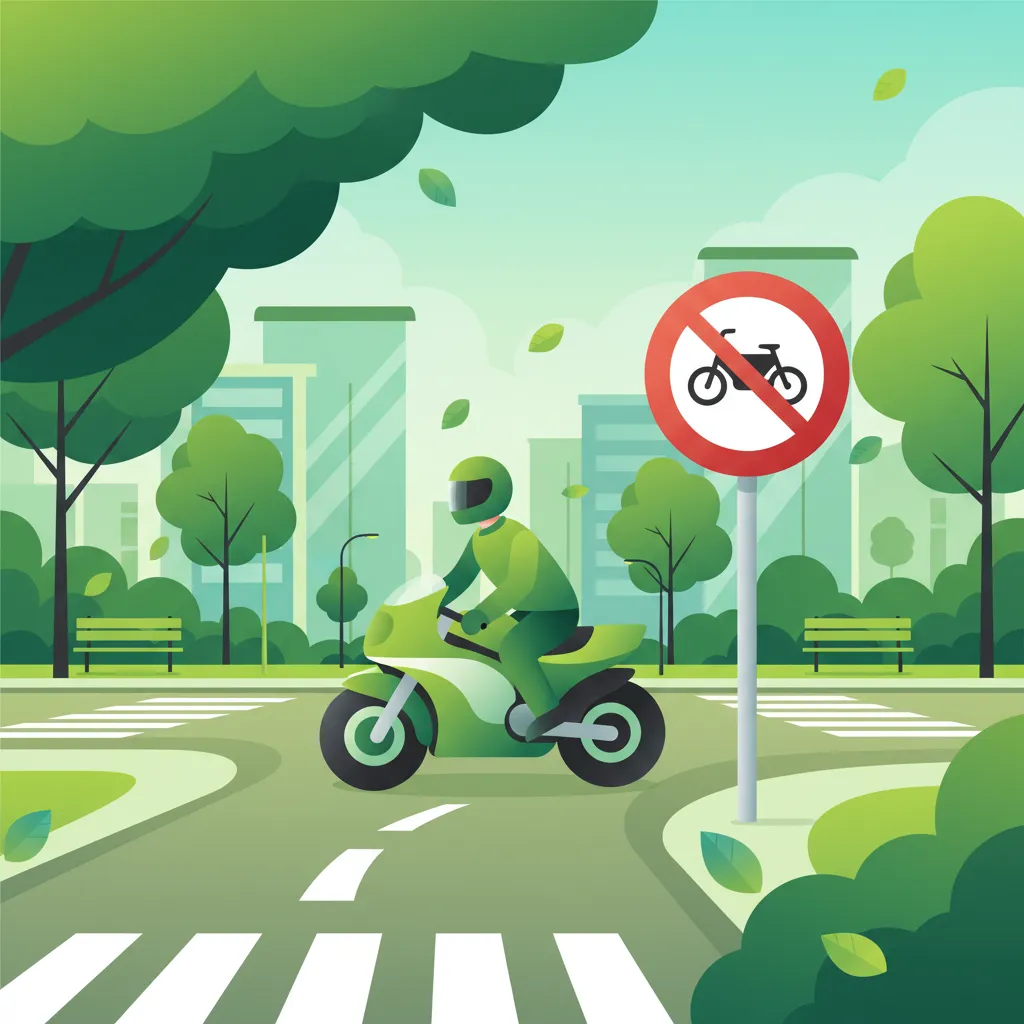
This lesson focuses on Dutch regulatory signs that enforce mandatory rules and restrictions, particularly those impacting A2 motorcyclists. You will learn to recognize and obey prohibition signs, such as those indicating a motorcycle ban (BORD 40), speed limits, and overtaking restrictions (BORD 21). The content explains the legal consequences of non-compliance and how to apply these rules in practical riding scenarios to ensure full adherence to Dutch traffic law.
Understand how to interact calmly and correctly with Dutch police during roadside checks. This covers vehicle condition inspections, sobriety tests, and your rights and responsibilities to ensure a smooth and compliant traffic stop experience.
This lesson details the procedures of a typical traffic stop ('verkeerscontrole') from a rider's perspective. It outlines the authority of police officers to check documents, inspect the vehicle, and administer sobriety tests, while also explaining the basic rights of the rider during such an interaction. The goal is to demystify the process and encourage a calm, cooperative, and respectful demeanor, which facilitates a more positive and efficient roadside encounter for both parties.
This lesson prepares you for a routine traffic stop by law enforcement. It outlines your legal obligation to stop when signaled to do so and to provide your driving license, vehicle registration certificate, and proof of insurance upon request. The lesson covers expected procedures, such as breathalyzer tests, and advises on maintaining a respectful and cooperative attitude. Understanding the process ensures any interaction with police is handled correctly and without unnecessary complications.
This lesson details the systematic procedure for checking the functionality of all lights and indicators before a ride. This simple but critical safety check includes verifying the operation of the high and low beam headlight, the taillight, the brake light (using both front and rear brake activators), and all four turn signals. Ensuring all lights are working is a legal requirement and fundamental for visibility and communicating intentions to other road users.
This lesson serves as a critical reinforcement of the legal requirement to carry specific documents ('verkeersdocumenten') while riding. It explicitly lists the mandatory items—driving license, vehicle registration, and proof of insurance—and explains the legal consequences of failing to produce them on demand during a police stop. The content stresses that having these documents readily accessible is a basic and non-negotiable aspect of legal motorcycling in the Netherlands.

Your vehicle's lights and horn are your primary tools for seeing, being seen, and communicating warnings. This lesson guides you through a simple but vital check of all electrical components before you ride. You will learn how to verify the function of your headlight (high and low beam), taillight, brake light (using both front and rear brake levers), and turn signals. It also covers checking the horn's operation and ensuring all mandatory reflectors are clean and intact.
This lesson outlines the rider's responsibility for ensuring their motorcycle's engine and exhaust system comply with Dutch legal standards. It covers basic but vital pre-ride checks, such as verifying engine oil and coolant levels. A significant focus is placed on exhaust compliance, explaining the regulations regarding noise levels ('geluidseisen') and the rules surrounding aftermarket exhaust systems, including the requirement for approved markings and the use of 'dB-killers'.
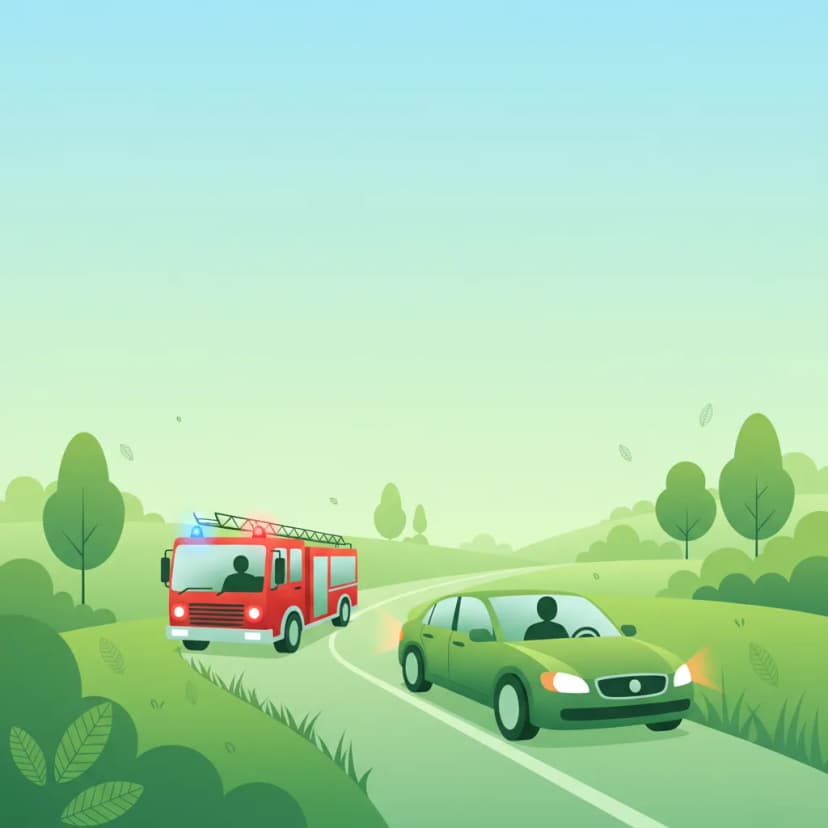
This lesson details the legal obligation and safe procedures for yielding to emergency vehicles ('noodvoertuigen' or 'voorrangsvoertuigen') that are using audible and visual warnings. It provides clear guidance on how to safely create space, whether by pulling over, adjusting speed, or clearing an intersection, without causing a secondary hazard. The content emphasizes maintaining composure and making predictable maneuvers to allow emergency services to pass quickly and safely.
This lesson covers the mandatory lighting and signaling equipment for A2 motorcycles under Dutch law, ensuring you remain visible and communicate your intentions correctly. You will learn the rules for using headlights, taillights, turn signals, and brake lights in various conditions, including daytime and adverse weather. The content also addresses the importance of maintaining this equipment and using hand signals as a valid secondary method of communication in traffic.
This lesson covers the critical topic of impaired riding, detailing the legal blood alcohol limits for drivers in the Netherlands. It explains how alcohol, illegal drugs, and even some legal medications drastically impair judgment, coordination, and reaction time, making riding a motorcycle extremely dangerous. The severe legal penalties, including fines, license suspension, and imprisonment, are also clearly outlined.
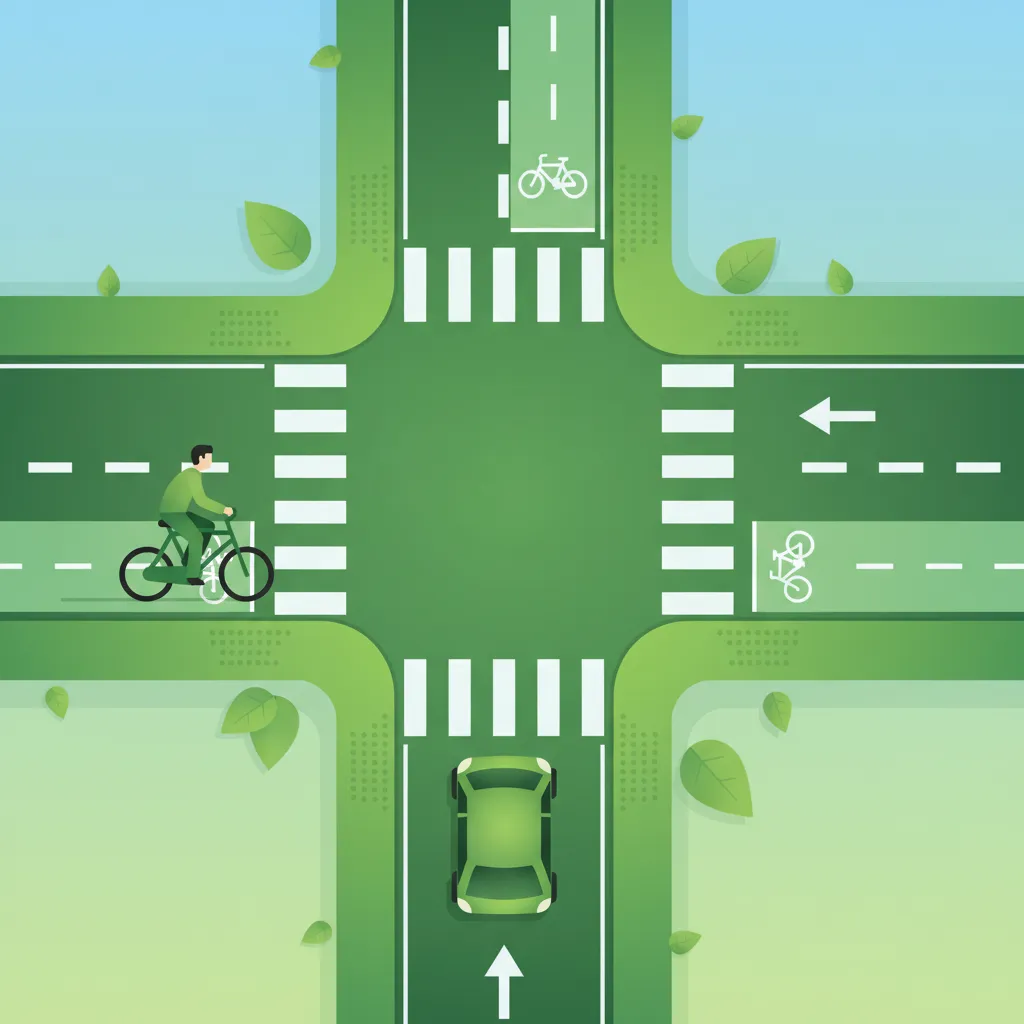
This lesson explores the legal meaning of various road surface markings, including solid and broken lane delimiters, directional arrows, and special-purpose lane indicators. It describes how markings dictate permitted maneuvers, such as overtaking and lane changes, and alert riders to upcoming hazards or changes in road layout. The content also examines the relationship between markings and road design in the Netherlands, emphasizing how a motorcyclist must interpret these visual cues for safe positioning.
Find clear answers to common questions learners have about Preparing for Police Checks and Spot Inspections. Learn how the lesson is structured, which driving theory objectives it supports, and how it fits into the overall learning path of units and curriculum progression in the Netherlands. These explanations help you understand key concepts, lesson flow, and exam focused study goals.
You must carry your valid Dutch driving license (rijbewijs), your motorcycle's registration certificate (kentekenbewijs), and proof of insurance (verzekeringsbewijs). Failing to produce these can lead to fines.
Officers often check tire tread depth, working lights and indicators, horn functionality, mirror condition, and the legality of your exhaust system (noise levels). Ensure your motorcycle is in good technical condition.
No, in the Netherlands, you are legally obliged to cooperate with a police request for a sobriety test (e.g., breathalyser test, drug swipe). Refusal can lead to severe penalties, including immediate license suspension.
You have the right to remain silent (except for providing personal identification), to know the reason for the stop, and to be treated respectfully. However, you must follow legitimate instructions from officers.
If your motorcycle is found to be unroadworthy, officers may issue a fine, confiscate your registration certificate, or even immobilize your vehicle until repairs are made. You'll be given instructions on how to rectify the issues.
Generally, police in the Netherlands require a specific reason (reasonable suspicion) or a warrant to search your vehicle's contents. However, they can perform a visual inspection of your motorcycle's condition.