
Welcome to the essential lesson on impaired riding for your Dutch A1 motorcycle license. This topic is critical for understanding the severe risks associated with riding under the influence of alcohol, drugs, or medication, and is a guaranteed part of your CBR theory exam. We will cover the legal limits in the Netherlands and the drastic impact these substances have on your ability to ride safely.
Operating a motorcycle demands peak concentration, rapid reflexes, and sound judgment. Any substance that impairs these vital abilities poses an extreme risk, not only to the rider but also to other road users. This lesson delves into the critical topic of impaired riding in the Netherlands, detailing the legal framework, the devastating effects of alcohol, illegal drugs, and even some legal medications, and the severe penalties for violations. Understanding these factors is not just crucial for passing your Dutch A1 motorcycle theory exam but is fundamental for ensuring your safety and the safety of everyone on the road.
In the Netherlands, specific laws regulate the maximum permissible blood alcohol concentration (BAC) for anyone operating a motor vehicle, including motorcycles. These limits are set to ensure a minimum level of cognitive and motor function is maintained to prevent accidents. BAC is measured in promille (‰), representing grams of ethanol per litre of blood.
For most experienced riders in the Netherlands—those aged 21 or older who have held their driving license for five years or more—the legal blood alcohol concentration limit is 0.5 promille (0.5‰). Exceeding this limit means you are legally considered unfit to ride and are subject to penalties.
A BAC of 0.5‰ can cause measurable impairment, including slowed reaction time, reduced coordination, and difficulty tracking moving objects. Even if you "feel fine," your riding ability is significantly compromised.
The Dutch legal system imposes a stricter limit on novice riders and younger drivers to account for their less developed experience and judgment. If you are under 21 years old or have held any driving license for less than five years (including your provisional motorcycle license), your legal BAC limit is 0.2 promille (0.2‰). This reduced limit highlights the increased vulnerability of less experienced road users to the effects of alcohol.
Alcohol is a central nervous system depressant that significantly degrades a rider's ability to control a motorcycle safely. Even at BAC levels below the legal limit, its effects can be dangerous:
Common misunderstanding: "One drink means I'm legal." Your actual BAC depends on many factors, including body weight, gender, metabolism, food intake, and how quickly you consume alcohol. Never rely on a fixed number of drinks to determine if you are fit to ride.
Beyond alcohol, the Netherlands maintains a strict zero-tolerance policy for illicit drugs for all drivers and riders. This means that any detectable amount of prohibited substances in your system while operating a vehicle is illegal, regardless of whether you subjectively feel impaired.
The Dutch Opiumwet (Opium Act) governs prohibited substances. Common illicit drugs covered by this policy include:
Different drugs affect the brain and body in distinct ways, but all have detrimental impacts on riding ability:
Police in the Netherlands are authorized to perform roadside oral fluid (saliva) tests if they suspect drug use. A positive preliminary result will lead to further investigation, typically a blood test, which can confirm the presence and concentration of illicit substances. If confirmed, immediate legal action follows.
It is a common misconception that only illegal substances affect your fitness to ride. Many legally prescribed or over-the-counter (OTC) medications can significantly impair your cognitive and motor skills, making it unsafe to operate a motorcycle.
Medications that frequently cause impairment include:
Under Dutch road traffic safety law, riders have a mandatory obligation to ensure they are fit to ride. This means:
Create a habit of always checking medication labels and consulting healthcare professionals. Your "fit-to-ride" assessment is a continuous responsibility, not just when taking illicit substances or alcohol.
The Dutch legal system imposes a progressive penalty structure for impaired riding offenses, designed to deter violations and ensure road safety. Consequences escalate with the severity of impairment and repeat offenses.
In severe cases, particularly if an accident occurs, or for repeat offenders, impaired riding can lead to criminal charges and even imprisonment. The Wetboek van Strafrecht (Dutch Penal Code) outlines potential prison sentences for causing accidents under the influence, showing a complete disregard for road safety. A criminal record can have long-lasting negative impacts on employment, insurance premiums, and international travel.
Penalties are recorded on your CBR file. This can affect future license renewals and insurance rates for many years, even after your suspension period ends.
Many riders make critical mistakes regarding substance use and riding. Understanding these common pitfalls is key to avoiding serious consequences.
The dangers of alcohol, drugs, and medication are not isolated. They are significantly amplified by various environmental and situational factors, making an already risky situation even more perilous.
Rain, fog, snow, or strong winds already reduce visibility, decrease tire grip, and make controlling a motorcycle more challenging. When combined with impaired reaction times and judgment, the risk of a severe accident skyrockets. For example, a reaction time delay that might be manageable on a dry, clear day becomes critically dangerous on a wet, slippery road.
Riding at night, dawn, or dusk naturally reduces visual perception. Impairment from substances further degrades your ability to perceive hazards, judge distances, and react to unexpected movements in low-light environments. Pupil dilation or constriction caused by certain substances can also make adapting to varying light levels (e.g., headlights of oncoming traffic) much harder.
Riding with a heavy load or carrying a passenger already affects a motorcycle's handling and braking characteristics, requiring more skill and anticipation. When combined with impaired coordination and judgment, managing an unstable or heavily loaded motorcycle becomes exceptionally hazardous.
Impaired riding severely compromises your ability to anticipate the unpredictable movements of vulnerable road users like pedestrians, cyclists, and children. Your slowed perception and judgment mean you are less likely to spot them in time or react appropriately, leading to a much higher likelihood of severe accidents.
Perhaps one of the most dangerous scenarios is the synergistic effect of combining alcohol with other drugs or medications. Even a legal BAC combined with a legally prescribed medication can amplify impairment to a level far exceeding the sum of their individual effects. For example, mixing alcohol with benzodiazepines (anti-anxiety meds) can lead to extreme drowsiness and severely compromised motor control, even if the alcohol intake alone was below the legal limit. This interaction can double or triple impairment metrics.
Motorcycles offer less protection than cars, making riders highly vulnerable in a crash. Any factor that increases the likelihood or severity of a collision is therefore amplified for motorcyclists.
Dutch traffic data consistently shows a strong correlation between substance use and increased accident risk. Riders with a BAC of 0.8‰ or higher are statistically many times more likely to be involved in fatal crashes compared to sober riders.
This lesson has highlighted the profound dangers and legal consequences of impaired riding in the Netherlands. For safe riding and to comply with Dutch A1 motorcycle theory requirements, remember these critical points:
Always prioritize your safety and the safety of others. The best practice is to always ride sober, alert, and fully focused. If there's any doubt about your fitness to ride, choose alternative transport.
Lesson content overview
Explore all units and lessons included in this driving theory course.
Explore search topics learners often look for when studying Alcohol, Drugs, Medication and Their Effects on Riding. These topics reflect common questions about road rules, driving situations, safety guidance, and lesson level theory preparation for learners in the Netherlands.
Browse additional driving theory lessons that cover connected traffic rules, road signs, and common driving situations related to this topic. Improve your understanding of how different rules interact across everyday traffic scenarios.
Understand the severe legal consequences in the Netherlands for riding a motorcycle under the influence of alcohol, drugs, or medication. Covers fines, license suspension, and criminal charges for A1 theory.

This lesson covers the critical topic of driving under the influence, explaining the legal blood alcohol concentration (BAC) limits for Category AM riders. It highlights the distinction between the lower limit for novice drivers and the standard limit for experienced drivers. The lesson also addresses the zero-tolerance policy for driving under the influence of drugs, the types of police tests conducted, and the severe legal penalties, including fines, license suspension, and mandatory courses, for any violations.
This lesson outlines the significant penalties for driving under the influence in the Netherlands. You will learn about the scale of fines, the potential for an immediate driving ban (rijverbod), and the circumstances under which a driver's license can be suspended or revoked. The curriculum also covers the mandatory and costly educational courses (like LEMA or EMG) that convicted drivers may be forced to attend to regain their driving privileges. A DUI conviction results in a criminal record, which can have long-lasting personal and professional consequences.
This lesson extends the topic of impaired driving to include illegal drugs and certain medications. You will learn that the Netherlands has a zero-tolerance policy for driving under the influence of many illegal substances, enforced with saliva tests. The curriculum also highlights the importance of checking for warnings on prescription and over-the-counter medicines, often indicated by a yellow sticker, as many can cause drowsiness or impair concentration. The driver is always responsible for ensuring they are fit to drive.
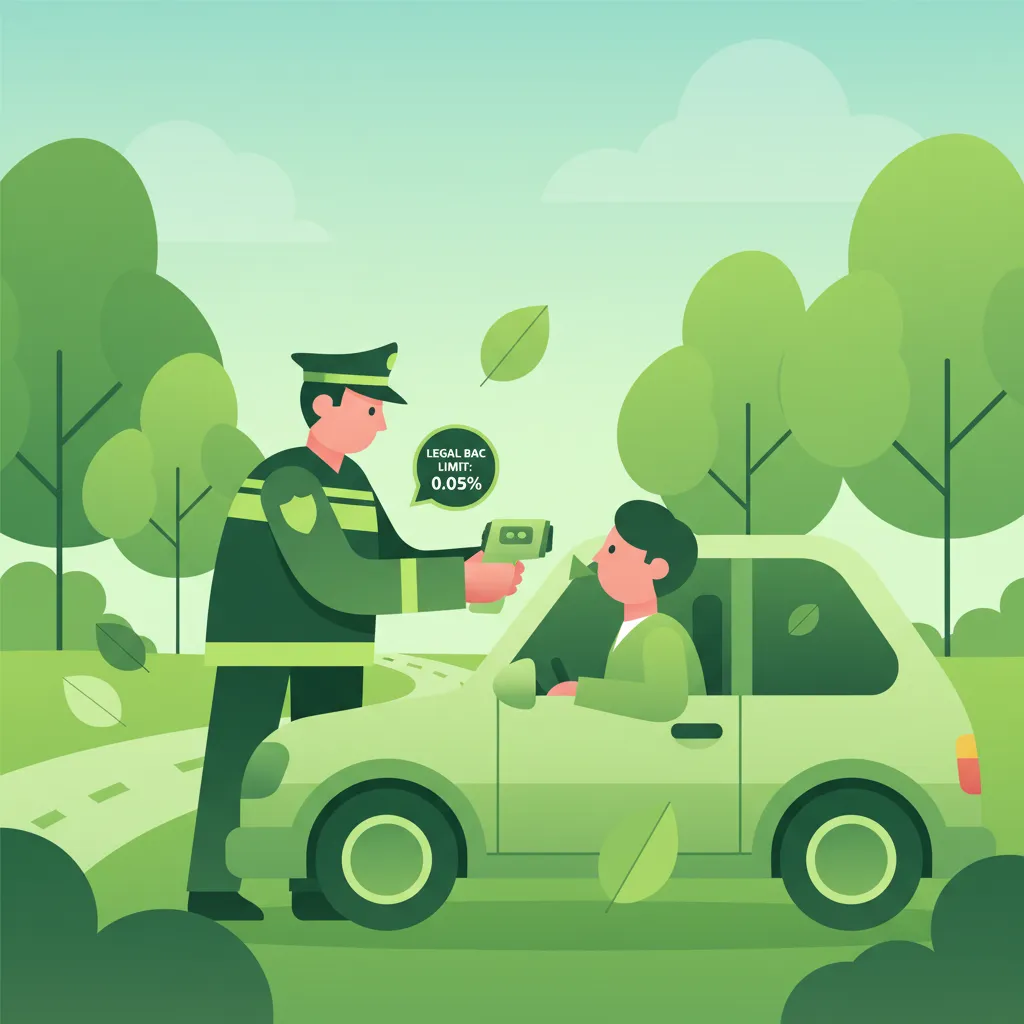
This lesson details the legal limits for alcohol consumption when driving. You will learn that for experienced drivers (who have held their license for more than five years), the BAC limit is 0.5 promille. For novice drivers, a stricter limit of 0.2 promille applies, which effectively means a zero-tolerance policy. The content explains how these levels are measured by police using breathalyzer tests and the factors that can influence a person's BAC, stressing that the only safe approach is not to drink and drive.

This lesson explores the physiological and cognitive effects of alcohol on a driver. You will learn how alcohol acts as a depressant on the central nervous system, leading to a measurable decrease in reaction speed, blurred vision, and a loss of coordination. The curriculum explains how alcohol impairs judgment, often leading to increased risk-taking and a failure to perceive hazards. Understanding these dangerous effects reinforces the critical importance of separating drinking from driving completely.

Distractions are a leading cause of traffic accidents. This lesson focuses on the extreme danger of using a mobile phone or any other electronic device while riding. It explains the Dutch law, which strictly prohibits holding a mobile electronic device while driving. More importantly, it covers the concept of 'inattention blindness,' where even hands-free conversations can distract your brain to the point that you fail to see hazards right in front of you. The only safe ride is a focused ride.
Explore the critical impact of alcohol, illicit drugs, and impairing medications on a motorcyclist's reaction time, judgment, coordination, and overall ability to safely control a vehicle.
This lesson explores the physiological and cognitive effects of alcohol on a driver. You will learn how alcohol acts as a depressant on the central nervous system, leading to a measurable decrease in reaction speed, blurred vision, and a loss of coordination. The curriculum explains how alcohol impairs judgment, often leading to increased risk-taking and a failure to perceive hazards. Understanding these dangerous effects reinforces the critical importance of separating drinking from driving completely.

This lesson explains that fatigue is a major contributor to single-vehicle motorcycle accidents. You will learn to recognize its subtle symptoms, such as slow reaction times, poor judgment, and difficulty concentrating. The content provides essential strategies for prevention and management, including planning for regular rest stops, staying hydrated, and knowing when to stop riding for the day.

Your ability to react quickly to danger depends on your reaction time, which is affected by alertness, fatigue, and distractions. This lesson explores these factors and teaches proactive hazard perception skills. You will learn how to scan the road ahead, identify potential risks early (e.g., a child near the road, a car waiting to pull out), and predict the actions of other road users. This anticipatory mindset is more effective than simply reacting to events as they happen.
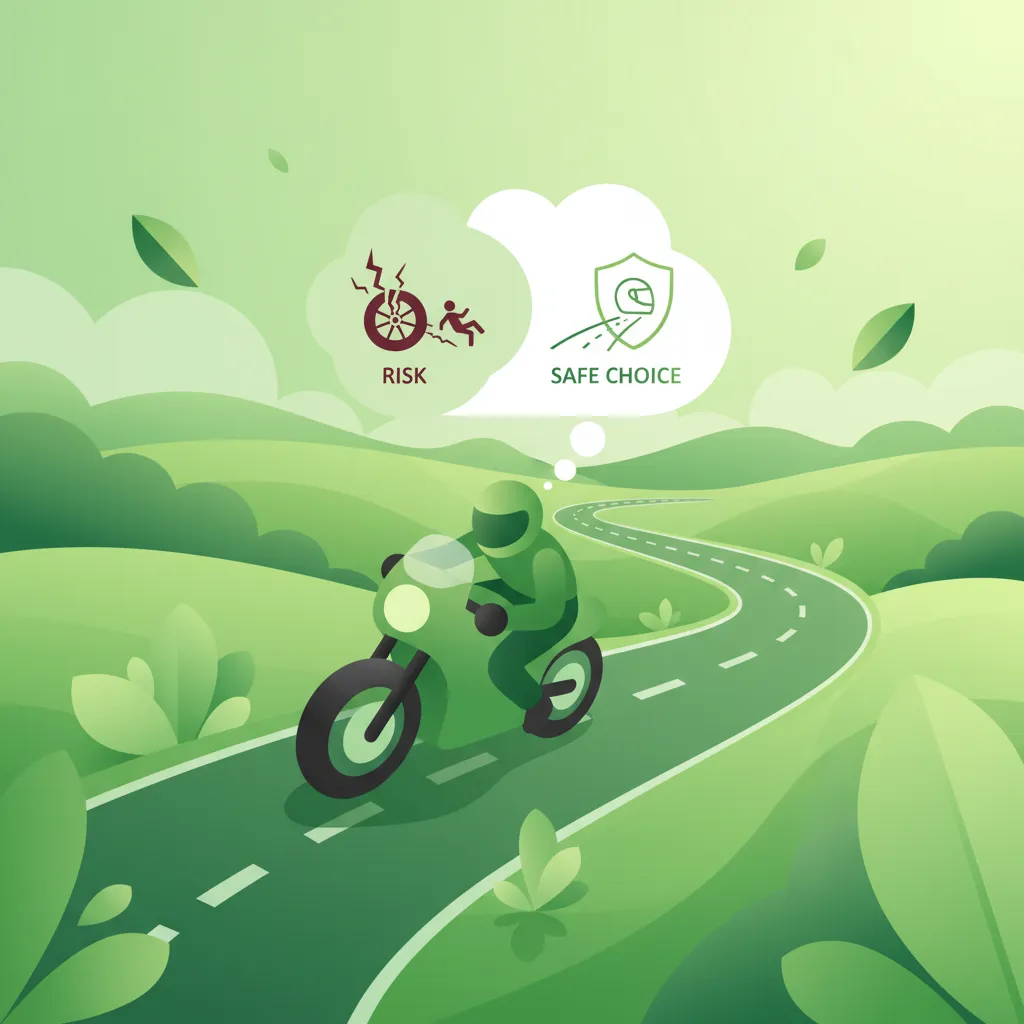
This lesson delves into the psychological aspects of motorcycling, exploring how factors like attitude, emotion, and fatigue can influence decision-making and risk-taking. It encourages self-awareness, helping riders recognize states like overconfidence or distraction that can lead to poor choices. The ultimate goal is to foster a mature, defensive mindset focused on risk mitigation and making safe, responsible decisions on every ride.

This lesson delves into the mental side of safe riding. You will explore how a rider's emotional state, attitude, and level of experience can influence their perception of risk. The content addresses the common pitfall of overconfidence, especially among newer riders, and the importance of resisting peer pressure to ride beyond your skill level, emphasizing a mature and responsible approach to risk management.
This lesson explores the psychological factors that underpin safe riding, focusing on the concept of cognitive load—the amount of mental effort required to process information. It explains how fatigue, stress, and distractions can overload a rider's capacity to process information, leading to a loss of situational awareness and poor decisions. The content provides strategies for managing mental resources, maintaining focus, and ensuring that the rider's brain is always ahead of the motorcycle.
Find clear answers to common questions learners have about Alcohol, Drugs, Medication and Their Effects on Riding. Learn how the lesson is structured, which driving theory objectives it supports, and how it fits into the overall learning path of units and curriculum progression in the Netherlands. These explanations help you understand key concepts, lesson flow, and exam focused study goals.
In the Netherlands, the legal blood alcohol concentration (BAC) limit for motorcyclists, including A1 licence holders, is 0.5 promille (or 0.2 promille for novice drivers with less than 5 years of experience). Even at this limit, your riding ability can be significantly impaired, so it's always safest to ride with zero alcohol.
Yes, many prescription and over-the-counter medications can impair your riding ability. Drugs that cause drowsiness, dizziness, blurred vision, or slowed reflexes are particularly dangerous. Always check the medication's leaflet or consult your doctor or pharmacist about potential side effects before riding.
Penalties for riding under the influence of alcohol or drugs in the Netherlands are severe. They can include substantial fines, immediate license suspension, mandatory participation in rehabilitation programs, and even imprisonment, especially in cases involving accidents or repeat offenses.
Alcohol starts affecting your cognitive and motor skills almost immediately after consumption. Even a small amount can slow your reaction time, reduce your ability to judge distances and speed, impair your vision, and affect your balance and coordination – all critical for safe motorcycle operation.
Yes, the CBR theory exam for all motorcycle categories includes questions specifically testing your knowledge of the dangers and legal aspects of riding under the influence of alcohol, drugs, and certain medications. Understanding these risks is crucial for passing.