
This lesson is part of Unit 10: Accident Management, Legal Responsibilities & Substance Use for the Dutch A1 motorcycle licence. It focuses on the vital immediate actions you must take after any motorcycle accident to ensure safety and proper procedure until professional help arrives. Mastering this is crucial for both your exam and real-world riding.
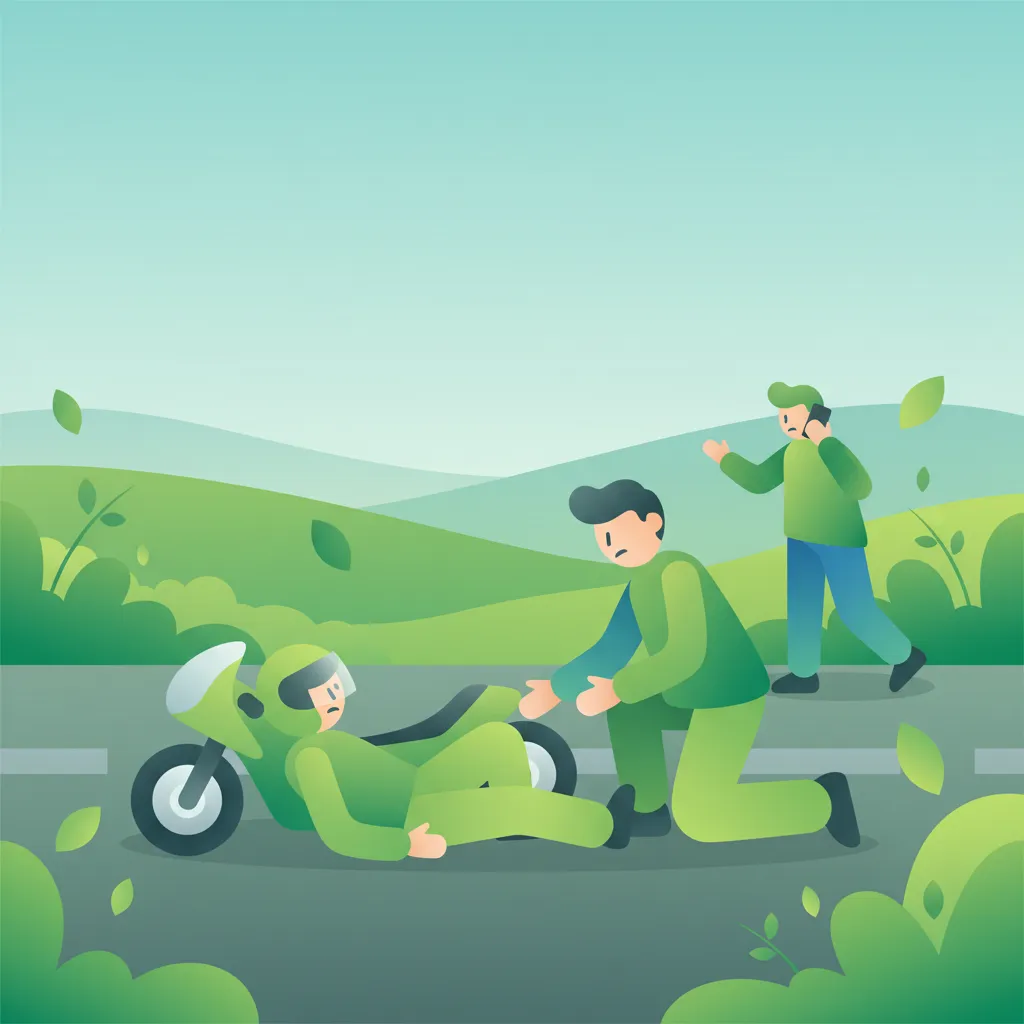
Navigating a motorcycle accident can be a highly stressful and disorienting experience. However, knowing the correct, legally required, and safety-oriented steps to take immediately afterwards is crucial. This lesson provides a clear, prioritized framework for Dutch A1 motorcycle riders to manage such situations effectively, protecting themselves, other road users, and ensuring compliance with Dutch traffic laws. Prompt and correct actions are not only a legal obligation but also vital for preventing further incidents and facilitating accurate reporting and insurance claims.
This guide draws upon essential elements of the Dutch Road Traffic Act (Wegverkeerswet) and the Regulation on Traffic Signs & Signals (Regeling verkeersregels en verkeerstekens – RVV 1990), specifically tailored for your Dutch A1 Motorcycle Theory exam and real-world safety on Dutch roads.
The moments following a motorcycle accident are critical. The immediate environment of a collision often presents new hazards, such as obstructed lanes, debris, and disabled vehicles, which can lead to secondary collisions. Your quick and accurate response can significantly reduce these risks, safeguard injured individuals, and comply with your legal duties as a road user in the Netherlands.
Failure to act correctly can result in severe consequences, including fines, penalty points on your licence, or even licence suspension. Moreover, improper handling of the scene can complicate insurance claims and liability determinations, leading to prolonged disputes and financial penalties.
Your absolute first priority after any collision is to ensure the safety of everyone involved and to prevent further incidents. This involves several critical steps to secure the accident scene.
As soon as your motorcycle comes to a stop after an accident, or if you encounter a disabled vehicle, immediately activate your hazard warning lights (gevaarlichten). These flashing indicators make your vehicle more visible to other road users, especially in poor visibility conditions or on high-speed roads. Ensure your motorcycle's hazard lights are always functional as required by Dutch vehicle regulations (Regeling voertuigen).
A warning triangle (gevarendriehoek) is a mandatory piece of safety equipment for all motor vehicles in the Netherlands and must be carried on your motorcycle. Proper placement is essential to provide adequate warning time for approaching traffic.
Correct distances for warning triangle placement (RVV 1990 § 6):
Place the triangle upstream of the traffic flow that is approaching your motorcycle. Once the triangle is placed, move yourself and any passengers to a safe location, ideally behind a safety barrier if one is available, or as far away from the traffic lane as possible. If you have a high-visibility vest or reflective clothing, put it on to enhance your personal visibility.
Never attempt to place a warning triangle if doing so would put you in immediate danger. Your personal safety always comes first. If you cannot safely place the triangle, move yourself to safety and prioritize calling emergency services.
Once the scene is initially secured, your next crucial step is to assess the physical condition of all involved parties, including yourself, any passenger, and other motorists or pedestrians.
First, quickly check yourself for injuries, paying particular attention to your head, neck, spine, and limbs. If you suspect a serious injury, try to remain as still as possible to avoid exacerbating it. Take a moment to calm yourself; post-collision stress can impair judgment.
Under Article 5 of the Dutch Road Traffic Act (Wegverkeerswet Art. 5), road users involved in or witnessing an accident are legally obligated to render assistance to victims within reasonable limits. This "duty of care" is paramount.
Key steps for assessing others:
Do NOT move injured persons unless their life is in immediate danger (e.g., fire, immediate risk of being hit by traffic). Moving someone with a suspected spinal injury can lead to permanent paralysis or worsen their condition. Wait for professional medical assistance to arrive.
The moment you determine there are injuries, a fire, or any immediate danger that compromises public safety, immediately contact the Dutch emergency services by dialing 112. This is the pan-European emergency number for police, fire, and ambulance services and is free to call from any phone.
The single, pan-European telephone number for reaching emergency services (police, fire, ambulance) in the Netherlands and all other EU member states.
Stay on the line until the operator tells you it's okay to hang up. They may ask for additional details or provide instructions.
Beyond immediate safety, Dutch law imposes strict obligations on drivers involved in an accident. Compliance is crucial for avoiding penalties and facilitating subsequent insurance and legal processes.
Article 9 of the Dutch Road Traffic Act (Wegverkeerswet Art. 9) states that any driver involved in an accident must stop at the scene "as soon as reasonably possible" without creating further risk. You are required to remain at the scene until all necessary information has been exchanged or the police have released you. Leaving the scene prematurely, even if the other party appears to flee, is illegal and can lead to severe penalties.
You must exchange relevant personal and vehicle details with all other parties involved in the accident, including drivers, passengers, and property owners.
It is highly recommended to use a standard "European Collision Report Form" (Europees Schadeformulier), also known as an "accident report form" (schadeformulier), to document the incident and exchange details. Most insurance companies provide these forms. If you don't have one, write down all the necessary information, including the details of any witnesses.
Always carry a collision report form in a waterproof pouch on your motorcycle. This simplifies the process of exchanging details and documenting the incident accurately.
While not every minor scrape requires immediate police presence, certain conditions mandate a police report. In the Netherlands, you must report an accident to the police if:
If police are required, they will conduct an investigation and may ask you to provide a written statement (Politiereglement Art. 41).
Preserving the accident scene and documenting all relevant details is crucial for accurate reconstruction of events, which is vital for insurance claims and legal proceedings.
Unless it is absolutely necessary for safety (e.g., moving a vehicle that is an immediate danger), avoid moving your motorcycle or any other physical evidence before the police arrive or before you have thoroughly documented the scene with photographs. Altering the scene could be considered obstruction of justice and compromise your claim.
The immediate actions after an accident can vary depending on environmental factors and the specific context of the incident. Applying conditional logic ensures the most effective response.
Understanding typical errors can help you avoid them in a real-life scenario:
In the stressful aftermath of a motorcycle accident in the Netherlands, remembering a clear sequence of actions can be life-saving and prevent further legal complications.
By following these prioritized steps, you demonstrate responsible road behaviour, protect yourself and others, and lay the groundwork for a smoother resolution of the accident. This knowledge is not just for your Dutch A1 Motorcycle Theory exam, but for real-world safety on every ride.
Lesson content overview
Explore all units and lessons included in this driving theory course.
Explore search topics learners often look for when studying Immediate Actions After a Motorcycle Accident. These topics reflect common questions about road rules, driving situations, safety guidance, and lesson level theory preparation for learners in the Netherlands.
Browse additional driving theory lessons that cover connected traffic rules, road signs, and common driving situations related to this topic. Improve your understanding of how different rules interact across everyday traffic scenarios.
Understand your legal obligations after a motorcycle accident in the Netherlands. This lesson details mandatory stopping, information exchange, and when to report to the police according to Dutch traffic law.

This lesson details the legal requirements for reporting a traffic accident in the Netherlands, including the circumstances under which you must involve the police. It explains the correct procedure for exchanging personal, vehicle, and insurance information with any other parties involved. The lesson also covers the use of the European Accident Statement form to document the facts of the incident for insurance purposes.

This lesson provides a clear, step-by-step guide for actions to take immediately following a traffic accident. It covers the priorities of personal safety, securing the scene to prevent further incidents, and providing aid to the injured. The curriculum details the legal requirements for reporting an accident ('ongevalrapportage') and the correct procedure for exchanging information with other parties involved, including the use of the European Accident Statement form.

In the event of an accident, a calm and methodical approach is essential. This lesson details the necessary actions, from stopping safely and assessing the situation to exchanging driver and insurance details with the other party. It explains how to fill out the European Accident Statement form ('schadeformulier'), which is a vital document for insurance claims. You will also learn when it is mandatory to call the police and the importance of gathering evidence like photos and witness contact information.
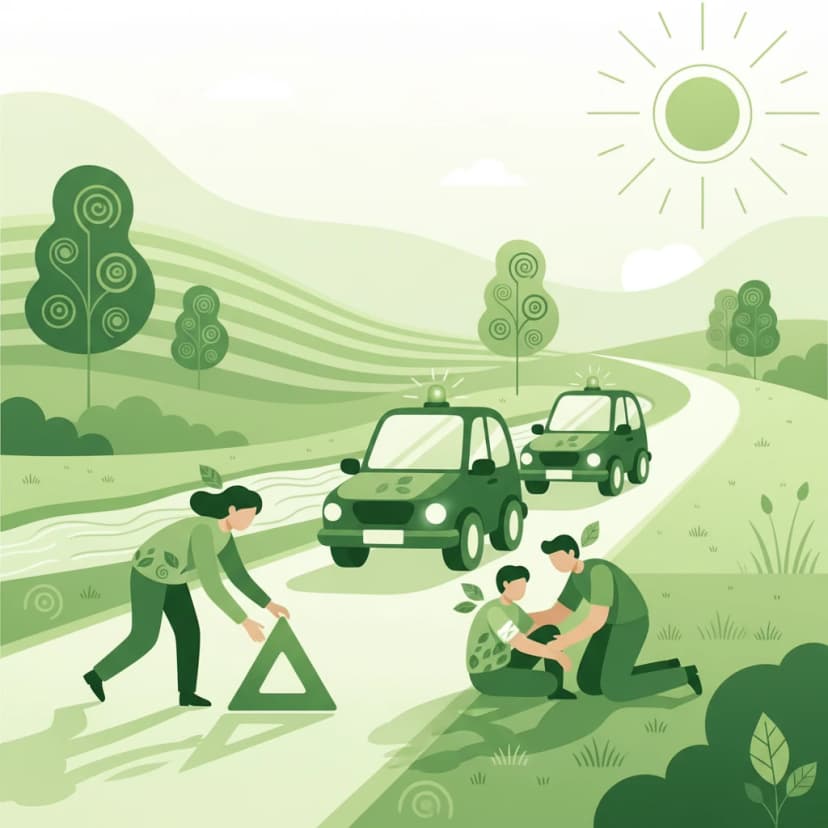
This lesson outlines the correct protocol to follow after a traffic accident. The first priority is to ensure the safety of everyone involved by securing the scene and checking for injuries. You will learn when it is mandatory to call the emergency services (112), such as when there are injuries or significant road blockage. The curriculum also explains the legal requirement to stop and exchange insurance and contact details with other parties involved. The use of the European Accident Statement form to record the details is also covered.
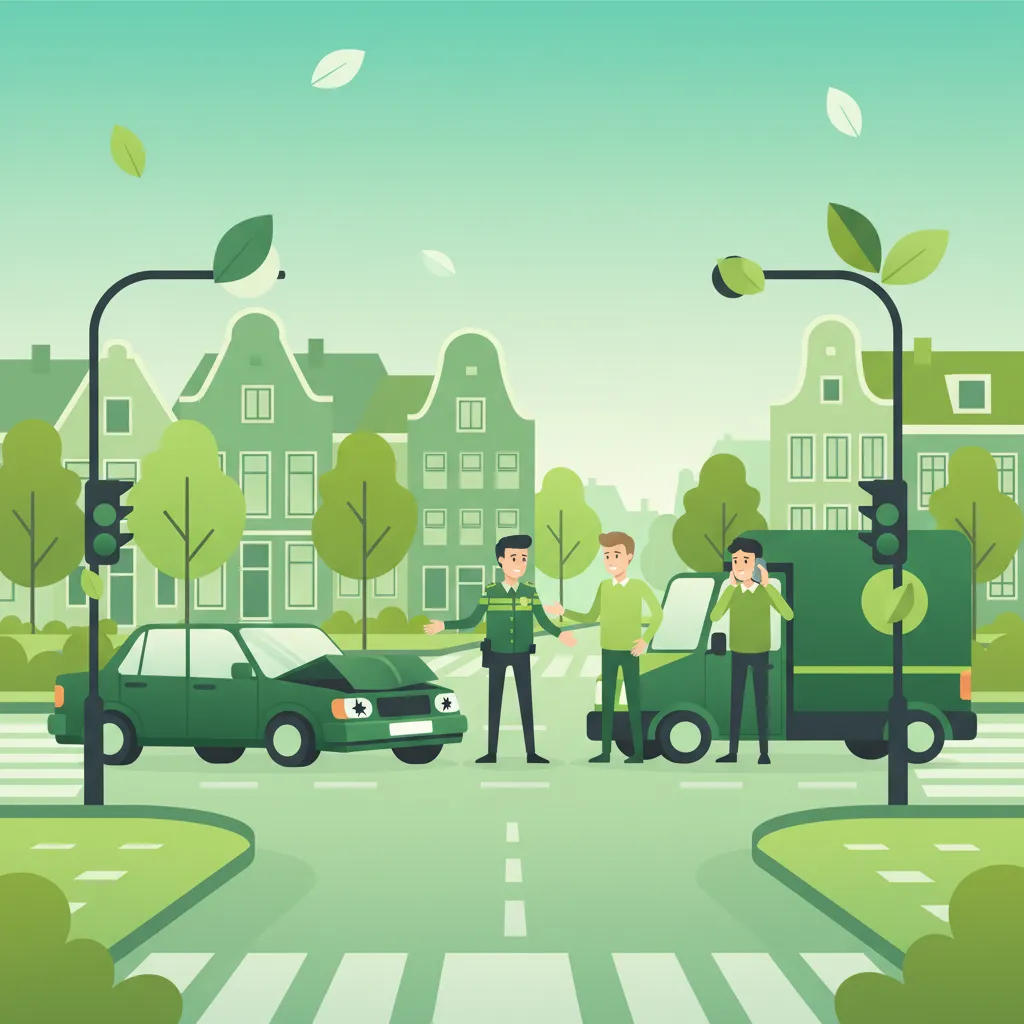
This lesson explains the processes that follow a road accident, focusing on legal and insurance matters. It describes how liability is determined, the steps involved in filing an insurance claim, and the importance of accurate documentation and evidence, such as photos and witness statements. The content also touches upon potential legal consequences, such as fines or prosecution if traffic laws were violated, providing a comprehensive overview of the post-accident landscape.

This lesson provides a practical guide for the unfortunate event of an accident while riding abroad. It outlines the steps for contacting local emergency services, the importance of involving local police, and how to use the European Accident Statement form, which is standardized across languages. The content offers advice on overcoming potential language barriers and the critical steps for gathering evidence and notifying your insurance provider promptly to ensure a smooth claims process.

This lesson examines the statutory duties imposed on motorcyclists, with a strong emphasis on the 'duty of care' (zorgplicht) and the conditions under which legal liability arises after a traffic incident. It clarifies the relationship between personal responsibility, mandatory insurance coverage, and the legal expectation for proactive risk mitigation to prevent accidents. The content also analyzes scenarios to illustrate how liability is typically determined within Dutch traffic jurisprudence, preparing riders for their legal responsibilities.

This lesson provides an overview of the motor vehicle insurance system in the Netherlands, explaining the mandatory third-party liability insurance ('WA-verzekering'). It outlines the process for filing an insurance claim after an accident and the factors that are considered when determining liability or fault. Understanding this process is important for navigating the financial and legal consequences of a collision.
Learn how to secure a motorcycle accident scene and manage immediate emergency procedures. This lesson covers activating hazard lights, deploying the warning triangle, and assessing injuries until help arrives.

This lesson equips riders with essential, life-saving first-aid knowledge tailored to common motorcycle accident scenarios. It covers the primary survey (DRABC - Danger, Response, Airway, Breathing, Circulation), how to manage severe bleeding, and how to treat for shock. A critical component of the lesson is the guidance on helmet removal—emphasizing that it should generally not be attempted by a layperson unless absolutely necessary to clear an airway.
This lesson provides a clear, step-by-step guide for actions to take immediately following a traffic accident. It covers the priorities of personal safety, securing the scene to prevent further incidents, and providing aid to the injured. The curriculum details the legal requirements for reporting an accident ('ongevalrapportage') and the correct procedure for exchanging information with other parties involved, including the use of the European Accident Statement form.

This lesson outlines the step-by-step procedure for executing a controlled emergency stop in a straight line. It emphasizes keeping the motorcycle upright, looking ahead, and applying both brakes firmly and progressively up to the point of maximum traction (or ABS activation). Understanding this technique is critical for minimizing stopping distance in a sudden hazard scenario and is a key skill assessed in practical motorcycle training.
This lesson provides a practical guide for the unfortunate event of an accident while riding abroad. It outlines the steps for contacting local emergency services, the importance of involving local police, and how to use the European Accident Statement form, which is standardized across languages. The content offers advice on overcoming potential language barriers and the critical steps for gathering evidence and notifying your insurance provider promptly to ensure a smooth claims process.

This lesson prepares you for a critical situation: performing a maximum-force emergency stop. You will learn the correct body posture and braking technique to stop in the shortest possible distance without losing control. The content provides a clear explanation of how ABS works by rapidly pulsing the brakes to prevent the wheels from locking, allowing you to maintain steering control even during a panic stop.

This lesson explains how to apply the principle of counter-steering decisively in an emergency situation to perform a rapid swerve. It covers the importance of looking where you want to go, avoiding 'target fixation' on the obstacle, and executing a firm push on the appropriate handlebar to initiate a quick lean and change of direction. This skill is a critical component of collision avoidance for any motorcyclist.
This lesson details the legal requirements for reporting a traffic accident in the Netherlands, including the circumstances under which you must involve the police. It explains the correct procedure for exchanging personal, vehicle, and insurance information with any other parties involved. The lesson also covers the use of the European Accident Statement form to document the facts of the incident for insurance purposes.

A vehicle breakdown can be a dangerous situation if not handled correctly. This lesson provides a clear safety protocol: switch on your hazard lights immediately, and move your vehicle as far to the right of the road or onto the hard shoulder as possible. For your personal safety, you should get away from the vehicle and stand behind a safety barrier if one is available. You will learn the steps for calling for roadside assistance and the legal requirements regarding warning triangles if applicable.
This lesson explains the processes that follow a road accident, focusing on legal and insurance matters. It describes how liability is determined, the steps involved in filing an insurance claim, and the importance of accurate documentation and evidence, such as photos and witness statements. The content also touches upon potential legal consequences, such as fines or prosecution if traffic laws were violated, providing a comprehensive overview of the post-accident landscape.
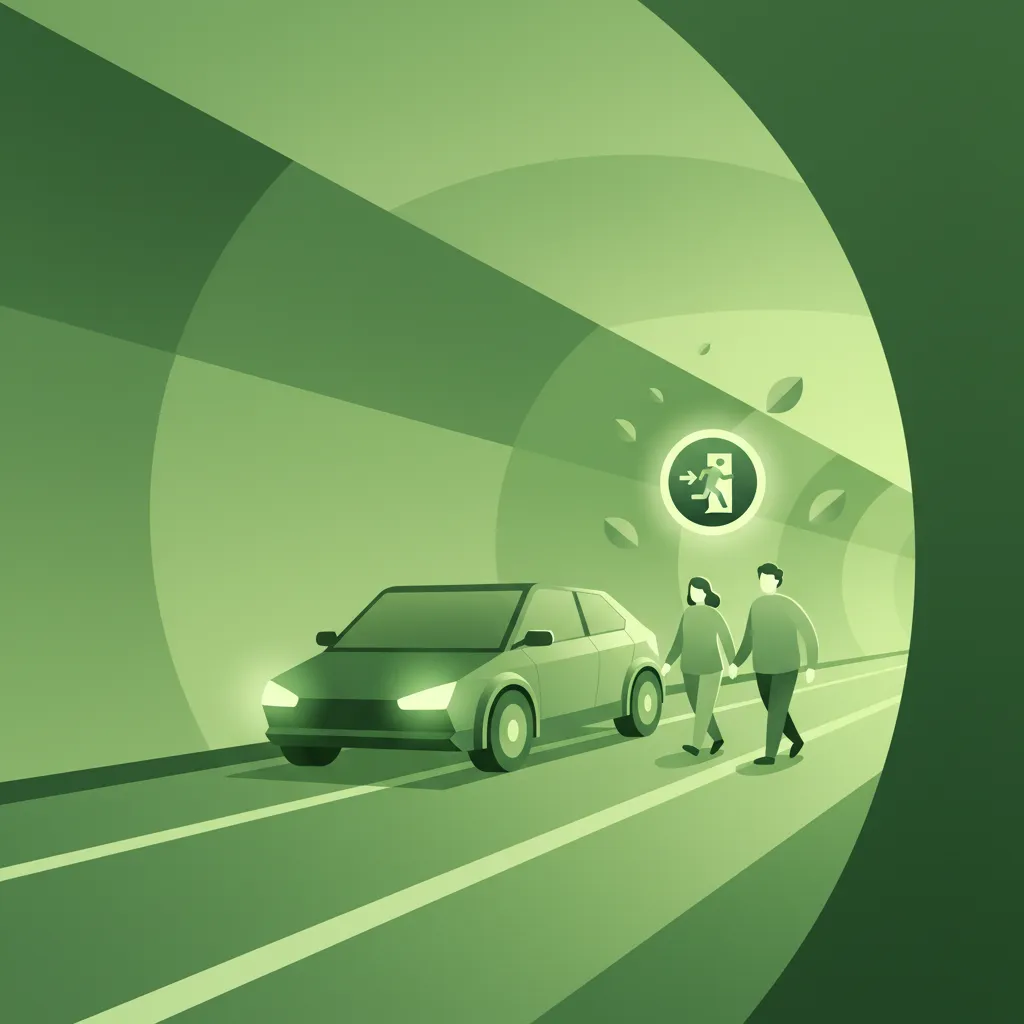
This lesson provides clear, life-saving instructions for handling an emergency stop inside a tunnel. It outlines the correct procedure: pull into an emergency bay if possible, activate hazard lights, turn off the engine, and leave the key. The content emphasizes the importance of moving to a safe location, using the emergency telephones to report the incident, and following all instructions from tunnel operators, including evacuation procedures if necessary.
Find clear answers to common questions learners have about Immediate Actions After a Motorcycle Accident. Learn how the lesson is structured, which driving theory objectives it supports, and how it fits into the overall learning path of units and curriculum progression in the Netherlands. These explanations help you understand key concepts, lesson flow, and exam focused study goals.
The absolute first priority is your safety and the safety of others. Check if you are in immediate danger (e.g., still in traffic, fire risk) and move to a safe location if possible. Then, check for injuries. Your own well-being and preventing further accidents are paramount.
You should call 112 if there are any injuries, however minor they may seem. Also call if there is significant damage to vehicles or property, if the accident is blocking traffic, or if you suspect any illegal activity. It's always better to err on the side of caution and call if you are unsure.
If you are injured and unable to move safely, stay as still as possible to avoid worsening your injuries. Signal for help from bystanders if you can. If someone else is present, ask them to call 112 for you and to check on others involved, while also trying to make the scene safer if possible without putting themselves at risk.
For very minor accidents with no injuries and minimal damage, calling the police might not always be strictly necessary, especially if both parties agree. However, if there's any dispute, significant damage, or potential for injury, it is advisable to involve the police for official reporting. The theory exam often tests the principle of calling emergency services when in doubt.
Yes, if no one is seriously injured and the situation is safe, exchanging insurance and contact details with the other party involved is important. However, this should only happen after ensuring safety and, if necessary, after the emergency services have been called and attended.