
Logo
Dutch Driving Theory Courses

Lesson 6 of the Emergency Braking, Crash Avoidance and Accident Handling unit

Dutch Motorcycle Theory A: First-Aid Basics for Motorcyclists

As a Category A motorcyclist in the Netherlands, knowing how to react in an emergency is crucial. This lesson focuses on essential first-aid techniques specific to motorcycle accident scenarios, building on your knowledge of road safety and accident prevention. It's a vital component of your preparation for the Dutch CBR theory exam and for safe riding in general.

first aidmotorcycle safetyaccident handlingemergency responseCBR exam
Dutch Motorcycle Theory A: First-Aid Basics for Motorcyclists
Dutch Motorcycle Theory A

First-Aid Basics for Motorcyclists: Saving Lives After a Collision

Motorcycle riding, while exhilarating, carries inherent risks. Despite all precautions and advanced riding techniques, accidents can occur. In such critical moments, possessing basic first-aid knowledge can be the difference between life and death for yourself or a fellow rider. This lesson, part of your Dutch Motorcycle Theory – Category A Comprehensive Preparation, equips you with essential life-saving skills, focusing on immediate interventions that a layperson can perform safely and effectively until professional medical help arrives.

In the Netherlands, every road user has a legal obligation to render reasonable assistance after a collision. This duty is enshrined in Article 3:54 of the Reglement Verkeersregels en Verkeerstekens (RVV 1990). Prompt and correct first-aid, especially in high-speed motorcycle crashes where injuries are often severe due to high kinetic energy transfer, is crucial. Understanding the principles outlined here will not only prepare you for emergencies but also ensure you comply with your legal responsibilities.

The Critical First Moments: Why Immediate Action Matters

When a motorcycle accident occurs, the nature of the injuries can be complex and severe, often involving multiple trauma patterns like fractures, head injuries, and internal bleeding. Unlike car drivers, motorcyclists lack a protective enclosure, making them more vulnerable to direct impact. The first few minutes following a severe incident are often referred to as the "golden hour" – a period during which prompt medical intervention significantly improves a victim's chances of survival. Your actions as a first responder during this time can stabilize the victim and prevent secondary injuries.

The physics of a motorcycle crash mean that even at moderate speeds, significant kinetic energy is transferred to the rider upon impact. This can lead to serious injuries that require immediate attention. Recognizing and addressing life-threatening conditions quickly can maintain vital functions and prevent the situation from deteriorating further while awaiting emergency services.

In the Netherlands, the law is clear regarding your responsibilities at the scene of an accident. Article 3:54 of the RVV 1990 states that any road user involved in or witnessing an accident is obliged to render reasonable assistance to those injured and to report the incident. This is not merely a moral imperative but a legal requirement.

Definition

Legal Duty of Assistance

Under Dutch law (RVV 1990, Article 3:54), any road user witnessing or involved in an accident is legally obliged to render reasonable assistance and not to flee the scene.

"Reasonable assistance" means taking actions proportionate to the situation and within your knowledge and skill level. This includes securing the scene, calling emergency services (112), and performing basic first aid as you are able. Failure to comply with this duty can lead to significant legal consequences, including fines, penalty points on your license, or even criminal prosecution. Therefore, understanding and applying basic first-aid principles is not only about saving lives but also about fulfilling your legal obligations as a responsible road user.

Prioritizing Safety: The DRABC Primary Survey for Accident Scenes

The DRABC protocol is a systematic approach to assessing a casualty in an emergency. It ensures that life-threatening conditions are identified and addressed in a specific order, preventing critical steps from being missed. This structured primary survey is the cornerstone of effective first aid in any trauma situation, especially after a motorcycle accident.

Danger: Securing the Accident Scene

The very first step in any emergency situation is to ensure scene safety. You cannot help others if you become a casualty yourself. Before approaching any victim, you must assess and mitigate immediate dangers.

  • Traffic: Be aware of oncoming traffic. Use your hazard lights, and if safe, position your motorcycle or other vehicles to protect the scene. Deploy a warning triangle if available and safe to do so.
  • Fire: Check for leaking fuel, smoke, or flames from the damaged motorcycle or other vehicles. If there's an immediate fire risk, consider moving the victim only if it can be done safely and without further injury, and only if the danger is imminent.
  • Other Hazards: Look for spilled oil, broken glass, downed power lines, or hazardous substances. Only proceed if the scene is safe, or you can make it safe without putting yourself at undue risk.

If danger persists and cannot be safely mitigated, you should only move the casualty if their life is in immediate peril (e.g., from fire or traffic) and it can be done with minimal risk of exacerbating existing injuries, particularly spinal trauma.

Response: Assessing Consciousness (AVPU Scale)

Once the scene is safe, your next step is to assess the victim's level of consciousness. This helps you understand the severity of their condition and how to proceed. The AVPU scale is a quick and effective method:

  • A - Alert: The victim is awake, aware of their surroundings, and responds to you spontaneously.
  • V - Voice: The victim responds when you speak to them, perhaps by opening their eyes, making a sound, or moving.
  • P - Pain: The victim responds only to painful stimuli, such as a gentle pinch or firm rub on the chest bone (sternum).
  • U - Unresponsive: The victim does not respond to voice or pain.

If the victim is unresponsive, it indicates a serious condition, potentially a head injury or shock, requiring immediate attention to their airway and breathing.

Airway Management: Clearing Obstructions and Helmet Considerations

An open airway is paramount for survival. An unconscious victim's tongue can fall back and block their airway, or their airway could be obstructed by blood, vomit, or debris.

Warning

Critical Warning on Helmet Removal: A motorcycle helmet should never be removed by a layperson unless it is absolutely essential to clear an obstructed airway or the helmet itself is compromising breathing. Improper removal can cause or worsen severe spinal injuries.

To open an airway while minimizing neck movement (crucial due to potential spinal injuries in motorcycle crashes):

  1. Jaw-Thrust Maneuver: If a spinal injury is suspected (which should always be assumed in a motorcycle accident), use the jaw-thrust maneuver. Place your fingers under the angles of the victim's jaw and gently lift the jaw forward without tilting the head back. This moves the tongue away from the back of the throat.
  2. Head-Tilt/Chin-Lift (if no spinal injury suspected): If you are certain there is no spinal injury (which is rarely the case in a motorcycle crash, so proceed with extreme caution), you can gently tilt the head back and lift the chin.

If the helmet is obstructing the airway, or the visor is broken and pressing against the face, removal might be necessary. This is an advanced and risky procedure that should ideally be performed by trained medical personnel. However, in a life-or-death situation where the airway cannot otherwise be cleared, you may need to act. The next section provides detailed guidance on this critical step.

Breathing Assessment: Checking for Respiration

Once the airway is open, you need to check if the victim is breathing effectively.

  • Look, Listen, Feel:
    • Look for chest rise and fall.
    • Listen for breath sounds at the mouth and nose.
    • Feel for air movement on your cheek.
  • Rate: Note the rate and depth of breathing. Gasping or shallow breathing is not effective breathing.

If the victim is not breathing or is only gasping, immediately call 112 if you haven't already. If you are trained and equipped for rescue breathing (CPR), initiate it. Otherwise, focus on maintaining an open airway until professional help arrives.

Circulation Control: Stopping Severe Bleeding

The "C" in DRABC stands for Circulation, which primarily involves checking for a pulse and, most importantly in trauma, controlling severe external bleeding. Uncontrolled bleeding is a leading cause of preventable death after accidents.

  • Pulse Check: Feel for a pulse in the carotid artery (in the neck, to the side of the windpipe). A rapid, weak pulse can indicate shock.
  • Bleeding Assessment: Quickly scan the victim for any signs of severe bleeding, paying particular attention to the limbs, head, and torso. Motorcycle gear can hide serious injuries, so be thorough but avoid unnecessary movement.

If you identify severe bleeding, immediate action is required. This leads to the next crucial topic: hemorrhage control.

Controlling Life-Threatening Bleeding: Essential Techniques

Severe external bleeding can rapidly lead to a life-threatening condition called hypovolemic shock. Controlling bleeding is often the most immediate and impactful first-aid intervention you can perform.

Direct Pressure and Pressure Dressings

The primary method for controlling most external bleeding is direct pressure.

  1. Direct Pressure: Apply firm, continuous pressure directly onto the wound with a clean cloth, bandage, or even your hand if nothing else is available. Maintain this pressure for at least 5-10 minutes. Do not peek to check the bleeding; continuous pressure is key.
  2. Pressure Dressing: If direct pressure alone isn't enough or you need to free your hands, apply a pressure dressing. Place a thick pad over the wound and wrap it tightly with a bandage, ensuring continuous pressure. The dressing should be tight enough to stop the bleeding but not so tight that it cuts off circulation to the limb beyond the wound.

If blood soaks through the dressing, do not remove it. Instead, apply more pads and another bandage on top, maintaining pressure.

When to Use a Tourniquet for Arterial Bleeding

For life-threatening arterial bleeding that cannot be controlled by direct pressure or pressure dressings, a tourniquet may be necessary. This is a critical intervention for saving a limb or a life.

Definition

Tourniquet

A device applied proximal to a severe arterial bleed to occlude blood flow, used only for life-threatening hemorrhage where direct pressure fails.

  • Life-Threatening Bleeding: A tourniquet is reserved for situations where there is bright red blood spurting vigorously (arterial bleeding) or bleeding that is not stopping despite prolonged direct pressure.
  • Application: Apply the tourniquet proximal (closer to the body) to the wound, about 5-8 cm above it, directly on the skin if possible, or over clothing if necessary. Tighten it as much as possible until the bleeding stops. Note the time of application.
  • Dutch Red Cross Guidelines: The Dutch Red Cross guidelines allow laypersons to use tourniquets in life-threatening bleeding situations. However, it's crucial to understand that a tourniquet should only be used as a last resort for severe, uncontrollable bleeding, as improper or prolonged use can cause tissue damage. Once applied, a tourniquet should only be removed by medical professionals.

Recognizing and Managing Shock After a Motorcycle Accident

Shock is a life-threatening condition that occurs when the body's organs and tissues do not receive enough blood flow, leading to insufficient oxygen delivery. In motorcycle accidents, the most common type of shock is hypovolemic shock, caused by significant blood loss.

Definition

Hypovolemic Shock

A life-threatening medical condition where inadequate blood flow leads to insufficient oxygen delivery to tissues, commonly caused by significant blood loss.

Signs and Symptoms of Hypovolemic Shock

Recognizing the signs of shock quickly is vital for effective management:

  • Pale, Cold, Clammy Skin: The skin may appear ashen or bluish, and feel cold and moist to the touch as blood is diverted from the extremities to vital organs.
  • Rapid, Weak Pulse (Tachycardia): The heart tries to compensate for reduced blood volume by beating faster, but the pulse may feel weak.
  • Rapid, Shallow Breathing: The body attempts to increase oxygen intake.
  • Nausea or Vomiting: A common physiological response to severe stress.
  • Confusion or Altered Mental State: As the brain receives less oxygen, the victim may become disoriented, restless, anxious, or even lose consciousness.
  • Thirst: The body's natural response to fluid loss.
  • Weakness or Dizziness: Due to reduced blood pressure.

First Aid for Shock: Positioning and Maintaining Body Temperature

Managing shock is about supporting the victim's circulatory system and keeping them stable until emergency medical services arrive.

  1. Lie Flat: Position the victim lying flat on their back. This helps blood flow to vital organs.
  2. Elevate Legs (Unless Spinal Injury Suspected): If there is no suspicion of a spinal injury (which, again, should be assumed in a motorcycle crash unless ruled out by professionals), you can gently elevate the victim's legs by about 30 cm. This helps return blood from the legs to the core circulation. If a spinal injury is suspected, keep the victim flat without elevating the legs.
  3. Maintain Body Temperature: Cover the victim with a blanket, jacket, or anything available to keep them warm. Hypothermia can worsen shock.
  4. No Food or Drink: Do not give the victim anything to eat or drink, even if they complain of thirst. This could cause aspiration if they lose consciousness, or complicate potential surgery.
  5. Monitor: Continuously monitor their breathing and pulse. Reassure the victim if they are conscious.

Prompt action in managing shock can prevent circulatory collapse and improve the victim's prognosis.

Motorcycle Helmet Removal: When and How to Safely Remove a Helmet

This is perhaps one of the most contentious and critical aspects of motorcycle first aid. The overarching principle is to avoid removing the helmet unless it is absolutely necessary. The primary concern is the risk of exacerbating a cervical (neck) spinal injury, which could lead to permanent paralysis or even death.

The Critical Rule: Do Not Remove Unless Airway is Compromised

Always assume a spinal injury in a motorcycle accident. Removing a helmet can cause significant movement of the head and neck, potentially worsening an unstable spinal fracture.

The helmet should only be removed if:

  1. Airway Obstruction: The victim's airway is blocked (e.g., by the helmet itself, a broken visor, blood, or vomit) and you cannot clear it with the helmet in place using the jaw-thrust maneuver.
  2. Helmet Interference: The helmet prevents adequate breathing or your ability to effectively perform rescue breathing.

If the victim is breathing adequately and their airway is clear with the helmet on, do not remove it. Instead, keep it in place and maintain spinal immobilization if possible until professional help arrives. You can try to open the visor to improve airflow without removing the helmet.

Step-by-Step Guide for Essential Helmet Removal (Two-Person Technique)

If helmet removal is absolutely necessary, ideally it should be performed by two people to maintain constant cervical spine stabilization. If you are alone, the priority is to maintain head and neck alignment as much as possible.

Procedure for Essential Helmet Removal

  1. Assess and Prepare: Reconfirm that helmet removal is essential due to airway compromise. Have a second person (if available) dedicated solely to maintaining inline cervical stabilization.

  2. First Responder - Head Stabilization: The first person kneels at the victim's head and places their hands on both sides of the helmet, maintaining firm, steady pressure to prevent any head or neck movement. This person is responsible for head and neck alignment throughout the process.

  3. Second Responder - Helmet Strap Release: The second person (or the first person, if working alone and only after securing the head as best as possible) carefully cuts or unfastens the helmet chin strap.

  4. Careful Helmet Removal (Two-Person):

    • The first person continues to stabilize the head, preventing any movement.
    • The second person places their hands on the victim's jaw and the back of their head (occiput) before the helmet is moved, ensuring continuous support for the head and neck.
    • The first person (still stabilizing the head) then gently widens the helmet slightly at the base and carefully slides it off, moving it towards the victim's feet. The helmet should be removed slowly and in line with the body, avoiding any twisting or tilting of the head.
    • As the helmet clears the face, the second person takes over full support of the head and neck, maintaining a neutral, inline position.
  5. Careful Helmet Removal (One-Person - Last Resort): If alone, you must perform the cutting of the strap and then maintain the jaw-thrust with one hand while gently guiding the helmet off with the other. This is extremely difficult to do safely and carries a very high risk of spinal injury. It is truly a last resort.

  6. Post-Removal: Once the helmet is off, immediately ensure the airway is clear. Maintain manual cervical spine stabilization until emergency services arrive.

Common Mistakes in Motorcycle Accident First Aid and How to Avoid Them

Even with good intentions, common errors can worsen a victim's condition or put the rescuer at risk. Being aware of these pitfalls can help you respond more effectively.

  • Ignoring Scene Danger: Rushing to the victim without first securing the scene (traffic, fire, etc.) can lead to you becoming a secondary casualty. Always prioritize "Danger" in DRABC.
  • Improper or Unnecessary Helmet Removal: Removing the helmet routinely "to check for injuries" without airway compromise significantly increases the risk of cervical spine damage. Always keep the helmet on unless the airway is blocked.
  • Failure to Control Severe Bleeding: Underestimating the urgency of severe bleeding or applying only a small bandage to an arterial bleed can lead to rapid blood loss and shock. Apply direct pressure immediately, followed by a pressure dressing or a tourniquet if necessary.
  • Moving a Victim with Suspected Spinal Injury: Dragging or lifting an injured rider without maintaining inline spinal stabilization can cause irreversible neurological damage. Only move a victim if their life is in immediate danger (e.g., fire).
  • Providing Food or Drink to a Shocked or Unconscious Victim: Offering water, coffee, or food to someone in shock or unconscious can cause aspiration (inhaling fluids into the lungs), which can be fatal. Keep them warm and monitor their airway.
  • Delaying the Call to Emergency Services (112): While initial assessment and immediate first aid are vital, calling 112 as soon as the scene is safe is crucial to ensure professional help arrives quickly. Don't wait too long after your primary survey.
  • Incorrect Position for Shock Management: Elevating the legs of a victim with suspected spinal injury can worsen their condition. If spinal injury is a possibility, keep the victim lying flat.

Adapting First Aid to Specific Conditions: Weather, Road, and Vehicle Factors

First-aid situations are rarely textbook perfect. Your response will need to be adapted based on the environmental and circumstantial factors surrounding the accident.

  • Weather Conditions:
    • Rain/Snow: Increase the risk of hypothermia. Keep the victim as dry and warm as possible using blankets, waterproof coverings, or even your own riding gear. Low visibility also increases the danger from other traffic.
    • Bright Sun/High Temperatures: Risk of heat exhaustion or heatstroke. Try to provide shade for the victim and avoid overheating them if covering for shock.
  • Lighting & Visibility:
    • Night/Low Light: Use flashlights (from your phone or bike) to properly assess injuries and maintain visibility for other road users. Be extra cautious about traffic approaching the scene.
  • Road Type:
    • Highway (Snelweg): Higher speeds mean more severe trauma. Scene safety is paramount due to fast-moving traffic. Focus on quickly securing the area and calling 112. Traffic control (e.g., flagging down other drivers) may be necessary.
    • Urban (Stadswegen): Lower speeds but potentially higher pedestrian traffic and multiple hazards. Scene management involves keeping bystanders away and dealing with multiple potential victims.
    • Rural Roads (Buitenwegen): Often isolated, leading to longer EMS response times. This increases the importance of immediate, effective first aid.
  • Vehicle State:
    • Damaged Motorcycle with Leaking Fuel: Treat this as an immediate fire risk ("Danger" in DRABC). Move the victim if safe to do so and if the fire risk is imminent.
    • Heavy Load/Trailer: If other vehicles are involved, they might obstruct access to the victim or pose additional hazards.
  • Vulnerable Users Interaction:
    • Other Motorcyclists: Often the first on scene. They can assist, but must also prioritize their own safety.
    • Pedestrians/Cyclists: May need to be directed away from the incident scene to prevent further hazards.

The Impact of Timely First Aid: Cause-and-Effect Relationships

Understanding the "why" behind first-aid actions reinforces their importance and helps in decision-making under pressure.

  • Correct DRABC Execution → Early identification of airway obstruction → Timely airway clearance → Prevents hypoxia (lack of oxygen), significantly improving survival odds.
  • Skipping "Danger" → Rescuer injury or secondary accident → Reduced overall assistance capacity, possible legal liability, and additional victims.
  • Inadequate Hemorrhage Control → Continued blood loss → Hemorrhagic shock → Fatality if not reversed rapidly.
  • Unnecessary Helmet Removal → Potential cervical spine damage → Paralysis or worsened neurological outcome for the victim.
  • Delayed EMS Call → Prolonged time to definitive medical care → Increased morbidity (severity of illness/injury) and mortality.
  • Providing Food/Drink to Shocked Victim → Aspiration risk → Respiratory compromise, potentially fatal.

The principles of first aid for motorcyclists are interwoven with other crucial aspects of safe riding and post-accident procedures covered in your Dutch Motorcycle Theory course. Effective first aid builds upon your understanding of collision avoidance strategies (9.4) by anticipating trauma patterns, and it directly precedes post-accident procedures and reporting (9.5) by laying the groundwork for victim care and scene management. It also reinforces concepts from human factors (12) by emphasizing the need for structured decision-making under stress.

Key First-Aid Terms for Motorcyclists

DRABC
A structured primary survey: Danger, Response, Airway, Breathing, Circulation, guiding immediate trauma response.
AVPU Scale
A method to assess consciousness: Alert, responds to Voice, responds to Pain, or Unresponsive.
Direct Pressure
Applying firm, continuous force directly onto a bleeding wound to stop blood flow.
Pressure Dressing
A bandage applied tightly over a wound to maintain continuous pressure and control bleeding.
Tourniquet
A medical device used to stop severe arterial bleeding by constricting blood flow proximal to the wound, used as a last resort.
Hypovolemic Shock
A life-threatening condition caused by severe blood loss, leading to inadequate blood flow to organs.
Cervical Spine Immobilization
The act of keeping the head and neck in a neutral, aligned position to prevent further injury to the spinal cord.
Jaw-Thrust Maneuver
A technique to open an airway by lifting the jaw forward without tilting the head, used when spinal injury is suspected.
Legal Duty of Assistance
The legal obligation under Dutch law (RVV 1990, Article 3:54) to render reasonable aid and report accidents.
Scene Safety
The initial assessment and mitigation of dangers (e.g., traffic, fire) at an accident site before providing aid.
Airway Obstruction
Any blockage preventing air from reaching the lungs, which can be caused by the tongue, debris, or a helmet.
Emergency Services (112)
The national emergency number in the Netherlands for ambulance, police, and fire services.
Golden Hour
The critical first hour after a severe injury during which prompt medical intervention can significantly improve survival chances.
Kinetic Energy Transfer
The process by which energy from motion is transferred to the rider during an impact, causing trauma.
Primary Survey
The initial rapid assessment of a trauma victim to identify and address immediate life-threatening conditions.

Further Learning and Practice

Learn more with these articles

Check out these practice sets


Search topics related to First-Aid Basics for Motorcyclists

Explore search topics learners often look for when studying First-Aid Basics for Motorcyclists. These topics reflect common questions about road rules, driving situations, safety guidance, and lesson level theory preparation for learners in the Netherlands.

motorcycle accident first aid netherlandsDRABC procedure for motorcyclistshow to stop bleeding on a motorcycle riderwhen to remove motorcycle helmet accidentDutch CBR theory first aid motorcycleemergency response for motorcycle crashtreating shock after motorcycle accidentbasic life support for riders nl

Related driving theory lessons for First-Aid Basics for Motorcyclists

Browse additional driving theory lessons that cover connected traffic rules, road signs, and common driving situations related to this topic. Improve your understanding of how different rules interact across everyday traffic scenarios.

Motorcycle Accident First Aid Response and Legal Duties

Understand essential first aid for motorcycle accidents in the Netherlands, including the DRABC survey, bleeding control, shock management, and your legal duty to assist. This lesson covers immediate actions until emergency services arrive.

first aidaccident responselegal dutyDRABCmotorcycle safetyNetherlands
Post-Accident Procedures and Reporting (ongevalrapportage) lesson image

Post-Accident Procedures and Reporting (ongevalrapportage)

This lesson provides a clear, step-by-step guide for actions to take immediately following a traffic accident. It covers the priorities of personal safety, securing the scene to prevent further incidents, and providing aid to the injured. The curriculum details the legal requirements for reporting an accident ('ongevalrapportage') and the correct procedure for exchanging information with other parties involved, including the use of the European Accident Statement form.
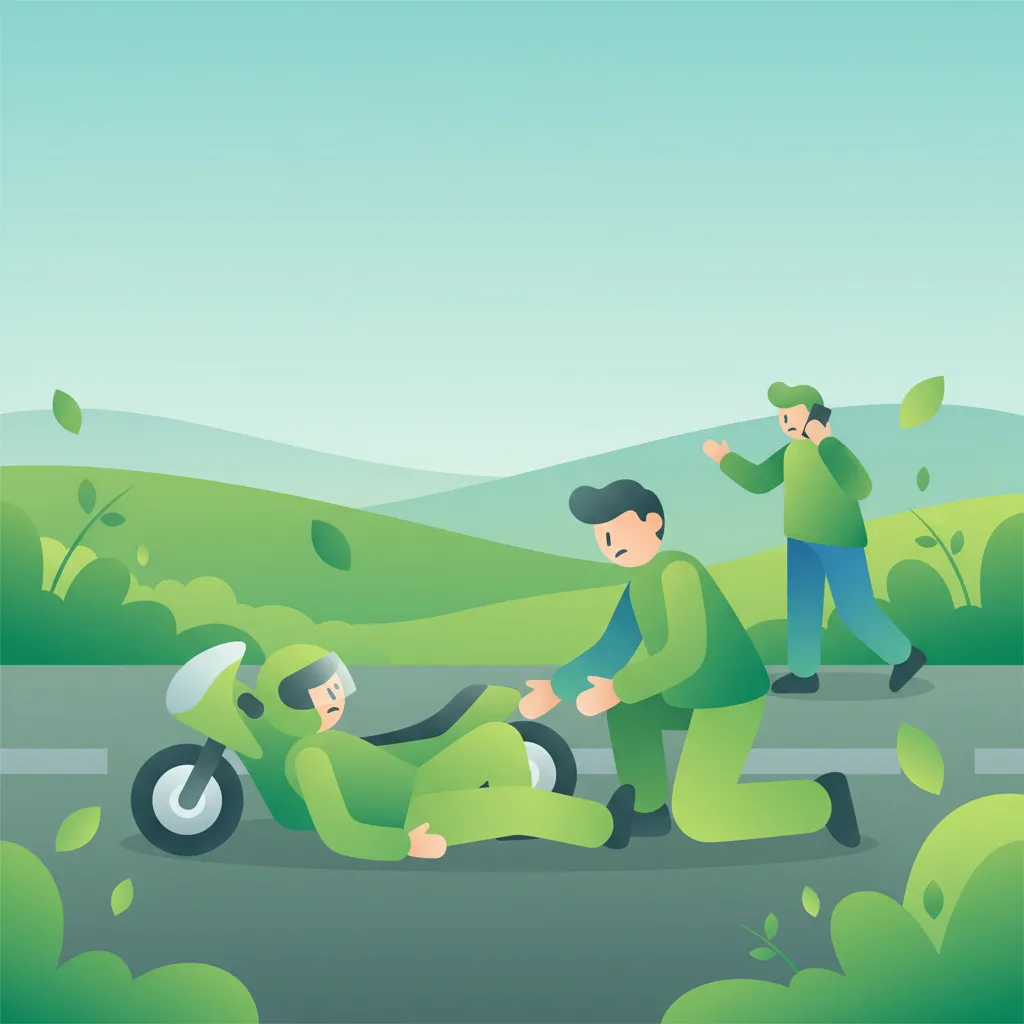
Dutch Motorcycle Theory AEmergency Braking, Crash Avoidance and Accident Handling
View lesson
Immediate Actions After a Motorcycle Accident lesson image

Immediate Actions After a Motorcycle Accident

This lesson provides a clear, prioritized list of actions to take in the immediate aftermath of an accident. The primary focus is on safety: securing the scene to prevent further incidents, checking for injuries on yourself and others, and calling emergency services (112). It provides the essential knowledge required to manage a stressful and potentially dangerous situation calmly and effectively until professional help arrives.

Dutch A1 Motorcycle TheoryAccident Management, Legal Responsibilities & Substance Use
View lesson
Reporting Obligations and Interaction with Police lesson image

Reporting Obligations and Interaction with Police

This lesson details the legal requirements for reporting a traffic accident in the Netherlands, including the circumstances under which you must involve the police. It explains the correct procedure for exchanging personal, vehicle, and insurance information with any other parties involved. The lesson also covers the use of the European Accident Statement form to document the facts of the incident for insurance purposes.

Dutch A1 Motorcycle TheoryAccident Management, Legal Responsibilities & Substance Use
View lesson
Legal Consequences and Insurance Claims lesson image

Legal Consequences and Insurance Claims

This lesson explains the processes that follow a road accident, focusing on legal and insurance matters. It describes how liability is determined, the steps involved in filing an insurance claim, and the importance of accurate documentation and evidence, such as photos and witness statements. The content also touches upon potential legal consequences, such as fines or prosecution if traffic laws were violated, providing a comprehensive overview of the post-accident landscape.

Dutch Motorcycle Theory AEmergency Braking, Crash Avoidance and Accident Handling
View lesson
Accident Reporting and Documentation lesson image

Accident Reporting and Documentation

In the event of an accident, a calm and methodical approach is essential. This lesson details the necessary actions, from stopping safely and assessing the situation to exchanging driver and insurance details with the other party. It explains how to fill out the European Accident Statement form ('schadeformulier'), which is a vital document for insurance claims. You will also learn when it is mandatory to call the police and the importance of gathering evidence like photos and witness contact information.

Dutch Driving Theory AMLegal Responsibilities & Incident Procedures
View lesson
Rider Obligations and Liability lesson image

Rider Obligations and Liability

This lesson examines the statutory duties imposed on motorcyclists, with a strong emphasis on the 'duty of care' (zorgplicht) and the conditions under which legal liability arises after a traffic incident. It clarifies the relationship between personal responsibility, mandatory insurance coverage, and the legal expectation for proactive risk mitigation to prevent accidents. The content also analyzes scenarios to illustrate how liability is typically determined within Dutch traffic jurisprudence, preparing riders for their legal responsibilities.

Dutch Motorcycle Theory AFundamentals of Motorcycle Theory & Dutch Traffic Law
View lesson
Rider Liability and Duty of Care (zorgplicht) lesson image

Rider Liability and Duty of Care (zorgplicht)

This lesson provides an in-depth exploration of Article 5 of the Dutch Road Traffic Act, which establishes the general 'duty of care' ('zorgplicht'). It explains that every road user has a fundamental obligation to behave in a way that does not cause danger or hindrance to others. The curriculum clarifies how this broad principle is applied in determining legal liability after an accident, especially in incidents involving vulnerable road users, reinforcing the rider's constant accountability.
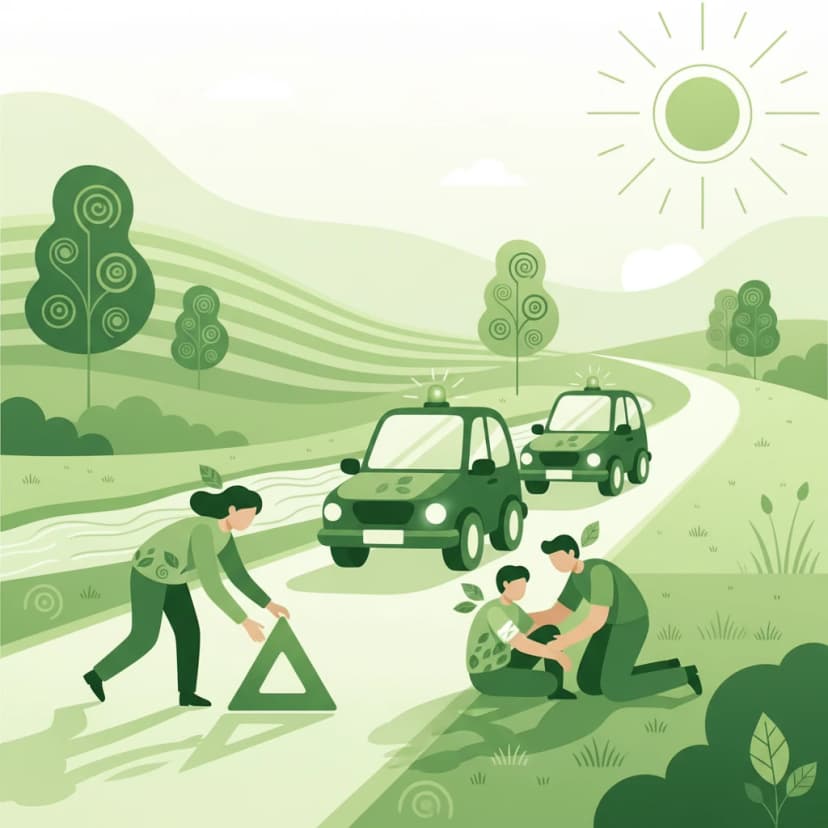
Dutch Motorcycle Theory ALegal Responsibilities, Police Interaction, and International Riding
View lesson
Actions at an Accident Scene lesson image

Actions at an Accident Scene

This lesson outlines the correct protocol to follow after a traffic accident. The first priority is to ensure the safety of everyone involved by securing the scene and checking for injuries. You will learn when it is mandatory to call the emergency services (112), such as when there are injuries or significant road blockage. The curriculum also explains the legal requirement to stop and exchange insurance and contact details with other parties involved. The use of the European Accident Statement form to record the details is also covered.

Dutch Driving Theory BEmergencies, Breakdowns, and Accidents
View lesson
Insurance Claims and Liability Determination lesson image

Insurance Claims and Liability Determination

This lesson provides an overview of the motor vehicle insurance system in the Netherlands, explaining the mandatory third-party liability insurance ('WA-verzekering'). It outlines the process for filing an insurance claim after an accident and the factors that are considered when determining liability or fault. Understanding this process is important for navigating the financial and legal consequences of a collision.

Dutch A1 Motorcycle TheoryAccident Management, Legal Responsibilities & Substance Use
View lesson
Reporting and Handling Foreign Accidents lesson image

Reporting and Handling Foreign Accidents

This lesson provides a practical guide for the unfortunate event of an accident while riding abroad. It outlines the steps for contacting local emergency services, the importance of involving local police, and how to use the European Accident Statement form, which is standardized across languages. The content offers advice on overcoming potential language barriers and the critical steps for gathering evidence and notifying your insurance provider promptly to ensure a smooth claims process.

Dutch Motorcycle Theory ALegal Responsibilities, Police Interaction, and International Riding
View lesson

Frequently asked questions about First-Aid Basics for Motorcyclists

Find clear answers to common questions learners have about First-Aid Basics for Motorcyclists. Learn how the lesson is structured, which driving theory objectives it supports, and how it fits into the overall learning path of units and curriculum progression in the Netherlands. These explanations help you understand key concepts, lesson flow, and exam focused study goals.

When should I remove a helmet after a motorcycle accident?

As a general rule, do not remove the helmet unless absolutely necessary to maintain an open airway or if there is immediate danger to the rider from fire or explosion. Improper removal can cause further injury to the neck and spine. If airway is compromised and helmet removal is necessary, it should be done by at least two trained individuals, one stabilising the head and neck.

What is the most critical first step after a motorcycle accident?

The absolute first step is to ensure your own safety and the safety of the scene (Danger). Check for ongoing hazards like traffic, fire, or fuel leaks. Only then should you approach the casualty to assess their condition (Response, Airway, Breathing, Circulation).

How can I help a motorcyclist with severe bleeding?

Apply firm, direct pressure to the wound using a clean cloth or your hands if nothing else is available. If the bleeding is on a limb and direct pressure isn't enough, consider applying a tourniquet as a last resort for life-threatening bleeding, but only if you are trained and have no other options.

What are the signs of shock in a motorcycle accident victim?

Signs of shock include pale, cold, clammy skin; rapid, shallow breathing; rapid pulse; nausea; and a feeling of weakness or dizziness. Keep the casualty lying down, warm, and reassured, and elevate their legs slightly if no head, neck, or back injury is suspected.

How does the DRABC survey apply to motorcyclists specifically?

The DRABC (Danger, Response, Airway, Breathing, Circulation) survey is universal. For motorcyclists, the 'Danger' phase is critical due to potential hazards like leaking fuel or the bike's position. When assessing 'Airway', be mindful of the helmet, and if it must be removed, do so with extreme caution to protect the neck.

What documentation should I have regarding first aid for the Dutch theory exam?

The theory exam focuses on rules and hazard perception, not practical first aid skills. However, understanding emergency procedures, including basic first aid, is part of demonstrating awareness of accident handling, which is assessed through scenario-based questions. Knowing these basics is part of your overall responsibility as a road user in the Netherlands.

Continue your Dutch driving theory learning journey

Dutch road signsDutch article topicsSearch Dutch road signsDutch driving theory homeDutch road sign categoriesSearch Dutch theory articlesDutch driving theory coursesDutch Driving Theory B courseDutch driving theory articlesDutch driving theory practiceDutch practice set categoriesDutch Driving Theory AM courseDutch Motorcycle Theory A courseDutch A1 Motorcycle Theory courseDutch Motorcycle Theory (A2) courseSearch Dutch driving theory practiceTowing, Trailers, and Loads unit in Dutch Driving Theory BRoadway Access & Navigation unit in Dutch Driving Theory AMVehicle Positioning and Lane Use unit in Dutch Driving Theory BHuman Factors & Risk Management unit in Dutch Driving Theory AMInfrastructure and Special Roads unit in Dutch Driving Theory BLegal Foundations & Vehicle Types unit in Dutch Driving Theory AMLegal Responsibilities & Incident Procedures unit in Dutch Driving Theory AMHighway (Autosnelweg) Rules for Motorcycles unit in Dutch Motorcycle Theory (A2)Advanced Riding Techniques and High-Speed Control unit in Dutch Motorcycle Theory AAccident Management, Legal Responsibilities & Substance Use unit in Dutch A1 Motorcycle TheoryFirst-Aid Basics for Motorcyclists lesson in Emergency Braking, Crash Avoidance and Accident HandlingSkid Control and Recovery Techniques lesson in Emergency Braking, Crash Avoidance and Accident HandlingLegal Consequences and Insurance Claims lesson in Emergency Braking, Crash Avoidance and Accident HandlingPrinciples of Emergency Braking (noodsremmen) lesson in Emergency Braking, Crash Avoidance and Accident HandlingABS Functionality and Limitations on Motorcycles lesson in Emergency Braking, Crash Avoidance and Accident HandlingCollision Avoidance Strategies (botsingsvermijding) lesson in Emergency Braking, Crash Avoidance and Accident HandlingPost-Accident Procedures and Reporting (ongevalrapportage) lesson in Emergency Braking, Crash Avoidance and Accident Handling