
In the Netherlands, understanding insurance and liability after a motorcycle accident is crucial. This lesson covers the mandatory third-party liability insurance (WA-verzekering), the process for making a claim, and the key factors that determine who is at fault. This knowledge is vital for navigating the consequences of a collision and forms part of the safety and legal responsibilities covered in the A1 motorcycle theory curriculum.
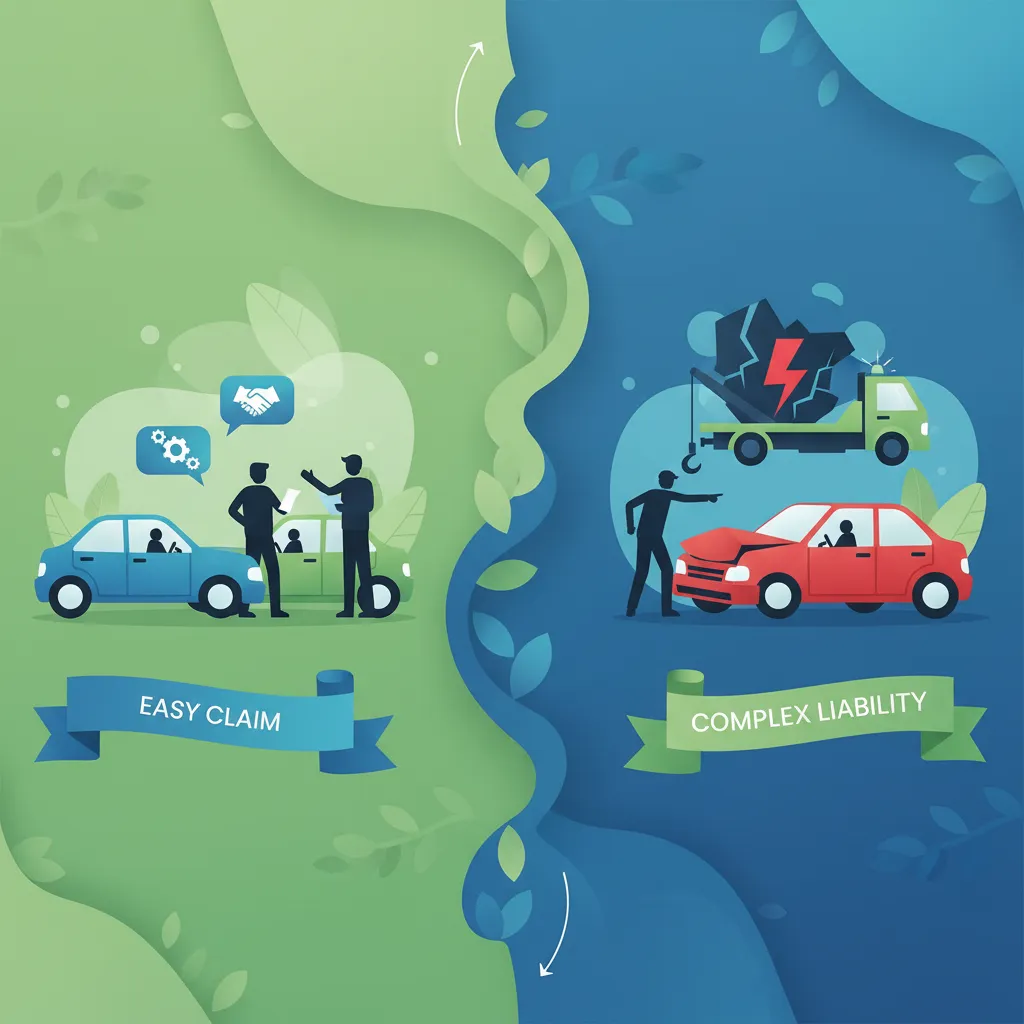
Understanding the Dutch motor vehicle insurance system, particularly for A1 motorcycles, is crucial for every rider. This lesson provides a comprehensive overview of the mandatory third-party liability insurance, known as 'WA-verzekering,' outlining the process for filing an insurance claim after an accident and the factors considered when determining liability or fault. A clear grasp of these procedures is vital for managing the financial and legal repercussions of a collision within the context of the Dutch A1 Motorcycle Theory curriculum.
In the Netherlands, specific laws govern vehicle insurance to ensure all road users are protected. For motorcyclists, including those with an A1 license, adhering to these regulations is not just a recommendation but a legal obligation.
The cornerstone of Dutch motor vehicle insurance is the Wet Aansprakelijkheidsverzekering Motorrijtuigen (WAM), which mandates that every motor vehicle, including your A1 motorcycle, must have valid civil liability insurance. This is commonly known as WA-verzekering (Wettelijke Aansprakelijkheidsverzekering). Its primary purpose is to protect third parties from financial damages or personal injuries you might cause with your motorcycle.
This means if you are involved in an accident and are found to be at fault, your WA-verzekering will cover the costs of damages to other vehicles, property, or injuries sustained by other individuals. It acts as a safety net, guaranteeing that victims receive compensation regardless of your personal financial situation. Failing to have a valid WA-verzekering is a serious offense, leading to significant fines and potential legal consequences, including the inability to register your motorcycle with the CBR (Centraal Bureau Rijvaardigheidsbewijzen).
While WA-verzekering is mandatory, it's essential to understand its limitations: it does not cover damages to your own motorcycle or injuries you sustain as the rider. For this, you would need additional, optional insurance, typically referred to as Kasko insurance or "All-Risk" coverage.
Kasko insurance comes in various forms, such as "Beperkt Kasko" (limited comprehensive) which might cover theft, fire, or storm damage, and "Volledig Kasko" (full comprehensive or all-risk) which extends to cover damages to your own motorcycle even if you are at fault for an accident. Choosing whether to take out Kasko insurance depends on factors like the value of your motorcycle, your financial risk tolerance, and your willingness to pay higher premiums. For example, if you collide with a parked car due to your own mistake, your WA-verzekering would cover the car's damage, but without Kasko, you would bear the cost of repairing your motorcycle yourself.
Navigating the aftermath of a motorcycle accident involves a structured process to ensure your insurance claim is handled correctly. Following these steps can significantly streamline the process and safeguard your rights.
The moments immediately following an accident are critical for gathering evidence. After ensuring everyone's safety and taking any necessary immediate actions (as covered in Lesson 10.1: Immediate Actions After a Motorcycle Accident), focus on documenting the scene thoroughly. This includes:
Adequate documentation provides an undeniable factual basis for your claim dossier, significantly aiding the insurer's assessment process.
For most significant accidents, especially those involving personal injury or substantial property damage, reporting to the police is mandatory under Dutch law. You can file an Aangifte (formal report) or receive an OPM (Oordeel van de Politie – Police Judgment/Assessment).
Under the Road Traffic Act (Wegenverkeerswet), accidents causing injury, death, or damage exceeding approximately €300 must be reported to the police.
The police report serves as an official, unbiased record of the accident's circumstances, often including preliminary assessments of fault. This document, identified by a unique OPM-nummer, is highly valued by insurance companies during their liability determination. Even for minor incidents, it is often advisable to involve the police if there's any dispute or uncertainty. As discussed in Lesson 10.2: Reporting Obligations and Interaction with Police, timely reporting is essential.
Once the immediate aftermath is handled and, if necessary, a police report filed, your next critical step is to notify your own insurance company. Most insurance policies include a "notification clause" requiring you to inform them of a claim "as soon as reasonably possible," often within 24 hours of the accident.
Failure to notify your insurer promptly can be considered a breach of your contractual obligations and might lead to your claim being delayed or even rejected. Always retain proof of your notification (e.g., email confirmation, registered letter).
After receiving your claim dossier, your insurer will initiate its assessment process. This typically involves:
Understanding how responsibility is assigned after an accident is central to the insurance claims process. While often used interchangeably, "liability" and "fault" have distinct legal meanings in the Netherlands.
Fault (Schuld) refers to the factual cause of an accident, often linked to negligence or a violation of traffic rules (e.g., speeding, running a red light, failing to yield). It describes why the accident happened.
Liability (Aansprakelijkheid) is the legal responsibility to compensate for damages caused. It determines who pays. In the Netherlands, due to the mandatory WA-verzekering, liability is usually shifted from the individual at fault to their insurance company. Your WA-verzekering automatically covers your legal liability for damages you cause to third parties.
For example, if you are at fault for rear-ending another vehicle, your actions (e.g., not maintaining a safe distance) constitute "fault." Your WA-verzekering then assumes "liability" to pay for the damage to the other vehicle. The existence of your WA-verzekering ensures the victim receives compensation, even if you, as the rider, couldn't personally afford the costs.
Accidents are rarely black and white; often, multiple parties contribute to the incident. The Dutch legal system applies the principle of comparative fault (Gedeelde Schuld), where responsibility for an accident can be divided among the involved parties, expressed as percentages.
For instance, if Rider A is found 70% at fault and Driver B 30% at fault, their respective insurers will contribute to the compensation in those proportions. If Rider A suffers €10,000 in damages, Driver B's insurer would pay 70% (€7,000) of that claim, as Rider A was 30% at fault for their own damages. Similarly, if Driver B suffered €5,000 in damages, Rider A's insurer would pay 30% (€1,500) of that. This system ensures that financial responsibility aligns with actual culpability, as outlined in Article 6:162 of the Dutch Civil Code (Burgerlijk Wetboek) concerning unlawful acts and contributory negligence.
Police reports (Aangifte or OPM) and the evidence collected at the scene are paramount in determining liability. These objective records provide essential facts that insurers and, if necessary, courts use to assign fault. Details such as vehicle positions, witness statements, speed limits, and observed traffic violations form the basis for liability assessment.
Without a police report or sufficient documentation, determining liability becomes much more challenging and can lead to disputes, delays, or even a reduction in the compensation you receive. Insurers rely on credible evidence to ensure fair payouts and prevent fraudulent claims.
Understanding the financial implications of filing a claim is vital for all motorcyclists. This includes knowing about your deductible and the different forms of compensation.
Eigen risico (excess or deductible) is a fixed amount that you, as the policyholder, must pay out of your own pocket before your insurer covers the remaining claim amount. It is a standard feature in most Dutch insurance policies, including WA-verzekering for motorcycles.
For standard WA policies in the Netherlands, the typical excess (eigen risico) is around €150. You may sometimes choose a higher excess to lower your monthly premium.
For example, if the damage caused to a third party is €500 and your eigen risico is €150, you would pay the first €150, and your insurer would cover the remaining €350. The purpose of eigen risico is to encourage responsible driving and reduce the number of small, frequent claims, thereby helping to keep overall insurance costs down. In some specific cases, such as a "no-fault" claim where the other party is 100% at fault and their insurer fully compensates, your insurer might waive your eigen risico.
Materiële schade refers to financial reimbursement for physical damage to property. This is the most common type of compensation in motorcycle accident claims. It covers:
Your WA-verzekering primarily covers materiële schade to third parties. If you have Kasko insurance, it would also cover materiële schade to your own motorcycle.
Letselschade refers to financial reimbursement for bodily harm suffered in an accident. This type of compensation is often more complex and covers a broader range of costs:
Crucially, your WA-verzekering covers letselschade caused to third parties. As a rider, if you are injured in an accident where you are at fault, your WA-verzekering will not cover your own personal injury. For coverage of your own injuries, you would need separate personal injury insurance (such as an 'Opzittendenverzekering' or 'Schadeverzekering Inzittenden' in Dutch) or rely on your standard health insurance for medical costs.
Adhering to specific timeframes and maintaining meticulous documentation are non-negotiable aspects of filing a successful insurance claim in the Netherlands.
Dutch civil law establishes strict prescription periods (verjaringstermijnen), which are legal deadlines within which a claim must be initiated. Once these periods expire, your right to claim compensation is legally extinguished.
Missing these deadlines means your claim will be legally barred, and you will lose your right to compensation, bearing the full cost yourself. Prompt action is always recommended.
It's vital to remember that these are statutory deadlines. While your insurer's notification window (e.g., 24 hours) is a contractual obligation, these prescription periods are enshrined in law (Articles 3:310–3:312 BW).
A well-organized and complete claim dossier is your strongest asset when dealing with insurance companies. The following documentation is generally required to substantiate a claim:
Ensure you keep original documents and provide copies to your insurer. Maintaining accurate records will accelerate the claims process and minimize potential disputes.
Beyond the financial implications handled by insurance companies, accidents, particularly those involving negligence, can trigger significant legal and administrative consequences in the Netherlands.
The CBR (Centraal Bureau Rijvaardigheidsbewijzen) is the Dutch authority responsible for issuing and regulating driving licenses. While primarily focused on exams, the CBR also plays a crucial role in public safety. In cases where an accident reveals serious negligence, repeated traffic violations, or impairment (e.g., due to alcohol or drugs, as covered in Lesson 10.4: Alcohol, Drugs, Medication), the CBR has the power to:
Even if your insurer covers the damages, the CBR's administrative actions can have a profound impact on your ability to ride an A1 motorcycle, reflecting the state's commitment to road safety.
In unfortunate circumstances, you might be involved in an accident with a vehicle that is uninsured, or whose driver flees the scene (hit-and-run). While this can complicate the claims process, the Dutch system offers a safety net through the Motor Vehicle Liability Compensation Fund (Waarborgfonds Motorverkeer – VAK).
The VAK is specifically established to provide compensation to victims of accidents caused by:
To claim from the VAK, you must meet strict conditions, including proving that the accident occurred and demonstrating reasonable efforts to identify the at-fault party or their insurer. It typically acts as a last resort when all other avenues for compensation have been exhausted.
Avoiding common pitfalls can significantly improve the outcome of your insurance claim and prevent unnecessary stress or financial burdens.
Let's explore how these principles apply in typical accident situations, providing insight into liability determination and the claims process.
Setting: A busy city street, dry weather, 30 km/h speed limit. Actors: Rider A (A1 motorcycle) and Driver B (car). Incident: Rider A attempts to change lanes without signaling and collides with the side of Driver B's car, which was maintaining its lane. Outcome: The police report notes Rider A's failure to signal as the primary cause. Liability is determined to be 80% for Rider A and 20% for Driver B (for potentially not being fully attentive or maintaining sufficient distance). Rider A's WA-verzekering covers 80% of Driver B's car damage, while Rider A is personally responsible for their own motorcycle's damage (unless they have Kasko) and 20% of their own damage if they claimed from Driver B's insurer.
Setting: A rural two-lane road, light rain, 80 km/h speed limit. Actors: Rider C (A1 motorcycle) and Truck D. Incident: Rider C maintains 80 km/h in the rain and brakes abruptly for a sudden obstacle. Truck D, following closely, slides on the wet road and strikes Rider C's motorcycle. Outcome: The police report highlights Rider C's excessive speed for the conditions and abrupt braking, while also noting Truck D's insufficient following distance. Liability is split: 60% Rider C, 40% Truck D. Rider C's insurer pays 40% of Truck D's damages, and Truck D's insurer pays 60% of Rider C's damages (less any eigen risico for Rider C, and assuming Rider C has Kasko or the damage is severe enough for a shared claim).
Setting: A dimly lit parking lot at night. Actors: Rider E (motorcycle) and a parked car. Incident: Rider E accidentally scratches a parked car while maneuvering out of a spot and leaves the scene without stopping or leaving contact details. Outcome: The owner of the parked car discovers the damage and reports it to the police. Rider E is later identified through CCTV footage. Rider E faces criminal charges for a hit-and-run (failure to stop and provide details) and a significant fine. Rider E's insurer may deny the claim due to the criminal act and absence of a proper police report from Rider E. Rider E becomes personally liable for the parked car's repair costs and their own motorcycle's damage.
Setting: A city intersection with traffic lights. Actors: Rider F (A1 motorcycle) and a Cyclist G. Incident: Rider F proceeds through a green light. Cyclist G, ignoring a red light, enters the intersection and collides with Rider F's front wheel, causing Rider F to fall and sustain a broken arm. Outcome: The police report clearly states Cyclist G ran the red light. Cyclist G is found 100% at fault. Rider F files a claim with Cyclist G's (or their WA-verzekering if they have one for cycling accidents, which is rare but can be part of family liability insurance) or, if Cyclist G is uninsured, via the VAK. Rider F's medical expenses (€2,200 for treatment and recovery) and motorcycle repair (€1,200) are fully compensated. Rider F pays no eigen risico as they are not at fault.
Setting: A highway on a clear day. Actors: Rider H (A1 motorcycle) and Vehicle I (car). Incident: Rider H's motorcycle suffers unexpected brake failure due to neglected maintenance (overdue service, worn brake pads), leading to loss of control and striking Vehicle I. Outcome: Investigations by the insurer and police reveal the brake failure was due to a lack of proper motorcycle maintenance, a breach of the rider's duty to keep their vehicle roadworthy. Rider H is deemed 70% at fault for negligent maintenance. Rider H's WA-verzekering covers 30% of Vehicle I's repair costs, as Rider H is found 70% responsible for their own damages. Rider H bears the remaining 70% of Vehicle I's damage and all of their own motorcycle's repair costs (unless Kasko applies).
Lesson content overview
Explore all units and lessons included in this driving theory course.
Explore search topics learners often look for when studying Insurance Claims and Liability Determination. These topics reflect common questions about road rules, driving situations, safety guidance, and lesson level theory preparation for learners in the Netherlands.
Browse additional driving theory lessons that cover connected traffic rules, road signs, and common driving situations related to this topic. Improve your understanding of how different rules interact across everyday traffic scenarios.
Understand the legal and administrative impacts beyond insurance claims, including CBR actions and dealing with uninsured drivers. This Dutch driving theory lesson clarifies responsibilities and consequences following a motorcycle accident.

This lesson explains the processes that follow a road accident, focusing on legal and insurance matters. It describes how liability is determined, the steps involved in filing an insurance claim, and the importance of accurate documentation and evidence, such as photos and witness statements. The content also touches upon potential legal consequences, such as fines or prosecution if traffic laws were violated, providing a comprehensive overview of the post-accident landscape.

This lesson details the legal requirements for reporting a traffic accident in the Netherlands, including the circumstances under which you must involve the police. It explains the correct procedure for exchanging personal, vehicle, and insurance information with any other parties involved. The lesson also covers the use of the European Accident Statement form to document the facts of the incident for insurance purposes.

This lesson provides a clear, step-by-step guide for actions to take immediately following a traffic accident. It covers the priorities of personal safety, securing the scene to prevent further incidents, and providing aid to the injured. The curriculum details the legal requirements for reporting an accident ('ongevalrapportage') and the correct procedure for exchanging information with other parties involved, including the use of the European Accident Statement form.

This lesson examines the statutory duties imposed on motorcyclists, with a strong emphasis on the 'duty of care' (zorgplicht) and the conditions under which legal liability arises after a traffic incident. It clarifies the relationship between personal responsibility, mandatory insurance coverage, and the legal expectation for proactive risk mitigation to prevent accidents. The content also analyzes scenarios to illustrate how liability is typically determined within Dutch traffic jurisprudence, preparing riders for their legal responsibilities.
This lesson provides a definitive list of the documents a motorcyclist must carry at all times when riding in the Netherlands. It specifies the requirement for a valid driving license ('rijbewijs') for the correct category, the vehicle registration card ('kentekenbewijs'), and proof of valid third-party liability insurance ('verzekeringsbewijs'). The content clarifies that failure to produce these documents during a police check can result in significant fines and legal complications.

In the event of an accident, a calm and methodical approach is essential. This lesson details the necessary actions, from stopping safely and assessing the situation to exchanging driver and insurance details with the other party. It explains how to fill out the European Accident Statement form ('schadeformulier'), which is a vital document for insurance claims. You will also learn when it is mandatory to call the police and the importance of gathering evidence like photos and witness contact information.

This lesson provides a detailed overview of the structure of Dutch traffic legislation, focusing on the Road Traffic Act (Wegenverkeerswet 1994) and its relationship with CBR regulations. It explains the hierarchy from national statutes to local ordinances and how these rules govern rider behavior in various traffic situations. Furthermore, the lesson clarifies the mechanisms for enforcement, the types of sanctions for non-compliance, and the legislative goal of ensuring road safety for all participants.
This lesson covers the specific articles of the Dutch Road Traffic Act that apply to motorways, with a primary focus on the strict rule of keeping to the rightmost available lane unless overtaking. It explains the legal and safety reasons for only passing on the left and discusses the correct positioning within a lane for maximum visibility and safety. The content also addresses the nuances of lane usage during heavy congestion, ensuring riders comply with the law and contribute to smooth traffic flow.

This lesson explains the fundamental concepts of legal liability in traffic accidents and the role of mandatory third-party insurance (WA-verzekering) in the Netherlands. You will learn how insurance companies use the accident statement form and other evidence to determine fault and process claims for damages. Understanding this process helps you appreciate the financial responsibilities associated with riding and the importance of having correct and valid insurance cover at all times.
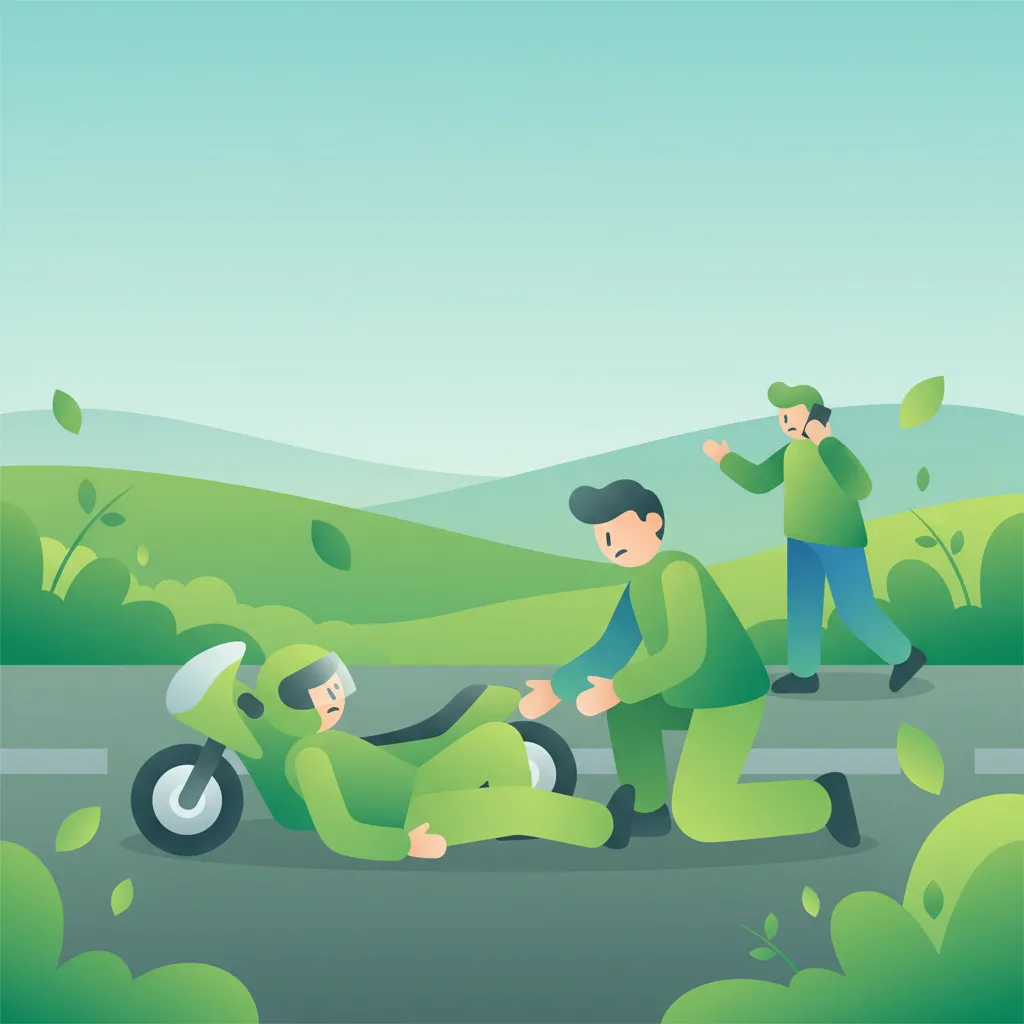
This lesson provides a clear, prioritized list of actions to take in the immediate aftermath of an accident. The primary focus is on safety: securing the scene to prevent further incidents, checking for injuries on yourself and others, and calling emergency services (112). It provides the essential knowledge required to manage a stressful and potentially dangerous situation calmly and effectively until professional help arrives.
Learn about frequent errors and misunderstandings in filing insurance claims for motorcycle accidents in the Netherlands. This driving theory lesson helps you avoid pitfalls related to WA insurance, eigen risico, and documentation.
This lesson explains the fundamental concepts of legal liability in traffic accidents and the role of mandatory third-party insurance (WA-verzekering) in the Netherlands. You will learn how insurance companies use the accident statement form and other evidence to determine fault and process claims for damages. Understanding this process helps you appreciate the financial responsibilities associated with riding and the importance of having correct and valid insurance cover at all times.
This lesson explains the processes that follow a road accident, focusing on legal and insurance matters. It describes how liability is determined, the steps involved in filing an insurance claim, and the importance of accurate documentation and evidence, such as photos and witness statements. The content also touches upon potential legal consequences, such as fines or prosecution if traffic laws were violated, providing a comprehensive overview of the post-accident landscape.
This lesson provides a definitive list of the documents a motorcyclist must carry at all times when riding in the Netherlands. It specifies the requirement for a valid driving license ('rijbewijs') for the correct category, the vehicle registration card ('kentekenbewijs'), and proof of valid third-party liability insurance ('verzekeringsbewijs'). The content clarifies that failure to produce these documents during a police check can result in significant fines and legal complications.
This lesson examines the statutory duties imposed on motorcyclists, with a strong emphasis on the 'duty of care' (zorgplicht) and the conditions under which legal liability arises after a traffic incident. It clarifies the relationship between personal responsibility, mandatory insurance coverage, and the legal expectation for proactive risk mitigation to prevent accidents. The content also analyzes scenarios to illustrate how liability is typically determined within Dutch traffic jurisprudence, preparing riders for their legal responsibilities.
This lesson covers the specific articles of the Dutch Road Traffic Act that apply to motorways, with a primary focus on the strict rule of keeping to the rightmost available lane unless overtaking. It explains the legal and safety reasons for only passing on the left and discusses the correct positioning within a lane for maximum visibility and safety. The content also addresses the nuances of lane usage during heavy congestion, ensuring riders comply with the law and contribute to smooth traffic flow.
This lesson reinforces the fundamental rule of Dutch highway driving: use the rightmost lane available and use the lanes to the left only for overtaking. You will learn the complete, safe overtaking procedure: check mirrors, signal, perform a shoulder check for the blind spot, smoothly move over, accelerate past the vehicle, and then return to the right lane when safe.

This lesson provides critical instruction on managing blind spots ('dode hoek') to prevent collisions, particularly during lane changes. It covers the correct setup and use of mirrors, but stresses their limitations and the absolute necessity of the 'lifesaver' shoulder check before any lateral movement. Furthermore, it teaches riders how to be aware of the large blind spots around cars and especially trucks, and how to position themselves on the road to remain visible to other drivers at all times.
In the event of an accident, a calm and methodical approach is essential. This lesson details the necessary actions, from stopping safely and assessing the situation to exchanging driver and insurance details with the other party. It explains how to fill out the European Accident Statement form ('schadeformulier'), which is a vital document for insurance claims. You will also learn when it is mandatory to call the police and the importance of gathering evidence like photos and witness contact information.

Holding a license and owning a vehicle comes with continuous legal responsibilities. This lesson reminds you of the importance of renewing your driving license before it expires and ensuring your vehicle's insurance policy remains active. It also covers your duty to inform the relevant authorities (like the RDW) of any changes, such as a change of address. Fulfilling these administrative obligations is essential to remaining a legal and responsible road user in the Netherlands.
This lesson prepares riders for the possibility of a routine police check ('verkeerscontrole'). It explains what officers typically inspect, which includes the required documentation, the roadworthiness of the motorcycle (e.g., tire tread depth, exhaust legality), and the rider's sobriety. The curriculum provides guidance on how to interact calmly and cooperatively with law enforcement, ensuring the stop proceeds smoothly and efficiently while being aware of one's basic rights.
Find clear answers to common questions learners have about Insurance Claims and Liability Determination. Learn how the lesson is structured, which driving theory objectives it supports, and how it fits into the overall learning path of units and curriculum progression in the Netherlands. These explanations help you understand key concepts, lesson flow, and exam focused study goals.
WA stands for 'Wettelijke Aansprakelijkheid' or 'Legal Liability'. It is mandatory insurance for all motor vehicles in the Netherlands, including A1 motorcycles. This insurance covers damages that you, as the driver, cause to third parties (other vehicles, property, or people) with your motorcycle. It does not cover damages to your own motorcycle.
First, ensure the safety of yourself and others. Check for injuries and call emergency services if necessary. Then, secure the scene if possible, exchange details with any other parties involved, and gather evidence like photos or witness information. Finally, report the incident to your insurance company and the police if required by law.
Liability is determined based on traffic rules, evidence from the scene (skid marks, vehicle positions), witness statements, and police reports. The party deemed to have violated traffic laws or acted negligently, leading to the accident, is typically held liable. In the Netherlands, the 'own negligence' principle is often applied, meaning you are responsible for the damage you cause.
It's always best to check your specific WA insurance policy terms. Generally, for incidents where you have caused damage to a third party, reporting is mandatory. Even for minor incidents, reporting ensures proper procedure and protects you from future claims. If no damage is done or no other party is involved, reporting might not be necessary, but always verify with your insurer.
WA insurance only covers damage you cause to others. WA-Casco insurance, also known as 'beperkt casco', adds coverage for damage to your own motorcycle caused by specific events like fire, theft, or storm damage. Full comprehensive ('all risk') insurance covers almost all damage to your own motorcycle, regardless of fault.
The CBR A1 theory exam includes questions related to legal responsibilities, accident management, and understanding the implications of traffic violations. Questions may present a scenario and ask about the correct actions to take regarding reporting, liability, or the type of insurance needed, testing your awareness of these crucial aspects of road safety and law.