
Being involved in a traffic accident, however minor, requires a calm and correct response. This lesson in Unit 9, 'Legal Responsibilities & Incident Procedures', guides you through the essential steps for reporting and documenting any incident, ensuring you meet your legal obligations and insurance requirements.
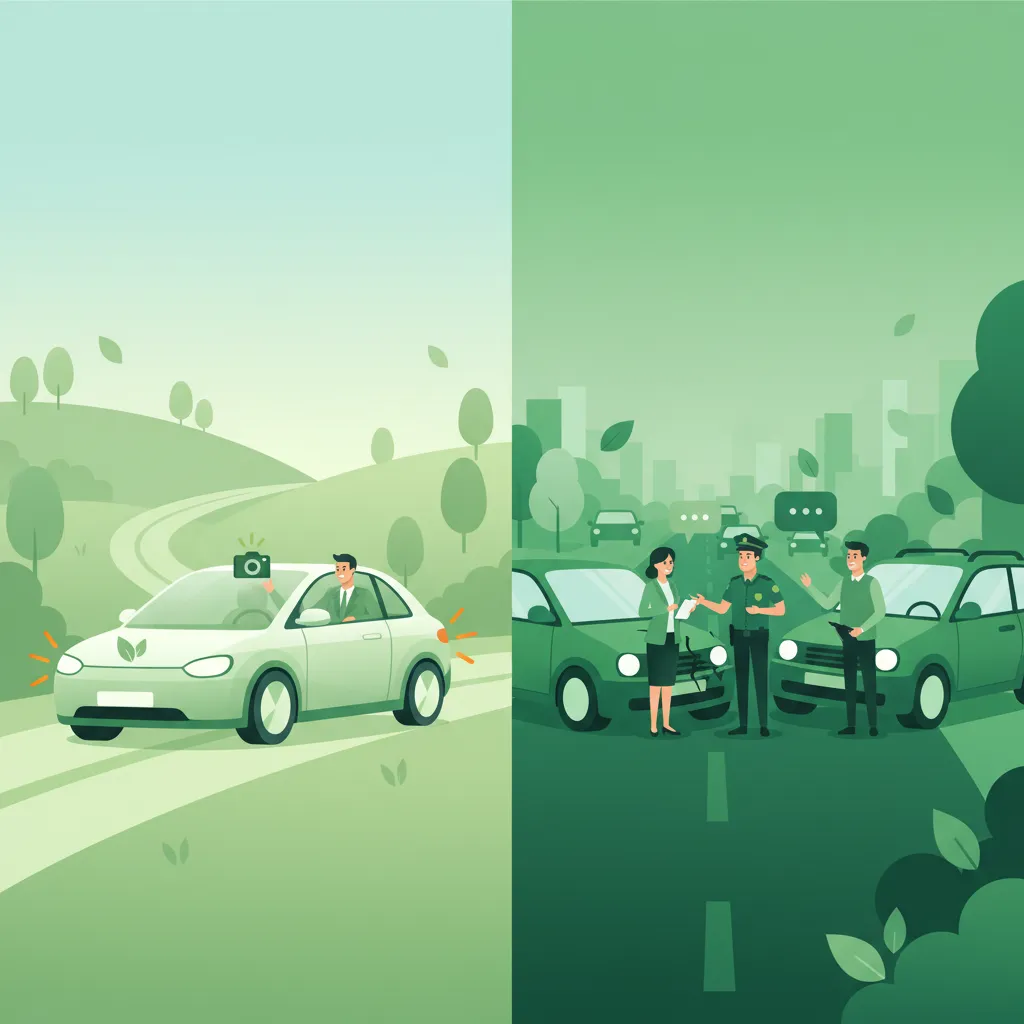
Being involved in a traffic accident, even a minor one, can be a stressful and confusing experience. As a Category AM (moped or scooter) driver in the Netherlands, it's crucial to know exactly what steps to take to ensure safety, fulfill legal obligations, and protect your interests regarding insurance claims. A calm and methodical approach is essential to manage the situation effectively.
This lesson provides a complete guide to the procedural and legal framework for handling a traffic accident. You will learn the immediate actions required at the scene, how to assess injuries and damage, when police involvement is mandatory, and how to properly document the incident using the European Accident Statement. Understanding these steps is vital for securing appropriate medical care, facilitating insurance claims, and avoiding potential legal penalties.
The moments immediately following an accident are critical. Your first priority should always be the safety of yourself and others, followed by securing the scene and preventing further incidents.
Immediately after an accident, you must bring your moped or scooter to a halt in a location that minimizes further risk to traffic participants and the environment. This action prevents secondary collisions and protects anyone who might be injured.
As soon as you stop, activate your hazard lights (waarschuwingslichten) to warn approaching traffic. If it's safe to do so, move your vehicle to the hard shoulder or the side of the road, ensuring it's not obstructing traffic. If the road surface is hazardous (e.g., fire, fuel spill), you may need to move your vehicle further off the road.
On highways, place a warning triangle (gevarendriehoek) at least 30 meters behind your vehicle. On other roads, a distance of 20 meters is typically sufficient. In low visibility conditions, such as at night or in adverse weather, wearing a reflective vest (reflecterend vest) is also strongly advised to make yourself visible to other road users. Dutch Road Traffic Act (RVV 1990) Article 5 and 7 mandate these actions to prevent obstruction and protect other road users.
Always keep a warning triangle and a reflective vest in your vehicle storage. These items are indispensable for your safety in an emergency.
Once the scene is secured, quickly assess the situation for injuries to yourself, passengers, or other parties involved. Rapid appraisal helps determine if professional medical help is required.
Never assume that no visible injury means no police call. Some serious internal injuries might not be immediately obvious. If there's any doubt about someone's condition, always call emergency services.
In the Netherlands, police involvement in a traffic accident is not always mandatory, but specific conditions trigger this legal obligation. Knowing these thresholds is crucial for Category AM drivers.
You must (verplicht) notify the police by calling 112 if any of the following apply:
Even if the police are not called, you are still required to exchange details and complete an accident statement for insurance purposes. However, in cases where police notification is mandatory, failure to do so can lead to administrative penalties or even criminal charges.
After ensuring safety and, if necessary, notifying the police, the next critical step is to exchange information with the other parties involved and document the accident comprehensively.
It is a legal obligation to exchange specific personal, vehicle, and insurance information with the other party. This data is essential for insurance companies to process claims.
You must provide and obtain the following details from all involved parties:
Always verify the accuracy of the information you receive. If possible, take a photo of the other party's driving license and insurance card.
The European Accident Statement (Europees Schadeformulier), commonly known in the Netherlands as the Schadeformulier, is a standardized, EU-wide document crucial for recording factual information about a road traffic accident. It can be completed either as a paper form or digitally via the "Road Accident Reporting" app.
The Schadeformulier ensures uniform data collection, which speeds up the claims process, especially in cross-border situations. It is divided into several sections that you must fill out accurately and objectively:
Do not sign the Schadeformulier if you disagree with the factual representation of the accident. If you cannot agree, note this on the form or call the police if required. Misrepresentation or errors can significantly impact your insurance claim.
Thorough evidence collection is vital for substantiating your account of the accident and protecting your legal position. It helps insurers and authorities reconstruct the events accurately.
Use your smartphone or a camera to take numerous photographs from multiple angles. This is often the most critical form of evidence.
What to photograph:
Take photos before any vehicles are moved, if it is safe to do so. If vehicles must be moved to clear traffic, take photos of their original positions first.
While the Schadeformulier has a section for a diagram, creating additional detailed sketches can be beneficial, especially for complex situations or if photos are limited. Your sketches can complement the official form and highlight specific details.
If anyone witnessed the accident, politely ask them for their name and contact details (phone number, email). Where possible, ask them to provide a brief written statement of what they observed. Witnesses can provide an objective account that can be crucial, particularly if there are disputes over fault. Note their information on the Schadeformulier as well.
Memory fades quickly. Collect all evidence – photos, sketches, witness contacts – immediately at the scene. This greatly strengthens your claim.
Notifying your insurance provider is a mandatory step after any accident that may give rise to a claim. Timely reporting is crucial to avoid breaching your policy conditions.
Practical steps include calling your insurer's 24/7 claims line, providing a reference number if issued by the police, and sending digital copies of the completed Schadeformulier and all supporting photographic evidence. Late reporting may lead to reduced compensation or even the denial of your claim, as it can hinder the insurer's ability to investigate while evidence is fresh.
Always refer to your specific insurance policy documents for exact reporting deadlines. Failure to adhere to these can void your claim.
Several Dutch laws and regulations, primarily the Reglement Verkeersregels en Verkeerstekens (RVV 1990) and provisions from the Wet op de Verzekeringen (Dutch Insurance Law), dictate how drivers must act after an accident.
The general rules for accident reporting can vary significantly based on the specific circumstances of the incident. Understanding these contextual variations is crucial for proper handling.
Failing to follow proper accident procedures can lead to serious legal and financial repercussions.
| Situation | Why It's Wrong | Correct Behaviour | Potential Consequence |
|---|---|---|---|
| Leaving the scene (doorrijden na een ongeval) | Violates duty to stop (RVV Art. 5 §1) and exchange details (RVV Art. 27 §4). | Stop, exchange details, and document the incident. | Criminal charges, fines, license points, claim denial. |
| Failing to call police when mandatory | Ignores legal requirement (RVV Art. 5 §§13-16) for injuries, significant damage, disputes, or motorways. | Call 112, report the situation, and wait for instructions. | Criminal liability, fines, official report disputes. |
| Moving vehicles unnecessarily before documenting | Can be seen as tampering with evidence (RVV Art. 7 §1) and makes reconstruction difficult. | Only move if there is immediate danger to life or traffic, and after documenting original positions. | Evidence disputed, unfavorable liability findings. |
| Providing incomplete details (e.g., no policy number) | Hampers insurance claims and breaches duty to provide accurate information (RVV Art. 27 §4). | Provide full name, address, birthdate, license number, registration, insurer, and policy number. | Claim delays, denial, administrative penalties. |
| Incorrectly filling the Schadeformulier | Misrepresentation reduces its legal weight and can lead to disputes. | Verify all entries, draw accurate diagrams, and ensure both parties agree on factual content before signing. | Insurer rejection, liability disputes. |
| Delaying insurer notification beyond policy timelines | Breaches insurance contract terms. | Report to your insurer immediately or within the stipulated timeframe (e.g., 24 hours for minor accidents). | Claim may be voided, reduced, or denied. |
| Not collecting evidence (photos, witnesses) | Weakens your ability to prove fault or establish facts. | Take comprehensive photos and gather witness contacts before leaving the scene. | Unfavorable court/insurer decisions, under-compensation. |
| Not using hazard lights or warning triangle appropriately | Increases risk of secondary accidents (RVV Art. 7 §2). | Activate hazard lights immediately; place warning triangle at correct distance. | Police citation, higher risk of further collisions. |
| Ignoring injured persons | Violates the fundamental duty to render assistance (RVV Art. 5 §5) and humanitarian ethics. | Provide first aid, call 112, and stay with the injured party until professional help arrives. | Criminal liability for failure to render assistance. |
The rigorous procedures for accident reporting and documentation in the Netherlands are founded on principles of safety, legal integrity, and efficiency.
Remember these key actions if you are involved in an accident:
Lesson content overview
Explore all units and lessons included in this driving theory course.
Explore search topics learners often look for when studying Accident Reporting and Documentation. These topics reflect common questions about road rules, driving situations, safety guidance, and lesson level theory preparation for learners in the Netherlands.
Browse additional driving theory lessons that cover connected traffic rules, road signs, and common driving situations related to this topic. Improve your understanding of how different rules interact across everyday traffic scenarios.
Understand your legal responsibilities and the potential consequences of non-compliance when involved in a traffic accident in the Netherlands. This lesson covers mandatory reporting, driver obligations, and legal frameworks like the RVV 1990.

This lesson details the legal requirements for reporting a traffic accident in the Netherlands, including the circumstances under which you must involve the police. It explains the correct procedure for exchanging personal, vehicle, and insurance information with any other parties involved. The lesson also covers the use of the European Accident Statement form to document the facts of the incident for insurance purposes.
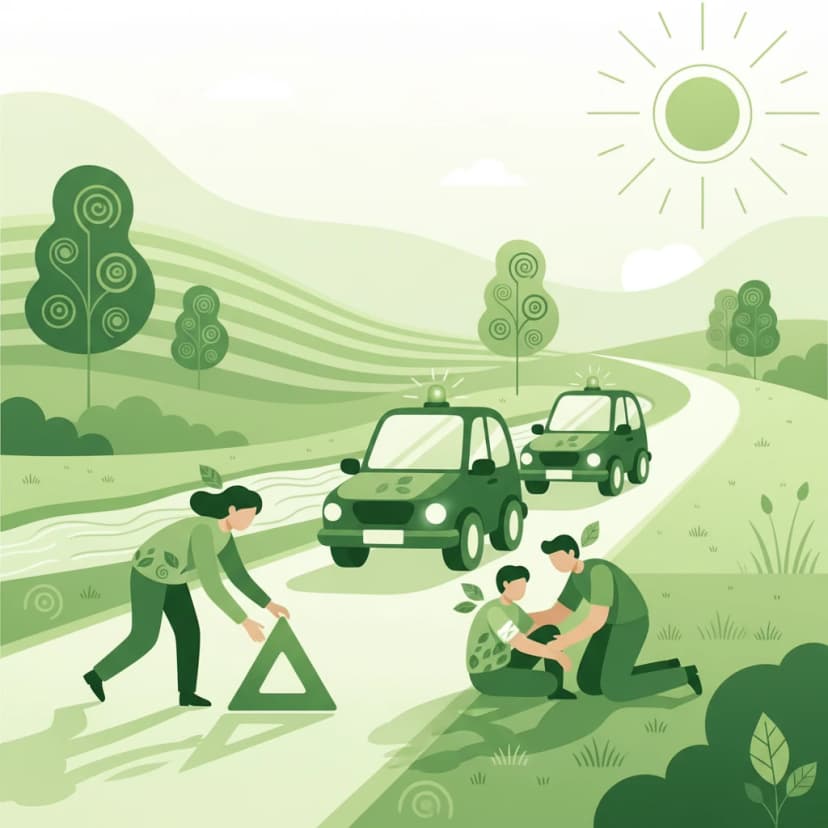
This lesson outlines the correct protocol to follow after a traffic accident. The first priority is to ensure the safety of everyone involved by securing the scene and checking for injuries. You will learn when it is mandatory to call the emergency services (112), such as when there are injuries or significant road blockage. The curriculum also explains the legal requirement to stop and exchange insurance and contact details with other parties involved. The use of the European Accident Statement form to record the details is also covered.

This lesson provides a clear, step-by-step guide for actions to take immediately following a traffic accident. It covers the priorities of personal safety, securing the scene to prevent further incidents, and providing aid to the injured. The curriculum details the legal requirements for reporting an accident ('ongevalrapportage') and the correct procedure for exchanging information with other parties involved, including the use of the European Accident Statement form.

This lesson explains the processes that follow a road accident, focusing on legal and insurance matters. It describes how liability is determined, the steps involved in filing an insurance claim, and the importance of accurate documentation and evidence, such as photos and witness statements. The content also touches upon potential legal consequences, such as fines or prosecution if traffic laws were violated, providing a comprehensive overview of the post-accident landscape.

This lesson explains the fundamental concepts of legal liability in traffic accidents and the role of mandatory third-party insurance (WA-verzekering) in the Netherlands. You will learn how insurance companies use the accident statement form and other evidence to determine fault and process claims for damages. Understanding this process helps you appreciate the financial responsibilities associated with riding and the importance of having correct and valid insurance cover at all times.
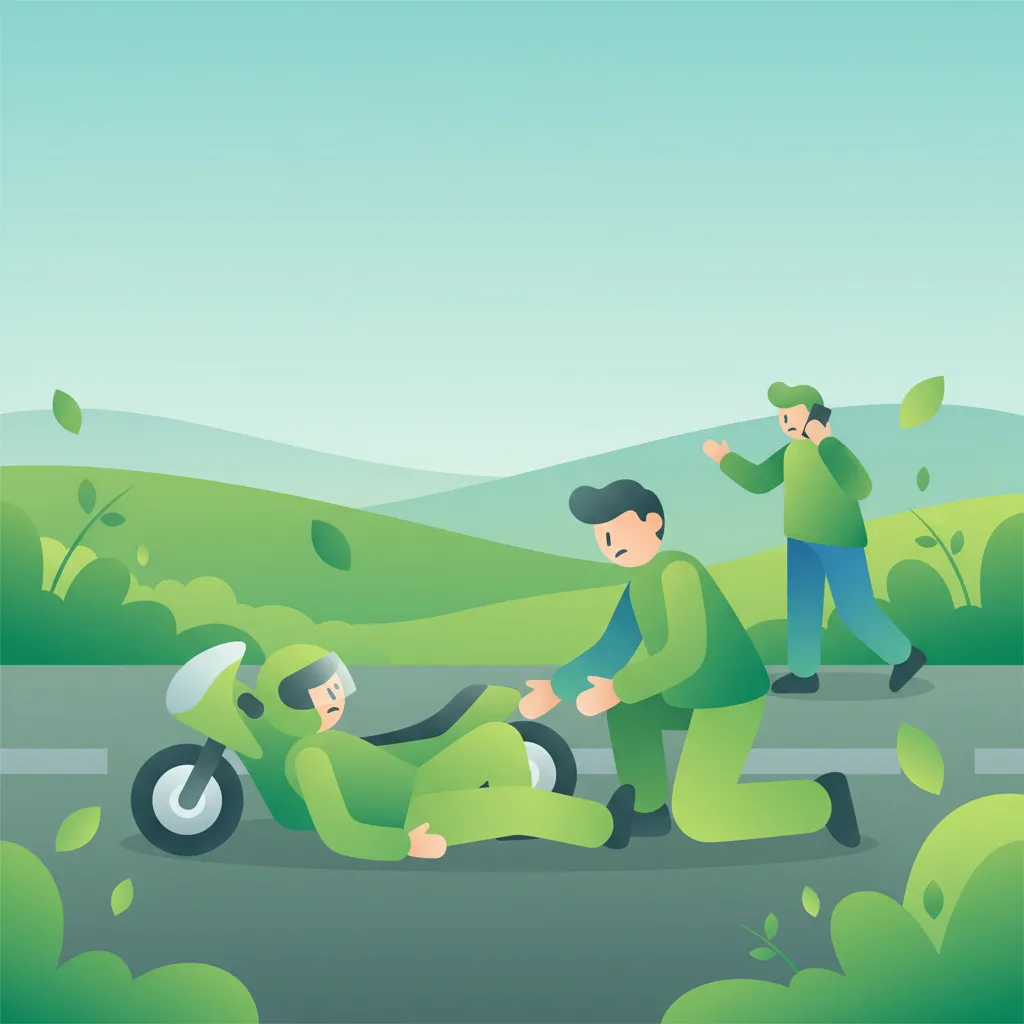
This lesson provides a clear, prioritized list of actions to take in the immediate aftermath of an accident. The primary focus is on safety: securing the scene to prevent further incidents, checking for injuries on yourself and others, and calling emergency services (112). It provides the essential knowledge required to manage a stressful and potentially dangerous situation calmly and effectively until professional help arrives.

This lesson provides an overview of the motor vehicle insurance system in the Netherlands, explaining the mandatory third-party liability insurance ('WA-verzekering'). It outlines the process for filing an insurance claim after an accident and the factors that are considered when determining liability or fault. Understanding this process is important for navigating the financial and legal consequences of a collision.

This lesson provides a practical guide for the unfortunate event of an accident while riding abroad. It outlines the steps for contacting local emergency services, the importance of involving local police, and how to use the European Accident Statement form, which is standardized across languages. The content offers advice on overcoming potential language barriers and the critical steps for gathering evidence and notifying your insurance provider promptly to ensure a smooth claims process.

This lesson provides an in-depth exploration of Article 5 of the Dutch Road Traffic Act, which establishes the general 'duty of care' ('zorgplicht'). It explains that every road user has a fundamental obligation to behave in a way that does not cause danger or hindrance to others. The curriculum clarifies how this broad principle is applied in determining legal liability after an accident, especially in incidents involving vulnerable road users, reinforcing the rider's constant accountability.
Learn how to effectively gather evidence, fill out the European Accident Statement (Schadeformulier), and document all necessary details after a traffic incident. Essential information for insurance claims and accident reconstruction.
This lesson outlines the correct protocol to follow after a traffic accident. The first priority is to ensure the safety of everyone involved by securing the scene and checking for injuries. You will learn when it is mandatory to call the emergency services (112), such as when there are injuries or significant road blockage. The curriculum also explains the legal requirement to stop and exchange insurance and contact details with other parties involved. The use of the European Accident Statement form to record the details is also covered.
This lesson provides a clear, step-by-step guide for actions to take immediately following a traffic accident. It covers the priorities of personal safety, securing the scene to prevent further incidents, and providing aid to the injured. The curriculum details the legal requirements for reporting an accident ('ongevalrapportage') and the correct procedure for exchanging information with other parties involved, including the use of the European Accident Statement form.
This lesson details the legal requirements for reporting a traffic accident in the Netherlands, including the circumstances under which you must involve the police. It explains the correct procedure for exchanging personal, vehicle, and insurance information with any other parties involved. The lesson also covers the use of the European Accident Statement form to document the facts of the incident for insurance purposes.
This lesson provides a practical guide for the unfortunate event of an accident while riding abroad. It outlines the steps for contacting local emergency services, the importance of involving local police, and how to use the European Accident Statement form, which is standardized across languages. The content offers advice on overcoming potential language barriers and the critical steps for gathering evidence and notifying your insurance provider promptly to ensure a smooth claims process.
This lesson explains the processes that follow a road accident, focusing on legal and insurance matters. It describes how liability is determined, the steps involved in filing an insurance claim, and the importance of accurate documentation and evidence, such as photos and witness statements. The content also touches upon potential legal consequences, such as fines or prosecution if traffic laws were violated, providing a comprehensive overview of the post-accident landscape.
This lesson provides a clear, prioritized list of actions to take in the immediate aftermath of an accident. The primary focus is on safety: securing the scene to prevent further incidents, checking for injuries on yourself and others, and calling emergency services (112). It provides the essential knowledge required to manage a stressful and potentially dangerous situation calmly and effectively until professional help arrives.
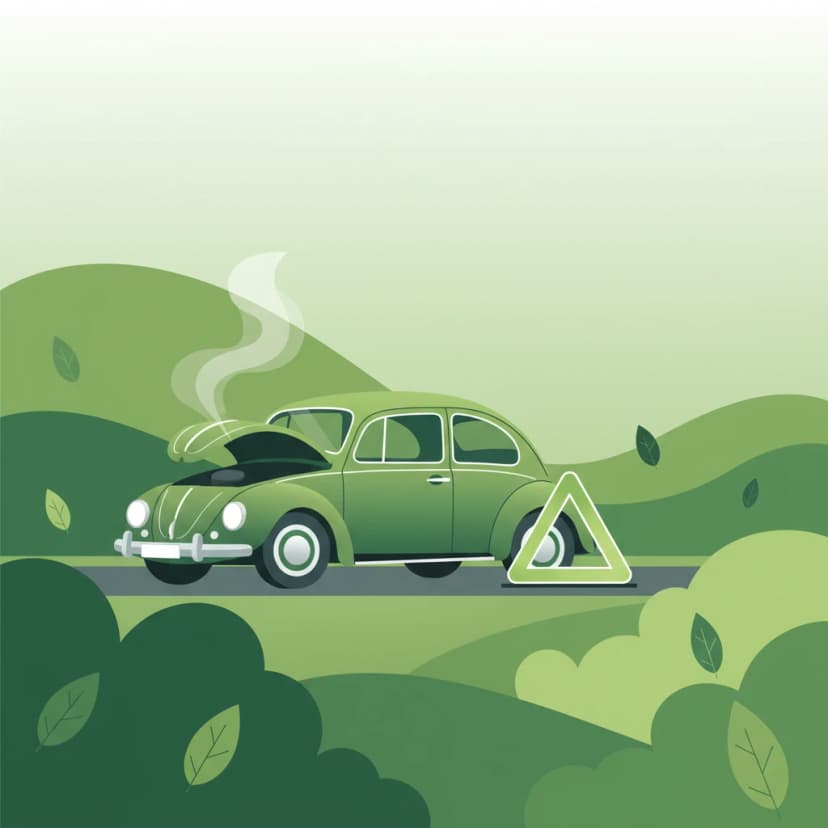
This lesson provides a clear action plan for when your car breaks down. You will learn to pull over to a safe location, preferably the hard shoulder on a motorway, and immediately activate your hazard warning lights. The curriculum explains the legal requirement to place a warning triangle a suitable distance behind the vehicle (if safe to do so) and the strong recommendation to wear a high-visibility jacket. Crucially, it instructs that all occupants should exit the vehicle on the safe side and wait behind the guardrail for assistance.
Find clear answers to common questions learners have about Accident Reporting and Documentation. Learn how the lesson is structured, which driving theory objectives it supports, and how it fits into the overall learning path of units and curriculum progression in the Netherlands. These explanations help you understand key concepts, lesson flow, and exam focused study goals.
The European Accident Statement form, known as the 'schadeformulier', is a standardized document used across Europe to record the details of a road traffic accident. Filling it out accurately with the other party involved is crucial for insurance claims. It provides a clear, agreed-upon account of what happened, helping insurers process claims efficiently and fairly.
You must call the police if there are serious injuries or fatalities, if a driver appears to be under the influence of alcohol or drugs, if there is significant traffic disruption, or if one party refuses to cooperate or provide details. In cases of minor accidents with no injuries and full cooperation, reporting may not be mandatory, but the accident statement form is still essential.
You should exchange names, addresses, phone numbers, email addresses, and insurance company details (including policy numbers). It's also important to note the make, model, and registration number of their vehicle. Sharing this information calmly and clearly helps ensure all parties can proceed with insurance claims smoothly.
If safe to do so, take photos of the accident scene from multiple angles, showing the position of the vehicles, any damage, road conditions, and relevant traffic signs or signals. If there are witnesses, ask for their contact details. Any dashcam footage can also be invaluable evidence.
If your moped breaks down, pull over to a safe location as far off the road as possible, away from traffic. Turn on your hazard lights if equipped. Place your warning triangle at an appropriate distance behind your vehicle to warn oncoming traffic. Then, contact breakdown assistance or a relevant service.