
Understanding traffic signs and signals is fundamental to safe riding and passing your CBR theory exam for Category AM. This unit provides a comprehensive overview of all traffic control devices on Dutch roads, from regulatory signs and warning signals to information boards and road markings. You'll learn to interpret their meaning and react appropriately, ensuring you can navigate confidently and legally.
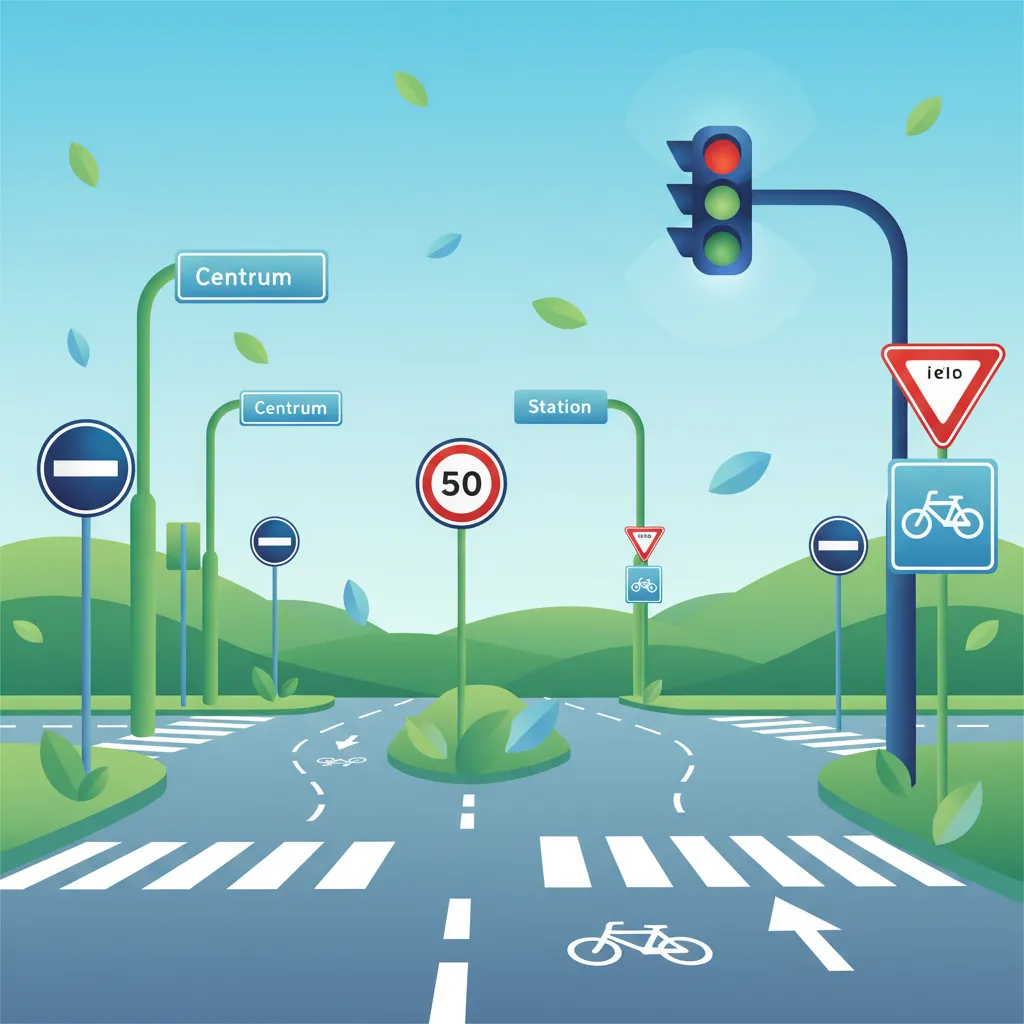
Browse all lessons that make up Traffic Signs & Signals. Each lesson focuses on specific topics, learning objectives, and core concepts, helping you build essential knowledge and follow a clear, structured progression toward your study goals in the Netherlands.
This lesson covers the most critical category of traffic signs: regulatory signs, which impose a legal obligation or prohibition. You will learn the precise meaning and required action for essential signs such as the B6 Stop sign, which mandates a full stop, and the C2 No Entry sign, which forbids access. Understanding the shapes, colors, and symbols of these signs is fundamental to safe driving and a major focus of the official CBR theory test.
Warning signs are designed to enhance your safety by alerting you to potential hazards. This lesson focuses on signs of particular relevance to moped and scooter riders, such as warnings for sharp bends, slippery road surfaces, crosswinds, and level crossings. You will learn to recognize the standard triangular shape of Dutch warning signs and understand how to adjust your speed and positioning in response to these alerts, a key skill in hazard perception.
This lesson explains how to interpret informational signs that provide guidance and navigational aid. You will learn to read directional signs indicating cities and locations, understand route numbering on major roads, and recognize signs for services like fuel stations or parking areas. It also covers the signs that mark the beginning and end of a built-up area ('bebouwde kom'), which have important implications for speed limits and traffic rules.
Road surface markings are a crucial part of the traffic regulation system. This lesson covers the meaning of various lines, including solid versus broken center lines, edge lines, and stop lines. You will also learn to interpret symbols like 'shark's teeth' (yield markings), bicycle pictograms, and directional arrows, all of which provide essential information about priority, lane usage, and upcoming turns, directly impacting your riding decisions.
Effective communication with other road users is vital for safety. This lesson details the legal requirements and proper use of your vehicle's signaling equipment, including headlights, brake lights, and turn signals (indicators). It also explains the specific situations in which using the horn is permitted to avert danger. Finally, it covers the mandatory placement and type of reflectors that ensure your vehicle remains visible to others, especially in low-light conditions.
Explore high-intent keywords and long-tail search topics learners use when researching Traffic Signs & Signals. These terms reflect how people search for reliable study materials, structured explanations, and unit-level theory preparation support in the Netherlands.
Find clear answers to the most common questions learners ask about Traffic Signs & Signals. Understand how the unit is organized, what learning goals it supports, and how it contributes to your study progression with structured explanations and practical guidance tailored for learners in the Netherlands.
Dutch traffic signs are broadly categorized into three main groups: regulatory signs (like 'Stop' or 'No Entry'), warning signs (alerting to hazards like sharp bends), and information signs (providing guidance such as directions or facility information). Understanding these categories helps in quickly interpreting their meaning and expected action.
Road surface markings are very important for the theory exam. They provide crucial information about lane discipline, stopping points, priority, and specific road hazards. For example, 'shark's teeth' markings indicate you must yield the right-of-way. Mastering these markings ensures you can navigate intersections and other critical road segments correctly.
Yes, Category AM riders should pay close attention to signs that restrict access to certain roads or lanes (e.g., 'No Entry for Mopeds'), signs indicating mandatory cycle paths (fietspad/bromfietspad), and signs related to speed limits applicable to their vehicle category. Understanding these is vital for compliance and safety.
While the basic colours (red, orange, green) are the same, dedicated signals for mopeds or cyclists might appear alongside standard traffic lights. These could include specific light symbols or colours. Always follow the signal that directly pertains to your vehicle type. If no specific signal is present, the standard signals apply.
During the CBR theory exam, not understanding a traffic sign can lead to incorrect answers. The exam is designed to test your comprehensive knowledge of all signs and signals. If you encounter a sign you don't recognize, try to infer its meaning based on its shape and colour, but ideally, you should have studied all types beforehand.
Temporary traffic signs, often orange, are used to indicate temporary conditions such as road works or diversions. They take precedence over permanent signs when in conflict. It's crucial to be extra vigilant and adhere to these temporary signs as they often signal changed road layouts or hazards.
All included lessons
Lessons in Traffic Signs & Signals
See who benefits most from studying Traffic Signs & Signals. This overview explains how the unit supports different learning needs, what level of knowledge is helpful before starting, and how it fits into the overall study path in the Netherlands.
This unit is essential for all learners preparing for the Dutch Category AM theory exam, whether they are new to the rules or seeking a refresher. It is particularly beneficial for those who find road signs confusing or want to build a strong foundation in traffic signal interpretation to enhance their safety on Dutch roads.

See how Dutch Driving Theory AM is structured, with key topics, learning objectives, and a step-by-step path for theory preparation in the Netherlands.
Explore all units and lessons included in this driving theory course.