
Navigating complex intersections and yielding appropriately is crucial for safe AM category riding in the Netherlands. This unit dives deep into Dutch priority (voorrang) rules, ensuring you can confidently determine who has the right-of-way in any situation. Mastering these concepts is vital for both passing your CBR theory exam and riding safely.
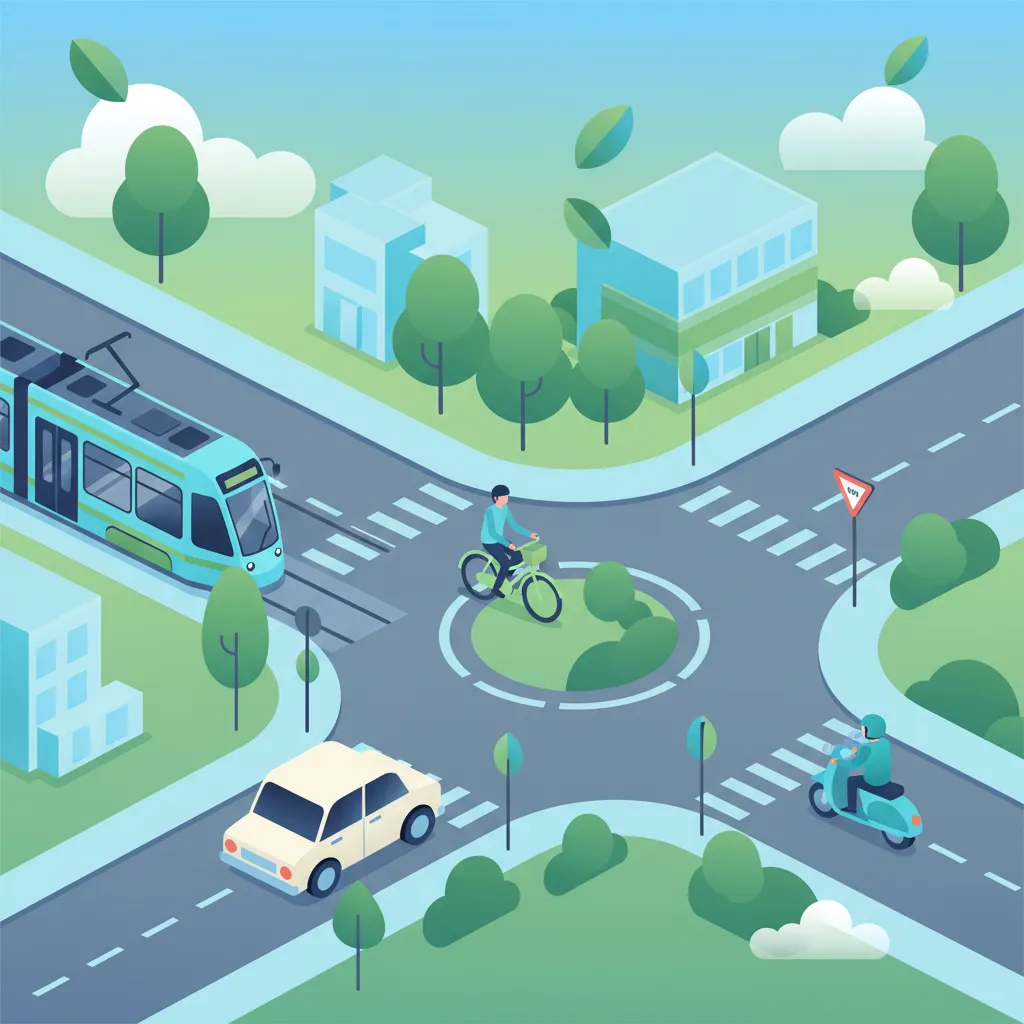
Browse all lessons that make up Right‑of‑Way & Priority Situations. Each lesson focuses on specific topics, learning objectives, and core concepts, helping you build essential knowledge and follow a clear, structured progression toward your study goals in the Netherlands.
This lesson breaks down the rules of priority at intersections. You will learn to identify an 'equal' intersection where the default rule of giving way to traffic from the right applies. It also explains how priority is regulated by signs (such as the B6 Stop sign and B7 priority road sign) and road markings ('shark's teeth'). Understanding these hierarchies is crucial for making safe and correct decisions when crossing or turning at any junction.
Roundabouts are a common feature of Dutch roads, and they have specific priority rules. This lesson teaches the standard rule of yielding to traffic already circulating on the roundabout before you enter. It also covers correct lane positioning, the importance of signaling your intention to exit, and the specific rules that often apply to cyclists who may have priority when crossing the exits. These skills ensure smooth and safe passage through both large and mini-roundabouts.
As a motorized road user, you have a special responsibility towards more vulnerable participants. This lesson focuses on the rules giving priority to pedestrians at marked zebra crossings and the importance of anticipating the movements of cyclists, children, and the elderly. You will learn about maintaining a safe lateral distance when overtaking cyclists and how to navigate shared spaces with heightened awareness, a key component of social and safe driving behavior.
Safely merging and changing lanes requires a systematic approach known as 'mirror-signal-blind spot'. This lesson explains the correct procedure for entering a carriageway from an acceleration lane, ensuring you match the speed of the traffic flow and find a safe gap. It also covers the technique for changing lanes, emphasizing the critical importance of checking your blind spot with a shoulder check (dode hoek) before making any lateral movement to prevent collisions.
When an emergency vehicle approaches with sirens and blue flashing lights, you are legally required to give way. This lesson explains the correct procedure: check your surroundings, signal your intention, and move to the side of the road as safely and quickly as possible to create a clear path. It also covers the procedure for making an emergency stop due to a vehicle breakdown, including the use of hazard warning lights and positioning your vehicle for maximum safety.
Explore high-intent keywords and long-tail search topics learners use when researching Right‑of‑Way & Priority Situations. These terms reflect how people search for reliable study materials, structured explanations, and unit-level theory preparation support in the Netherlands.
Find clear answers to the most common questions learners ask about Right‑of‑Way & Priority Situations. Understand how the unit is organized, what learning goals it supports, and how it contributes to your study progression with structured explanations and practical guidance tailored for learners in the Netherlands.
A frequent error is misinterpreting the 'priority to the right' rule at unmarked intersections or incorrectly assuming priority when it's not granted. Another common issue is confusion at complex junctions or when dealing with multiple types of road users simultaneously. This unit clarifies these scenarios to help you avoid these pitfalls during your exam.
In the absence of signs or markings, the default rule is 'priority to the right' – the vehicle coming from your right has priority. However, you must always look for priority signs (like a yellow diamond or a white triangle pointing down) and road markings like 'shark's teeth' which override this default rule. This unit details how to recognize and obey these indicators.
Generally, mopeds follow the same rules as cars on roundabouts, but specific considerations for their size and speed are important. This unit covers the specific signage and yielding requirements for entering and navigating roundabouts, including mini-roundabouts, ensuring you understand the correct procedure for AM category vehicles.
As a rider, you must always yield to pedestrians who are on or about to enter a zebra crossing. Pedestrians have priority. This unit emphasizes this crucial rule and explains how to safely slow down and stop to allow pedestrians to cross without obstruction.
When a cycle path intersects with the main road, priority rules can become complex. Generally, if the cycle path meets the road at an equal intersection without specific signage, 'priority to the right' still applies to vehicles on the main road, but you must always be aware of cyclists and be prepared to yield if they have priority or are already crossing. We break down these nuanced situations in the lessons.
Emergency vehicles (like police cars, ambulances, and fire trucks) with flashing blue lights and sirens always have priority. You must make way for them immediately by slowing down, stopping if necessary, and moving to the side of the road if it is safe to do so. This unit covers the correct procedures for yielding to these vehicles.
All included lessons
Lessons in Right‑of‑Way & Priority Situations
See who benefits most from studying Right‑of‑Way & Priority Situations. This overview explains how the unit supports different learning needs, what level of knowledge is helpful before starting, and how it fits into the overall study path in the Netherlands.
This unit is essential for all learners preparing for the Dutch Category AM (Moped & Scooter) theory exam. It's particularly beneficial for those who find priority rules confusing or frequently make mistakes in intersection scenarios, helping them build the confidence needed for the official CBR test.

See how Dutch Driving Theory AM is structured, with key topics, learning objectives, and a step-by-step path for theory preparation in the Netherlands.
Explore all units and lessons included in this driving theory course.