
Logo
Dutch Driving Theory Courses

Lesson 3 of the Right‑of‑Way & Priority Situations unit

Dutch Driving Theory AM: Pedestrians, Cyclists, and Vulnerable Users

As a motorized road user, you share the road with many different participants. This lesson in Unit 4, Right-of-Way & Priority Situations, focuses specifically on your responsibilities towards vulnerable road users like pedestrians and cyclists. Understanding these rules is crucial for your AM moped theory exam and for safe riding in the Netherlands.
priority rulesvulnerable road userspedestrianscyclistszebra crossing
Dutch Driving Theory AM: Pedestrians, Cyclists, and Vulnerable Users
Dutch Driving Theory AM

Prioritizing Pedestrians, Cyclists, and Vulnerable Road Users in Dutch Traffic

As a motorized road user preparing for your Dutch Category AM theory exam, understanding your special responsibility towards more vulnerable participants is paramount. This lesson delves into the specific rules, safety considerations, and legal obligations that ensure the safety of pedestrians, cyclists, and other vulnerable road users (VRUs) on Dutch public roads. Adhering to these principles is not merely a legal requirement but a cornerstone of safe and social driving behavior, reflecting the Dutch emphasis on protecting those with limited physical protection.

Understanding Vulnerable Road Users (VRUs) on Dutch Roads

Vulnerable Road Users (VRUs) are defined as road participants who, due to their limited physical protection or slower reaction capabilities, are at a higher risk of injury in the event of a collision. This category primarily includes pedestrians and cyclists, but can also extend to users of mobility scooters, rollerblades, or even horse riders in certain contexts. In the Netherlands, where cycling is an integral part of daily life and urban areas are densely populated, the interaction between motorized vehicles and VRUs is frequent and requires heightened awareness.

Why Vulnerable Users Require Special Protection

The legal framework and traffic safety philosophy in the Netherlands are built on the premise of protecting VRUs. This allocation of priority and imposition of heightened caution on motorized users stems from several crucial factors:

  • Human Factors: Children, the elderly, and sometimes even adults may exhibit unpredictable behavior, have slower reaction times, limited fields of vision, or suffer from physiological fragility. Children, for example, might dart into traffic without fully understanding the danger. The elderly might misjudge speeds or have impaired hearing. Motorized users must anticipate these possibilities.
  • Physics of Collisions: Even a moped or scooter, while smaller than a car, possesses significant kinetic energy at comparable speeds. In a collision, this energy is transferred, and due to the VRU's lack of physical protection (like a car's chassis), the consequences are often severe. The law emphasizes preventative measures, such as maintaining distance and yielding, rather than relying on corrective actions like emergency braking after a hazard appears.
  • Policy Intent: "Safety over Convenience": Dutch traffic policy prioritizes safety outcomes over the convenience of motorized traffic. This means that laws are designed to minimize risks for the most vulnerable, even if it means slowing down or altering the route for drivers. This intent is visible in the design of shared spaces and the explicit priority rules for pedestrians and cyclists in specific situations.

Pedestrian Priority at Marked Zebra Crossings

One of the most fundamental rules for motorized vehicle operators in the Netherlands is yielding to pedestrians at marked zebra crossings. This rule is designed to ensure that pedestrians can cross roads safely at designated points.

A zebra crossing, also known as a pedestrian crossing, is legally designated by distinct white longitudinal stripes on the road surface. Often, but not always, it is accompanied by a specific traffic sign.

When approaching such a crossing, you, as a motorized road user, have a clear legal obligation. According to RVV 1990 Article 39 (1), you must yield to any pedestrian who is on, or clearly about to step onto, a marked zebra crossing. This means you must:

  • Slow down significantly as you approach a marked crossing.
  • Stop before the first stripe if a pedestrian is present or clearly intends to cross.
  • Remain stopped until the pedestrian has fully cleared the entire width of the crossing before you proceed.

This priority is absolute at marked zebra crossings, overriding other traffic rules such as a green traffic light for vehicles. Even if a traffic light is green for motorized traffic, if a pedestrian is on the zebra crossing, you must wait until they have finished crossing.

Common Misunderstandings at Zebra Crossings

Several common errors can lead to dangerous situations or violations at zebra crossings:

  • Assuming you can proceed if the pedestrian is on the far side: The rule states that the crossing must be unobstructed. You cannot proceed until the pedestrian has stepped off the last stripe.
  • Believing a green traffic light overrides pedestrian priority: As mentioned, at a marked zebra crossing, pedestrian priority takes precedence.
  • Cyclists passing stopped vehicles: If a vehicle is stopped at a zebra crossing to yield to pedestrians, a cyclist must not overtake that vehicle without first checking thoroughly for pedestrians. The cyclist also shares the responsibility to yield.
  • Unmarked pedestrian crossings: While you should always be cautious, the absolute priority rule applies specifically to marked zebra crossings. At unmarked crossings (common in residential streets), the situation may involve general right-of-way rules, which are not as absolute.

Tip

Always assume pedestrians might cross, even if they don't immediately signal intent. Eye contact can help confirm intentions.

Maintaining Safe Lateral Distance When Overtaking Cyclists

Overtaking cyclists requires particular care and adherence to specific lateral safety distances to prevent collisions. Cyclists can be easily destabilized by wind turbulence from passing vehicles, sudden swerves to avoid obstacles, or unexpected movements.

Specific Distance Requirements in Urban and Rural Areas

The Dutch traffic regulations (RVV 1990 Article 36 (1-b)) specify minimum lateral (side) clearances you must maintain when overtaking a cyclist:

  • In built-up areas (urban zones): A minimum of 1.5 meters (approximately five feet) side clearance is required. Built-up areas are typically indicated by street lighting, sidewalks, and lower speed limits.
  • On other roads (rural/non-urban areas): A minimum of 1.0 meter (approximately three feet) side clearance is required.

To ensure this distance, you must assess the available space before initiating the overtaking maneuver. If the gap is insufficient, you must wait for a safe opportunity, which might mean slowing down and staying behind the cyclist until the road widens or oncoming traffic clears. Always use your turn indicators to signal your intention to overtake and move back into your lane safely.

Overtaking on Dedicated Bicycle Lanes

The rules regarding overtaking cyclists also depend on the presence and type of bicycle lane:

  • Painted Bicycle Lanes (without physical separation): If a bicycle lane is merely painted on the road surface and not physically separated from the main carriageway, you are generally prohibited from driving in this lane to overtake a cyclist. You must stay in your own lane and wait for an opportunity to overtake safely from the adjacent carriageway, maintaining the required lateral distance. RVV 1990 Article 36 (2-a) addresses this, preventing dangerous incursions into the cyclist's designated space.
  • Physically Separated Bicycle Lanes: If a bike lane is physically separated from the motor traffic lane by a curb, barrier, or significant green space, it functions as a distinct roadway for cyclists. In such cases, the lateral distance requirement between motorized traffic and cyclists may be reduced, as the separation itself provides safety. However, you must still maintain a safe distance and never enter a physically separated bike lane unless explicitly permitted (e.g., for crossing).

Anticipating Unpredictable Movements of Vulnerable Users

Proactive anticipation is a critical skill for safe driving, especially when interacting with vulnerable road users. You must predict likely actions of children, the elderly, and cyclists based on environmental cues, age-related behavior patterns, and contextual factors.

According to RVV 1990 Article 41 (2), drivers must adjust their speed according to the presence of vulnerable road users and may not exceed the speed limit set for that area. This means:

  • Children: Children are often unpredictable. They may dart out from behind parked cars, from playgrounds, or residential driveways without looking. Their perception of speed and distance is underdeveloped, and they may be easily distracted. Always reduce your speed significantly near schools, parks, residential areas, or any place children might be playing or congregating. Be prepared to stop instantly.
  • The Elderly: Older pedestrians and cyclists may move slower, take longer to cross roads, or have reduced peripheral vision, hearing, or reaction times. They might hesitate at curbs or not see an approaching vehicle as readily. Give them ample time and space, and avoid rushing or startling them.
  • Cyclists: While generally more predictable than children, cyclists can still make sudden movements. They might swerve to avoid potholes, open car doors, or other obstacles. Their hand signals might be unclear or given late. Always assume a cyclist might change their lane position, and maintain a generous following and lateral distance. Be particularly vigilant when cyclists are riding alongside parked cars, as a door could suddenly open.

Warning

Never assume a vulnerable road user has seen you or will act predictably. Always be prepared for the unexpected.

The Netherlands employs various innovative road designs, including "shared spaces" and "woonerven" (living streets), to prioritize vulnerable road users and foster a safer, more communal environment.

Rules and Conduct in Woonerf Zones

A Woonerf is a specifically designated residential area designed to physically slow traffic and give precedence to pedestrians and cyclists. These zones are characterized by:

  • Reduced Speed Limits: Often 15 km/h or 20 km/h, though sometimes up to 30 km/h. The design of the street (e.g., narrowings, speed bumps, varied surfaces) inherently encourages low speeds.
  • Shared Surface: There are often no traditional sidewalks, curbs, or clear lane markings. Motorized traffic, cyclists, and pedestrians share the same surface.
  • Duty of Care: According to RVV 1990 Article 44 (3), motorized traffic must give way to pedestrians and cyclists within a woonerf or shared street. Overtaking is generally discouraged or prohibited unless the road design explicitly allows for it safely.

In a woonerf, you must drive at a speed that allows you to stop safely within the distance you can see. You should make eye contact with other users and proceed with mutual respect. The underlying philosophy is that pedestrians have implicit priority in these low-speed, mixed-traffic environments.

General Shared Street Principles

Shared streets are similar to woonerven but might be found in more varied urban contexts, sometimes with slightly higher speed limits (up to 30 km/h). The core principle remains:

  • Mutual Negotiation: All users are expected to negotiate passage through eye contact and awareness.
  • Motorized User Responsibility: Motorized vehicles retain a duty of care to yield to more vulnerable users. This means you must be prepared to stop or adjust your path to accommodate pedestrians and cyclists who have entered the shared surface.
  • No Aggressive Overtaking: Overtaking maneuvers should only be attempted if explicitly safe and permitted by road markings or design, typically at extremely low speeds and with ample space.

Enhancing Visibility and Proper Lighting for Road Safety

Visibility is a two-way street: you need to see vulnerable road users, and they need to see you. Proper use of your vehicle's lighting and maintaining clear visibility are crucial for safe interaction with VRUs, especially in challenging conditions.

Effective Use of Vehicle Lighting

According to RVV 1990 Article 29, all vehicles must be equipped with functional lighting devices and must use appropriate lights, especially when approaching pedestrians and cyclists.

  • Low-beam (Dipped) Headlights: These are your primary lights for night driving, twilight, and poor weather conditions. They provide adequate illumination without dazzling other road users. It is mandatory to use low-beam headlights at night or in conditions of poor visibility (e.g., heavy rain, fog) when approaching or operating near pedestrians and cyclists.
  • High-beam Headlights: These provide maximum illumination but can seriously dazzle other road users, including cyclists and pedestrians. High-beam headlights should never be used in urban areas, or when approaching or following other traffic, including VRUs. Switch to low-beam at least 150 meters before encountering an oncoming vehicle or VRU.
  • Auxiliary Lights/Reflectors: Many mopeds and scooters are equipped with front-facing reflectors or auxiliary daytime running lights. While these enhance your visibility to others, they are not a substitute for proper headlights in low-light conditions.

Importance of Clean Mirrors and Observation

Beyond lighting, your ability to observe VRUs depends on maintaining clear vision:

  • Rear-view Mirrors: Ensure your mirrors are clean, properly adjusted, and free from obstructions. Regularly check them to spot cyclists approaching from behind, especially before making turns, changing lanes, or opening doors. Many "blind-spot" collisions with cyclists occur due to neglected mirror checks.
  • Shoulder Checks (Blind Spot Checks): Your mirrors have blind spots. Before changing lanes or making any lateral movement, always perform a quick shoulder check to directly confirm no cyclist or pedestrian is in your blind spot.
  • Clean Windows and Visor: Keep your helmet visor and any vehicle windscreens clean to ensure maximum visibility, especially during rain or at night when glare can be a significant issue.

Core Dutch Traffic Regulations for Vulnerable Road Users (RVV 1990)

Understanding the specific articles within the Reglement verkeersregels en verkeerstekens 1990 (RVV 1990) is crucial for passing your Dutch Category AM theory exam and for safe riding.

  • Article 39 (1): Yield to pedestrians on marked zebra crossings. This establishes the absolute priority of pedestrians at these specific crossings. You must stop and wait until the pedestrian has fully cleared the crossing.
  • Article 36 (1-b): Maintain minimum lateral distance when overtaking cyclists. This mandates a minimum side clearance of 1.5 meters in built-up areas and 1.0 meter elsewhere, unless a dedicated and legally separated bike lane is present.
  • Article 41 (2): Adjust speed to the presence of vulnerable users. This requires you to reduce your speed in areas where children, the elderly, or high cyclist traffic are likely, enhancing your reaction time and reducing braking distances.
  • Article 44 (3): Yield in shared-space/woonerf. In these zones, motorized traffic must give way to pedestrians and cyclists and adhere to specific (often very low) speed limits.
  • Article 29: Use appropriate lighting when VRUs are present. This covers the mandatory use of low-beam headlights at night or in poor visibility, especially when approaching or passing pedestrians and cyclists, and prohibits the misuse of high-beams.
  • Article 36 (2-a): Prohibit overtaking on bicycle lanes unless physically separated. This rule prevents motorized vehicles from using painted bicycle lanes to overtake cyclists, reserving these lanes for their intended users.

Failing to adhere to the rules designed to protect vulnerable road users can lead to significant legal and financial consequences, in addition to the obvious risk of causing severe injury or fatality.

  • Failing to stop for a pedestrian at a zebra crossing: This is a serious offense. If a pedestrian is on or about to step onto the crossing, you must stop. + possible penalty points.
  • Overtaking a cyclist with insufficient lateral clearance: Violating the 1.0m or 1.5m rule endangers the cyclist. This can result in a fine and 2 penalty points.
  • Using high-beam headlights near a cyclist at night: Dazzling a cyclist significantly impairs their vision and judgment, potentially leading to an accident. This can result in a fine.
  • Exceeding the speed limit in a woonerf or school zone: These areas have reduced speed limits specifically for VRU safety. Significant speeding can lead to fines and 3 penalty points, along with increased liability in an accident.
  • Attempting to overtake a cyclist in a painted bicycle lane: Driving into a designated bicycle lane to overtake is prohibited and dangerous, potentially resulting in a fine and 2 penalty points.
  • Neglecting a shoulder check, leading to a "blind-spot" collision with a cyclist: This demonstrates negligence and can lead to severe liability in the event of an accident, along with fines.
  • Ignoring a pedestrian on a zebra crossing because of a green traffic light: This is a common and dangerous misunderstanding. Pedestrian priority at a marked crossing is absolute. This can result in a fine and 2 penalty points.
  • Passing a child near a playground without reducing speed: Failure to anticipate unpredictable child behavior is a serious omission of the duty of care. This can result in a fine and potential criminal liability if injury occurs.
  • Overtaking a cyclist too closely in wet conditions: Even if the minimum legal distance is met, failing to increase it in adverse conditions where braking and stability are compromised can be deemed negligent. This increases accident risk and liability.
  • Continuing to drive in a shared street when a pedestrian has entered the roadway, assuming "right-of-way is shared": While mutual respect is key, motorized traffic must still yield to pedestrians who have entered the shared surface. This can lead to fines and collision risk.

Adapting to Changing Conditions: Weather, Road Types, and Vehicle State

Safe driving around vulnerable road users requires continuous adaptation to the environment and your vehicle's condition.

Driving in Rain, Fog, and Darkness

  • Rain / Wet Roads: Reduced tire grip means longer braking distances. Increase both lateral overtaking distance (e.g., by an additional 0.5 meters) and longitudinal following distance to compensate. Cyclists are also more prone to skidding on wet surfaces.
  • Fog / Low Visibility: Use low-beam headlights (and fog lights if equipped and appropriate) to enhance your visibility. Reduce speed significantly and increase your observation distance, as VRUs may be difficult to spot until very close. Be prepared to stop much earlier for crossing pedestrians.
  • Nighttime: Always use low-beam headlights. Be extra vigilant for cyclists and pedestrians, especially those without adequate lighting or reflective clothing. Their visibility can be severely limited. Your perception of depth and distance is also reduced at night.

Adjustments for Different Road Environments

  • Urban (Built-up) Roads: These areas typically have lower speed limits and higher concentrations of VRUs. Adhere strictly to the 1.5-meter overtaking distance for cyclists and be constantly prepared for sudden pedestrian movements, especially near intersections, bus stops, and parked cars.
  • Rural / Non-Built-up Roads: While the minimum overtaking distance for cyclists is 1.0 meter, speeds are often higher. This means that if a collision occurs, the impact will be far more severe. Maintain vigilance, especially on roads without dedicated bike paths, and reduce speed around any pedestrian crossings or potential VRU presence.
  • Motorways / Fast Roads: Pedestrian and cyclist crossings are generally prohibited on these roads. However, you might encounter cyclists or pedestrians on emergency lanes or service roads adjacent to fast roads. Always apply the appropriate overtaking distances and exercise extreme caution.

Vehicle Load and Maintenance Considerations

  • Loaded Scooter / Heavy Cargo: An increased load significantly extends your braking distance. If carrying heavy cargo or a passenger, you may need to expand your overtaking distance by an additional factor (e.g., an extra 0.2 meters per 10 kg of load) to allow for the reduced maneuverability and longer stopping times.
  • Brake Wear / Maintenance Issues: Any vehicle defect, especially regarding brakes or tires, compromises your ability to stop safely. You must compensate by reducing speed and increasing all safety distances (following, lateral, and stopping distances) until repairs are made. Failure to do so could be considered gross negligence in an accident.

Special Care for Children and Elderly

  • Children (Age < 12): Assume sudden, unpredictable movements. Keep a generous lateral distance (e.g., ≥ 2.0 meters where possible) and be prepared for them to dart into the road without warning, especially near playgrounds, schools, and residential streets.
  • Elderly: They may walk slower, take longer to react, or have impaired senses. Maintain a speed that allows you to stop within your 2-second perception-reaction time. Give them extra space and time to complete maneuvers or cross the road.
  • Special Zones (School Zones, Playgrounds): Treat these as "potential pedestrian zones" at all times. Mandatory speed reductions (often to 30 km/h or even 20 km/h) and early yielding at crossings are essential. Within a 30-meter radius of a playground, reduce speed to at most 20 km/h.

The Science Behind Safety: Physics and Human Factors

The rules and guidelines for protecting vulnerable road users are deeply rooted in the physics of collisions and human psychological factors.

Kinetic Energy and Collision Severity

The kinetic energy (EkE_k) of a moving object is calculated as Ek=12mv2E_k = \frac{1}{2}mv^2, where mm is mass and vv is velocity (speed). This formula highlights that speed has a squared impact on energy.

  • Reducing Speed Drastically Reduces Injury: If you reduce your speed from 45 km/h to 30 km/h, the kinetic energy drops by approximately 56%. This means that in the event of an unavoidable impact, the energy transferred to a vulnerable user is drastically lower, significantly improving their chances of survival and reducing injury severity.
  • Mass Matters: While mopeds are lighter than cars, they still have enough mass and speed to inflict severe injuries on unprotected pedestrians and cyclists.

Human Reaction Time and Perception

  • Reaction Time: The average human reaction time is approximately 0.7 to 1.0 seconds. At 30 km/h, a vehicle travels about 6 meters before the rider even begins to apply the brakes. This "thinking distance" adds considerably to the total stopping distance.
  • Perception-Reaction Time for VRUs: Vulnerable users often have longer perception-reaction times, especially children or the elderly. Rules like the mandatory lateral overtaking distance give both the rider and the cyclist more time to react to unexpected events, such as a sudden swerve or a gust of wind.
  • Psychological Factors: Drivers sometimes suffer from "optimism bias," overestimating their ability to react quickly or stop in time. Strict distance rules and speed limits are designed to counteract this bias, imposing a safer standard of behavior regardless of perceived personal skill.

Conclusion: Driving Safely Around Vulnerable Road Users

Protecting pedestrians, cyclists, and other vulnerable road users is a core responsibility for every motorized vehicle operator in the Netherlands. By understanding and consistently applying the rules for pedestrian priority at zebra crossings, maintaining safe lateral distances when overtaking cyclists, anticipating unpredictable movements, and exercising caution in shared spaces, you contribute significantly to road safety. Always adjust your behavior based on weather, road type, and the specific needs of children and the elderly. Adhering to these regulations is not just about avoiding fines and penalty points; it is about embracing a social and defensive riding style that values life and safety above all else, preparing you to ride safely and confidently on Dutch roads.

Learn more with these articles

Check out these practice sets

Zebra crossing
A marked pedestrian crossing with white longitudinal stripes, where pedestrians have absolute right-of-way.
Vulnerable Road User (VRU)
Any road participant at a higher risk of injury due to limited physical protection or slower reaction, primarily pedestrians and cyclists.
Lateral safety distance
The minimum side-clearance required when a motorized vehicle overtakes a cyclist: 1.5m in built-up areas, 1.0m elsewhere.
Built-up area
An urban or densely populated zone, often indicated by street lighting and specific speed limits.
Shared space / Woonerf
A road environment where motorized traffic, cyclists, and pedestrians share the same surface with minimal segregation, prioritizing VRUs.
Low-beam (dipped) headlights
Standard vehicle illumination used at night or in low-visibility conditions to avoid dazzling other road users.
High-beam headlights
Bright vehicle illumination for open roads; prohibited in urban areas or near other traffic/VRUs due to glare.
Brake reaction time
The time from perceiving a hazard to physically applying the brakes, adding to total stopping distance.
Right-of-way hierarchy
The legal ordering that dictates which road user must give way to another in specific situations.
Penalty points
Points assigned to a driver's license for traffic violations, which can lead to license suspension if accumulated.
Kinetic energy
The energy an object possesses due to its motion, directly proportional to its mass and the square of its velocity (speed).
Blind-spot
An area around a vehicle not visible in the driver's mirrors or peripheral vision, requiring a shoulder check to observe.
RVV 1990
The Dutch Regulations on Traffic Rules and Traffic Signs from 1990, outlining legal traffic conduct.
Anticipation
The proactive prediction of likely actions of other road users, especially VRUs, based on cues and context.

Search topics related to Pedestrians, Cyclists, and Vulnerable Users

Explore search topics learners often look for when studying Pedestrians, Cyclists, and Vulnerable Users. These topics reflect common questions about road rules, driving situations, safety guidance, and lesson level theory preparation for learners in the Netherlands.

priority pedestrians netherlands am theoryhow to overtake cyclists am mopedrules for cyclists and mopeds netherlandsam theory exam vulnerable road userscbr theory questions pedestrians cyclistssafe distance when passing bicycle am categorywhat does a zebra crossing mean for mopeds nlanticipating cyclist movements am theory

Related driving theory lessons for Pedestrians, Cyclists, and Vulnerable Users

Browse additional driving theory lessons that cover connected traffic rules, road signs, and common driving situations related to this topic. Improve your understanding of how different rules interact across everyday traffic scenarios.

Advanced Rules for Vulnerable Road Users in Dutch Traffic

Explore complex interactions and advanced considerations for pedestrians, cyclists, and other vulnerable road users in the Netherlands. Learn how to navigate challenging urban environments and specific Dutch traffic scenarios safely and legally, beyond basic priority rules.
vulnerable road usersadvanced rulescomplex scenariosDutch traffic lawpedestrian prioritycyclist safety
Priority at Pedestrian Crossings and Bicycle Lanes lesson image

Priority at Pedestrian Crossings and Bicycle Lanes

This lesson explains the critical rules of priority involving pedestrians and cyclists to ensure the safety of vulnerable road users. You will learn the absolute requirement to stop for pedestrians on or waiting to use a 'zebrapad' (zebra crossing). The content also covers situations where you must yield to cyclists crossing your path, such as when turning across a dedicated bicycle lane (fietspad).
Dutch Motorcycle Theory (A2)Rights of Way and Priority Situations
View lesson
Pedestrian Priorities and Crossings lesson image

Pedestrian Priorities and Crossings

This lesson focuses on the rules governing interactions with pedestrians. You will learn the absolute requirement to stop for pedestrians who are on or clearly intending to cross at a designated zebra crossing. The curriculum also covers how to share the road in a 'woonerf' (home zone) where pedestrians have priority. It emphasizes being particularly cautious around children, the elderly, and disabled pedestrians, who may require more time or behave unpredictably.
Dutch Driving Theory BVulnerable Road Users
View lesson
Children, Elderly, and Disabled Road Users lesson image

Children, Elderly, and Disabled Road Users

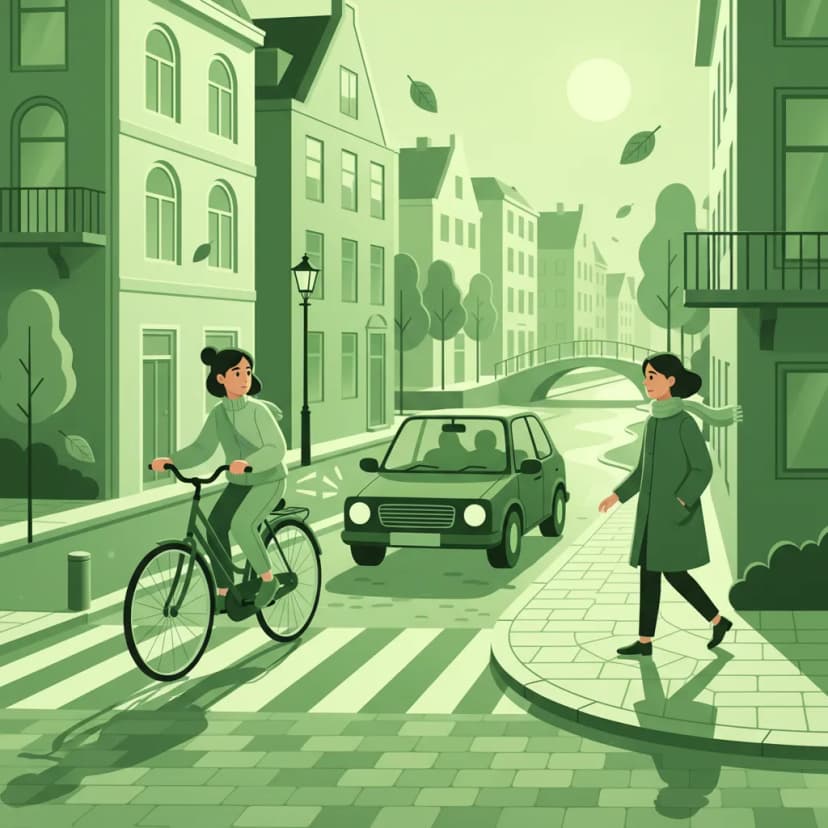
This lesson focuses on the legal and moral responsibility to be extra vigilant around certain groups of vulnerable road users. You will learn that children can be impulsive and have poor traffic awareness, requiring drivers to be prepared to stop suddenly, especially near schools and playgrounds. The content also discusses the need for patience with elderly or disabled road users, who may move more slowly. You will learn to recognize signs of disability, like a white cane or a guide dog, and give these individuals extra space and time.
Dutch Driving Theory BVulnerable Road Users
View lesson
Special Priority Situations lesson image

Special Priority Situations

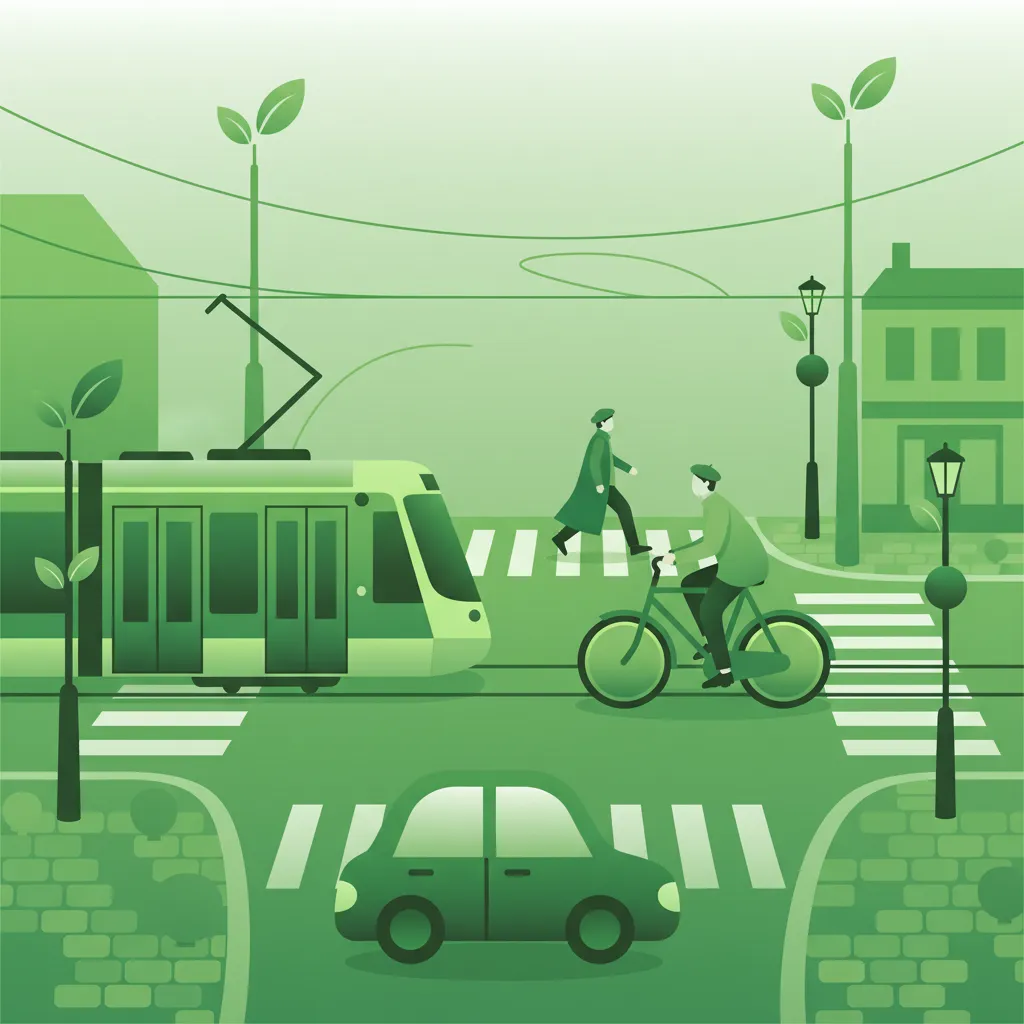
This lesson addresses special situations where standard priority rules are superseded. You will learn the absolute priority of emergency vehicles using sirens and flashing lights, and the correct procedure for giving them way safely. The content also explains the specific priority rules for trams, which often have right-of-way over other traffic, as well as for military columns and official funeral processions. Furthermore, the lesson reinforces the rules for yielding to pedestrians at designated zebra crossings.
Dutch Driving Theory BRight-of-Way and Priority Rules
View lesson
Interacting with Cyclists and Mopeds lesson image

Interacting with Cyclists and Mopeds

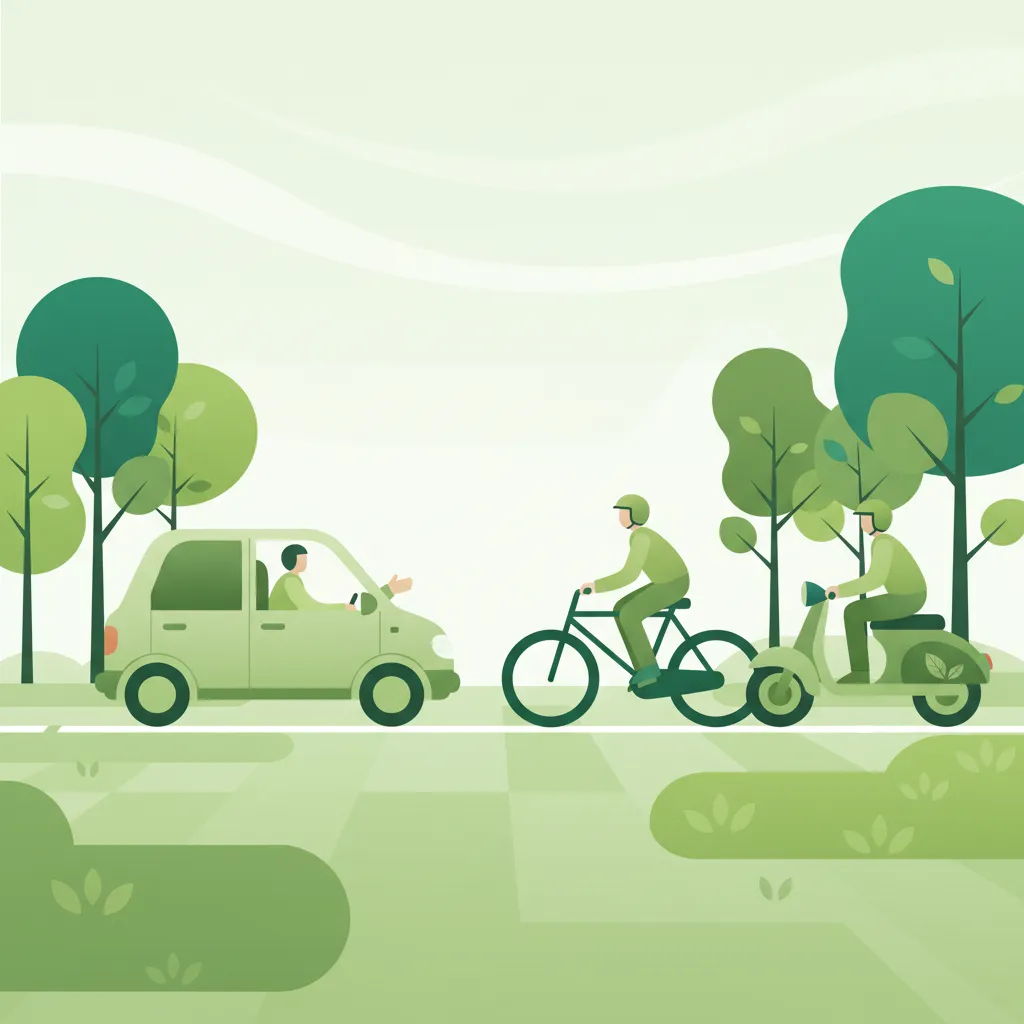
This lesson is critical for driving in the Netherlands, a country with more bicycles than people. You will learn about the different types of cycle paths and how priority rules apply, especially at junctions. The content stresses the importance of checking the blind spot for cyclists before turning right ('dode hoek'). It also covers the rules for different types of mopeds (snorfiets and bromfiets) and the importance of giving all two-wheeled road users ample space when overtaking.
Dutch Driving Theory BVulnerable Road Users
View lesson
Equal-Priority Intersections and Advanced Decision-Making lesson image

Equal-Priority Intersections and Advanced Decision-Making

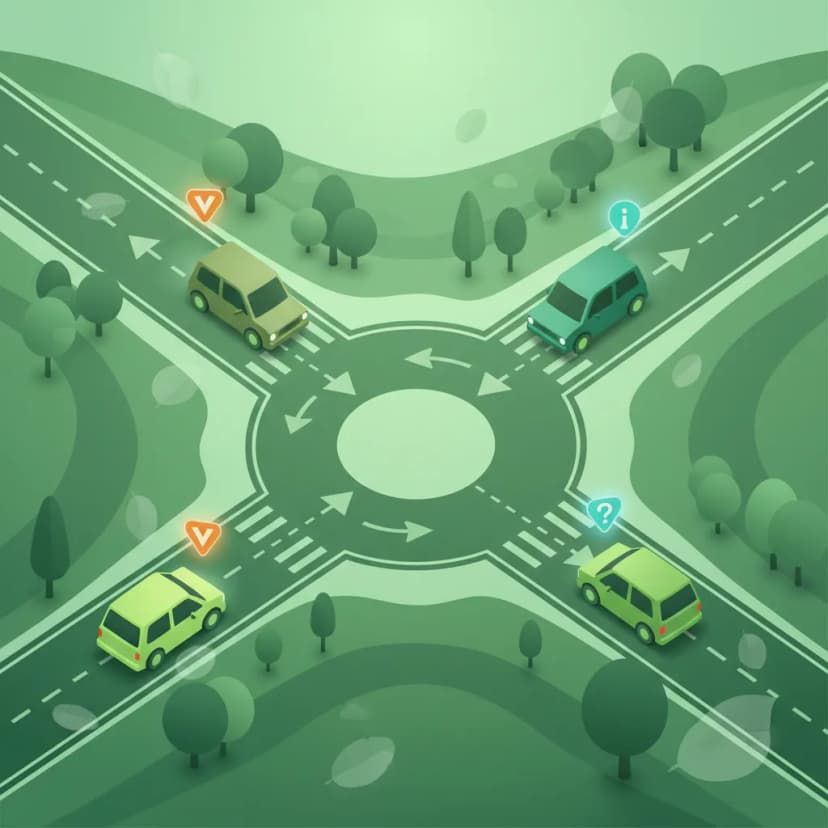
This lesson addresses the challenge of navigating equal-priority intersections, where no signs or markings dictate the right-of-way. You will master the fundamental Dutch traffic rule of giving priority to all drivers approaching from your right ('rechts voor'). The content focuses on developing advanced observational skills and clear communication to safely manage these situations, which are common in residential and urban areas.
Dutch Motorcycle Theory (A2)Rights of Way and Priority Situations
View lesson
Hazard Identification in Urban Traffic lesson image

Hazard Identification in Urban Traffic

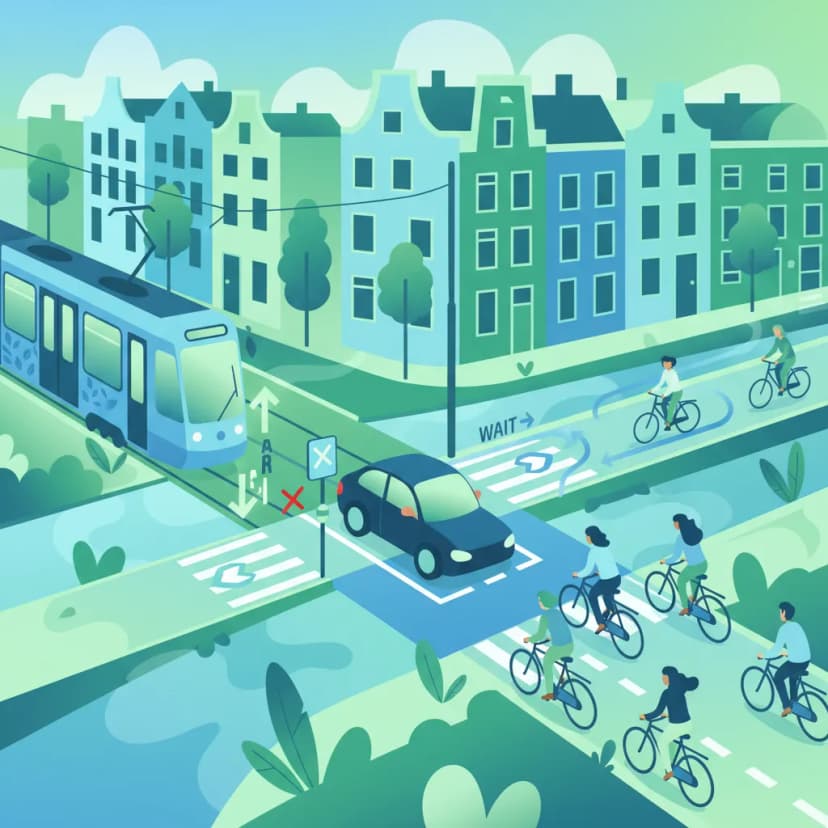
This lesson focuses on the unique and densely packed hazards found in urban traffic environments. It teaches riders to develop a systematic scanning pattern to identify potential risks from multiple sources simultaneously, such as pedestrians stepping off curbs, car doors opening unexpectedly, and buses pulling out. The content also emphasizes the importance of managing speed and always having an 'escape route' planned in case a hazard suddenly materializes in the complex city landscape.
Dutch Motorcycle Theory ASafe Following Distance and Hazard Perception
View lesson
Intersections and Yield Rules lesson image

Intersections and Yield Rules

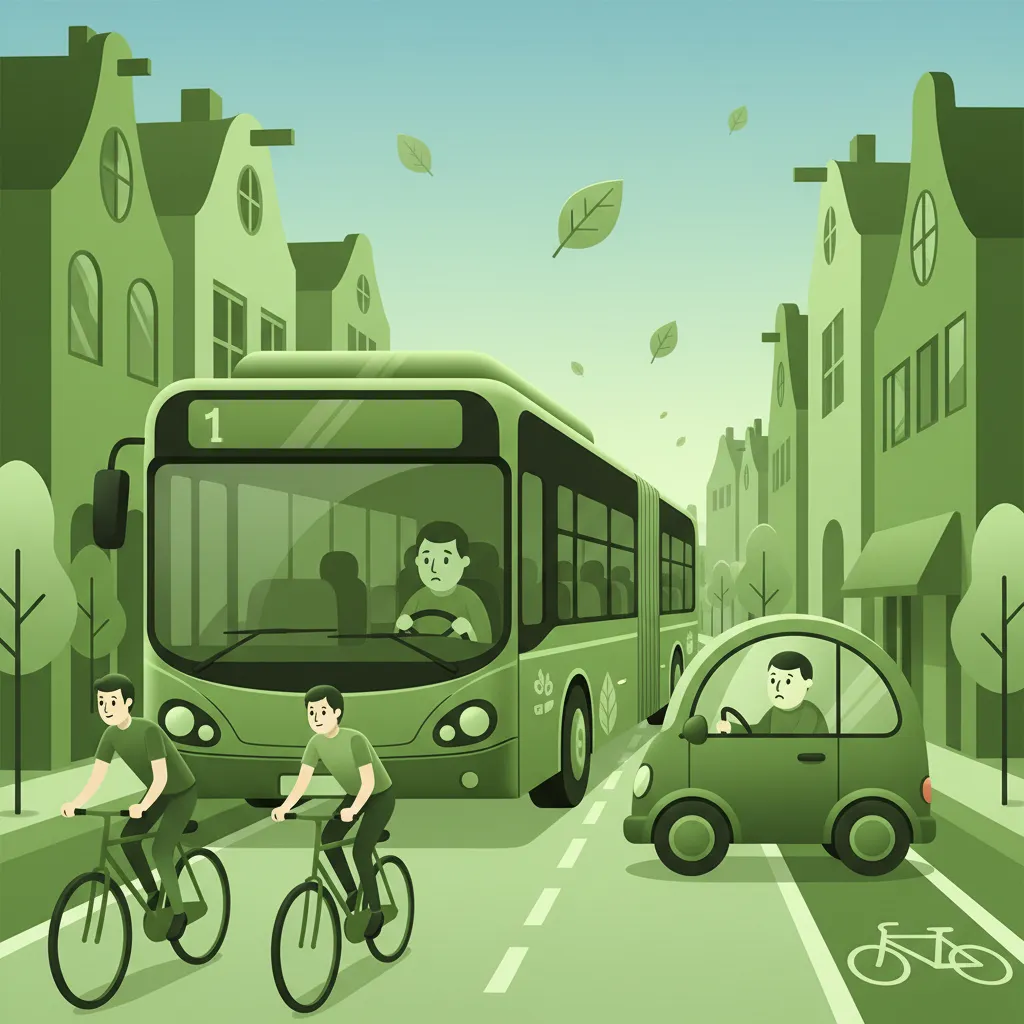
This lesson breaks down the rules of priority at intersections. You will learn to identify an 'equal' intersection where the default rule of giving way to traffic from the right applies. It also explains how priority is regulated by signs (such as the B6 Stop sign and B7 priority road sign) and road markings ('shark's teeth'). Understanding these hierarchies is crucial for making safe and correct decisions when crossing or turning at any junction.
Dutch Driving Theory AMRight‑of‑Way & Priority Situations
View lesson
Interaction with Buses, Trucks, and Vulnerable Users lesson image

Interaction with Buses, Trucks, and Vulnerable Users

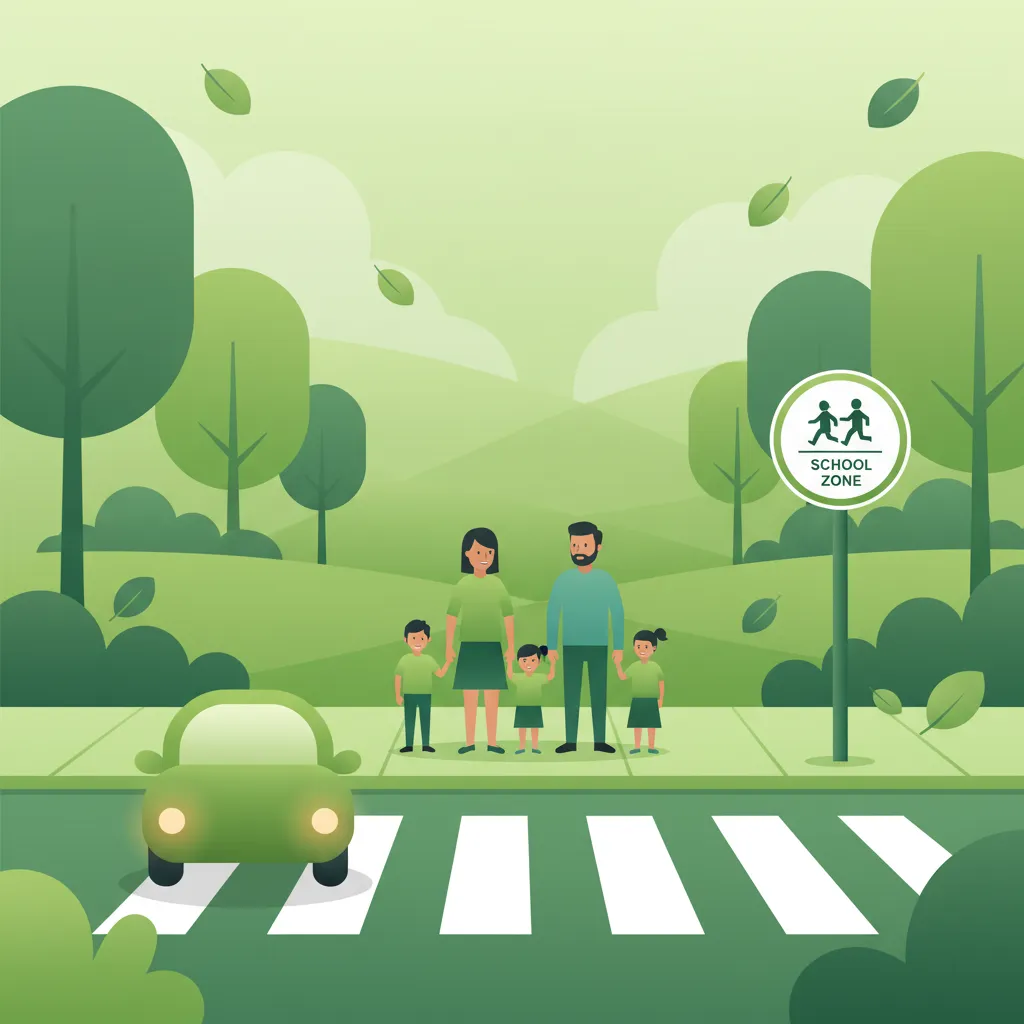
This lesson covers strategies for safely navigating around vehicles at both ends of the size spectrum. It details the large blind spots ('no-zones') around trucks and buses and advises on where to position a motorcycle to remain visible. Equally, it emphasizes the duty of care towards vulnerable road users, teaching riders to anticipate the movements of pedestrians and cyclists and to always provide them with ample space when passing.
Dutch A1 Motorcycle TheoryRoad Positioning, Lane Discipline & Overtaking
View lesson
Pedestrian Crossings and School Zones lesson image

Pedestrian Crossings and School Zones

This lesson focuses on the legal requirements and safe practices for riding near pedestrian crossings ('zebrapaden') and designated school zones. It details the absolute obligation to yield to pedestrians on or about to use a crossing and the need for significantly reduced speeds and heightened vigilance in areas with children. The content underscores the importance of anticipation and being prepared for unpredictable movements from vulnerable road users to prevent serious incidents.

Dutch Motorcycle Theory APriority Rules and Intersection Navigation
View lesson

Navigating Dutch Shared Spaces and Living Streets

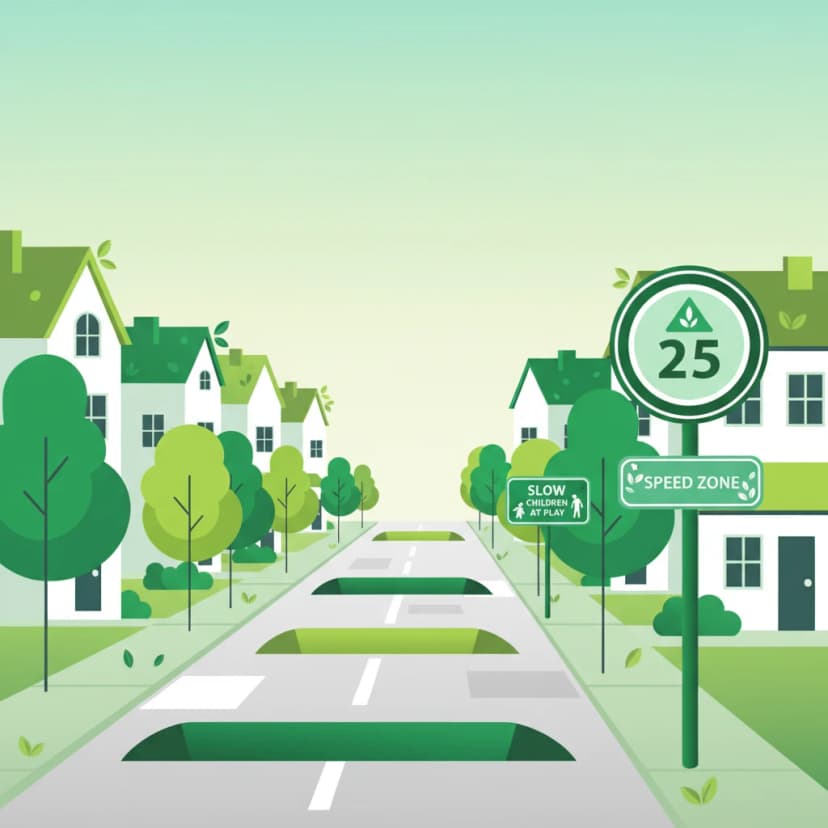
Understand the specific rules and best practices for driving in Dutch woonerven (living streets) and other shared road spaces. Learn how to interact safely with pedestrians and cyclists in environments designed for mixed use and reduced vehicle speeds.
shared spaceswoonerfliving streetsmixed trafficurban drivingvulnerable usersDutch driving theory
Special Speed Zones lesson image

Special Speed Zones

This lesson explains speed limits in specially designated zones designed to protect vulnerable road users. You will learn the rules of a 'woonerf' (home zone), where the speed limit is walking pace (max 15 km/h) and pedestrians can use the full width of the road. The content also covers 30 km/h zones, common in residential areas and around schools, which are often enforced through road design like speed bumps. Understanding the purpose and rules of these zones is key to driving responsibly in urban environments.
Dutch Driving Theory BSpeed Management and Limits
View lesson
Merging and Lane Changes on Carriageways lesson image

Merging and Lane Changes on Carriageways

Safely merging and changing lanes requires a systematic approach known as 'mirror-signal-blind spot'. This lesson explains the correct procedure for entering a carriageway from an acceleration lane, ensuring you match the speed of the traffic flow and find a safe gap. It also covers the technique for changing lanes, emphasizing the critical importance of checking your blind spot with a shoulder check (dode hoek) before making any lateral movement to prevent collisions.

Dutch Driving Theory AMRight‑of‑Way & Priority Situations
View lesson
Pedestrian Priorities and Crossings lesson image

Pedestrian Priorities and Crossings

This lesson focuses on the rules governing interactions with pedestrians. You will learn the absolute requirement to stop for pedestrians who are on or clearly intending to cross at a designated zebra crossing. The curriculum also covers how to share the road in a 'woonerf' (home zone) where pedestrians have priority. It emphasizes being particularly cautious around children, the elderly, and disabled pedestrians, who may require more time or behave unpredictably.

Dutch Driving Theory BVulnerable Road Users
View lesson
Intersections and Yield Rules lesson image

Intersections and Yield Rules

This lesson breaks down the rules of priority at intersections. You will learn to identify an 'equal' intersection where the default rule of giving way to traffic from the right applies. It also explains how priority is regulated by signs (such as the B6 Stop sign and B7 priority road sign) and road markings ('shark's teeth'). Understanding these hierarchies is crucial for making safe and correct decisions when crossing or turning at any junction.
Dutch Driving Theory AMRight‑of‑Way & Priority Situations
View lesson
Roundabouts and Mini‑Roundabouts lesson image

Roundabouts and Mini‑Roundabouts

Roundabouts are a common feature of Dutch roads, and they have specific priority rules. This lesson teaches the standard rule of yielding to traffic already circulating on the roundabout before you enter. It also covers correct lane positioning, the importance of signaling your intention to exit, and the specific rules that often apply to cyclists who may have priority when crossing the exits. These skills ensure smooth and safe passage through both large and mini-roundabouts.
Dutch Driving Theory AMRight‑of‑Way & Priority Situations
View lesson
Special Lanes and Road Markings lesson image

Special Lanes and Road Markings

This lesson covers a variety of lanes and markings with specific rules. You will learn to recognize and respect bus lanes, which are reserved for public transport, and rush-hour lanes (spitsstrook), which are only open during busy periods as indicated by electronic signs. The curriculum also explains the meaning of different line types (solid, broken, double lines) that dictate whether lane changes or overtaking are permitted. Understanding these special lanes and markings is key to navigating Dutch infrastructure correctly.

Dutch Driving Theory BVehicle Positioning and Lane Use
View lesson
Children, Elderly, and Disabled Road Users lesson image

Children, Elderly, and Disabled Road Users

This lesson focuses on the legal and moral responsibility to be extra vigilant around certain groups of vulnerable road users. You will learn that children can be impulsive and have poor traffic awareness, requiring drivers to be prepared to stop suddenly, especially near schools and playgrounds. The content also discusses the need for patience with elderly or disabled road users, who may move more slowly. You will learn to recognize signs of disability, like a white cane or a guide dog, and give these individuals extra space and time.
Dutch Driving Theory BVulnerable Road Users
View lesson
Interaction with Other Road Users lesson image

Interaction with Other Road Users

This lesson provides a detailed framework for how motorcyclists must safely and legally interact with diverse road users, including cars, trucks, cyclists, and pedestrians. It covers the required communication signals, anticipatory behaviors, and specific positioning techniques necessary to coexist in complex traffic environments like urban centers and shared spaces. Emphasis is placed on legal expectations and practical methods that actively reduce collision risk and promote smooth traffic flow.
Dutch Motorcycle Theory AFundamentals of Motorcycle Theory & Dutch Traffic Law
View lesson
Tunnels, Level Crossings, and Road Works lesson image

Tunnels, Level Crossings, and Road Works

This lesson equips you with the knowledge to safely navigate special traffic situations. It covers the rules for riding through tunnels, including mandatory lighting, and the absolute priority of trains at level crossings, indicated by warning lights and barriers. You will also learn to recognize and react to the temporary signage and altered lane configurations typically found in road work zones, ensuring you can adapt your riding to maintain safety in these potentially hazardous environments.
Dutch Driving Theory AMRoadway Access & Navigation
View lesson
Dutch Motorway Law (snelwegwet) and Lane Discipline lesson image

Dutch Motorway Law (snelwegwet) and Lane Discipline

This lesson covers the specific articles of the Dutch Road Traffic Act that apply to motorways, with a primary focus on the strict rule of keeping to the rightmost available lane unless overtaking. It explains the legal and safety reasons for only passing on the left and discusses the correct positioning within a lane for maximum visibility and safety. The content also addresses the nuances of lane usage during heavy congestion, ensuring riders comply with the law and contribute to smooth traffic flow.

Dutch Motorcycle Theory AHighway and Tunnel Riding Strategies
View lesson

Frequently asked questions about Pedestrians, Cyclists, and Vulnerable Users

Find clear answers to common questions learners have about Pedestrians, Cyclists, and Vulnerable Users. Learn how the lesson is structured, which driving theory objectives it supports, and how it fits into the overall learning path of units and curriculum progression in the Netherlands. These explanations help you understand key concepts, lesson flow, and exam focused study goals.

When do I have priority over pedestrians at a zebra crossing (zebrapad)?

At a marked zebra crossing, pedestrians always have priority. As a moped rider (AM category), you must always yield to pedestrians who are on, or clearly intend to step onto, the zebra crossing. This applies even if they are not yet on the crossing but show clear intent to cross.

What is the rule for overtaking cyclists on a narrow road?

When overtaking a cyclist on a road where there isn't much space, you must maintain a safe lateral distance. In the Netherlands, this is generally at least 1 meter in built-up areas and 2 meters outside built-up areas. If you cannot overtake safely with this distance, you must wait until it is safe, potentially by slowing down behind the cyclist or waiting for an opportunity to pass when the road widens or you reach an intersection where overtaking is permitted and safe.

Do I need to watch out for cyclists on the main carriageway, not just cycle paths?

Yes, absolutely. While cyclists have dedicated paths in many areas, they may also ride on the main carriageway. You must be aware of them in all road situations, especially when turning, changing lanes, or entering/exiting junctions. Always scan for cyclists, especially in urban environments.

How should I react to children or elderly pedestrians near the road?

Children and the elderly can be less predictable. They might suddenly step into the road without looking or make unexpected movements. Always anticipate this by reducing your speed when passing them and maintaining a greater distance, ready to brake or stop if necessary. Assume they might not see you or react appropriately.

What if a cyclist is in a tram lane or on a section of road shared with trams?

When cyclists share road space with trams, especially in busy urban areas, extra caution is needed. Trams have a very wide turning circle and may move unpredictably. Cyclists might also be navigating around tram tracks or traffic. Always maintain a safe distance from both trams and cyclists, and be aware that their movements might be influenced by the tram lines.

Continue your Dutch driving theory learning journey

Dutch road signsDutch article topicsSearch Dutch road signsDutch driving theory homeDutch road sign categoriesSearch Dutch theory articlesDutch driving theory coursesDutch Driving Theory B courseDutch driving theory articlesDutch driving theory practiceDutch practice set categoriesDutch Driving Theory AM courseDutch Motorcycle Theory A courseDutch A1 Motorcycle Theory courseDutch Motorcycle Theory (A2) courseSearch Dutch driving theory practiceTowing, Trailers, and Loads unit in Dutch Driving Theory BRoadway Access & Navigation unit in Dutch Driving Theory AMVehicle Positioning and Lane Use unit in Dutch Driving Theory BHuman Factors & Risk Management unit in Dutch Driving Theory AMInfrastructure and Special Roads unit in Dutch Driving Theory BLegal Foundations & Vehicle Types unit in Dutch Driving Theory AMIntersections and Yield Rules lesson in Right‑of‑Way & Priority SituationsLegal Responsibilities & Incident Procedures unit in Dutch Driving Theory AMRoundabouts and Mini‑Roundabouts lesson in Right‑of‑Way & Priority SituationsHighway (Autosnelweg) Rules for Motorcycles unit in Dutch Motorcycle Theory (A2)Emergency Stops and Priority Vehicles lesson in Right‑of‑Way & Priority SituationsAdvanced Riding Techniques and High-Speed Control unit in Dutch Motorcycle Theory AMerging and Lane Changes on Carriageways lesson in Right‑of‑Way & Priority SituationsPedestrians, Cyclists, and Vulnerable Users lesson in Right‑of‑Way & Priority SituationsAccident Management, Legal Responsibilities & Substance Use unit in Dutch A1 Motorcycle Theory