
Welcome to the 'Right-of-Way & Priority Situations' unit. This lesson on intersections and yield rules is crucial for understanding who goes first on Dutch roads. You'll learn to decipher priority signs, markings, and default rules to navigate junctions safely and pass your theory exam.
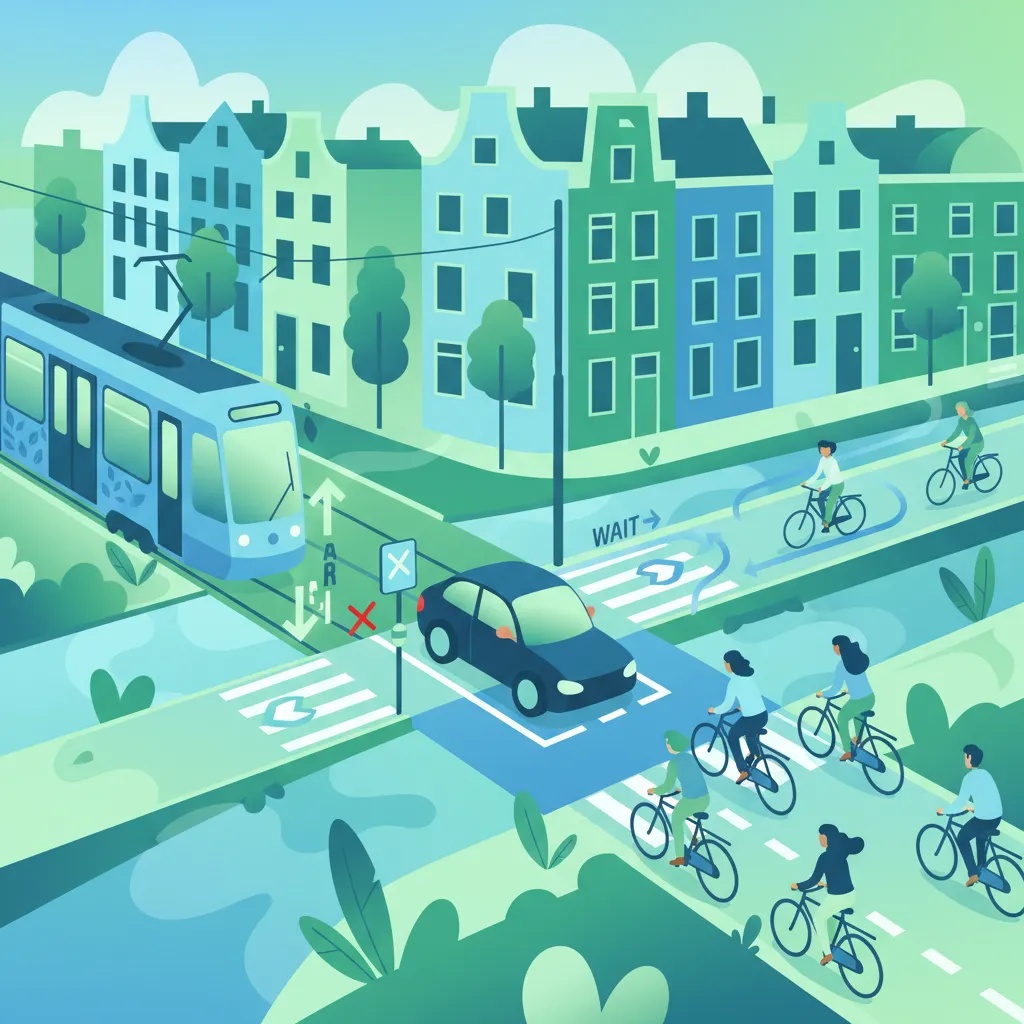
Navigating intersections safely and efficiently is one of the most critical skills for any road user, especially for those operating a moped or scooter (Category AM) in the Netherlands. Understanding who has the right to proceed first, or "priority," is not just a matter of courtesy; it is a fundamental aspect of Dutch traffic law designed to prevent collisions and ensure the smooth flow of traffic. Misinterpreting priority rules is a leading cause of accidents at junctions, making this lesson indispensable for your safety and for successfully passing your Dutch Category AM theory exam.
This comprehensive guide will break down the rules governing priority at various types of intersections you will encounter on Dutch roads. We will explore the hierarchy of control, from explicit traffic signs and road markings to the default rules that apply when no specific instructions are present. By mastering these principles, you will be equipped to make confident and correct decisions at any junction, ensuring your safety and the safety of others.
In the Netherlands, determining priority at an intersection follows a clear, legally established hierarchy. This system ensures predictability and minimizes ambiguity, allowing all road users to anticipate each other's actions. Drivers must assess these layers of control in a specific order:
Understanding this hierarchy is paramount. You must always scan for signs first, then markings, and only if neither is present do you apply the default right-hand priority rule. This systematic approach reduces the "decision overload" drivers might otherwise experience in complex traffic situations.
Traffic signs provide clear, explicit instructions regarding priority at intersections. They are the most authoritative form of traffic control and must always be obeyed. For your Dutch moped license, recognizing and correctly responding to these signs is crucial.
The B6 Stop sign is one of the most critical priority signs. It demands an absolute and complete stop before the designated stop line.
When you encounter a B6 Stop sign, you must bring your moped or scooter to a full stop. This means your wheels must cease movement entirely before the stop line (a solid white line across your lane). After stopping, you must look left, right, and ahead, giving way to all traffic on the intersecting road, regardless of their direction of approach or any other implied priority. Only when the intersection is completely clear and safe to proceed may you do so. Failing to come to a complete stop, often referred to as "rolling through" a stop sign, is a serious violation and a significant cause of collisions.
The B7 Priority Road sign designates the road you are on as having priority over intersecting roads.
When you are traveling on a road marked with a B7 sign, you generally have the right-of-way over traffic entering from side roads or other intersecting roads that do not have their own priority. This allows for a smoother flow of traffic on main routes. However, being on a priority road does not grant you absolute impunity. You must still be prepared to stop if required by other signs (like a B6 Stop sign at a different intersection further along your priority road) or traffic lights, and always yield to emergency vehicles or pedestrians at marked crossings. The B7 sign remains in effect until you see a B15 sign, indicating the end of the priority road.
The B16 Give Way sign (also known as a Yield sign) explicitly tells you that you must yield to traffic on the intersecting road.
When you see a B16 Give Way sign, you must slow down and be prepared to stop if necessary to allow traffic on the intersecting road to pass first. Unlike the B6 Stop sign, a full stop is not mandatory if the intersection is clear and you can safely proceed without impeding other traffic. However, you must always yield to vehicles on the cross-road. This sign is frequently accompanied by "shark's teeth" road markings, providing a visual reinforcement of the yielding requirement.
The B15 Priority Road Ends sign indicates that the priority status of the road you are on is about to terminate.
Once you pass a B15 sign, the road you are traveling on no longer has automatic priority over intersecting roads. From that point forward, the default "priority to the right" rule will apply at subsequent intersections, unless other signs (like a B6 or B16) or road markings (like shark's teeth) explicitly dictate otherwise. It is a common mistake for drivers to assume their priority continues beyond this sign, leading to dangerous situations. Always be vigilant for the B15 sign and adjust your driving behavior accordingly.
When no traffic signs are present, or in conjunction with a B16 Give Way sign, road markings play a crucial role in regulating priority. The most common and important marking for priority is the "shark's teeth" marking.
Shark's teeth are a series of white, inverted triangles painted on the road surface, pointing towards the direction of the traffic that must give way. They are a visual reinforcement of the requirement to yield to traffic on the intersecting road. If you see shark's teeth pointing towards your moped or scooter, it means you must slow down and be prepared to stop, yielding to any traffic on the road you are entering or crossing.
These markings are often found at the entry to minor roads or side streets where they intersect with main roads, providing clear guidance even in the absence of a B16 sign. They are particularly helpful in urban areas where multiple junctions might exist. It is a serious error to mistake shark's teeth for decorative markings or lane dividers; they are legally binding instructions to yield.
An equal intersection (or uncontrolled intersection) is a junction where there are no traffic signs (like B6, B7, B16) and no specific road markings (like shark's teeth) to indicate priority. In such situations, the default right-hand priority rule, known as "Rechts Voorrang" in Dutch, applies.
According to RVV 1990, Article 37, this rule states that you must give way to any vehicle approaching from your right. This applies to all vehicles, including mopeds, scooters, cars, trucks, and even cyclists on roads, unless specific local exceptions are marked.
Key aspects of Rechts Voorrang:
Common Misunderstandings:
While the hierarchy of signs, markings, and the right-hand rule covers most vehicle-to-vehicle interactions, there is an absolute rule that overrides almost everything else: the priority of pedestrians at marked crossings.
A pedestrian crossing (often called a zebra crossing due to its white striped markings) is designed to give pedestrians the absolute right-of-way.
According to RVV 1990, Article 37, paragraph 5, all vehicular traffic must stop for pedestrians who are either on the crossing or clearly indicating their intention to cross (e.g., waiting at the curb and looking to cross). This rule applies even if you are on a priority road (marked with a B7 sign) or have a green light if the crossing is controlled by traffic lights. Pedestrians are among the most vulnerable road users, and their safety is paramount. Failure to yield to pedestrians at a marked crossing is a serious offense with high collision potential.
While the general hierarchy of priority rules covers most scenarios, certain special situations modify or override these rules to ensure safety or facilitate emergency services.
Emergency vehicles (politie, ambulance, brandweer – police, ambulance, fire service) using flashing blue lights and/or sirens must always be given immediate and unconditional right-of-way. This rule overrides all other priority rules, including the right-hand rule or being on a priority road.
When an emergency vehicle approaches, you must immediately make way for it. This typically means:
The rapid response of emergency services depends on drivers yielding promptly and safely.
Temporary conditions can also alter established priority rules:
Always remain alert for temporary signs and adjust your driving behavior accordingly. Temporary measures are put in place for safety and efficiency under specific conditions.
Even with a clear understanding of the rules, certain situations often lead to confusion or violations. Being aware of these common pitfalls can help you avoid accidents and ensure compliance.
To prevent collisions, always prioritize observation, anticipate potential hazards, and be prepared to yield even if you legally have priority, especially in complex or ambiguous situations. Defensive driving means assuming other road users might make mistakes.
Safe driving at intersections is not solely about knowing the rules; it also involves adapting your behavior to various environmental and vehicle-specific factors.
Adverse weather conditions significantly impact perception and reaction times:
The type of road and environment also influence how you should approach intersections:
As a moped or scooter rider, your vehicle's characteristics affect your approach:
Always extend extra caution and space to pedestrians, cyclists, and other vulnerable road users:
Mastering intersections and priority rules is not just about passing your Dutch moped theory exam; it's about ensuring your safety and the safety of everyone on the road. Remember these key principles:
By internalizing these rules and applying them consistently, you will become a safer and more confident moped rider on Dutch roads.
Lesson content overview
Explore all units and lessons included in this driving theory course.
Explore search topics learners often look for when studying Intersections and Yield Rules. These topics reflect common questions about road rules, driving situations, safety guidance, and lesson level theory preparation for learners in the Netherlands.
Browse additional driving theory lessons that cover connected traffic rules, road signs, and common driving situations related to this topic. Improve your understanding of how different rules interact across everyday traffic scenarios.
Explore advanced priority situations beyond basic intersections. Understand rules for emergency vehicles, road works, and how temporary conditions alter right-of-way in the Netherlands. Essential for comprehensive driving theory knowledge.
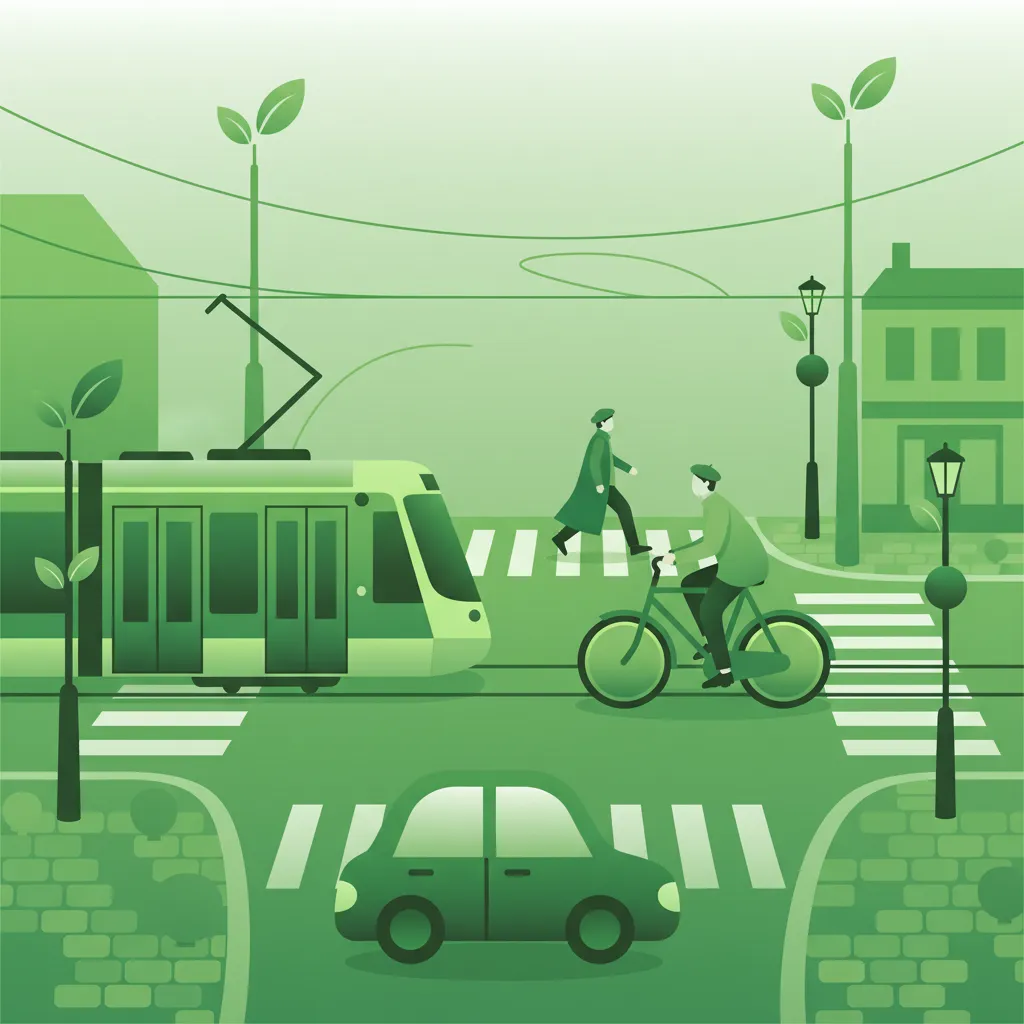
This lesson addresses special situations where standard priority rules are superseded. You will learn the absolute priority of emergency vehicles using sirens and flashing lights, and the correct procedure for giving them way safely. The content also explains the specific priority rules for trams, which often have right-of-way over other traffic, as well as for military columns and official funeral processions. Furthermore, the lesson reinforces the rules for yielding to pedestrians at designated zebra crossings.
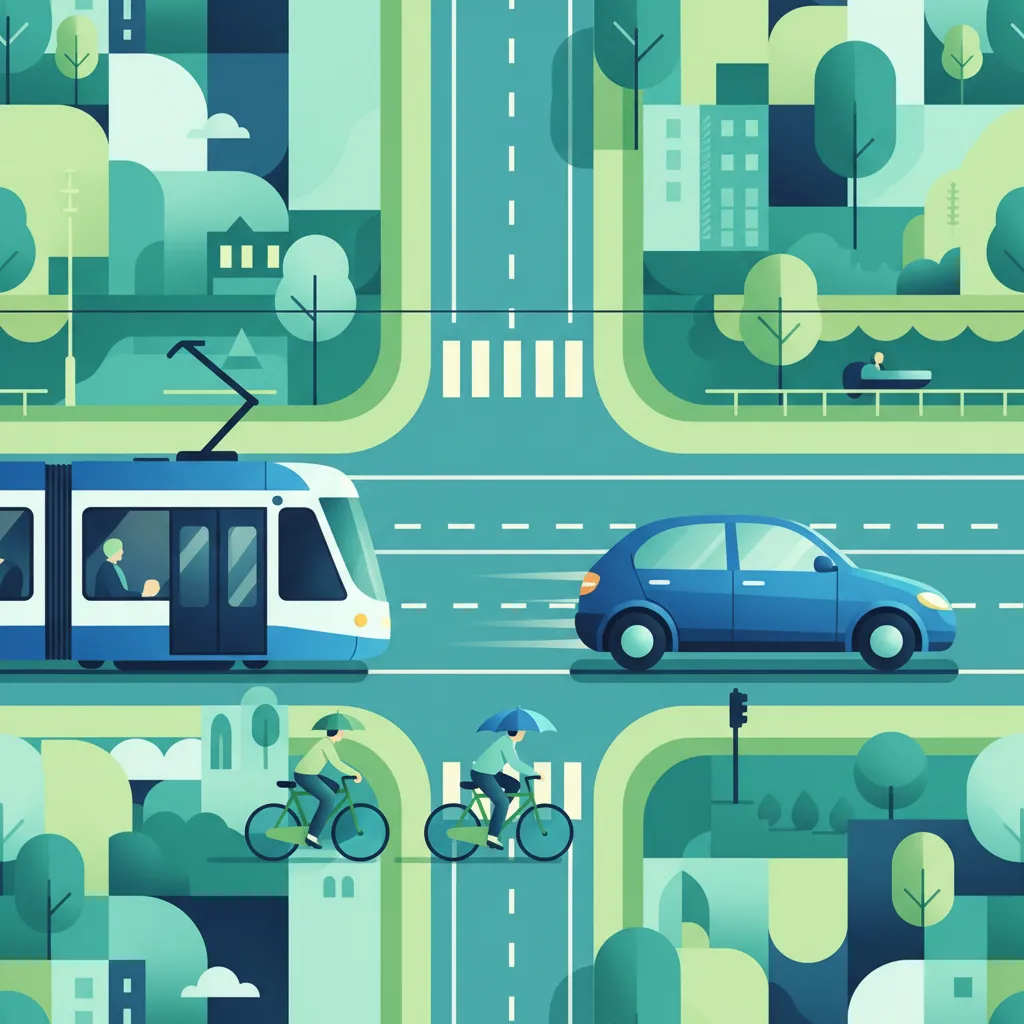
This lesson introduces the foundational principles of right-of-way in the Netherlands, starting with the road user hierarchy and the default rule of giving priority to traffic from the right at equal intersections. You will learn to identify a priority road, marked by sign BORD 30, and understand how this designation overrides the default rule. The content establishes the legal framework for making priority decisions in the absence of specific signs or signals.
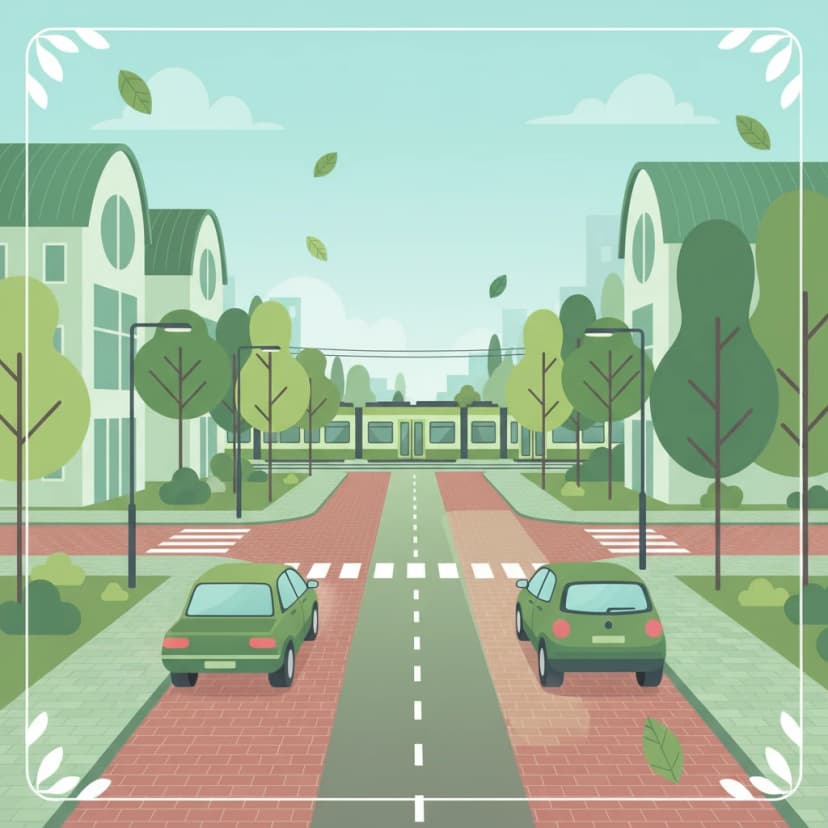
This lesson explains the foundational 'priority to the right' rule, which applies at intersections of equal roads where no other signs or markings dictate priority. You will learn to identify such junctions and understand your obligation to yield to traffic approaching from your right side. The lesson also clarifies important exceptions, such as when exiting a driveway, entering a paved road from an unpaved one, or when encountering a tram. Mastering this rule is crucial for navigating residential areas and city streets where signage is often minimal.
This lesson establishes the foundational rule of priority in Dutch traffic law: yielding to traffic from the right at intersections of equal roads unless otherwise indicated. It explains how to identify an unmarked or 'equal' junction and the correct procedure for approaching, assessing, and proceeding safely. The content also introduces the primary signs and markings, such as 'shark's teeth,' that override this default rule, forming the basis for all other priority scenarios.
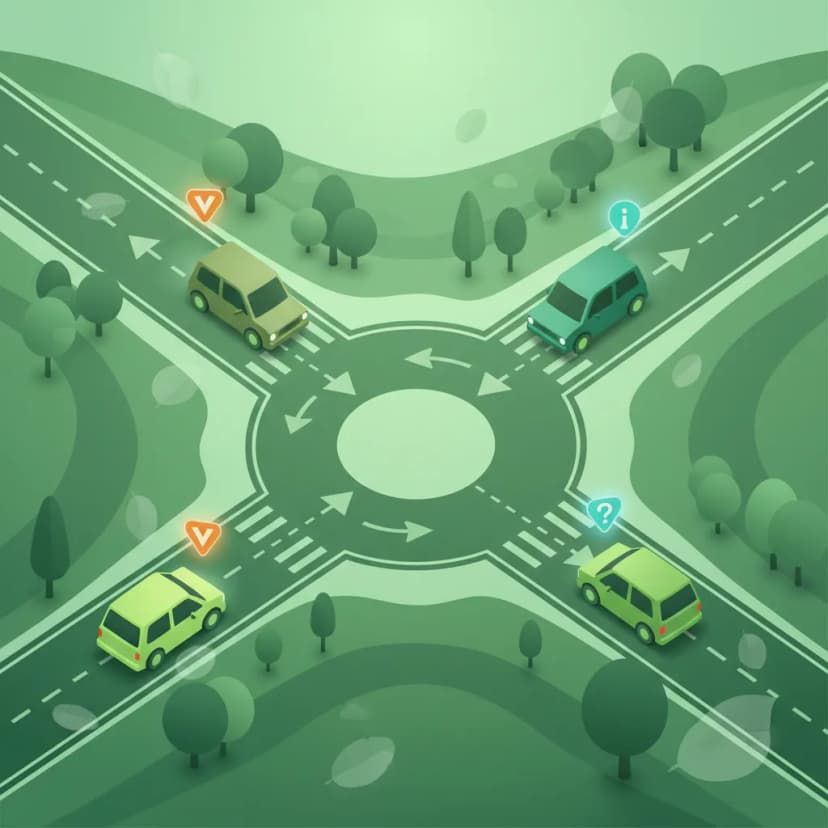
This lesson addresses the challenge of navigating equal-priority intersections, where no signs or markings dictate the right-of-way. You will master the fundamental Dutch traffic rule of giving priority to all drivers approaching from your right ('rechts voor'). The content focuses on developing advanced observational skills and clear communication to safely manage these situations, which are common in residential and urban areas.
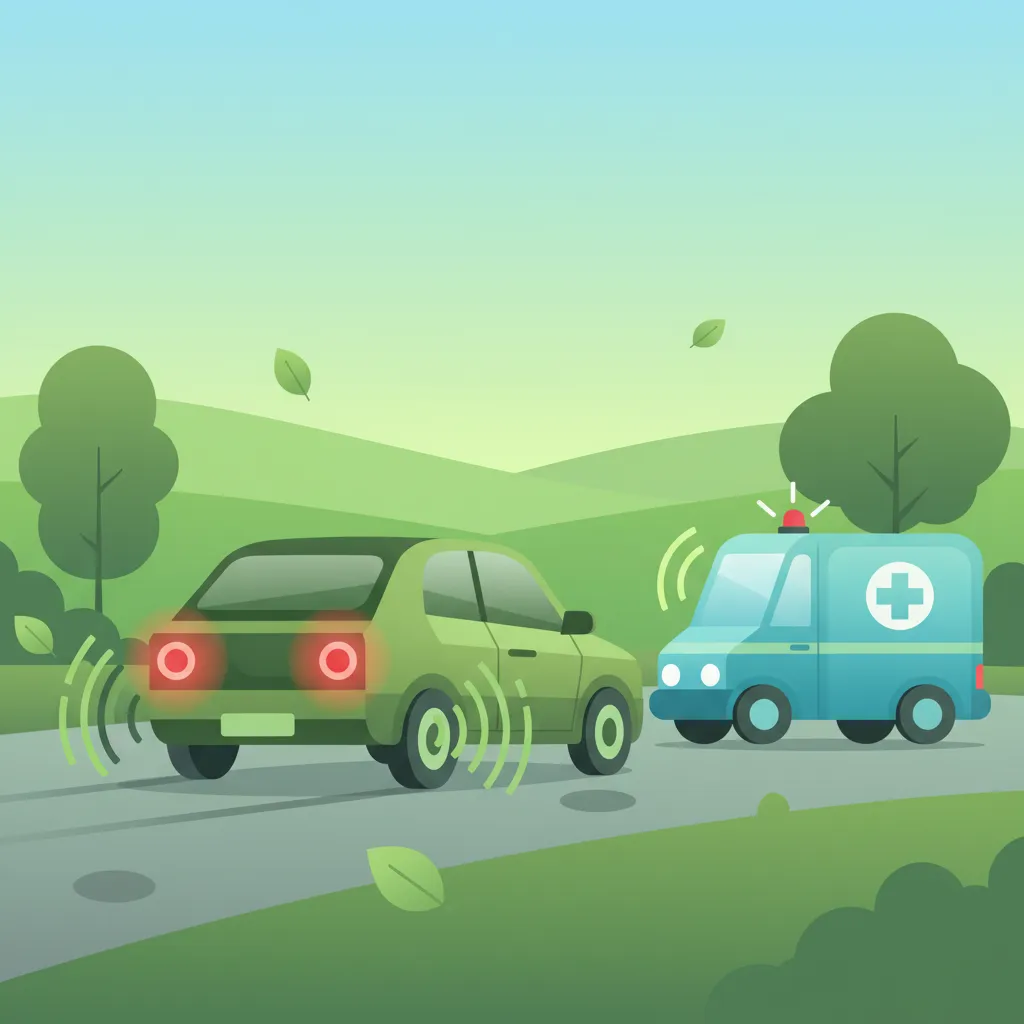
When an emergency vehicle approaches with sirens and blue flashing lights, you are legally required to give way. This lesson explains the correct procedure: check your surroundings, signal your intention, and move to the side of the road as safely and quickly as possible to create a clear path. It also covers the procedure for making an emergency stop due to a vehicle breakdown, including the use of hazard warning lights and positioning your vehicle for maximum safety.
This lesson explains the critical rules of priority involving pedestrians and cyclists to ensure the safety of vulnerable road users. You will learn the absolute requirement to stop for pedestrians on or waiting to use a 'zebrapad' (zebra crossing). The content also covers situations where you must yield to cyclists crossing your path, such as when turning across a dedicated bicycle lane (fietspad).
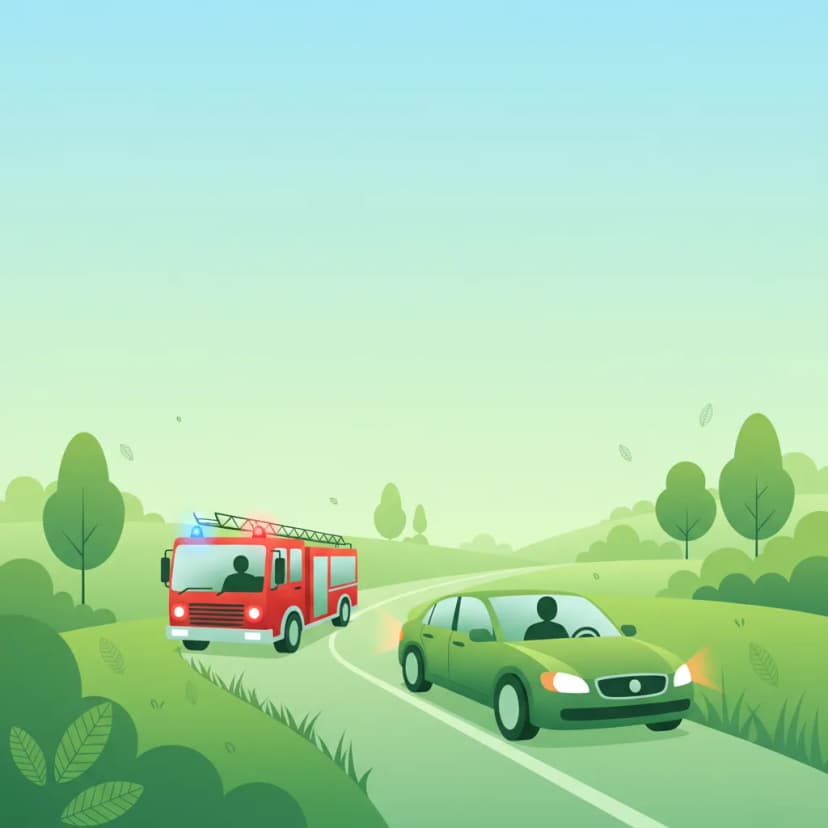
This lesson details the legal obligation and safe procedures for yielding to emergency vehicles ('noodvoertuigen' or 'voorrangsvoertuigen') that are using audible and visual warnings. It provides clear guidance on how to safely create space, whether by pulling over, adjusting speed, or clearing an intersection, without causing a secondary hazard. The content emphasizes maintaining composure and making predictable maneuvers to allow emergency services to pass quickly and safely.
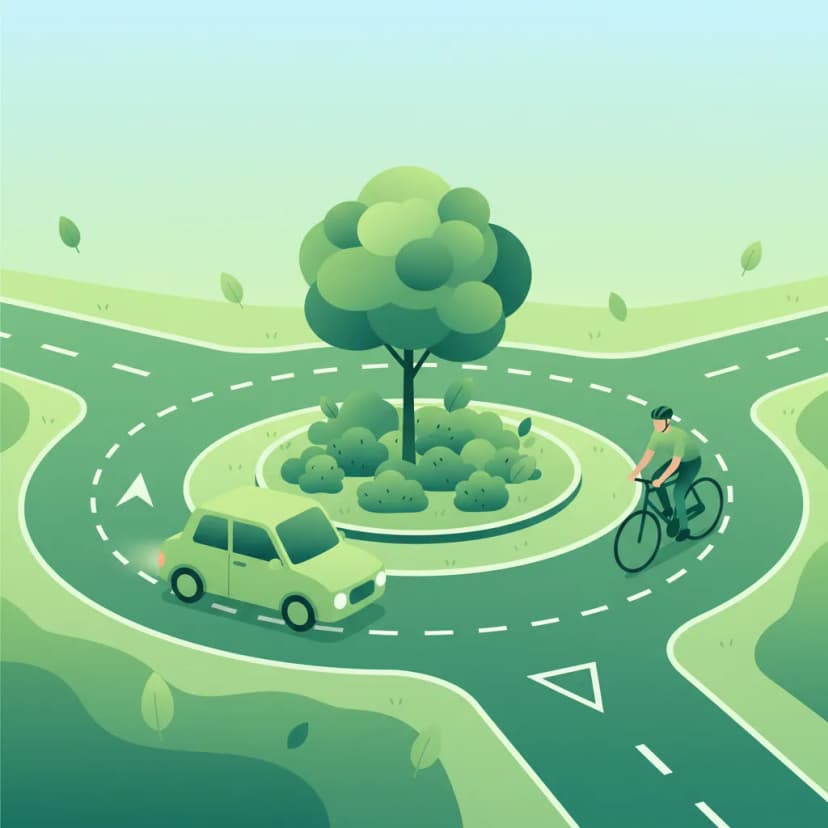
This lesson delves into the hierarchy of priority rules on Dutch roads, clarifying who has the right-of-way in various intersection scenarios. It explains the meaning of signs like 'voorrangsweg' and road markings such as shark's teeth ('haaientanden'). Special attention is given to the correct procedure for entering, navigating, and exiting roundabouts on a motorcycle, including proper signaling and lane choice to ensure safe and efficient passage.
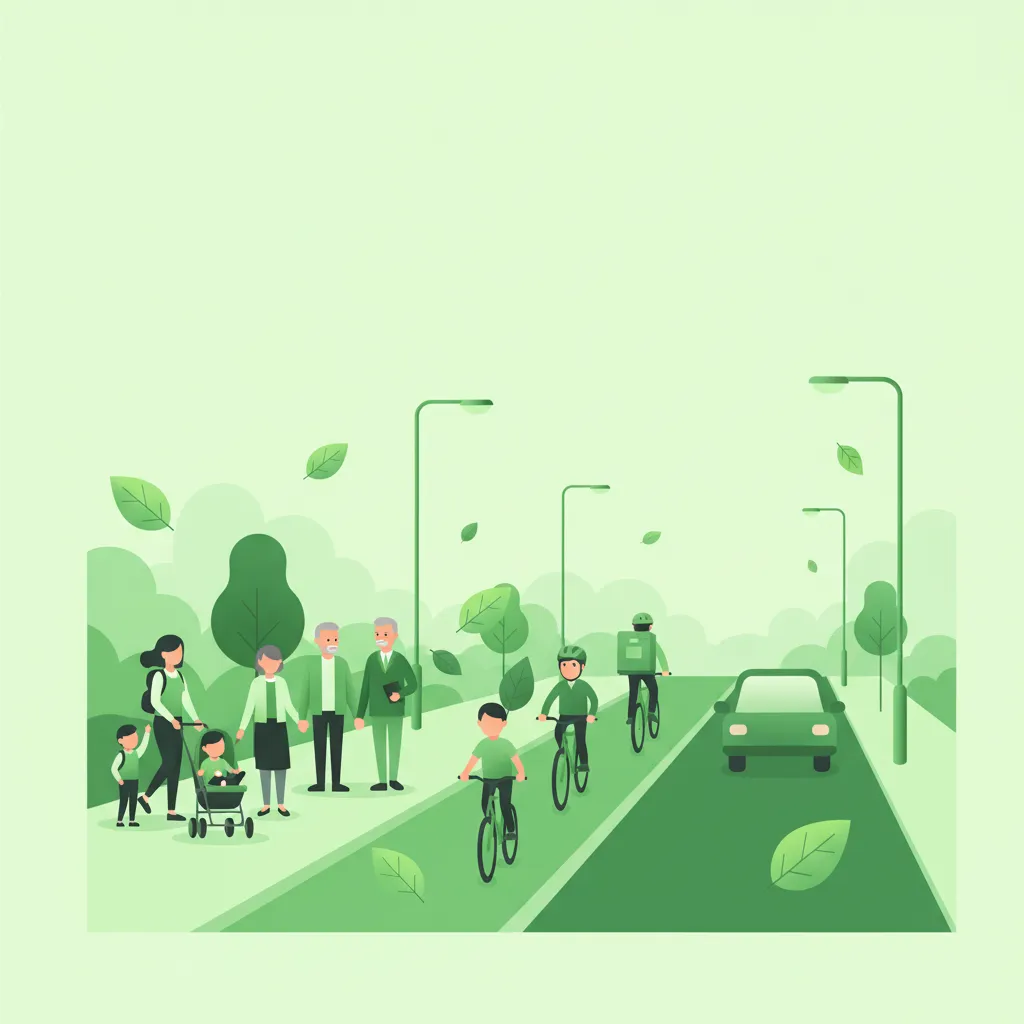
As a motorized road user, you have a special responsibility towards more vulnerable participants. This lesson focuses on the rules giving priority to pedestrians at marked zebra crossings and the importance of anticipating the movements of cyclists, children, and the elderly. You will learn about maintaining a safe lateral distance when overtaking cyclists and how to navigate shared spaces with heightened awareness, a key component of social and safe driving behavior.
Learn about frequent errors and misconceptions drivers have at intersections and priority situations. Understand how to avoid violations related to stop signs, yield signs, and the right-hand rule for your theory exam.
This lesson explains the foundational 'priority to the right' rule, which applies at intersections of equal roads where no other signs or markings dictate priority. You will learn to identify such junctions and understand your obligation to yield to traffic approaching from your right side. The lesson also clarifies important exceptions, such as when exiting a driveway, entering a paved road from an unpaved one, or when encountering a tram. Mastering this rule is crucial for navigating residential areas and city streets where signage is often minimal.
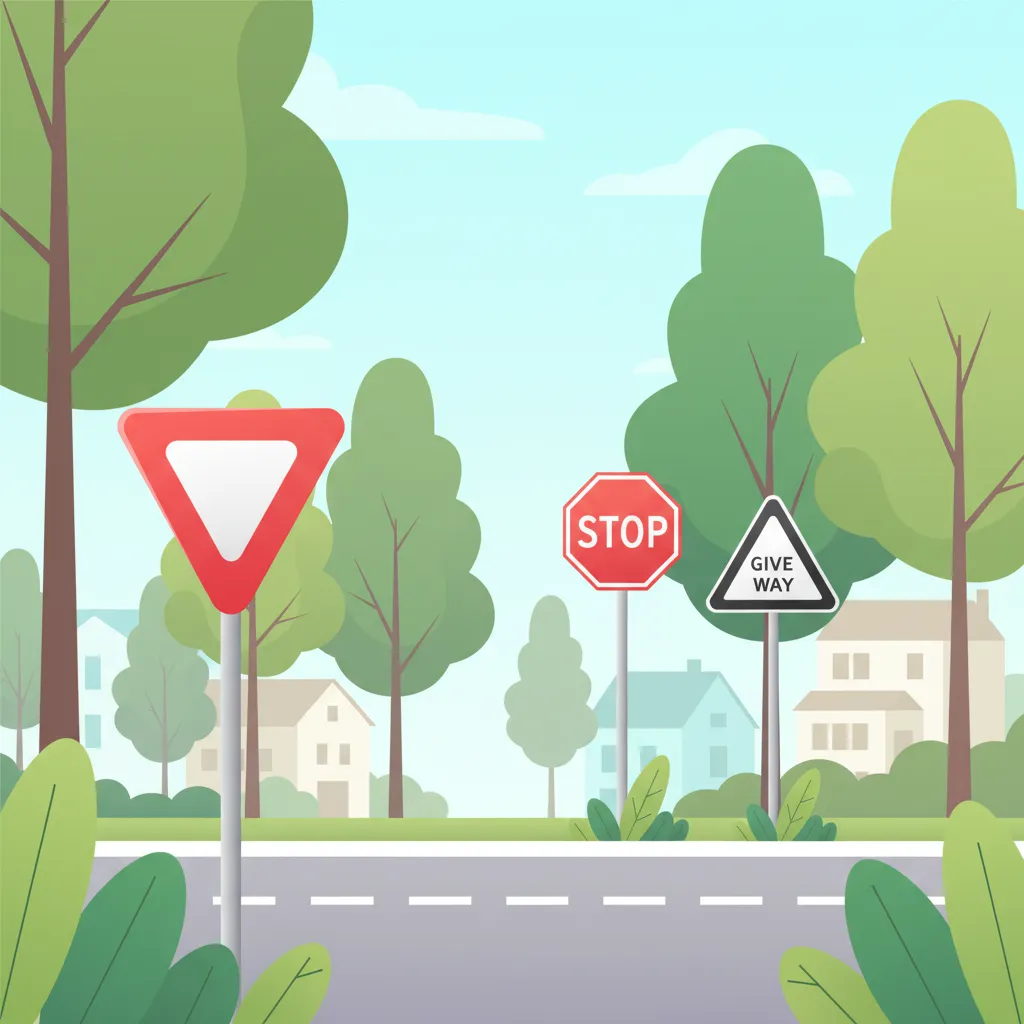
This lesson details the function of signs and markings that explicitly assign priority at intersections. You will learn the difference between the B5 yield sign, which requires giving way to intersecting traffic, and the B6 stop sign, which mandates a complete stop before proceeding. The content also covers the 'haaientanden' (shark teeth) road markings, which function similarly to a yield sign. Understanding how these signs interact with priority road signs (B1) is essential for correctly navigating controlled intersections.
This lesson provides a detailed guide to navigating roundabouts (rotondes) in the Netherlands. You will learn the primary rule: drivers approaching a roundabout must yield to traffic already circulating on it, which is typically indicated by yield signs (B5) and shark teeth. The curriculum also covers the correct use of turn signals when entering and exiting, rules for multi-lane roundabouts, and special considerations for the priority of cyclists who may have a dedicated path around the roundabout. Correct roundabout etiquette is key to maintaining traffic flow and safety.
This lesson addresses the challenge of navigating equal-priority intersections, where no signs or markings dictate the right-of-way. You will master the fundamental Dutch traffic rule of giving priority to all drivers approaching from your right ('rechts voor'). The content focuses on developing advanced observational skills and clear communication to safely manage these situations, which are common in residential and urban areas.
This lesson explains the critical rules of priority involving pedestrians and cyclists to ensure the safety of vulnerable road users. You will learn the absolute requirement to stop for pedestrians on or waiting to use a 'zebrapad' (zebra crossing). The content also covers situations where you must yield to cyclists crossing your path, such as when turning across a dedicated bicycle lane (fietspad).
This lesson addresses special situations where standard priority rules are superseded. You will learn the absolute priority of emergency vehicles using sirens and flashing lights, and the correct procedure for giving them way safely. The content also explains the specific priority rules for trams, which often have right-of-way over other traffic, as well as for military columns and official funeral processions. Furthermore, the lesson reinforces the rules for yielding to pedestrians at designated zebra crossings.
This lesson establishes the foundational rule of priority in Dutch traffic law: yielding to traffic from the right at intersections of equal roads unless otherwise indicated. It explains how to identify an unmarked or 'equal' junction and the correct procedure for approaching, assessing, and proceeding safely. The content also introduces the primary signs and markings, such as 'shark's teeth,' that override this default rule, forming the basis for all other priority scenarios.
This lesson introduces the foundational principles of right-of-way in the Netherlands, starting with the road user hierarchy and the default rule of giving priority to traffic from the right at equal intersections. You will learn to identify a priority road, marked by sign BORD 30, and understand how this designation overrides the default rule. The content establishes the legal framework for making priority decisions in the absence of specific signs or signals.
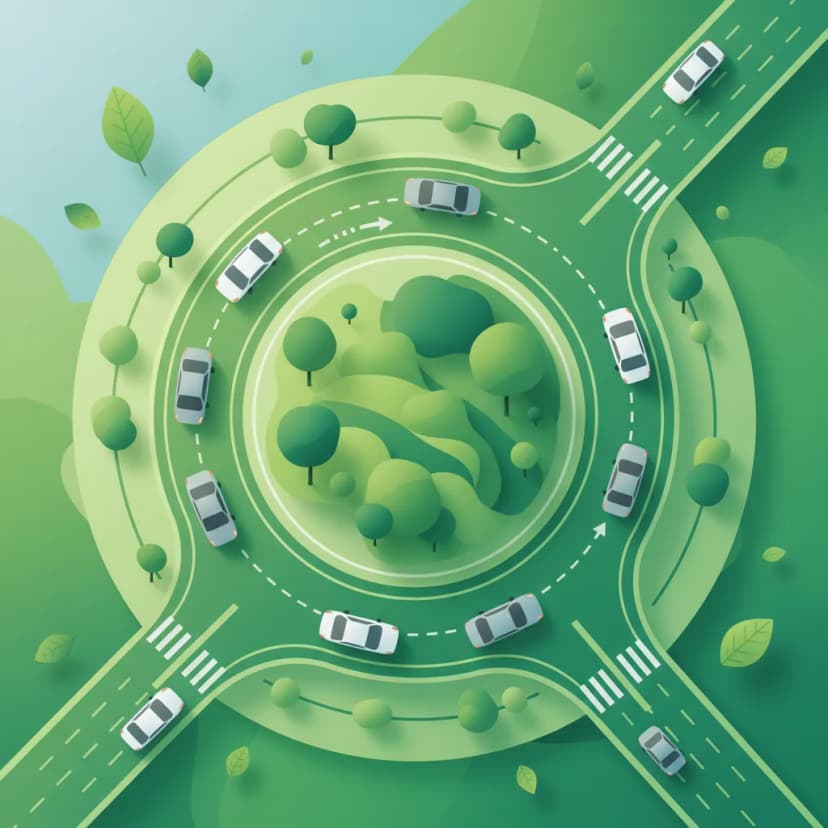
This lesson focuses on the rules and techniques for safely navigating Dutch roundabouts, a common feature of the road network. You will learn that traffic circulating on the roundabout typically has priority and that you must yield before entering. The content covers correct lane selection for your intended exit, proper use of turn signals, and maintaining awareness of cyclists who may have priority on adjacent paths.
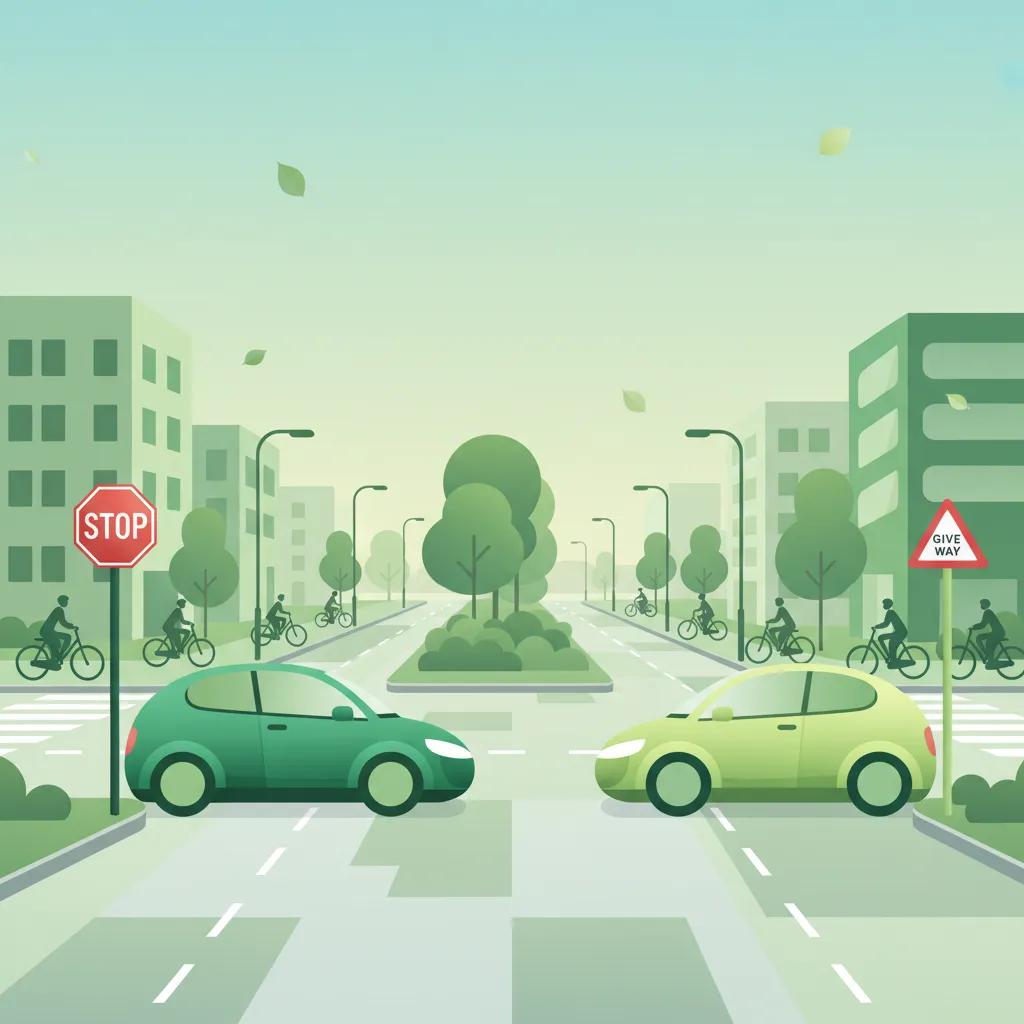
This lesson details the specific actions required at intersections controlled by 'Stop' and 'Give Way' signs. You will learn the legal requirement to come to a complete stop at a stop line (BORD 44) and the obligation to yield to all crossing traffic when encountering give-way markings ('haaientanden'). The content covers safe approach speeds and effective scanning techniques for motorcyclists to accurately assess gaps in traffic before proceeding.
Find clear answers to common questions learners have about Intersections and Yield Rules. Learn how the lesson is structured, which driving theory objectives it supports, and how it fits into the overall learning path of units and curriculum progression in the Netherlands. These explanations help you understand key concepts, lesson flow, and exam focused study goals.
At an 'equal' intersection where no signs or road markings dictate otherwise, the default rule is 'priority to the right'. This means you must give way to traffic approaching from your right. This rule is fundamental for AM category riders.
'Shark's teeth' are triangular markings painted on the road pointing towards oncoming traffic. They indicate that you must give way to traffic on the intersecting road, regardless of whether they are coming from your right or left. They reinforce priority rules.
The B6 Stop sign (a red triangle with a white border and the word 'STOP') means you must stop completely before entering the intersection and yield to all traffic. The B7 Priority Road sign (a white diamond with a yellow border) indicates that you have priority and other traffic must yield to you.
The basic priority rules for intersections are the same for AM category vehicles like mopeds and cars. However, AM vehicles often have specific rules regarding road access (e.g., use of cycle paths), which can influence their positioning before an intersection. Always check local signage and road markings.
If you are ever uncertain about priority at an intersection, it is safest to slow down and be prepared to stop. Observe other traffic carefully, and if necessary, wait for a clear and safe opportunity to proceed. It's better to be cautious than to cause an accident.