
This lesson is crucial for any A1 motorcycle rider in the Netherlands, establishing who has the right-of-way in various traffic situations. You'll learn to interpret priority signs like 'voorrangsweg' and road markings like 'haaientanden'. Mastering these rules is vital for safe riding, efficient traffic flow, and passing your Dutch CBR theory exam.
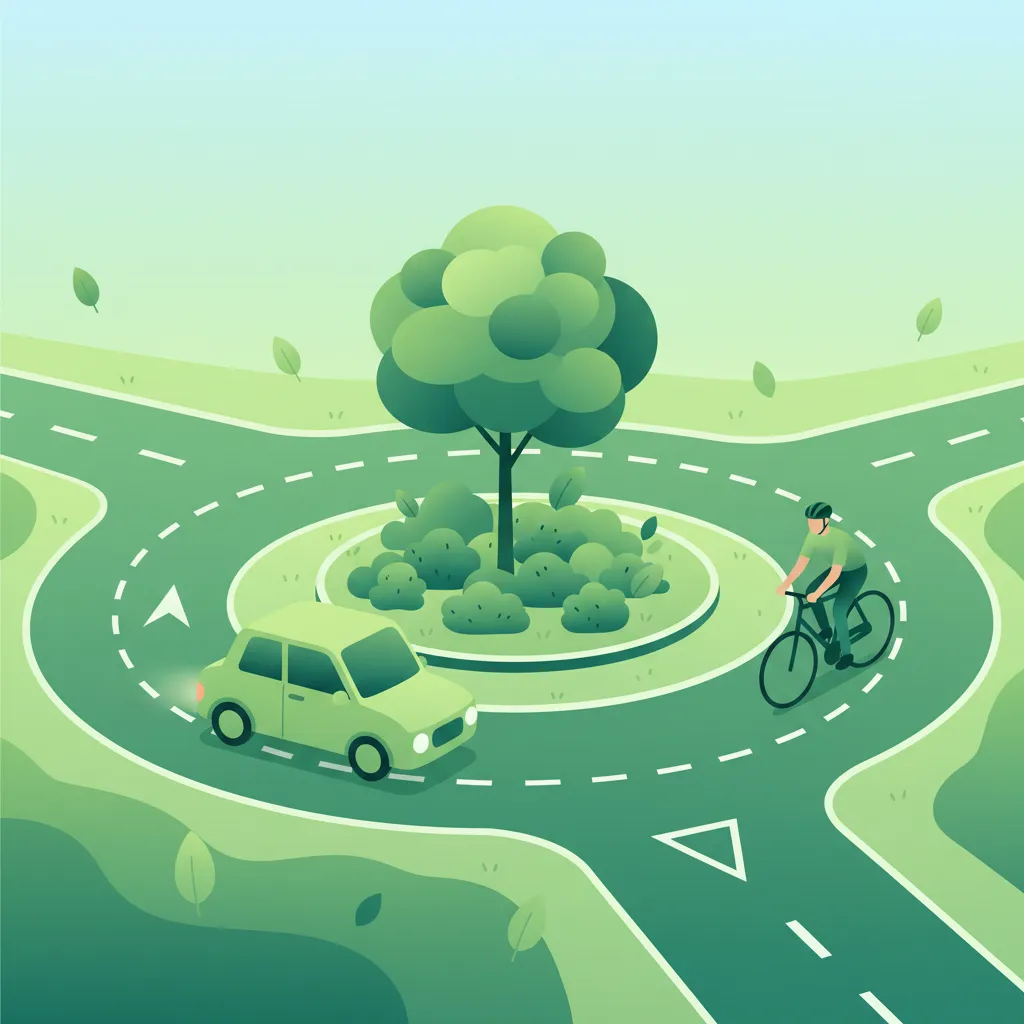
Navigating the complex network of Dutch roads requires a thorough understanding of priority rules and the specific procedures for roundabouts. For prospective A1 motorcyclists, mastering these elements is not just crucial for passing the CBR theory exam but is fundamental to safe and efficient riding. This lesson will clarify who has the right-of-way in various scenarios, interpret key signs and road markings, and detail the complete process for navigating roundabouts on a motorcycle.
Priority, also known as right-of-way, dictates which road user may proceed first at a conflict point, such as an intersection. In the Netherlands, these rules are clearly defined to ensure predictability and safety for all traffic participants. Adhering to these rules is paramount for preventing collisions and maintaining smooth traffic flow.
The Dutch traffic laws (Reglement Verkeersregels en Verkeerstekens 1990 – RVV 1990) establish a clear hierarchy for determining priority:
Understanding this hierarchy allows motorcyclists to anticipate and react correctly, reducing uncertainty and minimizing collision risks.
A 'voorrangsweg' (priority road) is a road where traffic automatically has the right-of-way over traffic approaching from intersecting roads. This designation is vital for maintaining traffic flow on main arteries.
When you are riding on a priority road, you generally do not need to stop or yield to traffic from side roads, unless specific traffic lights or other signs indicate otherwise. However, it is crucial to remain vigilant, as other road users might not always adhere to the rules. Always be prepared to react to unexpected behavior.
Always scan intersections: Even on a priority road, always scan intersections for potential hazards, especially for other drivers who might mistakenly assume priority or fail to see you.
The obligation to 'give-way' (voorrang verlenen) means you must allow another vehicle or road user to proceed first before you enter an intersection or merge into a traffic stream. This rule is often communicated through specific signs or road markings.
Upon seeing a give-way sign, you must slow down and be prepared to stop. You should only proceed when it is safe to do so and you will not impede the flow of crossing traffic. Misinterpreting this sign can lead to dangerous situations and is a common cause of accidents.
'Haaientanden' (shark's teeth) are white, triangular road markings painted on the road surface. These triangles point towards the approaching vehicle and reinforce the legal requirement to give way.
These markings are often found at intersections or at the entry points of roundabouts, either accompanying a give-way sign or sometimes even in its absence. Regardless of whether a sign is present, 'shark's teeth' explicitly mean you must yield to traffic on the road they face. As a motorcyclist, you must recognize these markings instantly and react by slowing down or stopping as necessary.
At intersections where there are no traffic lights, signs, or 'shark's teeth' markings, the general rule of 'right-hand traffic' applies. This means that traffic approaching from your right has priority.
However, this rule has exceptions:
Be extra cautious: The 'right-hand traffic' rule can be challenging to apply quickly. Always be prepared to yield if there's any doubt about who has priority, especially at unfamiliar or complex intersections.
Roundabouts are circular intersections designed to improve traffic flow and reduce conflict points compared to traditional crossroads. For motorcyclists, navigating roundabouts safely requires precise control, keen observation, and correct signaling.
A roundabout (kruispunt met rotonde) is an intersection where traffic travels in one direction (counter-clockwise in the Netherlands) around a central island. They significantly reduce collision severity by converting perpendicular collisions into glancing blows and by reducing the total number of conflict points from 32 in a traditional intersection to as few as 8.
Roundabouts come in different types:
Entering a roundabout safely is a multi-step process for motorcyclists, requiring careful planning and execution.
Observe: As you approach, scan the roundabout for circulating traffic, pedestrians, cyclists, and any specific signage or lane markings.
Adjust Speed: Reduce your speed to a safe, controllable level. For small roundabouts, this might be around 15-20 km/h; for larger ones, up to 30 km/h is generally appropriate. Your speed should allow you to stop comfortably if needed.
Lane Selection: Choose the correct lane before entering. In multi-lane roundabouts, signs or road markings typically indicate which lane to use for specific exits (e.g., outer lane for left turns, inner for straight/right, or as indicated). In single-lane roundabouts, position yourself appropriately for your intended exit.
Yield: You must yield to all traffic already circulating on the roundabout, including cyclists and pedestrians on designated crossings. Stop if necessary before the entry point (often marked by 'shark's teeth'). Only enter when there is a safe gap in traffic.
Signal (if applicable): If you are taking the first exit to the right, you should signal right upon approach. For other exits, you typically signal your exit after passing the exit before your intended one.
Once inside the roundabout, maintaining control and clear communication are key.
Multi-lane roundabouts demand particularly strict lane discipline from motorcyclists. These roundabouts are designed with specific entry and exit lanes, often indicated by arrows or signs.
Effective signaling is vital for safety and smooth traffic flow on roundabouts. For motorcyclists, using both lamp indicators and clear hand signals can enhance visibility and communication.
Understanding the rules is only half the battle; recognizing common mistakes and adapting to varying conditions completes the picture of safe and skilled riding.
Many accidents at intersections and roundabouts stem from misunderstandings or deliberate violations of priority rules.
Motorcyclist vulnerability: Due to their smaller profile, motorcycles can be less visible. Always assume other drivers might not see you and actively work to make your intentions clear through positioning, speed, and signaling.
Adverse conditions significantly impact how safely you can navigate priority situations and roundabouts.
Mastering priority rules and roundabout navigation is a cornerstone of safe motorcycle riding in the Netherlands. By understanding the legal hierarchy, recognizing critical signs and markings, and executing precise maneuvers, you contribute significantly to road safety for yourself and others.
Consistent application of these rules, combined with defensive riding techniques, will ensure you are well-prepared for the Dutch A1 motorcycle theory exam and, more importantly, for safe and confident riding on Dutch roads.
Lesson content overview
Explore all units and lessons included in this driving theory course.
Explore search topics learners often look for when studying Priority Rules & Roundabout Navigation. These topics reflect common questions about road rules, driving situations, safety guidance, and lesson level theory preparation for learners in the Netherlands.
Browse additional driving theory lessons that cover connected traffic rules, road signs, and common driving situations related to this topic. Improve your understanding of how different rules interact across everyday traffic scenarios.
Explore edge cases and advanced scenarios for priority rules at Dutch roundabouts and complex intersections. Learn how to handle multi-lane roundabouts, unexpected situations, and challenging priority conflicts to enhance your motorcycle safety.
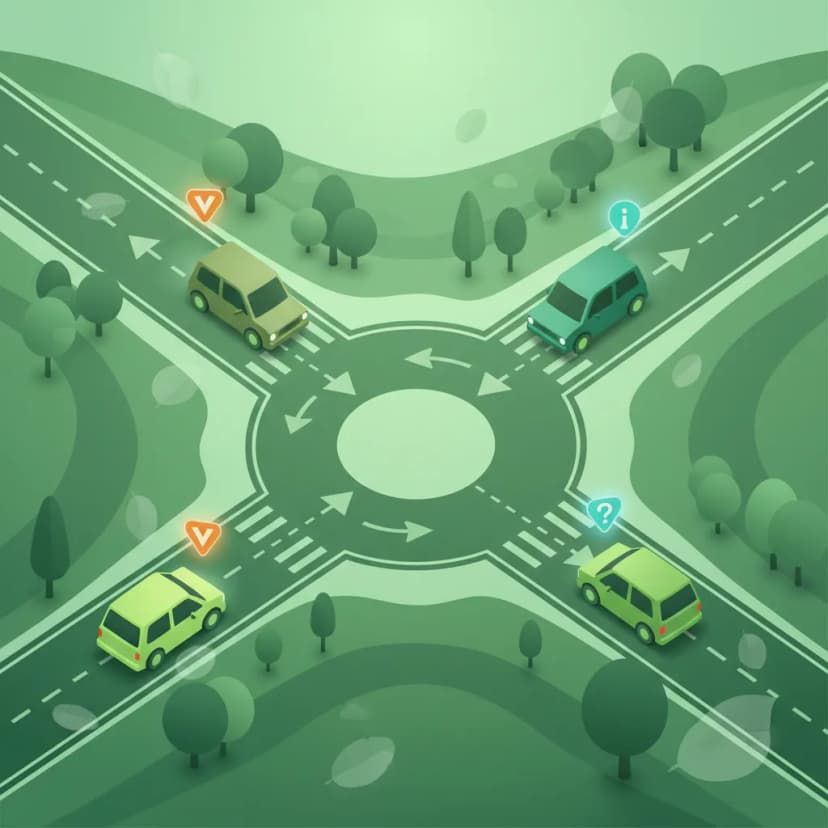
This lesson addresses the challenge of navigating equal-priority intersections, where no signs or markings dictate the right-of-way. You will master the fundamental Dutch traffic rule of giving priority to all drivers approaching from your right ('rechts voor'). The content focuses on developing advanced observational skills and clear communication to safely manage these situations, which are common in residential and urban areas.
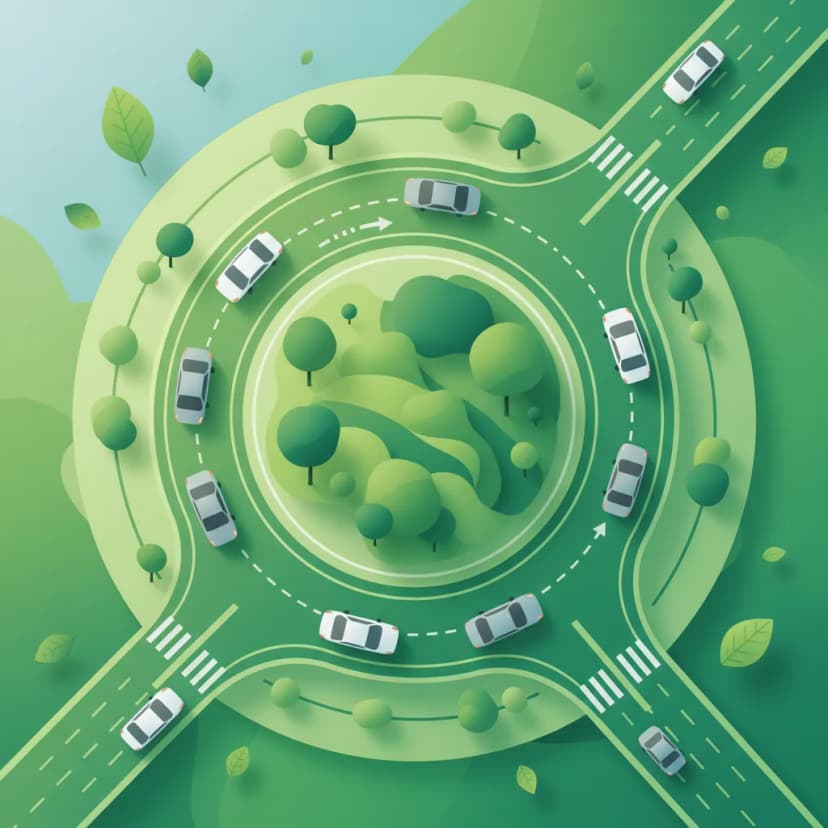
This lesson focuses on the rules and techniques for safely navigating Dutch roundabouts, a common feature of the road network. You will learn that traffic circulating on the roundabout typically has priority and that you must yield before entering. The content covers correct lane selection for your intended exit, proper use of turn signals, and maintaining awareness of cyclists who may have priority on adjacent paths.
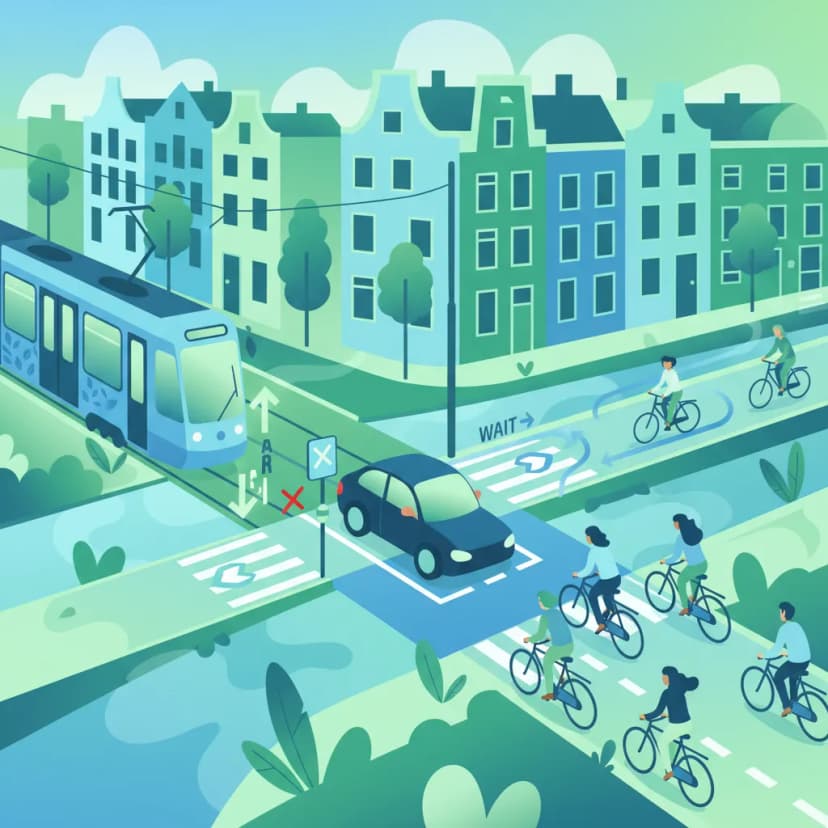
This lesson breaks down the rules of priority at intersections. You will learn to identify an 'equal' intersection where the default rule of giving way to traffic from the right applies. It also explains how priority is regulated by signs (such as the B6 Stop sign and B7 priority road sign) and road markings ('shark's teeth'). Understanding these hierarchies is crucial for making safe and correct decisions when crossing or turning at any junction.
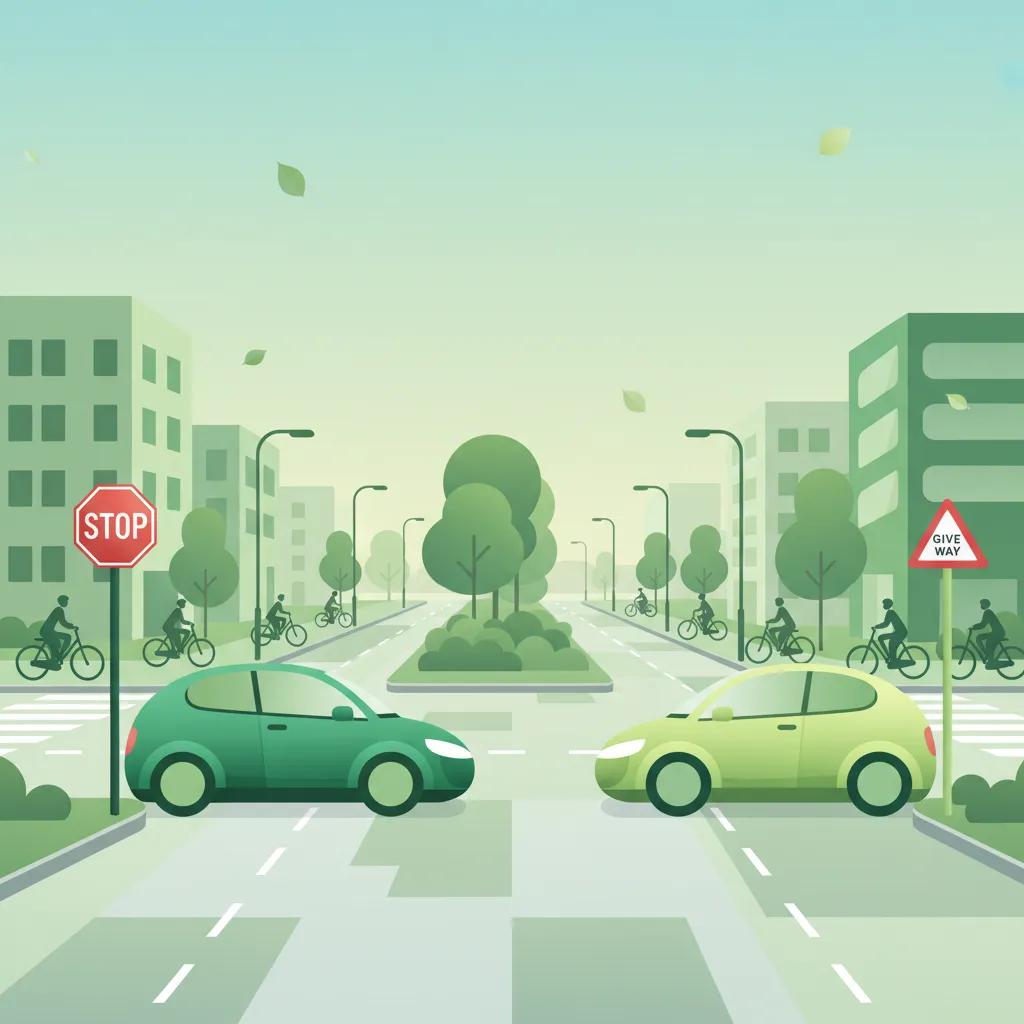
This lesson details the specific actions required at intersections controlled by 'Stop' and 'Give Way' signs. You will learn the legal requirement to come to a complete stop at a stop line (BORD 44) and the obligation to yield to all crossing traffic when encountering give-way markings ('haaientanden'). The content covers safe approach speeds and effective scanning techniques for motorcyclists to accurately assess gaps in traffic before proceeding.
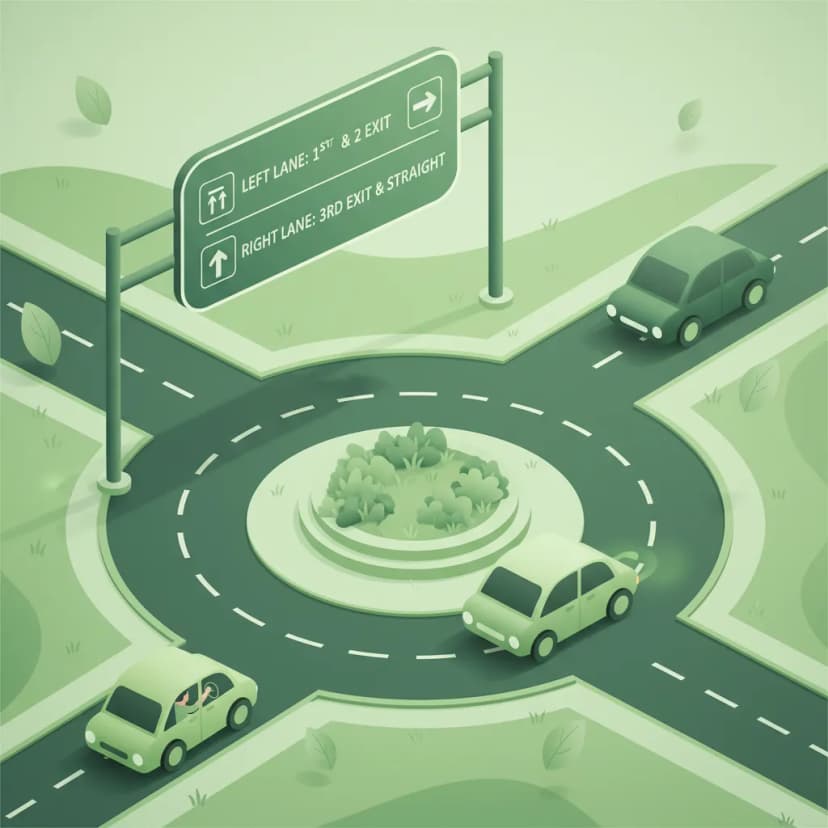
This lesson provides a detailed guide to navigating Dutch roundabouts ('rotondes'), including single-lane, multi-lane, and 'turbo' designs. It clarifies the specific priority rules that apply when entering the roundabout and the critical importance of correct signaling when changing lanes or exiting. Special attention is given to the vulnerable position of motorcyclists and the need to be aware of other vehicles' blind spots and the priority rules concerning cyclists on or near the roundabout.
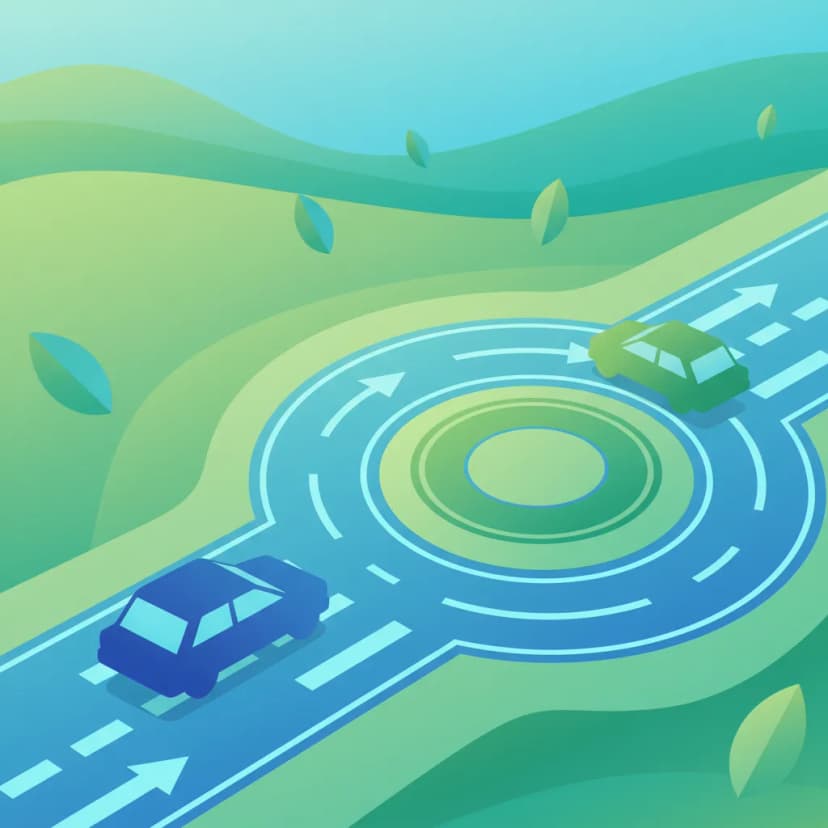
Roundabouts are a common feature of Dutch roads, and they have specific priority rules. This lesson teaches the standard rule of yielding to traffic already circulating on the roundabout before you enter. It also covers correct lane positioning, the importance of signaling your intention to exit, and the specific rules that often apply to cyclists who may have priority when crossing the exits. These skills ensure smooth and safe passage through both large and mini-roundabouts.
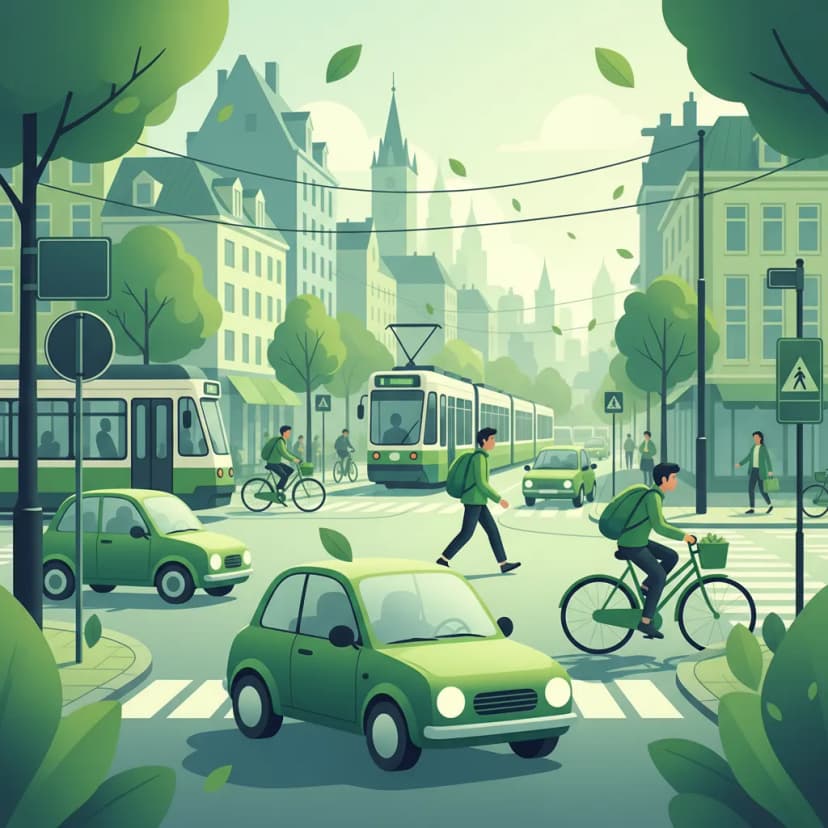
This lesson establishes the foundational rule of priority in Dutch traffic law: yielding to traffic from the right at intersections of equal roads unless otherwise indicated. It explains how to identify an unmarked or 'equal' junction and the correct procedure for approaching, assessing, and proceeding safely. The content also introduces the primary signs and markings, such as 'shark's teeth,' that override this default rule, forming the basis for all other priority scenarios.
This lesson introduces the foundational principles of right-of-way in the Netherlands, starting with the road user hierarchy and the default rule of giving priority to traffic from the right at equal intersections. You will learn to identify a priority road, marked by sign BORD 30, and understand how this designation overrides the default rule. The content establishes the legal framework for making priority decisions in the absence of specific signs or signals.
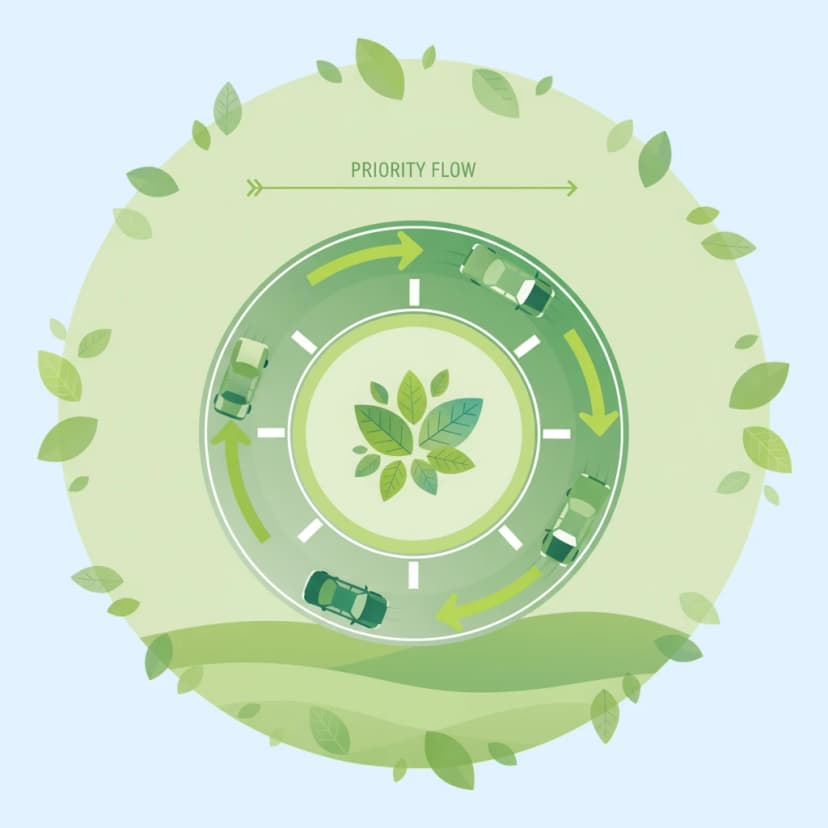
This lesson provides a detailed guide to navigating roundabouts (rotondes) in the Netherlands. You will learn the primary rule: drivers approaching a roundabout must yield to traffic already circulating on it, which is typically indicated by yield signs (B5) and shark teeth. The curriculum also covers the correct use of turn signals when entering and exiting, rules for multi-lane roundabouts, and special considerations for the priority of cyclists who may have a dedicated path around the roundabout. Correct roundabout etiquette is key to maintaining traffic flow and safety.
This lesson explains the critical rules of priority involving pedestrians and cyclists to ensure the safety of vulnerable road users. You will learn the absolute requirement to stop for pedestrians on or waiting to use a 'zebrapad' (zebra crossing). The content also covers situations where you must yield to cyclists crossing your path, such as when turning across a dedicated bicycle lane (fietspad).
Understand the critical theory behind safely navigating Dutch roundabouts when interacting with vulnerable road users like pedestrians and cyclists. Learn priority rules and best practices for motorcyclists to ensure mutual safety.
This lesson focuses on the rules and techniques for safely navigating Dutch roundabouts, a common feature of the road network. You will learn that traffic circulating on the roundabout typically has priority and that you must yield before entering. The content covers correct lane selection for your intended exit, proper use of turn signals, and maintaining awareness of cyclists who may have priority on adjacent paths.
This lesson provides a detailed framework for how motorcyclists must safely and legally interact with diverse road users, including cars, trucks, cyclists, and pedestrians. It covers the required communication signals, anticipatory behaviors, and specific positioning techniques necessary to coexist in complex traffic environments like urban centers and shared spaces. Emphasis is placed on legal expectations and practical methods that actively reduce collision risk and promote smooth traffic flow.
This lesson provides a detailed guide to navigating Dutch roundabouts ('rotondes'), including single-lane, multi-lane, and 'turbo' designs. It clarifies the specific priority rules that apply when entering the roundabout and the critical importance of correct signaling when changing lanes or exiting. Special attention is given to the vulnerable position of motorcyclists and the need to be aware of other vehicles' blind spots and the priority rules concerning cyclists on or near the roundabout.
This lesson details the specific actions required at intersections controlled by 'Stop' and 'Give Way' signs. You will learn the legal requirement to come to a complete stop at a stop line (BORD 44) and the obligation to yield to all crossing traffic when encountering give-way markings ('haaientanden'). The content covers safe approach speeds and effective scanning techniques for motorcyclists to accurately assess gaps in traffic before proceeding.
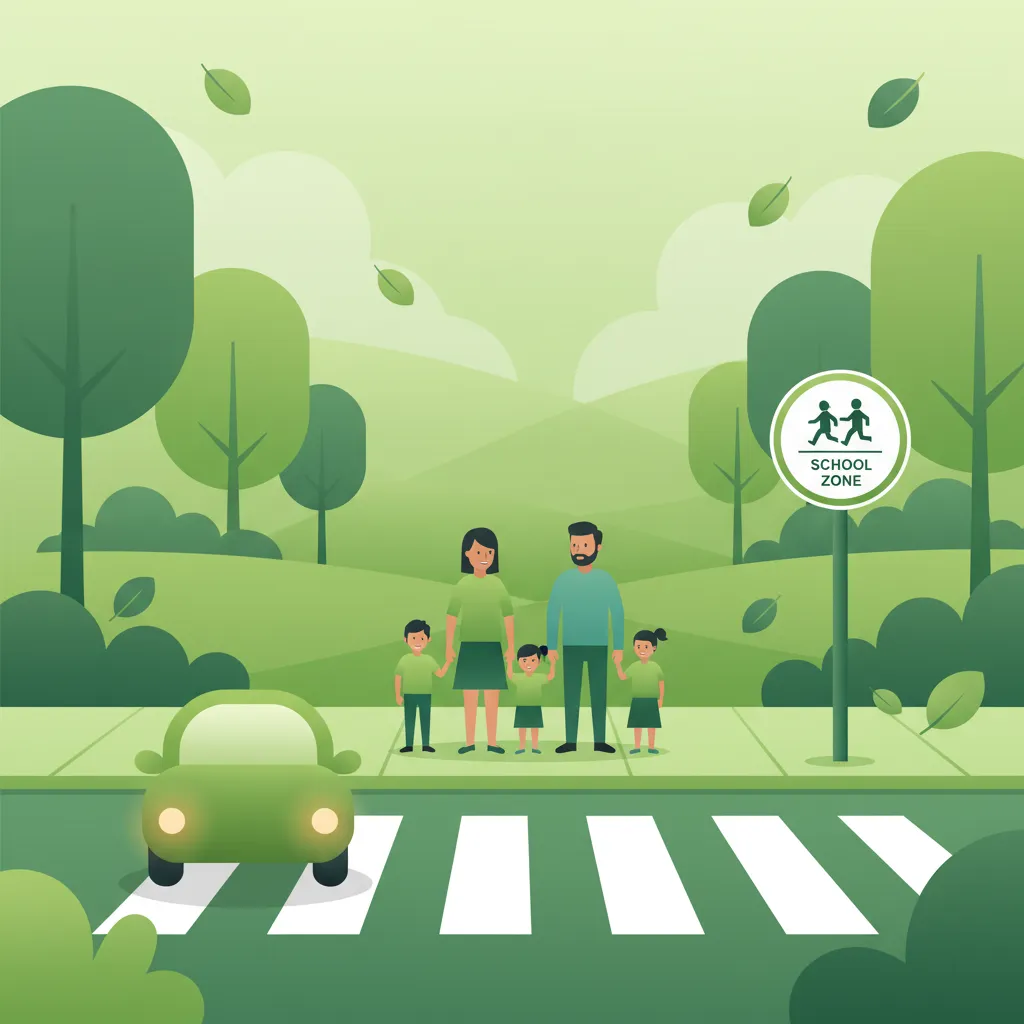
This lesson focuses on the legal requirements and safe practices for riding near pedestrian crossings ('zebrapaden') and designated school zones. It details the absolute obligation to yield to pedestrians on or about to use a crossing and the need for significantly reduced speeds and heightened vigilance in areas with children. The content underscores the importance of anticipation and being prepared for unpredictable movements from vulnerable road users to prevent serious incidents.
This lesson addresses interactions with other types of road users. You will learn about motorcyclists, who can accelerate and brake quickly and may filter through slow traffic. The curriculum explains how to anticipate their movements and check for them carefully at junctions. It also covers how to safely approach and overtake slow-moving vehicles, such as agricultural tractors, and how to behave around horse riders, which requires slowing down and giving a very wide berth.
Roundabouts are a common feature of Dutch roads, and they have specific priority rules. This lesson teaches the standard rule of yielding to traffic already circulating on the roundabout before you enter. It also covers correct lane positioning, the importance of signaling your intention to exit, and the specific rules that often apply to cyclists who may have priority when crossing the exits. These skills ensure smooth and safe passage through both large and mini-roundabouts.
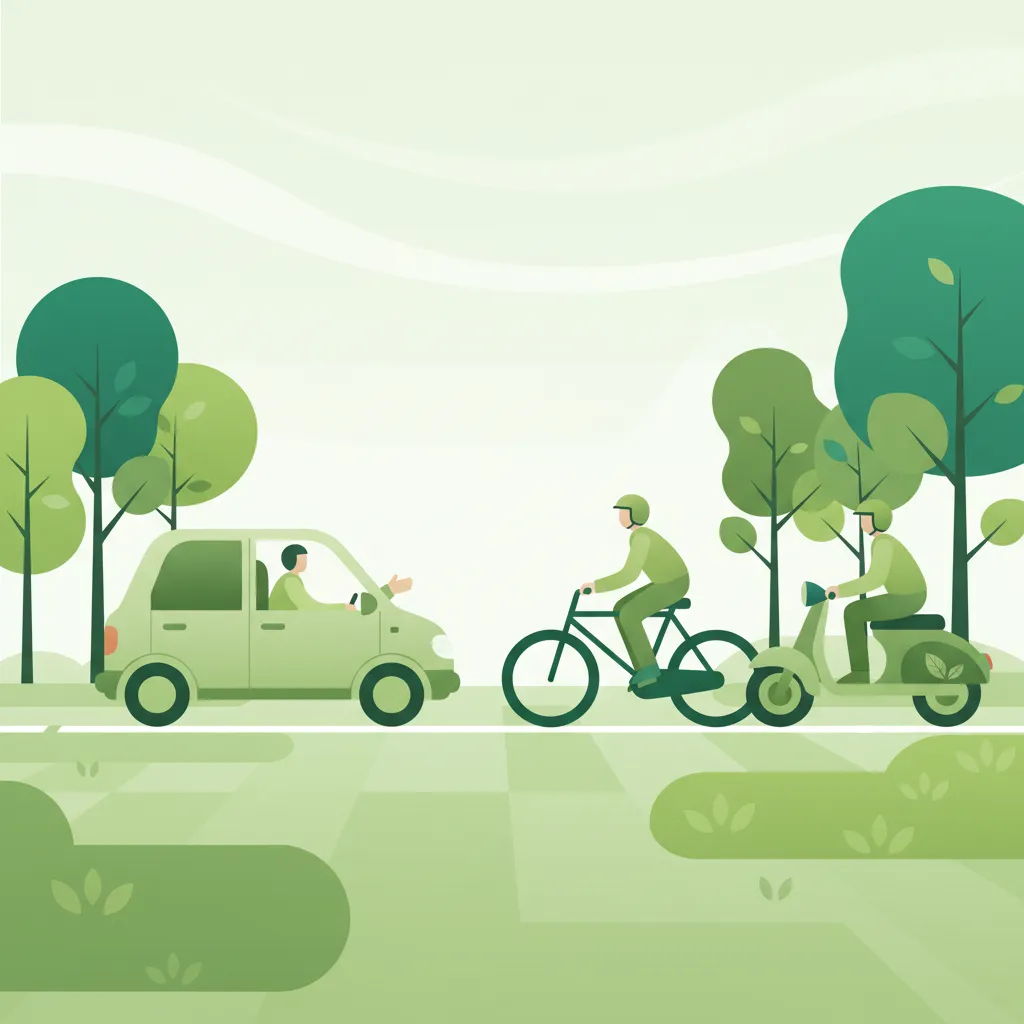
This lesson is critical for driving in the Netherlands, a country with more bicycles than people. You will learn about the different types of cycle paths and how priority rules apply, especially at junctions. The content stresses the importance of checking the blind spot for cyclists before turning right ('dode hoek'). It also covers the rules for different types of mopeds (snorfiets and bromfiets) and the importance of giving all two-wheeled road users ample space when overtaking.
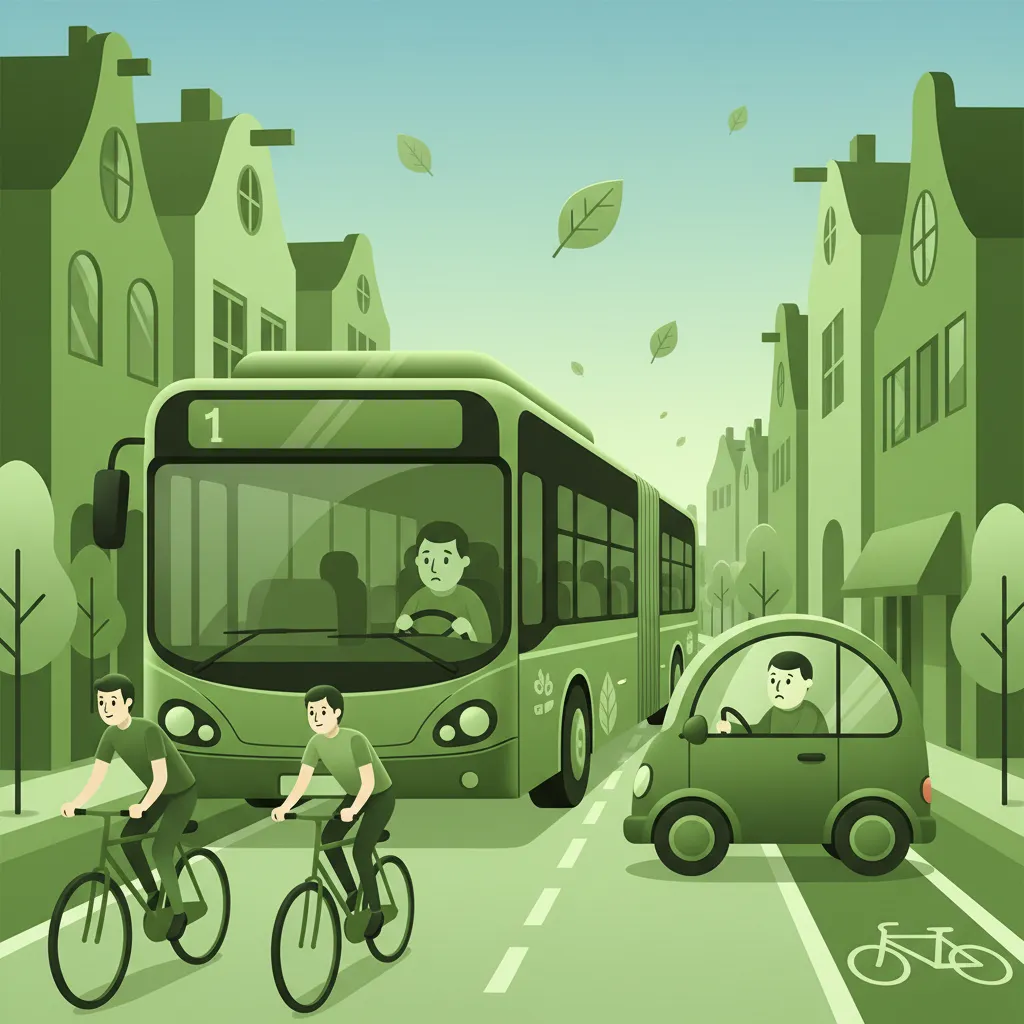
This lesson covers strategies for safely navigating around vehicles at both ends of the size spectrum. It details the large blind spots ('no-zones') around trucks and buses and advises on where to position a motorcycle to remain visible. Equally, it emphasizes the duty of care towards vulnerable road users, teaching riders to anticipate the movements of pedestrians and cyclists and to always provide them with ample space when passing.

This lesson provides critical instruction on managing blind spots ('dode hoek') to prevent collisions, particularly during lane changes. It covers the correct setup and use of mirrors, but stresses their limitations and the absolute necessity of the 'lifesaver' shoulder check before any lateral movement. Furthermore, it teaches riders how to be aware of the large blind spots around cars and especially trucks, and how to position themselves on the road to remain visible to other drivers at all times.
Find clear answers to common questions learners have about Priority Rules & Roundabout Navigation. Learn how the lesson is structured, which driving theory objectives it supports, and how it fits into the overall learning path of units and curriculum progression in the Netherlands. These explanations help you understand key concepts, lesson flow, and exam focused study goals.
A 'voorrangsweg' (priority road) means you have priority over all traffic from side roads unless otherwise indicated. A 'voorrangskruispunt' (priority intersection) means you have priority over traffic approaching from your right, but you must still yield to traffic on a 'voorrangsweg' if you are entering one. Always check signs carefully.
No, not always. While general rules often give priority to traffic already on the roundabout, many Dutch roundabouts, especially in urban areas, explicitly grant priority to cyclists. Always check road signs and markings (like shark's teeth for cyclists) before entering a roundabout to determine the specific priority situation.
On a multi-lane roundabout, you should signal right before exiting. For single-lane roundabouts, you also signal right when you intend to exit. If you are going straight or turning left, you only signal right when you are past the exit before yours, indicating your immediate intent to leave.
'Haaientanden' (shark's teeth) road markings always indicate that you must yield. They are often seen in conjunction with a B6 yield sign, but they can also appear alone to reinforce a yield situation, such as at exits from a private road onto a public road, or where cyclists have priority. If you see 'haaientanden', prepare to yield.
If there are no specific signs or markings indicating priority at a regular intersection in the Netherlands, the general rule 'priority to traffic from the right' applies. This means vehicles approaching from your right have the right-of-way. However, for A1 motorcyclists, it's crucial to always ride defensively and anticipate others' actions.