
Welcome to the lesson on Stopping, Parking, and Tunnels for your A1 motorcycle license. This section clarifies specific Dutch regulations for stopping and parking, including designated areas and pavement rules. We'll also cover essential procedures for safely navigating tunnels, from lighting requirements to breakdown protocols. Mastering these areas is key to avoiding fines and riding with confidence in these specific traffic situations.

Understanding the specific rules for stopping, parking, and navigating tunnels is crucial for every motorcyclist in the Netherlands, particularly those operating Category A1 motorcycles. This comprehensive lesson clarifies the legal requirements and practical expectations, ensuring you can ride safely, avoid fines, and contribute to smooth traffic flow. From distinguishing between a brief stop and a prolonged park, to executing correct procedures in the unique environment of a tunnel, mastering these regulations is fundamental for your Dutch A1 Motorcycle Theory exam and confident road participation.
The Netherlands has clear, distinct rules for when and where vehicles, including motorcycles, can temporarily halt. It's essential to understand the difference between stopping and parking, as the legal implications and permissible locations vary significantly.
Dutch traffic law, primarily defined in the Reglement Verkeersregels en Verkeerstekens 1990 (RVV 1990), makes a clear distinction between "stopping" and "parking." This differentiation is based on both the duration and the intent of the halt.
Stopping refers to a brief, temporary halt of your motorcycle. This could be to allow a passenger to get on or off, to load or unload goods, or to yield to other traffic. Generally, a stop lasting less than 30 seconds, where the rider remains with the motorcycle and could move it immediately, is considered stopping. It's a momentary interruption of travel.
Parking, on the other hand, implies a more prolonged stop where the intention is to leave the motorcycle stationary and typically unattended. If you intend to step away from your motorcycle for more than 30 seconds, or if you leave it completely, you are parking. This requires your motorcycle to be in a legally designated parking spot.
Remember the 30-second rule: If you're stopping for more than 30 seconds or leaving your motorcycle, you're parking.
Unlike cars, motorcycles often have specific provisions for parking due to their smaller footprint. In the Netherlands, you are primarily expected to park your motorcycle in designated motorcycle parking bays. These bays are clearly marked to ensure orderly use of public space and to prevent obstruction.
Designated motorcycle parking bays can be found in two main forms:
Parking in these designated areas ensures your motorcycle is legally parked and avoids fines.
Always look for official signs or road markings. Assuming an empty spot is a parking spot can lead to fines.
Recognizing the correct signage is paramount. The primary sign indicating a designated motorcycle parking bay is a blue rectangular sign with a white 'P' for parking, topped with a white motorcycle silhouette. This sign unambiguously grants permission to park motorcycles in that specific area.
Parking on the pavement (sidewalk) is a common point of confusion for motorcyclists, especially those new to Dutch traffic laws.
The general rule in the Netherlands is that pavement parking is prohibited. Sidewalks are reserved for pedestrians. However, there is a crucial exception: pavement parking is only allowed if a specific sign or marked area explicitly permits it for motorcycles. This will be the same blue sign with the motorcycle symbol mentioned earlier, placed either at the edge of the pavement or with painted markings on the sidewalk itself.
If no such sign is present, even if there appears to be ample space, parking your motorcycle on the pavement is illegal and can result in a fine or even the removal of your vehicle. The intent behind this strict rule is to protect pedestrian safety and ensure unimpeded access for all.
Even when permitted, ensure your parked motorcycle does not obstruct the pedestrian pathway. A clear width of at least 0.6 metres should be maintained for safe passage.
The default prohibition on pavement parking underscores the Dutch commitment to pedestrian safety and accessibility. Motorcycles, even small A1 models, can become significant obstacles for pedestrians, especially those with limited mobility, parents with strollers, or visually impaired individuals. By restricting pavement parking to designated areas, the law aims to prevent hazards and maintain the functionality of pedestrian zones.
Beyond specific parking rules, certain areas on the road are designated as "no-stopping" zones, where any halt, even momentary, is strictly forbidden.
A no-stopping zone is indicated by a round red sign with a blue background and a red diagonal cross (an 'X'). This sign signifies "Verbod te Stoppen" (prohibition to stop). In these areas, you cannot stop your motorcycle for any reason other than to avoid an immediate collision. This means you cannot stop to drop off a passenger, check a map, or wait for someone, even if it's for just a few seconds.
These zones are typically implemented in areas where any stationary vehicle would severely impede traffic flow, create a hazard, or block essential access, such as near bus stops, emergency vehicle access points, or on busy thoroughfares.
Stopping in a "no-stopping" zone carries a significant fine. The rationale is clear: such halts create unpredictable obstructions, increasing the risk of rear-end collisions and causing unnecessary traffic congestion. It is imperative to identify and respect these signs to ensure safety and avoid legal repercussions.
Tunnels present unique challenges for motorcyclists due to reduced visibility, confined spaces, and specific emergency protocols. Dutch traffic law outlines strict requirements for tunnel navigation to maximize safety for all road users.
Visibility is paramount inside tunnels, regardless of the time of day or external lighting conditions.
The law mandates that your low beam (dipped beam) headlights must be switched on at least 30 metres before entering any tunnel and must remain on throughout its entire length. You should only switch them off 30 metres after you have fully exited the tunnel. This rule applies to all vehicles, day and night, and is crucial for ensuring that your motorcycle is clearly visible to other drivers and that you can adequately see the tunnel environment, which may include changes in road surface or sudden obstacles.
Don't rely on automatic light sensors. Manually activate your low beam headlights well in advance of a tunnel entrance.
While low beams are mandatory, high beam (main beam) headlights are generally prohibited inside tunnels, unless a specific sign explicitly allows their use. Using high beams in a confined space like a tunnel can cause severe glare and temporary blindness for oncoming drivers and those ahead of you, creating a dangerous situation. Always switch to low beam upon approach and only re-engage high beam after exiting the tunnel, if conditions warrant.
The confined nature of tunnels demands heightened lane discipline and caution, particularly regarding overtaking.
Inside a tunnel, motorcyclists are required to maintain strict lane discipline. This means riding centrally within your lane and keeping a safe lateral distance from the tunnel walls or any barriers. Riding too close to the tunnel wall increases the risk of side-swiping, especially if you encounter crosswinds from other vehicles or if the road surface is wet. Staying centered provides a buffer zone and ensures predictable positioning for other road users.
Overtaking another vehicle inside a tunnel is generally prohibited in the Netherlands. The limited space, potential for reduced visibility, and challenges in judging distances make overtaking a high-risk maneuver in this environment. A sign indicating "overtaking allowed" would be an exception, but these are rare in Dutch tunnels. Without such a sign, you must remain in your lane and maintain a safe following distance from the vehicle ahead.
A breakdown inside a tunnel is a critical situation that requires a swift and correct response to ensure your safety and that of other road users.
If your motorcycle breaks down in a tunnel, follow these essential steps:
Hazard lights (knipperlichten) are vital for signaling a dangerous, stationary vehicle. Their immediate activation alerts other drivers to an unexpected obstruction. A warning triangle further extends this visual warning, providing an additional safety margin for approaching traffic to react and adjust their speed or lane position.
Always prioritize contacting emergency services. Tunnel control centres are equipped to respond quickly to incidents, dispatching help and often adjusting tunnel ventilation, lighting, and traffic flow controls to manage the situation effectively.
Respecting speed limits is always important, but critically so in tunnels. The posted speed limits in tunnels are designed to ensure drivers can stop safely if an incident occurs ahead. Due to the confined space, reduced visibility, and often limited escape routes, maintaining a speed that allows for a safe stopping distance before the tunnel exit is paramount. Be aware that tunnel speed limits might be lower than the adjacent road.
Awareness of common violations is the first step in avoiding them. Many fines and dangerous situations stem from misunderstandings or neglecting the specific rules for motorcycles.
Traffic rules often have nuances that depend on the specific conditions. Applying these conditional rules ensures maximum safety.
Every rule concerning stopping, parking, and tunnel navigation is rooted in core principles of safety, order, and predictability.
Let's look at a few common scenarios to solidify your understanding of these rules.
Urban Parking Dilemma
Tunnel Entry during Daylight
Unexpected Tunnel Breakdown
Overtaking in a Multi-Lane Tunnel
This lesson has equipped you with comprehensive knowledge about stopping, parking, and tunnel navigation for your Dutch A1 Motorcycle Theory exam. To deepen your understanding and prepare for different scenarios, explore related topics:
Practice applying these rules to various situations to ensure you can make safe and legal decisions on the road.
Lesson content overview
Explore all units and lessons included in this driving theory course.
Explore search topics learners often look for when studying Stopping, Parking, and Tunnels. These topics reflect common questions about road rules, driving situations, safety guidance, and lesson level theory preparation for learners in the Netherlands.
Browse additional driving theory lessons that cover connected traffic rules, road signs, and common driving situations related to this topic. Improve your understanding of how different rules interact across everyday traffic scenarios.
Explore nuanced Dutch traffic law for motorcyclists regarding stopping and parking in complex scenarios and special tunnel conditions. Understand conditional rules for visibility, road context, and emergency situations beyond the basics.
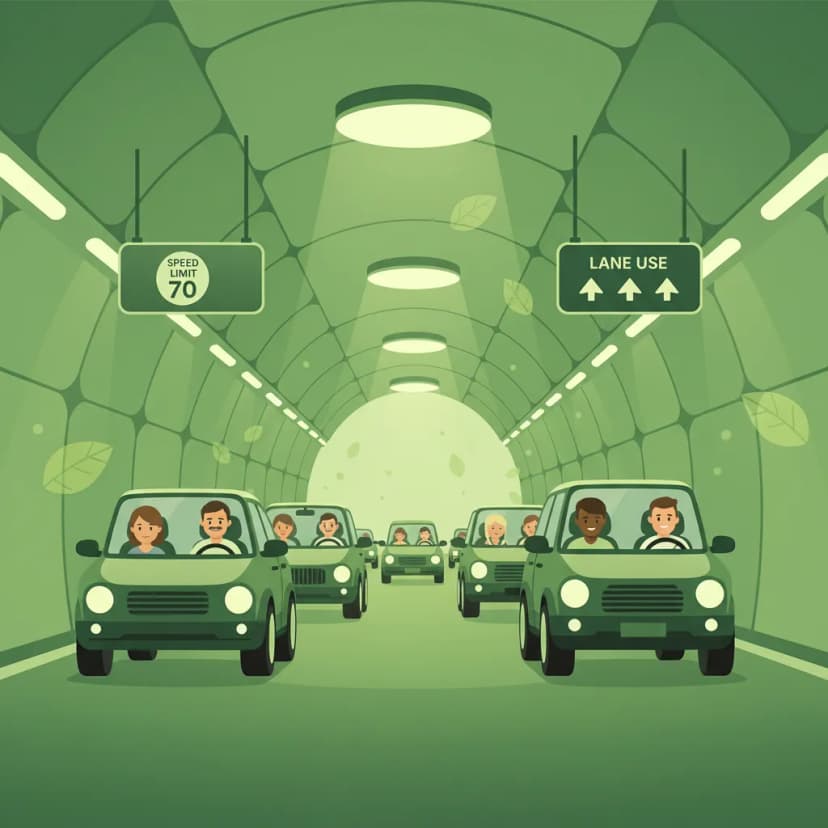
This lesson details the specific regulations ('tunnelvoorschriften') and best practices for riding through tunnels in the Netherlands. It covers key rules such as removing sunglasses before entry, maintaining a safe following distance, and understanding tunnel-specific signage and traffic lights. The curriculum also explains the location and purpose of emergency exits and refuges, and the importance of tuning into the indicated radio frequency for emergency broadcasts.
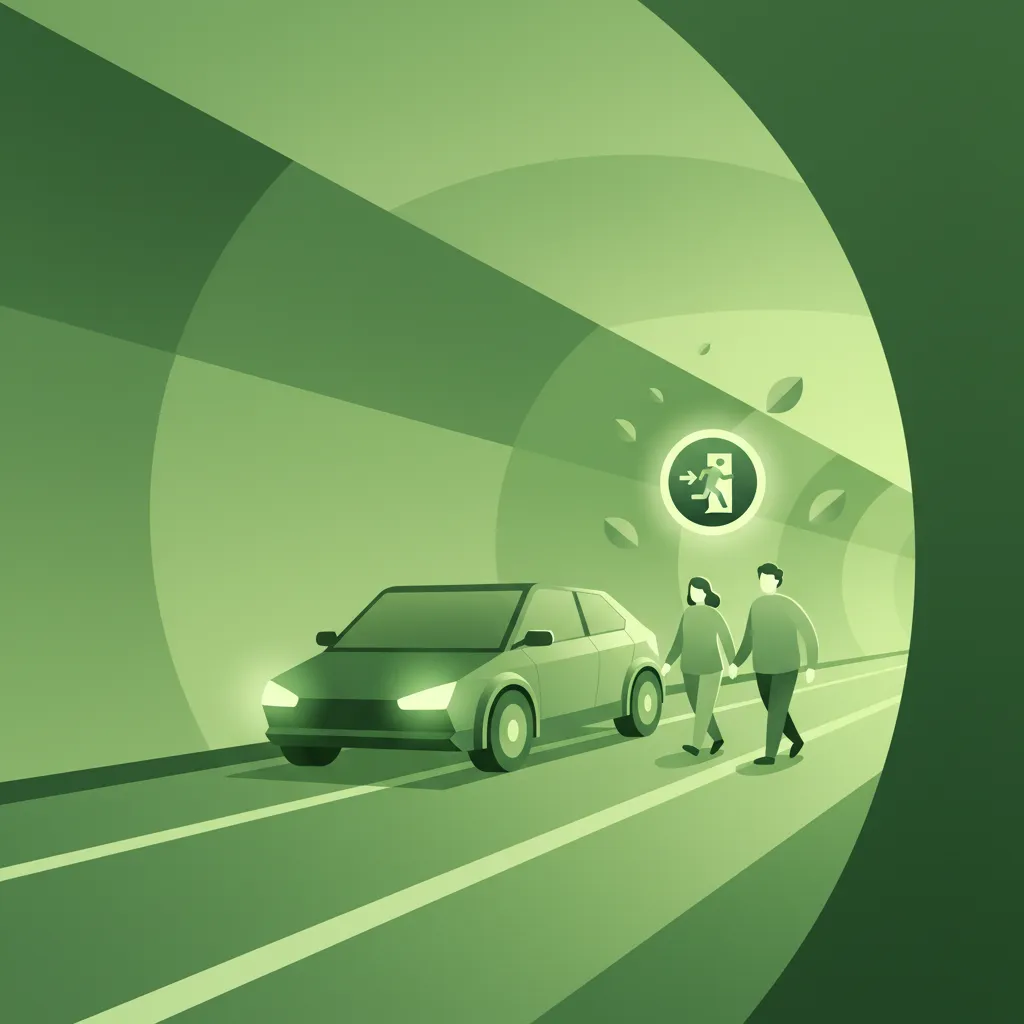
This lesson provides clear, life-saving instructions for handling an emergency stop inside a tunnel. It outlines the correct procedure: pull into an emergency bay if possible, activate hazard lights, turn off the engine, and leave the key. The content emphasizes the importance of moving to a safe location, using the emergency telephones to report the incident, and following all instructions from tunnel operators, including evacuation procedures if necessary.
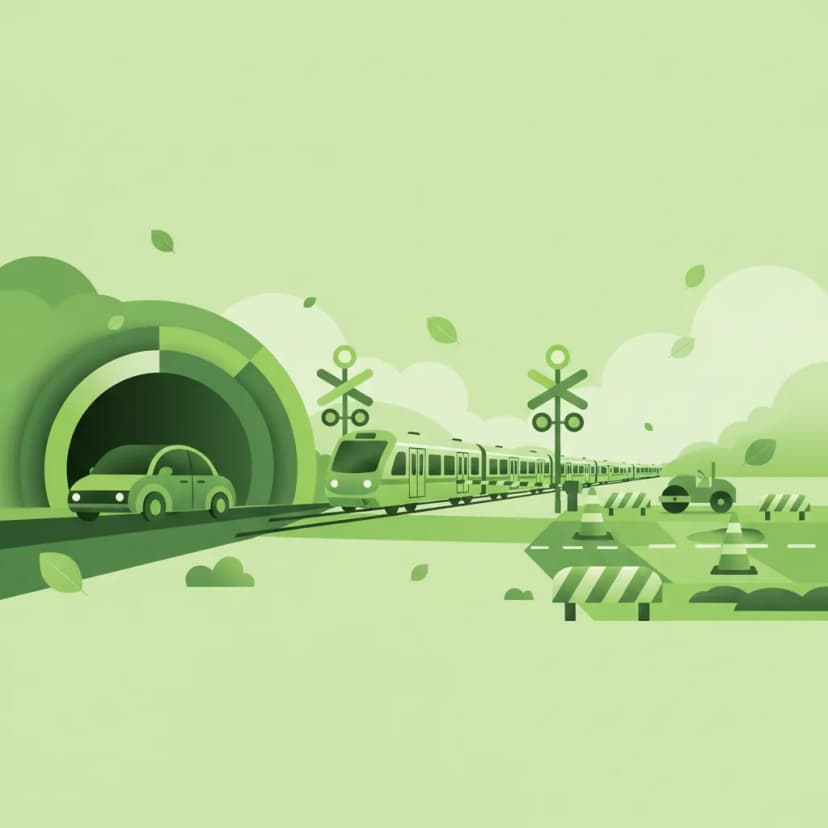
This lesson equips you with the knowledge to safely navigate special traffic situations. It covers the rules for riding through tunnels, including mandatory lighting, and the absolute priority of trains at level crossings, indicated by warning lights and barriers. You will also learn to recognize and react to the temporary signage and altered lane configurations typically found in road work zones, ensuring you can adapt your riding to maintain safety in these potentially hazardous environments.
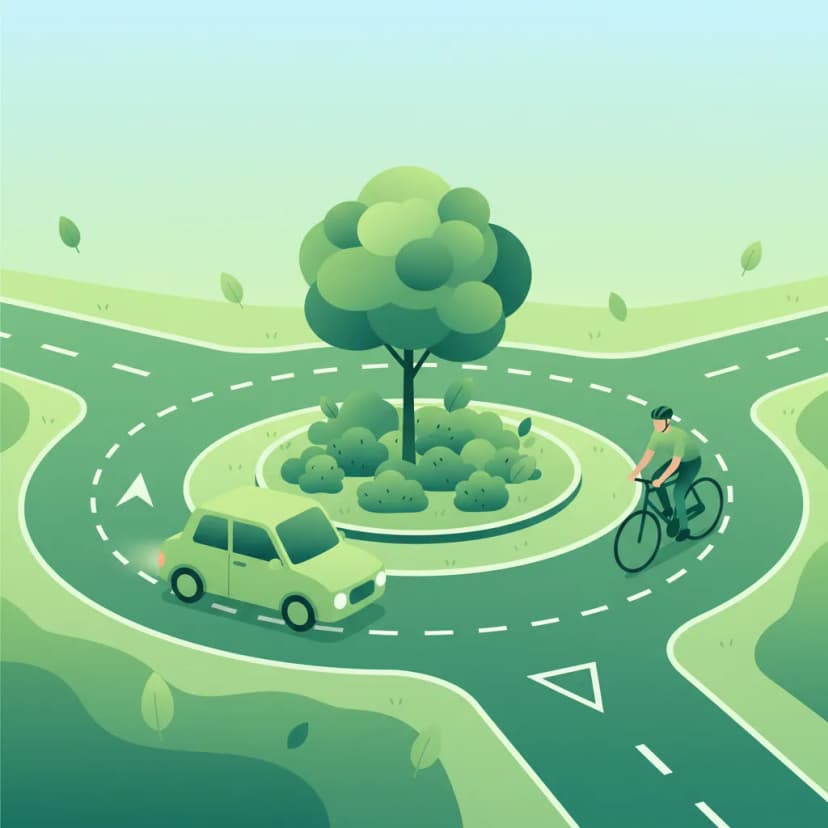
This lesson delves into the hierarchy of priority rules on Dutch roads, clarifying who has the right-of-way in various intersection scenarios. It explains the meaning of signs like 'voorrangsweg' and road markings such as shark's teeth ('haaientanden'). Special attention is given to the correct procedure for entering, navigating, and exiting roundabouts on a motorcycle, including proper signaling and lane choice to ensure safe and efficient passage.
This lesson covers the mandatory lighting and signaling equipment for A2 motorcycles under Dutch law, ensuring you remain visible and communicate your intentions correctly. You will learn the rules for using headlights, taillights, turn signals, and brake lights in various conditions, including daytime and adverse weather. The content also addresses the importance of maintaining this equipment and using hand signals as a valid secondary method of communication in traffic.
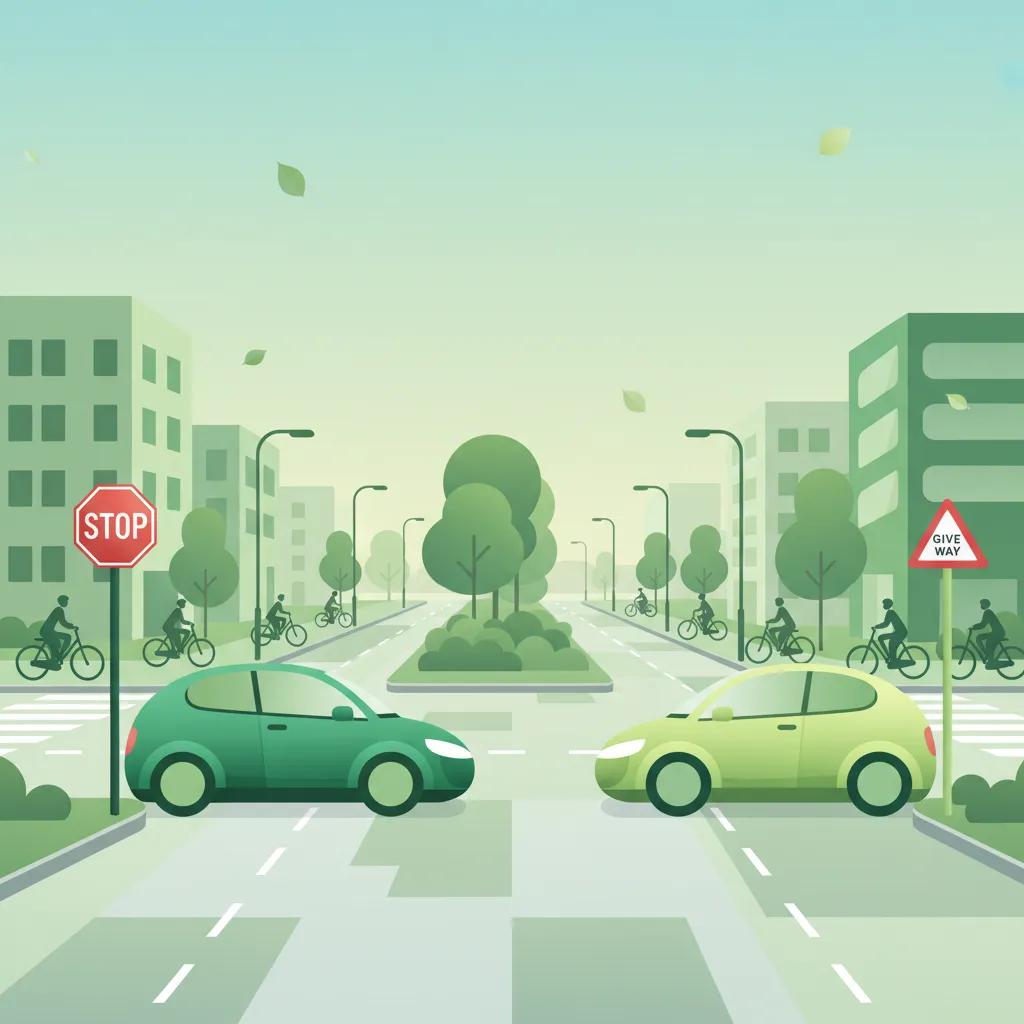
This lesson details the specific actions required at intersections controlled by 'Stop' and 'Give Way' signs. You will learn the legal requirement to come to a complete stop at a stop line (BORD 44) and the obligation to yield to all crossing traffic when encountering give-way markings ('haaientanden'). The content covers safe approach speeds and effective scanning techniques for motorcyclists to accurately assess gaps in traffic before proceeding.
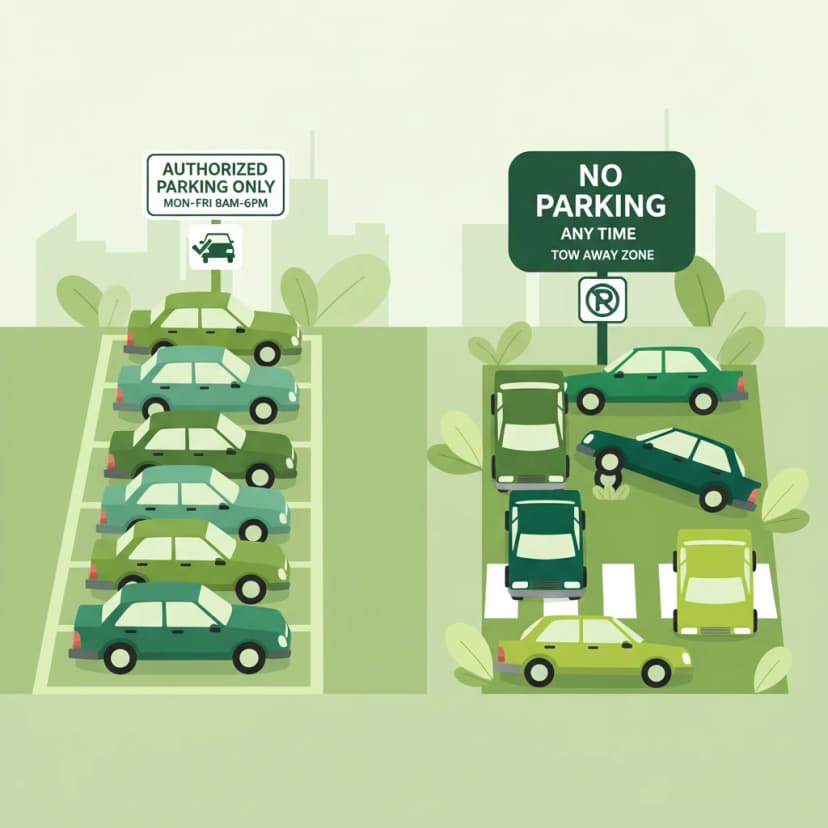
This lesson clarifies the legal distinction between stopping (briefly, while the driver remains with the vehicle) and parking (leaving the vehicle). You will learn to recognize signs and road markings, such as yellow lines, that indicate where stopping or parking is prohibited. The curriculum covers rules for parking in designated zones, such as blue zones requiring a parking disc, and provides a list of locations where parking is always forbidden, for example, on a cycle path or too close to an intersection.

This lesson provides a step-by-step guide to executing a safe and legal overtaking maneuver. It covers the entire process: assessing the situation for a sufficient gap in oncoming traffic, performing necessary mirror and shoulder checks, signaling intent, and accelerating decisively. The lesson also highlights situations where overtaking is prohibited by law, such as before pedestrian crossings or where there are solid white lines.
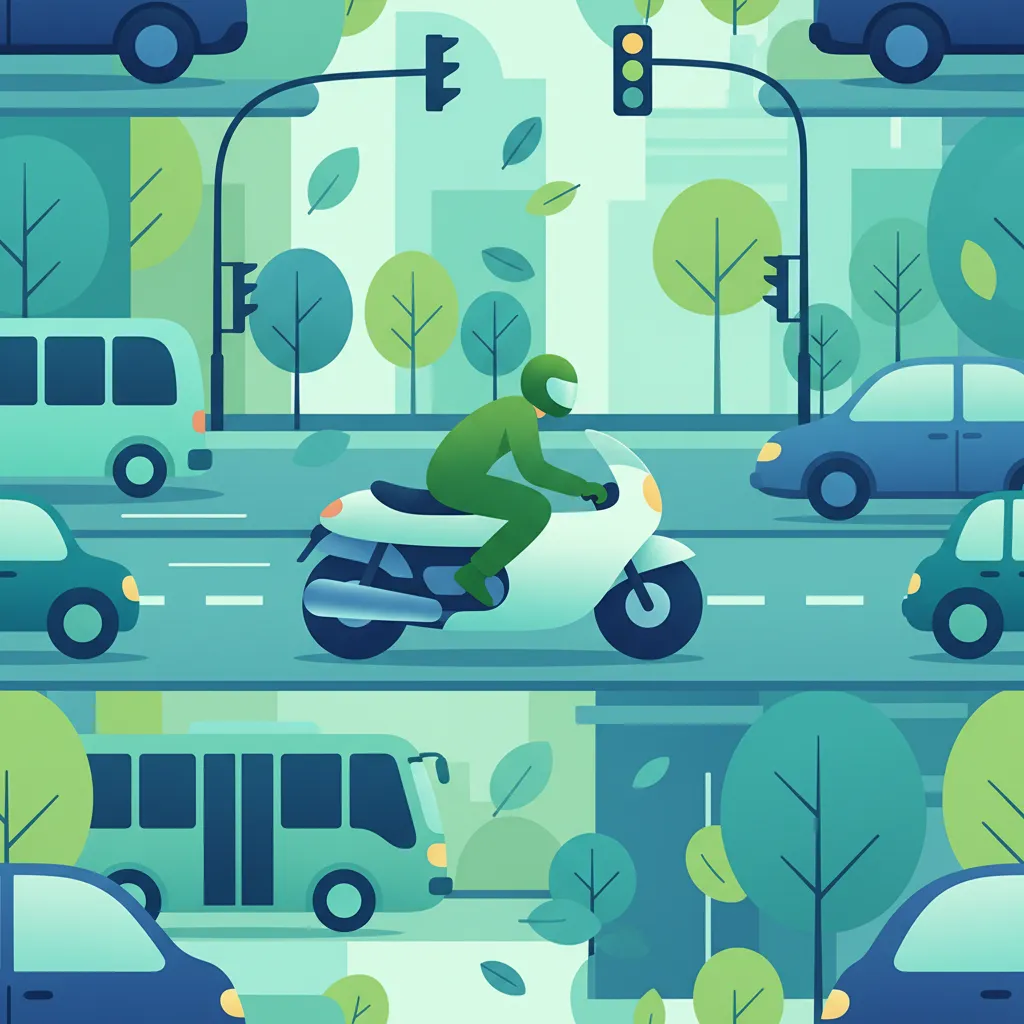
This lesson covers the universal Dutch road rules with a specific focus on their application to light motorcycles. It details the various speed limits for different road types, from urban areas to motorways, and explains the correct procedures for overtaking and lane positioning. The legal aspects of lane filtering in congestion are also examined, alongside mandatory equipment use like daytime running lights, to ensure riders can integrate safely and legally into traffic flow.

This lesson covers safety procedures for specific infrastructure. You will learn the importance of using dipped headlights in tunnels and what to do in case of a breakdown or fire inside a tunnel. The curriculum explains how to respond to the warning lights and barriers at movable bridges and railway level crossings, emphasizing that you must always stop for flashing red lights. The meaning of the St. Andrew's Crosses, indicating the number of railway tracks, is also covered.
Identify and avoid frequent violations related to motorcycle stopping and parking regulations in the Netherlands. Learn about critical errors in tunnel navigation and how to prevent fines and ensure safety based on official theory.
This lesson provides a step-by-step guide to executing a safe and legal overtaking maneuver. It covers the entire process: assessing the situation for a sufficient gap in oncoming traffic, performing necessary mirror and shoulder checks, signaling intent, and accelerating decisively. The lesson also highlights situations where overtaking is prohibited by law, such as before pedestrian crossings or where there are solid white lines.
This lesson details the specific regulations ('tunnelvoorschriften') and best practices for riding through tunnels in the Netherlands. It covers key rules such as removing sunglasses before entry, maintaining a safe following distance, and understanding tunnel-specific signage and traffic lights. The curriculum also explains the location and purpose of emergency exits and refuges, and the importance of tuning into the indicated radio frequency for emergency broadcasts.
This lesson covers the universal Dutch road rules with a specific focus on their application to light motorcycles. It details the various speed limits for different road types, from urban areas to motorways, and explains the correct procedures for overtaking and lane positioning. The legal aspects of lane filtering in congestion are also examined, alongside mandatory equipment use like daytime running lights, to ensure riders can integrate safely and legally into traffic flow.
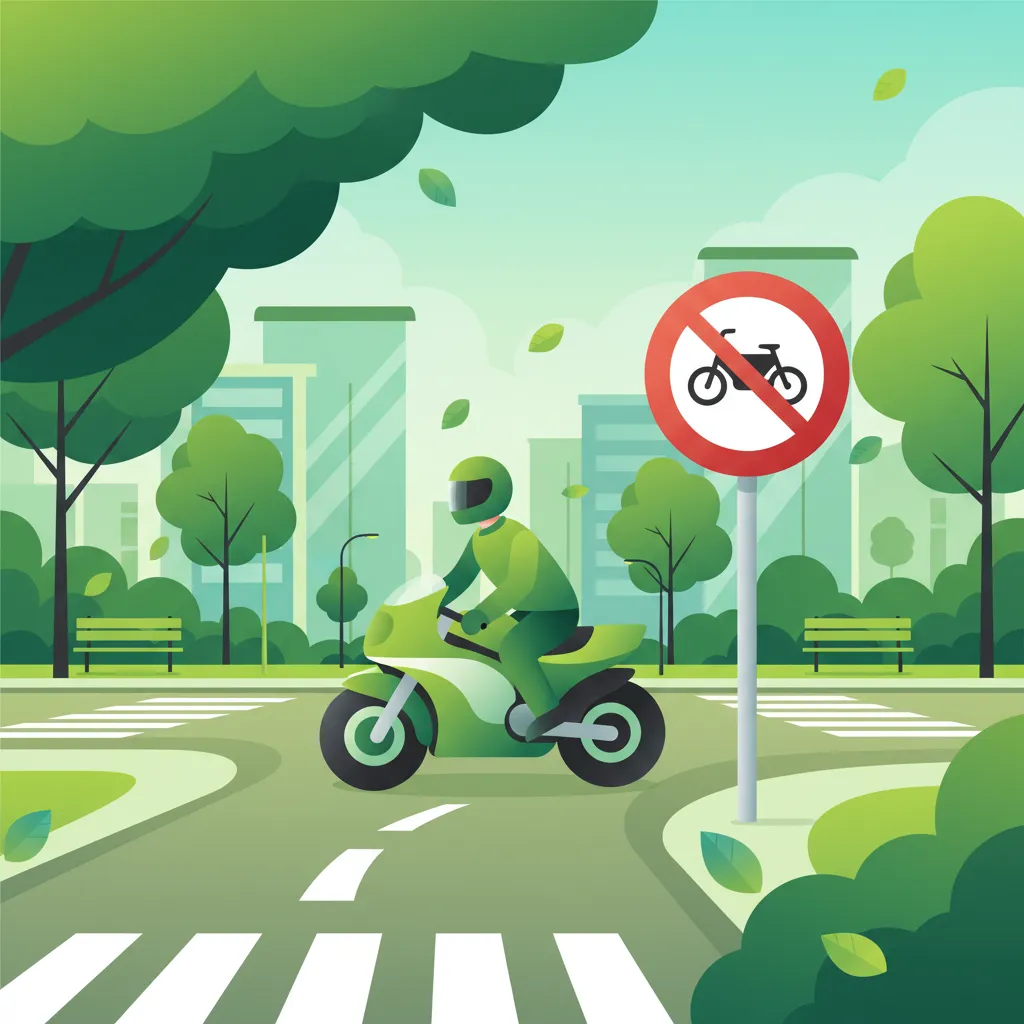
This lesson focuses on Dutch regulatory signs that enforce mandatory rules and restrictions, particularly those impacting A2 motorcyclists. You will learn to recognize and obey prohibition signs, such as those indicating a motorcycle ban (BORD 40), speed limits, and overtaking restrictions (BORD 21). The content explains the legal consequences of non-compliance and how to apply these rules in practical riding scenarios to ensure full adherence to Dutch traffic law.
This lesson delves into the hierarchy of priority rules on Dutch roads, clarifying who has the right-of-way in various intersection scenarios. It explains the meaning of signs like 'voorrangsweg' and road markings such as shark's teeth ('haaientanden'). Special attention is given to the correct procedure for entering, navigating, and exiting roundabouts on a motorcycle, including proper signaling and lane choice to ensure safe and efficient passage.
This lesson clarifies the legal distinction between stopping (briefly, while the driver remains with the vehicle) and parking (leaving the vehicle). You will learn to recognize signs and road markings, such as yellow lines, that indicate where stopping or parking is prohibited. The curriculum covers rules for parking in designated zones, such as blue zones requiring a parking disc, and provides a list of locations where parking is always forbidden, for example, on a cycle path or too close to an intersection.
This lesson details the specific actions required at intersections controlled by 'Stop' and 'Give Way' signs. You will learn the legal requirement to come to a complete stop at a stop line (BORD 44) and the obligation to yield to all crossing traffic when encountering give-way markings ('haaientanden'). The content covers safe approach speeds and effective scanning techniques for motorcyclists to accurately assess gaps in traffic before proceeding.
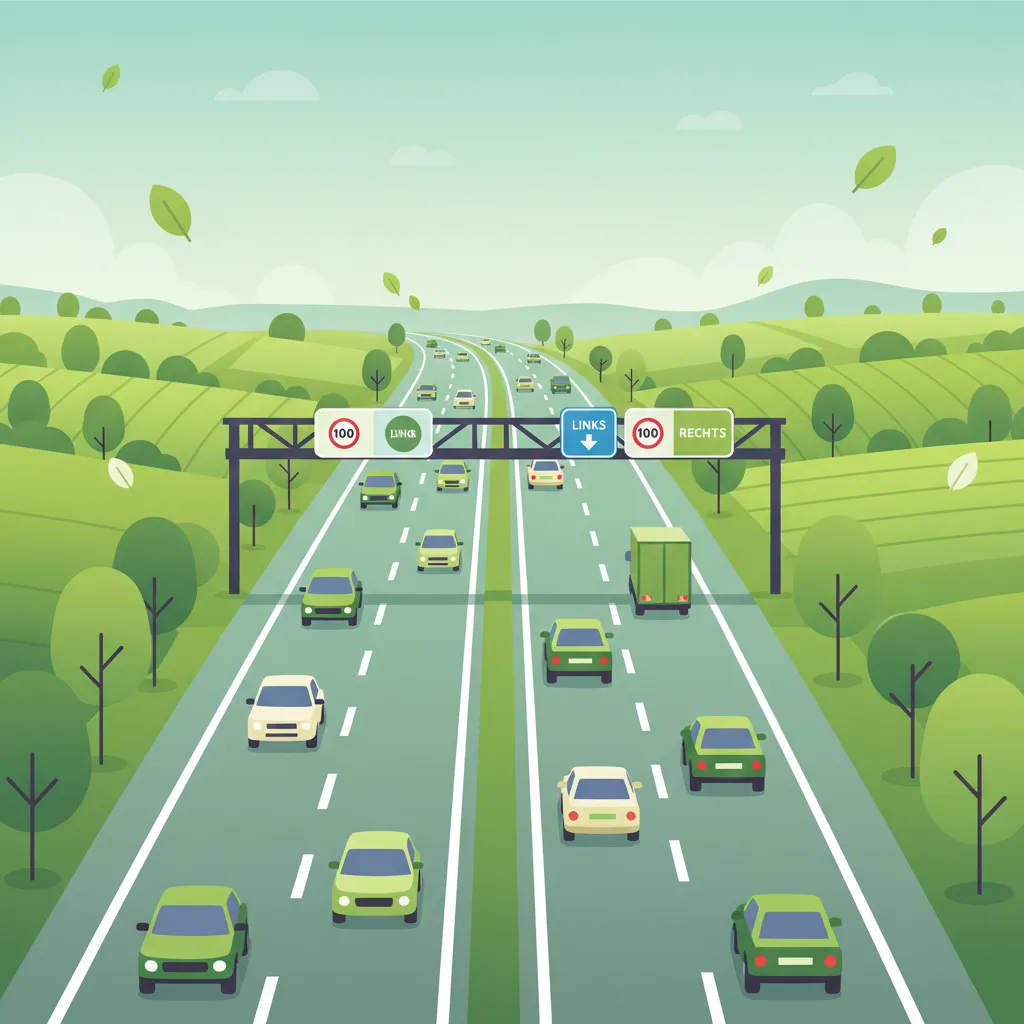
This lesson covers the specific articles of the Dutch Road Traffic Act that apply to motorways, with a primary focus on the strict rule of keeping to the rightmost available lane unless overtaking. It explains the legal and safety reasons for only passing on the left and discusses the correct positioning within a lane for maximum visibility and safety. The content also addresses the nuances of lane usage during heavy congestion, ensuring riders comply with the law and contribute to smooth traffic flow.
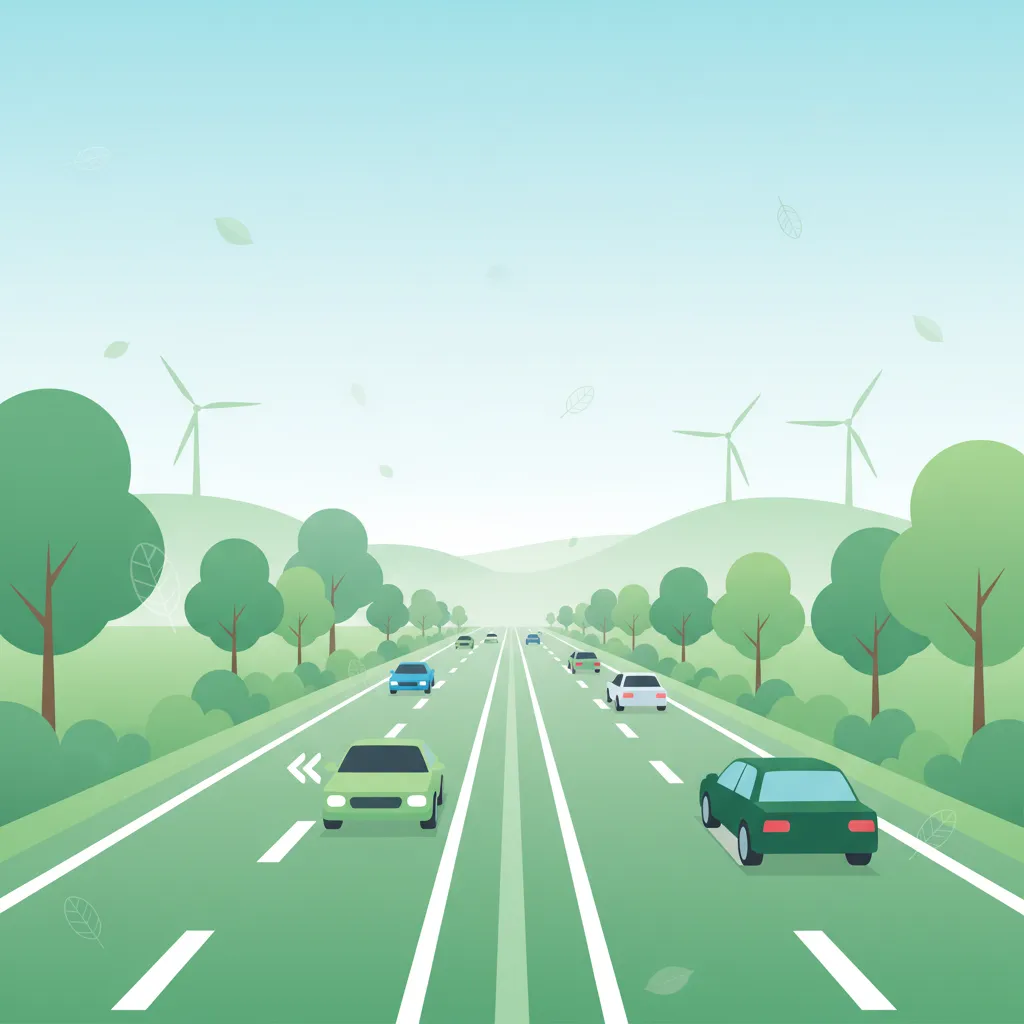
This lesson reinforces the fundamental rule of Dutch highway driving: use the rightmost lane available and use the lanes to the left only for overtaking. You will learn the complete, safe overtaking procedure: check mirrors, signal, perform a shoulder check for the blind spot, smoothly move over, accelerate past the vehicle, and then return to the right lane when safe.
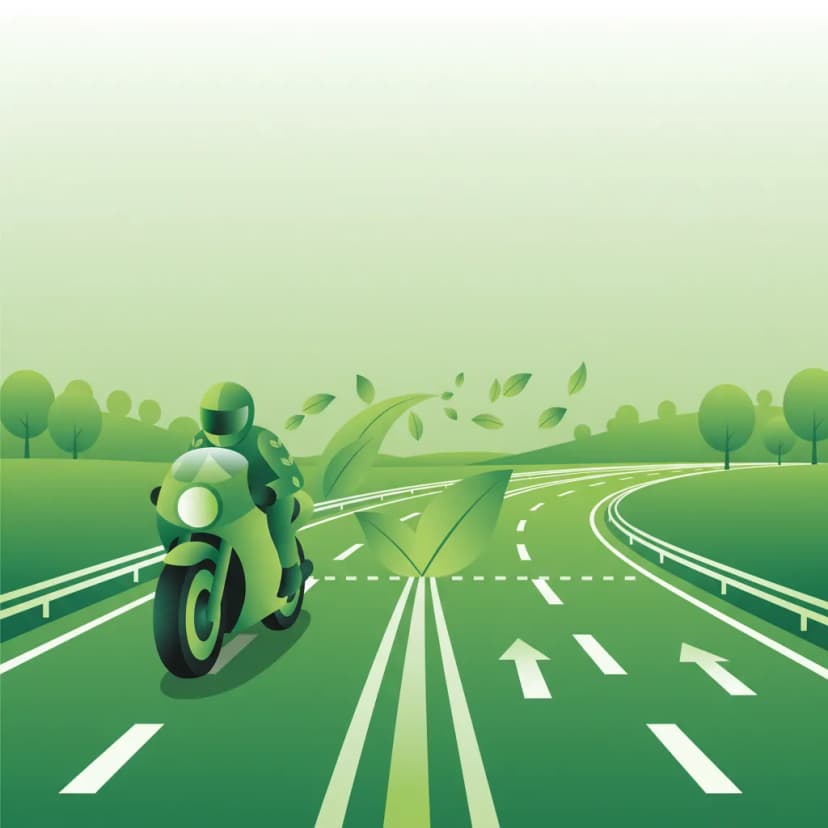
This lesson focuses on the meaning of different road markings and their implications for motorcycle lane discipline. You will learn the legal distinction between solid and broken lines regarding overtaking, how to interpret directional arrows for lane choice, and the rules for using special lanes. The content emphasizes maintaining a safe and strategic position within the lane to maximize visibility and create a safety buffer from other vehicles.
Find clear answers to common questions learners have about Stopping, Parking, and Tunnels. Learn how the lesson is structured, which driving theory objectives it supports, and how it fits into the overall learning path of units and curriculum progression in the Netherlands. These explanations help you understand key concepts, lesson flow, and exam focused study goals.
In the Netherlands, parking a motorcycle on the pavement is generally allowed if it does not obstruct pedestrians or traffic. However, specific local regulations or signs might prohibit it in certain areas. Always check for signage and ensure you leave enough space for pedestrians.
When entering a tunnel in the Netherlands, you are required to switch on your dipped headlights (dimlicht). This applies to all vehicles, including A1 motorcycles, to ensure visibility for yourself and to make you more visible to other road users within the tunnel.
If your motorcycle breaks down in a tunnel, immediately switch on your hazard warning lights. If possible, move your motorcycle to the hard shoulder or a designated emergency area. Do not attempt repairs. Exit the tunnel on foot via the emergency exits and contact emergency services from a safe location.
Yes, many Dutch cities provide designated parking spaces or bays specifically for motorcycles. These are often marked with signs indicating 'motorcycle parking'. Using these is recommended to avoid obstructing other traffic and to comply with parking regulations.
Adequate tunnel lighting is crucial for safe passage. You must use your dipped headlights to see and be seen. If the tunnel lighting is insufficient or malfunctioning, or if you feel uncomfortable with the conditions, it is safer to consider an alternative route or wait until conditions improve, especially if you are not confident with tunnel navigation.