
Navigating tunnels, level crossings, and road works requires specific knowledge to ensure safety and compliance with Dutch traffic law. This lesson focuses on these distinct traffic situations, building on your understanding of basic road rules and preparing you for the specific challenges and signage encountered in these environments.
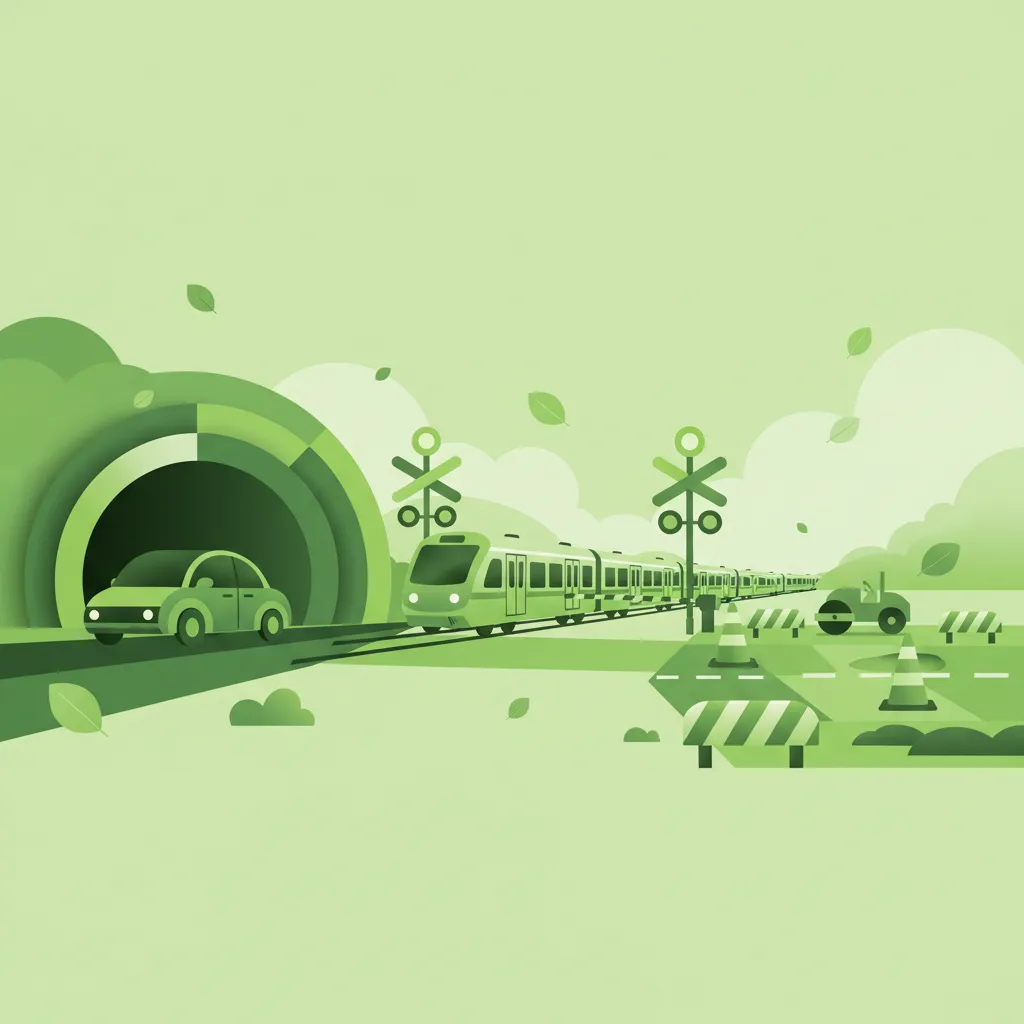
As a rider preparing for your Dutch Category AM driving license theory exam, understanding how to safely navigate special traffic situations is crucial. Tunnels, railway level crossings, and road work zones present unique challenges that differ significantly from regular road conditions. These environments often have reduced visibility, altered road geometry, and specific right-of-way rules. Mastering the rules and recommended behaviours for these zones is essential to ensure your safety and compliance with Dutch traffic law.
These specific environments are defined by temporary or controlled conditions that modify standard roadway expectations. Your ability to adapt and respond correctly in these situations is a key aspect of safe riding.
The inherent risks in tunnels, at level crossings, and within road work zones stem from several factors:
Always anticipate that conditions may change rapidly in these zones. Stay alert and be prepared to adjust your speed and riding behaviour at a moment's notice.
This lesson connects directly to fundamental concepts learned in other parts of your Dutch driving license theory course. It builds upon your understanding of basic traffic signs and signals (Lesson 3), general right-of-way principles (Lesson 4), and speed limits specific to Category AM vehicles (Lesson 2.2), applying them to complex, real-world scenarios.
Tunnels are enclosed passages that guide traffic under obstructions such as rivers, hills, or other roads. While they offer a direct route, they also present challenges due to reduced light and confined spaces.
A permanently constructed underground or covered passage designed for vehicular traffic, which may also be shared with cyclists or pedestrians.
One of the most critical rules when entering a tunnel is the activation of your vehicle's lights.
Rule: Your low-beam headlights (dimlicht) must be switched on before entering any tunnel and must remain on until you have fully exited. This rule applies regardless of the time of day or how bright it appears outside the tunnel.
Rationale: The sudden change in light levels upon entering a tunnel can temporarily impair your vision. More importantly, ensuring your headlights are on makes your moped or scooter visible to other road users, both from the front and through their rear-view mirrors. This significantly reduces the risk of collisions.
Do not use your high-beam headlights (grootlicht) inside a tunnel. High-beams can cause severe glare and temporary blindness for oncoming drivers and those you are following, especially when reflecting off tunnel walls.
Even if your moped or scooter has an automatic lighting system, it is your responsibility to ensure the lights are activated. Manually switch them on if the automatic system doesn't engage immediately.
Tunnels often have specific speed limits that may be lower than the general road speed limit. For Category AM vehicles, tunnel speed limits are frequently set at 30 km/h unless otherwise indicated by signage.
Speed Adaptation: Always observe and adhere to the posted speed limits inside tunnels. These limits are set to provide adequate reaction time and stopping distance in a restricted environment. Remember, even if no explicit speed limit sign is present, you must adjust your speed to what is safe and appropriate for the conditions, which often means slower than usual.
Overtaking: Overtaking other vehicles in tunnels is generally restricted and often prohibited.
Rule: Overtaking is only permitted in a tunnel if the lane markings clearly indicate a passing lane (e.g., a broken white line allowing lane changes). If there is a solid white line or a double solid line, overtaking is strictly forbidden.
Rationale: Limited visibility, confined space, and potential for moisture on the road surface make overtaking manoeuvres particularly hazardous in tunnels. Maintaining a safe following distance of at least a two-second gap is crucial to allow for sudden braking by the vehicle ahead.
While rare, emergencies can occur in tunnels. Knowing how to react is vital.
Breakdown or Accident: If your vehicle breaks down or you are involved in a minor accident within a tunnel:
alarmlichten).Never stop in the middle of a traffic lane in a tunnel unless absolutely forced to do so by an immediate danger. Your primary goal is to clear the path for other vehicles and emergency services.
A railway level crossing, also known as a railroad crossing, is any intersection where a road and a railway track meet at the same level. These are inherently dangerous points where road users must yield unconditionally to trains.
An intersection where a road crosses a railway track at the same level, protected by various warning devices such as lights, barriers, or signs.
Level crossings are equipped with warning devices designed to alert road users to an approaching train. It is imperative to understand and react correctly to these signals:
Andreaskruis (St. Andrew's Cross) signs, which indicate a crossing with single or multiple tracks.Rule: Trains have absolute priority at all level crossings. When any warning device is active – including flashing red lights, lowered or lowering barriers, or audible alarms – you must stop at the designated stopping line (stopstreep) on the road.
Do not proceed if you hear an audible warning, even if you cannot yet see a train or if the barriers have not fully lowered. Trains can appear suddenly and move at very high speeds.
The stopping line is positioned to ensure a safe distance from the tracks. Crossing this line while warnings are active is a serious violation and extremely dangerous.
Once a train has passed, do not proceed immediately.
Rule: You must wait until the barriers are fully raised and the flashing red lights have completely ceased before moving forward.
Rationale: Sometimes, another train might be approaching from the opposite direction, or there could be a malfunction. Waiting for the signals to clear completely ensures that all immediate danger has passed. Never try to weave around lowering barriers or rush across if the signals just start to clear.
Road work zones, also known as construction areas, are segments of road where maintenance, repairs, or upgrades are being carried out. These zones are characterized by temporary signage, markings, and sometimes physical barriers.
A section of roadway where temporary construction or maintenance activities are taking place, indicated by provisional traffic signs, lane alterations, and sometimes physical barriers.
One of the fundamental principles of driving in a road work zone is that all temporary signs, markings, and signals installed for the duration of the work are legally binding. They override any permanent signs or markings that may be present.
Legal Weight: Temporary traffic signs typically have an orange background or are placed on temporary stands. These signs carry the same legal authority as permanent signs. It is your duty to recognize and obey them.
Road work zones often feature reduced speed limits and altered lane configurations to ensure the safety of both road users and construction workers.
Speed Adaptation: Temporary speed limits are common in work zones and can be significantly lower than the usual speed limit for that road. Always reduce your speed to the limit indicated by the temporary signage, typically ranging from 20 to 40 km/h. If no explicit limit is posted but conditions warrant it (e.g., narrow lanes, debris, workers nearby), reduce your speed to a safe level.
Lane Discipline: Road work zones frequently involve lane reductions, closed lanes, or diversions.
Rule: You must strictly follow any temporary lane markings, cone placements, or directional arrows. Stay within the indicated lane, even if the physical road appears wider or the adjacent lane seems empty. These markings are in place to guide traffic safely around the work area and protect workers.
In road work zones, always maintain a greater following distance than usual. Road surfaces can be uneven, and construction vehicles may enter or exit lanes unexpectedly.
No Overtaking: Overtaking is generally prohibited in road work zones unless explicitly permitted by specific lane markings or signs. Signs like the A23 "No Overtaking" sign are often displayed.
Workers on a construction site are vulnerable. Your actions directly impact their safety.
Yield to Workers: Be prepared to yield to workers who may need to temporarily enter your lane or cross the road. Their presence indicates a high-risk area.
Awareness of Equipment: Construction sites often have heavy machinery, loose materials, and uneven surfaces. Ride cautiously, anticipating sudden movements from equipment or debris on the road.
The rules governing traffic behaviour in tunnels, at level crossings, and in road work zones are primarily codified in the Dutch Road Traffic Regulations (RVV 1990). Familiarity with these articles is essential for all drivers.
Failing to adhere to the specific rules in these environments can lead to serious consequences, from fines to fatal collisions.
Safe riding requires constant adaptation to changing circumstances.
Understanding the specific terminology associated with these environments is key to comprehension and successful exam preparation.
Effectively navigating tunnels, level crossings, and road work zones is not merely about adhering to rules; it's about understanding the underlying safety principles. Mandatory illumination in tunnels ensures visibility, absolute train priority at crossings prevents catastrophic accidents, and strict adherence to temporary traffic management in work zones protects vulnerable workers and maintains orderly flow.
By consistently applying these principles, Category AM riders can significantly reduce risks, ensure legal compliance, and contribute to safer Dutch roads for everyone. The knowledge gained here is fundamental and will serve as a strong foundation for more advanced topics in hazard perception and defensive riding throughout your driving theory course.
To deepen your understanding and prepare for your theory exam, explore these related topics and practice questions.
Lesson content overview
Explore all units and lessons included in this driving theory course.
Explore search topics learners often look for when studying Tunnels, Level Crossings, and Road Works. These topics reflect common questions about road rules, driving situations, safety guidance, and lesson level theory preparation for learners in the Netherlands.
Browse additional driving theory lessons that cover connected traffic rules, road signs, and common driving situations related to this topic. Improve your understanding of how different rules interact across everyday traffic scenarios.
Understand the specific Dutch traffic laws and safety protocols for navigating tunnels, railway level crossings, and road work zones. Learn essential theory for safe passage and hazard avoidance in these critical areas, crucial for your CBR AM exam.

This lesson covers safety procedures for specific infrastructure. You will learn the importance of using dipped headlights in tunnels and what to do in case of a breakdown or fire inside a tunnel. The curriculum explains how to respond to the warning lights and barriers at movable bridges and railway level crossings, emphasizing that you must always stop for flashing red lights. The meaning of the St. Andrew's Crosses, indicating the number of railway tracks, is also covered.
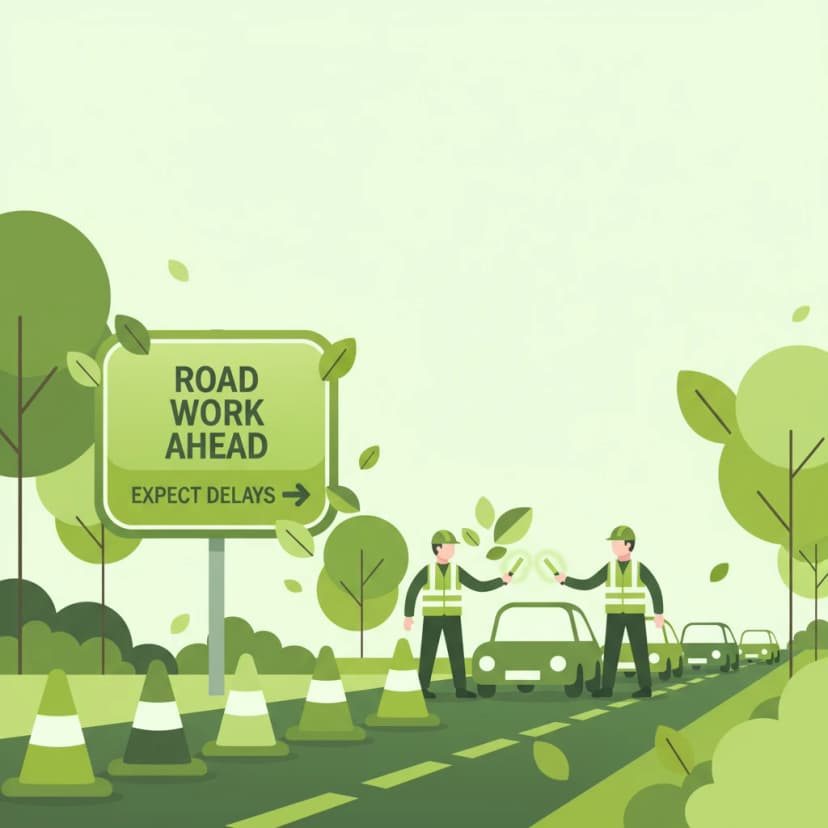
This lesson prepares you for encountering road works, a common feature on any road network. You will learn that signs and markings related to road works are often yellow and that they temporarily override permanent white markings and signs. The curriculum stresses the importance of adhering to temporary speed limits, being alert for workers and machinery, and navigating narrowed lanes. It also covers how to follow diversion routes ('omleiding') and obey instructions given by traffic controllers.
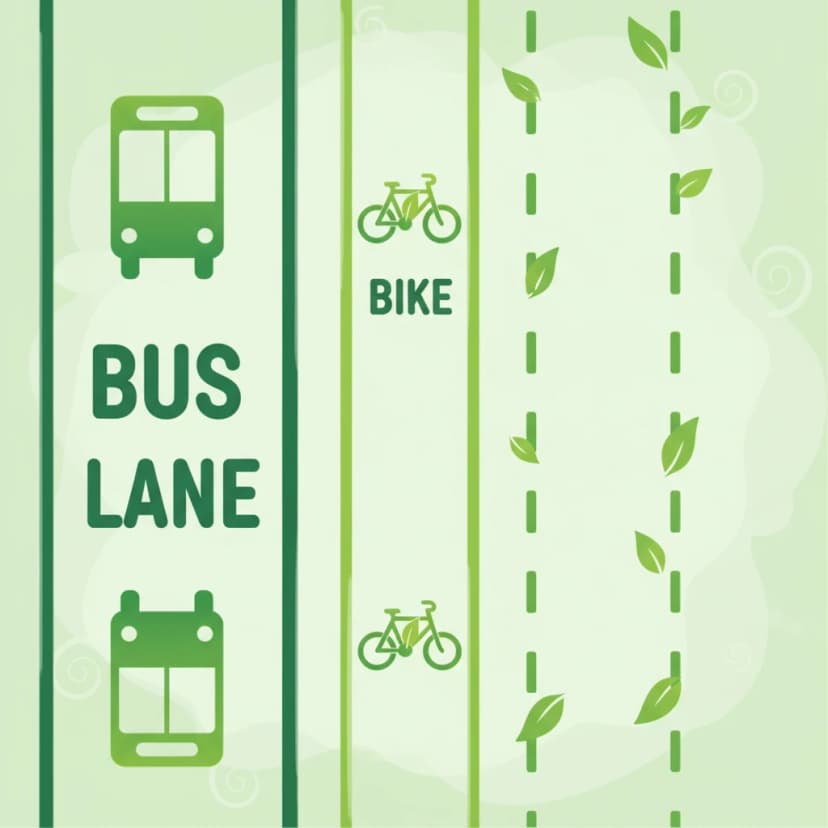
This lesson covers a variety of lanes and markings with specific rules. You will learn to recognize and respect bus lanes, which are reserved for public transport, and rush-hour lanes (spitsstrook), which are only open during busy periods as indicated by electronic signs. The curriculum also explains the meaning of different line types (solid, broken, double lines) that dictate whether lane changes or overtaking are permitted. Understanding these special lanes and markings is key to navigating Dutch infrastructure correctly.
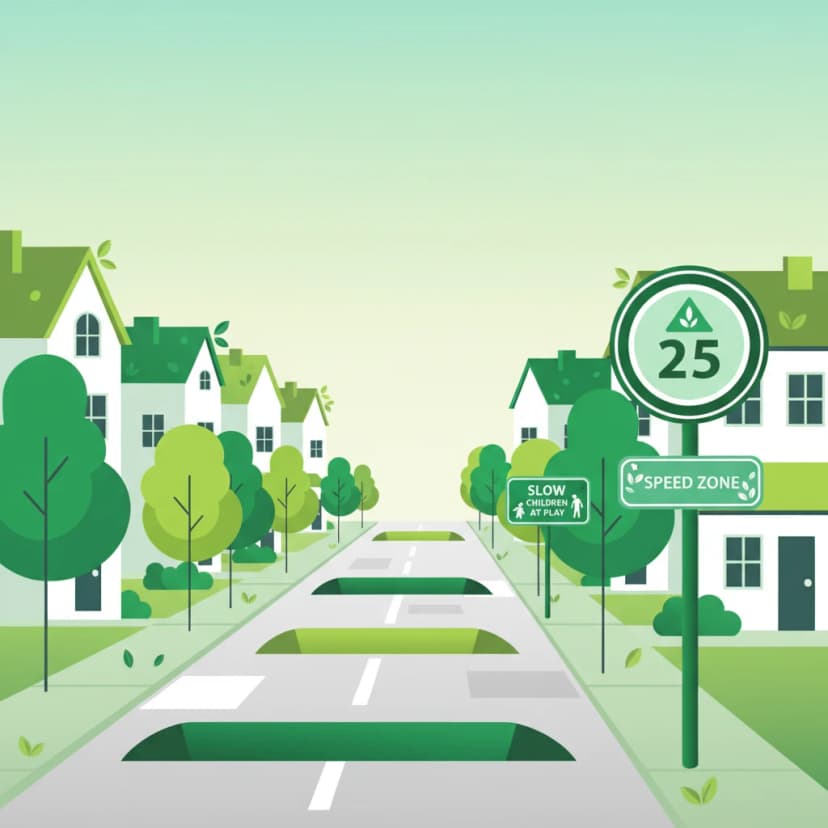
This lesson explains speed limits in specially designated zones designed to protect vulnerable road users. You will learn the rules of a 'woonerf' (home zone), where the speed limit is walking pace (max 15 km/h) and pedestrians can use the full width of the road. The content also covers 30 km/h zones, common in residential areas and around schools, which are often enforced through road design like speed bumps. Understanding the purpose and rules of these zones is key to driving responsibly in urban environments.
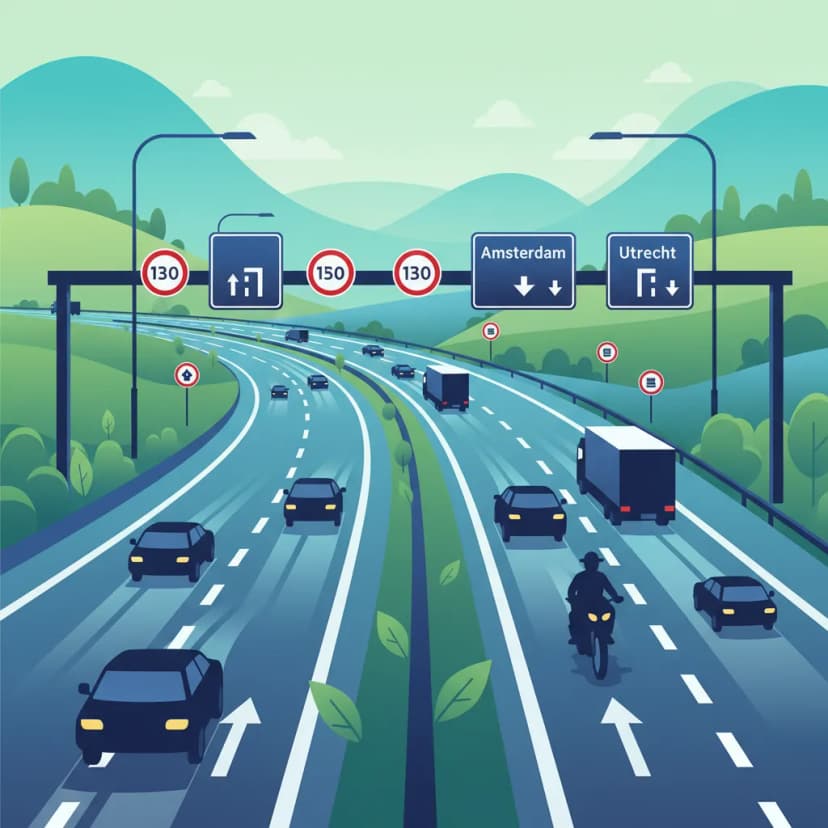
This lesson details the specific regulations for driving on Dutch motorways, identifiable by the G1 sign. You will learn the correct procedure for joining the flow of traffic using the acceleration lane and for leaving via the deceleration lane. The curriculum reinforces the 'keep right unless overtaking' rule for lane discipline. It also explains that stopping is strictly forbidden, and the hard shoulder (vluchtstrook) may only be used for genuine emergencies.
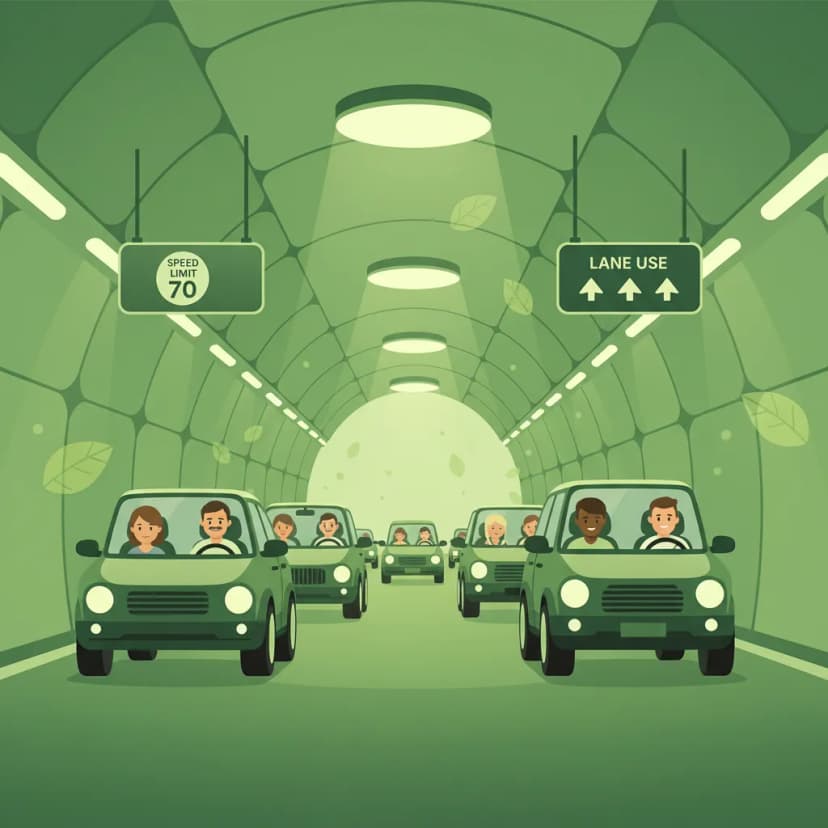
This lesson details the specific regulations ('tunnelvoorschriften') and best practices for riding through tunnels in the Netherlands. It covers key rules such as removing sunglasses before entry, maintaining a safe following distance, and understanding tunnel-specific signage and traffic lights. The curriculum also explains the location and purpose of emergency exits and refuges, and the importance of tuning into the indicated radio frequency for emergency broadcasts.
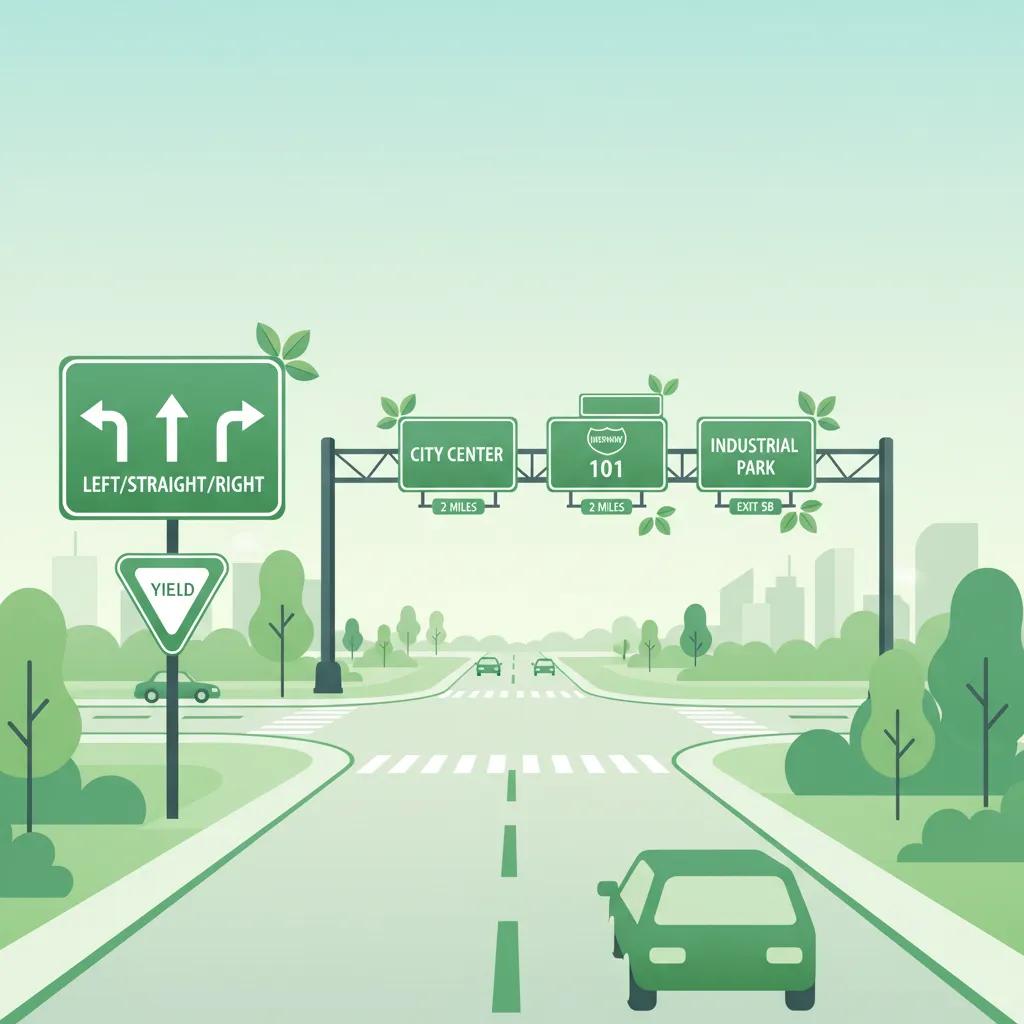
This lesson focuses on the array of signs used to manage traffic at intersections and along multi-lane roads. You will learn to interpret overhead gantry signs, lane designation signs, and markings that guide drivers into the correct lane for their intended direction. The curriculum covers signs indicating priority at upcoming junctions, such as the B3 and B4 signs, which clarify right-of-way rules in complex scenarios. Proper interpretation of these signs is essential for smooth lane changes, efficient navigation, and preventing conflicts at junctions.
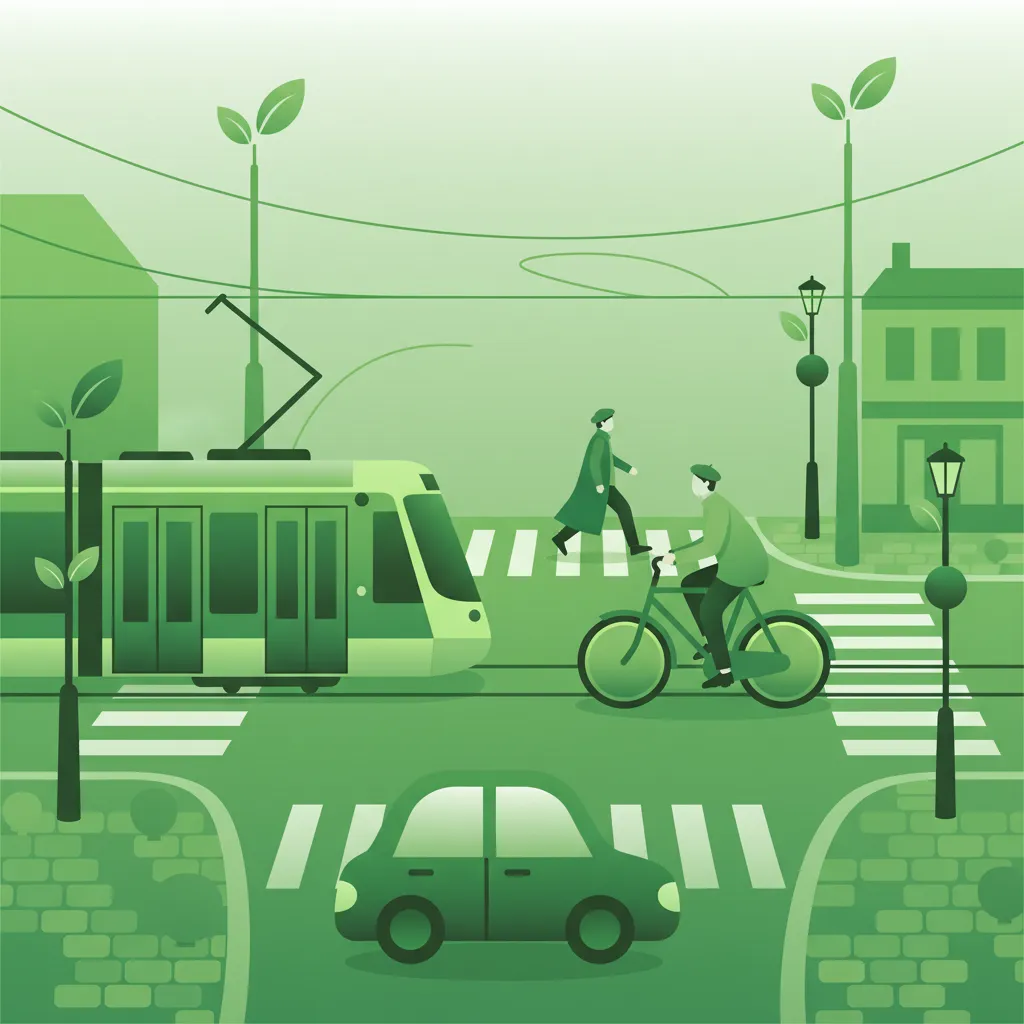
This lesson addresses special situations where standard priority rules are superseded. You will learn the absolute priority of emergency vehicles using sirens and flashing lights, and the correct procedure for giving them way safely. The content also explains the specific priority rules for trams, which often have right-of-way over other traffic, as well as for military columns and official funeral processions. Furthermore, the lesson reinforces the rules for yielding to pedestrians at designated zebra crossings.

This lesson prepares riders for navigating the unique challenges of construction zones and temporary road layouts. It covers the identification of orange-colored temporary signs, understanding detour (omleiding) routes, and adhering to reduced speed limits. Special attention is given to the hazards common in work zones, such as loose gravel, uneven surfaces, and the presence of workers, emphasizing the need for heightened awareness and caution.

This lesson clarifies the specific Dutch regulations concerning stopping and parking for motorcycles, including designated parking bays and rules for parking on pavements. It also covers the mandatory procedures for safely navigating tunnels, such as required lighting, lane discipline, and actions to take during a breakdown or emergency. By understanding these rules, riders can avoid fines and navigate these specific traffic situations with confidence.
Focus on recognizing and managing the unique hazards present in Dutch tunnels, level crossings, and road work zones. This lesson explains how to adapt your behaviour to ensure safety and compliance with traffic regulations for your theory exam.
This lesson covers safety procedures for specific infrastructure. You will learn the importance of using dipped headlights in tunnels and what to do in case of a breakdown or fire inside a tunnel. The curriculum explains how to respond to the warning lights and barriers at movable bridges and railway level crossings, emphasizing that you must always stop for flashing red lights. The meaning of the St. Andrew's Crosses, indicating the number of railway tracks, is also covered.
This lesson prepares you for encountering road works, a common feature on any road network. You will learn that signs and markings related to road works are often yellow and that they temporarily override permanent white markings and signs. The curriculum stresses the importance of adhering to temporary speed limits, being alert for workers and machinery, and navigating narrowed lanes. It also covers how to follow diversion routes ('omleiding') and obey instructions given by traffic controllers.
This lesson details the specific regulations ('tunnelvoorschriften') and best practices for riding through tunnels in the Netherlands. It covers key rules such as removing sunglasses before entry, maintaining a safe following distance, and understanding tunnel-specific signage and traffic lights. The curriculum also explains the location and purpose of emergency exits and refuges, and the importance of tuning into the indicated radio frequency for emergency broadcasts.
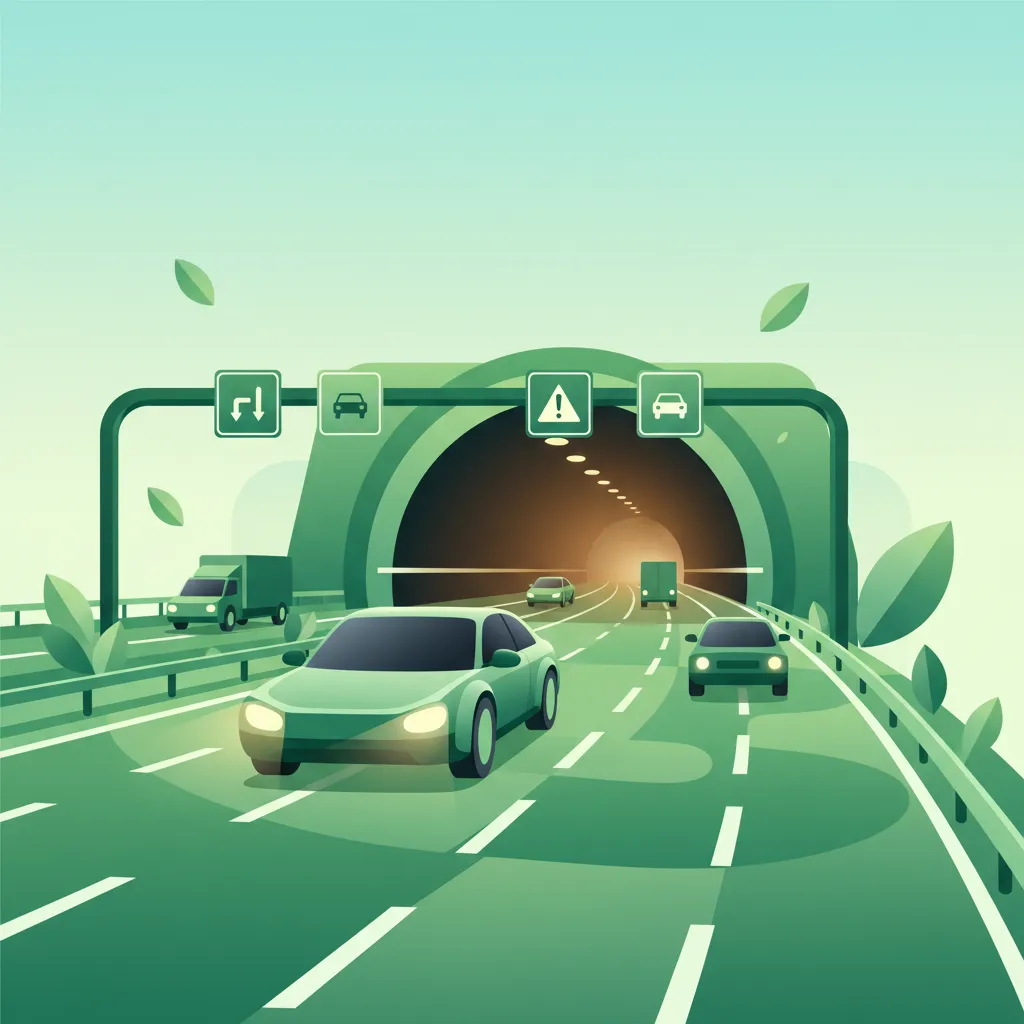
This lesson transitions hazard perception skills to the high-speed environment of motorways and tunnels. It covers specific risks such as vehicles merging at different speeds, sudden braking and congestion ahead, road debris, and the aerodynamic effects of crosswinds and large trucks. The curriculum also addresses the challenges of riding in tunnels, including changes in light and surface conditions, and the importance of identifying emergency exits and procedures in case of an incident.

This lesson focuses on the use of specialized lights for specific situations. You will learn the strict conditions under which fog lights may be used: the rear fog light is only permitted when visibility from fog or snow is less than 50 meters, and not in rain. The lesson also explains the correct use of hazard warning lights, which are intended to warn other drivers of a stationary obstruction (like a breakdown or the tail end of a sudden traffic jam) or while being towed.
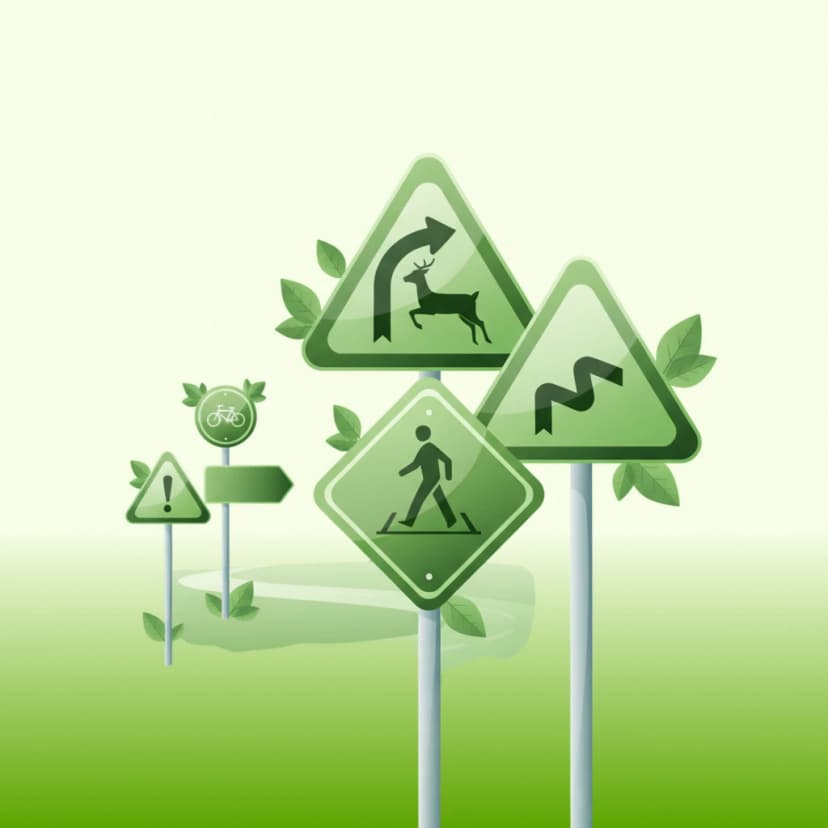
This lesson introduces warning signs, which are designed to alert drivers to potential dangers or changes in road layout ahead. You will learn to interpret the triangular-shaped signs that indicate hazards such as sharp curves, slippery road surfaces (J27), or upcoming road works (J8). The curriculum explains how these signs help in anticipating risks and adjusting driving behavior accordingly, such as reducing speed or increasing alertness. A thorough understanding of warning signs is vital for proactive and defensive driving in various environments.
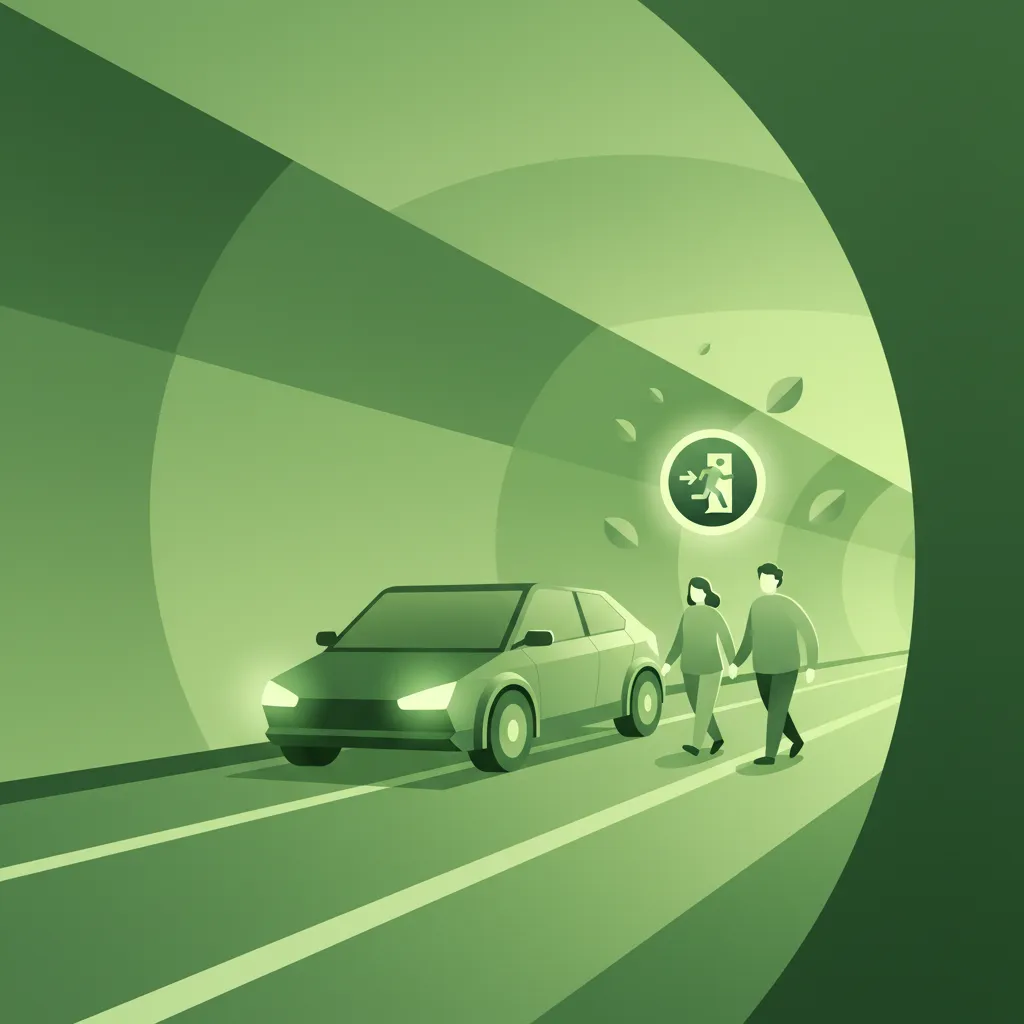
This lesson provides clear, life-saving instructions for handling an emergency stop inside a tunnel. It outlines the correct procedure: pull into an emergency bay if possible, activate hazard lights, turn off the engine, and leave the key. The content emphasizes the importance of moving to a safe location, using the emergency telephones to report the incident, and following all instructions from tunnel operators, including evacuation procedures if necessary.

This lesson covers the full range of lights and signals required on a vehicle for visibility and communication. You will learn about the mandatory requirements for headlights, taillights, brake lights, indicators, and reflectors. The curriculum emphasizes the driver's legal responsibility to ensure all lights are clean and functional before every journey. The correct use and function of the horn as an audible warning device in case of imminent danger are also explained.
This lesson details the specific regulations for driving on Dutch motorways, identifiable by the G1 sign. You will learn the correct procedure for joining the flow of traffic using the acceleration lane and for leaving via the deceleration lane. The curriculum reinforces the 'keep right unless overtaking' rule for lane discipline. It also explains that stopping is strictly forbidden, and the hard shoulder (vluchtstrook) may only be used for genuine emergencies.
This lesson clarifies the specific Dutch regulations concerning stopping and parking for motorcycles, including designated parking bays and rules for parking on pavements. It also covers the mandatory procedures for safely navigating tunnels, such as required lighting, lane discipline, and actions to take during a breakdown or emergency. By understanding these rules, riders can avoid fines and navigate these specific traffic situations with confidence.
Find clear answers to common questions learners have about Tunnels, Level Crossings, and Road Works. Learn how the lesson is structured, which driving theory objectives it supports, and how it fits into the overall learning path of units and curriculum progression in the Netherlands. These explanations help you understand key concepts, lesson flow, and exam focused study goals.
In Dutch tunnels, it is mandatory to use your vehicle's dipped headlights (dimlicht) for improved visibility, both for yourself and for other road users. Even during daytime, ensure your lights are switched on to be seen clearly.
Flashing red lights at a level crossing indicate that a train is approaching and that you must stop immediately. You must not attempt to cross, even if you cannot see a train, until the lights have stopped flashing and any barriers are fully raised.
When approaching road works, pay close attention to temporary signs and traffic controllers. Reduce your speed, be prepared for lane diversions or temporary closures, and maintain extra vigilance for workers and equipment. Always follow the indicated diversions or new lane markings.
Generally, yes. For most tunnels open to AM category vehicles, lighting requirements apply. However, always check specific signage for the tunnel as some may have additional restrictions or recommendations for different types of vehicles. Speed pedelecs, being faster, need extra caution regarding visibility and speed differences.
Overtaking in road works zones is generally not advised and often prohibited by temporary signage. The lanes may be narrower, visibility can be reduced, and there might be unexpected obstacles or personnel. Prioritize safety by maintaining a safe position and following the designated route.