
Welcome to the Speed Limits lesson for your Dutch Category AM (Moped & Scooter) theory exam. Understanding and adhering to these specific speed limits is crucial for safe riding and passing your CBR test. This lesson clarifies the different maximum speeds for snorfietsen, bromfietsen, and speed pedelecs across various road types.
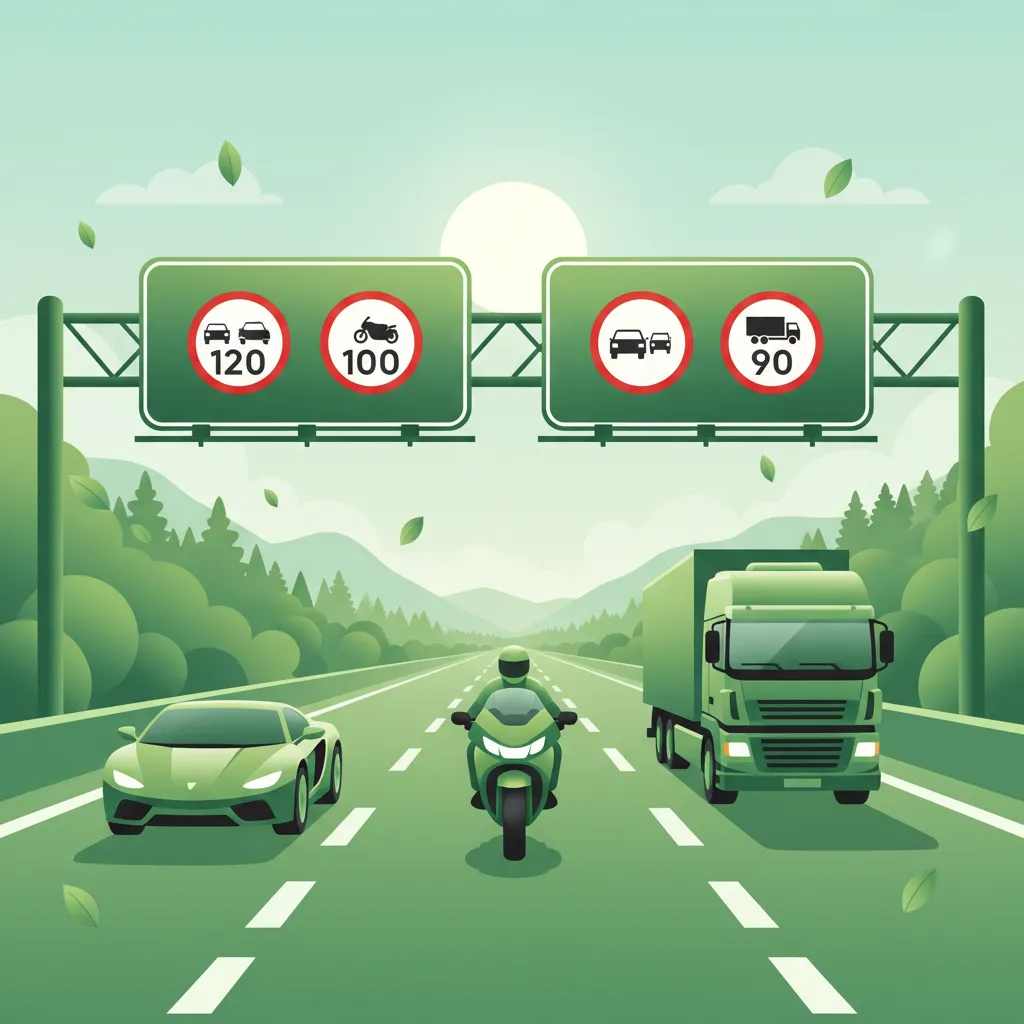
Welcome to this comprehensive lesson on speed limits for Category AM vehicles in the Netherlands. This topic is fundamental for all aspiring moped, scooter, snorfiets, and speed-pedelec riders, forming a crucial part of the Dutch Driving License Theory Course for Category AM. Understanding these regulations is not only vital for passing your CBR theory exam but also for ensuring your safety and the safety of others on Dutch roads.
The Netherlands, known for its extensive network of cycle paths and diverse urban infrastructure, has specific and strict speed regulations for light motorised two-wheelers. Category AM vehicles, which include snorfietsen, bromfietsen, and speed-pedelecs, are designed for specific uses and speeds, influencing where they can ride and how fast. Unlike cars, these vehicles have their own inherent maximum speed limits, which apply regardless of higher posted speed signs for other traffic. This lesson will clarify these distinctions, empowering you to make correct and safe decisions on the road.
Speed limits for Category AM vehicles are not arbitrary; they are meticulously set by a combination of safety engineering, road-type design, and overarching policy goals. The primary aim is to protect riders, other road users – especially vulnerable ones like pedestrians and cyclists – and to ensure smooth, predictable traffic flow.
The underlying logic is rooted in physics and vehicle capabilities:
This lesson connects directly to other key areas of your Dutch Category AM theory course, such as understanding roadway access, interpreting traffic signs, and mastering speed management and braking techniques.
Understanding Dutch speed limits involves several core principles that Category AM riders must internalise. These principles define how maximum speeds are determined and enforced across various road types and situations.
This is the absolute top speed a vehicle in the Category AM class may travel, irrespective of any posted signs. It is determined by the vehicle's legal classification and design. For a snorfiets, this ceiling is 25 km/h. For a bromfiets or speed-pedelec, it is 45 km/h. This maximum prevents vehicles from exceeding their design-speed safety envelope and is a constant constraint on the rider. You must always monitor your vehicle’s speedometer and adjust instantly when entering a zone with a lower limit.
Default speed limits are the standard speeds that apply when no explicit speed limit sign is present on a given road. While cars might have a default of 50 km/h inside built-up areas or 80 km/h outside, Category AM vehicles are always subject to their own category ceiling. This means that even if the default for other vehicles is higher, your moped's inherent limit takes precedence. These defaults provide a baseline for all road users to anticipate.
Certain road types, such as 'woonerf' (living street), 'fietspad' (bicycle lane), and 'bromfietspad' (moped lane), impose lower speed limits than the general default or even your vehicle's category ceiling. These limitations ensure that vehicle speed aligns with the functional design and intended safety level of the road environment. Riders must recognise the road type visually through signage, pavement markings, or curb design and adjust their speed accordingly.
Posted speed limit signs, often circular with a red border and a number (known as E-signs), define the maximum speed for all road users. However, it's critical to remember that these signs cannot raise a Category AM vehicle above its own inherent speed ceiling. The effective limit for a Category AM rider is always the lower of the posted sign limit, the default for the road type, or the vehicle’s category ceiling. This rule guarantees uniform speed expectations while respecting vehicle-specific limitations.
Exceeding either the posted speed limit, the road-type default, or your vehicle’s category ceiling carries severe legal consequences in the Netherlands. These include significant fines, penalty points on your CBR record, and potentially even the temporary suspension of your Category AM licence. These penalties serve as a deterrent and reinforce the importance of a strong safety culture on the roads.
The Dutch Category AM licence covers a range of light motorised two-wheelers and powered bicycles, each with distinct characteristics and specific speed limitations. Understanding these subcategories is crucial for knowing which rules apply to you.
A snorfiets is a light two-wheel vehicle with a maximum design speed of 25 km/h. This category includes traditional petrol-powered models and increasingly, electric or pedal-assist variants (e-snorfietsen). Snorfietsen are generally allowed to use 'fietspaden' (bicycle lanes) unless specifically prohibited by signage. They are identifiable by their blue licence plate.
The 25 km/h limit for a snorfiets is an absolute ceiling. Even if a road has a higher posted speed limit for other vehicles, a snorfiets must never exceed 25 km/h.
A bromfiets is a motorised two-wheel vehicle with a maximum design speed of 45 km/h. This category includes traditional motor scooters (up to 50 cc) and their electric equivalents. Bromfietsen are generally required to use the main carriageway ('rijbaan') or designated 'bromfietspaden' (moped lanes). They are typically identifiable by their yellow licence plate. Bromfietsen are usually not permitted on regular 'fietspaden' unless a specific local sign allows it.
A speed-pedelec is an electrically assisted bicycle capable of speeds between 25 km/h and 45 km/h. Despite resembling an electric bicycle, it is legally classified as a motor vehicle (specifically, a bromfiets) and requires a Category AM licence, registration, insurance, and the display of a yellow moped licence plate. Speed-pedelecs must also be type-approved and display a motor-on indicator when travelling above 25 km/h. Like bromfietsen, they must primarily use the carriageway or 'bromfietspad'.
In the absence of specific speed limit signs, default speed limits apply. These defaults vary depending on whether you are "inside a built-up area" (binnen de bebouwde kom) or "outside a built-up area" (buiten de bebouwde kom). However, for Category AM vehicles, your vehicle's inherent speed ceiling remains the ultimate limit.
You are "inside a built-up area" when you pass a white sign with a black silhouette of a city, or when leaving, a similar sign with a red diagonal line.
This means that if you are riding a bromfiets on a road inside a built-up area with no speed sign, your maximum speed is 45 km/h, even though cars might travel at 50 km/h. A snorfiets in the same scenario is capped at 25 km/h.
When you are "outside a built-up area", you typically encounter higher default speed limits for cars.
Crucially, the higher default speeds for cars outside built-up areas do not raise the speed ceiling for Category AM vehicles. A bromfiets must still adhere to its 45 km/h maximum, and a snorfiets to its 25 km/h maximum, regardless of the road's default speed for other traffic.
A woonerf, or living street, is a designated residential area designed for shared use by pedestrians, cyclists, and limited motorised traffic. These zones are identifiable by specific signs and often have distinct physical features like speed bumps and varied paving.
In a woonerf, all road users, including Category AM vehicles, must exercise extreme caution. The 30 km/h default for a woonerf is often the most restrictive limit and must be strictly observed.
Dutch roads utilise standard European (E-category) signs to communicate speed limits. While these signs apply to all road users, Category AM riders must apply a specific interpretation rule to determine their effective maximum speed.
These are circular signs with a red border and a black number indicating the maximum speed in kilometres per hour. Examples include 30, 50, 70, or 100 km/h.
This sign is a white circular disc with a black diagonal line through it. It indicates that the previous specific speed limit has ended, and the default speed limit for the road type (or zone) resumes. It does not mean that all speed restrictions are lifted.
The golden rule for Category AM riders is that the effective speed limit is the lowest of these three values:
Example: Imagine you are riding a bromfiets (45 km/h ceiling) through a residential area with a posted 30 km/h speed limit sign.
This means you must not exceed 30 km/h, even though your bromfiets can technically go up to 45 km/h. The sign has created a lower, binding maximum.
Beyond general defaults and signs, certain road types have specific rules that further refine how Category AM speed limits apply. Riders must actively identify the road type to determine their legal maximum speed.
These are the main roads shared with cars.
On a carriageway, your vehicle's inherent ceiling is often the most significant limiter, unless a lower speed limit sign is posted.
These are special lanes or roads exclusively for bromfietsen, speed-pedelecs, and sometimes snorfietsen if indicated.
These lanes are primarily for bicycles.
Bromfietsen and speed-pedelecs using regular fietspaden are engaging in illegal and dangerous behaviour, risking fines and serious accidents with cyclists.
As discussed, woonerf areas have a default 30 km/h limit. Zone 30 (zone met 30 km/h) areas are similar, designated with a sign indicating a 30 km/h maximum that applies to all vehicles within that zone.
Strict enforcement of speed limits in the Netherlands means that violations carry significant legal consequences. These are designed to deter dangerous driving and enhance road safety for everyone.
Exceeding the speed limit – whether it's the category ceiling, a posted sign, or a road-type default – is considered a serious offence. The fines in the Netherlands are substantial and are categorised by how much the limit was exceeded.
For Category AM vehicles, even slight transgressions can lead to hefty fines. For example:
In addition to fines, a violation typically adds 6 penalty points to your CBR (Centraal Bureau Rijvaardigheidsbewijzen) record. The CBR point system is a critical aspect of your licence status.
Accumulating 6 penalty points, often achievable with a single significant speeding offence, triggers a temporary suspension of your Category AM licence for up to 6 weeks. This period is intended to serve as a strong deterrent and a period for re-education.
Furthermore, if a speeding violation leads to an accident, the rider may face civil liability for damages, significantly increased insurance premiums, and even potential criminal charges for reckless driving, especially if serious injury or fatality occurs. The legal ramifications extend far beyond just the initial fine.
Riding a snorfiets that has been illegally modified to go faster than 25 km/h is not only a speeding offense but also a 'misuse of vehicle class', carrying even more severe penalties and the potential for vehicle confiscation.
Even with a clear understanding of the rules, certain situations often lead to mistakes for Category AM riders. Being aware of these common pitfalls can help you avoid violations and stay safe.
While legal speed limits define the absolute maximum, a responsible rider understands that real-world conditions often demand a much lower, practical speed. These adjustments are crucial for safety and preventing accidents.
Factors like dense fog, heavy rain, or darkness significantly reduce visibility and your reaction time.
The physical state of the road surface directly impacts your vehicle's grip and stability.
Changes in your vehicle's condition or load can alter its handling and braking performance.
Even when the legal speed limit is respected, vigilance is key when near pedestrians, cyclists, or children.
| Term | Definition | Notes |
|---|---|---|
| Category AM | Dutch vehicle class covering motor scooters, mopeds, snorfiets, and speed-pedelecs with max design speed ≤ 45 km/h. | Requires an AM driving license. |
| Snorfiets | Light two-wheel vehicle limited to 25 km/h, typically with a blue license plate; often allowed on fietspaden. | "E-snorfiets" refers to electric versions. |
| Bromfiets | Motorised two-wheel vehicle limited to 45 km/h, with a yellow license plate; must use carriageways or bromfietspaden. | Includes 50cc scooters. |
| Speed-pedelec | Electric bicycle capable of 25–45 km/h; legally classified as a bromfiets, requires AM license and yellow plate. | Must have a motor-on indicator. |
| Woonerf | Living street where pedestrians and cyclists have priority; default speed limit is 30 km/h for all road users. | Marked by specific signs and design. |
| Bromfietspad | Dedicated lane or road for bromfietsen and speed-pedelecs; may have its own posted speed limit (often 30 km/h). | Different from a regular fietspad. |
| Fietspad | Bicycle lane primarily reserved for non-motorised bicycles, also used by snorfietsen unless prohibited. | Often identifiable by green paving. |
| Speed-limit sign (E-16) | Circular traffic sign showing a numeric speed in km/h; indicates the maximum speed for all road users. | Must be obeyed in conjunction with vehicle's ceiling. |
| End of speed-limit sign (E-12) | White circular sign with a black diagonal line, indicating that the previous speed limit no longer applies, reverting to defaults. | Does not lift the vehicle's inherent ceiling. |
| Default speed limit | The speed that applies when no explicit sign is present for the given road type or area. | Always subject to the vehicle's category ceiling. |
| Ceiling speed | The absolute upper speed limit for a vehicle class (25 km/h for snorfiets, 45 km/h for bromfiets/speed-pedelec). | This limit is inherent to the vehicle and is independent of signage. |
| Penalty points (CBR) | Points added to a driver’s record for traffic violations; accumulating 6 points can lead to licence suspension. | Speeding in Category AM typically incurs 6 points. |
| Built-up area (binnen de bebouwde kom) | Urban area defined by signage; default speed limit for cars is 50 km/h unless otherwise posted. | Indicated by a white sign with a black city silhouette. |
| Outside built-up area (buiten de bebouwde kom) | Rural area outside city limits; default speed limit for cars is 80 km/h (or higher on motorways). | Begins after passing the "end of built-up area" sign. |
| Visibility-adjusted speed | A speed chosen by the rider that is lower than the legal limit, to compensate for limited sight distance, adverse weather, or poor road conditions. | Recommended best practice for safety. |
Let's look at a few practical scenarios to solidify your understanding of how speed limits apply to Category AM vehicles.
Setting: Residential street inside a built-up area, a sign clearly shows 30 km/h. It's cloudy, and the pavement is wet. You are riding a bromfiets. Rule / Decision Point: Apply the "lower of" rule and consider road conditions. Your bromfiets ceiling is 45 km/h, but the sign is 30 km/h. Correct Behaviour: Ride at 30 km/h, or slightly below due to the wet surface to ensure adequate grip and stopping distance. Incorrect Behaviour: Riding at 45 km/h because your vehicle's ceiling is 45 km/h, ignoring the sign and weather. Why Correct: The posted sign (30 km/h) is lower than your vehicle's ceiling (45 km/h) and the default for inside built-up areas (50 km/h). Wet conditions further necessitate caution.
Setting: Suburban road outside a built-up area, no speed sign is present. The day is clear. You are riding a snorfiets. Rule / Decision Point: Apply the default (no sign) but always respect your 25 km/h ceiling. Correct Behaviour: Ride at 25 km/h. Incorrect Behaviour: Riding at 40 km/h, assuming the default for cars (80 km/h) applies to you. Why Correct: Your snorfiets's 25 km/h ceiling is an absolute maximum, regardless of higher defaults for other vehicle types outside built-up areas.
Setting: You enter a woonerf (living street) clearly marked with its distinctive sign, and it has a default 30 km/h limit. You are on a speed-pedelec. Rule / Decision Point: The woonerf default is 30 km/h, and your speed-pedelec's ceiling is 45 km/h. Correct Behaviour: Ride at 30 km/h or lower, exercising extreme caution for pedestrians. Incorrect Behaviour: Riding at 45 km/h, arguing that your vehicle's ceiling is 45 km/h. Why Correct: The effective limit is the lower of the woonerf's 30 km/h rule and your vehicle's 45 km/h ceiling, making 30 km/h the maximum.
Setting: You are on a dedicated bromfietspad that has a specific local sign indicating a 25 km/h speed limit. You are riding a bromfiets. Rule / Decision Point: A local sign overrides general defaults, but you are still bound by your 45 km/h ceiling. Correct Behaviour: Ride at 25 km/h. Incorrect Behaviour: Riding at 45 km/h because you believe a bromfietspad should allow you to reach your maximum speed. Why Correct: The local sign posting 25 km/h is lower than your bromfiets's 45 km/h ceiling, so you must obey the sign.
Setting: You enter a road works zone with a temporary 50 km/h speed limit sign. You are on a snorfiets. Rule / Decision Point: Your vehicle ceiling (25 km/h) is absolute; temporary signs cannot raise it. Correct Behaviour: Ride at 25 km/h. Incorrect Behaviour: Riding at 45 km/h because the temporary sign is higher, assuming it allows more speed. Why Correct: The 25 km/h ceiling for your snorfiets always applies. The temporary 50 km/h sign simply sets a maximum for all other vehicles, but cannot override your inherent vehicle limit.
Lesson content overview
Explore all units and lessons included in this driving theory course.
Explore search topics learners often look for when studying Speed Limits per Vehicle Category. These topics reflect common questions about road rules, driving situations, safety guidance, and lesson level theory preparation for learners in the Netherlands.
Browse additional driving theory lessons that cover connected traffic rules, road signs, and common driving situations related to this topic. Improve your understanding of how different rules interact across everyday traffic scenarios.
Understand the specific speed limits for snorfiets, bromfiets, and speed-pedelecs on various Dutch road types such as woonerven, carriageways, and residential areas. Essential Dutch theory for your AM license.
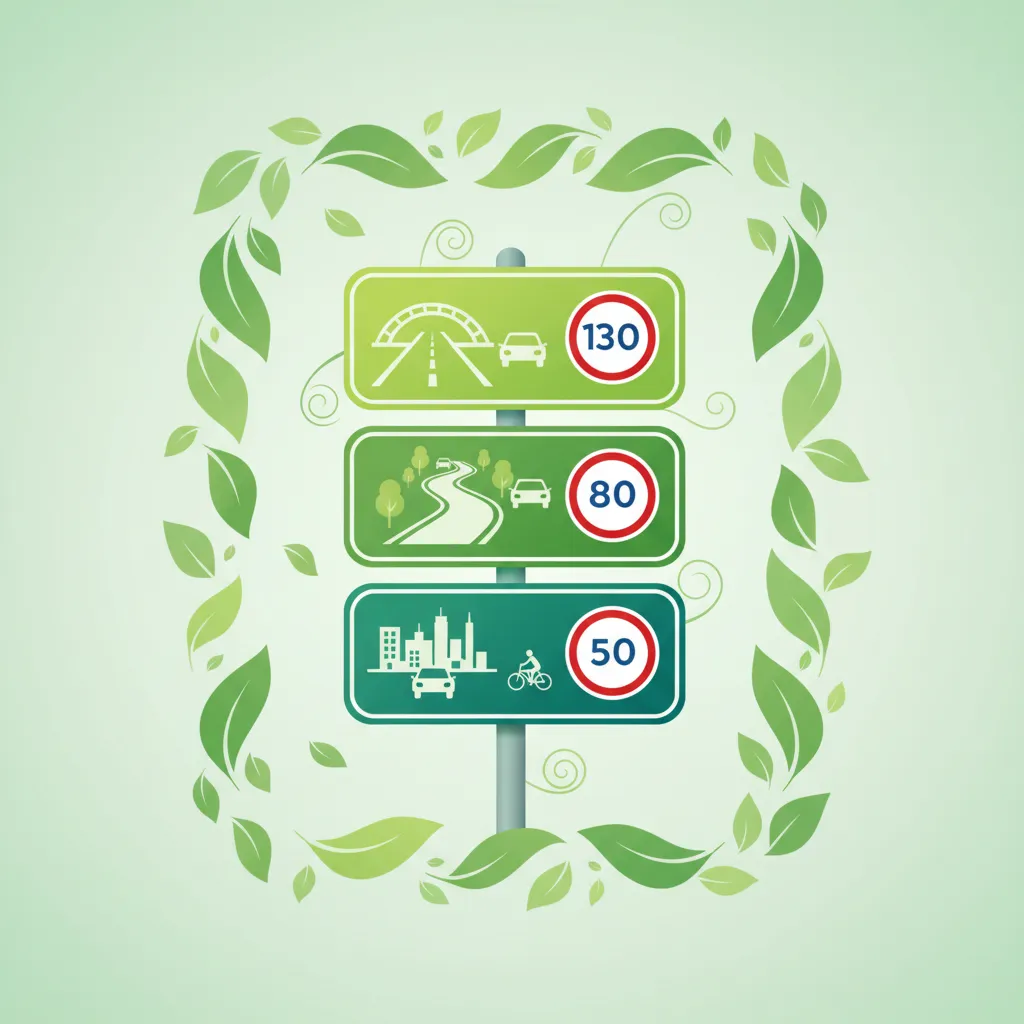
This lesson provides a definitive guide to the legal speed limits on different types of Dutch roads. It covers the rules for built-up areas (typically 50 km/h), rural roads (80 km/h), expressways ('autowegen'), and motorways ('snelwegen'), including time-dependent variations. Understanding these official limits is the first step in managing speed legally and appropriately for the road environment, a core topic on the CBR theory test.
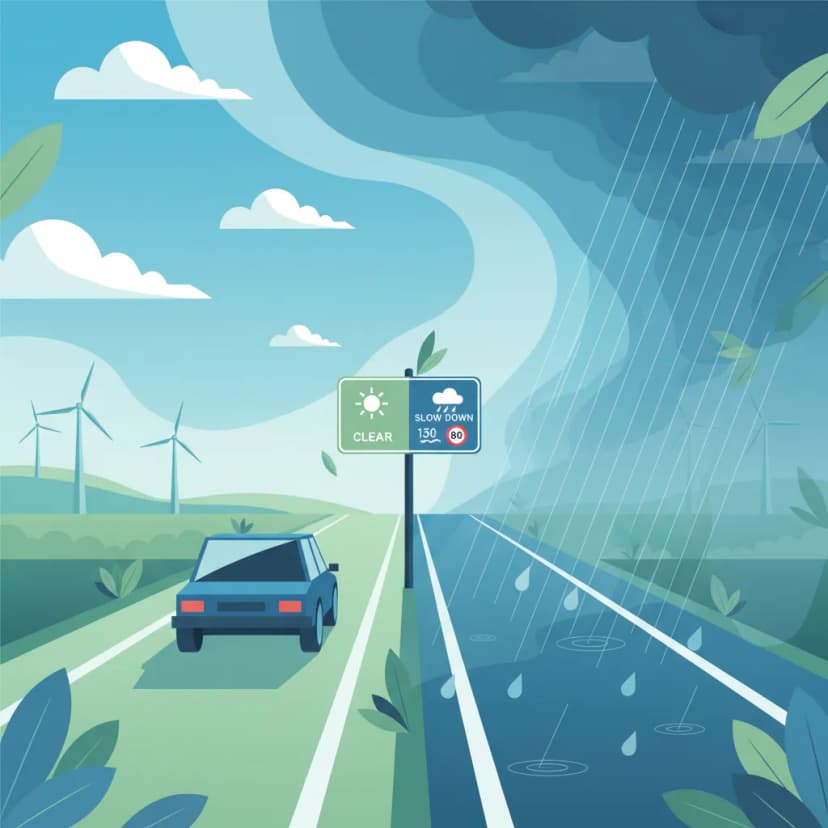
The posted speed limit is a maximum, not a target. This lesson teaches the crucial skill of adapting your speed to prevailing conditions. You will learn how to assess factors like traffic density, poor weather (rain, fog), limited visibility (at night), and slippery road surfaces. Adjusting your speed downwards in these situations provides you with more time to react to hazards and significantly reduces the risk of losing control or being involved in a collision.
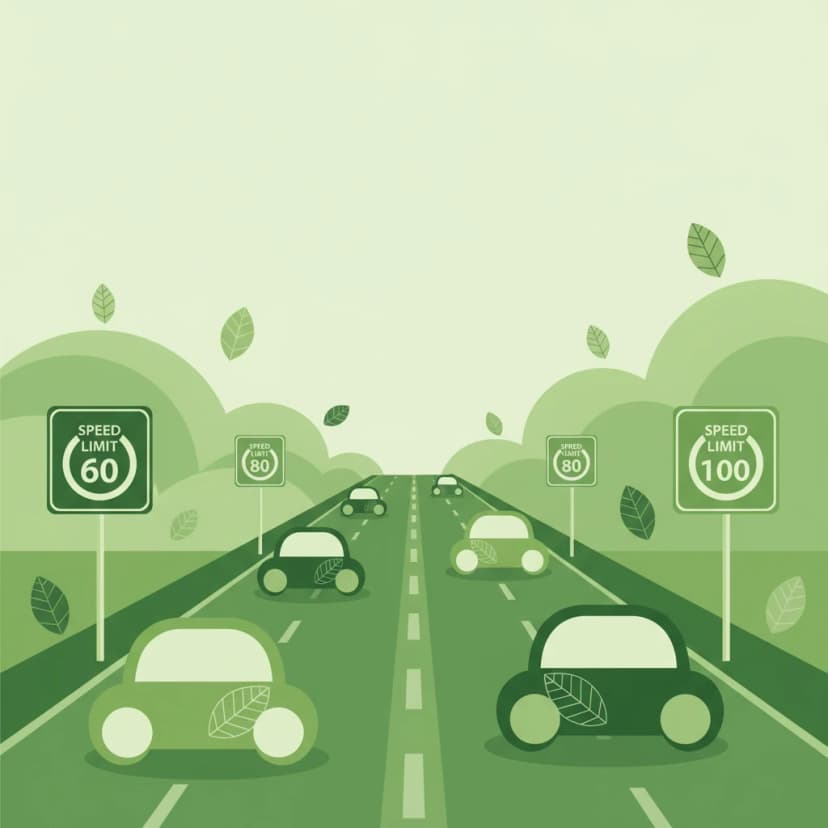
This lesson focuses on the specific speed regulations for major highways in the Netherlands. You will learn to identify an 'autosnelweg' (motorway, G1 sign), where the speed limit is 100 km/h between 6:00 and 19:00 and often 130 km/h at other times, unless indicated otherwise. The lesson also covers the 'autoweg' (expressway, G3 sign), which typically has a speed limit of 100 km/h. Furthermore, you will study dynamic speed limits indicated on electronic signs, which can change due to traffic or weather conditions.
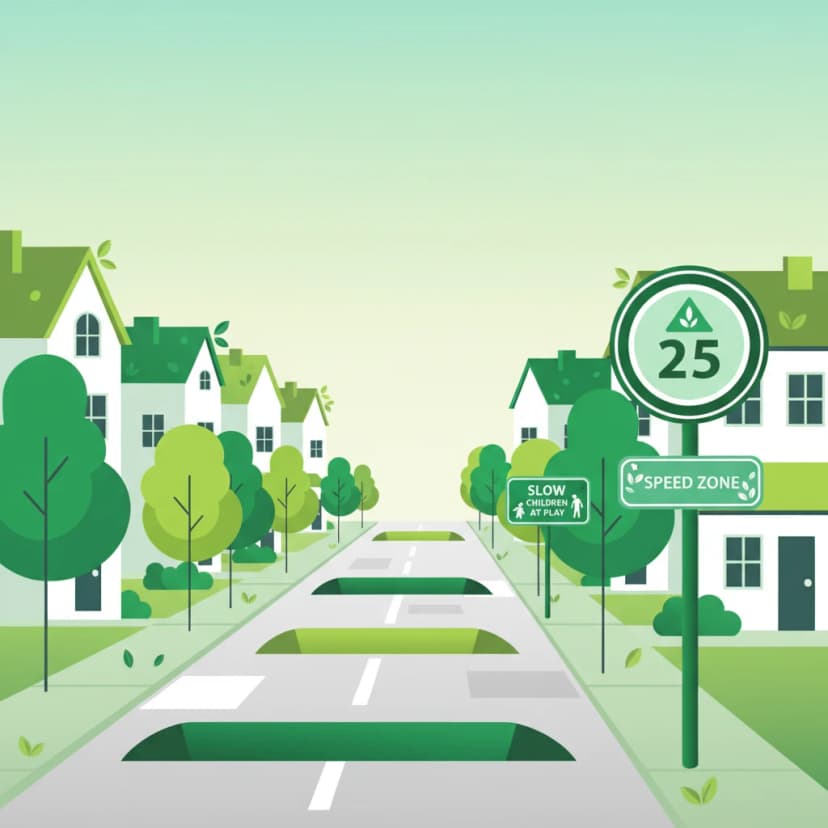
This lesson explains speed limits in specially designated zones designed to protect vulnerable road users. You will learn the rules of a 'woonerf' (home zone), where the speed limit is walking pace (max 15 km/h) and pedestrians can use the full width of the road. The content also covers 30 km/h zones, common in residential areas and around schools, which are often enforced through road design like speed bumps. Understanding the purpose and rules of these zones is key to driving responsibly in urban environments.
This lesson details the default speed limits that apply in the absence of specific signs. You will learn to recognize the signs (H1 and H2) that mark the beginning and end of a built-up area, where the default speed limit is 50 km/h. Outside these areas, on non-highway roads, the standard limit is 80 km/h. The content explains the rationale behind these limits, which are based on factors like pedestrian density, road design, and potential hazards, ensuring you can apply the correct speed in any location.

This lesson explains how to respond to variable speed limits shown on overhead electronic signs, which are used to manage traffic flow in real-time. You will learn why these limits are adjusted for factors like congestion, accidents, or bad weather, and the legal requirement to obey them. The content focuses on the importance of anticipatory riding, scanning far ahead for these signs to allow for smooth and safe speed adjustments.

This lesson provides a detailed breakdown of the official classifications for Category AM vehicles under Dutch law. You will learn to distinguish between a bromfiets, snorfiets, speed pedelec, and brommobiel based on technical criteria like maximum speed and engine power. Understanding these definitions is fundamental, as they determine which traffic rules, licensing requirements, and road access permissions apply to each vehicle type, forming the basis for the entire CBR theory exam.
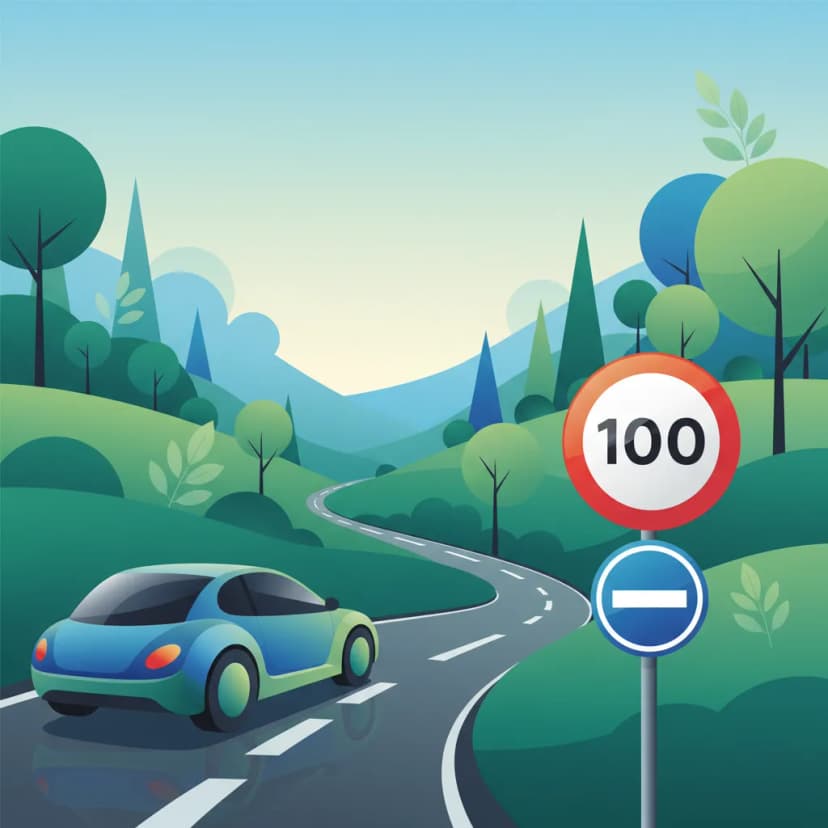
This lesson provides a detailed overview of fixed speed limits on the Dutch road network and the signs that indicate them. You will learn to identify signs for maximum speed (BORD 50) and understand the default limits that apply within built-up areas, on rural roads, and on motorways. The content emphasizes the importance of constant awareness and legal compliance to avoid penalties and ensure road safety for yourself and others.
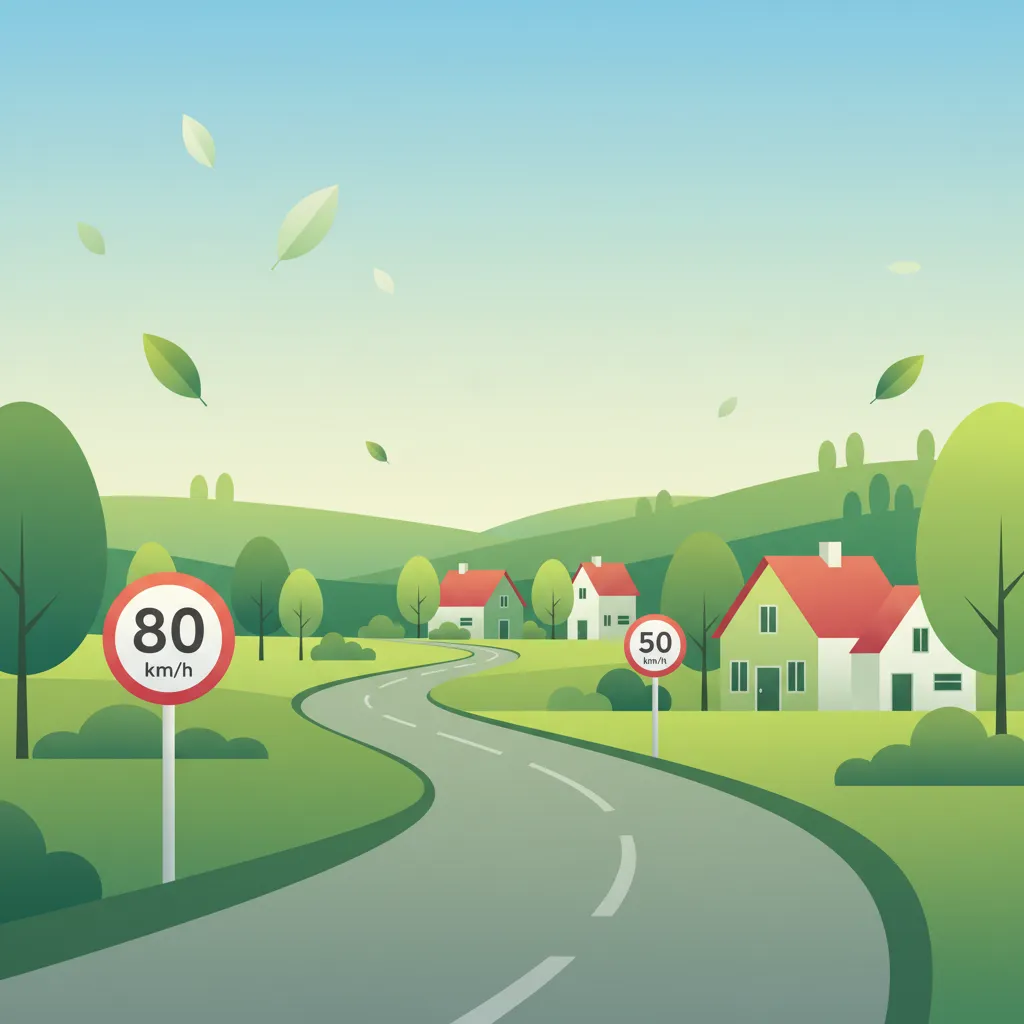
This lesson focuses on identifying different types of speed zones and understanding the rationale behind their limits. It explains how to recognize the start and end of a 'built-up area' ('binnen de bebouwde kom') via place-name signs and discusses special zones like 30 km/h zones and 'woonerven' (residential yards). The curriculum emphasizes adapting riding style to the specific hazards present in each type of zone, from high pedestrian activity in urban areas to unexpected curves on rural roads.
This lesson focuses on the unique demands of riding at sustained high speeds on motorways ('snelwegen'). It covers essential topics such as strict lane discipline, safe overtaking procedures, and maintaining a greater following distance to compensate for higher reaction and braking times. The content also addresses the physical and mental challenges, including managing wind blast, increased noise levels, and maintaining heightened situational awareness over long distances to combat fatigue.
Learn about typical errors Category AM riders make regarding speed limits in the Netherlands, including ignoring vehicle ceilings and misinterpreting signs. Essential theory for avoiding fines and ensuring safety.
This lesson provides a definitive guide to the legal speed limits on different types of Dutch roads. It covers the rules for built-up areas (typically 50 km/h), rural roads (80 km/h), expressways ('autowegen'), and motorways ('snelwegen'), including time-dependent variations. Understanding these official limits is the first step in managing speed legally and appropriately for the road environment, a core topic on the CBR theory test.
The posted speed limit is a maximum, not a target. This lesson teaches the crucial skill of adapting your speed to prevailing conditions. You will learn how to assess factors like traffic density, poor weather (rain, fog), limited visibility (at night), and slippery road surfaces. Adjusting your speed downwards in these situations provides you with more time to react to hazards and significantly reduces the risk of losing control or being involved in a collision.
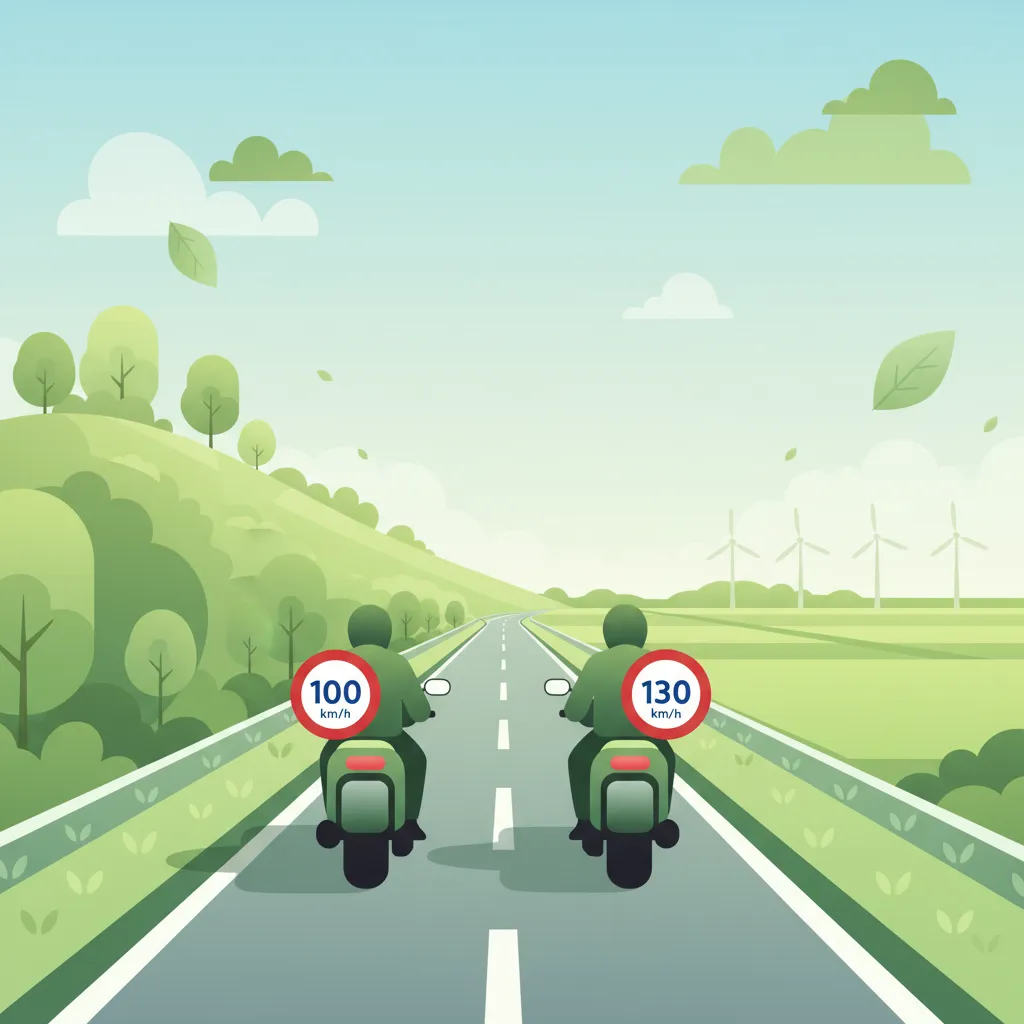
This lesson outlines the statutory national speed limits applicable to motorcycles in the Netherlands. It clearly defines the maximum permitted speeds on motorways ('snelwegen'), non-motorway rural roads ('buiten de bebouwde kom'), and within built-up areas ('binnen de bebouwde kom'). The content also addresses variations, such as time-dependent speed limits on certain motorways, ensuring riders have a complete and accurate understanding of the legal requirements for speed.
This lesson focuses on the specific speed regulations for major highways in the Netherlands. You will learn to identify an 'autosnelweg' (motorway, G1 sign), where the speed limit is 100 km/h between 6:00 and 19:00 and often 130 km/h at other times, unless indicated otherwise. The lesson also covers the 'autoweg' (expressway, G3 sign), which typically has a speed limit of 100 km/h. Furthermore, you will study dynamic speed limits indicated on electronic signs, which can change due to traffic or weather conditions.
This lesson details the default speed limits that apply in the absence of specific signs. You will learn to recognize the signs (H1 and H2) that mark the beginning and end of a built-up area, where the default speed limit is 50 km/h. Outside these areas, on non-highway roads, the standard limit is 80 km/h. The content explains the rationale behind these limits, which are based on factors like pedestrian density, road design, and potential hazards, ensuring you can apply the correct speed in any location.
This lesson provides a detailed overview of fixed speed limits on the Dutch road network and the signs that indicate them. You will learn to identify signs for maximum speed (BORD 50) and understand the default limits that apply within built-up areas, on rural roads, and on motorways. The content emphasizes the importance of constant awareness and legal compliance to avoid penalties and ensure road safety for yourself and others.
This lesson focuses on identifying different types of speed zones and understanding the rationale behind their limits. It explains how to recognize the start and end of a 'built-up area' ('binnen de bebouwde kom') via place-name signs and discusses special zones like 30 km/h zones and 'woonerven' (residential yards). The curriculum emphasizes adapting riding style to the specific hazards present in each type of zone, from high pedestrian activity in urban areas to unexpected curves on rural roads.
This lesson explains how to respond to variable speed limits shown on overhead electronic signs, which are used to manage traffic flow in real-time. You will learn why these limits are adjusted for factors like congestion, accidents, or bad weather, and the legal requirement to obey them. The content focuses on the importance of anticipatory riding, scanning far ahead for these signs to allow for smooth and safe speed adjustments.
This lesson provides a detailed breakdown of the official classifications for Category AM vehicles under Dutch law. You will learn to distinguish between a bromfiets, snorfiets, speed pedelec, and brommobiel based on technical criteria like maximum speed and engine power. Understanding these definitions is fundamental, as they determine which traffic rules, licensing requirements, and road access permissions apply to each vehicle type, forming the basis for the entire CBR theory exam.
This lesson covers the universal Dutch road rules with a specific focus on their application to light motorcycles. It details the various speed limits for different road types, from urban areas to motorways, and explains the correct procedures for overtaking and lane positioning. The legal aspects of lane filtering in congestion are also examined, alongside mandatory equipment use like daytime running lights, to ensure riders can integrate safely and legally into traffic flow.
Find clear answers to common questions learners have about Speed Limits per Vehicle Category. Learn how the lesson is structured, which driving theory objectives it supports, and how it fits into the overall learning path of units and curriculum progression in the Netherlands. These explanations help you understand key concepts, lesson flow, and exam focused study goals.
The primary difference is the maximum speed. A snorfiets has a maximum speed of 25 km/h on the carriageway, while a bromfiets (and a speed pedelec) has a maximum speed of 45 km/h on the carriageway. This distinction affects where each vehicle is permitted to ride and the specific rules that apply, especially concerning cycle paths and road signage.
Yes, generally the speed limits for bromfietsen and speed pedelecs (45 km/h) and snorfietsen (25 km/h) apply on the carriageway both inside and outside built-up areas unless specific signs indicate otherwise. However, it's crucial to always observe traffic signs, as special limits might be posted. Snorfietsen may be directed onto cycle paths with their own speed limits.
In a 'woonerf', the general speed limit is 15 km/h for all vehicles, including snorfietsen, bromfietsen, and speed pedelecs. The emphasis in these zones is on pedestrian safety and shared space, so you must drive at a very low speed, be prepared to stop, and give way to all other traffic participants.
Exceeding speed limits for AM category vehicles, even by a small margin, can lead to fines and penalty points on your driving record. For the theory exam, incorrect answers regarding speed limits will result in failing the test. It is essential to strictly adhere to the posted limits to ensure safety and pass your exam.
Speed pedelecs are classified similarly to bromfietsen and have a maximum speed of 45 km/h on the carriageway. However, they are often subject to additional regulations regarding helmet use (approved speed pedelec helmet) and may have specific rules about where they can ride, particularly in relation to cycle paths. Always check current regulations and signage.