
Prepare for the challenges of riding at speed on Dutch motorways ('snelwegen') with this lesson. Building on general road rules, we delve into the specific demands of high-speed environments, including lane discipline, safe overtaking, and hazard perception. This knowledge is crucial for passing your Category A theory exam and ensuring safe riding on Dutch highways.
Riding a motorcycle on Dutch motorways, known as snelwegen, presents a distinct set of challenges and demands specific skills. Unlike other road types, motorways involve sustained high speeds, often exceeding 80 km/h, which significantly alters the dynamics of riding. This lesson of the Dutch Motorcycle Theory course is designed to equip you with the essential knowledge for safe and legal high-speed riding, covering everything from strict lane discipline and safe overtaking to managing physical demands like wind blast and rider fatigue. Mastering these techniques is crucial not only for your CBR Category A theory exam but also for your safety on the road.
Motorways are designed for efficient, high-volume traffic flow. For motorcyclists, this environment introduces several critical factors. At elevated speeds, kinetic energy increases exponentially, meaning a small increase in speed dramatically lengthens stopping distances and reduces the time available to perceive and react to hazards. Furthermore, the constant exposure to aerodynamic forces (wind blast), increased noise levels, and the monotony of long, straight stretches can contribute to physical and mental fatigue. A systematic approach to risk management, grounded in physics, human factors, and legal obligations, is therefore paramount.
The core challenge of high-speed riding lies in the altered perception of time and distance. Your motorcycle covers much greater distances in the same amount of time, shrinking your reaction window. This means hazards that would be minor at lower speeds can become critical emergencies on a motorway. The legal framework and recommended riding practices for motorways are specifically tailored to mitigate these inherent risks, focusing on predictability, clear communication, and generous safety margins.
Maintaining impeccable lane discipline is fundamental to safe motorway riding. It ensures predictability for other road users, minimizes conflicts, and helps you position yourself optimally for visibility and stability. The Dutch traffic regulations (RVV 1990) are explicit about lane usage on motorways.
On motorways, motorcycle riders should primarily use the leftmost lane appropriate for their speed. This means if you are cruising at the speed limit, you should generally occupy the middle lane on a three-lane motorway, or the left lane on a two-lane carriageway, returning to the right after overtaking. Staying consistently in the center of your chosen lane is crucial. This position maximizes your visibility to vehicles behind and to the sides, while also providing a buffer zone from potential hazards on either side of the lane.
Unnecessary lane changes disrupt traffic flow and increase the risk of collision. When a lane change is necessary, such as for overtaking or to exit the motorway, it must be performed with ample warning. You are required to signal your intention at least three seconds before initiating the lane change. Always check your mirrors and perform a head check (shoulder check) to confirm the lane is clear, especially in your blind spots, before moving.
RVV 1990 Article 3.23 (Lane usage) mandates specific lane behavior. Riding on the far right edge of a lane to "save space" is a common misconception and a dangerous practice. It reduces your visibility to other drivers, particularly those in larger vehicles, and increases the risk of side-swipes.
One of the most critical safety measures on motorways is maintaining an adequate following distance. At high speeds, the standard two-second rule is often insufficient. Due to the quadratic increase in kinetic energy, stopping distances lengthen dramatically, necessitating an extended following distance.
The Dutch guideline for following distance is a base of 2 seconds, with an additional 0.5 seconds for every 10 km/h above 80 km/h. This time-based calculation is crucial because it accounts for varying speeds.
Here's how it breaks down:
To measure your following distance, pick a fixed point on the road ahead (e.g., a bridge, a sign). When the vehicle in front passes that point, start counting "one thousand one, one thousand two, one thousand three..." You should not reach the fixed point before you finish counting your required number of seconds.
This increased time gap provides you with sufficient time to perceive a hazard, react, and initiate braking, significantly reducing the risk of a rear-end collision.
RVV 1990 Article 3.33 explicitly requires drivers to maintain sufficient distance to stop safely. Failing to adhere to recommended following distances is a serious violation.
Overtaking on a motorway requires a systematic and cautious approach. It must be executed safely, predictably, and in accordance with Dutch traffic laws.
RVV 1990 Article 3.29 strictly prohibits overtaking on the right side of a vehicle on motorways. This is a highly dangerous and illegal maneuver that can result in significant fines and increased accident risk due to blind spot conflicts.
Motorcycles are highly susceptible to aerodynamic forces, particularly at high speeds. Wind blast, especially from large vehicles, can significantly affect your stability and control.
When a heavy goods vehicle (HGV) passes you or you pass an HGV, the sheer volume of air it displaces can create strong, sudden gusts of wind. These lateral gusts can push your motorcycle sideways, potentially causing a loss of traction or control.
Strategies for Wind Blast Management:
Ignoring wind blast can lead to frightening "tank slappers" (violent handlebar oscillations) or a complete loss of control. While not directly legislated, the duty of care (RVV 1990 article 3.2) implies a rider's responsibility to manage such physical forces safely.
Sustained high-speed riding, coupled with constant concentration and exposure to wind and noise, can quickly lead to mental and physical fatigue. Fatigue degrades reaction time, hazard perception, and decision-making, significantly increasing accident risk.
Proactive management of fatigue is essential for long motorway rides.
Key Mitigation Measures:
Service areas (verzorgingsplaatsen) along Dutch motorways are ideal for planned breaks. Many offer facilities for refreshments and stretching.
Situational awareness is always important for motorcyclists, but at high speeds, it becomes critically enhanced. You need to continuously scan your environment, not just the road directly in front of you, but also far ahead, to the sides, and behind.
By continuously processing information from your environment, you can make proactive adjustments to your speed and position, rather than reacting suddenly to an immediate threat.
The acoustic environment inside a motorcycle helmet at high speeds can be surprisingly loud. Wind noise, coupled with engine and exhaust sounds, increases significantly with speed. Prolonged exposure to high decibel levels can lead to temporary or even permanent hearing loss, and critically, it contributes to rider fatigue and reduces your ability to perceive important auditory cues from traffic.
Managing noise exposure is an integral part of fatigue mitigation and maintaining sharp situational awareness on motorways.
Adhering to specific Dutch traffic laws is not just about avoiding fines; it's about ensuring safety and predictable behavior in a high-speed environment. Here are crucial regulations relevant to motorway riding for motorcyclists:
Failing to comply with these regulations can lead to substantial fines and, more importantly, significantly increase your risk of an accident.
Understanding common errors is as important as knowing the correct procedures. Many accidents on motorways involving motorcycles stem from simple, avoidable mistakes.
These actions not only carry legal penalties but are primary contributors to motorway accidents.
Motorway riding conditions are not static. Weather, road type, vehicle load, and interactions with other road users all demand adjustments to your high-speed riding strategy.
Understanding the fundamental principles that govern motorcycle behavior and human performance at high speeds reinforces the rationale behind safe riding practices.
By appreciating these underlying scientific principles, you can develop a deeper understanding of why specific safety measures are so important for high-speed riding on Dutch motorways.
Lesson content overview
Explore all units and lessons included in this driving theory course.
Explore search topics learners often look for when studying High-Speed Riding on Motorways (snelweg). These topics reflect common questions about road rules, driving situations, safety guidance, and lesson level theory preparation for learners in the Netherlands.
Browse additional driving theory lessons that cover connected traffic rules, road signs, and common driving situations related to this topic. Improve your understanding of how different rules interact across everyday traffic scenarios.
Explore advanced techniques for safe high-speed motorway riding on Dutch snelwegen. This lesson focuses on advanced lane discipline, overtaking strategies, and managing aerodynamic forces like wind blast and rider fatigue for Category A theory.

This lesson reinforces the fundamental rule of Dutch highway driving: use the rightmost lane available and use the lanes to the left only for overtaking. You will learn the complete, safe overtaking procedure: check mirrors, signal, perform a shoulder check for the blind spot, smoothly move over, accelerate past the vehicle, and then return to the right lane when safe.
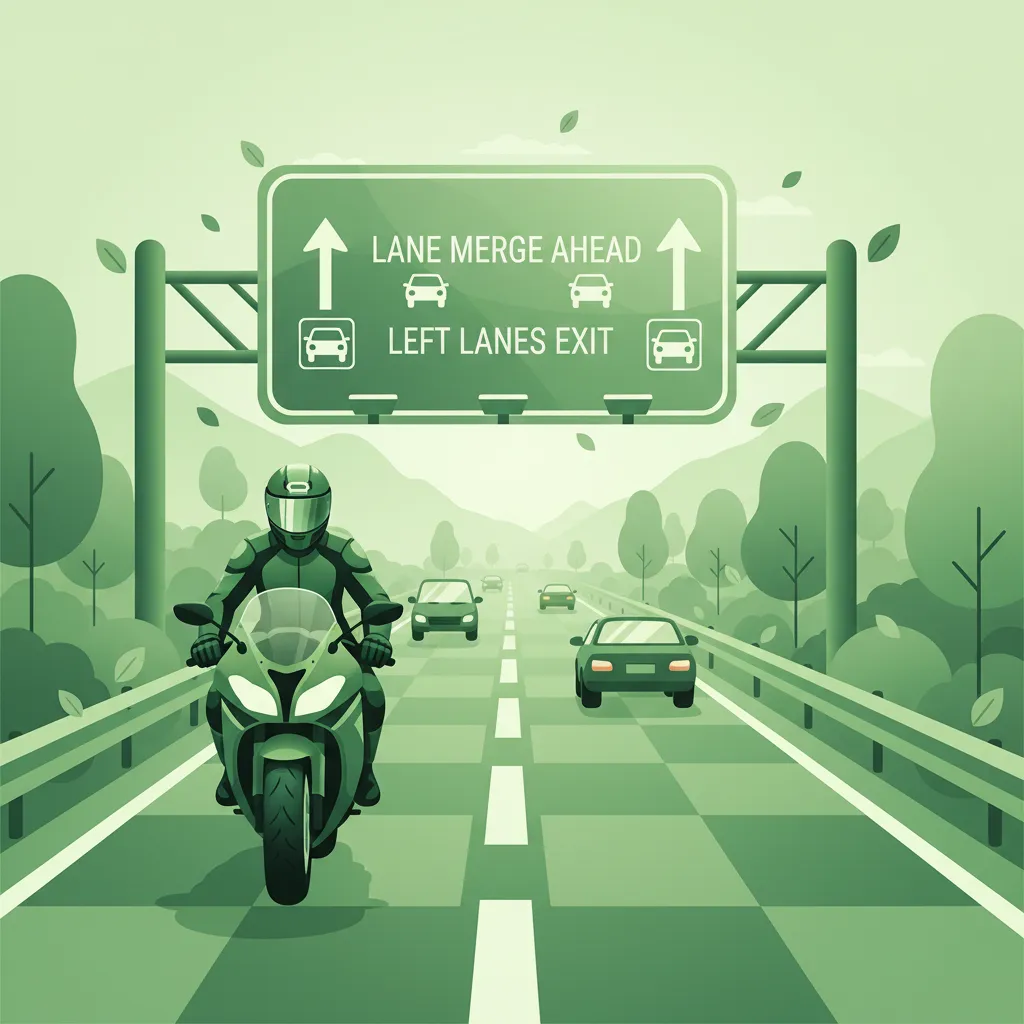
This lesson prepares you for the unique dangers of high-speed highway riding. You will learn to scan for and navigate road hazards like debris, potholes, and slippery steel expansion joints on bridges. The content also addresses the powerful air turbulence created by large trucks that can upset a motorcycle's stability and the mental challenge of maintaining focus on long, monotonous stretches of road.
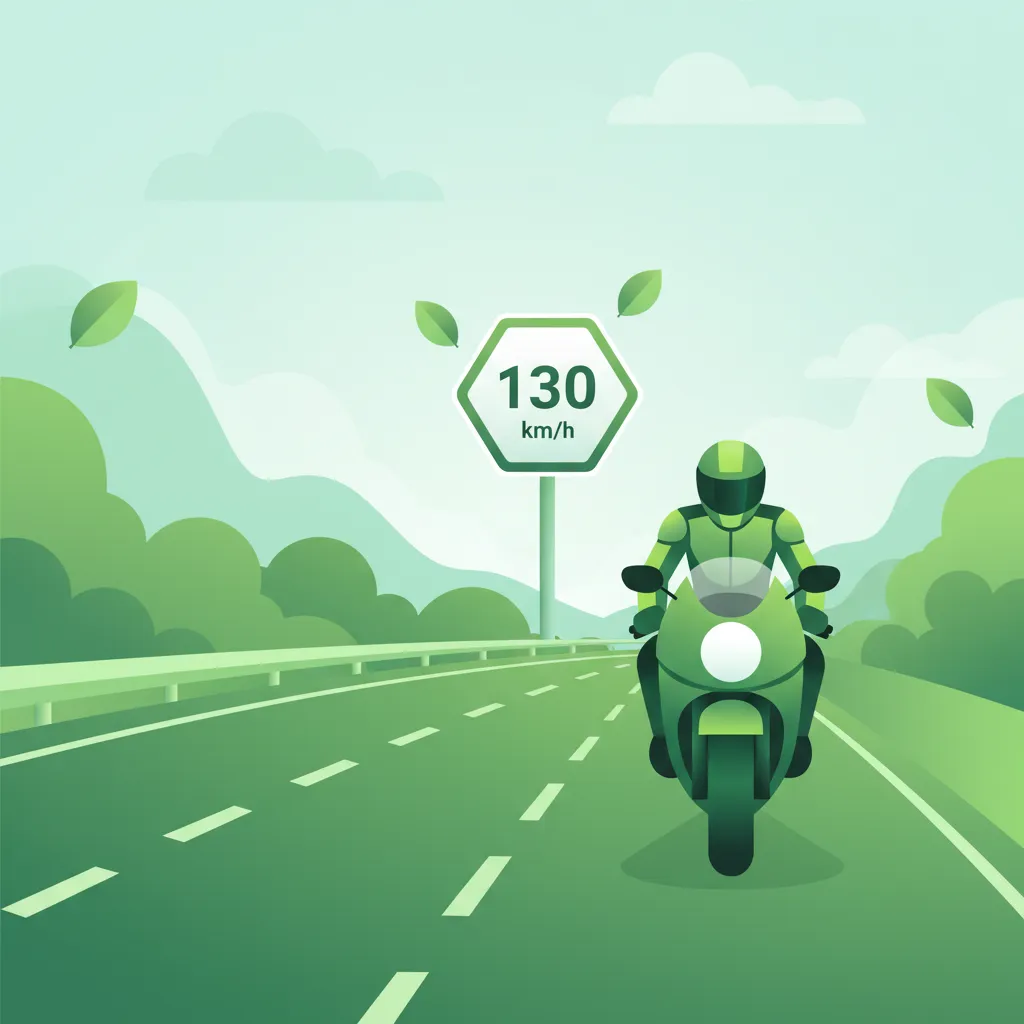
This lesson focuses on the specific skills required for managing speed on high-speed highways (autosnelwegen). You will learn the correct technique for accelerating on the on-ramp to smoothly merge with traffic flow. The content covers how to choose an appropriate cruising speed, maintain a safe following distance, and manage the aerodynamic effects of wind and turbulence from larger vehicles at high speeds.
This lesson details the systematic process for safely overtaking on a multi-lane motorway, leveraging the acceleration capabilities of a Category A motorcycle. It covers the 'mirror, signal, maneuver' sequence, with a strong emphasis on the critical shoulder check to clear the blind spot before moving out. The content also discusses how to judge closing speeds, ensure adequate space before returning to the lane, and how to handle situations involving multiple lanes and slower-moving heavy vehicles.
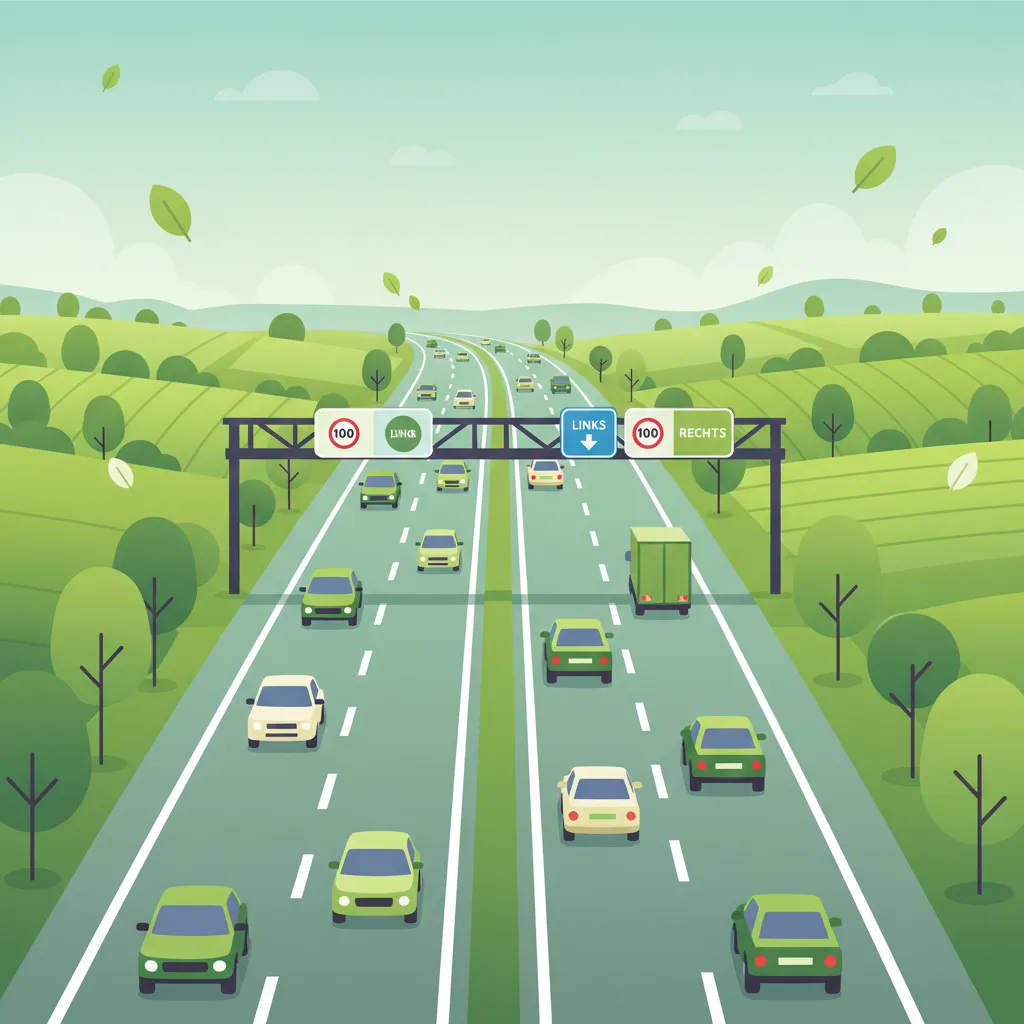
This lesson covers the specific articles of the Dutch Road Traffic Act that apply to motorways, with a primary focus on the strict rule of keeping to the rightmost available lane unless overtaking. It explains the legal and safety reasons for only passing on the left and discusses the correct positioning within a lane for maximum visibility and safety. The content also addresses the nuances of lane usage during heavy congestion, ensuring riders comply with the law and contribute to smooth traffic flow.

This lesson prepares you for the challenge of riding in strong winds. You will learn to anticipate areas prone to gusts, such as exiting a tunnel or passing a large truck. The content explains how to maintain a relaxed grip on the handlebars and use subtle counter-steering inputs and body lean to counteract the force of the wind, keeping the motorcycle on its intended path.

This lesson equips riders with cognitive strategies for managing ambiguous or conflicting traffic situations where priority rules may be misinterpreted by other road users. It focuses on the principles of defensive riding, such as making eye contact, using clear signals, and being prepared to yield the right-of-way to avoid a collision. The content teaches how to resolve uncertainty safely by prioritizing hazard avoidance over asserting one's legal right-of-way, a critical skill for motorcyclist survival.
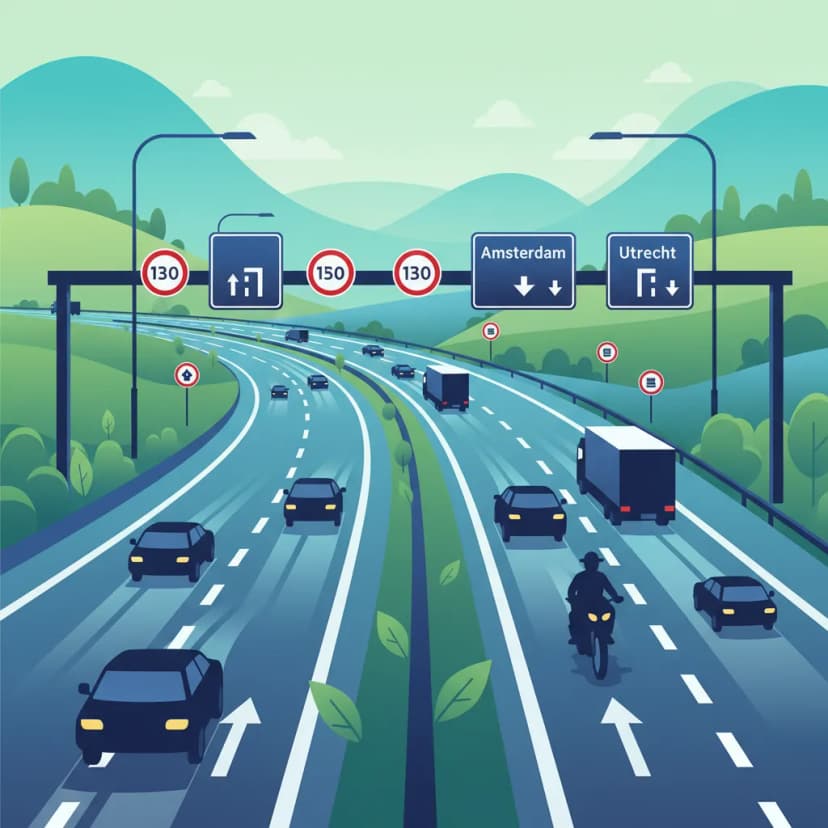
This lesson details the specific regulations for driving on Dutch motorways, identifiable by the G1 sign. You will learn the correct procedure for joining the flow of traffic using the acceleration lane and for leaving via the deceleration lane. The curriculum reinforces the 'keep right unless overtaking' rule for lane discipline. It also explains that stopping is strictly forbidden, and the hard shoulder (vluchtstrook) may only be used for genuine emergencies.

This lesson revisits the concept of following distance, emphasizing its heightened importance in the high-speed motorway environment. It explains how increased speeds dramatically lengthen both reaction and braking distances, making a minimum two-to-three-second gap absolutely critical for safety. The content also stresses the importance of maintaining a space cushion to the sides, creating potential escape routes in case of sudden incidents in adjacent lanes.

Defensive riding means riding to prevent collisions, despite the actions of others or the conditions around you. This lesson teaches the core principles of this proactive safety strategy. Key techniques include managing the space cushion around your vehicle, positioning yourself in your lane for maximum visibility, constantly planning an escape route, and communicating your intentions clearly to other road users. This mindset acknowledges your vulnerability and empowers you to take control of your own safety.
Understand critical Dutch traffic laws and hazard perception specific to high-speed motorway riding. Covers lane usage, following distances, speed regulations, and identifying dangers on NL snelwegen for the Category A theory exam.
This lesson reinforces the fundamental rule of Dutch highway driving: use the rightmost lane available and use the lanes to the left only for overtaking. You will learn the complete, safe overtaking procedure: check mirrors, signal, perform a shoulder check for the blind spot, smoothly move over, accelerate past the vehicle, and then return to the right lane when safe.

This lesson focuses on the specific speed regulations for major highways in the Netherlands. You will learn to identify an 'autosnelweg' (motorway, G1 sign), where the speed limit is 100 km/h between 6:00 and 19:00 and often 130 km/h at other times, unless indicated otherwise. The lesson also covers the 'autoweg' (expressway, G3 sign), which typically has a speed limit of 100 km/h. Furthermore, you will study dynamic speed limits indicated on electronic signs, which can change due to traffic or weather conditions.
This lesson covers the specific articles of the Dutch Road Traffic Act that apply to motorways, with a primary focus on the strict rule of keeping to the rightmost available lane unless overtaking. It explains the legal and safety reasons for only passing on the left and discusses the correct positioning within a lane for maximum visibility and safety. The content also addresses the nuances of lane usage during heavy congestion, ensuring riders comply with the law and contribute to smooth traffic flow.

This lesson focuses on hazard perception ('gevaarherkenning'), a critical section of the CBR exam. It explains how increasing speed reduces a rider's field of vision and shortens the time available to identify, process, and react to potential dangers. The content explores techniques for actively scanning the road ahead and anticipating the actions of other road users to make safe, proactive decisions rather than reactive ones.

This lesson focuses on identifying different types of speed zones and understanding the rationale behind their limits. It explains how to recognize the start and end of a 'built-up area' ('binnen de bebouwde kom') via place-name signs and discusses special zones like 30 km/h zones and 'woonerven' (residential yards). The curriculum emphasizes adapting riding style to the specific hazards present in each type of zone, from high pedestrian activity in urban areas to unexpected curves on rural roads.

This lesson transitions hazard perception skills to the high-speed environment of motorways and tunnels. It covers specific risks such as vehicles merging at different speeds, sudden braking and congestion ahead, road debris, and the aerodynamic effects of crosswinds and large trucks. The curriculum also addresses the challenges of riding in tunnels, including changes in light and surface conditions, and the importance of identifying emergency exits and procedures in case of an incident.
This lesson revisits the concept of following distance, emphasizing its heightened importance in the high-speed motorway environment. It explains how increased speeds dramatically lengthen both reaction and braking distances, making a minimum two-to-three-second gap absolutely critical for safety. The content also stresses the importance of maintaining a space cushion to the sides, creating potential escape routes in case of sudden incidents in adjacent lanes.

This lesson explains how to respond to variable speed limits shown on overhead electronic signs, which are used to manage traffic flow in real-time. You will learn why these limits are adjusted for factors like congestion, accidents, or bad weather, and the legal requirement to obey them. The content focuses on the importance of anticipatory riding, scanning far ahead for these signs to allow for smooth and safe speed adjustments.
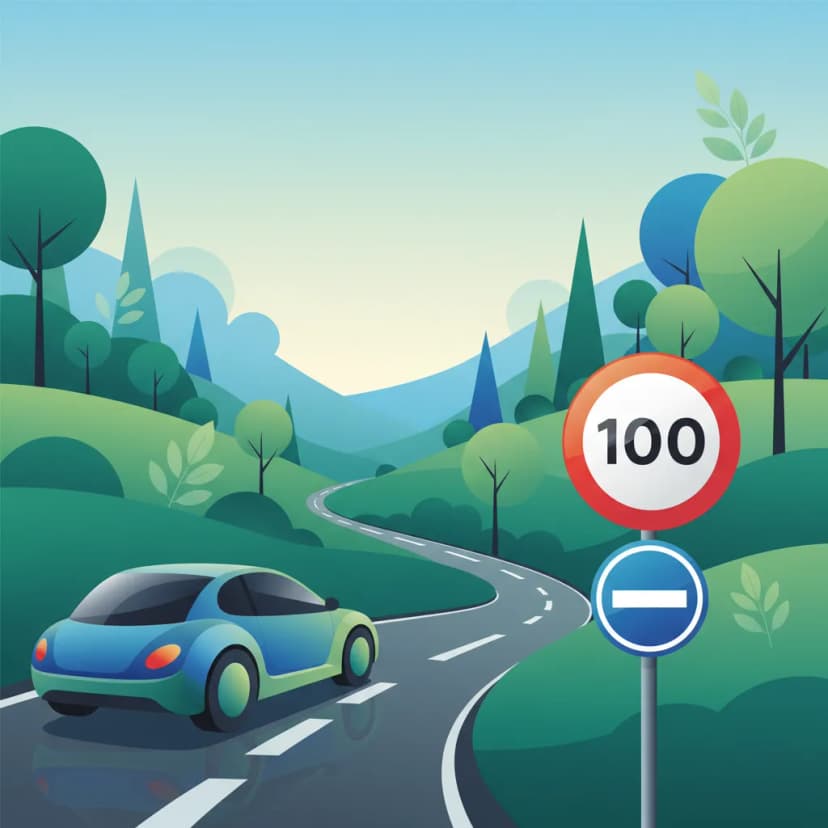
This lesson provides a detailed overview of fixed speed limits on the Dutch road network and the signs that indicate them. You will learn to identify signs for maximum speed (BORD 50) and understand the default limits that apply within built-up areas, on rural roads, and on motorways. The content emphasizes the importance of constant awareness and legal compliance to avoid penalties and ensure road safety for yourself and others.
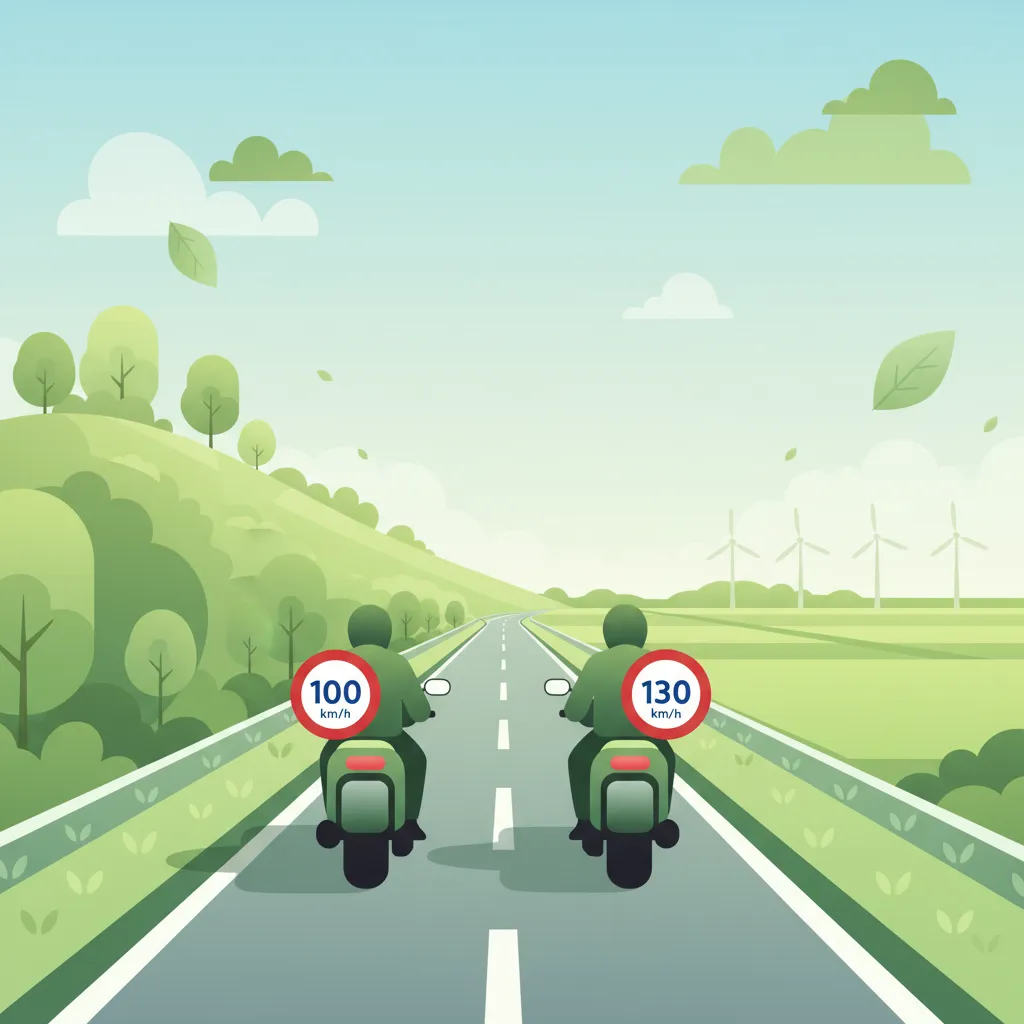
This lesson outlines the statutory national speed limits applicable to motorcycles in the Netherlands. It clearly defines the maximum permitted speeds on motorways ('snelwegen'), non-motorway rural roads ('buiten de bebouwde kom'), and within built-up areas ('binnen de bebouwde kom'). The content also addresses variations, such as time-dependent speed limits on certain motorways, ensuring riders have a complete and accurate understanding of the legal requirements for speed.
Find clear answers to common questions learners have about High-Speed Riding on Motorways (snelweg). Learn how the lesson is structured, which driving theory objectives it supports, and how it fits into the overall learning path of units and curriculum progression in the Netherlands. These explanations help you understand key concepts, lesson flow, and exam focused study goals.
On Dutch motorways (snelwegen), the general rule of thumb is to maintain a two-second following distance. However, at higher speeds common on motorways, you should increase this to at least three or even four seconds to account for longer reaction and braking times, especially considering the motorcycle's potentially shorter stopping distance compared to cars.
Wind blast, especially from passing larger vehicles or due to crosswinds, can significantly destabilize a motorcycle. On motorways, you need to be prepared for constant wind pressure. This requires a firm grip, maintaining your line with counter-steering adjustments, and anticipating sudden gusts. Properly adjusting your speed and position can help mitigate its effects.
Motorcycles must adhere to the same lane discipline as other vehicles, using the appropriate lanes for speed and overtaking. However, motorcyclists should be particularly aware of blind spots of other vehicles and be prepared to move out of faster lanes if a larger vehicle is gaining on them rapidly. Always ensure you have an escape route and are visible.
Yes, the CBR exam often includes questions about fatigue, especially in the context of long-distance riding on motorways where speeds are sustained. Recognizing the signs of fatigue and knowing when to take a break are crucial for maintaining concentration and safety, which are tested in the exam.
The standard maximum speed limit on most Dutch motorways (snelwegen) is 130 km/h. However, this can be reduced to 100 km/h or 120 km/h depending on signage, time of day (e.g., during rush hour), or specific road conditions. Always pay close attention to posted speed limits.