
On a motorcycle, maintaining traction is paramount. This lesson focuses on how to assess various road surface conditions and adapt your speed accordingly. Understanding how different surfaces affect grip is crucial for safe Category A riding and will be tested in your Dutch theory exam.

Riding a motorcycle safely demands constant vigilance and skilled adaptation, especially concerning road surface conditions. The surface beneath your tyres is the primary determinant of how much grip (traction) you have for braking, accelerating, and cornering. This lesson will teach you the crucial skill of assessing these conditions and adjusting your speed accordingly to maintain maximum control and ensure your safety on Dutch roads.
For a motorcyclist, understanding and reacting to changes in road surface friction is not just good practice—it's essential for survival. Every manoeuvre, from braking to leaning into a turn, relies on the friction between your tyres and the road. When this friction is reduced, your bike's capabilities are diminished, leading to longer stopping distances, reduced cornering ability, and an increased risk of losing control.
In the Netherlands, traffic law (specifically RVV 1990 art. 5, §1) places a legal obligation on every driver to adjust their speed to the prevailing traffic, road, and environmental conditions. This includes the state of the road surface. Failure to do so is a common cause of accidents, particularly for motorcyclists who are more vulnerable to sudden changes in grip.
At the heart of safe riding lies an appreciation for the physics of traction. Traction, or grip, is the frictional force that allows your tyres to push against the road, propelling you forward, slowing you down, or changing direction.
The friction coefficient (µ) is a dimensionless number that quantifies how much friction a tyre can generate on a specific surface. It represents the ratio of the force needed to slide one surface over another to the force pressing them together.
This coefficient is critical because it directly influences your bike's capabilities. A lower µ means you need to reduce your speed to stay within safe operating limits.
Your motorcycle operates within a traction envelope, which is the range of longitudinal (braking/acceleration) and lateral (cornering) forces your tyres can generate before slipping. This envelope is constantly changing based on the surface friction coefficient, tyre condition, and even load distribution.
Staying within this envelope is paramount. If the forces you demand from your tyres (e.g., by braking too hard, accelerating too aggressively, or cornering too sharply) exceed what the available friction (µ) can support, your wheels will slip, leading to a loss of control.
Understanding kinetic energy is vital for speed adjustment. Your bike's kinetic energy increases quadratically with speed (½ mv²). This means doubling your speed quadruples your kinetic energy. When braking, this energy must be dissipated through friction.
This quadratic relationship highlights why even small speed reductions on low-µ surfaces have a significant impact on safety. Reduced speed dramatically lowers the energy your brakes and tyres need to manage, making it much easier to stay within the traction envelope.
Various road surfaces and conditions can drastically reduce the available grip. Recognizing these hazards early is a cornerstone of defensive motorcycle riding.
Wet asphalt is one of the most common low-µ surfaces encountered. When rain, condensation, or recent cleaning leaves a film of water on the road, the friction coefficient can drop significantly (µ ≈ 0.55-0.75). This means:
Riders must not assume that because a speed limit is posted, it is safe to maintain that speed on wet roads. Dutch law requires you to adapt your speed.
While less common for motorcycles due to their narrower tyres, deeper puddles or standing water can pose a hydroplaning risk. This occurs when a wedge of water builds up under the tyre, lifting it off the road surface and causing a complete loss of traction. If you encounter standing water, reduce your speed substantially, maintain a straight line, and avoid sudden steering or braking inputs.
Loose gravel or unbound mineral particles (common on rural roads, construction zones, or shoulders) present a significant challenge. The tyres cannot achieve a solid purchase on the shifting surface, resulting in a much lower friction coefficient (µ ≈ 0.35-0.45).
Never assume that a road marked for a certain speed limit (e.g., 80 km/h on an N-weg) implies it is safe to maintain that speed if sections are covered in loose gravel. Adjust your speed to a level where you can confidently control your motorcycle.
Oil, petrol, or diesel spills are among the most dangerous road hazards due to their extremely low friction coefficient (µ ≈ 0.20-0.35). These films can instantly cause a loss of traction.
The best approach is to spot these hazards early through active scanning, decelerate before reaching the spill, and aim to navigate across it with minimal lean and steady, gentle throttle. If unavoidable, keep inputs as smooth and minimal as possible.
Metallic surfaces such as manhole covers, drainage grates, and tram or railway lines become exceptionally slippery when wet. Their smooth, non-porous nature prevents tyre rubber from gripping effectively, causing a temporary drop in µ to around 0.40.
Treat these patches as temporary hazards. Reduce your speed, aim to cross them as straight as possible, and avoid any abrupt steering, braking, or acceleration when your tyres are on them.
Thermoplastic or painted lines, arrows, and symbols on the road surface can also become very slick when wet (µ ≈ 0.45-0.55). The smooth, dense paint offers less grip than the surrounding asphalt.
Adjust your trajectory to cross painted markings at the shallowest angle possible, especially in corners, and avoid sudden movements while your tyres are on them.
The temperature of the road surface significantly influences tyre rubber behaviour. Motorcycle tyres are designed to operate within an optimal temperature range.
Always consider the ambient and road temperature when assessing grip. In cold conditions, reduce your speed and increase your safety margins, treating the road as if it were damp.
Effective speed adjustment is not merely a reactive measure; it's a proactive strategy built on continuous observation and assessment.
Your scanning horizon is the distance ahead that you visually examine to identify potential hazards. For surface conditions, this needs to be extensive:
A wide scanning horizon provides sufficient time to process information, decide on a course of action, and safely adjust your speed before reaching a low-µ area. Looking only a few metres ahead leaves you no time to react.
Choosing a speed based on the lowest estimated friction coefficient (worst-case µ) within your observation horizon, allowing for safe handling even if an unforeseen, extremely slippery patch appears.
This principle encourages early deceleration rather than reactionary braking. If you see a patch of wet road ahead, assume it might be slicker than it looks, or that there could be an unseen oil spill within that area. Adjust your speed to accommodate this "worst-case" scenario, providing a robust safety margin.
When riding on any low-µ surface, smooth and gentle inputs are crucial:
Understanding the specific legal framework in the Netherlands reinforces the importance of adjusting your speed to road conditions.
"The driver shall drive with a speed that is appropriate to the traffic, road, and environmental conditions."
This article is fundamental. It means that simply adhering to the posted speed limit is not enough. Your speed must always be "reasonable" and "appropriate" for the prevailing circumstances, including the condition of the road surface. Failure to do so can result in a traffic violation, even if you were technically below the maximum speed limit.
"A driver must keep a distance that allows him to stop safely under the prevailing conditions."
This directly relates to surface friction. On low-µ surfaces, your braking distance increases significantly. Therefore, your following distance must also increase to ensure you can stop safely behind the vehicle ahead. A common recommendation is to double your following distance in wet conditions.
"The driver shall avoid hazards that can be avoided without danger to other road users."
This regulation places a duty on you to actively avoid known low-grip patches or other hazards by, for example, reducing speed or adjusting your lane position.
The BOVAG (Netherlands' industry association for motor vehicles) and other road safety organisations often provide practical, advisory guidelines. For instance, a common recommendation is to "Reduce speed by at least 30% when transitioning from dry to wet surfaces." While not legally binding, these guidelines align with the physics of reduced grip and help riders meet the legal standard of "reasonable speed."
Several common errors lead to accidents when surface conditions change:
The application of speed adjustment principles varies with the riding context.
On motorways with high kinetic energy, an oil spill requires an immediate, decisive reaction. Spotting a spill 250-300m ahead means gently reducing speed well before the patch, potentially to 50 km/h or less, and maintaining a straight line across it without sudden inputs. High speeds make any slip catastrophic.
Road works often involve temporary, uneven, or low-grip surfaces like loose aggregate or steel plates. These temporary surfaces may have a µ as low as 0.30. Treat them as "extreme low-grip" zones and reduce your speed significantly, possibly to 30 km/h or less, depending on the severity.
The principles discussed here are foundational and link directly to other aspects of advanced motorcycle riding:
This lesson forms a cornerstone for safe and responsible motorcycle riding in the Netherlands, directly supporting the Dutch CBR Category A motorcycle theory exam.
Setting: A city street with a 50 km/h limit. Light rain has made the asphalt visibly wet, and there's a cyclist ahead. Decision Point: Approaching a zebra crossing marked with slippery painted lines. Correct Behaviour: The rider reduces speed to 35 km/h, increases their following distance to the cyclist to at least 3 seconds, and crosses the painted lines at a shallow angle with minimal lean. Incorrect Behaviour: The rider maintains 50 km/h, crosses the wet painted lines sharply while attempting to slow down, causing a momentary wheel slip and nearly colliding with the cyclist. Why Correct: The rider reduces kinetic energy, allows for a longer braking distance, and maintains higher stability on the low-µ painted surface, ensuring compliance with RVV 1990 Art. 5.
Setting: A rural road with an 80 km/h posted limit. A section ahead has freshly laid loose gravel covering the asphalt. Decision Point: Entering the gravel section after a dry asphalt stretch. Correct Behaviour: The rider decelerates smoothly to 55 km/h before reaching the gravel. While on the gravel, they use gentle, steady throttle inputs and keep the motorcycle upright, avoiding sharp turns. Incorrect Behaviour: The rider maintains 80 km/h, enters the gravel at full speed, causing the front tyre to 'dive' and slide, leading to a loss of control and a potential high-side accident.
Setting: A dry motorway with a 100 km/h limit. The rider spots a shimmering oil patch approximately 250 metres ahead. Decision Point: Reducing speed early enough to cross the extremely slick area safely. Correct Behaviour: The rider immediately and gently closes the throttle, applies light, progressive braking to reduce speed to around 45 km/h well before the oil patch (e.g., 300m out). They then maintain a straight line over the patch, avoiding any braking or steering inputs while on the oil itself. Incorrect Behaviour: The rider waits until 100 metres from the oil patch before braking hard. Their wheels lock on the dry asphalt, and then slide uncontrollably on the oil, potentially causing a multi-vehicle collision due to insufficient stopping distance.
Adjusting your speed for road surface conditions is a fundamental skill for every motorcyclist in the Netherlands. It requires continuous observation, an understanding of basic physics, and adherence to legal requirements. By consistently assessing the traction envelope, recognizing low-µ surfaces, and applying risk-based speed selection, you can dramatically reduce your risk of accidents and ensure a safer, more confident riding experience. This proactive approach not only safeguards you but also contributes to the safety of all road users around you.
Lesson content overview
Explore all units and lessons included in this driving theory course.
Explore search topics learners often look for when studying Adjusting Speed for Road Surface Conditions. These topics reflect common questions about road rules, driving situations, safety guidance, and lesson level theory preparation for learners in the Netherlands.
Browse additional driving theory lessons that cover connected traffic rules, road signs, and common driving situations related to this topic. Improve your understanding of how different rules interact across everyday traffic scenarios.
Learn how to adapt your motorcycle speed for slippery conditions like wet asphalt, gravel, and oil spills, based on Dutch traffic law (RVV 1990). Understand traction limits and hazard perception for safer riding.

The posted speed limit is a maximum, not a target. This lesson teaches the crucial skill of adapting your speed to prevailing conditions. You will learn how to assess factors like traffic density, poor weather (rain, fog), limited visibility (at night), and slippery road surfaces. Adjusting your speed downwards in these situations provides you with more time to react to hazards and significantly reduces the risk of losing control or being involved in a collision.

This lesson reinforces the critical relationship between adverse conditions, reduced traction, and massively increased stopping distances. It provides a clear framework for how much riders need to increase their following distance and reduce their overall speed to maintain a safe margin for error. The curriculum teaches riders to constantly reassess their speed based on visual feedback from the road surface and the level of visibility, ensuring they can always stop within the distance they can clearly see.

This lesson compares the different skills and awareness levels required for riding in dense urban environments versus high-speed express environments. It discusses managing frequent hazards like intersections and vulnerable road users in the city, contrasted with the need for high-speed stability, smooth lane changes, and managing merging traffic on motorways. Understanding how to adapt riding style is key to navigating these distinct settings safely.

Riding on two wheels requires special care on surfaces with reduced grip. This lesson teaches you how to handle challenging conditions like rain, ice, wet leaves, or tram tracks. Key principles include reducing speed significantly, making all control inputs (braking, accelerating, steering) much more smoothly and gradually, and increasing your following distance to allow for much longer stopping distances. Recognizing potentially slippery areas is a critical part of proactive hazard perception.
This lesson prepares you to deal with sudden changes in road surface that can cause a loss of traction. You will learn to scan for these hazards and, if they cannot be avoided, how to ride over them safely. The key technique is to keep the motorcycle upright and maintain smooth, steady control inputs—no abrupt braking, accelerating, or steering—to minimize the risk of a skid.
This lesson focuses on the unique demands of riding at sustained high speeds on motorways ('snelwegen'). It covers essential topics such as strict lane discipline, safe overtaking procedures, and maintaining a greater following distance to compensate for higher reaction and braking times. The content also addresses the physical and mental challenges, including managing wind blast, increased noise levels, and maintaining heightened situational awareness over long distances to combat fatigue.
This lesson emphasizes the critical importance of adapting your speed to prevailing conditions, which may require driving slower than the legal limit. You will learn how factors like rain, fog, snow, and darkness significantly increase braking distances and reduce visibility. The curriculum explains the dangers of aquaplaning on wet roads and black ice in winter. The core principle taught is that a safe driver always adjusts their speed to ensure they can stop within the distance they can see to be clear.

This lesson explains how to respond to variable speed limits shown on overhead electronic signs, which are used to manage traffic flow in real-time. You will learn why these limits are adjusted for factors like congestion, accidents, or bad weather, and the legal requirement to obey them. The content focuses on the importance of anticipatory riding, scanning far ahead for these signs to allow for smooth and safe speed adjustments.
This lesson prepares you for the unique dangers of high-speed highway riding. You will learn to scan for and navigate road hazards like debris, potholes, and slippery steel expansion joints on bridges. The content also addresses the powerful air turbulence created by large trucks that can upset a motorcycle's stability and the mental challenge of maintaining focus on long, monotonous stretches of road.

This lesson focuses on hazard perception ('gevaarherkenning'), a critical section of the CBR exam. It explains how increasing speed reduces a rider's field of vision and shortens the time available to identify, process, and react to potential dangers. The content explores techniques for actively scanning the road ahead and anticipating the actions of other road users to make safe, proactive decisions rather than reactive ones.
Explore the physics of motorcycle tyre-road interaction, understanding the friction coefficient and traction envelope. Learn how various surfaces affect grip and how to maintain control in diverse conditions for your Category A theory exam.
Riding on two wheels requires special care on surfaces with reduced grip. This lesson teaches you how to handle challenging conditions like rain, ice, wet leaves, or tram tracks. Key principles include reducing speed significantly, making all control inputs (braking, accelerating, steering) much more smoothly and gradually, and increasing your following distance to allow for much longer stopping distances. Recognizing potentially slippery areas is a critical part of proactive hazard perception.
This lesson prepares you to deal with sudden changes in road surface that can cause a loss of traction. You will learn to scan for these hazards and, if they cannot be avoided, how to ride over them safely. The key technique is to keep the motorcycle upright and maintain smooth, steady control inputs—no abrupt braking, accelerating, or steering—to minimize the risk of a skid.

This lesson explains the science behind reduced grip on wet surfaces and the dangerous phenomenon of hydroplaning, where a tire rides on a layer of water instead of the road. It details the critical roles of tire tread depth, tire pressure, and riding speed in maintaining contact with the asphalt. Riders will learn techniques for riding in the rain, including using exceptionally smooth control inputs and proactively reducing speed when approaching standing water.

This lesson explains the physics of why wet roads offer significantly less traction than dry ones, highlighting particular hazards like the first rain after a dry spell. It defines aquaplaning (when a tire rides on a layer of water instead of the road) and explains how speed and tire condition contribute to this dangerous phenomenon. The content provides clear strategies for riding in the rain, including reducing speed and applying all controls with extra smoothness.

This lesson addresses the specific challenge of cornering when road grip is compromised. It teaches riders how to identify potential low-traction surfaces like wet manhole covers, painted lines, gravel, or oil patches. The content focuses on techniques to mitigate risk, such as reducing speed, minimizing lean angle, and applying all control inputs—braking, steering, and throttle—with exceptional smoothness to avoid overwhelming the available grip.

This lesson explores the often-overlooked factor of road surface temperature and its direct impact on tire grip and braking efficiency. It explains that cold tires on cold asphalt have significantly less grip, leading to longer stopping distances and a higher risk of skidding. The content discusses the importance of allowing tires to warm up through gentle riding and highlights the danger of isolated icy patches, even on otherwise clear winter days.

This lesson details the critical role that tires play in motorcycle safety, as they are the only connection to the road. It explains the importance of selecting the right type of tire for the season and expected riding conditions. The content provides a guide on how to perform regular pre-ride checks, including inspecting for correct inflation pressure, checking tread depth, and looking for any signs of damage or wear.

This lesson provides theoretical knowledge on how to manage a loss of traction, covering both rear-wheel and the more critical front-wheel skids. It explains the typical causes, such as harsh braking or acceleration, and the correct, often counter-intuitive, recovery inputs. The importance of looking in the desired direction of travel to avoid target fixation and using smooth, measured controls to help the tires regain grip is strongly emphasized.
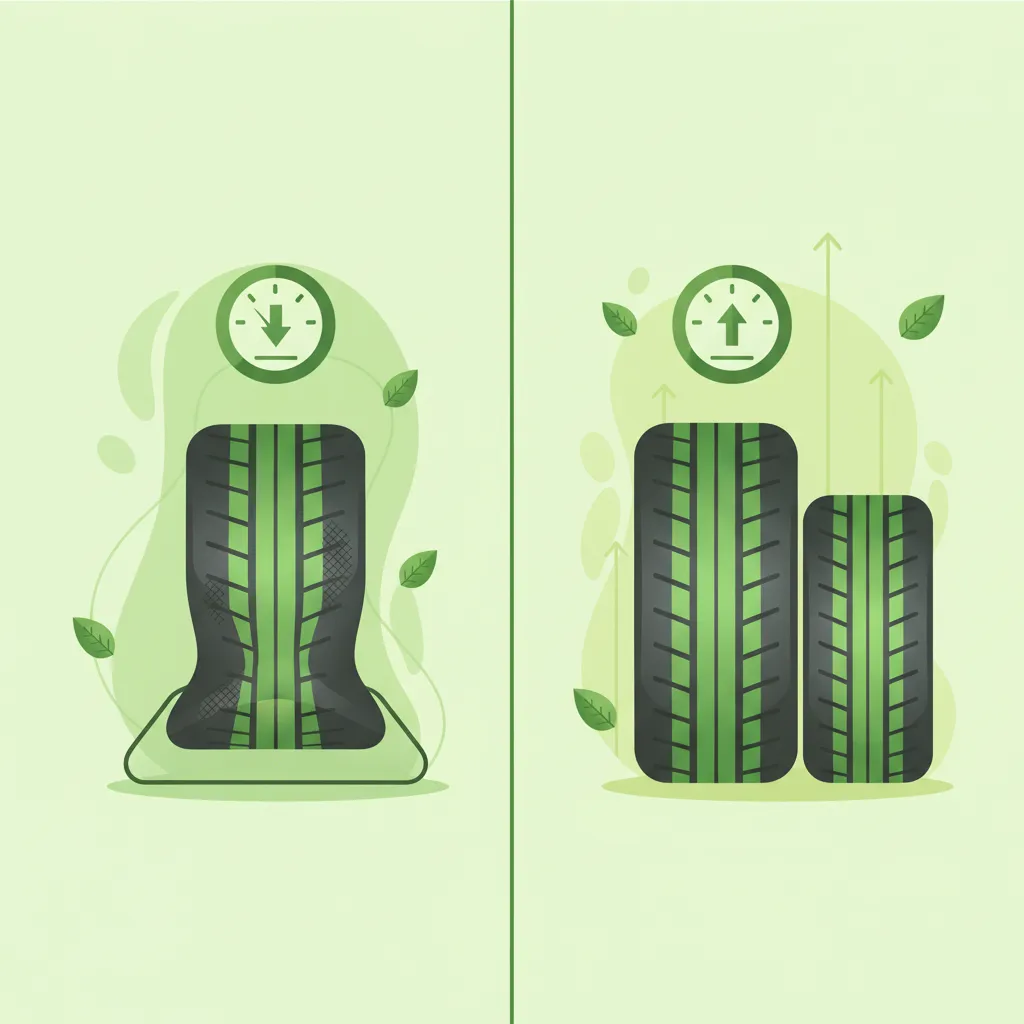
This lesson emphasizes that tires are the single most critical safety component on a motorcycle, being the only connection to the road. It provides detailed instructions on how to correctly check tire pressure ('bandenspanning') when the tires are cold and explains how to read tire wear indicators to assess remaining tread depth. The content also covers the legal minimum tread depth and the severe impact that incorrect pressure or excessive wear has on handling, braking, and overall safety.
This lesson reinforces the critical relationship between adverse conditions, reduced traction, and massively increased stopping distances. It provides a clear framework for how much riders need to increase their following distance and reduce their overall speed to maintain a safe margin for error. The curriculum teaches riders to constantly reassess their speed based on visual feedback from the road surface and the level of visibility, ensuring they can always stop within the distance they can clearly see.
Find clear answers to common questions learners have about Adjusting Speed for Road Surface Conditions. Learn how the lesson is structured, which driving theory objectives it supports, and how it fits into the overall learning path of units and curriculum progression in the Netherlands. These explanations help you understand key concepts, lesson flow, and exam focused study goals.
There's no fixed number, but a general guideline is to reduce speed by at least one-third. Always observe how much water is on the road and reduce speed further if there's a risk of aquaplaning. Focus on smooth throttle and brake control, and increase following distances.
Yes, painted road markings, especially older or worn ones, can become very slippery when wet or even dry. They are often made of different materials than the asphalt. Always anticipate reduced grip when riding over them, particularly when cornering or braking.
Aquaplaning (or hydroplaning) occurs when your tires lose contact with the road surface and ride on a layer of water. To prevent it, reduce speed, especially in standing water, ensure your tires are in good condition with adequate tread depth, and avoid sudden steering or braking inputs.
Loose gravel significantly reduces tire grip, making the bike feel unstable. It's best to maintain a steady throttle and avoid sudden movements. If you encounter gravel, try to ride in a straight line at a reduced speed and look through the turn to where you want to go.
If you hit an oil patch, try to remain as calm as possible and maintain a steady throttle and upright position. Avoid braking or sharp turns. Look for a clear path and gently steer towards it. The bike will feel very unstable, so smooth inputs are critical.
The core principles of physics and traction apply universally, but for Category A motorcycles, the higher speeds and power mean these factors are even more critical. Dutch theory exam questions will specifically assess your understanding of these hazards within the NL context.