
This lesson is crucial for your A2 motorcycle licence preparation, focusing on how to safely handle unexpected road surface hazards. Understanding these challenges and knowing how to react will significantly improve your safety and confidence on Dutch roads, especially in situations not covered by basic priority or speed rules.
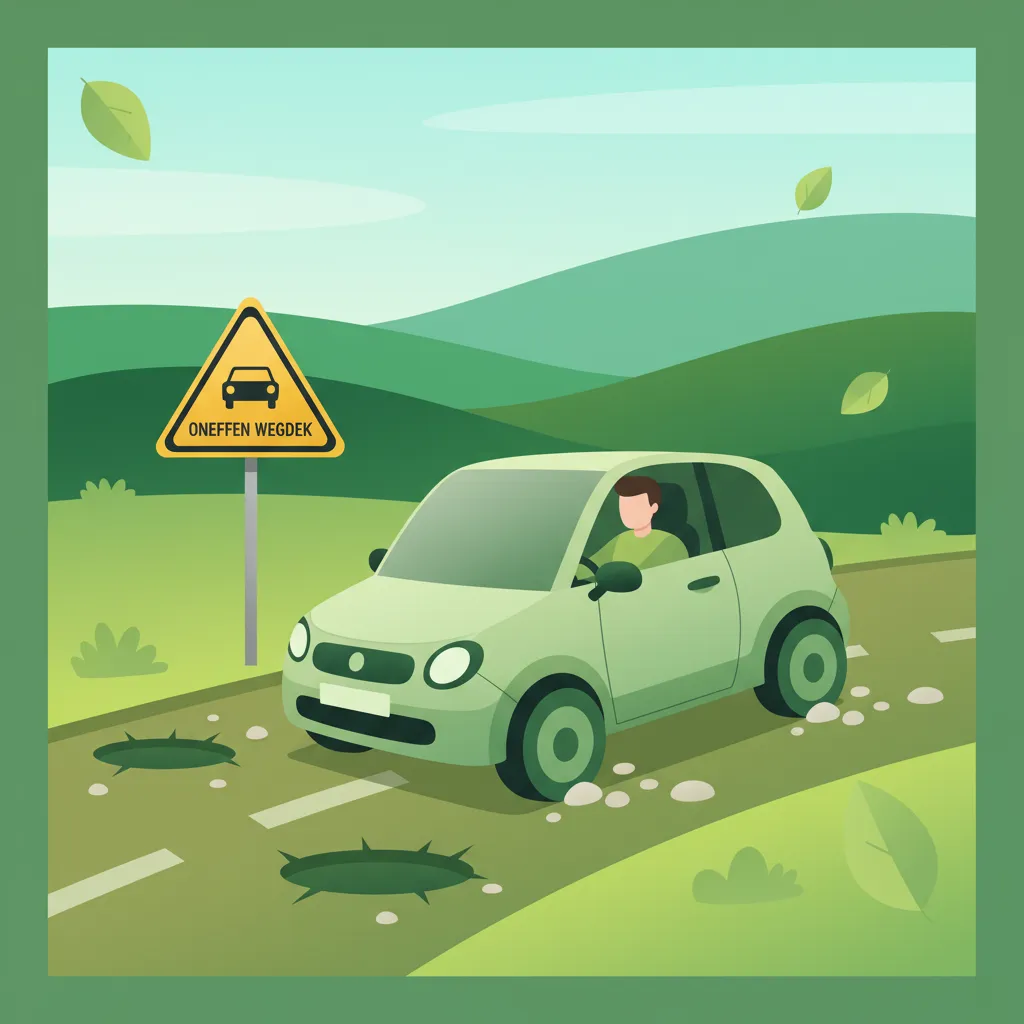
Riding a motorcycle demands constant vigilance, especially when it comes to the ever-changing road surface. Hazards like wet patches, loose gravel, or slippery painted markings can significantly reduce the grip your tyres have on the road, leading to a loss of control. This lesson, part of your preparation for the Dutch Motorcycle License (Category A2) theory course, will equip you with the knowledge and techniques to identify these risks, anticipate their effects, and traverse them safely.
The primary goal is to maintain your motorcycle's stability and prevent skidding. This involves understanding how different surfaces affect tyre traction and applying smooth, controlled inputs rather than abrupt braking, accelerating, or steering. By learning to scan ahead and react appropriately, you can minimise the risk of accidents and ensure safer rides on Dutch roads, fulfilling your legal obligation to adapt your riding to prevailing conditions.
The ability of your motorcycle's tyres to grip the road is fundamental to safe riding. This grip, known as traction, allows you to accelerate, brake, and corner effectively. Road surface hazards directly interfere with this critical relationship, making it essential for every rider to understand the underlying physics.
The amount of traction available between your tyres and the road surface is quantified by the friction coefficient (μ). This ratio represents the potential grip and varies significantly depending on the surface material, its condition (e.g., wet, dry, icy), and even its temperature. A higher μ indicates more grip, while a lower μ means less.
For instance, dry asphalt typically has a high friction coefficient, often ranging from 0.6 to 0.9. However, introduce water, oil, or ice, and this value can plummet dramatically. Wet asphalt might see μ drop to 0.4-0.6, oil spots can reduce it further to 0.2-0.4, and ice offers an extremely low μ, sometimes as little as 0.1-0.2. Understanding these variations is vital because a lower friction coefficient directly translates to a lower maximum braking, acceleration, or cornering force your tyres can generate before they begin to slide. Dutch traffic law, specifically RVV 1990 Article 3, mandates that drivers must adjust their speed to prevailing road conditions, including surface characteristics. This legal obligation directly reflects the physics of the friction coefficient.
To fully grasp the limits of your motorcycle's grip, it is helpful to conceptualise the adhesion circle, also known as the friction circle or circle of forces. This theoretical model illustrates the combined limits of the longitudinal (braking and acceleration) and lateral (cornering) forces that a tyre can generate before losing traction.
Imagine a circle where the centre represents zero force, and the edge represents the maximum grip available. Any combination of braking, acceleration, or cornering forces must remain within this circle to maintain control. When you lean into a corner, you use a significant portion of the available lateral grip. If you then try to brake or accelerate too hard, you exceed the remaining longitudinal grip, pushing past the edge of the adhesion circle and causing a skid. Road surface hazards shrink this adhesion circle, meaning there is less total grip available for any manoeuvre. Therefore, on low-friction surfaces, even small inputs can quickly push your tyres beyond their limits.
Recognising various types of road surface hazards is the first step towards handling them effectively. Each hazard presents unique challenges and requires a specific riding approach to maintain control.
These substances are among the most dangerous for motorcyclists due as they drastically reduce the friction coefficient.
Loose materials on the road surface reduce the direct contact between your tyres and the underlying asphalt, decreasing grip and making the bike less stable.
These hazards involve physical changes to the road or artificial markings that can compromise tyre grip or vehicle stability.
Abrupt transitions between different road surfaces can surprise a rider and lead to a sudden change in tyre grip. This can include moving from smooth asphalt to cobblestones, or from a dry section of road to a wet or gravelled patch. These transitions require immediate adjustment of speed and riding technique to maintain stability.
The most effective way to handle road surface hazards is to identify them early and anticipate their impact. This requires disciplined visual scanning techniques, a cornerstone of safe motorcycle riding.
Effective scanning involves a continuous visual sweep of the road ahead, not just focusing on the vehicle immediately in front. For motorcyclists, it's generally recommended to look at least 10 seconds ahead of your current position. This translates to roughly 150-200 metres at 60 km/h.
This primary scan allows you to detect potential surface anomalies like wet patches, gravel spills, or potholes well in advance. Early detection provides a crucial "decision window," giving you ample time to assess the hazard, adjust your speed, consider a lane change if safe, or prepare for a controlled ride-through. Without this look-ahead, you risk encountering hazards with insufficient time to react, forcing abrupt and potentially dangerous manoeuvres.
While your primary scan focuses on the distant road, it's equally important to utilise your peripheral vision for secondary scanning. This allows you to spot sudden, close-range changes or hazards that might appear without warning, such as a fresh oil spill or a newly formed pothole just metres ahead.
Beyond directly seeing hazards, develop an awareness of environmental cues that often precede them:
By combining active scanning with an understanding of these cues, you significantly enhance your ability to anticipate and prepare for road surface hazards.
When avoidance isn't possible, applying specific riding principles is crucial for maintaining control over hazardous surfaces. These principles aim to keep your tyres within their reduced traction limits.
On any slippery surface, abrupt inputs are your enemy. Progressive control means applying brakes, throttle, and steering in a gradual, linear fashion. This minimises sudden load transfers—the shifts in weight that occur when you accelerate, brake, or turn—which can quickly exceed the reduced traction available.
When crossing a hazardous patch, the general rule is to maintain an upright riding geometry. This means keeping the motorcycle's roll angle as close to vertical as possible, ideally less than 10 degrees of lean. Your body should remain upright or slightly shifted rearward, rather than leaning with the motorcycle into the anomaly.
The rationale is simple: when the motorcycle is upright, the tyres are primarily subject to longitudinal forces (braking/acceleration). As you lean, lateral forces increase. On a low-friction surface, excessive lateral force quickly exhausts the limited available grip, leading to a slide. By riding straight and upright over a hazard, you maximise the tyre's ability to maintain longitudinal grip and stability. If you need to change direction, do so before entering the hazard, or gently after exiting it, not while traversing it.
Understanding load transfer is critical for safe riding, especially on challenging surfaces. Braking shifts the motorcycle's weight (and thus the normal force) to the front wheel, while acceleration shifts it to the rear. Leaning shifts weight laterally to the outer tyre.
On low-friction surfaces, any significant load transfer can easily exceed the traction limits of the tyre that is suddenly bearing more weight. For instance, aggressive front braking on an icy surface transfers a large amount of load to the front wheel, which, with its already minimal grip, can easily lock up. Conversely, sudden acceleration on a wet patch can cause the rear wheel to spin. Conscious management of load transfer means:
The most fundamental principle for handling road surface hazards is speed adaptation. As mandated by RVV 1990 Article 3, you must adjust your speed to the prevailing road and traffic conditions. On surfaces with reduced friction, this means significantly lowering your speed to ensure that any required braking or cornering forces remain well within the diminished grip envelope.
Lower speeds:
By reducing your speed, you effectively increase your safety margin and give yourself more time and options to react safely.
While the core principles of scanning, speed adaptation, upright geometry, and progressive control apply broadly, certain hazards benefit from tailored riding techniques.
Wet asphalt is common, and oil patches can appear suddenly.
These surfaces offer minimal to almost no grip, making them exceedingly dangerous.
Loose materials can cause the wheels to slide or dig in.
These physical hazards can cause sudden jolts and loss of control.
These often-encountered markings require a simple but specific technique.
Safe navigation of road surface hazards is not just good practice; it is a legal requirement under Dutch traffic law. Adhering to these regulations is crucial for preventing accidents and avoiding legal repercussions.
"The driver shall adjust the speed to the prevailing road and traffic conditions, especially when road surface conditions reduce traction."
This fundamental article of the Dutch traffic regulations (Reglement Verkeersregels en Verkeerstekens) places a clear obligation on all drivers, including motorcyclists, to adapt their speed. When the road surface is wet, icy, oily, or covered in loose material, the available traction is reduced, and therefore, your safe travelling speed must also be reduced. Failure to do so can lead to a loss of control, an accident, and potentially severe legal consequences, including fines and charges for reckless driving under the Verkeerswet 1994.
"The driver shall not endanger traffic by performing risky manoeuvres, such as sudden braking on low-traction surfaces."
Article 4 reinforces the duty to ride safely and avoid actions that could endanger yourself or other road users. This directly applies to handling surface hazards. Abrupt braking, sudden acceleration, or aggressive steering on a slippery surface are considered dangerous manoeuvres because they can easily lead to a skid or loss of control, potentially causing a collision. This article underpins the core principle of progressive control.
While not a formal law, Rijkswaterstaat (the Dutch Directorate-General for Public Works and Water Management) issues guidelines for drivers, especially concerning freshly painted road markings. The "Wet on Wet" (WOW) guidelines typically recommend that drivers cross new paint markings at a consistent speed without abrupt braking or steering. This advisory reinforces the need to maintain stable tyre grip on these notoriously slippery surfaces. Ignoring such advice can still contribute to an accident for which you could be held liable.
Understanding common errors and how different contexts affect hazard handling is vital for improving your safety on the road.
Several mistakes frequently lead to loss-of-traction accidents:
Environmental conditions and road characteristics significantly influence how you should approach surface hazards:
Your motorcycle's state and how you ride with others also play a role:
By mastering the principles and techniques for handling road surface hazards, you significantly enhance your safety and confidence on the road. This knowledge builds upon other critical skills in your Dutch Motorcycle License (Category A2) theory course, such as advanced hazard perception, emergency braking, and understanding vehicle dynamics. Continue to practice these concepts during your practical training to develop fluid, instinctive responses.
Lesson content overview
Explore all units and lessons included in this driving theory course.
Explore search topics learners often look for when studying Handling Road Surface Hazards. These topics reflect common questions about road rules, driving situations, safety guidance, and lesson level theory preparation for learners in the Netherlands.
Browse additional driving theory lessons that cover connected traffic rules, road signs, and common driving situations related to this topic. Improve your understanding of how different rules interact across everyday traffic scenarios.
Explore advanced strategies for safely navigating unpredictable road surfaces like oil, wet leaves, and steel gratings. This lesson focuses on minimising risk and maintaining control when traction is compromised on Dutch roads.
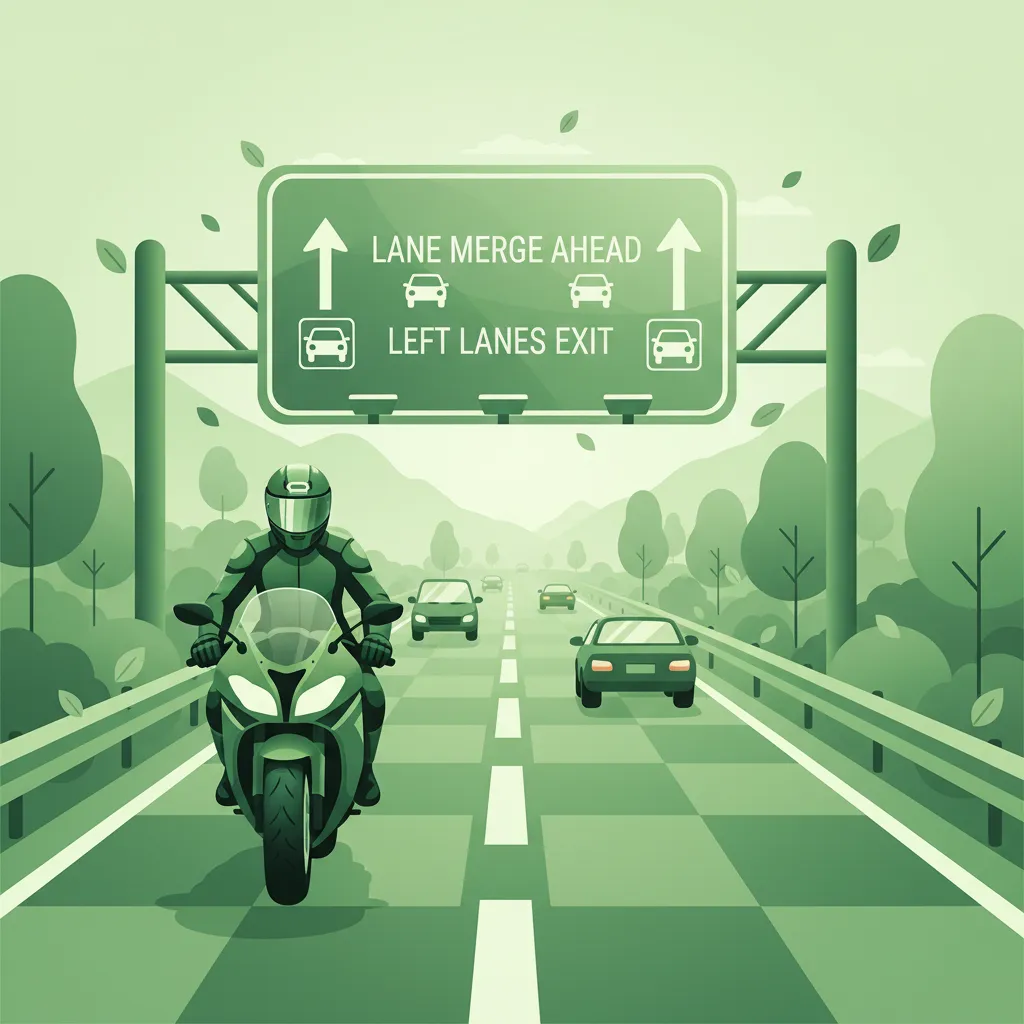
This lesson prepares you for the unique dangers of high-speed highway riding. You will learn to scan for and navigate road hazards like debris, potholes, and slippery steel expansion joints on bridges. The content also addresses the powerful air turbulence created by large trucks that can upset a motorcycle's stability and the mental challenge of maintaining focus on long, monotonous stretches of road.

This lesson addresses the specific challenge of cornering when road grip is compromised. It teaches riders how to identify potential low-traction surfaces like wet manhole covers, painted lines, gravel, or oil patches. The content focuses on techniques to mitigate risk, such as reducing speed, minimizing lean angle, and applying all control inputs—braking, steering, and throttle—with exceptional smoothness to avoid overwhelming the available grip.

This lesson transitions hazard perception skills to the high-speed environment of motorways and tunnels. It covers specific risks such as vehicles merging at different speeds, sudden braking and congestion ahead, road debris, and the aerodynamic effects of crosswinds and large trucks. The curriculum also addresses the challenges of riding in tunnels, including changes in light and surface conditions, and the importance of identifying emergency exits and procedures in case of an incident.

This lesson teaches the crucial skill of assessing road surfaces and adjusting speed accordingly to maintain maximum traction. It covers a variety of hazardous conditions, including wet asphalt, loose gravel, oil patches, metal manhole covers, and painted road markings, all of which can significantly reduce grip. Riders will learn to constantly scan the road ahead, identify potential traction-reducing surfaces, and proactively manage their speed to prevent slides and loss of control.
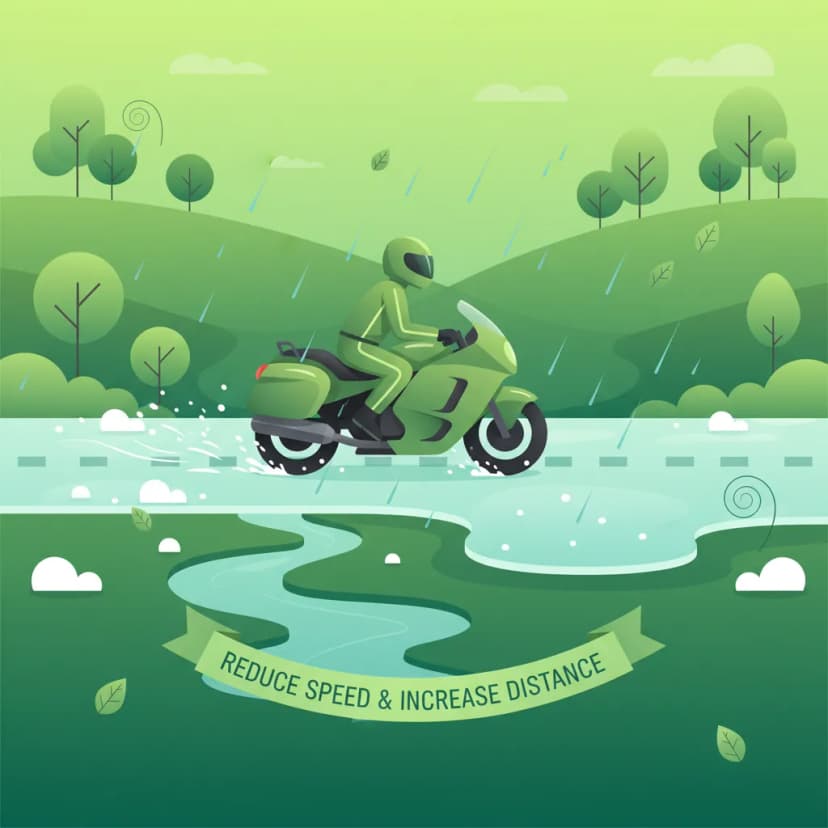
This lesson provides survival strategies for riding in the most challenging weather conditions, including heavy rain, snow, and potential ice. It emphasizes the importance of mental preparation, drastically reduced speeds, and hyper-smooth inputs for throttle, brakes, and steering. The content also covers identifying high-risk areas for 'black ice,' such as bridges and shaded spots, and the critical role of appropriate waterproof and insulated gear in preventing hypothermia and maintaining concentration.

This lesson focuses on the unique and densely packed hazards found in urban traffic environments. It teaches riders to develop a systematic scanning pattern to identify potential risks from multiple sources simultaneously, such as pedestrians stepping off curbs, car doors opening unexpectedly, and buses pulling out. The content also emphasizes the importance of managing speed and always having an 'escape route' planned in case a hazard suddenly materializes in the complex city landscape.
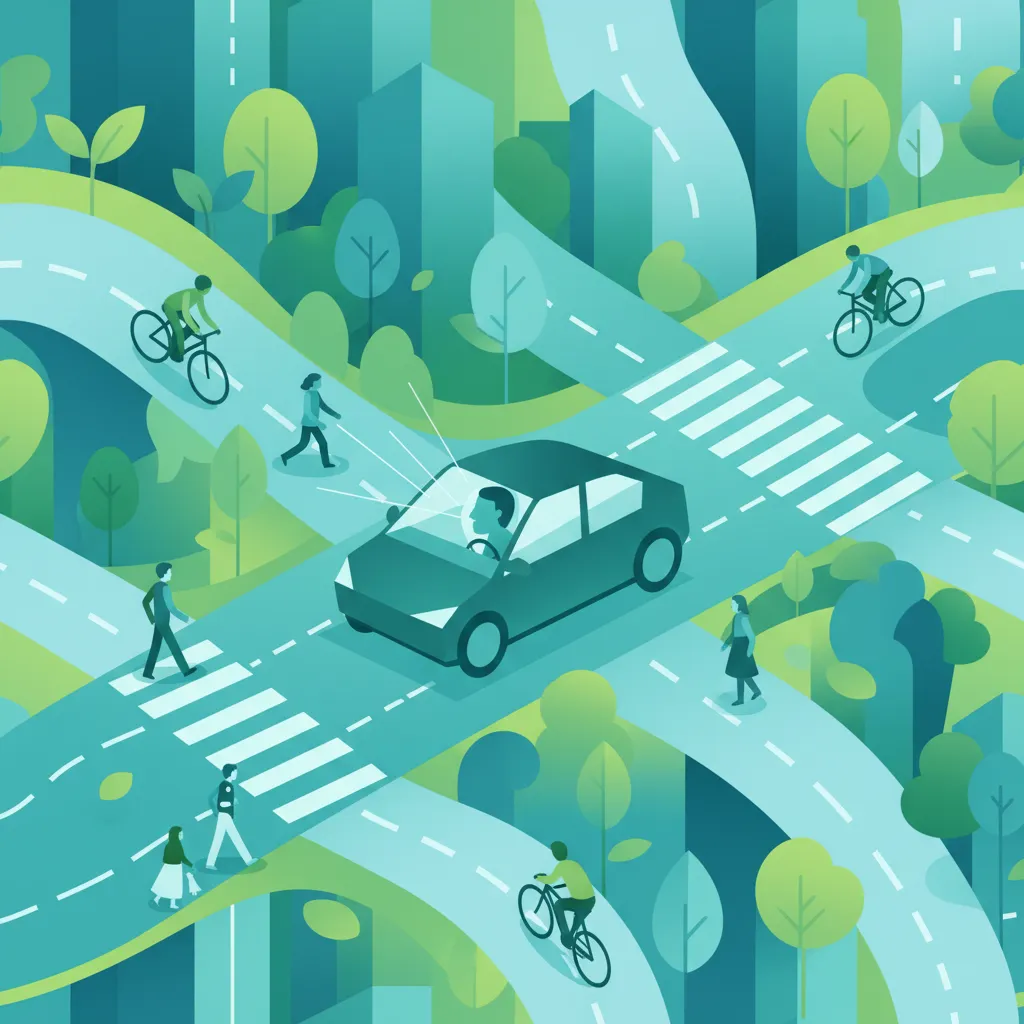
This lesson teaches you to be a proactive rather than a reactive rider by developing superior hazard perception skills. You will learn to scan your environment constantly—near, far, and to the sides—and to identify potential risks, such as a car waiting to turn or a pedestrian looking to cross. The content focuses on asking 'what if?' to predict the actions of others and position yourself for safety in advance.

This lesson synthesizes many of the course's concepts into the overarching philosophy of advanced defensive riding ('verdedigend rijden'). It defines this as a proactive mindset where the rider constantly scans for potential hazards, anticipates the worst-case scenario from other road users, and positions themselves to have time and space to react. This approach moves beyond simply following the rules to actively managing the environment to ensure personal safety at all times.

Riding on two wheels requires special care on surfaces with reduced grip. This lesson teaches you how to handle challenging conditions like rain, ice, wet leaves, or tram tracks. Key principles include reducing speed significantly, making all control inputs (braking, accelerating, steering) much more smoothly and gradually, and increasing your following distance to allow for much longer stopping distances. Recognizing potentially slippery areas is a critical part of proactive hazard perception.
This lesson details the interpretation of Dutch warning signs, which alert riders to potential dangers and changing road conditions. You will study signs indicating sharp curves, road narrowing (BORD 30), and temporary hazards like road works (BORD 36), learning to adjust speed and road position proactively. The content emphasizes how the A2 motorcycle's characteristics require earlier hazard recognition and response compared to other vehicles for maintaining control.
Understand your legal obligations under Dutch traffic law (RVV 1990) regarding speed adaptation and hazard management. Learn how environmental factors like weather and lighting affect road surface risks for motorcyclists.
This lesson provides survival strategies for riding in the most challenging weather conditions, including heavy rain, snow, and potential ice. It emphasizes the importance of mental preparation, drastically reduced speeds, and hyper-smooth inputs for throttle, brakes, and steering. The content also covers identifying high-risk areas for 'black ice,' such as bridges and shaded spots, and the critical role of appropriate waterproof and insulated gear in preventing hypothermia and maintaining concentration.

This lesson addresses the dual challenge of poor visibility: being able to see the road ahead and ensuring other road users can see you. It covers techniques for riding in fog and heavy rain, such as using appropriate lights and reducing speed to match sight distance. The lesson also discusses practical issues like helmet visor fogging and the importance of wearing high-visibility or reflective clothing to enhance conspicuity in low-light conditions.

This lesson explains how to counteract the effects of strong winds, which can easily upset a motorcycle's stability. It covers techniques like maintaining a relaxed grip on the handlebars and leaning into a steady crosswind. The lesson also addresses the impact of temperature, explaining how cold weather affects both the rider (risk of hypothermia, reduced concentration) and the motorcycle (reduced tire grip until warmed up), and emphasizes the need for appropriate protective gear.
This lesson explains why the standard two-second rule is insufficient in adverse conditions and requires extension. It details how factors like rain, fog, and darkness reduce both visibility and tire grip, thereby significantly increasing total stopping distance. The content provides practical guidelines, such as extending the following gap to four seconds or more in the wet, to ensure the rider always has enough time and space to stop safely, regardless of the conditions.

This lesson provides a detailed guide to riding in wet and low-visibility conditions. You will learn to make all your control inputs—braking, accelerating, and steering—exceptionally smooth to avoid breaking traction on slippery surfaces. The content covers the dangers of painted lines and manhole covers when wet, and the importance of increasing your following distance dramatically to account for longer braking distances.

This lesson reinforces the critical relationship between adverse conditions, reduced traction, and massively increased stopping distances. It provides a clear framework for how much riders need to increase their following distance and reduce their overall speed to maintain a safe margin for error. The curriculum teaches riders to constantly reassess their speed based on visual feedback from the road surface and the level of visibility, ensuring they can always stop within the distance they can clearly see.

This lesson covers the critical decision-making process of when to stop riding altogether because weather conditions have become too hazardous to continue safely. It provides procedures for safely pulling off the road, finding suitable shelter, and making yourself and your motorcycle as visible as possible to other traffic. The content emphasizes that there is no shame in stopping, and that rider preservation is the highest priority when faced with extreme conditions like gale-force winds or torrential downpours.

This lesson explains the science behind reduced grip on wet surfaces and the dangerous phenomenon of hydroplaning, where a tire rides on a layer of water instead of the road. It details the critical roles of tire tread depth, tire pressure, and riding speed in maintaining contact with the asphalt. Riders will learn techniques for riding in the rain, including using exceptionally smooth control inputs and proactively reducing speed when approaching standing water.

This lesson covers the principles of selecting and using appropriate protective gear to combat the effects of low temperatures and wind chill. It explains the concept of layering with a base, mid, and outer layer to trap heat and manage moisture. The content also discusses the benefits of heated grips and clothing, effective waterproofing, and solutions like Pinlock inserts to prevent visor fogging, all of which are crucial for maintaining comfort, concentration, and control in the cold.
This lesson prepares you for the unique dangers of high-speed highway riding. You will learn to scan for and navigate road hazards like debris, potholes, and slippery steel expansion joints on bridges. The content also addresses the powerful air turbulence created by large trucks that can upset a motorcycle's stability and the mental challenge of maintaining focus on long, monotonous stretches of road.
Find clear answers to common questions learners have about Handling Road Surface Hazards. Learn how the lesson is structured, which driving theory objectives it supports, and how it fits into the overall learning path of units and curriculum progression in the Netherlands. These explanations help you understand key concepts, lesson flow, and exam focused study goals.
Common hazards include potholes, gravel, sand, loose chippings, oil patches, painted lines, manhole covers, and uneven or broken tarmac. You must also be aware of slippery surfaces caused by rain, ice, or mud. The CBR theory exam often includes questions about recognizing and reacting to these specific conditions.
When encountering a hazard that cannot be avoided, avoid abrupt braking, acceleration, or steering. Ideally, maintain a steady, controlled throttle and keep the motorcycle upright. If you must slow down, do so gently before reaching the hazard, or maintain a slow, steady speed over it if it's unavoidable. Sudden changes in speed or direction can easily lead to a loss of traction.
Carrying a passenger or luggage shifts the motorcycle's centre of gravity and increases its weight, making it more susceptible to instability on poor surfaces. The motorcycle will also have a longer stopping distance. Always ensure your suspension and tyre pressures are correctly adjusted and ride with extra caution when carrying additional weight.
The 'keep upright' rule means trying to keep the motorcycle as vertical as possible when going over a hazard like a pothole or gravel patch. Leaning the motorcycle, especially while braking or accelerating, significantly increases the risk of the tyres losing grip and skidding. Aim to approach and traverse the hazard with minimal lean angle.
The CBR exam often uses scenario-based questions where you're shown an image or described a situation involving a specific road hazard. You'll be asked what you should do, or what the consequences might be. Questions test your understanding of maintaining control, avoiding sudden inputs, and anticipating potential dangers.