
This unit focuses on two crucial areas for motorcycle safety: making yourself visible and adapting your ride to challenging weather. You'll learn how to use your motorcycle's lighting effectively and position yourself to be seen by others. We’ll also cover essential techniques for maintaining control and traction during rain, fog, and strong winds, ensuring you're prepared for all conditions on Dutch roads.
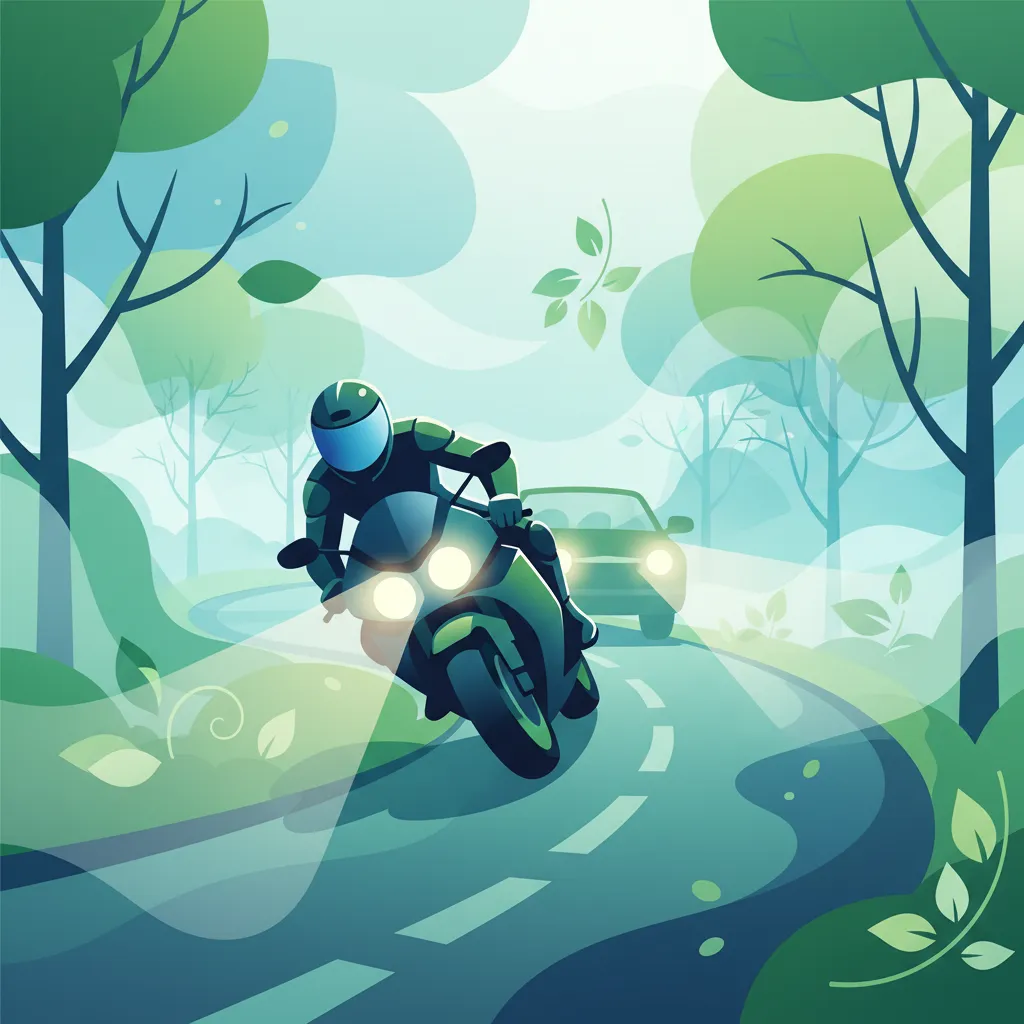
Browse all lessons that make up Visibility, Lighting, and Weather-Related Hazards. Each lesson focuses on specific topics, learning objectives, and core concepts, helping you build essential knowledge and follow a clear, structured progression toward your study goals in the Netherlands.
This lesson goes beyond the legal requirements of lighting to teach you how to use it strategically to stand out in traffic. You will learn the importance of always riding with your low-beam headlight on, and the appropriate, considerate use of the high beam to make yourself more noticeable from a distance. The content also covers using turn signals well in advance and tapping the brakes to flash the brake light before slowing.
This lesson explains that where you ride in your lane is a critical safety choice. You will learn to avoid lingering in the blind spots ('dode hoek') of cars and trucks, and how to position yourself to be clearly visible in their mirrors. The content teaches you to constantly adjust your lane position to create a space cushion and ensure you always have a planned escape path in case of an emergency.
This lesson provides a detailed guide to riding in wet and low-visibility conditions. You will learn to make all your control inputs—braking, accelerating, and steering—exceptionally smooth to avoid breaking traction on slippery surfaces. The content covers the dangers of painted lines and manhole covers when wet, and the importance of increasing your following distance dramatically to account for longer braking distances.
This lesson prepares you for the challenge of riding in strong winds. You will learn to anticipate areas prone to gusts, such as exiting a tunnel or passing a large truck. The content explains how to maintain a relaxed grip on the handlebars and use subtle counter-steering inputs and body lean to counteract the force of the wind, keeping the motorcycle on its intended path.
Explore high-intent keywords and long-tail search topics learners use when researching Visibility, Lighting, and Weather-Related Hazards. These terms reflect how people search for reliable study materials, structured explanations, and unit-level theory preparation support in the Netherlands.
Find clear answers to the most common questions learners ask about Visibility, Lighting, and Weather-Related Hazards. Understand how the unit is organized, what learning goals it supports, and how it contributes to your study progression with structured explanations and practical guidance tailored for learners in the Netherlands.
In the Netherlands, traffic density can be high, and many road users, including car drivers and cyclists, may not always be looking out for motorcycles. Enhancing your visibility, especially in urban areas and during peak hours, significantly reduces your risk of being involved in an accident. This unit teaches you proactive ways to make yourself seen.
Dutch law mandates specific lighting for motorcycles, including a functioning headlight (dipped beam) at all times, rear light, and brake lights. This unit goes beyond the basics, explaining how to use your lights and reflective gear to maximize your conspicuity in various conditions, not just when legally required.
Rain drastically reduces tyre grip, increasing your stopping distance and making cornering more hazardous. You need to brake earlier and more gently, avoid sudden inputs, and maintain a greater following distance. This unit provides detailed strategies for managing these risks safely.
Strong winds, especially side gusts on open roads or bridges, can push your motorcycle off course. You'll need to anticipate wind direction, adjust your body position to reduce wind resistance, and make slight steering corrections to stay in your lane. This unit covers techniques for maintaining stability and control in such conditions.
Riding in dense fog is inherently risky due to extremely limited visibility. While this unit covers techniques to improve your visibility using lights and positioning, it also emphasizes the importance of assessing if riding is truly necessary. When riding is unavoidable, you must proceed with extreme caution, reduce speed significantly, and increase following distances.
For optimal visibility, wear brightly coloured clothing, preferably fluorescent, and incorporate reflective elements. Helmets with bright colours or reflective stickers are also highly recommended. This unit reinforces that gear choices play a crucial role in how easily other road users can spot you.
All included lessons
Lessons in Visibility, Lighting, and Weather-Related Hazards
See who benefits most from studying Visibility, Lighting, and Weather-Related Hazards. This overview explains how the unit supports different learning needs, what level of knowledge is helpful before starting, and how it fits into the overall study path in the Netherlands.
This unit is essential for all learner motorcyclists preparing for the Dutch CBR theory exam. It's particularly beneficial for those who want to go beyond basic rules and understand the practical safety measures needed for riding in varying visibility and weather conditions common in the Netherlands.

See how Dutch Motorcycle Theory (A2) is structured, with key topics, learning objectives, and a step-by-step path for theory preparation in the Netherlands.
Explore all units and lessons included in this driving theory course.