
This lesson prepares you for the challenge of riding your A2 motorcycle in strong winds. Building on previous weather hazard knowledge, you will learn to anticipate gusts and apply effective techniques to maintain control. Mastering these skills is crucial for safe riding on Dutch roads and for your CBR theory exam.

Riding a motorcycle offers unparalleled freedom and exhilaration, but it also demands a deep understanding of vehicle dynamics and environmental challenges. Among the most significant natural hazards encountered on the road, especially in a country like the Netherlands with its open landscapes, bridges, and coastal areas, are crosswinds and other aerodynamic forces. This lesson, part of your Complete CBR Theory Course for the Dutch Motorcycle License (Category A2), will equip you with the knowledge and techniques to safely manage these invisible yet powerful forces.
Understanding how wind interacts with your motorcycle is crucial for maintaining control, stability, and ultimately, your safety on the road. Strong gusts can push your bike sideways, reduce tire traction, and compromise your steering, potentially leading to loss of control. By learning to anticipate these forces and applying specific riding techniques, you can mitigate risks and ride confidently, even in challenging conditions.
To effectively counter wind, you first need to grasp the basic aerodynamic principles at play. When your motorcycle moves through the air, or when air moves past your stationary motorcycle (wind), various forces are generated. These forces are proportional to the square of the relative wind speed, meaning even a small increase in wind speed can lead to a disproportionately large increase in force.
This is the most immediately noticeable effect of a crosswind. When wind hits your motorcycle from the side, it creates a lateral push, attempting to move your bike out of its lane. This force is particularly strong on motorcycles due to their relatively large side profile (including the rider) and lighter weight compared to cars.
While less commonly discussed, aerodynamic lift can be a significant hazard. When wind flows over curved surfaces like your fuel tank, fairings, or even your helmet, it can generate an upward force, similar to how an airplane wing creates lift. This lift reduces the pressure of your tires against the road surface, especially the front tire. A reduction in tire load directly translates to reduced traction, increasing the risk of front wheel wobble or loss of steering control. This is particularly dangerous for lighter "naked" bikes with less inherent aerodynamic stability.
Drag is the resistance your motorcycle experiences as it moves through the air. While primarily affecting acceleration and fuel consumption, it's also a component of the overall aerodynamic load. In a crosswind, drag isn't just longitudinal; the overall wind vector means a portion of the drag also contributes to the lateral forces. A rider's posture significantly influences drag, with a more upright position increasing frontal area and thus drag.
When a crosswind hits your motorcycle, it doesn't always apply force perfectly through the center of gravity. If the aerodynamic center of pressure is forward or aft of the center of gravity, it creates a twisting motion (a yaw moment). This moment attempts to turn the motorcycle's front wheel, initiating a change in your heading. Riders must counteract this yaw moment to maintain a straight line.
It's crucial to understand that the wind you feel on your bike isn't just the environmental wind. It's a combination of the true wind speed and direction, and the wind generated by your own forward movement. This "relative wind" or "apparent wind" dictates the actual aerodynamic forces acting on your motorcycle. For instance, riding at 80 km/h with a 20 km/h crosswind from your right will result in a much stronger apparent wind from the right-front than just the 20 km/h pure crosswind. Higher motorcycle speed can significantly amplify the lateral force experienced even from a moderate crosswind.
Effective wind management relies on a combination of physical techniques and good judgment. Here are the core principles to keep you safe and stable.
This is perhaps the most fundamental principle. A tight grip prevents the motorcycle from using its natural stability (thanks to gyroscopic forces and steering geometry). When you grip the handlebars tightly, your arm muscles act like rigid rods, transmitting every slight oscillation or wind gust directly to the steering and amplifying it. This can lead to a dreaded "tank slapper" or wobble. A relaxed grip allows the bike to subtly move beneath you, absorbing minor wind inputs, and allows you to feel the wind's effect through the handlebars, enabling smooth, proportional corrections.
Counter-steering is a vital skill for all motorcyclists and is especially critical when dealing with sudden crosswind gusts. If a gust pushes your motorcycle to the right, you need to lean the bike to the left to counteract this force. To achieve this lean quickly, you briefly push the left handlebar forward (or pull the right handlebar back), which causes the bike to steer momentarily to the right, initiating a lean to the left. This allows you to rapidly adjust your lean angle and direction to maintain your lane position against the wind. It's a practiced technique that becomes intuitive with experience.
While counter-steering quickly changes the bike's lean, body lean allows you to subtly shift your center of gravity. If the wind is coming from your right, you can lean your upper body slightly to the right (into the wind). This shifts your combined center of gravity, helping to counteract the side force without requiring a significant bike lean or continuous steering input. It effectively uses your body weight to increase the pressure on the side of the tires facing away from the wind, providing more grip against the lateral force. This technique works best in combination with a relaxed grip and gentle counter-steering inputs.
Given that aerodynamic forces are proportional to the square of relative wind speed, reducing your speed is the single most effective way to manage wind. Lower speeds drastically reduce the lateral forces exerted on your bike, making it much easier to maintain stability and react to gusts. When facing strong crosswinds, it's not just about staying within the posted speed limit (RVV 1990, Article 8); it's about reducing your speed to a level where you can comfortably and safely control the motorcycle, fulfilling your legal duty of care (RVV 1990, Article 5.1).
The spinning wheels of your motorcycle act like gyroscopes, providing inherent stability. When a force (like a crosswind) attempts to change the motorcycle's orientation, the gyroscopic effect resists this change, helping the bike to stay upright. However, this also means there's a slight delay in the motorcycle's response to your steering inputs. Understanding this delay encourages smoother, more anticipatory inputs rather than sudden, jerky corrections, which can destabilize the bike.
Wind isn't uniform; it's often localized and can vary dramatically. Being able to anticipate where strong crosswinds or sudden gusts are likely to occur is a key component of safe riding.
Exiting a tunnel is a classic scenario for unexpected wind. Inside a tunnel, you are shielded from wind. As you approach the exit, a pressure differential can create a "jet-wind" effect, where air rushes out of the tunnel at high speed, hitting you suddenly as a crosswind or headwind. Similarly, riding onto or across bridges often exposes you to stronger, unobstructed winds that can be "funneled" or amplified by the bridge structure itself.
Adaptation: Always reduce your speed significantly before exiting a tunnel or entering a bridge, especially on windy days. Adopt a relaxed grip and be prepared to make immediate, gentle counter-steering and body lean corrections.
Large vehicles like trucks, buses, and caravans create significant aerodynamic disturbances. When you are riding near them, you can experience:
Adaptation: Maintain a generous safe following distance and, when overtaking, ensure ample lateral clearance (at least 1.5 meters, as per RVV 1990, Article 38). Approach and exit the turbulent zones smoothly, anticipating the forces. Reduce speed if necessary, especially if the road surface is wet, further reducing tire grip.
On open highways, coastal roads, and polder roads common in the Netherlands, you are exposed to sustained, strong crosswinds with little to no shelter. Conversely, in urban areas, buildings and trees can channel wind into sudden, powerful gusts as you pass gaps between structures. Be aware of your surroundings and adapt your riding style accordingly.
Integrating the principles discussed above into your actual riding requires conscious practice and awareness.
When dealing with wind, jerky or abrupt steering inputs can destabilize the bike. Aim for small, progressive, and smooth corrections. Think of it as a continuous dance with the wind, making constant, minor adjustments rather than large, reactive ones. This allows the motorcycle's inherent stability to work with you.
On windy days, be extra cautious when overtaking large vehicles.
Imagine you are riding on a wide-open polder road in the Netherlands, and a steady crosswind is blowing strongly from your right.
In the Netherlands, specific articles of the Reglement verkeersregels en verkeerstekens 1990 (RVV 1990), or Traffic Regulations and Traffic Signs 1990, underpin your responsibilities as a motorcyclist when encountering challenging wind conditions.
This fundamental article states: "It is forbidden for anyone to cause danger or hinder traffic on the road, or to be likely to cause danger or hinder traffic." This implies a clear legal duty to adapt your riding style, speed, and positioning to prevailing conditions, including strong winds. Failing to do so can be considered negligent and lead to legal consequences in case of an incident.
While Article 8 sets maximum speed limits, your duty of care (Article 5.1) often dictates that your safe speed in strong winds may be significantly lower than the posted limit. You must adjust your speed downwards to ensure you can maintain full control and react safely to unexpected gusts.
This article specifies a minimum lateral distance when overtaking a vehicle wider than 2 meters, which includes most trucks and buses. The current requirement is to maintain at least 1.5 metres lateral clearance. This rule is particularly crucial in windy conditions to minimize your exposure to the unpredictable turbulent wakes created by these large vehicles.
If strong winds kick up a lot of dust or spray (in combination with rain), visibility can be reduced. In such conditions, Article 3 requires you to use appropriate lighting, such as low-beam headlights or fog lights, to ensure you are visible to other road users. Using high beams in reduced visibility can create glare for oncoming traffic, making the situation worse.
Some regions, particularly those prone to high winds like coastal highways or large bridge crossings, may have specific police ordinances or advisory signs regarding "Snelheidsreductie bij wind" (speed reduction for wind). These signs are usually advisory but indicate a known hazard. Ignoring them, even if not strictly illegal, could be viewed as a breach of your duty of care if an incident occurs.
Understanding common errors helps you consciously avoid them.
Why it's Wrong: Aerodynamic side force increases quadratically with speed. Maintaining a high speed in strong winds makes your motorcycle much harder to control and drastically reduces your reaction time. Correct Behaviour: Reduce your speed by at least 10-30% (or more, depending on wind intensity) to a level where you feel fully in control and can manage any drift.
Why it's Wrong: A tight grip transmits all muscle tension and external forces directly to the steering, amplifying wobbles and preventing the bike's natural self-stabilization. It also makes you less sensitive to subtle feedback from the road and wind. Correct Behaviour: Maintain a relaxed grip. Allow your arms to be flexible. Feel the steering torque from the wind and make gentle, progressive corrections.
Why it's Wrong: While body lean is good, an excessive or uncoordinated lean, without proper counter-steering or bike lean, can reduce your tire contact patch or exceed the lateral grip limits of your tires, especially on wet surfaces. Correct Behaviour: Combine modest body lean (typically 5-10 degrees) with gentle counter-steering to achieve the necessary bike lean angle. The goal is to balance the forces, not to fight them with extreme inputs.
Why it's Wrong: Riding too close exposes you to the unpredictable and strong turbulent wake of large vehicles, which can cause sudden, dangerous lateral pulls. Correct Behaviour: Always keep a safe lateral distance of at least 1.5 metres when overtaking. Increase your following distance significantly, especially when winds are gusty, to avoid the worst of the wake effects.
Why it's Wrong: You will be suddenly hit by a "jet-wind" or crosswind, which, combined with high speed, can cause immediate and severe lateral drift, pushing you into adjacent lanes or barriers. Correct Behaviour: Always reduce your speed significantly before exiting a tunnel and be mentally prepared for the sudden change in wind conditions.
Why it's Wrong: Lift reduces the load on your tires, particularly the front, which can lead to instability, wobbles, and reduced steering control. Correct Behaviour: Reduce speed, ensure correct tire pressure, and if necessary, shift your body weight slightly forward to increase front tire load.
Managing crosswinds and aerodynamic forces is not an isolated skill; it builds upon and integrates knowledge from several other lessons in your Complete CBR Theory Course for the Dutch Motorcycle License (Category A2).
By thoroughly understanding and practicing the techniques covered in this lesson, you will be well-prepared to handle one of the most common and challenging environmental hazards for motorcyclists, making you a safer and more confident rider on Dutch roads and beyond.
Lesson content overview
Explore all units and lessons included in this driving theory course.
Explore search topics learners often look for when studying Managing Crosswinds and Aerodynamic Forces. These topics reflect common questions about road rules, driving situations, safety guidance, and lesson level theory preparation for learners in the Netherlands.
Browse additional driving theory lessons that cover connected traffic rules, road signs, and common driving situations related to this topic. Improve your understanding of how different rules interact across everyday traffic scenarios.
Gain a deep understanding of aerodynamic forces like side force, lift, and drag that affect motorcycle stability. Learn how wind gusts and turbulence impact your ride and how to anticipate these Dutch road hazards.

Two-wheeled vehicles are particularly vulnerable to strong winds. This lesson explains how crosswinds and gusts can push you off course and upset your balance. You will learn proactive techniques to manage these effects, such as anticipating windy spots (e.g., bridges, gaps between buildings), adjusting your body position to be more aerodynamic, and applying subtle counter-steering inputs to maintain a straight line. A relaxed grip on the handlebars is key to letting the bike move slightly underneath you.

This lesson explains how to counteract the effects of strong winds, which can easily upset a motorcycle's stability. It covers techniques like maintaining a relaxed grip on the handlebars and leaning into a steady crosswind. The lesson also addresses the impact of temperature, explaining how cold weather affects both the rider (risk of hypothermia, reduced concentration) and the motorcycle (reduced tire grip until warmed up), and emphasizes the need for appropriate protective gear.
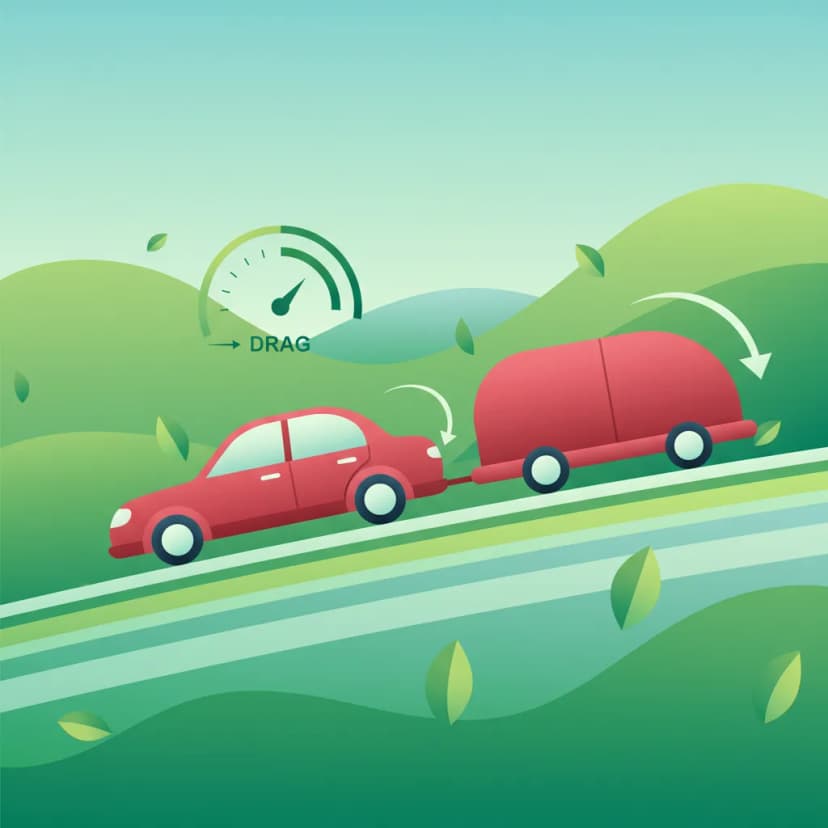
This lesson examines how adding weight, such as a pillion passenger or luggage, and changes in aerodynamics affect a motorcycle's performance and stability at speed. It explains the impact on acceleration, braking distances, and cornering ability due to a higher center of gravity and increased mass. Riders will learn how to adjust their speed and control inputs to safely manage the altered handling characteristics, especially when riding in windy conditions or at high motorway speeds.
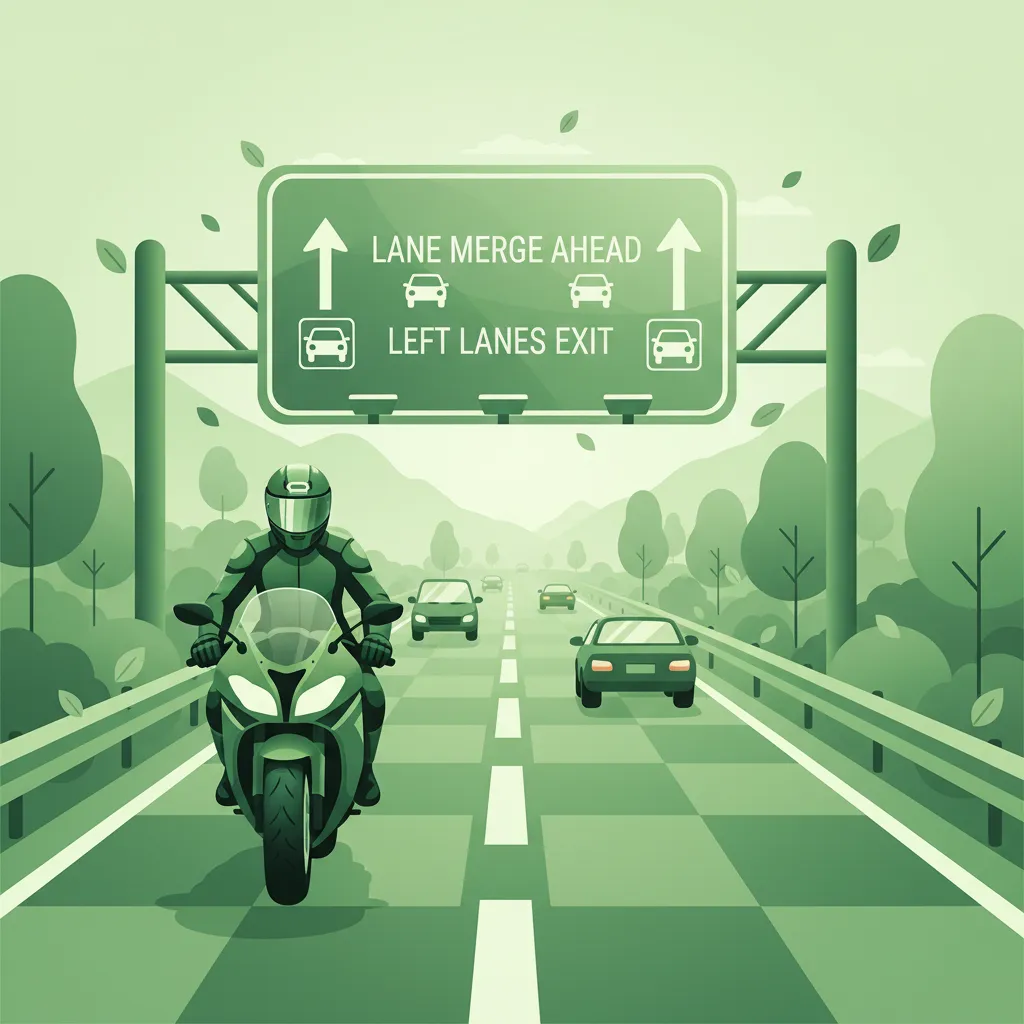
This lesson prepares you for the unique dangers of high-speed highway riding. You will learn to scan for and navigate road hazards like debris, potholes, and slippery steel expansion joints on bridges. The content also addresses the powerful air turbulence created by large trucks that can upset a motorcycle's stability and the mental challenge of maintaining focus on long, monotonous stretches of road.

This lesson explains the science behind reduced grip on wet surfaces and the dangerous phenomenon of hydroplaning, where a tire rides on a layer of water instead of the road. It details the critical roles of tire tread depth, tire pressure, and riding speed in maintaining contact with the asphalt. Riders will learn techniques for riding in the rain, including using exceptionally smooth control inputs and proactively reducing speed when approaching standing water.

This lesson reinforces the critical relationship between adverse conditions, reduced traction, and massively increased stopping distances. It provides a clear framework for how much riders need to increase their following distance and reduce their overall speed to maintain a safe margin for error. The curriculum teaches riders to constantly reassess their speed based on visual feedback from the road surface and the level of visibility, ensuring they can always stop within the distance they can clearly see.

This lesson provides a detailed guide to riding in wet and low-visibility conditions. You will learn to make all your control inputs—braking, accelerating, and steering—exceptionally smooth to avoid breaking traction on slippery surfaces. The content covers the dangers of painted lines and manhole covers when wet, and the importance of increasing your following distance dramatically to account for longer braking distances.

This lesson explains the physics of why wet roads offer significantly less traction than dry ones, highlighting particular hazards like the first rain after a dry spell. It defines aquaplaning (when a tire rides on a layer of water instead of the road) and explains how speed and tire condition contribute to this dangerous phenomenon. The content provides clear strategies for riding in the rain, including reducing speed and applying all controls with extra smoothness.

This lesson addresses the dual challenge of poor visibility: being able to see the road ahead and ensuring other road users can see you. It covers techniques for riding in fog and heavy rain, such as using appropriate lights and reducing speed to match sight distance. The lesson also discusses practical issues like helmet visor fogging and the importance of wearing high-visibility or reflective clothing to enhance conspicuity in low-light conditions.

This lesson explains why the standard two-second rule is insufficient in adverse conditions and requires extension. It details how factors like rain, fog, and darkness reduce both visibility and tire grip, thereby significantly increasing total stopping distance. The content provides practical guidelines, such as extending the following gap to four seconds or more in the wet, to ensure the rider always has enough time and space to stop safely, regardless of the conditions.
Master essential riding techniques for managing crosswinds and aerodynamic forces from large vehicles. Learn how to adjust grip, body position, and speed to maintain control on Dutch roads, especially near tunnels and trucks.
This lesson explains how to counteract the effects of strong winds, which can easily upset a motorcycle's stability. It covers techniques like maintaining a relaxed grip on the handlebars and leaning into a steady crosswind. The lesson also addresses the impact of temperature, explaining how cold weather affects both the rider (risk of hypothermia, reduced concentration) and the motorcycle (reduced tire grip until warmed up), and emphasizes the need for appropriate protective gear.
This lesson provides survival strategies for riding in the most challenging weather conditions, including heavy rain, snow, and potential ice. It emphasizes the importance of mental preparation, drastically reduced speeds, and hyper-smooth inputs for throttle, brakes, and steering. The content also covers identifying high-risk areas for 'black ice,' such as bridges and shaded spots, and the critical role of appropriate waterproof and insulated gear in preventing hypothermia and maintaining concentration.
Two-wheeled vehicles are particularly vulnerable to strong winds. This lesson explains how crosswinds and gusts can push you off course and upset your balance. You will learn proactive techniques to manage these effects, such as anticipating windy spots (e.g., bridges, gaps between buildings), adjusting your body position to be more aerodynamic, and applying subtle counter-steering inputs to maintain a straight line. A relaxed grip on the handlebars is key to letting the bike move slightly underneath you.
This lesson provides a detailed guide to riding in wet and low-visibility conditions. You will learn to make all your control inputs—braking, accelerating, and steering—exceptionally smooth to avoid breaking traction on slippery surfaces. The content covers the dangers of painted lines and manhole covers when wet, and the importance of increasing your following distance dramatically to account for longer braking distances.
This lesson covers the critical decision-making process of when to stop riding altogether because weather conditions have become too hazardous to continue safely. It provides procedures for safely pulling off the road, finding suitable shelter, and making yourself and your motorcycle as visible as possible to other traffic. The content emphasizes that there is no shame in stopping, and that rider preservation is the highest priority when faced with extreme conditions like gale-force winds or torrential downpours.
This lesson provides practical advice for driving in challenging weather. You will learn about the risk of aquaplaning in heavy rain and how to react, as well as how to manage the effects of strong crosswinds. The curriculum covers winter driving, explaining the danger of black ice, the benefits of winter tires, and techniques for avoiding and correcting a skid. A key focus is on adjusting driving style: increasing following distances, reducing speed, and making gentle steering and braking inputs.
This lesson reinforces the critical relationship between adverse conditions, reduced traction, and massively increased stopping distances. It provides a clear framework for how much riders need to increase their following distance and reduce their overall speed to maintain a safe margin for error. The curriculum teaches riders to constantly reassess their speed based on visual feedback from the road surface and the level of visibility, ensuring they can always stop within the distance they can clearly see.
This lesson addresses the dual challenge of poor visibility: being able to see the road ahead and ensuring other road users can see you. It covers techniques for riding in fog and heavy rain, such as using appropriate lights and reducing speed to match sight distance. The lesson also discusses practical issues like helmet visor fogging and the importance of wearing high-visibility or reflective clothing to enhance conspicuity in low-light conditions.

This lesson covers the principles of selecting and using appropriate protective gear to combat the effects of low temperatures and wind chill. It explains the concept of layering with a base, mid, and outer layer to trap heat and manage moisture. The content also discusses the benefits of heated grips and clothing, effective waterproofing, and solutions like Pinlock inserts to prevent visor fogging, all of which are crucial for maintaining comfort, concentration, and control in the cold.
This lesson prepares you for the unique dangers of high-speed highway riding. You will learn to scan for and navigate road hazards like debris, potholes, and slippery steel expansion joints on bridges. The content also addresses the powerful air turbulence created by large trucks that can upset a motorcycle's stability and the mental challenge of maintaining focus on long, monotonous stretches of road.
Find clear answers to common questions learners have about Managing Crosswinds and Aerodynamic Forces. Learn how the lesson is structured, which driving theory objectives it supports, and how it fits into the overall learning path of units and curriculum progression in the Netherlands. These explanations help you understand key concepts, lesson flow, and exam focused study goals.
Motorcycles, especially lighter A2 models, have a smaller contact patch with the road and are more susceptible to being pushed sideways by crosswinds. Unlike cars, the rider's body acts as a larger sail, and maintaining balance requires active input through steering and body position to counteract the force, which is less critical in a four-wheeled vehicle.
The key is to stay relaxed and provide subtle counter-steering in the direction of the wind to lean the bike into it, combined with slight body lean. Avoid stiffening up or gripping the handlebars too tightly, as this can make your reactions less effective. Practice small, smooth adjustments rather than sharp, panic-driven ones.
Yes, absolutely. While fixed speed limits indicate the maximum legal speed, safe riding dictates that you adjust your speed to prevailing conditions, including strong winds. Reducing your speed gives you more time to react, reduces the impact of gusts, and generally improves stability, which is a critical aspect of safe riding emphasized in the Dutch CBR exam.
While 'file rijden' typically occurs at slow speeds in congestion, managing wind is still relevant, especially between large stationary or slow-moving vehicles. Exiting a lane of trucks can expose you to sudden gusts. Always be aware of the aerodynamic wake of larger vehicles, both when passing and filtering, as sudden changes in air pressure can affect your A2 motorcycle's stability.
While no accessory can eliminate wind effects, some fairings or windshields can offer some protection. However, the most effective 'accessory' is your riding skill and technique. Ensure your helmet fits snugly to avoid buffeting and consider wearing aerodynamic clothing. For the CBR theory exam, focus on correct riding behaviour rather than equipment.