
Riding a motorcycle means constantly adapting to your environment. This lesson focuses on how strong winds and varying temperatures can impact your stability and safety. Understanding these factors is crucial for maintaining control and is a key topic for the Dutch A1 motorcycle theory exam.

Riding a motorcycle exposes you directly to the elements, making wind and temperature significant factors that influence stability, performance, and rider safety. For anyone preparing for the Dutch A1 motorcycle licence theory exam, understanding how to effectively counteract these environmental challenges is not just beneficial, but a legal requirement for safe road participation in the Netherlands. This lesson delves into the physics of how wind and temperature affect your motorcycle and body, and outlines the essential adjustments to your riding style and gear to maintain control and comfort.
Wind is not just an inconvenience; it's a powerful force that can significantly alter a motorcycle's handling characteristics. Recognizing different wind types and their specific impacts is crucial for anticipating challenges and reacting appropriately.
A motorcycle, with its rider, presents a distinct aerodynamic profile that interacts with airflow. This interaction generates various forces:
These forces directly impact the aerodynamic force balance on your motorcycle, determining how wind changes traction and handling. To counteract these effects, riders must learn to modify their grip, lean, and throttle input. Uncompensated forces can lead to reduced traction, unexpected lean angles, and compromised rider concentration, all of which increase the probability of an accident.
Wind can manifest in several ways, each requiring a specific rider response to maintain control.
A crosswind is a wind flow perpendicular to your direction of travel. It exerts a lateral aerodynamic side-force on the motorcycle, pushing it sideways. This force can cause the bike to drift off course or feel unstable.
To manage a steady crosswind, the technique involves subtly leaning the motorcycle into the wind. This is achieved by applying slight counter-steering pressure on the handlebar corresponding to the wind direction. For instance, if the wind is from the left, you'll apply gentle pressure to the left handlebar. This creates a small lean angle, allowing the motorcycle to "track" the wind and maintain its intended trajectory without constant wrestling with the handlebars. A relaxed grip is essential, allowing the bike to naturally absorb some of the wind's force rather than transmitting every push directly to your body. Dutch law (RVV 1990 §3.2) mandates reducing speed when environmental conditions affect vehicle stability, including strong crosswinds.
Headwinds blow directly against your direction of travel, significantly increasing aerodynamic drag. This means your motorcycle will require more throttle to maintain speed, leading to higher fuel consumption and reduced acceleration. Strong headwinds can also make the bike feel less stable at higher speeds, requiring more effort to hold a straight line. Conversely, they can contribute to slightly quicker tire cooling due to the increased airflow.
Tailwinds blow in the same direction as your travel. They reduce aerodynamic drag, allowing for higher speeds with less throttle input. While this might seem beneficial, a strong tailwind can make the motorcycle feel "lighter" and less planted, potentially affecting stability. It can also reduce the airflow over the engine and tires, which can be a factor in very hot conditions, though less common than cold tire effects. Riders must adjust throttle and braking distances according to these wind-induced speed changes, as per RVV 1990 §4.5.
Gusts are brief, sudden increases in wind speed, typically lasting less than a few seconds. They impose rapid, unpredictable lateral or longitudinal forces on the motorcycle, which can be very unsettling. Gusts are particularly dangerous when exiting sheltered areas (e.g., from behind buildings, trucks, or dense tree lines) or when crossing bridges.
The key to responding to a gust is to maintain a relaxed grip on the handlebars. A tight grip can cause you to over-correct, leading to abrupt steering inputs that might upset the motorcycle's balance or even cause a slide. Instead, allow the bike to absorb the gust's force and gently track the momentary displacement. Use subtle throttle modulation to manage sudden speed changes if the gust is a headwind or tailwind. Progressive adaptation, making gradual, smooth adjustments, is always preferable to sudden, aggressive corrections.
When riding near large vehicles or passing gaps in structures, anticipate sudden gusts due to the wind tunnel effect and prepare for a momentary push.
Ambient temperature plays a critical role in both rider comfort and the operational performance of your motorcycle, particularly the tires. Ignoring temperature effects can lead to impaired judgment, reduced control, and increased accident risk.
The human body's ability to perform optimally is closely tied to its core temperature. Extreme cold or heat can severely impair a rider's physical and mental capabilities. This concept is known as human thermoregulation.
Exposure to cold temperatures (e.g., below 5°C) can lead to several dangerous conditions for motorcyclists:
The wind chill effect exacerbates these problems. Even at moderate ambient temperatures, high wind speeds can make the perceived temperature feel much colder on exposed skin, drastically increasing the risk of frostbite or hypothermia. Proper protective gear is paramount to maintain core body temperature and preserve mental sharpness and motor skills. Dutch law states that a driver must not operate a vehicle if impaired by physical condition, which includes temperature-induced impairment (RVV 1990 §6.3).
High temperatures (e.g., above 20°C) also pose risks:
In hot weather, staying hydrated by drinking plenty of water and taking frequent breaks in the shade are crucial. While it might seem counterintuitive, wearing appropriate ventilated riding gear is better than riding with minimal clothing, as it provides protection, airflow, and helps regulate body temperature more effectively.
Tires are the motorcycle's sole contact with the road, and their performance is highly dependent on temperature. The thermal equilibrium of tires refers to the target temperature range (approximately 30-45°C for typical street tires) where the rubber compound provides optimal grip, known as the coefficient of friction (µ).
In cold conditions, especially below 10°C, tire rubber becomes stiffer and less pliable, significantly reducing its grip. This "cold-tire phase" means:
It is vital to allow your tires to warm up before engaging in aggressive riding. This typically involves a gentle warm-up ride of 5-10 minutes, gradually increasing speed and applying light braking and acceleration. This process slowly generates heat in the tires, bringing them into their optimal operating temperature range. RVV 1990 §5.1 requires ensuring "adequate vehicle condition," which includes proper tire performance, before entering traffic.
While less common, tires can also overheat, particularly on extremely hot days (e.g., >35°C ambient temperature) with sun-heated pavement, or during sustained aggressive riding. When rubber overheats, it can become too soft, leading to:
On very hot days, it's advisable to reduce speed, especially on long stretches, and take breaks in the shade to allow tires to cool slightly. Monitoring tire surface temperature can be beneficial if your motorcycle is equipped with a sensor or if you stop for a quick check.
Appropriate protective gear serves two primary functions: crash protection and thermal regulation. Selecting the right gear for the prevailing temperature and wind conditions is a key aspect of safe riding.
To combat cold and wind chill, your gear should prioritize insulation, wind-proofing, and water resistance:
Wearing insulated gloves on a 2°C day is a correct example, while riding without gloves in cold, windy weather is a common mistake that quickly leads to numb hands and reduced control.
In hot conditions, the focus shifts to ventilation, breathability, and protection from UV radiation:
Swapping to a ventilated textile jacket on a 22°C day is a good example of adapting gear.
Beyond gear selection, conscious adjustments to your riding technique are paramount for safe navigation in challenging wind and temperature conditions.
Progressive adaptation involves making gradual, continuous adjustments to your speed, lean angle, and grip as wind and temperature evolve during a ride. This approach reduces the risk of abrupt loss of control caused by sudden gusts or rapid temperature shifts. Constantly scanning the environment for clues about wind direction, strength, and potential temperature changes (e.g., entering shaded areas, riding near water) allows for proactive rather than reactive adjustments.
The legal duty of care under Dutch law requires riders to operate vehicles safely for themselves and other road users. This includes adapting to weather conditions. Specifically, RVV 1990 §4.5 dictates maintaining a safe distance and observing appropriate braking distances under all conditions.
Wind and temperature can both affect braking distances:
Therefore, increasing your following distance, especially in cold weather or strong winds, provides a larger buffer to react and stop safely.
Compliance with Dutch traffic laws (RVV 1990) is non-negotiable for all road users, including motorcyclists. Several regulations directly pertain to adjusting your riding for environmental factors.
"The driver shall adapt speed and driving style to weather, visibility, and road conditions."
This fundamental rule is highly applicable to wind and temperature. It mandates that you consciously alter your riding to account for strong winds, cold roads, or hot conditions. Failing to reduce speed on a windy motorway or maintaining a rigid grip in a gusting crosswind could be seen as a violation of this rule. The rationale is to ensure safe operation under reduced grip or visibility.
"A vehicle must be in a condition that does not endanger traffic safety."
This regulation extends to your motorcycle's tires. Cold or overheated tires are not in optimal condition and can endanger traffic safety due to reduced performance. Performing a warm-up ride for 5-10 minutes in cold conditions is an example of correct behavior. Starting at high speed with cold tires immediately after leaving your garage would be an incorrect example.
"Motorcyclists must wear a helmet and protective clothing; gloves are recommended for A1."
While a helmet and protective clothing are mandatory, gloves are specifically recommended for the A1 license. However, from a safety perspective and for fulfilling your general duty of care, wearing appropriate gloves (insulated for cold, ventilated for heat) is always considered best practice. They not only protect your hands in a crash but also aid thermoregulation, preventing numbness in cold or improving grip in heat.
Even experienced riders can make errors when dealing with wind and temperature. Being aware of these common pitfalls can help you avoid them.
Mastering riding in varying wind and temperature conditions requires a holistic approach, integrating physics, rider physiology, and legal requirements.
By consistently applying these principles, you will preserve traction, reduce stopping distances, maintain your alertness, and comply with Dutch legal obligations, thereby significantly minimizing accident risk under adverse weather conditions.
Lesson content overview
Explore all units and lessons included in this driving theory course.
Explore search topics learners often look for when studying Adjusting Riding Style for Wind and Temperature. These topics reflect common questions about road rules, driving situations, safety guidance, and lesson level theory preparation for learners in the Netherlands.
Browse additional driving theory lessons that cover connected traffic rules, road signs, and common driving situations related to this topic. Improve your understanding of how different rules interact across everyday traffic scenarios.
Learn how strong winds and varying temperatures affect motorcycle stability and rider safety. This lesson covers techniques to counteract side-forces from wind and manage cold or heat effects, essential for Dutch A1 licence theory.

This lesson reinforces the critical relationship between adverse conditions, reduced traction, and massively increased stopping distances. It provides a clear framework for how much riders need to increase their following distance and reduce their overall speed to maintain a safe margin for error. The curriculum teaches riders to constantly reassess their speed based on visual feedback from the road surface and the level of visibility, ensuring they can always stop within the distance they can clearly see.

This lesson prepares you for the challenge of riding in strong winds. You will learn to anticipate areas prone to gusts, such as exiting a tunnel or passing a large truck. The content explains how to maintain a relaxed grip on the handlebars and use subtle counter-steering inputs and body lean to counteract the force of the wind, keeping the motorcycle on its intended path.
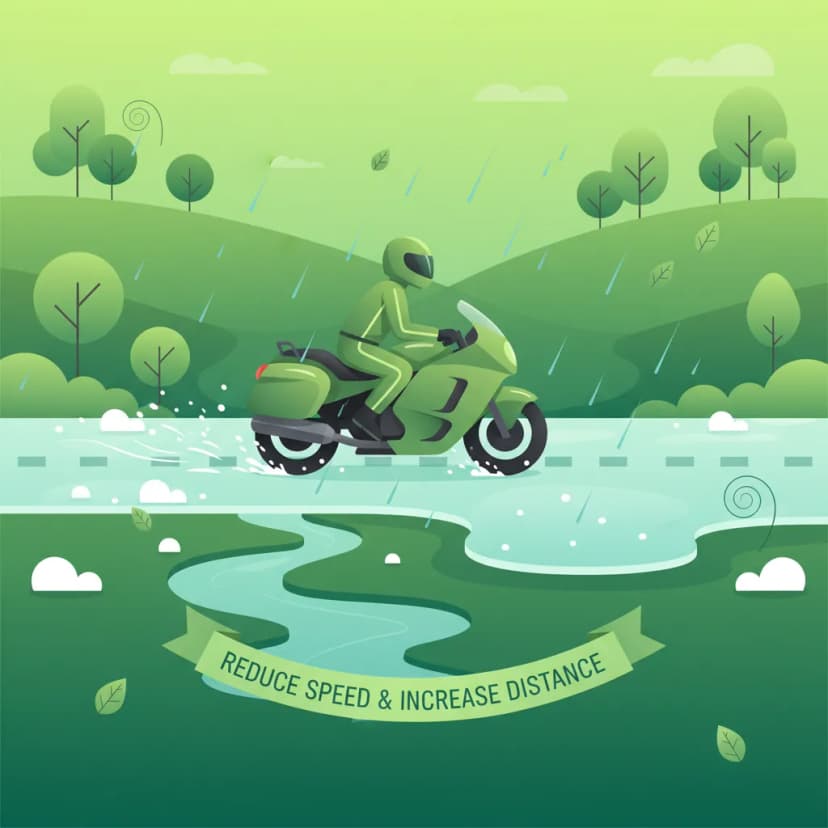
This lesson provides survival strategies for riding in the most challenging weather conditions, including heavy rain, snow, and potential ice. It emphasizes the importance of mental preparation, drastically reduced speeds, and hyper-smooth inputs for throttle, brakes, and steering. The content also covers identifying high-risk areas for 'black ice,' such as bridges and shaded spots, and the critical role of appropriate waterproof and insulated gear in preventing hypothermia and maintaining concentration.

This lesson covers the principles of selecting and using appropriate protective gear to combat the effects of low temperatures and wind chill. It explains the concept of layering with a base, mid, and outer layer to trap heat and manage moisture. The content also discusses the benefits of heated grips and clothing, effective waterproofing, and solutions like Pinlock inserts to prevent visor fogging, all of which are crucial for maintaining comfort, concentration, and control in the cold.

This lesson addresses the dual challenge of poor visibility: being able to see the road ahead and ensuring other road users can see you. It covers techniques for riding in fog and heavy rain, such as using appropriate lights and reducing speed to match sight distance. The lesson also discusses practical issues like helmet visor fogging and the importance of wearing high-visibility or reflective clothing to enhance conspicuity in low-light conditions.

This lesson explains why the standard two-second rule is insufficient in adverse conditions and requires extension. It details how factors like rain, fog, and darkness reduce both visibility and tire grip, thereby significantly increasing total stopping distance. The content provides practical guidelines, such as extending the following gap to four seconds or more in the wet, to ensure the rider always has enough time and space to stop safely, regardless of the conditions.

This lesson focuses on the crucial safety strategy of adjusting your riding for adverse conditions. You will learn that on wet roads, your braking distance can double, necessitating a much larger following distance (e.g., a four-second gap or more). The content covers the risks of reduced visibility in fog and at night, and the destabilizing effects of strong crosswinds, explaining how a greater space cushion provides the time and space needed to react safely.

Two-wheeled vehicles are particularly vulnerable to strong winds. This lesson explains how crosswinds and gusts can push you off course and upset your balance. You will learn proactive techniques to manage these effects, such as anticipating windy spots (e.g., bridges, gaps between buildings), adjusting your body position to be more aerodynamic, and applying subtle counter-steering inputs to maintain a straight line. A relaxed grip on the handlebars is key to letting the bike move slightly underneath you.

This lesson provides a detailed guide to riding in wet and low-visibility conditions. You will learn to make all your control inputs—braking, accelerating, and steering—exceptionally smooth to avoid breaking traction on slippery surfaces. The content covers the dangers of painted lines and manhole covers when wet, and the importance of increasing your following distance dramatically to account for longer braking distances.

This lesson teaches the crucial skill of assessing road surfaces and adjusting speed accordingly to maintain maximum traction. It covers a variety of hazardous conditions, including wet asphalt, loose gravel, oil patches, metal manhole covers, and painted road markings, all of which can significantly reduce grip. Riders will learn to constantly scan the road ahead, identify potential traction-reducing surfaces, and proactively manage their speed to prevent slides and loss of control.
Discover the crucial role of protective gear in managing wind chill, heat, and maintaining rider comfort and safety. Essential Dutch A1 theory knowledge on selecting and using appropriate motorcycle clothing for all weather.
This lesson provides survival strategies for riding in the most challenging weather conditions, including heavy rain, snow, and potential ice. It emphasizes the importance of mental preparation, drastically reduced speeds, and hyper-smooth inputs for throttle, brakes, and steering. The content also covers identifying high-risk areas for 'black ice,' such as bridges and shaded spots, and the critical role of appropriate waterproof and insulated gear in preventing hypothermia and maintaining concentration.
This lesson covers the principles of selecting and using appropriate protective gear to combat the effects of low temperatures and wind chill. It explains the concept of layering with a base, mid, and outer layer to trap heat and manage moisture. The content also discusses the benefits of heated grips and clothing, effective waterproofing, and solutions like Pinlock inserts to prevent visor fogging, all of which are crucial for maintaining comfort, concentration, and control in the cold.
This lesson provides practical advice for driving in challenging weather. You will learn about the risk of aquaplaning in heavy rain and how to react, as well as how to manage the effects of strong crosswinds. The curriculum covers winter driving, explaining the danger of black ice, the benefits of winter tires, and techniques for avoiding and correcting a skid. A key focus is on adjusting driving style: increasing following distances, reducing speed, and making gentle steering and braking inputs.

This lesson covers the critical decision-making process of when to stop riding altogether because weather conditions have become too hazardous to continue safely. It provides procedures for safely pulling off the road, finding suitable shelter, and making yourself and your motorcycle as visible as possible to other traffic. The content emphasizes that there is no shame in stopping, and that rider preservation is the highest priority when faced with extreme conditions like gale-force winds or torrential downpours.
This lesson provides a detailed guide to riding in wet and low-visibility conditions. You will learn to make all your control inputs—braking, accelerating, and steering—exceptionally smooth to avoid breaking traction on slippery surfaces. The content covers the dangers of painted lines and manhole covers when wet, and the importance of increasing your following distance dramatically to account for longer braking distances.
This lesson explains why the standard two-second rule is insufficient in adverse conditions and requires extension. It details how factors like rain, fog, and darkness reduce both visibility and tire grip, thereby significantly increasing total stopping distance. The content provides practical guidelines, such as extending the following gap to four seconds or more in the wet, to ensure the rider always has enough time and space to stop safely, regardless of the conditions.
This lesson reinforces the critical relationship between adverse conditions, reduced traction, and massively increased stopping distances. It provides a clear framework for how much riders need to increase their following distance and reduce their overall speed to maintain a safe margin for error. The curriculum teaches riders to constantly reassess their speed based on visual feedback from the road surface and the level of visibility, ensuring they can always stop within the distance they can clearly see.
This lesson addresses the dual challenge of poor visibility: being able to see the road ahead and ensuring other road users can see you. It covers techniques for riding in fog and heavy rain, such as using appropriate lights and reducing speed to match sight distance. The lesson also discusses practical issues like helmet visor fogging and the importance of wearing high-visibility or reflective clothing to enhance conspicuity in low-light conditions.

This lesson details the legal requirements for personal protective equipment in the Netherlands, with a primary focus on the mandatory use of an approved helmet meeting ECE 22.05 or 22.06 standards. It explains the different types of helmets and the pros and cons of each. While other gear like jackets, gloves, and boots may not be legally mandatory, the lesson strongly emphasizes their critical role in injury prevention.
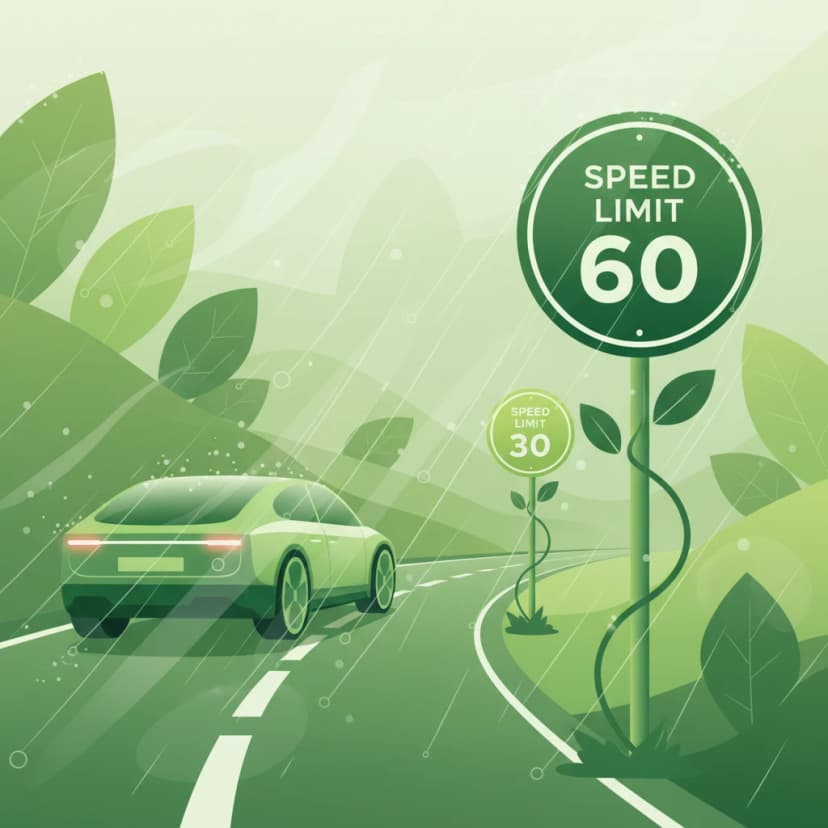
This lesson emphasizes the critical importance of adapting your speed to prevailing conditions, which may require driving slower than the legal limit. You will learn how factors like rain, fog, snow, and darkness significantly increase braking distances and reduce visibility. The curriculum explains the dangers of aquaplaning on wet roads and black ice in winter. The core principle taught is that a safe driver always adjusts their speed to ensure they can stop within the distance they can see to be clear.
Find clear answers to common questions learners have about Adjusting Riding Style for Wind and Temperature. Learn how the lesson is structured, which driving theory objectives it supports, and how it fits into the overall learning path of units and curriculum progression in the Netherlands. These explanations help you understand key concepts, lesson flow, and exam focused study goals.
In a strong crosswind, maintain a relaxed grip on the handlebars, allowing the bike to move slightly. Lean gently into the wind, using your body weight to help keep the motorcycle pointed straight. Avoid sudden movements and anticipate gusts by scanning the environment for potential windbreaks or sudden changes in wind force.
The primary risks in cold weather are hypothermia and reduced concentration for the rider, and decreased tire grip until they reach optimal temperature. Cold makes muscles stiff, slows reaction times, and makes operating controls more difficult. Tires also take longer to warm up, meaning less grip initially.
In cold temperatures, tires need time to warm up to achieve optimal grip. Until then, braking distances can be longer. Extremely hot temperatures can potentially lead to brake fade if the braking system is overworked, though this is less common with modern systems on light motorcycles under normal conditions. Always be aware of your tires' temperature and grip.
For cold weather, layer your clothing, including thermal base layers, a mid-layer, and a waterproof/windproof outer shell. Ensure your gloves and boots are well-insulated. For hot weather, prioritize breathable, high-quality protective gear that still offers abrasion resistance. Vented jackets and pants, and moisture-wicking underlayers are crucial for comfort and preventing overheating.
Yes, the Dutch CBR theory exam includes questions designed to assess your understanding of how external factors like wind and temperature affect motorcycle safety and stability. You'll be tested on recognizing hazards and knowing how to adjust your riding accordingly.