
Welcome to the lesson on highway (autosnelweg) navigation for your A2 motorcycle license! This essential part of your theory preparation covers the critical procedures for entering, merging into, and exiting the highway safely. Mastering these manoeuvres is key to confident and legal riding on high-speed Dutch roads.

Navigating the Dutch autosnelweg (highway or motorway) requires precision, anticipation, and a thorough understanding of specific rules. For Category A2 motorcycle riders, the manoeuvres of entering, merging onto, and exiting these high-speed roads are critical for safety and maintaining smooth traffic flow. This lesson provides an in-depth guide to ensure you can perform these actions confidently and in full compliance with Dutch traffic law.
The autosnelweg is designed for fast, uninterrupted travel. Unlike urban roads, traffic moves at high speeds, reducing the reaction time available to drivers. Proper execution of entry and exit manoeuvres is paramount to prevent collisions and ensure the safety of all road users. Errors in these dynamic situations are a frequent cause of accidents on highways.
As a motorcyclist, your smaller profile can sometimes make you less visible to other drivers, particularly those in larger vehicles with significant blind spots. This necessitates an even greater emphasis on clear communication, predictable behaviour, and precise execution of every manoeuvre. Adhering strictly to the Reglement Verkeersregels en Verkeerstekens (RVV 1990) and the Rijkswaterstaat Highway Code is not just a legal obligation but a fundamental safety principle. Mastering these skills builds upon foundational knowledge of traffic signs, speed limits, right-of-way, and safe following distances, which are crucial for safe highway riding.
Successful entry and exit from the autosnelweg revolve around several key principles that combine physics, legal requirements, and defensive riding techniques. These principles ensure your motorcycle integrates smoothly into the high-speed traffic stream, minimizing risk for yourself and others.
Speed matching is perhaps the most critical aspect of merging. It means using the entire length of the acceleration lane to bring your motorcycle's speed up to that of the traffic already on the highway. This minimizes the relative speed difference between your motorcycle and the main traffic flow, allowing for a smooth insertion with minimal need for abrupt braking or acceleration by any vehicle involved. Attempting to merge at a significantly lower speed forces other vehicles to slow down or swerve, creating a dangerous situation.
Once your speed is matched, you must identify a suitable gap in traffic. A safe gap is a space between two vehicles that is large enough for you to enter without causing either vehicle to brake or change lanes abruptly. For motorcycles, a minimum temporal gap of two seconds is recommended. At 130 km/h, a two-second gap translates to approximately 72 metres. You must continuously scan traffic, using your mirrors and quick head checks, to judge both the distance and speed of approaching vehicles. Never rely solely on visual distance; always factor in the speed of the vehicles.
Predictability is key on high-speed roads. Early signalling is essential to inform other road users of your intentions. According to RVV 1990, Article 3-33, you must activate the appropriate turn indicator at least 5 seconds before your intended lane change or exit. This provides sufficient warning, allowing other drivers to anticipate your movement and adjust their speed or position accordingly. Signalling too late or leaving your indicator on for too long can confuse other drivers.
Proper lane positioning enhances your visibility and allows for better spatial awareness. When merging, keep your motorcycle centred within the acceleration lane. This maximizes your visibility to drivers behind and alongside you and provides ample space for minor steering corrections. When transitioning into the main autosnelweg lane, maintain a central position. As you prepare to exit, move your motorcycle towards the right-hand side of the deceleration lane. This reduces conflict with faster traffic that might be overtaking on your left and positions you correctly for the off-ramp curve.
Exiting the autosnelweg requires a smooth and progressive reduction in speed. After moving into the deceleration lane, gradually reduce your speed, aiming for approximately 5 km/h per second. Start with engine braking, then progressively apply the rear brake. Only use the front brake if necessary, and always apply it smoothly and with control. This technique prevents rear-wheel lock-up and maintains stability, which is crucial, especially on curved off-ramps or in adverse weather conditions. Always observe the posted speed limit for the off-ramp, which is often significantly lower than the highway speed.
A fundamental rule on the autosnelweg is that traffic already on the main carriageway has priority. According to RVV 1990, Article 3-43, vehicles entering an autosnelweg must yield to traffic already on the highway. This means you cannot force your way into a gap or expect traffic to make way for you. You must wait for a safe and clear opening, even if it means slowing down or stopping at the end of a short acceleration lane. This rule is in place to maintain the ordered flow of high-speed traffic and prevent dangerous collisions.
Dutch traffic law provides a clear framework for safe autosnelweg use. Adherence to these regulations is mandatory and crucial for your safety and legal compliance.
This article dictates the timing of turn indicator use.
RVV 1990, Article 3-33: "Indicating the intention to change direction must be done in a timely manner." For autosnelweg manoeuvres, this is interpreted as a minimum of 5 seconds before the intended lane change or exit. In conditions of reduced visibility (rain, fog), this should be extended to at least 7 seconds to provide other drivers with more warning.
RVV 1990, Article 3-43: "Vehicles entering a highway must give way to traffic on the highway." This explicitly means traffic on the main autosnelweg has priority. Entering vehicles must always yield.
Never assume that because you are accelerating, main highway traffic will automatically make space for you. Your responsibility is to find a safe gap without disrupting the flow.
RVV 1990, Article 3-44: "Vehicles must keep within their lane unless overtaking or changing lanes." For motorcyclists, occupying the full width of your lane is generally recommended to maximize visibility and reduce the risk of other vehicles attempting to share your lane.
While merging, maintain a central position. In the deceleration lane, gradually shift towards the right edge to prepare for the off-ramp.
The general maximum speed limit on Dutch autosnelwegen is 130 km/h, unless otherwise indicated by road signs. However, speed limits on acceleration and deceleration lanes, and especially on off-ramps, are often lower (e.g., 70 or 80 km/h). Always observe these posted limits. Exceeding them, particularly on curves, can lead to loss of control.
The Rijkswaterstaat, responsible for Dutch infrastructure, sets standards for highway design. Deceleration lanes are typically designed to be at least 300 metres long (or 150 metres in urban areas) to allow sufficient space for safe speed reduction. Use the full length of these lanes to decelerate gradually.
When entering or exiting a ramp that runs parallel to or crosses a bicycle lane or shared path, extra vigilance is required.
RVV 1990, Article 3-41: When changing direction near cyclists or pedestrians, you must ensure clear visibility and signal earlier. This means extending your signalling time to at least 7 seconds and performing dedicated visual checks for these vulnerable road users.
Highway manoeuvres can become more complex under varying conditions. Being prepared for these situations is crucial.
In rain, fog, or snow, road grip is reduced, and visibility significantly decreases.
Nighttime conditions reduce depth perception and visual acuity.
In congested traffic or on shorter acceleration lanes (less than 250m), full speed matching might be challenging or impossible.
Understanding theory is one thing; applying it safely on the road is another. Here are some scenarios to illustrate correct and incorrect behaviours.
Setting: Rural autosnelweg, 130 km/h limit, 350m acceleration lane, clear visibility, dry weather. Correct Behaviour: The rider activates the right indicator 6 seconds before the merge point, smoothly accelerates to 130 km/h using the full ramp length. They identify a 2.5-second gap in the rightmost lane, merge centrally without needing other drivers to adjust, and maintain their speed. Incorrect Behaviour: The rider signals only 2 seconds before merging, reaches only 110 km/h, and attempts to force entry into a 1-second gap, causing the trailing car to brake abruptly. Reasoning: Proper signalling, speed matching, and gap selection ensure predictability and safety. The incorrect approach creates a dangerous speed differential and insufficient warning time, significantly increasing collision risk.
Setting: Autosnelweg in moderate rain (visibility ~50m), 120 km/h limit, 400m deceleration lane. Correct Behaviour: The rider activates the right indicator 7 seconds before the exit point, moves early to the right side of the deceleration lane. They reduce speed from 120 km/h to the off-ramp limit (e.g., 80 km/h) over the 400m using gradual engine braking and light rear brake, entering the off-ramp curve safely. Incorrect Behaviour: The rider signals only 3 seconds before the exit, continues on the left side of the deceleration lane, and brakes heavily within the last 30m, causing the rear wheel to lock on the wet pavement. Reasoning: Extended signalling and gradual, controlled deceleration are vital in reduced visibility and low-grip conditions. Abrupt braking on wet surfaces can lead to loss of control.
Setting: Urban autosnelweg, 130 km/h limit, very short 180m acceleration lane, heavy traffic with average gaps of 1.5 seconds. Correct Behaviour: The rider signals 5 seconds before the merge. Due to the short ramp, they accelerate to 120 km/h (a partial match) while actively looking for a larger, 3-second gap. When a suitable gap appears, they merge slightly left of the lane centre to allow any slightly faster vehicles to pass safely on their left. Incorrect Behaviour: The rider attempts to reach 130 km/h despite the short ramp, merges too early into an insufficient gap, forcing a fast-approaching car to brake hard. Reasoning: Adjusting the target speed and seeking a larger gap compensates for the physical limitations of a short ramp, prioritizing safety over an exact speed match. Forcing entry disrupts traffic and creates a hazard.
Setting: Autosnelweg exit ramp running parallel to a dedicated bicycle lane; bright afternoon. Correct Behaviour: The rider activates the right indicator 7 seconds before the exit point. They perform dedicated visual checks for both motor traffic and any cyclists on the adjacent lane. They move to the right side of the deceleration lane early, reduce speed to the posted limit for the off-ramp, and exit without impeding any cyclists. Incorrect Behaviour: The rider signals only 5 seconds, focusing solely on motor traffic, and cuts across the bicycle lane during the exit manoeuvre, forcing a cyclist to swerve suddenly. Reasoning: Additional vigilance and earlier signalling are essential when vulnerable road users are present, ensuring their safety and complying with RVV 1990, Article 3-41.
Being aware of frequent mistakes can help you avoid them:
To ensure you cover all critical aspects for safe autosnelweg manoeuvres, use this checklist:
Lesson content overview
Explore all units and lessons included in this driving theory course.
Explore search topics learners often look for when studying Entering, Merging, and Exiting the Autosnelweg. These topics reflect common questions about road rules, driving situations, safety guidance, and lesson level theory preparation for learners in the Netherlands.
Browse additional driving theory lessons that cover connected traffic rules, road signs, and common driving situations related to this topic. Improve your understanding of how different rules interact across everyday traffic scenarios.
Understand the critical Dutch traffic laws and techniques for safely merging onto and exiting the autosnelweg. Learn about speed matching, gap assessment, and signalling to ensure smooth integration into highway traffic.
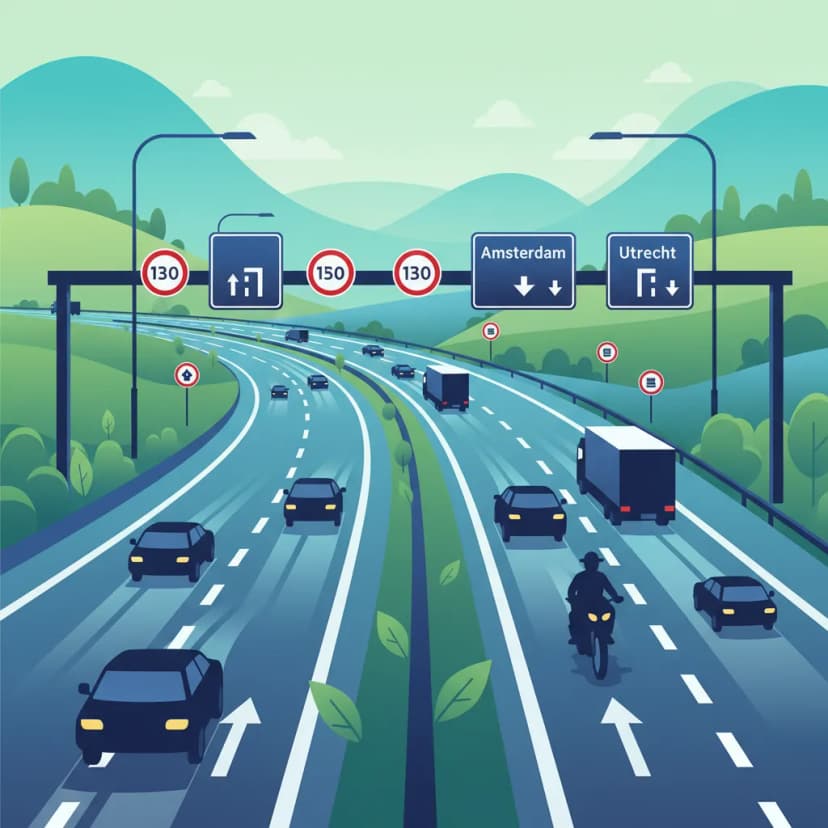
This lesson details the specific regulations for driving on Dutch motorways, identifiable by the G1 sign. You will learn the correct procedure for joining the flow of traffic using the acceleration lane and for leaving via the deceleration lane. The curriculum reinforces the 'keep right unless overtaking' rule for lane discipline. It also explains that stopping is strictly forbidden, and the hard shoulder (vluchtstrook) may only be used for genuine emergencies.

This lesson reinforces the fundamental rule of Dutch highway driving: use the rightmost lane available and use the lanes to the left only for overtaking. You will learn the complete, safe overtaking procedure: check mirrors, signal, perform a shoulder check for the blind spot, smoothly move over, accelerate past the vehicle, and then return to the right lane when safe.
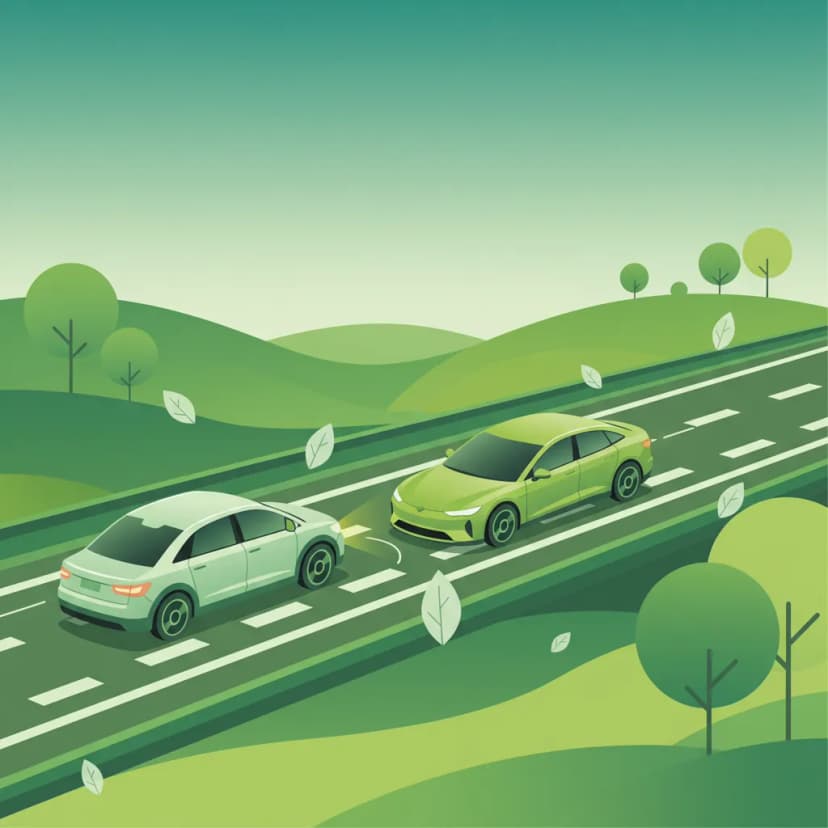
Safely merging and changing lanes requires a systematic approach known as 'mirror-signal-blind spot'. This lesson explains the correct procedure for entering a carriageway from an acceleration lane, ensuring you match the speed of the traffic flow and find a safe gap. It also covers the technique for changing lanes, emphasizing the critical importance of checking your blind spot with a shoulder check (dode hoek) before making any lateral movement to prevent collisions.

This lesson provides a step-by-step guide to safely navigating entry ('opritten') and exit ramps ('afritten'). It focuses on the critical skill of using the acceleration lane to match the speed of motorway traffic before merging, and the importance of finding a safe gap using mirrors and shoulder checks. For exiting, it covers the correct use of the deceleration lane to slow down safely without disrupting the flow of traffic on the main carriageway.
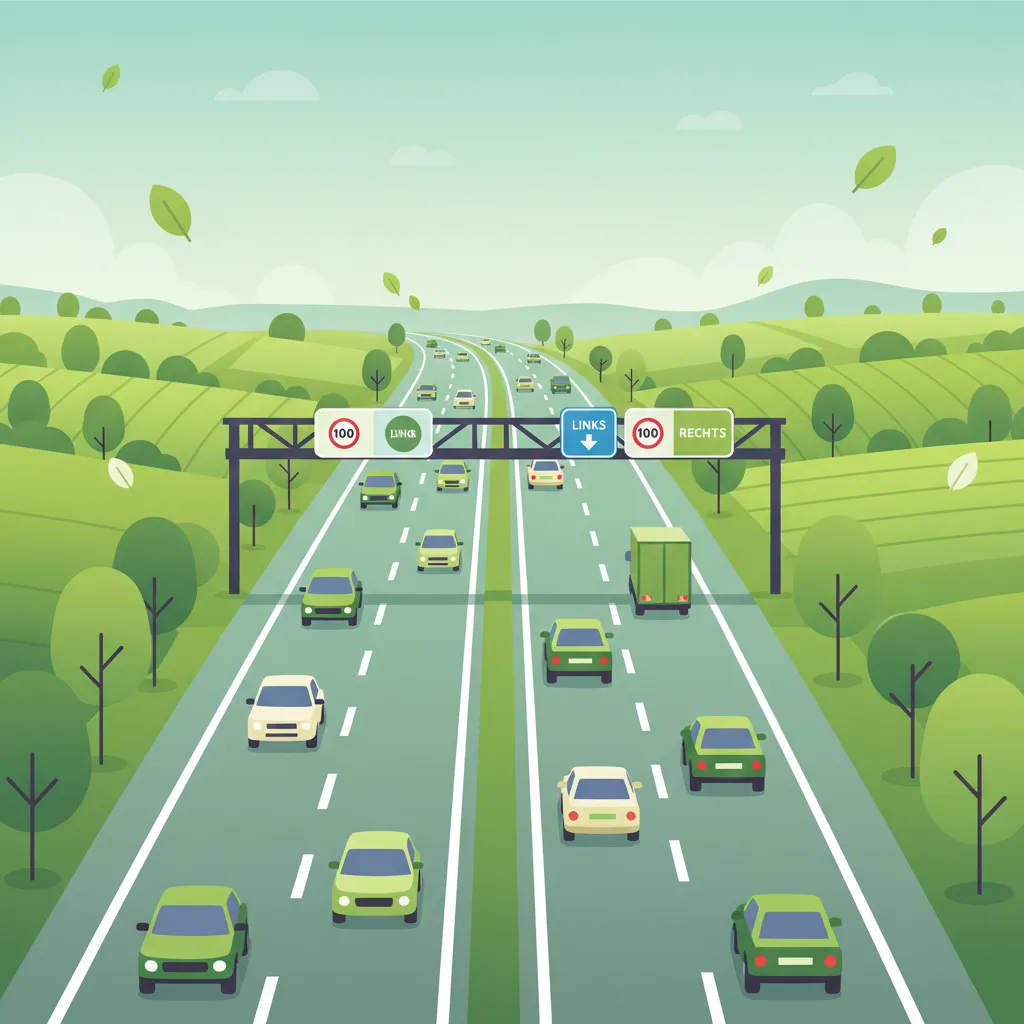
This lesson covers the specific articles of the Dutch Road Traffic Act that apply to motorways, with a primary focus on the strict rule of keeping to the rightmost available lane unless overtaking. It explains the legal and safety reasons for only passing on the left and discusses the correct positioning within a lane for maximum visibility and safety. The content also addresses the nuances of lane usage during heavy congestion, ensuring riders comply with the law and contribute to smooth traffic flow.
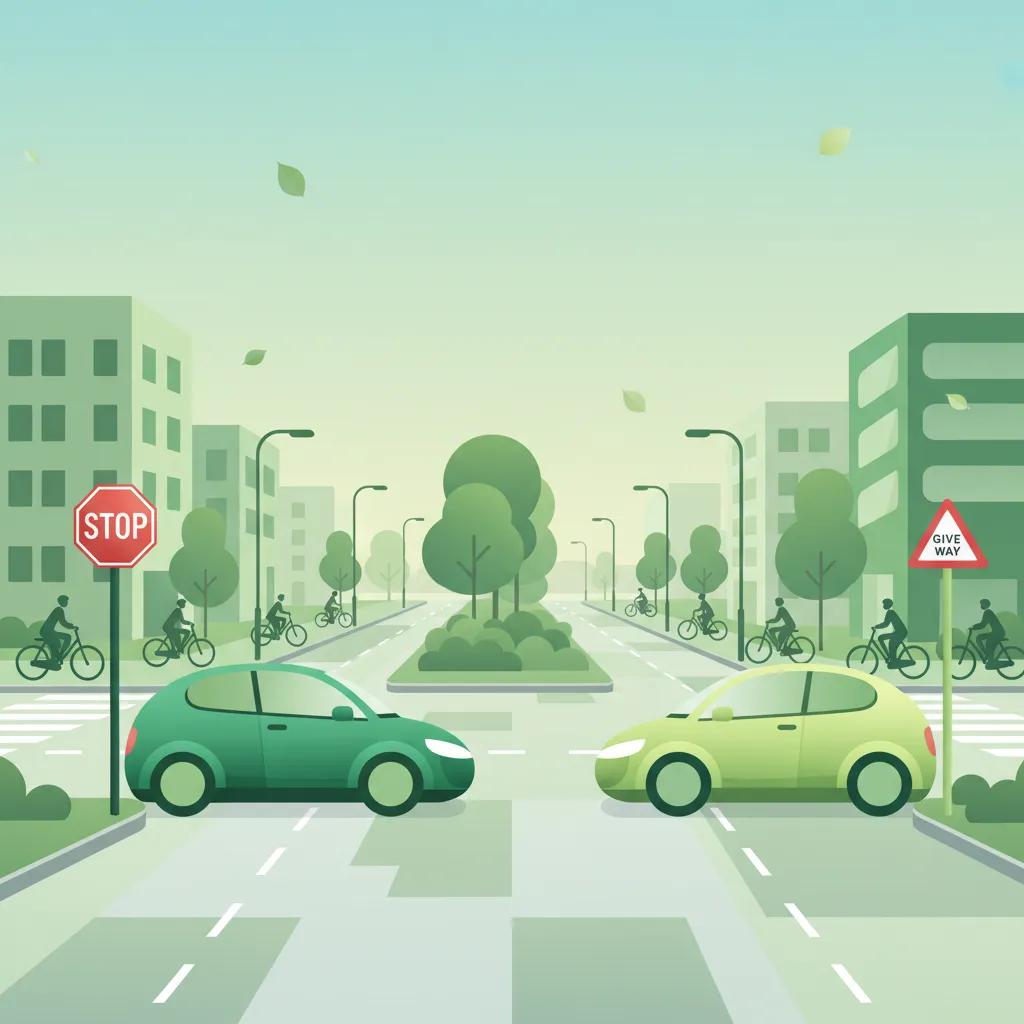
This lesson details the specific actions required at intersections controlled by 'Stop' and 'Give Way' signs. You will learn the legal requirement to come to a complete stop at a stop line (BORD 44) and the obligation to yield to all crossing traffic when encountering give-way markings ('haaientanden'). The content covers safe approach speeds and effective scanning techniques for motorcyclists to accurately assess gaps in traffic before proceeding.

This lesson provides a step-by-step guide to executing a safe and legal overtaking maneuver. It covers the entire process: assessing the situation for a sufficient gap in oncoming traffic, performing necessary mirror and shoulder checks, signaling intent, and accelerating decisively. The lesson also highlights situations where overtaking is prohibited by law, such as before pedestrian crossings or where there are solid white lines.
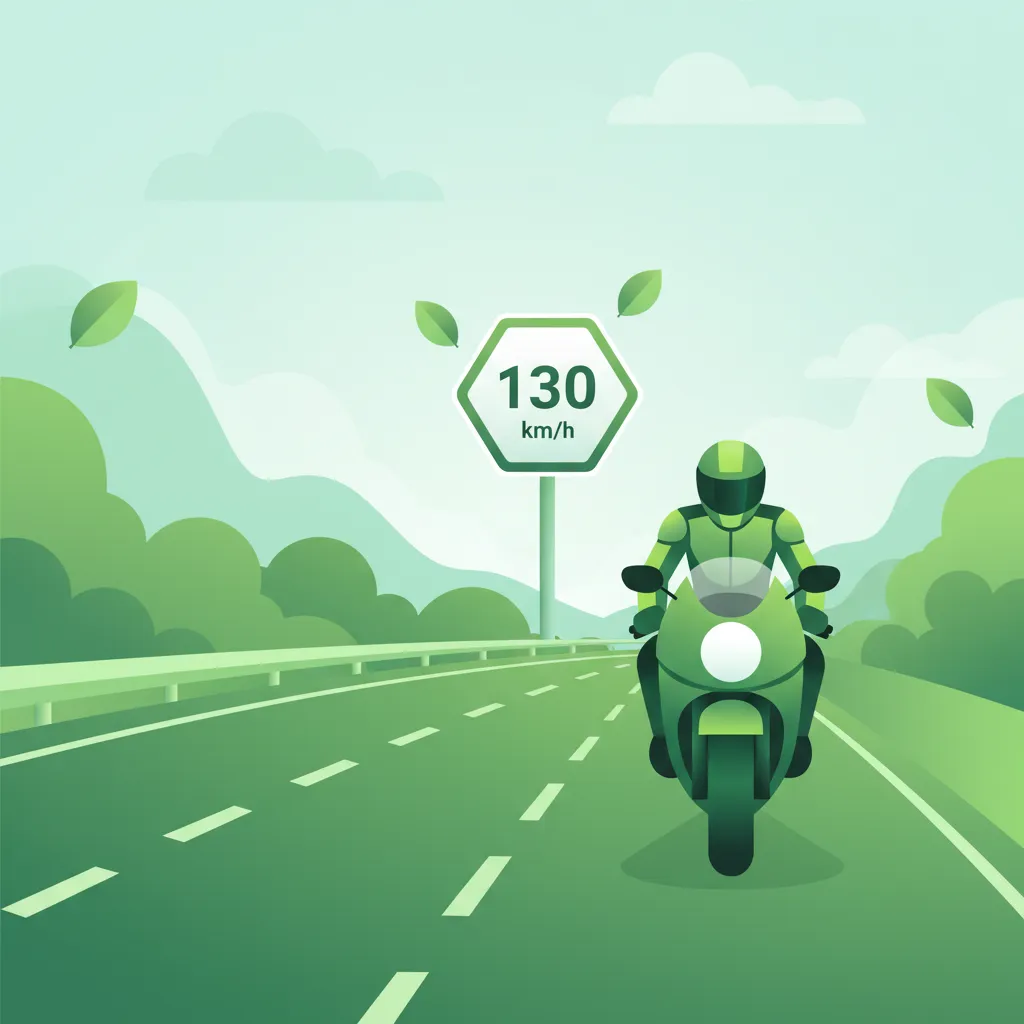
This lesson focuses on the specific skills required for managing speed on high-speed highways (autosnelwegen). You will learn the correct technique for accelerating on the on-ramp to smoothly merge with traffic flow. The content covers how to choose an appropriate cruising speed, maintain a safe following distance, and manage the aerodynamic effects of wind and turbulence from larger vehicles at high speeds.
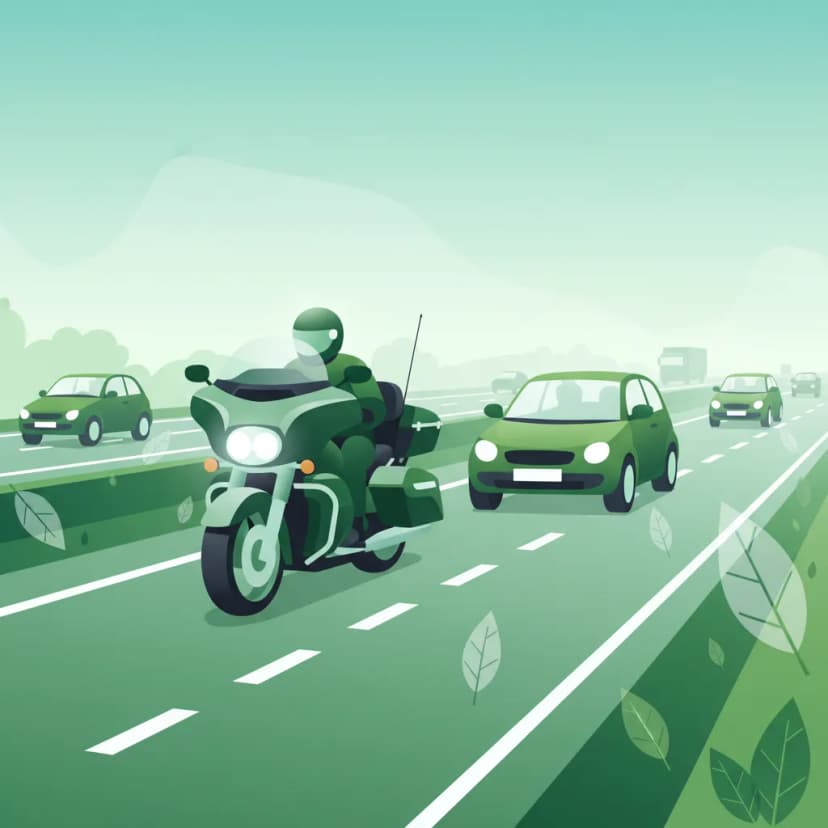
This lesson details the systematic process for safely overtaking on a multi-lane motorway, leveraging the acceleration capabilities of a Category A motorcycle. It covers the 'mirror, signal, maneuver' sequence, with a strong emphasis on the critical shoulder check to clear the blind spot before moving out. The content also discusses how to judge closing speeds, ensure adequate space before returning to the lane, and how to handle situations involving multiple lanes and slower-moving heavy vehicles.
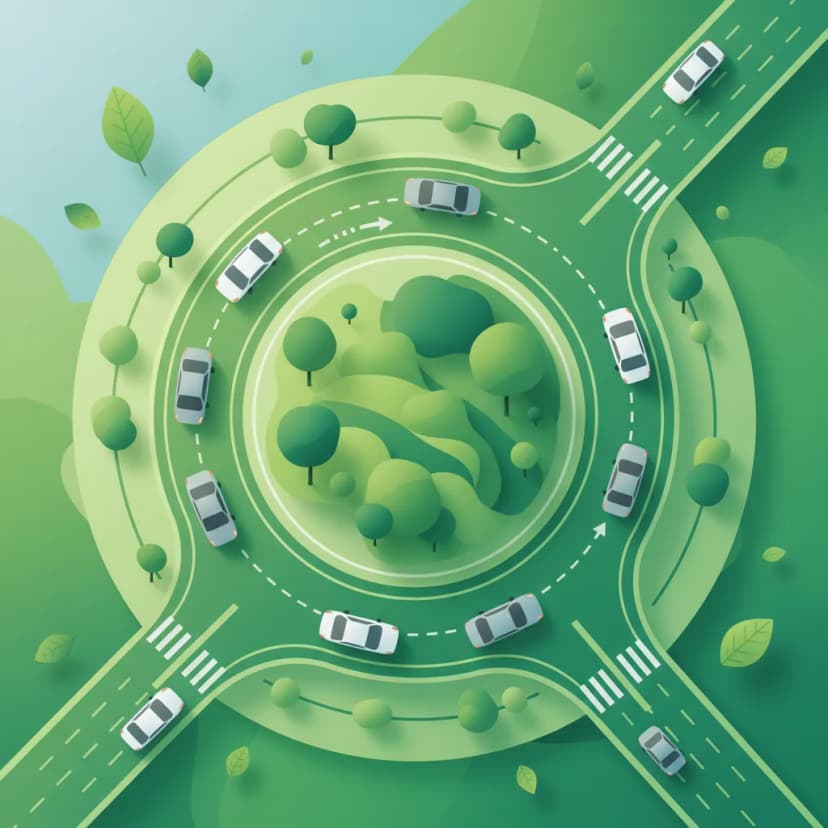
This lesson focuses on the rules and techniques for safely navigating Dutch roundabouts, a common feature of the road network. You will learn that traffic circulating on the roundabout typically has priority and that you must yield before entering. The content covers correct lane selection for your intended exit, proper use of turn signals, and maintaining awareness of cyclists who may have priority on adjacent paths.
Learn about frequent errors motorcyclists make when entering and exiting Dutch highways, and the specific hazards associated with these manoeuvres. This lesson focuses on avoiding dangerous situations and understanding consequences.
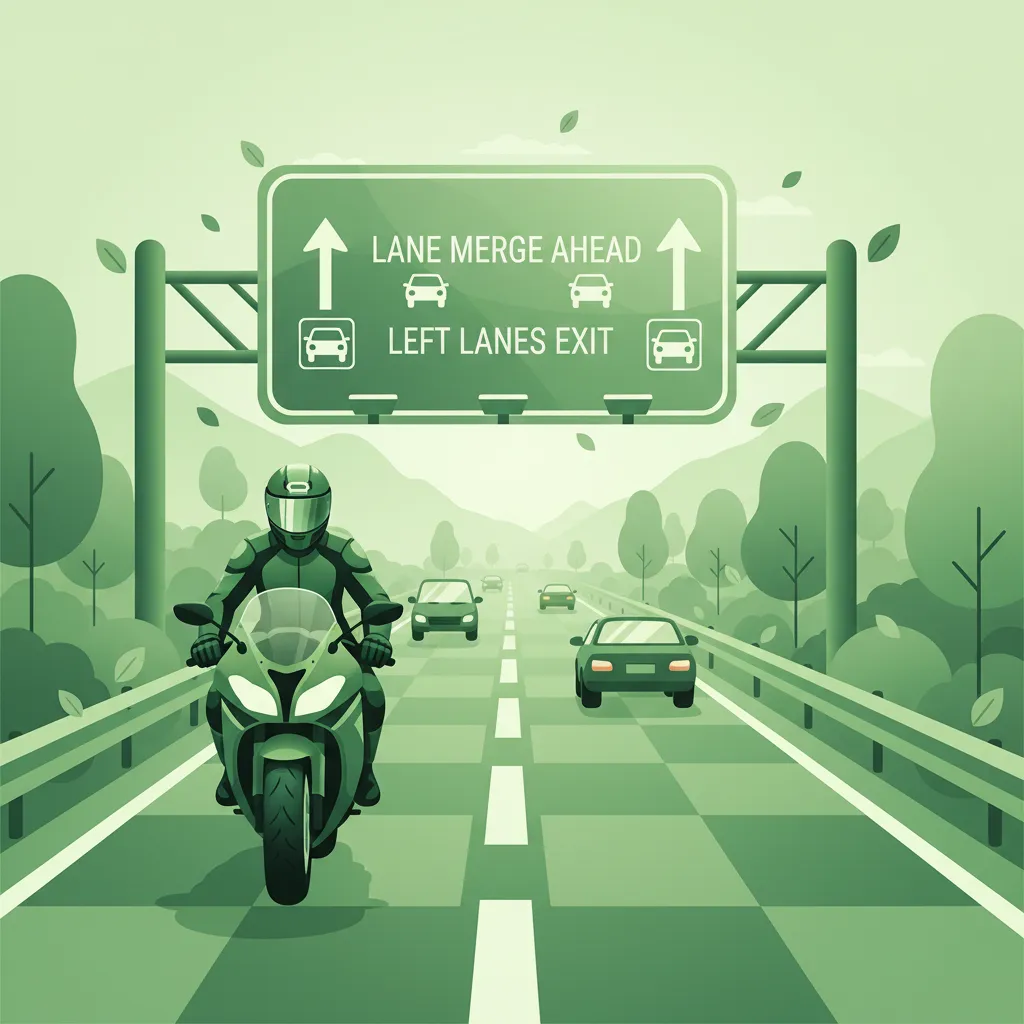
This lesson prepares you for the unique dangers of high-speed highway riding. You will learn to scan for and navigate road hazards like debris, potholes, and slippery steel expansion joints on bridges. The content also addresses the powerful air turbulence created by large trucks that can upset a motorcycle's stability and the mental challenge of maintaining focus on long, monotonous stretches of road.

This lesson transitions hazard perception skills to the high-speed environment of motorways and tunnels. It covers specific risks such as vehicles merging at different speeds, sudden braking and congestion ahead, road debris, and the aerodynamic effects of crosswinds and large trucks. The curriculum also addresses the challenges of riding in tunnels, including changes in light and surface conditions, and the importance of identifying emergency exits and procedures in case of an incident.
This lesson provides a step-by-step guide to safely navigating entry ('opritten') and exit ramps ('afritten'). It focuses on the critical skill of using the acceleration lane to match the speed of motorway traffic before merging, and the importance of finding a safe gap using mirrors and shoulder checks. For exiting, it covers the correct use of the deceleration lane to slow down safely without disrupting the flow of traffic on the main carriageway.
This lesson covers the specific articles of the Dutch Road Traffic Act that apply to motorways, with a primary focus on the strict rule of keeping to the rightmost available lane unless overtaking. It explains the legal and safety reasons for only passing on the left and discusses the correct positioning within a lane for maximum visibility and safety. The content also addresses the nuances of lane usage during heavy congestion, ensuring riders comply with the law and contribute to smooth traffic flow.
This lesson reinforces the fundamental rule of Dutch highway driving: use the rightmost lane available and use the lanes to the left only for overtaking. You will learn the complete, safe overtaking procedure: check mirrors, signal, perform a shoulder check for the blind spot, smoothly move over, accelerate past the vehicle, and then return to the right lane when safe.

This lesson revisits the concept of following distance, emphasizing its heightened importance in the high-speed motorway environment. It explains how increased speeds dramatically lengthen both reaction and braking distances, making a minimum two-to-three-second gap absolutely critical for safety. The content also stresses the importance of maintaining a space cushion to the sides, creating potential escape routes in case of sudden incidents in adjacent lanes.

This lesson provides critical instruction on managing blind spots ('dode hoek') to prevent collisions, particularly during lane changes. It covers the correct setup and use of mirrors, but stresses their limitations and the absolute necessity of the 'lifesaver' shoulder check before any lateral movement. Furthermore, it teaches riders how to be aware of the large blind spots around cars and especially trucks, and how to position themselves on the road to remain visible to other drivers at all times.
This lesson details the systematic process for safely overtaking on a multi-lane motorway, leveraging the acceleration capabilities of a Category A motorcycle. It covers the 'mirror, signal, maneuver' sequence, with a strong emphasis on the critical shoulder check to clear the blind spot before moving out. The content also discusses how to judge closing speeds, ensure adequate space before returning to the lane, and how to handle situations involving multiple lanes and slower-moving heavy vehicles.
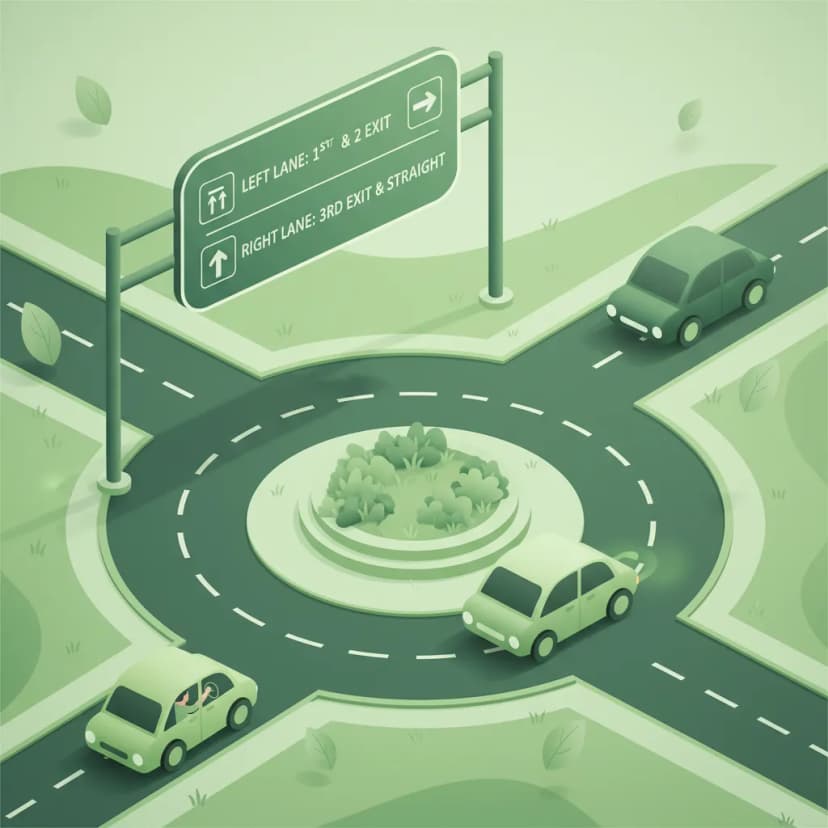
This lesson provides a detailed guide to navigating Dutch roundabouts ('rotondes'), including single-lane, multi-lane, and 'turbo' designs. It clarifies the specific priority rules that apply when entering the roundabout and the critical importance of correct signaling when changing lanes or exiting. Special attention is given to the vulnerable position of motorcyclists and the need to be aware of other vehicles' blind spots and the priority rules concerning cyclists on or near the roundabout.

This lesson covers A-code signs, which are designed to warn drivers of potential hazards on the road ahead. For motorcyclists, warnings about sharp bends, slippery surfaces, crosswinds, or falling rocks are especially critical for maintaining control and stability. The content explains how to interpret these triangular signs to anticipate changing conditions, adjust speed, and adopt a defensive riding posture well in advance of the hazard.
Find clear answers to common questions learners have about Entering, Merging, and Exiting the Autosnelweg. Learn how the lesson is structured, which driving theory objectives it supports, and how it fits into the overall learning path of units and curriculum progression in the Netherlands. These explanations help you understand key concepts, lesson flow, and exam focused study goals.
The acceleration lane (invoegstrook) on the autosnelweg is designed to allow you to accelerate your motorcycle to the speed of the existing highway traffic before you merge. Using its full length helps you match speeds safely, making your merge smoother and less disruptive to other road users.
You must look for a sufficient gap in the traffic on the lane you intend to merge into. It's crucial to assess the speed of approaching vehicles and ensure you have ample space to merge without forcing other drivers to brake suddenly. Always aim to merge when the traffic flow allows for a safe insertion.
You should signal your intention to exit the autosnelweg well in advance, typically when you see the initial 'Uitrit' (Exit) signs. This early signaling provides ample warning to other road users behind you, allowing them to anticipate your manoeuvre and adjust their own riding or driving accordingly.
If you miss your intended exit, do not stop or attempt a sudden manoeuvre on the highway. Continue to the next exit, or if necessary, use a designated safe area like an emergency stop zone. You can then re-plan your route and re-enter the highway in the correct direction, or take an alternative route.
Filtering, or 'file rijden', is generally not permitted on the acceleration lanes as you are expected to match the speed of traffic. It is also usually not advised on deceleration lanes due to the changing speeds and potential for sudden stops. Focus on maintaining appropriate speeds and safe following distances in these specific zones.