
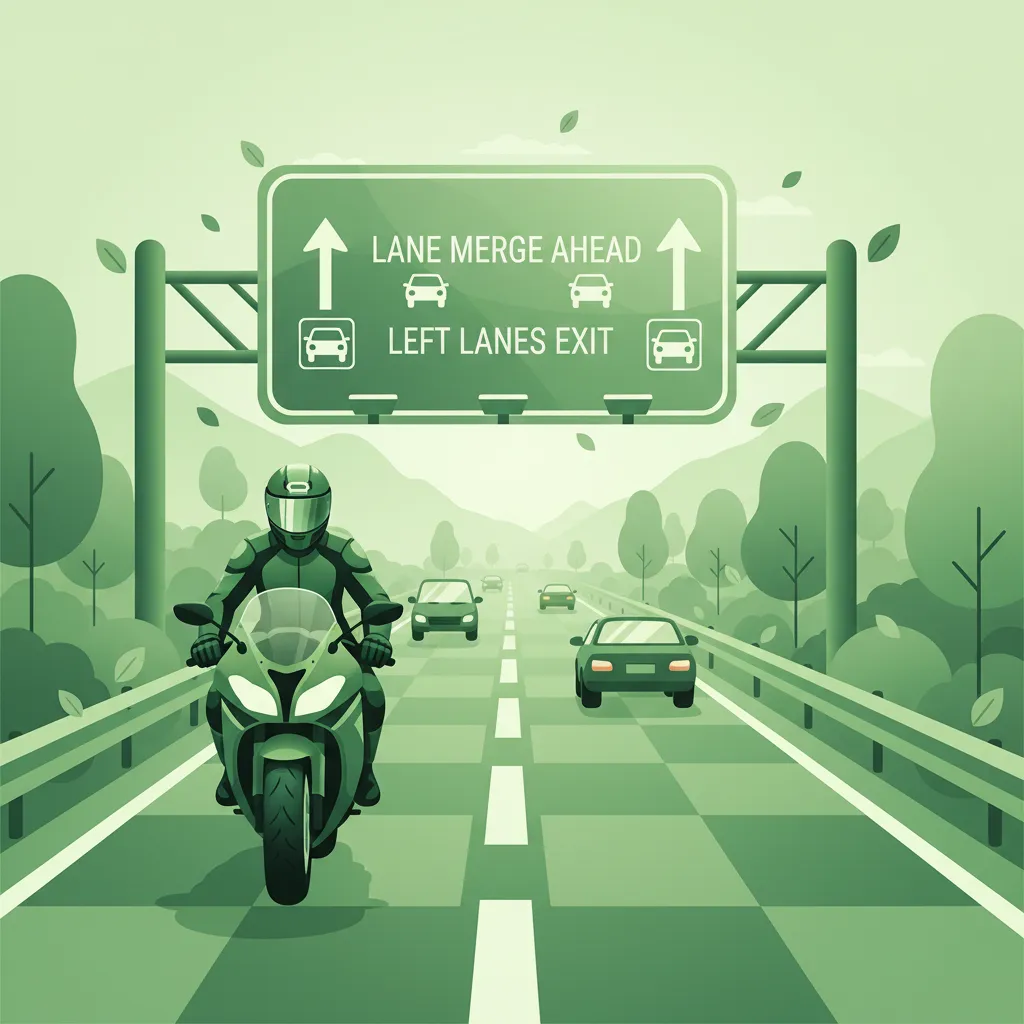
This lesson provides a comprehensive guide to safely navigating entry (opritten) and exit ramps (afritten) on Dutch motorways, specifically for Category A motorcyclists. You will learn critical techniques for matching speed, merging into traffic, and safely decelerating, building upon your understanding of motorway laws. Mastering these skills is essential for your Dutch CBR theory exam and for confident, safe high-speed riding.

Navigating motorways and expressways safely requires precise control, keen observation, and adherence to specific traffic laws. For motorcyclists, the critical maneuvers of entering via an acceleration lane (oprit) and exiting via a deceleration lane (afrit) are particularly vital. This lesson provides a comprehensive guide to understanding the legal requirements, mastering the techniques, and anticipating the risks associated with these high-speed transitions, ensuring you are well-prepared for your Dutch Motorcycle Theory exam and safe riding in the Netherlands.
Incorrectly using entry or exit ramps is a leading cause of high-speed collisions. As a motorcyclist, your unique visibility and acceleration capabilities mean that a systematic approach to these maneuvers is paramount. By understanding the physics, legal obligations, and human factors involved, you can integrate smoothly into traffic flow and exit confidently.
The acceleration lane, known in Dutch as an 'oprit', is a dedicated section of road designed to allow vehicles to increase their speed to match the prevailing traffic flow on the main carriageway before merging. It's a crucial component of motorway design, enabling a smooth transition and preventing abrupt speed differentials that can lead to dangerous situations.
The primary purpose of an oprit is to provide sufficient distance for a motorcyclist to reach a speed equal to, or slightly less than, the traffic they intend to join. This speed matching significantly reduces the relative speed between your motorcycle and other vehicles, making the merge much safer and more predictable.
Acceleration lanes can vary in length. A standard acceleration lane is typically 200 metres or longer, providing ample space for speed buildup. However, in urban areas or complex junctions, you might encounter shorter ramps, sometimes less than 100 metres. These shorter ramps demand quicker decision-making and earlier acceleration.
Entering a motorway safely requires a disciplined sequence of actions. Follow these steps for a smooth merge:
Common Misconception: Some riders believe they have right-of-way when merging from an acceleration lane. This is incorrect. Vehicles on the main carriageway always have priority over merging traffic (RVV 1990, art. 5.24). You must yield and wait for a safe opportunity to merge.
The deceleration lane, or 'afrit', is the counterpart to the acceleration lane, providing a dedicated space for vehicles to reduce their speed safely before exiting the motorway. Its purpose is to allow you to slow down gradually without disrupting the flow of high-speed traffic on the main carriageway.
The design of afritten ensures that exiting traffic can diverge from the main lanes and begin slowing down well before the actual exit point. This prevents the need for abrupt braking on the main carriageway, which could lead to rear-end collisions.
Similar to acceleration lanes, deceleration lanes vary in length, typically ranging from 300 to 500 metres. Some urban exits may have shorter 'early-exit' lanes, requiring you to begin your deceleration earlier.
Exiting a motorway safely also demands a precise sequence of actions to ensure a smooth and controlled transition:
Planning Ahead: For very short deceleration lanes, it might be necessary to slightly reduce your speed on the main carriageway before entering the ramp, provided you do so smoothly and safely without impeding traffic. This allows for a more controlled entry into the short deceleration lane.
Regardless of whether you are entering or exiting a motorway, several fundamental riding techniques are critical to ensure your safety and the safety of others.
Motorcycles, by their nature, have blind spots that are not fully covered by mirrors. Relying solely on mirrors, especially at high speeds, can be misleading due to distortion and parallax. Therefore, a comprehensive visual scan is essential.
Proper use of turn indicators is not merely a formality; it is a vital communication tool that prevents collisions. The Dutch Road Traffic Act (RVV 1990, article 5.21) mandates that turn indicators must be activated at least three seconds before a lane change or merge.
Maintaining strict lane discipline means staying within the designated markings of the ramp throughout the maneuver.
Violating lane discipline can lead to side-swipe collisions or force other drivers into evasive actions, destabilizing traffic flow.
Dutch traffic law provides clear regulations governing the use of motorways and their ramps. Adherence to these rules is mandatory and crucial for safe riding.
Legal priority given to certain road users. On Dutch motorways, vehicles on the main carriageway always have priority over those entering via an acceleration lane.
According to RVV 1990, article 5.24, drivers entering a motorway from an acceleration lane must yield to traffic already on the main carriageway. This means you are responsible for finding a safe gap and merging without impeding or forcing other drivers to adjust their speed or lane.
RVV 1990, article 5.8, states that the prevailing speed limit of the main carriageway also applies to acceleration and deceleration lanes, unless otherwise indicated by specific signage.
This means you must not exceed the legal speed limit while on the ramp, even if you are trying to match the speed of faster-moving traffic. Your goal is to match speed up to the limit, not to exceed it. If traffic is moving faster than the legal limit, you must merge at the legal limit and then adjust accordingly on the main carriageway.
As previously mentioned, RVV 1990, article 5.21, requires turn indicators to be activated at least three seconds before merging or exiting. This rule is rigorously enforced to ensure clear communication between road users.
Safe ramp usage is not a one-size-fits-all skill. Various environmental and traffic conditions require adjustments to your technique.
Urban motorways often feature shorter acceleration and deceleration lanes due to space constraints.
Heavy goods vehicles (trucks) have extensive blind spots, especially to their rear and sides. These "danger zones" are areas where the driver cannot see your motorcycle, even with mirrors.
If you are riding a motorcycle with a heavy load or towing a trailer (where permitted), your vehicle's dynamics change significantly.
Awareness of common errors is the first step to avoiding them.
The stringent rules and recommended techniques for entry and exit ramps are rooted in fundamental physics and human factors, all aimed at enhancing road safety.
Lesson content overview
Explore all units and lessons included in this driving theory course.
Explore search topics learners often look for when studying Entry and Exit Ramps (op- en afritten). These topics reflect common questions about road rules, driving situations, safety guidance, and lesson level theory preparation for learners in the Netherlands.
Browse additional driving theory lessons that cover connected traffic rules, road signs, and common driving situations related to this topic. Improve your understanding of how different rules interact across everyday traffic scenarios.
Explore advanced theory on motorcycle entry and exit ramp maneuvers in the Netherlands. Learn crucial techniques for merging, using acceleration/deceleration lanes, and handling specific road conditions for safer high-speed driving.

Safely merging and changing lanes requires a systematic approach known as 'mirror-signal-blind spot'. This lesson explains the correct procedure for entering a carriageway from an acceleration lane, ensuring you match the speed of the traffic flow and find a safe gap. It also covers the technique for changing lanes, emphasizing the critical importance of checking your blind spot with a shoulder check (dode hoek) before making any lateral movement to prevent collisions.

This lesson details the critical manoeuvres of entering and exiting a highway. You will learn to use the full length of the on-ramp to accelerate to the speed of the highway traffic before looking for a safe gap to merge into. The content also covers the process of exiting, including signaling early, moving into the deceleration lane, and adjusting your speed for the off-ramp curve.
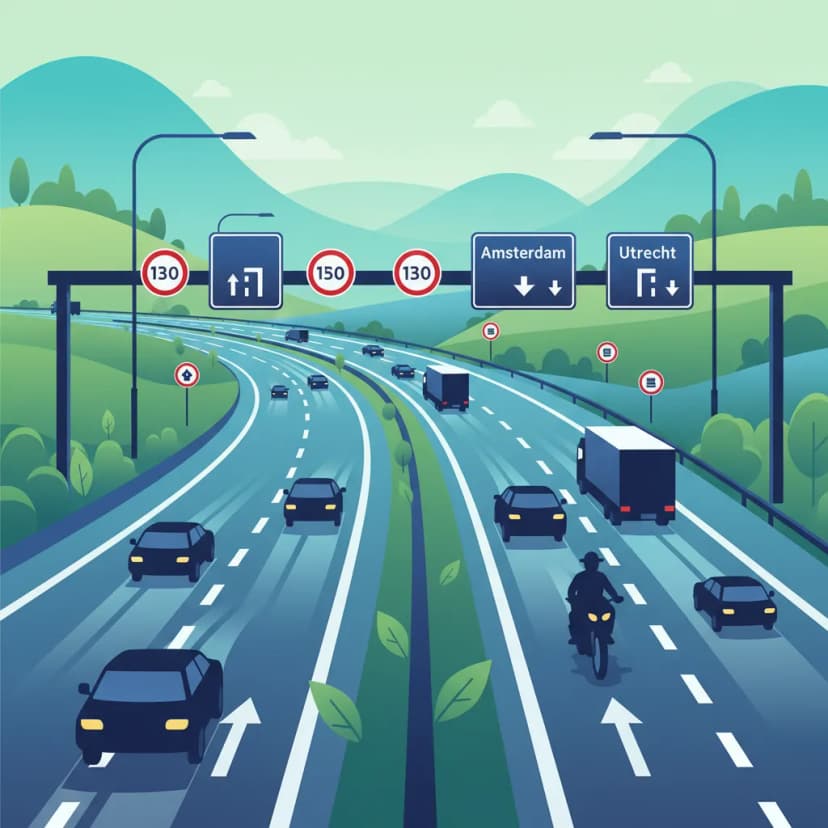
This lesson details the specific regulations for driving on Dutch motorways, identifiable by the G1 sign. You will learn the correct procedure for joining the flow of traffic using the acceleration lane and for leaving via the deceleration lane. The curriculum reinforces the 'keep right unless overtaking' rule for lane discipline. It also explains that stopping is strictly forbidden, and the hard shoulder (vluchtstrook) may only be used for genuine emergencies.

This lesson reinforces the fundamental rule of Dutch highway driving: use the rightmost lane available and use the lanes to the left only for overtaking. You will learn the complete, safe overtaking procedure: check mirrors, signal, perform a shoulder check for the blind spot, smoothly move over, accelerate past the vehicle, and then return to the right lane when safe.

This lesson revisits the concept of following distance, emphasizing its heightened importance in the high-speed motorway environment. It explains how increased speeds dramatically lengthen both reaction and braking distances, making a minimum two-to-three-second gap absolutely critical for safety. The content also stresses the importance of maintaining a space cushion to the sides, creating potential escape routes in case of sudden incidents in adjacent lanes.
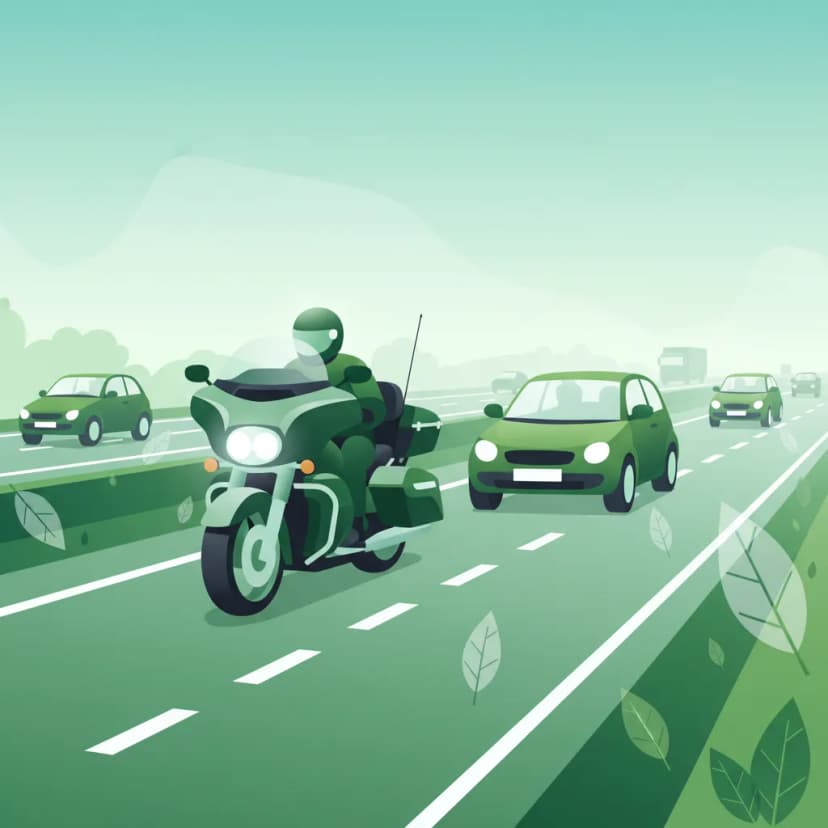
This lesson details the systematic process for safely overtaking on a multi-lane motorway, leveraging the acceleration capabilities of a Category A motorcycle. It covers the 'mirror, signal, maneuver' sequence, with a strong emphasis on the critical shoulder check to clear the blind spot before moving out. The content also discusses how to judge closing speeds, ensure adequate space before returning to the lane, and how to handle situations involving multiple lanes and slower-moving heavy vehicles.

This lesson covers the procedures and safety considerations for driving in reverse and turning around. You will learn that reversing should only be done over short distances and when it does not endanger or obstruct other road users. The curriculum details techniques for turning in the road and identifies situations and locations where U-turns are prohibited. The importance of all-around observation, checking blind spots, and yielding to all other traffic is a central theme.
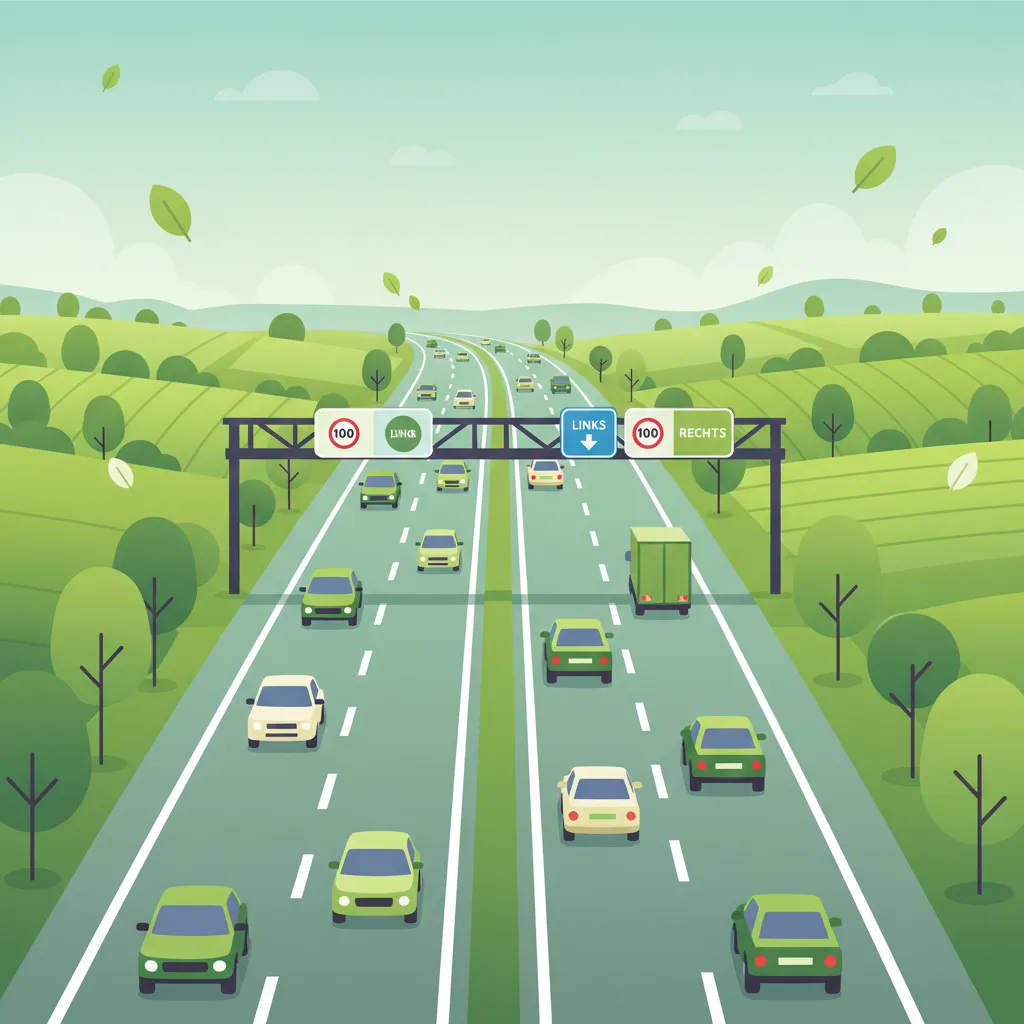
This lesson covers the specific articles of the Dutch Road Traffic Act that apply to motorways, with a primary focus on the strict rule of keeping to the rightmost available lane unless overtaking. It explains the legal and safety reasons for only passing on the left and discusses the correct positioning within a lane for maximum visibility and safety. The content also addresses the nuances of lane usage during heavy congestion, ensuring riders comply with the law and contribute to smooth traffic flow.

This lesson focuses on the array of signs used to manage traffic at intersections and along multi-lane roads. You will learn to interpret overhead gantry signs, lane designation signs, and markings that guide drivers into the correct lane for their intended direction. The curriculum covers signs indicating priority at upcoming junctions, such as the B3 and B4 signs, which clarify right-of-way rules in complex scenarios. Proper interpretation of these signs is essential for smooth lane changes, efficient navigation, and preventing conflicts at junctions.
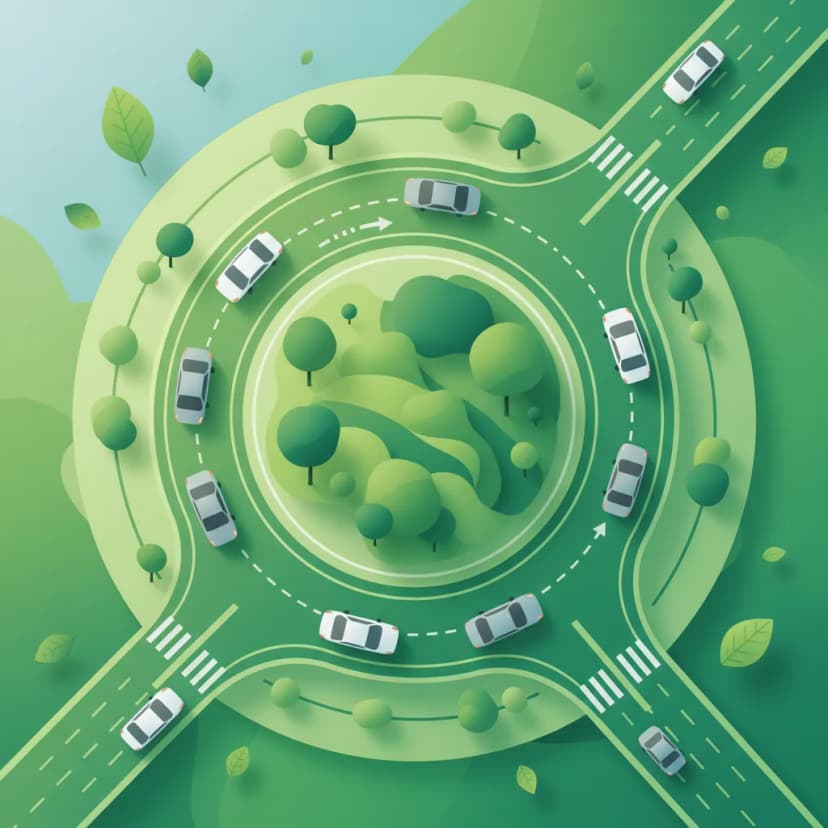
This lesson focuses on the rules and techniques for safely navigating Dutch roundabouts, a common feature of the road network. You will learn that traffic circulating on the roundabout typically has priority and that you must yield before entering. The content covers correct lane selection for your intended exit, proper use of turn signals, and maintaining awareness of cyclists who may have priority on adjacent paths.
Understand the most frequent errors motorcyclists make on motorway entry and exit ramps in the Netherlands. Learn how to avoid dangerous situations, recognize risks, and improve overall traffic safety.
Safely merging and changing lanes requires a systematic approach known as 'mirror-signal-blind spot'. This lesson explains the correct procedure for entering a carriageway from an acceleration lane, ensuring you match the speed of the traffic flow and find a safe gap. It also covers the technique for changing lanes, emphasizing the critical importance of checking your blind spot with a shoulder check (dode hoek) before making any lateral movement to prevent collisions.
This lesson details the critical manoeuvres of entering and exiting a highway. You will learn to use the full length of the on-ramp to accelerate to the speed of the highway traffic before looking for a safe gap to merge into. The content also covers the process of exiting, including signaling early, moving into the deceleration lane, and adjusting your speed for the off-ramp curve.
This lesson details the specific regulations for driving on Dutch motorways, identifiable by the G1 sign. You will learn the correct procedure for joining the flow of traffic using the acceleration lane and for leaving via the deceleration lane. The curriculum reinforces the 'keep right unless overtaking' rule for lane discipline. It also explains that stopping is strictly forbidden, and the hard shoulder (vluchtstrook) may only be used for genuine emergencies.
This lesson revisits the concept of following distance, emphasizing its heightened importance in the high-speed motorway environment. It explains how increased speeds dramatically lengthen both reaction and braking distances, making a minimum two-to-three-second gap absolutely critical for safety. The content also stresses the importance of maintaining a space cushion to the sides, creating potential escape routes in case of sudden incidents in adjacent lanes.
This lesson reinforces the fundamental rule of Dutch highway driving: use the rightmost lane available and use the lanes to the left only for overtaking. You will learn the complete, safe overtaking procedure: check mirrors, signal, perform a shoulder check for the blind spot, smoothly move over, accelerate past the vehicle, and then return to the right lane when safe.

This lesson transitions hazard perception skills to the high-speed environment of motorways and tunnels. It covers specific risks such as vehicles merging at different speeds, sudden braking and congestion ahead, road debris, and the aerodynamic effects of crosswinds and large trucks. The curriculum also addresses the challenges of riding in tunnels, including changes in light and surface conditions, and the importance of identifying emergency exits and procedures in case of an incident.
This lesson details the systematic process for safely overtaking on a multi-lane motorway, leveraging the acceleration capabilities of a Category A motorcycle. It covers the 'mirror, signal, maneuver' sequence, with a strong emphasis on the critical shoulder check to clear the blind spot before moving out. The content also discusses how to judge closing speeds, ensure adequate space before returning to the lane, and how to handle situations involving multiple lanes and slower-moving heavy vehicles.
This lesson covers the specific articles of the Dutch Road Traffic Act that apply to motorways, with a primary focus on the strict rule of keeping to the rightmost available lane unless overtaking. It explains the legal and safety reasons for only passing on the left and discusses the correct positioning within a lane for maximum visibility and safety. The content also addresses the nuances of lane usage during heavy congestion, ensuring riders comply with the law and contribute to smooth traffic flow.
This lesson prepares you for the unique dangers of high-speed highway riding. You will learn to scan for and navigate road hazards like debris, potholes, and slippery steel expansion joints on bridges. The content also addresses the powerful air turbulence created by large trucks that can upset a motorcycle's stability and the mental challenge of maintaining focus on long, monotonous stretches of road.

Overtaking is a high-risk maneuver that must be executed correctly. This lesson provides a step-by-step guide: assess if it is safe and legal, check mirrors and blind spots, signal your intention, accelerate smoothly past the other vehicle, and return to your lane leaving adequate space. You will also learn to identify situations where overtaking is prohibited, such as before a pedestrian crossing or when approaching a blind corner.
Find clear answers to common questions learners have about Entry and Exit Ramps (op- en afritten). Learn how the lesson is structured, which driving theory objectives it supports, and how it fits into the overall learning path of units and curriculum progression in the Netherlands. These explanations help you understand key concepts, lesson flow, and exam focused study goals.
The acceleration lane (oprit) is used to gain sufficient speed to match motorway traffic before merging safely, whereas the deceleration lane (afrit) is for gradually reducing speed after leaving the main carriageway. Both are crucial for maintaining smooth traffic flow and safety for motorcyclists.
A safe gap is typically when you can see the headlights of the vehicle behind you in your mirrors. Use the two-second rule as a guide and always perform a final shoulder check (dodehoekcontrole) to ensure no vehicles are in your blind spot before committing to the merge. Never assume other drivers will make space for your motorcycle.
Yes, whenever possible, you should use the full length of the acceleration lane to match the speed of the motorway traffic. This allows for a smoother, safer merge and reduces the risk of creating a hazardous situation by entering too slowly. For Category A motorcycles, adequate acceleration is usually not an issue, but matching speed is critical.
Never suddenly brake or attempt to cross solid lines or go back. Continue to the next exit. It is safer to take a detour than to create a dangerous situation by making an unsafe manoeuvre. Plan your route in advance and keep an eye on signage to avoid missing your afrit.
While the rules are the same, motorcyclists have different dynamics. Motorcycles can accelerate and decelerate faster, but are less visible to other traffic. This makes precise speed matching, careful gap selection, and exaggerated shoulder checks even more critical for Category A riders, especially given their higher performance capabilities and vulnerability.