
This unit focuses on your legal obligations as a motorcyclist in the Netherlands, including your duty of care to others. You'll learn how to interact professionally with police during roadside checks and gain vital knowledge for riding internationally, covering insurance, signs, and accident procedures abroad. Mastering these topics is crucial for both your theory exam and safe, compliant riding.
Browse all lessons that make up Legal Responsibilities, Police Interaction, and International Riding. Each lesson focuses on specific topics, learning objectives, and core concepts, helping you build essential knowledge and follow a clear, structured progression toward your study goals in the Netherlands.
This lesson provides an in-depth exploration of Article 5 of the Dutch Road Traffic Act, which establishes the general 'duty of care' ('zorgplicht'). It explains that every road user has a fundamental obligation to behave in a way that does not cause danger or hindrance to others. The curriculum clarifies how this broad principle is applied in determining legal liability after an accident, especially in incidents involving vulnerable road users, reinforcing the rider's constant accountability.
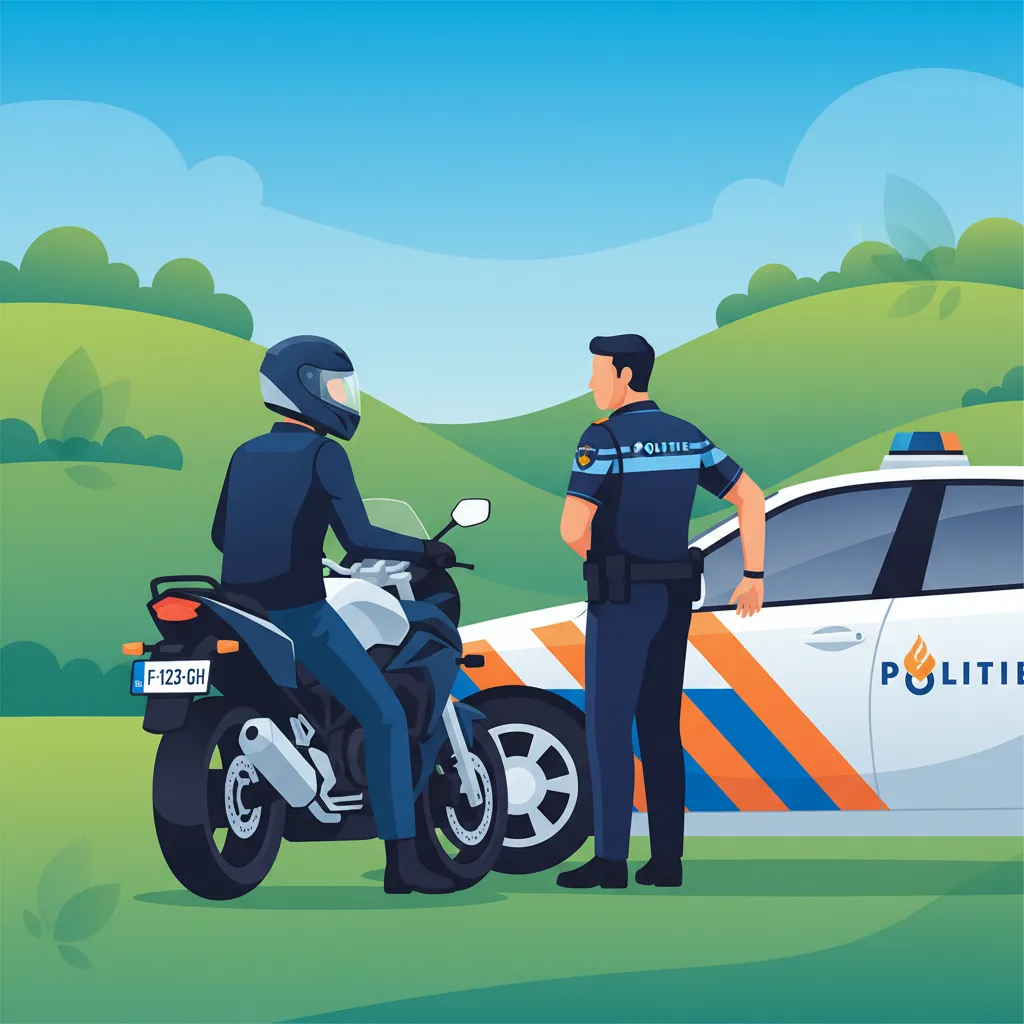
This lesson details the procedures of a typical traffic stop ('verkeerscontrole') from a rider's perspective. It outlines the authority of police officers to check documents, inspect the vehicle, and administer sobriety tests, while also explaining the basic rights of the rider during such an interaction. The goal is to demystify the process and encourage a calm, cooperative, and respectful demeanor, which facilitates a more positive and efficient roadside encounter for both parties.
This lesson serves as a critical reinforcement of the legal requirement to carry specific documents ('verkeersdocumenten') while riding. It explicitly lists the mandatory items—driving license, vehicle registration, and proof of insurance—and explains the legal consequences of failing to produce them on demand during a police stop. The content stresses that having these documents readily accessible is a basic and non-negotiable aspect of legal motorcycling in the Netherlands.
This lesson provides essential information for riders planning to travel outside the Netherlands into other European countries. It highlights that while many rules are harmonized, significant local variations exist regarding speed limits, motorway tolls or vignettes, and mandatory equipment (e.g., carrying a first-aid kit or visibility vest). The curriculum advises riders to research the specific regulations for each country on their itinerary to ensure a safe and legally compliant international journey.
This lesson builds on the understanding of international signage by focusing on the practical recognition of common foreign road signs ('buitenlandse borden'). While many symbols are standardized under the Vienna Convention, this lesson points out subtle but important differences in design and meaning. It helps riders develop the skill of quickly interpreting unfamiliar signage, ensuring they can understand and comply with local traffic regulations when riding abroad.
This lesson addresses the crucial topic of insurance validity for international motorcycle travel. It explains the purpose of the International Motor Insurance Card (Green Card) and clarifies in which countries it is mandatory versus recommended. The content guides riders on how to check their existing policy for territorial limits and what steps to take to ensure they have the necessary third-party liability coverage required to ride legally and be protected financially when traveling outside the Netherlands.
This lesson provides a practical guide for the unfortunate event of an accident while riding abroad. It outlines the steps for contacting local emergency services, the importance of involving local police, and how to use the European Accident Statement form, which is standardized across languages. The content offers advice on overcoming potential language barriers and the critical steps for gathering evidence and notifying your insurance provider promptly to ensure a smooth claims process.
Explore high-intent keywords and long-tail search topics learners use when researching Legal Responsibilities, Police Interaction, and International Riding. These terms reflect how people search for reliable study materials, structured explanations, and unit-level theory preparation support in the Netherlands.
Find clear answers to the most common questions learners ask about Legal Responsibilities, Police Interaction, and International Riding. Understand how the unit is organized, what learning goals it supports, and how it contributes to your study progression with structured explanations and practical guidance tailored for learners in the Netherlands.
The 'duty of care' ('zorgplicht') is a fundamental legal principle in Dutch traffic law that requires all road users, including motorcyclists, to act in a way that prevents danger or harm to themselves and others. This means anticipating potential risks, riding defensively, and always being mindful of the safety of other road users, especially more vulnerable ones like pedestrians and cyclists.
If stopped by police, remain calm and respectful. Ensure your motorcycle is safely positioned if requested. You are legally required to provide your driving license, motorcycle registration (kentekenbewijs), and proof of insurance. Cooperate with reasonable requests from the officer. If you are unsure about a request, you can politely ask for clarification.
You must always carry your valid Category A driving license (rijbewijs), the motorcycle's registration certificate (kentekenbewijs), and proof of third-party liability insurance (verzekeringsbewijs). It is also advisable to have a copy of the vehicle's periodic technical inspection (APK) report if applicable.
While many basic road signs are internationally standardized (Vienna Convention), there can be significant variations in specific warning, regulatory, and informational signs across different EU countries. It is crucial to familiarize yourself with the specific signage of any country you plan to ride in. This unit covers the general principles of recognizing foreign signs and highlights potential differences.
For travel within the European Union and many other European countries, your standard Dutch third-party liability insurance (WA-verzekering) usually covers you. However, it's essential to verify this with your insurance provider before your trip. For travel outside Europe, or for comprehensive coverage, you will likely need additional travel insurance or specific international motorcycle insurance.
In case of an accident abroad, prioritize safety by securing the scene if possible. Call emergency services if needed. Exchange information with other involved parties, including names, addresses, insurance details, and vehicle registration numbers. If possible, take photos of the scene and any damage. Report the accident to your insurance company and the local authorities as required by that country's laws.
All included lessons
Lessons in Legal Responsibilities, Police Interaction, and International Riding
See who benefits most from studying Legal Responsibilities, Police Interaction, and International Riding. This overview explains how the unit supports different learning needs, what level of knowledge is helpful before starting, and how it fits into the overall study path in the Netherlands.
This unit is designed for all Category A motorcycle license applicants in the Netherlands preparing for their theory exam. It is particularly beneficial for riders who anticipate traveling abroad on their motorcycle, as it covers essential international regulations and procedures.

See how Dutch Motorcycle Theory A is structured, with key topics, learning objectives, and a step-by-step path for theory preparation in the Netherlands.
Explore all units and lessons included in this driving theory course.