
While many road signs are internationally standardised, subtle differences can trip you up when riding abroad. This lesson focuses on recognizing common foreign road signs ('buitenlandse borden') and understanding their specific implications for Category A motorcyclists. It's a vital step in preparing you for international travel and ensuring you can navigate safely in any country.
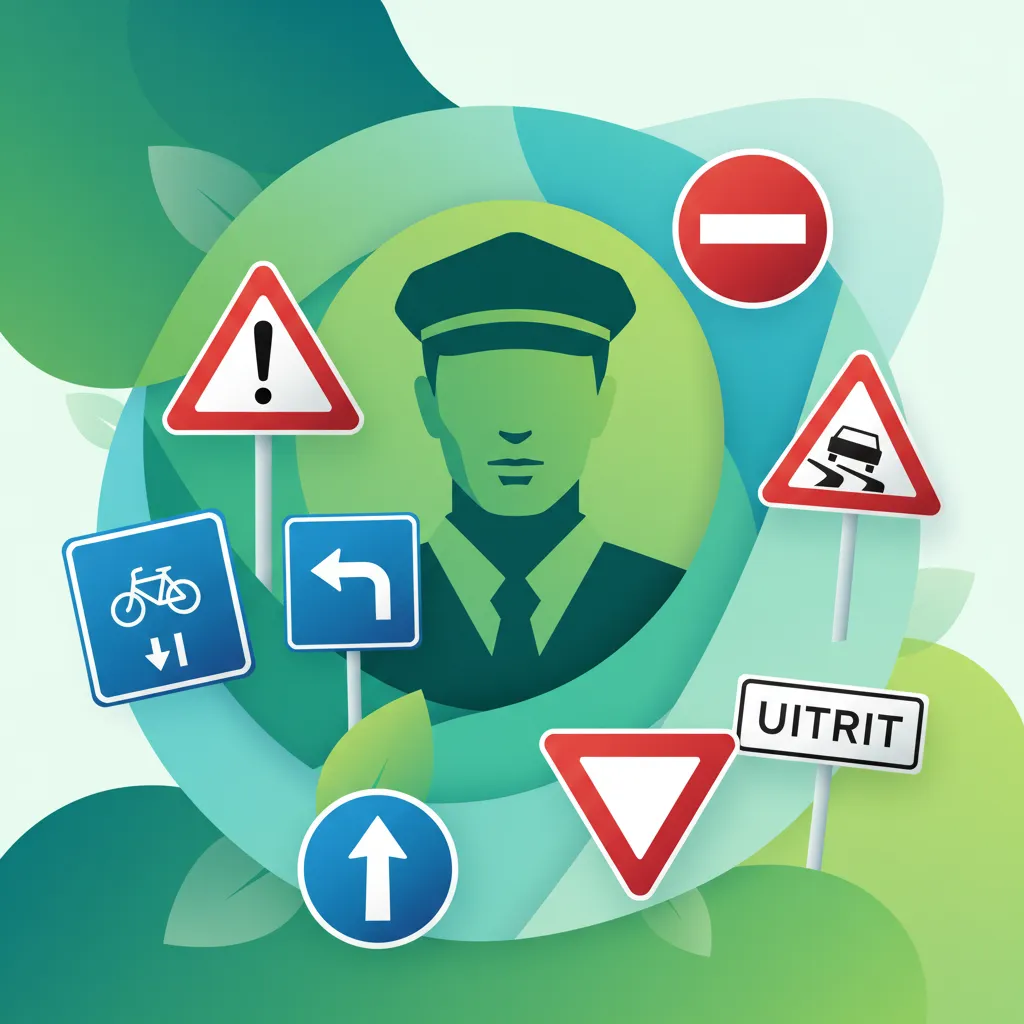
For motorcyclists, the open road often leads beyond national borders, presenting exciting new landscapes and challenges. While the Netherlands shares many road signs with its European neighbours, thanks to international agreements, subtle yet crucial differences can exist. Correctly interpreting these foreign road signs, often referred to as 'buitenlandse borden', is not just about avoiding fines; it is fundamental to safe riding and responsible participation in local traffic. This comprehensive lesson will equip you with the skills to recognise, understand, and react appropriately to road signs you may encounter when travelling internationally, ensuring your journeys are as safe and smooth as possible.
International motorcycling demands more than just a valid licence and a well-maintained vehicle; it requires an acute awareness of local traffic rules, primarily communicated through road signs. The ability to quickly and accurately interpret foreign road signs is a critical safety skill, especially when riding high-performance motorcycles where reaction times are short. A misunderstanding of a speed limit, a mandatory direction, or a prohibitory sign can lead to dangerous situations, legal penalties, or even accidents. This lesson builds on your existing knowledge of Dutch road signs and extends it to the broader European context, focusing on commonalities and significant differences.
While many European road signs share a common visual language, national implementations often vary in detail. Mastering these underlying principles will allow you to quickly decipher the legal intent of unfamiliar signage and adapt your riding accordingly.
The Vienna Convention on Road Signs and Signals, established in 1968, is an international treaty that has harmonized a significant portion of road signage across signatory countries. Its primary goal is to standardize symbols, shapes, and colours to facilitate international road traffic and enhance road safety. The Convention defines a core set of over 90 pictograms, along with their associated shapes and colour schemes, ensuring that a danger sign in the Netherlands, for example, shares a fundamental design with one in Germany or France.
This standardization means that if a foreign sign adheres to the Convention's core design, a rider can generally apply their understanding of the Dutch equivalent directly. For instance, a red-bordered equilateral triangle with a pictogram of a deer warns of "wild animals crossing" regardless of the local language. Recognising this baseline is the first step towards competent international riding.
Despite the widespread adoption of the Vienna Convention, each signatory country retains the right to introduce modifications or additions to the core sign set. These national adaptations are necessary to address specific local legislative needs, unique cultural contexts, or particular road environments not explicitly covered by the Convention.
For instance, while a general "no entry for motor vehicles" sign is standard, specific countries might have unique signs for particular types of vehicles or environmental zones. These adaptations can include country-specific mandatory signs, unique environmental warnings, or different graphical representations for certain hazards. As a rider, you must be aware that not every sign will be an exact replica of its Dutch counterpart. The EU Directive 2006/126/EC implies that drivers undertaking cross-border journeys are expected to understand these foreign signs, making recognition of national adaptations a key responsibility.
One of the most critical differences you will encounter, particularly when travelling outside the continental European metric system, is the use of different measurement units. Speed limits and distance markers are most commonly affected. While most of Europe uses kilometres per hour (km/h) for speed and metres (m) or kilometres (km) for distance, countries like the United Kingdom use miles per hour (mph) for speed and miles for distance.
A failure to recognise and correctly convert these units can lead to serious consequences, from unintentional speeding fines to dangerous miscalculations of stopping distances. It is crucial to identify unit symbols (e.g., 'km/h', 'mph', 't' for tonnes) and perform mental conversions when necessary. For example, 1 mph is approximately 1.609 km/h, meaning 70 mph equates to roughly 112 km/h.
The Vienna Convention effectively leverages semiotics – the study of signs and symbols – to create an intuitive visual language. Specific geometric shapes and colour palettes are universally assigned to distinct functional categories, allowing for rapid categorisation of unknown signs even when the pictogram is unfamiliar.
Understanding these colour and shape conventions allows for instant, almost subconscious, interpretation of a sign's general meaning, providing valuable seconds for a rider to process the specific pictogram and react.
While some foreign road signs include text, particularly for complex information or specific local regulations, the legally binding meaning is almost always conveyed by the pictogram. The visual symbol is designed to be universally understood, transcending language barriers. Any accompanying text typically serves as a clarification, often provided in the local language, or sometimes in multiple languages in border regions.
Riders should train themselves to prioritize the pictogram. If a sign shows a clear symbol, that symbol dictates the legal command, regardless of whether you can read or fully understand the accompanying text. Relying solely on text can lead to misinterpretation, especially if there's a language barrier or a quick glance leads to a translation error.
A crucial distinction in all traffic regulations is between temporary and permanent signage. Temporary signs are erected for a limited duration, usually to manage traffic during road works, special events, or emergencies. They typically feature an orange or reflective yellow background to make them highly visible and clearly differentiate them from permanent signs.
Temporary signs often impose altered speed limits, lane closures, or modified priority rules. It is vital to recognise their temporary nature, as they often take precedence over permanent signs for as long as they are displayed. Misreading a temporary sign as permanent can lead to unnecessary caution after the works are finished, while ignoring a temporary restriction can expose you to significant hazards and legal consequences.
Just as in the Netherlands, there is a legal hierarchy that determines which rule takes precedence when multiple signs or regulations might apply. This hierarchy typically flows from international treaties (like the Vienna Convention) to EU directives, national laws, and finally, local ordinances.
In practice, this means:
Understanding this hierarchy ensures that riders follow the most relevant and immediate instruction, especially in complex or dynamic traffic situations.
To effectively navigate foreign roads, a deeper understanding of the various sign categories and their common international representations is essential. While the Dutch system provides a strong foundation, observing subtle variations is key.
Danger signs are designed to alert drivers to potential hazards ahead, requiring them to adjust their speed and prepare to react. Under the Vienna Convention, these signs are almost universally triangular with a red border and a white or yellow background, pointing upwards. The pictogram within the triangle depicts the specific danger.
Examples include:
While the basic shape and colour are consistent, the exact pictograms can vary. For instance, some countries might use a moose silhouette instead of a deer for wildlife warnings. Always interpret these signs as a command to increase vigilance and reduce speed.
Prohibitory signs indicate actions that are forbidden. They are typically circular with a red border and a white or yellow background. The pictogram, often with a diagonal line through it, specifies the restriction.
Common examples internationally include:
It's crucial to note that some countries might have slight variations in these pictograms or may introduce additional prohibitory signs specific to local regulations (e.g., specific vehicle types, environmental restrictions).
Mandatory signs indicate an action that drivers must perform. These signs are almost universally circular with a blue background and a white pictogram.
Typical mandatory signs include:
As with other categories, subtle differences can exist. For example, some countries use pictograms for mandatory protective gear (e.g., helmets for mopeds in certain areas), which might not be common in the Netherlands.
Information signs provide general guidance, facilities, or road features. Direction signs guide drivers towards destinations. These signs are generally rectangular or square, with varied backgrounds depending on their function and the type of road.
Variations are most common in this category. Text is often used in combination with pictograms, and the language will be local. While less critical for immediate safety than danger or prohibitory signs, understanding information and directional signs is crucial for navigation and journey planning.
To ensure safe and legal international motorcycling, a set of specific rules and regulations govern the interpretation and obedience of foreign road signs. These principles help clarify obligations and prevent common errors.
All foreign road signs that conform to the basic design principles (shapes, colours, pictograms) of the Vienna Convention are legally binding in signatory states. This applies universally, regardless of the language used on the sign. The core purpose of the Convention is to establish a universally understood visual language for traffic regulation.
Rule Statement 1: Obey any foreign road sign that conforms to the Vienna Convention. Applicability: All public roads in signatory states; applies regardless of language. Legal Status: Mandatory (RVV 1990 § 5a; EU Directive 2006/126/EC). Rationale: Standardised visual communication ensures safety across borders. Incorrect Example: Ignoring a red-bordered triangle with a deer silhouette because text is in Polish.
When encountering speed limit signs or distance markers that use units other than kilometres per hour (km/h) or kilometres (km), it is mandatory to convert these units to their metric equivalents for comparison with your understanding of limits and distances. This is particularly relevant in the United Kingdom or other non-metric countries.
Rule Statement 2: When speed limit signs display units other than km/h, convert to km/h before comparing to Dutch limits. Applicability: All speed-limit signs abroad, especially UK (mph) and US (mph). Legal Status: Mandatory (RVV 1990 § 5b). Rationale: Prevents unintentional speeding due to unit confusion. Incorrect Example: Riding at 120 km/h in the UK after misreading a 70 mph sign as 70 km/h.
Temporary signs, identifiable by their distinct background colour (usually orange or reflective yellow), always take precedence over permanent signs for the duration they are displayed. These signs are used for road works, special events, or other transient conditions that require a deviation from normal traffic rules.
Rule Statement 3: Temporary (orange) signs have priority over permanent signs for the duration they are displayed. Applicability: Road works, events, detours; sign’s validity period indicated on sign or via accompanying signage. Legal Status: Mandatory (Temporary Traffic Signs Regulation, 1994). Rationale: Protects workers and adapts traffic flow safely. Incorrect Example: Continuing at the normal speed after a temporary 50 km/h sign is displayed for a construction zone.
In situations where a foreign sign combines a graphical pictogram with explanatory text, the pictogram is the primary source of the legal requirement. The text merely clarifies or reiterates the message, often in the local language. This ensures that non-native speakers can still understand and comply with essential traffic commands.
Rule Statement 4: If a foreign sign combines a pictogram with text, the pictogram dictates the legal requirement. Applicability: Any sign with multilingual text, common in EU countries. Legal Status: Mandatory (EU Regulation 2009/1441). Rationale: Guarantees that non-native speakers can still understand the obligation. Incorrect Example: Stopping only because the sign reads “STOP” in French while the pictogram is a blue mandatory lane sign.
Many primary road signs are accompanied by supplementary plates, which are smaller signs placed below or above the main sign. These plates add specific conditions, restrictions, or exceptions to the primary sign's meaning (e.g., specifying vehicle type, weight limits, or time restrictions). These supplementary plates are legally binding and must be strictly obeyed.
Rule Statement 5: National supplementary signs (e.g., “No entry for vehicles over 12 t”) must be obeyed even if the core sign allows entry. Applicability: Supplementary plates placed below/above a primary sign. Legal Status: Mandatory (RVV 1990 § 5c). Rationale: Provides restrictions tailored to local conditions. Incorrect Example: Ignoring a supplementary “> 12 t” restriction on a motorway entry sign in Belgium.
In rare cases, you might encounter contradictory signs (e.g., a generic Vienna-compliant sign appearing to conflict with a national supplemental sign). In such scenarios, the more specific or locally imposed rule typically takes precedence. Local authorities often use supplementary signs to fine-tune general rules to specific local conditions.
Rule Statement 6: In the event of contradictory signs (e.g., a Vienna-compliant sign vs. a national supplemental sign), the more specific/national rule applies. Applicability: Situations where a local authority adds a sign that modifies the core sign. Legal Status: Mandatory (RVV 1990 § 5d). Rationale: Ensures that locally imposed restrictions are respected. Incorrect Example: Following a generic “no overtaking” sign despite a local “no overtaking for motorcycles” supplemental sign.
When riding abroad, especially within the EU and Schengen states, you may be subject to police checks. During such checks, you may be asked to demonstrate your knowledge of local road signs. This is to confirm your preparedness for safe international travel and your understanding of the regulations of the country you are in.
Rule Statement 7: Drivers must be able to demonstrate knowledge of foreign road signs when requested by police during cross-border checks. Applicability: Police checkpoints in EU and Schengen states. Legal Status: Mandatory (EU Cross-Border Riding Regulations, Article 3). Rationale: Confirms preparedness for safe international travel. Incorrect Example: Failing to identify a foreign “no entry for trucks” sign when asked.
Even experienced riders can make mistakes when encountering unfamiliar signage. Being aware of these common pitfalls can help you avoid them.
The most frequent error is misinterpreting speed limits due to unit differences.
Ignoring supplementary plates that modify a primary sign can lead to violations.
Treating a temporary restriction as permanent, or failing to notice its removal, can be problematic.
While in the Netherlands, an inverted red-bordered triangle is a "Yield" sign, in some countries, an upright red-bordered triangle might depict a general warning or a specific hazard.
Focusing solely on any text accompanying a pictogram, especially if you misread or misunderstand the foreign language.
Assuming a symbol has the exact same implication in every country.
Road markings, like signs, can vary significantly between countries.
The environment and specific circumstances can significantly impact how well you recognise and interpret foreign road signs. Being aware of these variations allows for proactive adjustments to your riding.
Poor weather conditions like fog, heavy rain, or snow drastically reduce visibility and make it harder to discern sign details.
Riding at night, especially on unlit rural roads, poses challenges. While most important signs are reflective, temporary signs might be poorly lit or not reflective at all.
The type of road environment you are in significantly affects the density and specificity of signage.
If you are travelling with heavy luggage, a passenger, or towing a small trailer, your overall vehicle mass changes.
Signs related to pedestrians, cyclists, or school zones demand heightened attention, especially in unfamiliar territories where local behaviour might differ.
The relationship between correctly interpreting foreign road signs and your safety and legal standing is direct and profound.
Correct Recognition Leads to:
Misrecognition or Failure to Act Leads to:
To help solidify your understanding, here is a list of key terms used in this lesson.
Let's look at some real-world examples to reinforce your learning.
Setting: You are riding your motorcycle on a UK motorway on a clear, dry day. Relevant Rule: Rule 2 (Unit Conversion) – speed limits in the UK are displayed in miles per hour (mph). Correct Behaviour: You see a white circular sign with a red border indicating "70 mph." You mentally convert this to approximately 112 km/h. You then adjust your speed to stay below 112 km/h, respecting the local limit while maintaining a safe speed relevant to the traffic flow and your own riding capabilities. Incorrect Behaviour: You misinterpret "70 mph" as "70 km/h" and significantly reduce your speed, becoming a slow obstruction on a fast motorway, creating a potential rear-end collision risk. Why Correct: This ensures legal compliance and maintains safe traffic flow, preventing both speeding fines and hazardous slowing.
Setting: You are on an Alpine road in Austria. It's lightly raining, and you encounter an orange rectangular sign with a pictogram of a worker and "30 km/h." Relevant Rule: Rule 3 (Temporary Sign Priority) – temporary signs, often orange, override permanent signs. Correct Behaviour: Immediately recognise the orange sign as temporary. Reduce your speed to 30 km/h or less and remain highly alert for road workers, uneven surfaces, or changed lane configurations. Incorrect Behaviour: You ignore the orange sign, maintaining your previous speed of 80 km/h because the permanent sign for the road indicated 80 km/h. Why Correct: Obeying the temporary speed limit is legally binding and critically reduces the risk of hitting workers or construction equipment, especially in adverse weather.
Setting: You are riding on a rural French road and encounter an upright red-bordered triangle with a black exclamation mark inside. Relevant Concept: Colour-Shape Semiotics – red-bordered triangles typically signify danger. Correct Behaviour: You interpret this as a general warning sign for an unspecified hazard ahead. You immediately reduce your speed, increase your vigilance, and prepare to react to any potential danger (e.g., a sharp, unexpected curve, a change in road surface, or hidden access). Incorrect Behaviour: You assume the upright triangle is a variant of a "Yield" sign and only focus on crossing traffic, failing to prepare for a different type of hazard. Why Correct: Proper interpretation of a danger sign ensures you are prepared for unforeseen hazards, preventing an accident.
Setting: You are in the city centre of Zurich, Switzerland. You see a road sign featuring a red circle with a blue 'P' crossed out, and below it, the French text "Arrêt interdit." Relevant Concept: Pictogram overrides text. Correct Behaviour: You recognise the crossed-out 'P' symbol as a universal "No Parking" pictogram. You understand the French text clarifies this rule, but your primary action is based on the visual symbol: do not park here. Incorrect Behaviour: You misinterpret "Arrêt interdit" as "Parking allowed" (a common translation error for non-French speakers confusing 'arrêt' with 'rest' or 'stop' in a non-prohibitive sense) and park your motorcycle, leading to a fine. Why Correct: Prioritising the universally understood pictogram ensures compliance with the legal prohibition.
Setting: You are crossing an Autobahn bridge in Germany. A sign shows a red circle with a blue pictogram of a bridge, and below it, a supplementary plate states "12 t." Relevant Rule: Rule 5 (Supplementary Plate) – supplementary plates impose additional, legally binding restrictions. Correct Behaviour: You recognise the "12 t" on the supplementary plate as a weight restriction in tonnes. You verify that your total motorcycle weight, including luggage and passenger, does not exceed 12 tonnes. If compliant, you proceed. Incorrect Behaviour: You ignore the supplementary plate, assuming it doesn't apply to motorcycles, and cross the bridge with an overloaded vehicle. Why Correct: Obeying weight restrictions is critical for structural integrity of bridges and preventing legal liability.
This lesson on recognising foreign road signs is a crucial component of safe international motorcycling. It builds directly on your foundational knowledge from Road Signs and Signals for Motorcyclists and is essential for understanding Cross-Border Riding Regulations (EU-rijregels). Furthermore, the ability to rapidly process unfamiliar visual information under varying conditions directly relates to Human Factors, Risk Psychology and Defensive Riding.
Looking ahead, the skills gained here will prepare you for understanding Insurance Requirements for International Travel, as correct compliance with local traffic laws can impact the validity of your insurance in case of an incident. It also sets the stage for dealing with Reporting and Handling Foreign Accidents, where accurate understanding of the accident scene, including signage, is critical.
Lesson content overview
Explore all units and lessons included in this driving theory course.
Explore search topics learners often look for when studying Recognition of Foreign Road Signs (buitenlandse borden). These topics reflect common questions about road rules, driving situations, safety guidance, and lesson level theory preparation for learners in the Netherlands.
Browse additional driving theory lessons that cover connected traffic rules, road signs, and common driving situations related to this topic. Improve your understanding of how different rules interact across everyday traffic scenarios.
Explore how countries adapt international road signs. Learn to identify subtle but critical differences in symbols, colours, and meanings beyond the Vienna Convention, crucial for safe riding abroad and Dutch theory exam preparation.

This lesson provides essential guidance on recognizing and interpreting traffic signs that may differ from Dutch standards but are commonly encountered when riding across borders within the European Union. It highlights key differences based on the Vienna Convention on Road Signs and Signals, helping riders understand variations in regulatory, warning, and informational signs. This knowledge is crucial for maintaining legal compliance and safety when navigating foreign road systems, ensuring a confident international riding experience.

This lesson explores the legal meaning of various road surface markings, including solid and broken lane delimiters, directional arrows, and special-purpose lane indicators. It describes how markings dictate permitted maneuvers, such as overtaking and lane changes, and alert riders to upcoming hazards or changes in road layout. The content also examines the relationship between markings and road design in the Netherlands, emphasizing how a motorcyclist must interpret these visual cues for safe positioning.

This lesson offers an in-depth study of Dutch regulatory signs, which impose mandatory actions or prohibitions on road users, with a specific focus on their impact on motorcyclists. It explains the visual language of prohibition symbols ('verbodsborden') and obligation symbols ('verplichtingsborden'), the contexts in which they appear, and the strict statutory consequences of non-compliance. Real-world examples are used to illustrate how these signs directly influence route planning, overtaking decisions, and speed management.
This lesson explains how to interpret directional and informational signs to navigate the Dutch road network effectively. You will learn to read route signs on highways, understand lane guidance arrows for complex intersections, and identify panels indicating services like fuel stations or rest areas. The content focuses on how motorcyclists can use this information for safe and efficient route planning, including adapting to real-time information from electronic signs.

This lesson focuses on informational signs that guide motorcyclists in navigation, route planning, and locating essential services while on the road. It examines the standardized symbols and color-coding for directions ('richtingsborden'), destinations, distances, and amenities, explaining how these signs support efficient and safe travel. Learners will understand how to use this information for strategic route selection, especially on long journeys or in unfamiliar areas, ensuring a smooth and predictable trip.

This lesson focuses on Dutch regulatory signs that enforce mandatory rules and restrictions, particularly those impacting A2 motorcyclists. You will learn to recognize and obey prohibition signs, such as those indicating a motorcycle ban (BORD 40), speed limits, and overtaking restrictions (BORD 21). The content explains the legal consequences of non-compliance and how to apply these rules in practical riding scenarios to ensure full adherence to Dutch traffic law.
This lesson examines the function and interpretation of variable message signs (VMS) and other digital displays that provide real-time traffic information on Dutch roads. It explains how these systems communicate dynamic speed limits, congestion alerts, lane closures, and diversion routes, and how motorcyclists must legally comply with these instructions. Understanding these 'matrixborden' is critical for adapting to changing road conditions and ensuring safety on motorways and in tunnels.

This lesson provides a detailed explanation of the various markings painted on the road surface, which are as legally binding as physical signs. It clarifies the rules associated with solid and broken white lines, including restrictions on crossing them, and the function of arrows, chevrons, and text painted in lanes. A thorough understanding of these markings is fundamental for correct lane discipline, positioning, and safe maneuvering on a motorcycle.
This lesson provides a detailed overview of fixed speed limits on the Dutch road network and the signs that indicate them. You will learn to identify signs for maximum speed (BORD 50) and understand the default limits that apply within built-up areas, on rural roads, and on motorways. The content emphasizes the importance of constant awareness and legal compliance to avoid penalties and ensure road safety for yourself and others.

This lesson focuses on the meaning of different road markings and their implications for motorcycle lane discipline. You will learn the legal distinction between solid and broken lines regarding overtaking, how to interpret directional arrows for lane choice, and the rules for using special lanes. The content emphasizes maintaining a safe and strategic position within the lane to maximize visibility and create a safety buffer from other vehicles.
Master the interpretation of international road signs through practical scenarios. This lesson details common misunderstandings, critical unit conversions, and how to apply knowledge of foreign signage in diverse traffic situations for safer international travel.
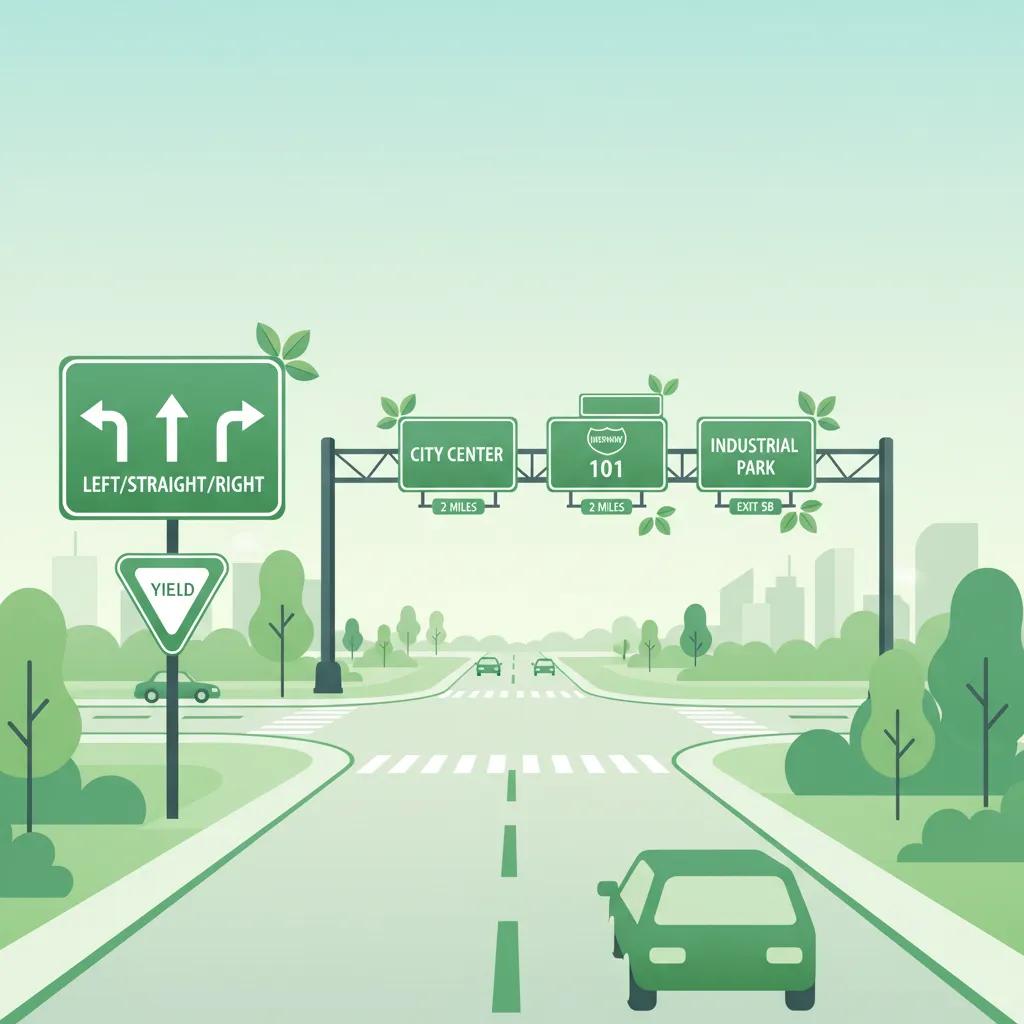
This lesson focuses on the array of signs used to manage traffic at intersections and along multi-lane roads. You will learn to interpret overhead gantry signs, lane designation signs, and markings that guide drivers into the correct lane for their intended direction. The curriculum covers signs indicating priority at upcoming junctions, such as the B3 and B4 signs, which clarify right-of-way rules in complex scenarios. Proper interpretation of these signs is essential for smooth lane changes, efficient navigation, and preventing conflicts at junctions.

This lesson introduces warning signs, which are designed to alert drivers to potential dangers or changes in road layout ahead. You will learn to interpret the triangular-shaped signs that indicate hazards such as sharp curves, slippery road surfaces (J27), or upcoming road works (J8). The curriculum explains how these signs help in anticipating risks and adjusting driving behavior accordingly, such as reducing speed or increasing alertness. A thorough understanding of warning signs is vital for proactive and defensive driving in various environments.
This lesson provides essential guidance on recognizing and interpreting traffic signs that may differ from Dutch standards but are commonly encountered when riding across borders within the European Union. It highlights key differences based on the Vienna Convention on Road Signs and Signals, helping riders understand variations in regulatory, warning, and informational signs. This knowledge is crucial for maintaining legal compliance and safety when navigating foreign road systems, ensuring a confident international riding experience.
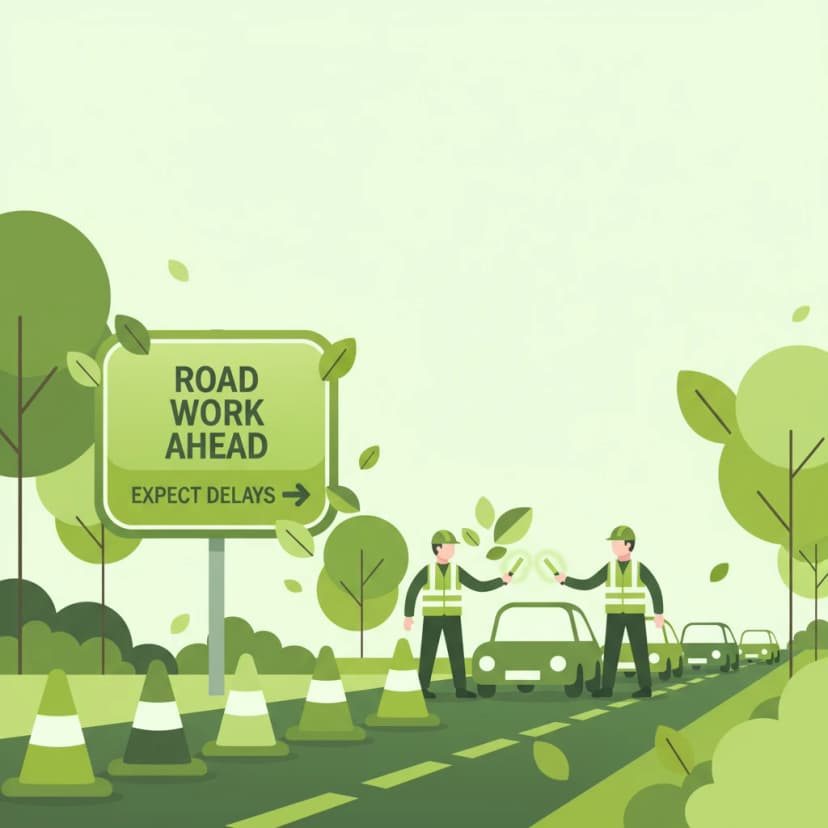
This lesson prepares you for encountering road works, a common feature on any road network. You will learn that signs and markings related to road works are often yellow and that they temporarily override permanent white markings and signs. The curriculum stresses the importance of adhering to temporary speed limits, being alert for workers and machinery, and navigating narrowed lanes. It also covers how to follow diversion routes ('omleiding') and obey instructions given by traffic controllers.
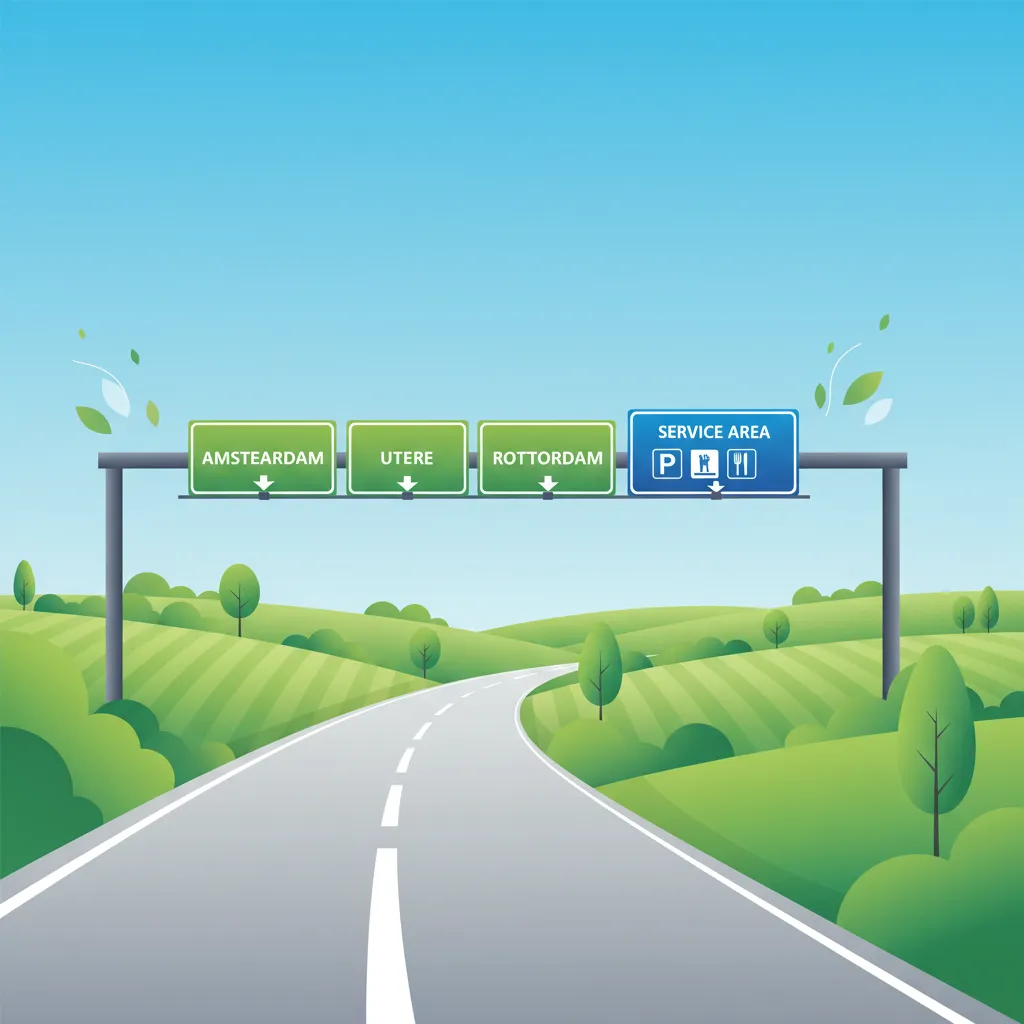
This lesson explains how to interpret informational signs that provide guidance and navigational aid. You will learn to read directional signs indicating cities and locations, understand route numbering on major roads, and recognize signs for services like fuel stations or parking areas. It also covers the signs that mark the beginning and end of a built-up area ('bebouwde kom'), which have important implications for speed limits and traffic rules.
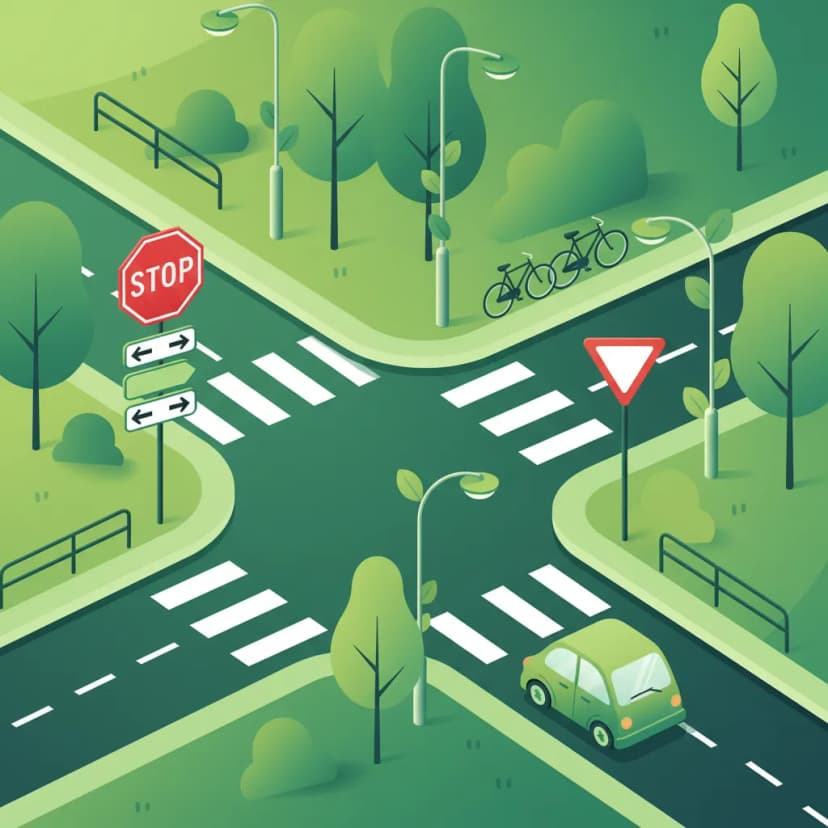
This lesson focuses on regulatory signs, which impose legal obligations on drivers and are essential for maintaining traffic order. You will learn to identify and act upon fundamental signs such as the octagonal B6 Stop sign, the diamond-shaped B1 Priority Road sign, and various compulsory direction arrows. The content explains the legal implications of these signs, detailing when a driver must stop completely, when they have priority, or the required path they must follow. Understanding these commands is crucial for safe and lawful driving at intersections and on designated routes.
This lesson examines the function and interpretation of variable message signs (VMS) and other digital displays that provide real-time traffic information on Dutch roads. It explains how these systems communicate dynamic speed limits, congestion alerts, lane closures, and diversion routes, and how motorcyclists must legally comply with these instructions. Understanding these 'matrixborden' is critical for adapting to changing road conditions and ensuring safety on motorways and in tunnels.

This lesson covers prohibition signs, which are used to forbid specific maneuvers or restrict access for certain vehicles. You will study the characteristics of these signs, typically circular with a red border, such as the C2 'No Entry for any vehicle' or the F1 'No Parking' sign. The content details the legal consequences of ignoring these prohibitions and explains how they contribute to traffic flow and safety in congested or sensitive areas. Recognizing these signs is fundamental to avoiding fines and dangerous situations on the road.

This lesson explains how to respond to variable speed limits shown on overhead electronic signs, which are used to manage traffic flow in real-time. You will learn why these limits are adjusted for factors like congestion, accidents, or bad weather, and the legal requirement to obey them. The content focuses on the importance of anticipatory riding, scanning far ahead for these signs to allow for smooth and safe speed adjustments.
This lesson focuses on informational signs that guide motorcyclists in navigation, route planning, and locating essential services while on the road. It examines the standardized symbols and color-coding for directions ('richtingsborden'), destinations, distances, and amenities, explaining how these signs support efficient and safe travel. Learners will understand how to use this information for strategic route selection, especially on long journeys or in unfamiliar areas, ensuring a smooth and predictable trip.
Find clear answers to common questions learners have about Recognition of Foreign Road Signs (buitenlandse borden). Learn how the lesson is structured, which driving theory objectives it supports, and how it fits into the overall learning path of units and curriculum progression in the Netherlands. These explanations help you understand key concepts, lesson flow, and exam focused study goals.
No, while many road signs adhere to international conventions like the Vienna Convention on Road Signs and Signals, there are often subtle but important differences in design, size, and specific meaning across countries. This lesson helps you recognise these variations and understand how to interpret them safely.
The CBR Category A theory exam may include questions featuring road signs from other European countries. This lesson specifically prepares you for such questions by highlighting common differences and teaching you how to deduce the meaning of unfamiliar signs, ensuring you don't lose marks on international signage.
This lesson teaches you to break down unfamiliar signs by their core elements: shape, colour, and symbols. Many signs use universal pictograms, and understanding basic principles allows you to make an educated guess about their meaning, alongside adhering to general Dutch traffic law principles like yielding to the right or priority signs if applicable.
While variations exist everywhere, some countries might have unique warning signs, regulatory signs, or informational signs specific to their local conditions or history. For example, signs related to specific local vehicle types or unique priority rules might differ. This lesson focuses on the common types of differences you are likely to encounter.
No, that's impractical. The goal of this lesson is to equip you with a framework for interpretation and recognition of common variations. By understanding the principles behind sign design and common international symbols, you'll be able to logically approach most unfamiliar signs you encounter.