
In the Netherlands, road markings are as legally binding as traffic signs. This lesson focuses on understanding surface markings and lane delimiters, crucial for A1 motorcycle riders preparing for their CBR theory exam. Mastering these elements ensures you maintain correct lane discipline and navigate safely, building on the basic road rules.

Road surface markings are critical elements of the Dutch traffic system, serving as silent guides and regulators for all road users, including A1 motorcycle riders. These painted symbols and lines directly on the carriageway provide essential instructions for lane discipline, positioning, and safe maneuvering. A thorough understanding of their meanings and legal implications is fundamental for passing your Dutch A1 motorcycle theory exam and for ensuring your safety on the road.
In the Netherlands, road surface markings are not merely suggestions; they carry the same legal weight and authority as physical traffic signs. This legal equivalence is stipulated in Article 7 of the Reglement Verkeersregels en Verkeersregels voor Voorrang (RVV 1990), which is the primary legal framework for Dutch traffic rules. This means that ignoring a road marking can lead to fines, penalties, and significantly increase the risk of accidents.
For motorcyclists, this legal binding nature is particularly crucial. Due to their smaller visual profile and greater maneuverability, motorcyclists must be acutely aware of lane boundaries and directional cues to prevent conflicts with larger vehicles and vulnerable road users. Markings provide clear delineation of space, reduce conflict points, and guide traffic flow, especially where physical signs might be impractical or less visible. They ensure predictability and standardize road user behavior, which is vital for safety.
Lane delimiters are lines painted on the road surface that define the boundaries of lanes, the carriageway, and other specific areas. Their color, continuity (solid or broken), and position convey precise instructions about permissible movements.
A solid white line is a continuous line of white paint, typically found along the center of two-way roads, separating lanes moving in the same direction, or marking the outer edge of the carriageway.
Practical Meaning: The presence of a solid white line signifies a strict prohibition against crossing it. This rule is designed to prevent head-on collisions on two-way roads or dangerous lane changes on multi-lane highways. Motorcyclists must remain within their designated lane and not cross a solid white line to overtake, change lanes, or make any other maneuver that would involve straddling or moving over the line. RVV 1990 Article 7.2a explicitly prohibits crossing a solid line where it would endanger safety.
Common Misunderstanding: Many riders mistakenly treat solid lines as advisory, especially on seemingly clear roads. However, they are mandatory and legal compliance is expected at all times.
Example: On a dual-carriageway, a solid white line often separates the main traffic lanes from an acceleration or deceleration lane, or separates the fast lane from other lanes. Crossing this line is only permitted in very specific, sign-posted circumstances, such as a designated U-turn area.
In contrast to solid lines, a broken white line consists of a series of short white dashes with equal spaces between them. These are commonly used to separate lanes of traffic moving in the same direction or to mark the center of a two-way road where overtaking is permitted.
Practical Meaning: A broken white line indicates that lane changes, merging, or overtaking maneuvers are permitted, provided they can be executed safely without hindering or endangering other traffic. RVV 1990 Article 7.2b states that crossing a broken line is allowed when the driver can do so without danger. Motorcyclists should always check their mirrors, signal their intentions, and ensure sufficient space and time before crossing a broken line.
Common Misunderstanding: While broken lines allow crossing, they do not grant absolute freedom. Safe judgment, awareness of surroundings, and the ability to not impede other road users remain mandatory. A rider who causes a collision while crossing a broken line due to unsafe maneuvering will still be held responsible.
Example: On a city boulevard with multiple lanes moving in the same direction, broken white lines separate these lanes, allowing motorcyclists to change lanes to prepare for a turn or to overtake a slower vehicle.
Yellow lines on the road surface in the Netherlands serve a specific purpose, primarily relating to bicycle lanes and certain parking restrictions. They can be solid or broken, each conveying distinct rules.
Practical Meaning:
Common Misunderstanding: Motorcyclists might mistakenly assume a broken yellow line allows general use, similar to a broken white line. However, its primary purpose is still related to bicycle lanes, and special permission via signs is usually required for motor vehicles to cross or use it.
Example: A residential street may have a solid yellow line adjacent to a painted bike lane. A motorcyclist must remain on the main road and never enter this lane. In some specific instances, a broken yellow line might be used at a bus stop, allowing buses to temporarily cross into a bike lane to pick up passengers, but this would be clearly signposted.
Beyond simple lines, the road surface is used to convey specific directions and information through various symbols and textual markings. These are equally binding and crucial for navigating safely, especially at complex intersections or merging points.
Lane arrows are large symbols painted on the road surface within a lane, indicating the only permitted direction(s) of travel for vehicles in that lane.
Subcategories:
Practical Meaning: Motorcyclists must ensure they are in the correct lane well in advance of an intersection or junction, according to their intended direction of travel. Once in a lane with a specific directional arrow, you are legally obligated to follow that direction, as per RVV 1990 Article 7.3. Entering a lane with an incompatible arrow for your desired movement is illegal and extremely dangerous, as it can cause conflicts with other traffic following the correct instructions.
Common Misunderstanding: Ignoring lane arrows when the lane appears wide enough or if traffic seems light. Lane markings have priority over driver intuition or convenience.
Example: Approaching a busy intersection, you intend to turn left. You must position your motorcycle in the lane clearly marked with a left-turn arrow (←). Proceeding straight from this lane is prohibited.
Chevrons are V-shaped patterns, often repeated, painted on the road surface. They are typically found in areas requiring specific lane positioning, such as merging zones, approach lanes to roundabouts, or to indicate safe following distances.
Practical Meaning: While not always legislated with specific "no crossing" rules like solid lines, chevrons serve as strong visual recommendations for safe lane use. When used to delineate a merging area, they guide vehicles smoothly into the next lane. For motorcyclists, aligning your bike's center with the chevrons can help maintain optimal lane position, especially when navigating turns or merging, improving stability and visibility. Non-adherence, particularly if it leads to unsafe maneuvering, could be cited as dangerous driving.
Common Misunderstanding: Assuming chevrons are merely decorative or indicating a buffer zone that can be freely used. These markings are there for safety and efficient traffic flow.
Example: On a highway approaching an off-ramp, chevrons might guide motorists into the correct deceleration lane, clearly showing the optimal path for merging out of the main flow of traffic.
Textual markings involve words, abbreviations, or symbols painted directly on the road surface, providing explicit instructions about lane usage or required actions.
Types:
Practical Meaning: These markings clearly define lane usage, restrictions, or required actions and are legally binding per RVV 1990 Article 7.4. Motorcyclists must adhere to these instructions. For example, a lane marked "BUS" is reserved for buses, and motorcycles are generally prohibited from using it unless a specific sign permits it (which is rare).
Common Misunderstanding: Failing to notice low-contrast text, especially in poor visibility conditions (night, rain). Riders must actively scan the road surface for these instructions.
Example: A lane on an urban avenue might have the word "BUS" painted repeatedly within it. A motorcyclist must not enter or ride in this lane.
These are critical markings that dictate when and where a driver must stop or give way to other traffic or pedestrians. Their precise placement and interpretation are vital for preventing collisions.
Practical Meaning:
Common Misunderstanding: Rolling over a stop line slightly before a light turns green, or assuming a yield line means you always have the right-of-way if you don't see immediate traffic. The rule is to stop fully behind the stop line and to give way completely at a yield line.
Example: At a traffic light that turns red, a motorcyclist must stop completely before the thick white stop line painted across their lane. At a small roundabout entry, a yield line requires you to give way to traffic already in the roundabout.
Beyond standard lines and arrows, other markings serve specific purposes or provide guidance in changing road conditions.
Lane end markings are a series of short, progressively decreasing lines that indicate a lane is about to terminate or merge into an adjacent lane.
Practical Meaning: These markings serve as a visual warning to motorcyclists that the current lane will soon end. Riders must begin to adjust their speed and prepare to merge safely into the adjacent lane, checking mirrors, signaling, and matching the speed of the merging traffic. While not accompanied by a specific RVV 1990 article, failure to merge safely can be considered dangerous driving.
Common Misunderstanding: Ignoring lane end markings and assuming the lane continues, leading to abrupt, last-minute merging that can create dangerous situations.
Example: A highway off-ramp might have lane end markings on the far right lane, indicating it will soon merge into a single lane exit.
In areas of roadworks or construction, temporary markings are used to guide traffic through altered layouts. These can be removable paint, cones with painted symbols, or temporary signs.
Practical Meaning: Temporary markings supersede permanent markings. They require immediate adaptation and strict compliance. These are often accompanied by reduced speed limits and other temporary signs. RVV 1990 Article 14 covers temporary traffic arrangements, making these markings legally enforceable. Motorcyclists must pay extra attention, reduce speed, and follow all temporary instructions to ensure their safety and the safety of construction workers.
Common Misunderstanding: Assuming temporary markings are optional or less important than permanent ones. They are legally binding and designed to manage risk in hazardous areas.
Example: Orange arrows painted on the road indicating a lane shift to the left due to road repairs, instructing traffic to move out of the closed right lane.
Understanding the rules is one thing; applying them consistently on the road is another. Certain situations commonly lead to violations or misunderstandings regarding road markings.
The effectiveness and interpretation of road markings can vary significantly depending on external conditions and the type of road. Motorcyclists must adjust their riding behavior accordingly.
Road surface markings are engineered with safety as their primary objective. For motorcyclists, their role in accident prevention is particularly profound:
By diligently observing and understanding road surface markings, motorcyclists not only comply with Dutch traffic law but also significantly enhance their own safety and contribute to the overall safety of the road environment.
Lesson content overview
Explore all units and lessons included in this driving theory course.
Explore search topics learners often look for when studying Surface Markings & Lane Delimiters. These topics reflect common questions about road rules, driving situations, safety guidance, and lesson level theory preparation for learners in the Netherlands.
Browse additional driving theory lessons that cover connected traffic rules, road signs, and common driving situations related to this topic. Improve your understanding of how different rules interact across everyday traffic scenarios.
Explore advanced interpretations of road surface markings and lane delimiters in the Netherlands. Understand special purpose markings, temporary markings in construction zones, and their legal implications for motorcycle riders. Crucial for safe navigation.

This lesson explores the legal meaning of various road surface markings, including solid and broken lane delimiters, directional arrows, and special-purpose lane indicators. It describes how markings dictate permitted maneuvers, such as overtaking and lane changes, and alert riders to upcoming hazards or changes in road layout. The content also examines the relationship between markings and road design in the Netherlands, emphasizing how a motorcyclist must interpret these visual cues for safe positioning.
This lesson focuses on the meaning of different road markings and their implications for motorcycle lane discipline. You will learn the legal distinction between solid and broken lines regarding overtaking, how to interpret directional arrows for lane choice, and the rules for using special lanes. The content emphasizes maintaining a safe and strategic position within the lane to maximize visibility and create a safety buffer from other vehicles.

Road surface markings are a crucial part of the traffic regulation system. This lesson covers the meaning of various lines, including solid versus broken center lines, edge lines, and stop lines. You will also learn to interpret symbols like 'shark's teeth' (yield markings), bicycle pictograms, and directional arrows, all of which provide essential information about priority, lane usage, and upcoming turns, directly impacting your riding decisions.

Understand the meaning of various road markings and how they dictate your position on the road. This lesson covers the rules associated with solid and broken white lines, bicycle lane symbols, suggestion strips, and arrows painted on the road surface. Proper lane discipline, including when overtaking is permitted and how to position yourself correctly within a lane or on a cycle path, is a fundamental skill for safe and predictable riding that is tested by the CBR.

This lesson prepares riders for navigating the unique challenges of construction zones and temporary road layouts. It covers the identification of orange-colored temporary signs, understanding detour (omleiding) routes, and adhering to reduced speed limits. Special attention is given to the hazards common in work zones, such as loose gravel, uneven surfaces, and the presence of workers, emphasizing the need for heightened awareness and caution.
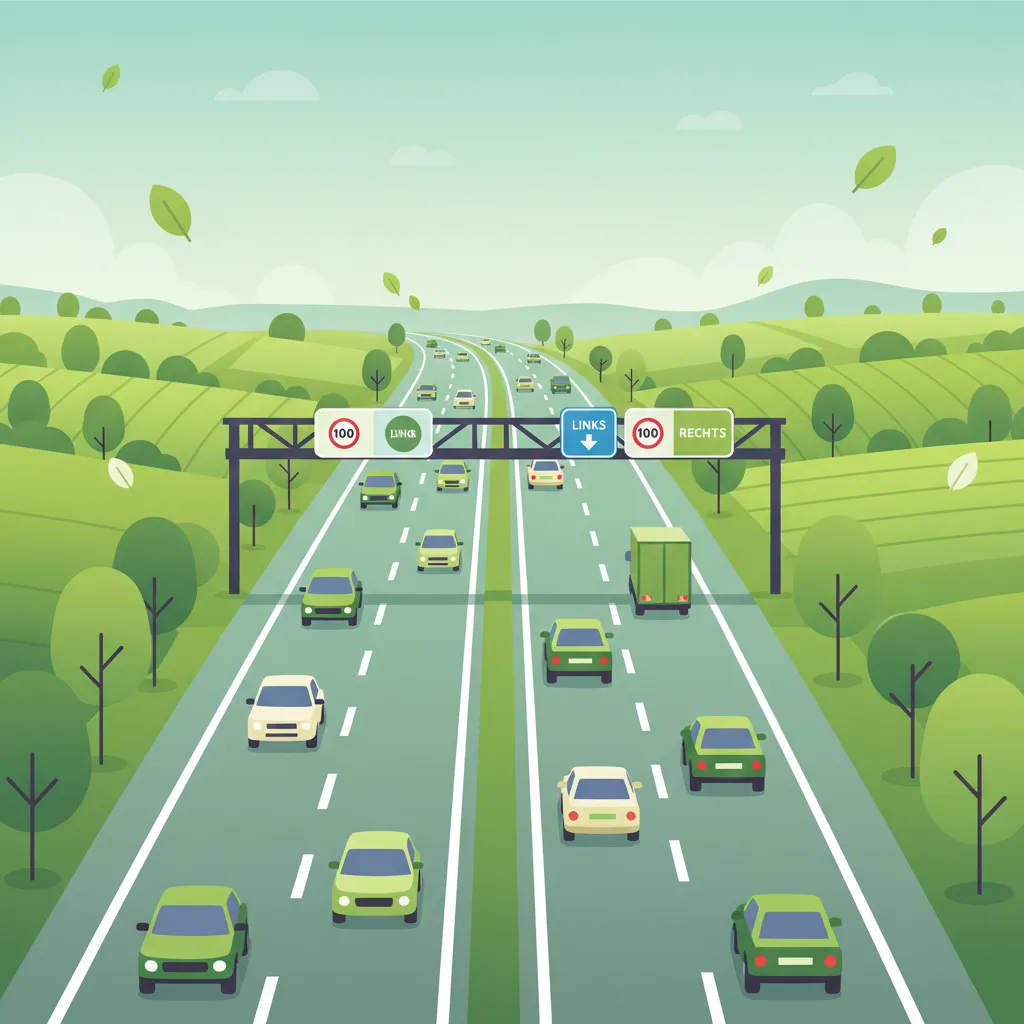
This lesson covers the specific articles of the Dutch Road Traffic Act that apply to motorways, with a primary focus on the strict rule of keeping to the rightmost available lane unless overtaking. It explains the legal and safety reasons for only passing on the left and discusses the correct positioning within a lane for maximum visibility and safety. The content also addresses the nuances of lane usage during heavy congestion, ensuring riders comply with the law and contribute to smooth traffic flow.

This lesson covers A-code signs, which are designed to warn drivers of potential hazards on the road ahead. For motorcyclists, warnings about sharp bends, slippery surfaces, crosswinds, or falling rocks are especially critical for maintaining control and stability. The content explains how to interpret these triangular signs to anticipate changing conditions, adjust speed, and adopt a defensive riding posture well in advance of the hazard.

This lesson focuses on Dutch regulatory signs that enforce mandatory rules and restrictions, particularly those impacting A2 motorcyclists. You will learn to recognize and obey prohibition signs, such as those indicating a motorcycle ban (BORD 40), speed limits, and overtaking restrictions (BORD 21). The content explains the legal consequences of non-compliance and how to apply these rules in practical riding scenarios to ensure full adherence to Dutch traffic law.
This lesson covers the universal Dutch road rules with a specific focus on their application to light motorcycles. It details the various speed limits for different road types, from urban areas to motorways, and explains the correct procedures for overtaking and lane positioning. The legal aspects of lane filtering in congestion are also examined, alongside mandatory equipment use like daytime running lights, to ensure riders can integrate safely and legally into traffic flow.
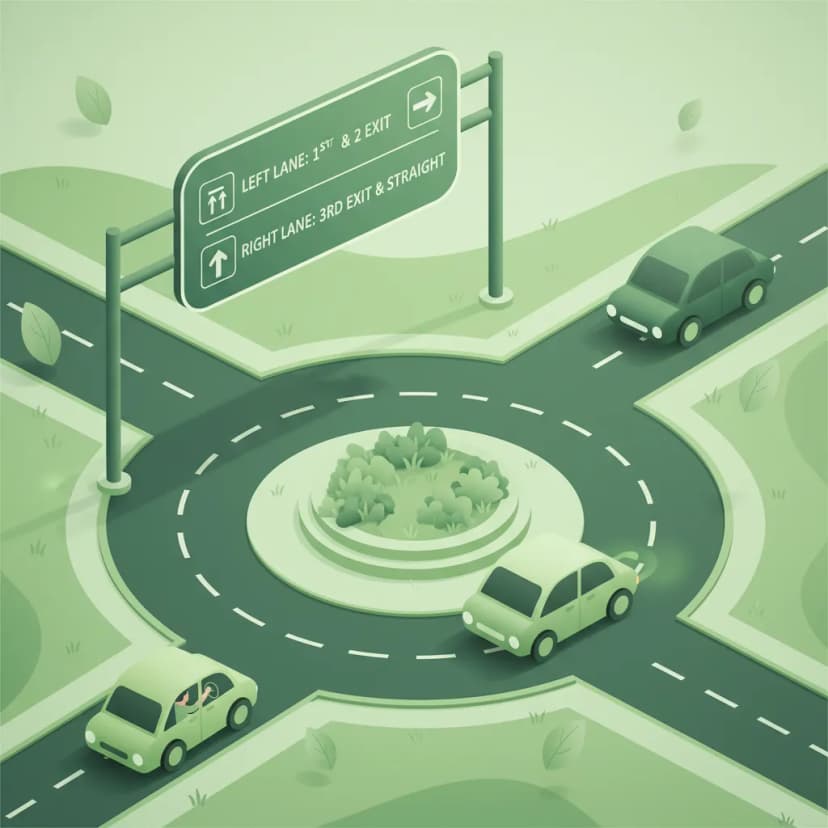
This lesson provides a detailed guide to navigating Dutch roundabouts ('rotondes'), including single-lane, multi-lane, and 'turbo' designs. It clarifies the specific priority rules that apply when entering the roundabout and the critical importance of correct signaling when changing lanes or exiting. Special attention is given to the vulnerable position of motorcyclists and the need to be aware of other vehicles' blind spots and the priority rules concerning cyclists on or near the roundabout.
Learn about common violations and misunderstandings related to Dutch road surface markings and lane delimiters. This lesson details challenging scenarios, potential consequences, and how to avoid errors for safer motorcycle riding.
This lesson explores the legal meaning of various road surface markings, including solid and broken lane delimiters, directional arrows, and special-purpose lane indicators. It describes how markings dictate permitted maneuvers, such as overtaking and lane changes, and alert riders to upcoming hazards or changes in road layout. The content also examines the relationship between markings and road design in the Netherlands, emphasizing how a motorcyclist must interpret these visual cues for safe positioning.
This lesson focuses on the meaning of different road markings and their implications for motorcycle lane discipline. You will learn the legal distinction between solid and broken lines regarding overtaking, how to interpret directional arrows for lane choice, and the rules for using special lanes. The content emphasizes maintaining a safe and strategic position within the lane to maximize visibility and create a safety buffer from other vehicles.
Understand the meaning of various road markings and how they dictate your position on the road. This lesson covers the rules associated with solid and broken white lines, bicycle lane symbols, suggestion strips, and arrows painted on the road surface. Proper lane discipline, including when overtaking is permitted and how to position yourself correctly within a lane or on a cycle path, is a fundamental skill for safe and predictable riding that is tested by the CBR.
Road surface markings are a crucial part of the traffic regulation system. This lesson covers the meaning of various lines, including solid versus broken center lines, edge lines, and stop lines. You will also learn to interpret symbols like 'shark's teeth' (yield markings), bicycle pictograms, and directional arrows, all of which provide essential information about priority, lane usage, and upcoming turns, directly impacting your riding decisions.
This lesson covers the specific articles of the Dutch Road Traffic Act that apply to motorways, with a primary focus on the strict rule of keeping to the rightmost available lane unless overtaking. It explains the legal and safety reasons for only passing on the left and discusses the correct positioning within a lane for maximum visibility and safety. The content also addresses the nuances of lane usage during heavy congestion, ensuring riders comply with the law and contribute to smooth traffic flow.
This lesson covers A-code signs, which are designed to warn drivers of potential hazards on the road ahead. For motorcyclists, warnings about sharp bends, slippery surfaces, crosswinds, or falling rocks are especially critical for maintaining control and stability. The content explains how to interpret these triangular signs to anticipate changing conditions, adjust speed, and adopt a defensive riding posture well in advance of the hazard.
This lesson examines the function and interpretation of variable message signs (VMS) and other digital displays that provide real-time traffic information on Dutch roads. It explains how these systems communicate dynamic speed limits, congestion alerts, lane closures, and diversion routes, and how motorcyclists must legally comply with these instructions. Understanding these 'matrixborden' is critical for adapting to changing road conditions and ensuring safety on motorways and in tunnels.

This lesson offers an in-depth study of Dutch regulatory signs, which impose mandatory actions or prohibitions on road users, with a specific focus on their impact on motorcyclists. It explains the visual language of prohibition symbols ('verbodsborden') and obligation symbols ('verplichtingsborden'), the contexts in which they appear, and the strict statutory consequences of non-compliance. Real-world examples are used to illustrate how these signs directly influence route planning, overtaking decisions, and speed management.

This lesson details the purpose and visual design of Dutch warning signs ('gevarendriehoeken') that alert riders to potential hazards ahead. It covers a wide range of scenarios, from road narrowing and dangerous curves to construction zones and the risk of falling rocks, emphasizing the need for early anticipation and speed adaptation. The content also explains how these warning signs integrate with other traffic information to help a rider form an accurate risk assessment and make safer decisions.

This lesson reinforces the fundamental rule of Dutch highway driving: use the rightmost lane available and use the lanes to the left only for overtaking. You will learn the complete, safe overtaking procedure: check mirrors, signal, perform a shoulder check for the blind spot, smoothly move over, accelerate past the vehicle, and then return to the right lane when safe.
Find clear answers to common questions learners have about Surface Markings & Lane Delimiters. Learn how the lesson is structured, which driving theory objectives it supports, and how it fits into the overall learning path of units and curriculum progression in the Netherlands. These explanations help you understand key concepts, lesson flow, and exam focused study goals.
Yes, absolutely. Just like traffic signs and signals, road surface markings in the Netherlands carry legal weight. Motorcyclists must adhere to them as strictly as other road users. They provide essential guidance on lane usage, direction, and restrictions that are critical for safe and lawful riding.
A solid white line generally indicates a prohibition against crossing or straddling the line, often marking the edge of the carriageway or separating traffic lanes moving in the same direction where overtaking is not permitted. A broken white line, conversely, typically divides lanes of traffic moving in the same direction and indicates that you may cross it to change lanes or overtake, provided it is safe to do so.
Filtering through traffic, or 'lane splitting', is generally performed between lanes of moving traffic. While a broken white line may separate these lanes, the legality and safety of filtering depend on specific Dutch regulations and the context (e.g., speed of traffic, road width). You must always ensure you are not crossing solid lines or contravening any other traffic rules while filtering.
Arrows painted on the road indicate the mandatory direction(s) of travel for the lane you are in. Straight arrows mean you must go straight, curved arrows mean you must turn in that direction, and arrows indicating both straight and turning movements mean you may choose either path. It's crucial to position your motorcycle correctly in relation to these arrows before reaching the intersection or junction.
In urban areas, markings like pedestrian crossings, cycle lane delimiters, and junction markings are particularly important for navigating complex traffic with varied road users. On highways, edge lines, lane dividers, and directional arrows become critical for maintaining speed, safe lane changes, and understanding upcoming exits or diversions. The core principles remain, but the density and type of markings, and the associated risks, differ significantly.