
This lesson focuses on Dutch B-code signs, crucial for motorcycle navigation. You'll learn to interpret directional signs, route numbers, and signs for essential services, ensuring you can confidently plan your route and react correctly at junctions. Mastering these signs is key to passing your A1 motorcycle theory exam.
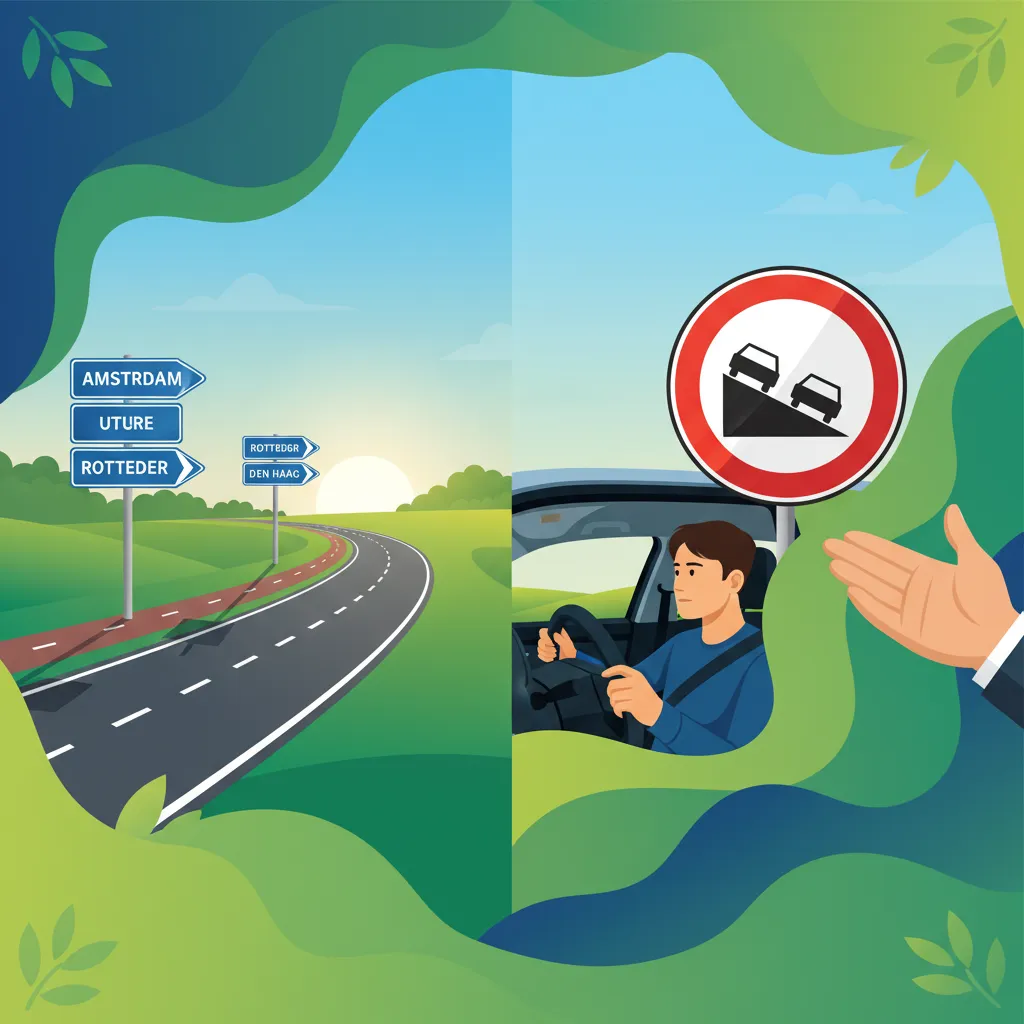
Welcome to this comprehensive lesson on Information and Directional Signs, also known as B-codes, within the context of the Dutch A1 Motorcycle Theory curriculum. These signs are crucial for safe and efficient navigation, providing essential non-prescriptive information such as directions, distances, and services. For motorcyclists, the ability to quickly and accurately interpret these signs is paramount for making timely decisions, especially when approaching exits or planning lane changes.
While B-codes do not issue mandatory commands like regulatory signs (C-codes), they heavily influence a rider's planning and execution of maneuvers. Understanding them is not just about finding your way; it's about anticipating road conditions, selecting the correct lane well in advance, and maintaining a smooth, predictable flow of traffic, all vital for motorcycle safety.
B-code signs in the Netherlands serve to inform road users about the path ahead, points of interest, available services, and the overarching road network. Unlike warning signs (A-codes) that alert to hazards, or regulatory signs (C-codes) that enforce rules, B-codes provide contextual information that empowers riders to make informed choices. This category of signs is fundamental for navigation, route planning, and ensuring traffic efficiency.
The underlying logic of B-codes is deeply rooted in safety and traffic flow. By presenting upcoming road features clearly and in advance, these signs reduce surprises, allowing motorcyclists ample time to adjust speed, signal, and execute lane changes smoothly. This predictability is essential for preventing dangerous last-minute maneuvers and bottlenecks, especially on busy motorways.
Quick Recognition: B-codes are typically rectangular or square. Directional signs for non-motorways usually have a blue background with white text and arrows, while those for motorways (A-roads) have a green background. Service signs feature a white background with a blue border and specific icons.
Not all information is equally critical in a fast-paced riding environment. Dutch B-codes are strategically placed and designed with a hierarchy of significance. Riders should learn to scan signs efficiently, prioritizing the most critical information first.
B-codes are often ordered by relevance: directional information takes precedence, followed by service information, then tourist signs, and finally distance indicators. This ensures riders focus on immediate navigational needs before considering secondary information.
This structured approach helps riders process information quickly, reducing cognitive load and allowing more attention to be dedicated to the road and surrounding traffic.
A critical safety principle underpinning B-codes is the concept of advance warning distance. Directional and exit signs are strategically placed at specific minimum distances before an intersection or exit. This provides motorcyclists sufficient time to:
Failure to notice signs early can force abrupt lane changes or last-minute braking, significantly increasing the risk of collision, particularly for motorcyclists who are more vulnerable.
On motorways, directional signs typically appear at least 300 metres before an exit. In urban areas, where speeds are lower, this distance might be around 150 metres. These distances are legally mandated to ensure road safety.
To minimize mental effort and improve recognition speed, all Dutch B-codes utilize consistent designs, colours, and symbols. This standardization allows riders to quickly map symbols to their meaning, even when glimpsing signs from peripheral vision.
For example, green backgrounds consistently indicate motorways, while blue backgrounds are used for directional signs on non-motorway roads. White backgrounds with blue borders are reserved for service and tourist information. Learning this symbol-to-meaning mapping is key to efficient and safe navigation.
The Dutch road network employs various types of B-code signs, each designed to convey specific information crucial for your journey. As an A1 motorcyclist, understanding each category is essential for preparing for the CBR theory exam and for safe riding in practice.
These signs guide you towards specific urban and rural settlements. They are typically blue with white text and arrows.
Rectangular or square signs indicating the direction (with an arrow) and distance to a city, town, or village. They help riders choose the correct lane for turns or exits leading to these destinations.
When you see a directional sign for a city, remember that motorcycles share the same lane-selection requirements as cars. Ignoring these signs can lead to unsafe last-minute maneuvers.
Practical Meaning: These signs help you position your motorcycle in the correct lane well in advance, preventing abrupt changes that can be hazardous.
Motorways, or A-roads, are high-capacity roads designed for faster travel. Their directional signs are easily identifiable by their green background.
Green-background signs indicating motorway numbers (e.g., A1, A2) and arrows showing the direction of travel or upcoming junctions and exits. These signs are critical for maintaining the correct route on motorways.
Practical Meaning: For motorcyclists, correct interpretation of these signs is vital to avoid missing an exit or taking a wrong turn, which can be particularly dangerous at high motorway speeds. A green sign indicating "Motorway ends" means you must leave the motorway at the next available exit.
The Netherlands utilizes a clear system of road numbering to help drivers navigate the extensive road network. Understanding this system is fundamental for route planning.
A classification system for roads including A-roads (motorways), N-roads (national roads), and E-roads (European routes), each identified by specific numbers and corresponding sign colours.
Practical Meaning: Knowing the road type helps you anticipate speed limits, road conditions, and appropriate riding behaviour. Misunderstanding an 'A' road for an 'N' road, for instance, could lead to unexpected speed changes or unsafe expectations.
These signs are indispensable for planning stops, especially on longer journeys or when managing fuel range on a motorcycle.
White-background signs with a blue border, displaying universally recognized icons for services such as fuel stations (pump icon), restaurants (knife and fork), parking (P), or toilets (WC).
Practical Meaning: For motorcyclists, anticipating stopping points is crucial. Motorcycles generally have smaller fuel tanks than cars, making early awareness of fuel stations vital.
Never make abrupt lane changes to access a service area. Always ensure you have sufficient advance warning distance (typically at least 200 metres) to signal, check mirrors, and change lanes safely.
These signs guide you to attractions and specific locations of interest. They are usually white with a blue border and feature pictograms.
White signs with a blue border showing stylised icons (e.g., a castle, a beach, a museum) and the name of the attraction. These are informational and do not indicate mandatory routes.
Practical Meaning: These signs are purely optional. While they can be helpful for detours or exploring, you are not obligated to follow them, and they should not cause you to make unnecessary or sudden lane changes.
These informational signs provide remaining distances to destinations, sometimes coupled with estimated travel times.
Signs indicating the remaining distance in kilometres to various destinations, often with a white background and black numerals. Some dynamic versions may also display estimated travel times.
Practical Meaning: Distance signs assist riders in gauging fuel consumption, estimating arrival times, and planning overtakes. While they do not impose legal duties, using them to plan your lane changes for upcoming exits is highly recommended for safety.
In modern traffic management, electronic Variable Message Signs (VMS) play an increasingly important role, especially on motorways.
Electronic panels that display real-time information such as lane closures, detours, temporary speed limits, or alternative routes. When they convey route or service information, they are considered dynamic B-codes.
Practical Meaning: VMS override any static signs. Riders must treat the information displayed on VMS as authoritative and comply immediately. Ignoring a VMS can lead to entering closed lanes, following incorrect detours, or even facing legal penalties.
Immediate compliance is required for VMS. These signs reflect current, dynamic road conditions and failing to obey them can be extremely dangerous.
Understanding the practical application of B-codes involves specific rules and guidelines to ensure safety and legal compliance on Dutch roads. Here are the key regulations relevant to A1 motorcycle riders.
Motorcyclists must position themselves in the lane indicated by the most recent directional sign when preparing for an exit. This applies to all motorways and major roads with directional signs.
While service area signs are helpful, they do not permit unsafe lane changes. A rider may only change lanes to enter a service area if the sign is placed at least 200 metres before the entry point.
When a "Motorway ends" green sign is displayed, the rider is legally obligated to exit the motorway at the next designated off-ramp. Continuing beyond this point on the former motorway carriageway is prohibited.
Variable Message Signs that display new route directions, lane closures, or detours must be obeyed instantly, regardless of conflicting static signs.
Distance signs are primarily informational. While they do not legally mandate a speed adjustment, riders must consider them when planning lane changes for upcoming exits or turns.
Misinterpreting or ignoring B-code signs can lead to common violations and dangerous situations. As an A1 motorcycle rider, being aware of these pitfalls will help you avoid them.
The interpretation and application of B-code rules are not always static. Environmental conditions, vehicle characteristics, and specific road contexts require adaptations from the rider.
| Context | Variation in Principle / Rule | Reasoning |
|---|---|---|
| Weather – Low Visibility (fog, rain) | Directional signs must be identified and interpreted earlier. Increase your recommended look-ahead distance by at least 30%. | Reduced visual acuity, especially at speed, significantly lengthens reaction time. Early planning is essential to mitigate surprise and allow ample time for safe maneuvers. |
| Nighttime | Blue-background signs appear brighter due to retro-reflective materials, but peripheral glare can still cause misinterpretation. Riders should actively scan signs with both central and peripheral vision to confirm details. | Human night vision, relying on retinal rods, has limited colour discrimination. Careful scanning helps overcome these limitations and ensures accurate sign interpretation without fixating on the sign for too long. |
| Urban vs. Motorway | Urban directional signs are often placed closer (approx. 150m) and may have multiple arrows; motorway signs have longer sightlines and are usually single-arrow for a specific exit. | Lower urban speeds allow for shorter warning distances. Motorways, with their higher speeds, necessitate much longer advance warning distances to ensure adequate reaction and maneuver time. |
| Vehicle Load (Heavy cargo) | Increased stopping distance and reduced agility necessitate even earlier lane changes for exits. Add at least 1 second of buffer per 100 kg of extra load to your planning. | Additional mass increases inertia, extending both braking and turning distances. Motorcycles become less responsive, requiring greater margins for error. |
| Vulnerable Road Users (cyclists, pedestrians) | In areas with high vulnerable road user traffic, prioritize their safety over strict lane-change timing. You may need to delay an exit or turn until a safe gap is present. | Dutch traffic law emphasizes the "principle of care" for vulnerable users. Protecting them outweighs the minor inconvenience of delaying your maneuver. |
| Temporary Construction Zones | Temporary B-codes (often with an orange background or specific construction symbols) override standard signs. Treat them as the current authority. | Construction zones are dynamic and frequently change. Temporary signs provide the most current and accurate information for navigating safely through these areas. |
| Electronic Variable Message Signs (VMS) | When a VMS indicates a lane closure ahead, riders must initiate a lane change at least 200 meters before the closure, irrespective of static sign distances. | VMS provide real-time data about immediate hazards. Acting earlier than usual is critical to prevent last-minute lane conflicts or being trapped in a closing lane. |
| Motorcycle-Specific Constraints | Due to limited visual field and constant need for road awareness, riders should use a "head-up" scanning pattern: glance 2-3 seconds ahead, then briefly to the sign, then back to the road. | Shorter, focused glances allow for information acquisition without prolonged distraction from the road ahead, minimizing exposure to hazards and maintaining overall situational awareness. |
Understanding B-codes doesn't exist in isolation; it integrates with many other aspects of safe motorcycle riding and Dutch traffic law.
This interconnectedness highlights why a holistic understanding of traffic theory is vital for safe and competent motorcycle riding.
Understanding and correctly interpreting Information and Directional Signs (B-codes) is a cornerstone of safe and effective navigation in the Dutch road network. As you progress through your Dutch A1 Motorcycle Theory course, continuously practice identifying these signs and anticipating the appropriate actions. Your ability to make timely and informed decisions based on B-code information will significantly enhance your safety and confidence on the road.
Lesson content overview
Explore all units and lessons included in this driving theory course.
Explore search topics learners often look for when studying Information & Directional Signs (B-codes). These topics reflect common questions about road rules, driving situations, safety guidance, and lesson level theory preparation for learners in the Netherlands.
Browse additional driving theory lessons that cover connected traffic rules, road signs, and common driving situations related to this topic. Improve your understanding of how different rules interact across everyday traffic scenarios.
Understand the meaning and application of Dutch B-code signs, including directional indicators for motorways and towns, route numbering systems, and essential service area information like fuel stations and rest stops. Crucial for motorcycle riders planning routes.

This lesson focuses on informational signs that guide motorcyclists in navigation, route planning, and locating essential services while on the road. It examines the standardized symbols and color-coding for directions ('richtingsborden'), destinations, distances, and amenities, explaining how these signs support efficient and safe travel. Learners will understand how to use this information for strategic route selection, especially on long journeys or in unfamiliar areas, ensuring a smooth and predictable trip.
This lesson explains how to interpret directional and informational signs to navigate the Dutch road network effectively. You will learn to read route signs on highways, understand lane guidance arrows for complex intersections, and identify panels indicating services like fuel stations or rest areas. The content focuses on how motorcyclists can use this information for safe and efficient route planning, including adapting to real-time information from electronic signs.
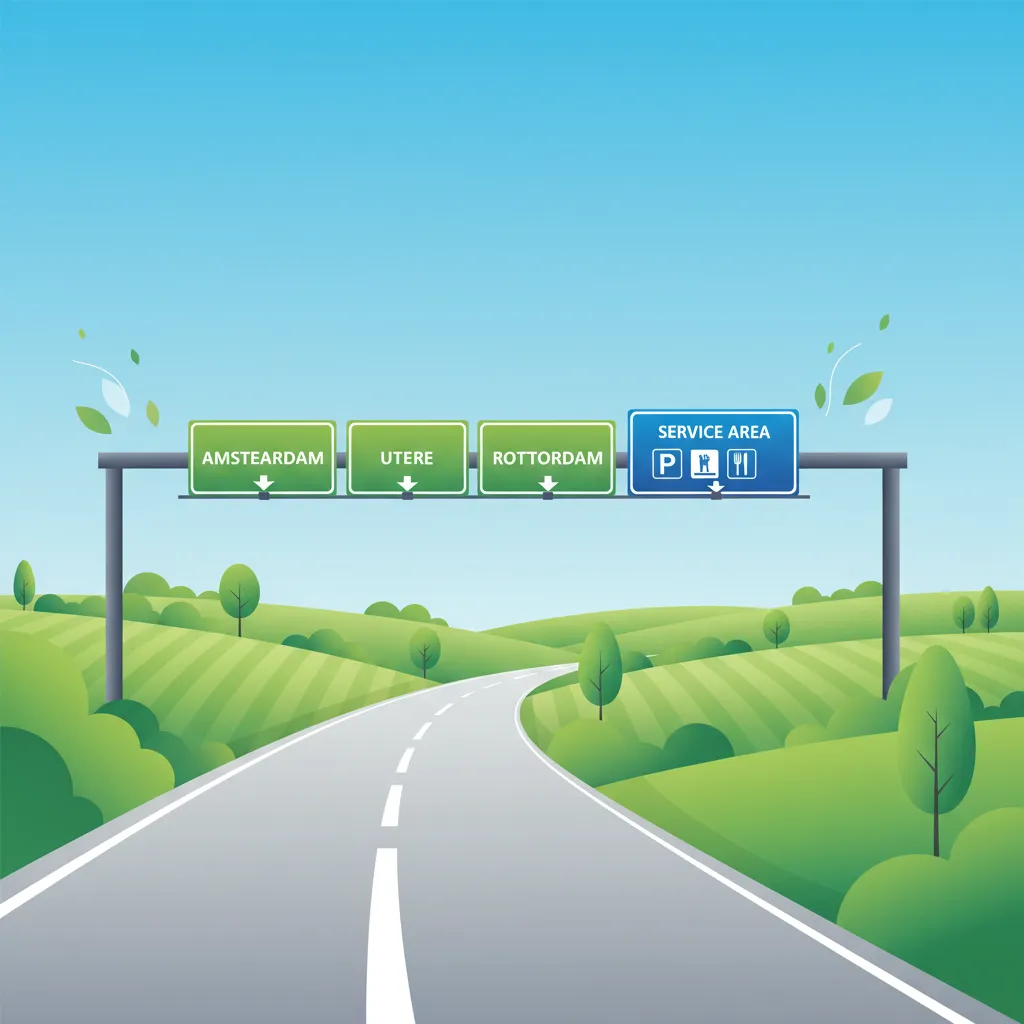
This lesson explains how to interpret informational signs that provide guidance and navigational aid. You will learn to read directional signs indicating cities and locations, understand route numbering on major roads, and recognize signs for services like fuel stations or parking areas. It also covers the signs that mark the beginning and end of a built-up area ('bebouwde kom'), which have important implications for speed limits and traffic rules.

This lesson covers A-code signs, which are designed to warn drivers of potential hazards on the road ahead. For motorcyclists, warnings about sharp bends, slippery surfaces, crosswinds, or falling rocks are especially critical for maintaining control and stability. The content explains how to interpret these triangular signs to anticipate changing conditions, adjust speed, and adopt a defensive riding posture well in advance of the hazard.

This lesson examines the function and interpretation of variable message signs (VMS) and other digital displays that provide real-time traffic information on Dutch roads. It explains how these systems communicate dynamic speed limits, congestion alerts, lane closures, and diversion routes, and how motorcyclists must legally comply with these instructions. Understanding these 'matrixborden' is critical for adapting to changing road conditions and ensuring safety on motorways and in tunnels.

This lesson offers an in-depth study of Dutch regulatory signs, which impose mandatory actions or prohibitions on road users, with a specific focus on their impact on motorcyclists. It explains the visual language of prohibition symbols ('verbodsborden') and obligation symbols ('verplichtingsborden'), the contexts in which they appear, and the strict statutory consequences of non-compliance. Real-world examples are used to illustrate how these signs directly influence route planning, overtaking decisions, and speed management.

This lesson details the purpose and visual design of Dutch warning signs ('gevarendriehoeken') that alert riders to potential hazards ahead. It covers a wide range of scenarios, from road narrowing and dangerous curves to construction zones and the risk of falling rocks, emphasizing the need for early anticipation and speed adaptation. The content also explains how these warning signs integrate with other traffic information to help a rider form an accurate risk assessment and make safer decisions.

This lesson focuses on Dutch regulatory signs that enforce mandatory rules and restrictions, particularly those impacting A2 motorcyclists. You will learn to recognize and obey prohibition signs, such as those indicating a motorcycle ban (BORD 40), speed limits, and overtaking restrictions (BORD 21). The content explains the legal consequences of non-compliance and how to apply these rules in practical riding scenarios to ensure full adherence to Dutch traffic law.

This lesson explores the legal meaning of various road surface markings, including solid and broken lane delimiters, directional arrows, and special-purpose lane indicators. It describes how markings dictate permitted maneuvers, such as overtaking and lane changes, and alert riders to upcoming hazards or changes in road layout. The content also examines the relationship between markings and road design in the Netherlands, emphasizing how a motorcyclist must interpret these visual cues for safe positioning.
This lesson builds on the understanding of international signage by focusing on the practical recognition of common foreign road signs ('buitenlandse borden'). While many symbols are standardized under the Vienna Convention, this lesson points out subtle but important differences in design and meaning. It helps riders develop the skill of quickly interpreting unfamiliar signage, ensuring they can understand and comply with local traffic regulations when riding abroad.
Explore how Dutch B-code signs are applied in different contexts, from motorways to urban areas. Learn about advance warning distances, specific rules for lane changes, and common pitfalls for motorcycle riders, ensuring safe navigation.
This lesson offers an in-depth study of Dutch regulatory signs, which impose mandatory actions or prohibitions on road users, with a specific focus on their impact on motorcyclists. It explains the visual language of prohibition symbols ('verbodsborden') and obligation symbols ('verplichtingsborden'), the contexts in which they appear, and the strict statutory consequences of non-compliance. Real-world examples are used to illustrate how these signs directly influence route planning, overtaking decisions, and speed management.
This lesson focuses on Dutch regulatory signs that enforce mandatory rules and restrictions, particularly those impacting A2 motorcyclists. You will learn to recognize and obey prohibition signs, such as those indicating a motorcycle ban (BORD 40), speed limits, and overtaking restrictions (BORD 21). The content explains the legal consequences of non-compliance and how to apply these rules in practical riding scenarios to ensure full adherence to Dutch traffic law.

This lesson focuses on C-code regulatory signs, which impose legal obligations and prohibitions on road users. Learners will study signs that establish speed limits, forbid entry, mandate specific directions, and restrict overtaking or parking. Understanding these signs is non-negotiable for legal compliance and safety, as they form the basis of traffic regulation and are a major component of the CBR theory exam for motorcyclists.
This lesson examines the function and interpretation of variable message signs (VMS) and other digital displays that provide real-time traffic information on Dutch roads. It explains how these systems communicate dynamic speed limits, congestion alerts, lane closures, and diversion routes, and how motorcyclists must legally comply with these instructions. Understanding these 'matrixborden' is critical for adapting to changing road conditions and ensuring safety on motorways and in tunnels.
This lesson covers A-code signs, which are designed to warn drivers of potential hazards on the road ahead. For motorcyclists, warnings about sharp bends, slippery surfaces, crosswinds, or falling rocks are especially critical for maintaining control and stability. The content explains how to interpret these triangular signs to anticipate changing conditions, adjust speed, and adopt a defensive riding posture well in advance of the hazard.
This lesson explores the legal meaning of various road surface markings, including solid and broken lane delimiters, directional arrows, and special-purpose lane indicators. It describes how markings dictate permitted maneuvers, such as overtaking and lane changes, and alert riders to upcoming hazards or changes in road layout. The content also examines the relationship between markings and road design in the Netherlands, emphasizing how a motorcyclist must interpret these visual cues for safe positioning.
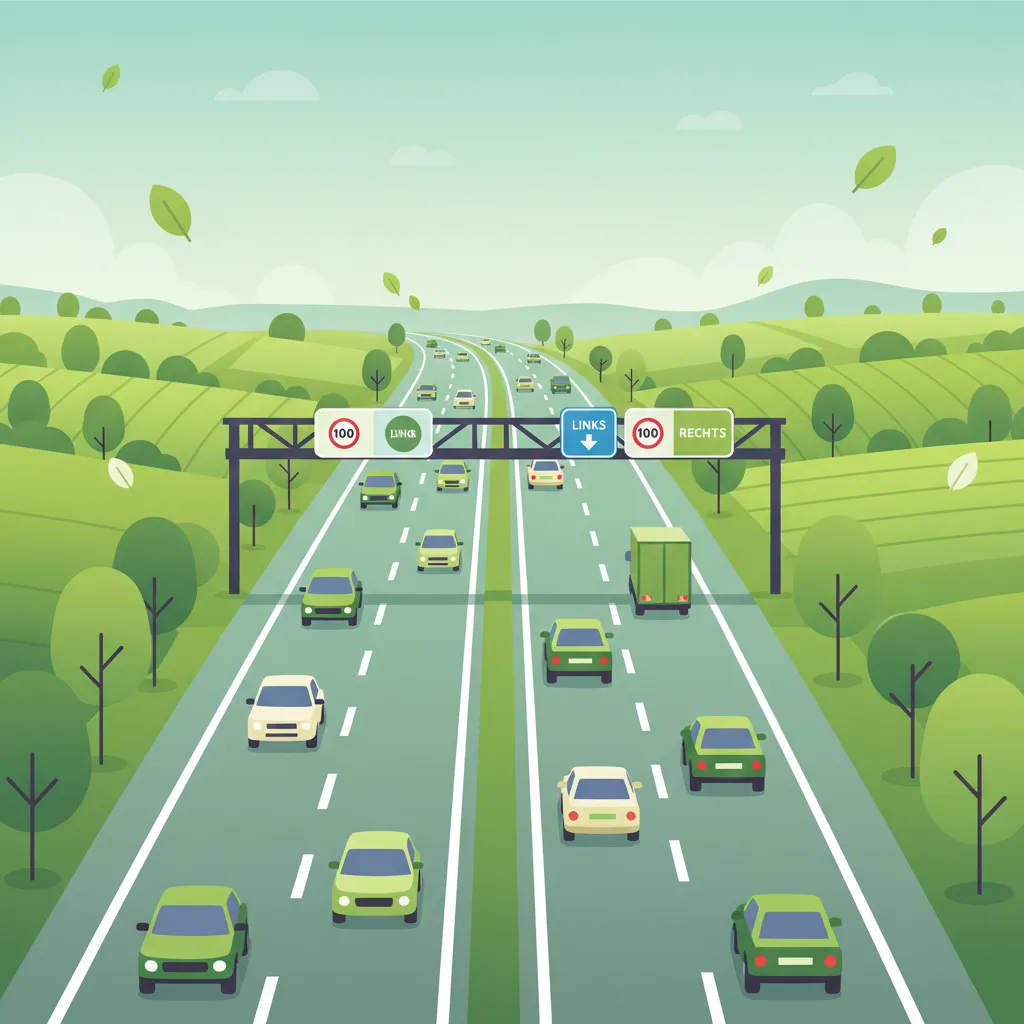
This lesson covers the specific articles of the Dutch Road Traffic Act that apply to motorways, with a primary focus on the strict rule of keeping to the rightmost available lane unless overtaking. It explains the legal and safety reasons for only passing on the left and discusses the correct positioning within a lane for maximum visibility and safety. The content also addresses the nuances of lane usage during heavy congestion, ensuring riders comply with the law and contribute to smooth traffic flow.
This lesson focuses on informational signs that guide motorcyclists in navigation, route planning, and locating essential services while on the road. It examines the standardized symbols and color-coding for directions ('richtingsborden'), destinations, distances, and amenities, explaining how these signs support efficient and safe travel. Learners will understand how to use this information for strategic route selection, especially on long journeys or in unfamiliar areas, ensuring a smooth and predictable trip.
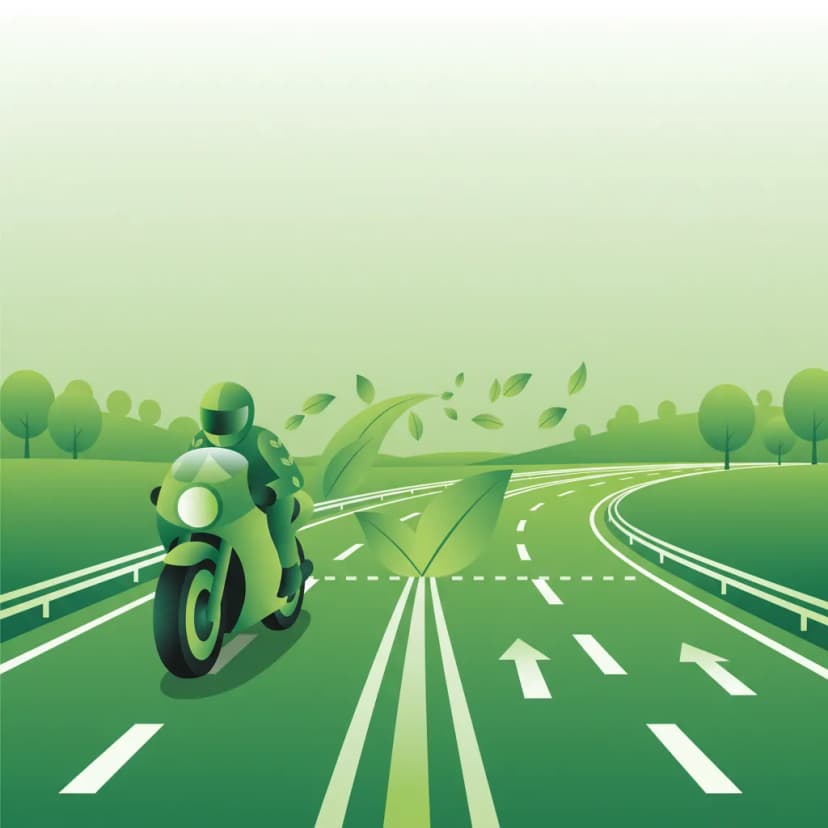
This lesson focuses on the meaning of different road markings and their implications for motorcycle lane discipline. You will learn the legal distinction between solid and broken lines regarding overtaking, how to interpret directional arrows for lane choice, and the rules for using special lanes. The content emphasizes maintaining a safe and strategic position within the lane to maximize visibility and create a safety buffer from other vehicles.

This lesson explains how to respond to variable speed limits shown on overhead electronic signs, which are used to manage traffic flow in real-time. You will learn why these limits are adjusted for factors like congestion, accidents, or bad weather, and the legal requirement to obey them. The content focuses on the importance of anticipatory riding, scanning far ahead for these signs to allow for smooth and safe speed adjustments.
Find clear answers to common questions learners have about Information & Directional Signs (B-codes). Learn how the lesson is structured, which driving theory objectives it supports, and how it fits into the overall learning path of units and curriculum progression in the Netherlands. These explanations help you understand key concepts, lesson flow, and exam focused study goals.
B-code signs in the Netherlands are primarily informational and directional. Unlike regulatory (C-code) signs that dictate rules or warning (A-code) signs that alert to hazards, B-code signs guide you, indicate services, or provide useful context for your journey. They are essential for navigation and route planning.
Dutch directional signs will show national road numbers, often prefixed with 'N' (e.g., N200) or 'A' (e.g., A12). The signs indicate which direction leads to these routes. For your A1 exam, understanding these helps you follow the correct path shown on the signs, especially when choosing an exit.
B-code signs commonly indicate essential services such as petrol stations, restaurants, hotels, hospitals, parking areas, and resting points. Recognizing these signs allows you to plan stops or seek assistance efficiently during your ride.
Yes, absolutely. As an A1 motorcycle rider, clear interpretation of B-code signs is crucial for smooth navigation, especially in complex junctions or on motorways where timely decisions about lane changes for exits are necessary. They help you stay on track and avoid last-minute, potentially risky manoeuvres.
While B-code signs primarily provide standard directional information, temporary diversions are usually indicated by orange signs (often C or D codes, depending on their function). However, B-code signs will direct you along the *new* route once a diversion is in place.