
This lesson explores variable speed limits, which are dynamically adjusted on Dutch roads via overhead electronic signs. You'll learn how these limits manage traffic flow during congestion, accidents, or bad weather, and the legal requirement to obey them for your A2 motorcycle. Understanding these rules is crucial for safe riding and mastering your CBR theory exam.

Navigating Dutch roads, especially motorways (autosnelwegen), requires a keen understanding of Variable Speed Limits (VSLs). These dynamic limits are a crucial component of modern traffic management, designed to enhance safety and efficiency in real-time. For aspiring riders in the Complete CBR Theory Course for the Dutch Motorcycle License (Category A2), mastering how to interpret and respond to these limits is fundamental for both lawful and safe riding.
Unlike fixed speed limits, which are indicated by permanent road signs, variable limits can change moment to moment based on prevailing road and traffic conditions. This lesson will explore the underlying logic of these systems, your legal obligations as a motorcyclist, and practical strategies for safely adapting your speed.
A Variable Speed Limit (VSL) is a maximum speed that can be adjusted in real time by traffic authorities, displayed on Overhead Electronic Variable Signs (OEVS). These are not merely advisory suggestions; they are legally binding traffic signs, just like their static counterparts. VSLs are an integral part of Dynamic Traffic Management (DTM) systems that continuously monitor and react to the flow of traffic across the Dutch road network.
The primary goal of implementing VSLs is to optimize road capacity, improve safety, and reduce environmental impact. By proactively adjusting speeds, traffic managers can prevent congestion from building, mitigate risks associated with accidents or bad weather, and ensure smoother, more predictable journeys for all road users.
Dynamic Traffic Management (DTM) is an integrated system that uses a network of sensors, cameras, and control centers to manage traffic flow. These systems gather real-time data on traffic density, vehicle speeds, weather conditions, and incidents. When specific thresholds are met – for example, a sudden increase in vehicle count, detection of heavy rainfall, or notification of an accident – the DTM system can automatically or manually trigger changes to the variable speed limits.
This constant adaptation means that the maximum permissible speed on a stretch of road can change multiple times during a single journey. As a motorcyclist, understanding that speed limits are dynamic and require continuous attention is a core skill for safe riding on Dutch roads.
In the Netherlands, all displayed speed limits, whether fixed or variable, carry the same legal weight. The Dutch Road Traffic Act (Reglement Verkeersregels en Verkeerstekens 1990 – RVV 1990) explicitly states that electronic variable signs displaying a speed value are legally binding traffic signs. This means there is no difference in your obligation to obey a VSL displayed on an overhead gantry compared to a permanent sign at the side of the road.
Variable speed limits are mandatory. Ignoring them or treating them as advisory will result in legal penalties, including significant fines and penalty points on your license.
Specifically, RVV 1990, Article 5-6, dictates that all road users must adhere to the speed limits indicated by traffic signs. This includes the dynamic limits shown on OEVS. Enforcement is carried out through various methods, including fixed and mobile speed cameras, average speed check zones (trajectcontrole), and direct police observation.
Exceeding a variable speed limit can lead to a range of penalties. These typically include monetary fines, which increase with the severity of the transgression. Furthermore, repeat or severe violations can result in penalty points being added to your driving license, potentially leading to a license suspension. It is crucial for A2 license holders to be particularly diligent, as any penalties can impact their ability to upgrade their license in the future.
The cornerstone of safe motorcycle riding, particularly in dynamic environments, is anticipatory scanning. This means constantly looking far ahead, not just at the vehicle in front, to identify potential hazards and upcoming traffic signs, including OEVS, well in advance.
Scan Distance refers to the forward visual range a rider must maintain to detect signs and hazards early enough to react safely and smoothly. On motorways (autosnelwegen), a minimum scan distance of 200 meters is recommended. Under adverse conditions, such as heavy rain, fog, or at night, this distance should be extended to 300-400 meters.
Maintaining an adequate scan distance allows you to spot a variable speed limit sign with ample time to process the information and adjust your speed without abrupt actions. This proactive approach prevents sudden braking, which can destabilize your motorcycle and increase the risk of rear-end collisions, especially in dense traffic.
When a new variable speed limit appears, you must execute a controlled Speed Adaptation Process (SAP). This is a step-by-step procedure designed to ensure a smooth, safe, and lawful transition to the new speed.
Failing to complete this process before entering the enforcement zone can be considered a violation, even if you eventually slow down. Smooth deceleration is key to maintaining stability and preventing ripple effects in traffic flow.
VSLs are dynamic because road conditions are dynamic. Several key factors can trigger a change in the displayed speed limit:
Weather is a significant determinant of variable speed limits. Conditions that reduce visibility or road surface friction will almost always result in a lower VSL.
VSLs are a primary tool for managing traffic flow and responding to incidents.
Even experienced riders can sometimes make mistakes when interacting with variable speed limits. Awareness of these common pitfalls can help you avoid violations and stay safe.
When an OEVS appears blank or displays a symbol that indicates "no specific limit" (e.g., a diagonal line through a circle on some older systems), it does not mean that there is no speed limit whatsoever, or that the previous (lower) VSL no longer applies. Instead, it typically signifies that the default fixed speed limit for that specific road type (e.g., 130 km/h on motorways, 80 km/h on certain rural roads) is now in effect.
Accelerating beyond the default limit in such a scenario will result in a speeding fine. Always know the default speed limit for the road you are on.
One of the most frequent violations is failing to reduce speed before reaching the enforcement zone of a new VSL. This often leads to harsh, sudden braking at or just past the sign, which is dangerous for motorcyclists due to potential loss of stability, especially in wet conditions. It also increases the risk of being rear-ended by other vehicles.
Sometimes, a rider might think that although a VSL is displayed (e.g., 90 km/h), the actual conditions (e.g., light rain, low traffic) don't warrant such a low speed, especially if the default is much higher (e.g., 130 km/h). This perception can lead to ignoring the VSL, which is both illegal and dangerous. The DTM system has sophisticated sensors and data analytics; if it lowers the limit, there's a reason, even if it's not immediately obvious to an individual rider.
Always assume that the DTM system has valid reasons for setting a specific VSL. Obey the displayed limit regardless of your personal assessment of the conditions.
A variable speed limit remains in effect until you encounter an explicit "end of speed limit" sign, or until you pass an OEVS that displays a new, different speed limit. Simply passing the gantry where the VSL was initially displayed does not automatically mean the limit has ended. Be vigilant for the appropriate signs indicating the end of the VSL zone.
In the rare event that an OEVS is dark or clearly malfunctioning, and therefore no variable speed limit is displayed, the default fixed speed limit for that road type automatically reinstates. You should not assume the previous VSL is still in effect, nor should you assume the road is now an unlimited zone. Always revert to the default fixed limit in case of a sign malfunction.
Understanding the "why" behind VSLs can reinforce your commitment to obeying them and make you a safer rider.
The relationship between speed and stopping distance is not linear; it's quadratic. Doubling your speed roughly quadruples your braking distance. Variable speed limits significantly reduce the kinetic energy of vehicles, thus drastically shortening the distance required to stop. For a motorcycle, which can be less stable under hard braking, particularly in adverse conditions, this reduction in stopping distance is a critical safety factor. A lower speed gives you more time and space to react to unexpected hazards.
Even for an alert motorcyclist, the average visual reaction time is around 1.3 to 1.5 seconds. At 130 km/h, your motorcycle travels approximately 36 meters per second. This means you will cover nearly 50 meters before you even begin to apply the brakes. A greater scan distance and lower VSLs provide a crucial safety buffer, extending your reaction window and enabling more controlled responses.
VSLs are a key tool in traffic flow theory. By reducing and harmonizing speeds during congestion, DTM systems aim to create a more uniform flow of vehicles. This reduces the formation of "shockwaves" – sudden slowdowns that propagate backward through traffic, often leading to rear-end collisions. For motorcycles, navigating such stop-and-go traffic is inherently more risky due to their smaller footprint and reduced visibility for other drivers.
Riders (and drivers) tend to adjust their behavior based on perceived risk. When VSLs are lowered, the perceived risk often increases, leading to safer behaviors such as increased following distances and greater caution. Conversely, ignoring VSLs can lead to a false sense of security, encouraging riskier maneuvers like aggressive overtaking, which can have severe consequences for motorcyclists.
To fully grasp this topic, familiarize yourself with these key terms:
Understanding and consistently obeying variable speed limits is a non-negotiable aspect of safe and lawful motorcycling in the Netherlands. It requires continuous attention, proactive scanning, and smooth, controlled speed adjustments. By internalizing these principles, you not only avoid legal penalties but also significantly contribute to your own safety and the overall efficiency and safety of the road network. This ability to adapt dynamically to changing conditions is a hallmark of a skilled and responsible rider.
Lesson content overview
Explore all units and lessons included in this driving theory course.
Explore search topics learners often look for when studying Variable Speed Limits and Dynamic Road Conditions. These topics reflect common questions about road rules, driving situations, safety guidance, and lesson level theory preparation for learners in the Netherlands.
Browse additional driving theory lessons that cover connected traffic rules, road signs, and common driving situations related to this topic. Improve your understanding of how different rules interact across everyday traffic scenarios.
Learn to interpret and react to variable speed limits (VSLs) on Dutch roads. Understand how dynamic traffic management adjusts speeds for weather and congestion, and your legal obligation to obey electronic signs.
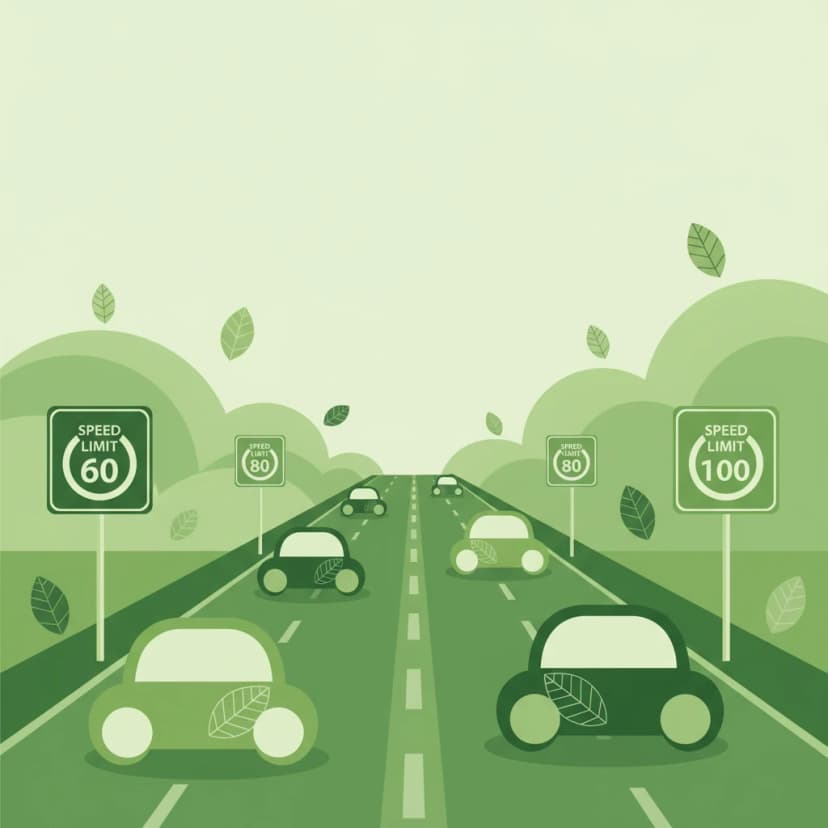
This lesson focuses on the specific speed regulations for major highways in the Netherlands. You will learn to identify an 'autosnelweg' (motorway, G1 sign), where the speed limit is 100 km/h between 6:00 and 19:00 and often 130 km/h at other times, unless indicated otherwise. The lesson also covers the 'autoweg' (expressway, G3 sign), which typically has a speed limit of 100 km/h. Furthermore, you will study dynamic speed limits indicated on electronic signs, which can change due to traffic or weather conditions.
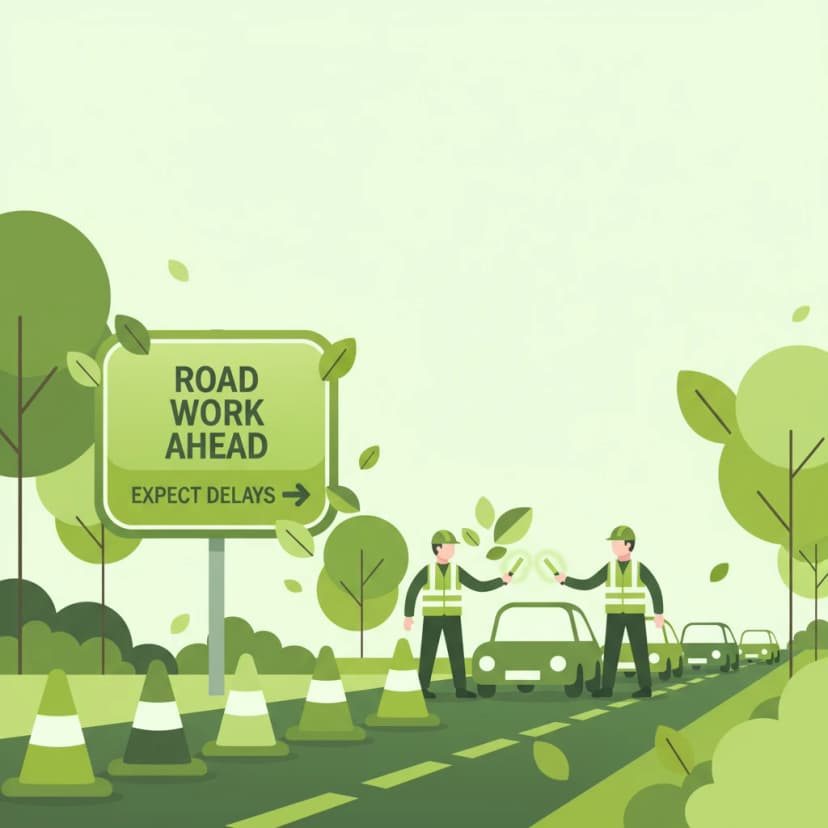
This lesson prepares you for encountering road works, a common feature on any road network. You will learn that signs and markings related to road works are often yellow and that they temporarily override permanent white markings and signs. The curriculum stresses the importance of adhering to temporary speed limits, being alert for workers and machinery, and navigating narrowed lanes. It also covers how to follow diversion routes ('omleiding') and obey instructions given by traffic controllers.
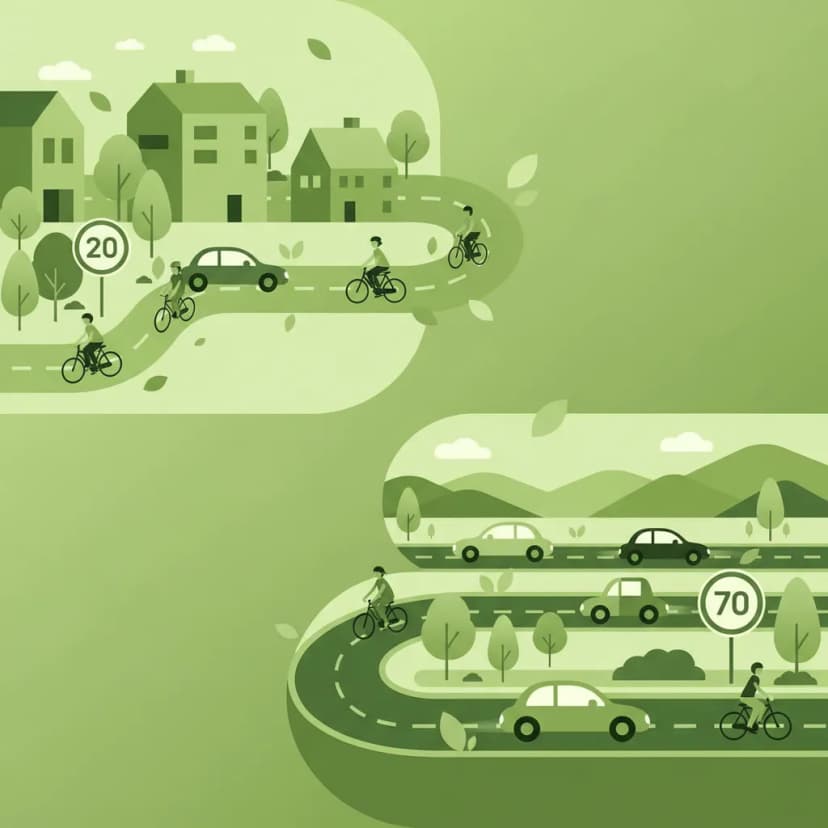
This lesson details the default speed limits that apply in the absence of specific signs. You will learn to recognize the signs (H1 and H2) that mark the beginning and end of a built-up area, where the default speed limit is 50 km/h. Outside these areas, on non-highway roads, the standard limit is 80 km/h. The content explains the rationale behind these limits, which are based on factors like pedestrian density, road design, and potential hazards, ensuring you can apply the correct speed in any location.
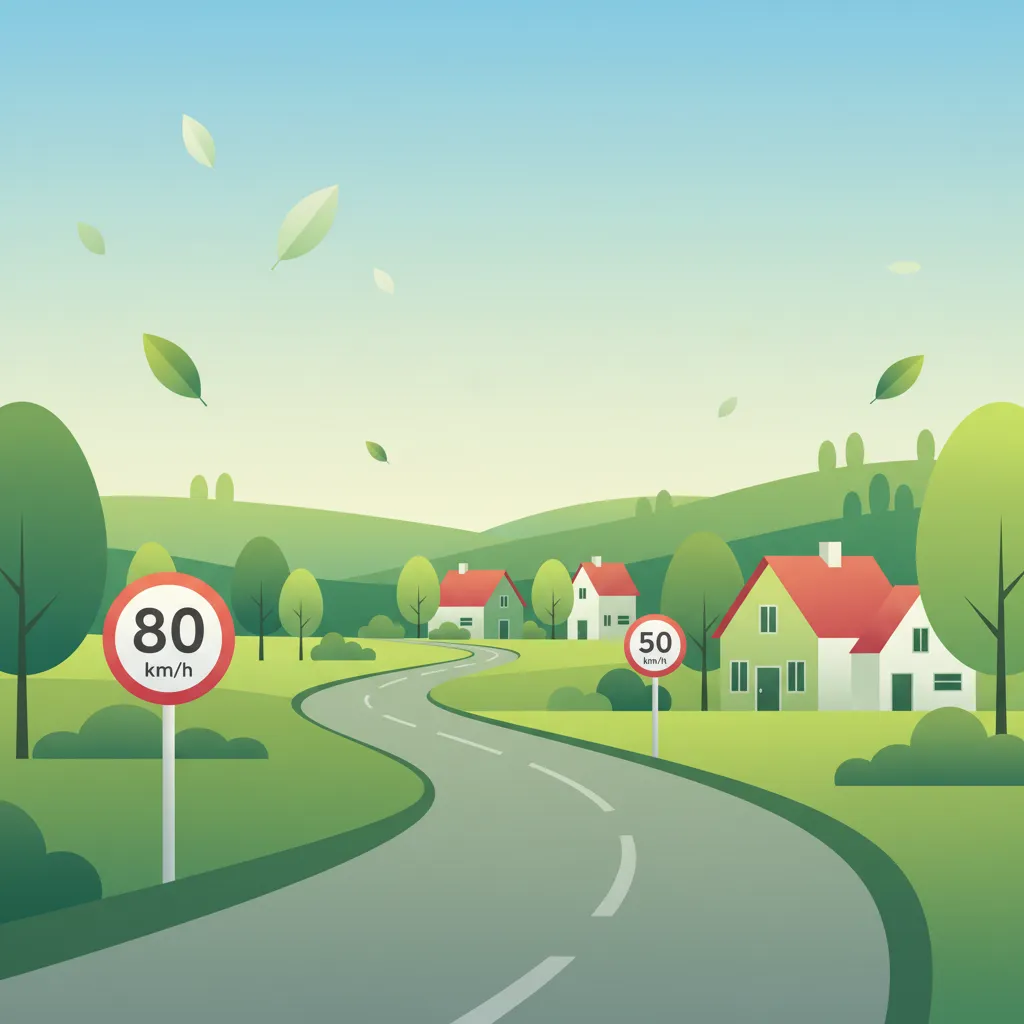
This lesson focuses on identifying different types of speed zones and understanding the rationale behind their limits. It explains how to recognize the start and end of a 'built-up area' ('binnen de bebouwde kom') via place-name signs and discusses special zones like 30 km/h zones and 'woonerven' (residential yards). The curriculum emphasizes adapting riding style to the specific hazards present in each type of zone, from high pedestrian activity in urban areas to unexpected curves on rural roads.

This lesson provides an overview of the various speed enforcement technologies and strategies used in the Netherlands. It explains the operation of fixed speed cameras ('flitspalen'), average speed check systems ('trajectcontrole'), and mobile enforcement units used by the police. Understanding these methods helps riders appreciate the high likelihood of being caught for speeding, reinforcing the importance of consistent compliance with all posted speed limits to avoid fines and other penalties.
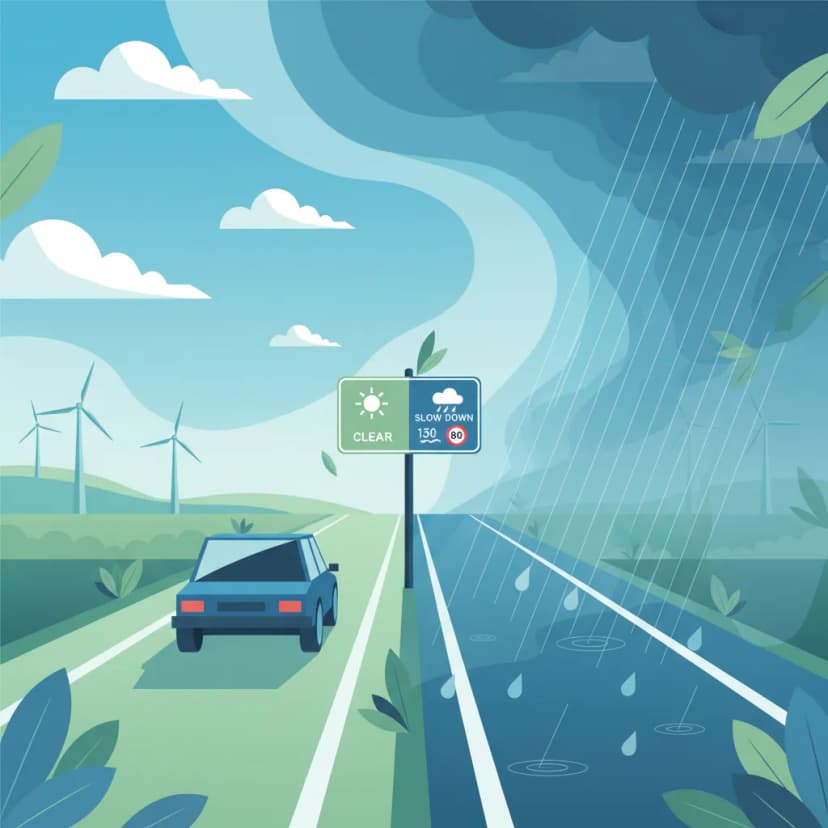
The posted speed limit is a maximum, not a target. This lesson teaches the crucial skill of adapting your speed to prevailing conditions. You will learn how to assess factors like traffic density, poor weather (rain, fog), limited visibility (at night), and slippery road surfaces. Adjusting your speed downwards in these situations provides you with more time to react to hazards and significantly reduces the risk of losing control or being involved in a collision.
This lesson focuses on the specific skills required for managing speed on high-speed highways (autosnelwegen). You will learn the correct technique for accelerating on the on-ramp to smoothly merge with traffic flow. The content covers how to choose an appropriate cruising speed, maintain a safe following distance, and manage the aerodynamic effects of wind and turbulence from larger vehicles at high speeds.
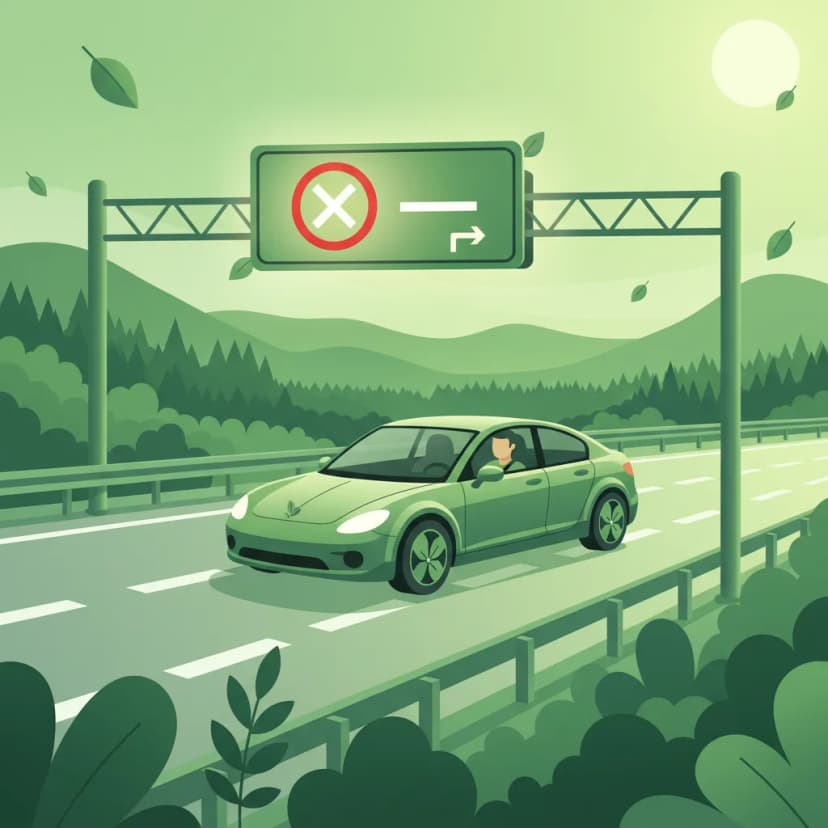
This lesson examines the function and interpretation of variable message signs (VMS) and other digital displays that provide real-time traffic information on Dutch roads. It explains how these systems communicate dynamic speed limits, congestion alerts, lane closures, and diversion routes, and how motorcyclists must legally comply with these instructions. Understanding these 'matrixborden' is critical for adapting to changing road conditions and ensuring safety on motorways and in tunnels.
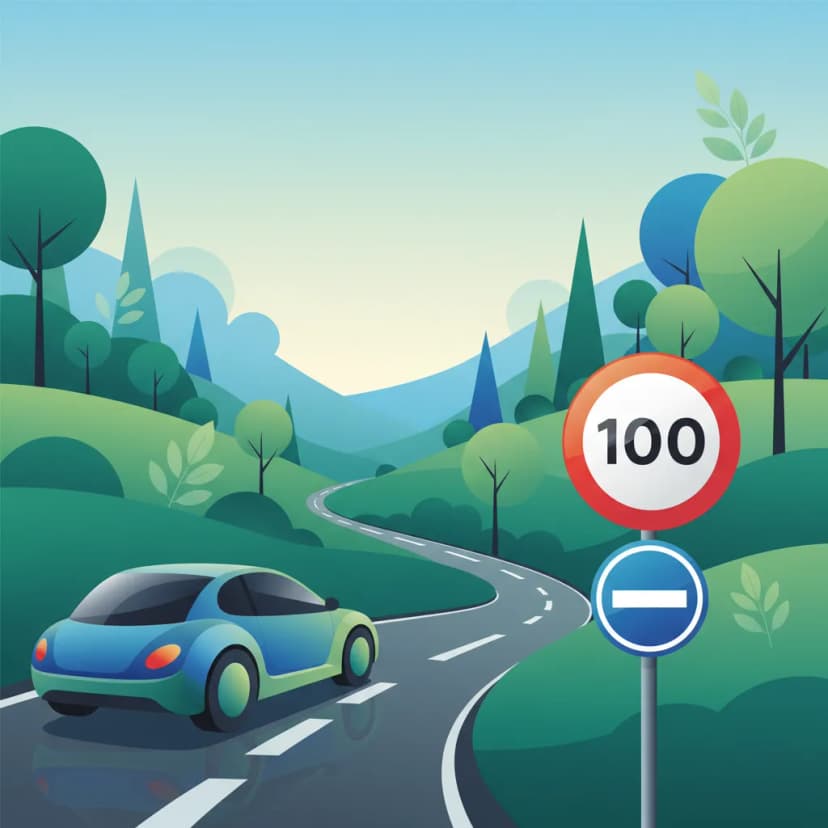
This lesson provides a detailed overview of fixed speed limits on the Dutch road network and the signs that indicate them. You will learn to identify signs for maximum speed (BORD 50) and understand the default limits that apply within built-up areas, on rural roads, and on motorways. The content emphasizes the importance of constant awareness and legal compliance to avoid penalties and ensure road safety for yourself and others.
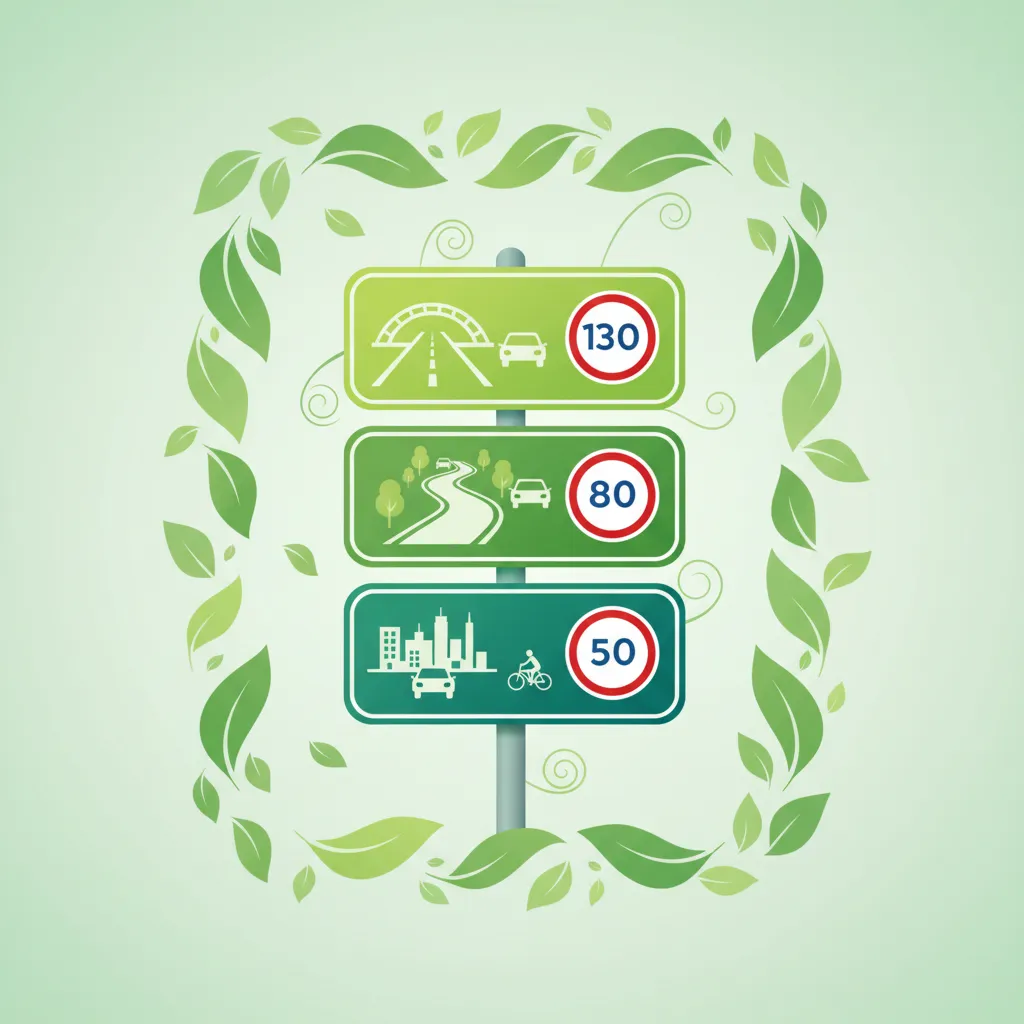
This lesson provides a definitive guide to the legal speed limits on different types of Dutch roads. It covers the rules for built-up areas (typically 50 km/h), rural roads (80 km/h), expressways ('autowegen'), and motorways ('snelwegen'), including time-dependent variations. Understanding these official limits is the first step in managing speed legally and appropriately for the road environment, a core topic on the CBR theory test.
Identify and understand frequent errors made when interpreting variable speed limits and electronic signs. Learn how to avoid violations and ensure safe speed adaptation on Dutch motorways.
This lesson provides a detailed overview of fixed speed limits on the Dutch road network and the signs that indicate them. You will learn to identify signs for maximum speed (BORD 50) and understand the default limits that apply within built-up areas, on rural roads, and on motorways. The content emphasizes the importance of constant awareness and legal compliance to avoid penalties and ensure road safety for yourself and others.
This lesson focuses on the specific speed regulations for major highways in the Netherlands. You will learn to identify an 'autosnelweg' (motorway, G1 sign), where the speed limit is 100 km/h between 6:00 and 19:00 and often 130 km/h at other times, unless indicated otherwise. The lesson also covers the 'autoweg' (expressway, G3 sign), which typically has a speed limit of 100 km/h. Furthermore, you will study dynamic speed limits indicated on electronic signs, which can change due to traffic or weather conditions.
This lesson details the default speed limits that apply in the absence of specific signs. You will learn to recognize the signs (H1 and H2) that mark the beginning and end of a built-up area, where the default speed limit is 50 km/h. Outside these areas, on non-highway roads, the standard limit is 80 km/h. The content explains the rationale behind these limits, which are based on factors like pedestrian density, road design, and potential hazards, ensuring you can apply the correct speed in any location.
This lesson examines the function and interpretation of variable message signs (VMS) and other digital displays that provide real-time traffic information on Dutch roads. It explains how these systems communicate dynamic speed limits, congestion alerts, lane closures, and diversion routes, and how motorcyclists must legally comply with these instructions. Understanding these 'matrixborden' is critical for adapting to changing road conditions and ensuring safety on motorways and in tunnels.

This lesson focuses on Dutch regulatory signs that enforce mandatory rules and restrictions, particularly those impacting A2 motorcyclists. You will learn to recognize and obey prohibition signs, such as those indicating a motorcycle ban (BORD 40), speed limits, and overtaking restrictions (BORD 21). The content explains the legal consequences of non-compliance and how to apply these rules in practical riding scenarios to ensure full adherence to Dutch traffic law.
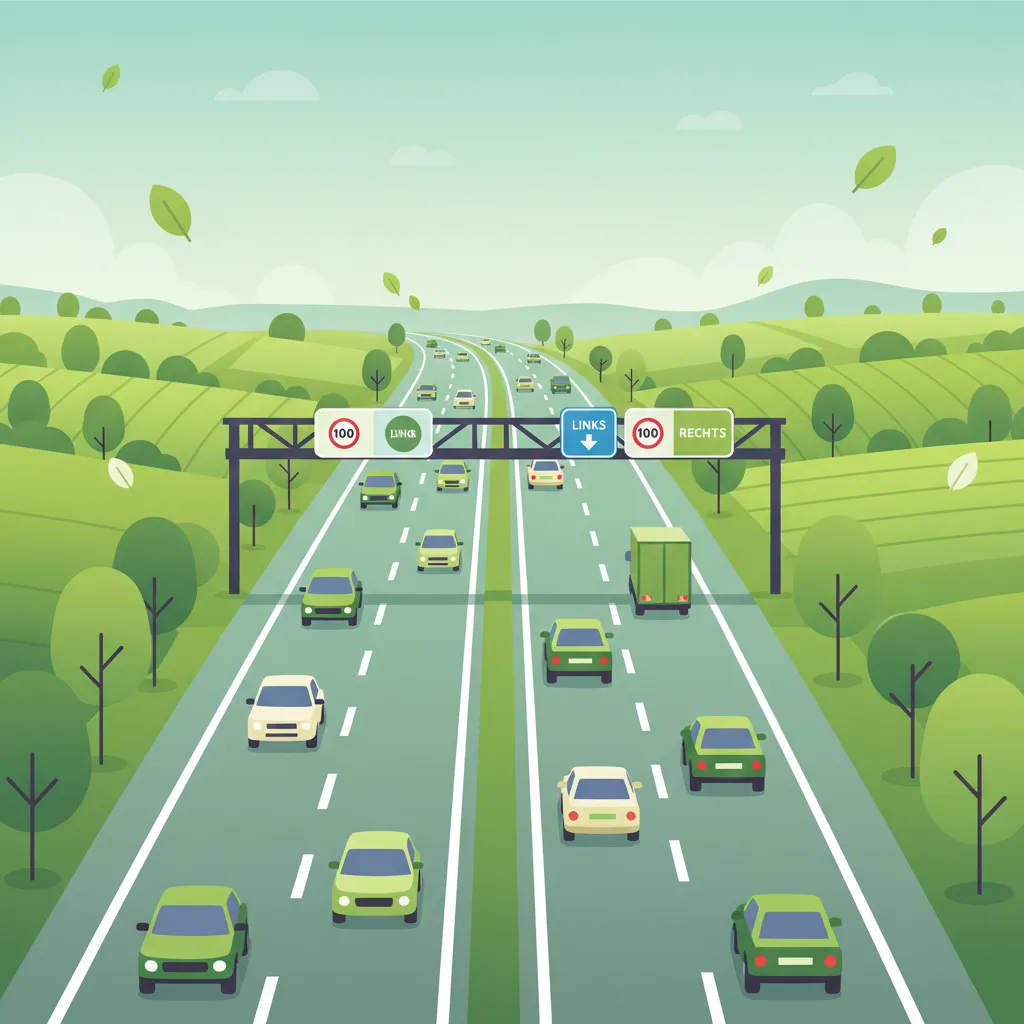
This lesson covers the specific articles of the Dutch Road Traffic Act that apply to motorways, with a primary focus on the strict rule of keeping to the rightmost available lane unless overtaking. It explains the legal and safety reasons for only passing on the left and discusses the correct positioning within a lane for maximum visibility and safety. The content also addresses the nuances of lane usage during heavy congestion, ensuring riders comply with the law and contribute to smooth traffic flow.
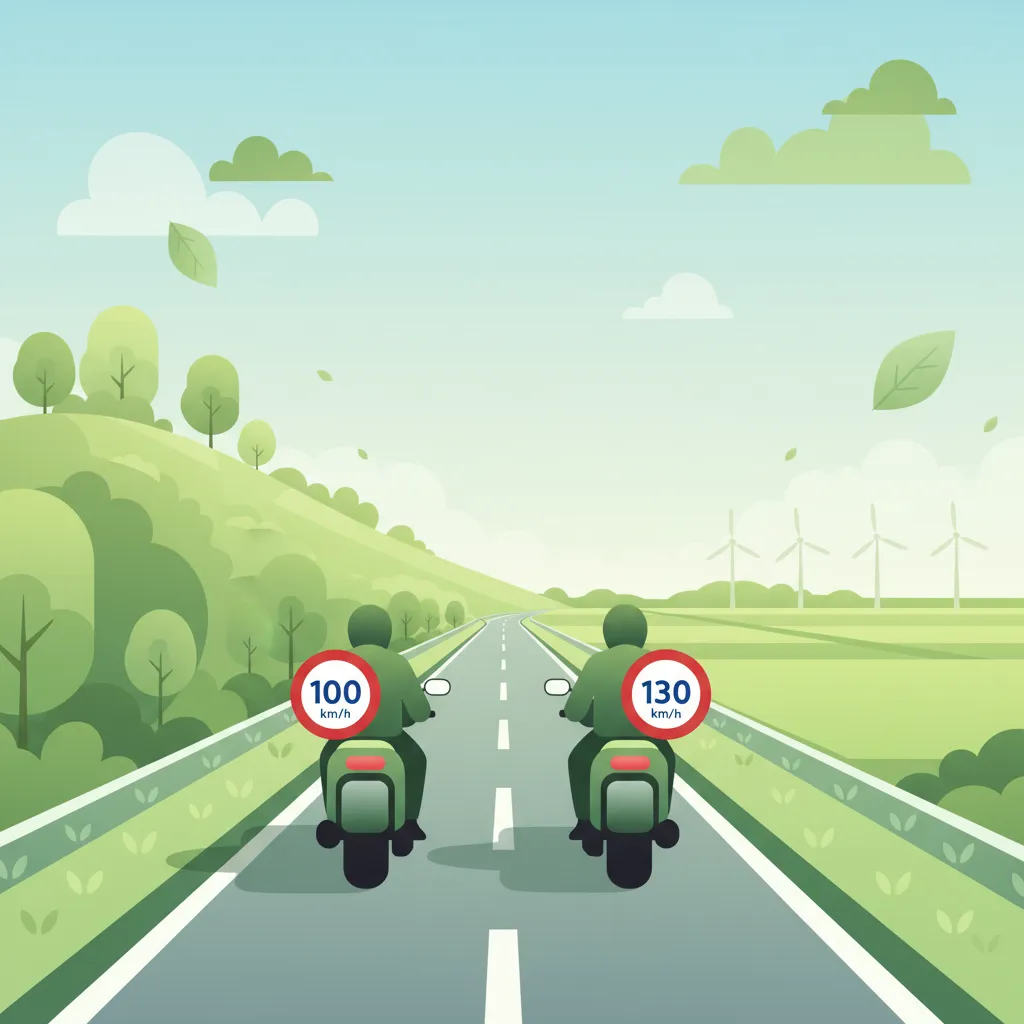
This lesson outlines the statutory national speed limits applicable to motorcycles in the Netherlands. It clearly defines the maximum permitted speeds on motorways ('snelwegen'), non-motorway rural roads ('buiten de bebouwde kom'), and within built-up areas ('binnen de bebouwde kom'). The content also addresses variations, such as time-dependent speed limits on certain motorways, ensuring riders have a complete and accurate understanding of the legal requirements for speed.
This lesson reinforces the fundamental rule of Dutch highway driving: use the rightmost lane available and use the lanes to the left only for overtaking. You will learn the complete, safe overtaking procedure: check mirrors, signal, perform a shoulder check for the blind spot, smoothly move over, accelerate past the vehicle, and then return to the right lane when safe.
This lesson provides a definitive guide to the legal speed limits on different types of Dutch roads. It covers the rules for built-up areas (typically 50 km/h), rural roads (80 km/h), expressways ('autowegen'), and motorways ('snelwegen'), including time-dependent variations. Understanding these official limits is the first step in managing speed legally and appropriately for the road environment, a core topic on the CBR theory test.
This lesson focuses on identifying different types of speed zones and understanding the rationale behind their limits. It explains how to recognize the start and end of a 'built-up area' ('binnen de bebouwde kom') via place-name signs and discusses special zones like 30 km/h zones and 'woonerven' (residential yards). The curriculum emphasizes adapting riding style to the specific hazards present in each type of zone, from high pedestrian activity in urban areas to unexpected curves on rural roads.
Find clear answers to common questions learners have about Variable Speed Limits and Dynamic Road Conditions. Learn how the lesson is structured, which driving theory objectives it supports, and how it fits into the overall learning path of units and curriculum progression in the Netherlands. These explanations help you understand key concepts, lesson flow, and exam focused study goals.
Yes, absolutely. Variable speed limits displayed on overhead electronic signs in the Netherlands are just as legally binding as fixed speed limit signs. Failing to obey them can result in fines and points, and you must demonstrate this understanding in your CBR A2 theory exam.
As an A2 motorcyclist, it's crucial to scan far ahead, especially on autosnelwegen. You should aim to identify upcoming electronic signs as early as possible, ideally giving yourself several hundred meters to smoothly and safely adjust your speed without sudden braking, which could be hazardous for following traffic.
Variable speed limits are primarily used for traffic management. Common reasons include heavy traffic congestion, ongoing roadworks, accidents, or adverse weather conditions like rain, fog, or strong winds. They aim to improve traffic flow, reduce the risk of accidents, and enhance safety for all road users, including A2 motorcyclists.
Generally, variable speed limits displayed on gantry signs above a motorway apply to all lanes they span. Sometimes, specific lanes might have different signs or symbols, but if a speed limit is shown over multiple lanes, it applies across them. Always pay close attention to the specific signs above your lane.
CBR theory questions on variable speed limits often present scenarios with electronic signs showing reduced speeds due to conditions like fog or congestion. You'll need to identify the correct speed, understand why it's applied, and choose the safest action, confirming your legal obligation and adaptive riding skills as an A2 motorcyclist.