
Welcome to the lesson on Speed Adaptation to Conditions. In this part of the 'Speed Management & Braking' unit for your AM category (moped/scooter) theory, you'll learn why simply following the speed limit isn't always safe. We'll explore how real-world factors affect your ability to stop and react, preparing you for crucial exam questions and safer riding on Dutch roads.
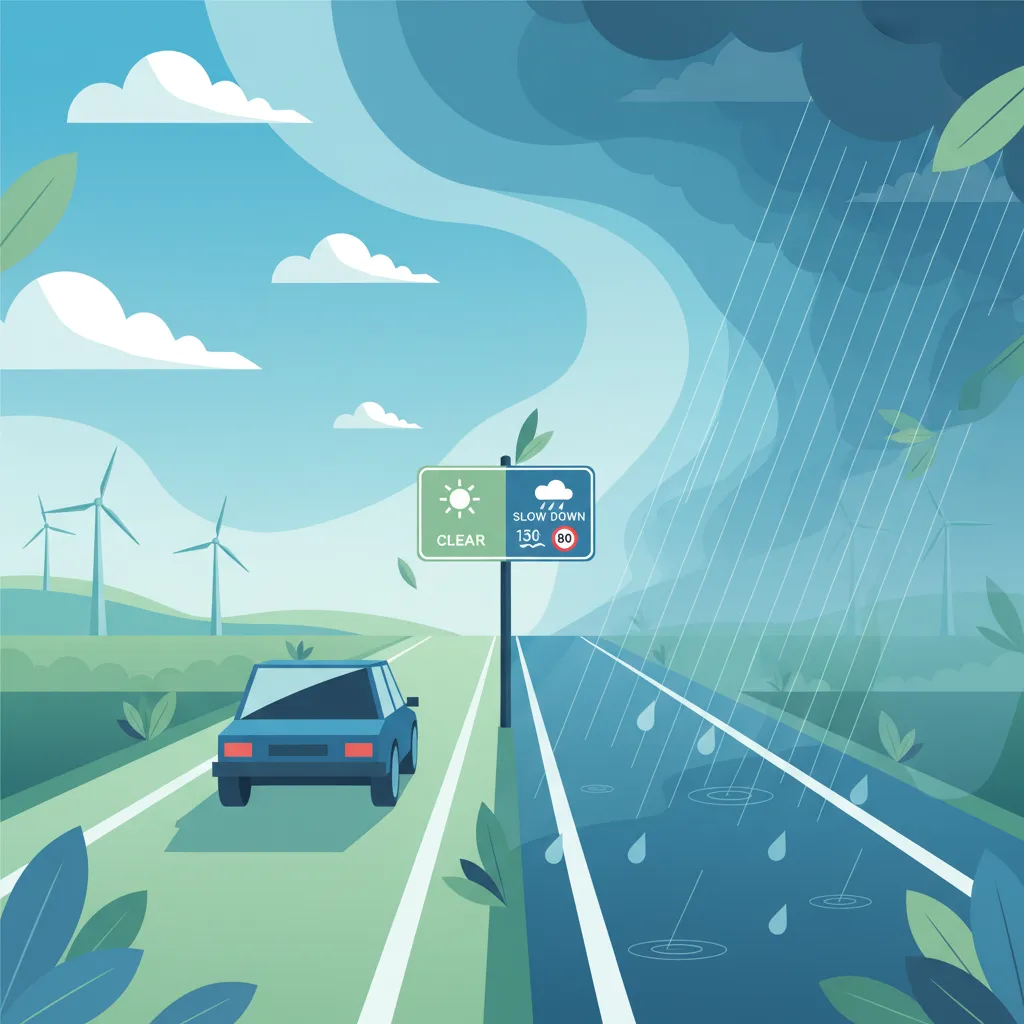
As a rider of a moped or scooter (Category AM vehicle) on Dutch roads, understanding speed is fundamental to your safety and the safety of others. While traffic signs clearly indicate the maximum permissible speed for a given road segment, this limit is rarely a target to be maintained at all times. Instead, it represents the absolute highest speed allowed under ideal circumstances.
This lesson delves into the crucial skill of continuously evaluating prevailing conditions and proactively adjusting your speed downwards when necessary. Mastering speed adaptation ensures you have sufficient time to perceive hazards, react appropriately, and bring your vehicle to a safe stop, significantly reducing the risk of collisions and maintaining control in diverse situations.
A posted speed limit, indicated by a circular sign with a red border and a number, defines the maximum legal speed you are permitted to travel on that specific road section. For example, a sign showing '50' inside a red circle means you may not exceed 50 kilometers per hour. However, this is distinct from a safe speed, which is the speed at which you can maintain complete control of your moped or scooter, react to any potential hazard, and stop safely given the actual driving conditions.
A safe speed is dynamic and varies constantly. It accounts for factors like weather, road surface, traffic density, visibility, your vehicle's condition, and the presence of vulnerable road users. Even if the posted limit is 50 km/h, your safe speed could be 30 km/h or even lower in adverse conditions. Failing to reduce your speed from the maximum limit when conditions demand it is a common cause of accidents and a legal offense in the Netherlands.
Dutch traffic law places a clear responsibility on every driver to adapt their speed. The Reglement Verkeersregels en Verkeerstekens (RVV 1990), specifically Article 7.2, mandates that: "The driver shall adjust speed to the prevailing conditions, such as weather, road surface, traffic, visibility, and vehicle state."
This article is paramount. It means that you are legally obliged to reduce your speed if any of these factors compromise your ability to ride safely. Disregarding this duty of care can lead to serious legal consequences, including fines, points on your license, and increased liability in the event of a collision. It underlines that simply obeying the posted maximum limit is not enough; you must also drive at a speed appropriate for the circumstances.
Successful speed adaptation requires continuous assessment of your surroundings. Several critical factors influence what constitutes a safe speed at any given moment. Understanding these factors will help you make informed decisions on the road.
Weather significantly impacts driving conditions by affecting both road surface grip and visibility.
Never assume your experience or vehicle features like ABS will compensate for excessive speed in adverse weather. Physics dictates reduced grip, and speed must be adjusted accordingly.
The type and condition of the road surface directly affect the available grip, or friction, for your tyres.
The amount of traffic on the road dictates the space you have to maneuver and react.
How well you can see and be seen is critical for safe riding.
In any low-visibility situation, ensure your lights are on and clean. While lights help you see, they are even more crucial for making sure other road users see you.
Your moped or scooter's state directly affects its performance, particularly braking and handling.
Vulnerable Road Users (VRUs) include pedestrians, cyclists, and other two-wheeler riders (like motorcyclists, though you are also a two-wheeler). They are more susceptible to serious injury in a collision.
Understanding how your vehicle stops is crucial for appreciating why speed adaptation is so vital. Your total stopping distance is comprised of two main components:
The physics behind stopping distance dictates that as your speed increases, your stopping distance grows exponentially, not linearly. This is because kinetic energy (the energy of motion) is directly proportional to the square of your speed ().
The maximum deceleration your moped or scooter can achieve is determined by the friction coefficient () between your tyres and the road surface.
When is low, your maximum braking force is reduced, and your braking distance increases proportionally. This is why a smooth, controlled reduction in speed is paramount on slippery surfaces.
While no feature can replace the need for careful speed adaptation, some techniques and systems can aid in certain situations.
Many accidents involving mopeds and scooters occur due to inappropriate speed. Recognizing common mistakes can help you avoid them.
| Situation | Why It’s Wrong | Correct Behaviour | Consequence |
|---|---|---|---|
| Maintaining posted speed in heavy rain | Friction loss leads to longer braking distance and aquaplaning risk. | Reduce speed by at least 20-30% (e.g., 30 km/h on a 50 km/h road). | Increased stopping distance, potential loss of control, collision. |
| Riding at night without adjusting speed | Reduced depth perception and reaction time in limited visibility. | Use dipped beams, keep speed low enough to stop within illuminated distance. | Failure to see hazards, leading to a collision. |
| Ignoring fog-related speed reduction | Inability to stop within sight distance when visibility is severely limited. | Reduce speed to ≤ 20 km/h in dense fog; ensure stop distance ≤ visibility. | Collision with unseen obstacles, high liability. |
| Overtaking on a slippery surface at speed | High risk of losing traction during the lane change or acceleration. | Delay overtaking, reduce speed, ensure sufficient clear road and grip. | Skidding, side-collision, loss of control. |
| Riding fully loaded without speed adjustment | Added mass increases kinetic energy and extends stopping distance significantly. | Reduce speed by 10-15% and be mindful of altered braking performance. | Longer braking distance, potential overrun of stop lines, brake fade. |
| Assuming ABS allows high speed on ice | ABS prevents lock-up but cannot increase the limited friction on ice. | Reduce speed drastically (often ≤ 15 km/h) on icy roads, regardless of ABS. | Failure to stop in time, collision. |
| Proceeding through crosswalk with waiting pedestrians | Pedestrians have legal priority and may assume you will stop. | Decelerate and stop completely before the crossing, allow pedestrians to cross. | Legal violation, potential severe incident with a vulnerable road user. |
| Riding at posted speed on loose gravel | Lower tyre-road friction, high risk of skidding and loss of control. | Reduce speed by 30% or more, maintain smooth throttle and steering inputs. | Skidding, loss of control, fall. |
Beyond Article 7.2 of the RVV 1990, several other regulations and general duties of care reinforce the need for careful speed management.
Let's consider practical examples to solidify your understanding.
Adapting your speed is not merely about obeying rules; it's a fundamental aspect of defensive riding that protects yourself and others.
Lesson content overview
Explore all units and lessons included in this driving theory course.
Explore search topics learners often look for when studying Speed Adaptation to Conditions. These topics reflect common questions about road rules, driving situations, safety guidance, and lesson level theory preparation for learners in the Netherlands.
Browse additional driving theory lessons that cover connected traffic rules, road signs, and common driving situations related to this topic. Improve your understanding of how different rules interact across everyday traffic scenarios.
Understand how weather, road surface, traffic density, and visibility impact safe driving speeds on Dutch roads. Learn why the posted speed limit is not always the safe speed for your moped or scooter.

Riding on two wheels requires special care on surfaces with reduced grip. This lesson teaches you how to handle challenging conditions like rain, ice, wet leaves, or tram tracks. Key principles include reducing speed significantly, making all control inputs (braking, accelerating, steering) much more smoothly and gradually, and increasing your following distance to allow for much longer stopping distances. Recognizing potentially slippery areas is a critical part of proactive hazard perception.
Defensive riding means riding to prevent collisions, despite the actions of others or the conditions around you. This lesson teaches the core principles of this proactive safety strategy. Key techniques include managing the space cushion around your vehicle, positioning yourself in your lane for maximum visibility, constantly planning an escape route, and communicating your intentions clearly to other road users. This mindset acknowledges your vulnerability and empowers you to take control of your own safety.
Controlling a two-wheeled vehicle at very low speeds is a challenging but essential skill. This lesson focuses on the delicate interplay between the clutch, throttle, and rear brake to maintain balance and control without putting your feet down. You will learn the techniques for a smooth take-off from a standstill and how to come to a gentle, controlled stop, which are fundamental skills for navigating city traffic and junctions safely.
This lesson focuses on the unique demands of riding at sustained high speeds on motorways ('snelwegen'). It covers essential topics such as strict lane discipline, safe overtaking procedures, and maintaining a greater following distance to compensate for higher reaction and braking times. The content also addresses the physical and mental challenges, including managing wind blast, increased noise levels, and maintaining heightened situational awareness over long distances to combat fatigue.

Overtaking is a high-risk maneuver that must be executed correctly. This lesson provides a step-by-step guide: assess if it is safe and legal, check mirrors and blind spots, signal your intention, accelerate smoothly past the other vehicle, and return to your lane leaving adequate space. You will also learn to identify situations where overtaking is prohibited, such as before a pedestrian crossing or when approaching a blind corner.
Proper cornering technique is vital for safety and stability on a two-wheeler. This lesson explains the physics of turning, including the concepts of lean angle and counter-steering. You will learn the importance of adjusting your speed before the turn, looking where you want to go, and maintaining a smooth throttle through the corner. These techniques help you maximize grip and maintain control, ensuring you can navigate bends safely.

Each season brings unique challenges for riders. This lesson discusses common seasonal hazards, such as wet autumn leaves that are as slippery as ice, the risk of black ice in winter, and increased agricultural traffic in the summer. It also highlights the importance of seasonal vehicle maintenance. For example, after winter, it is crucial to wash away corrosive road salt, and before winter, to check antifreeze and battery health, ensuring your vehicle is prepared for the conditions ahead.

Riding at night presents two main challenges: seeing the road and being seen by others. This lesson covers the legal requirements for your vehicle's lighting system and how to use it effectively, including when to use high beams. It also emphasizes strategies to increase your own conspicuity, such as wearing bright or reflective clothing. You will learn how darkness affects your perception of speed and distance and how to adapt your riding to compensate for these limitations.

This lesson explains how to respond to variable speed limits shown on overhead electronic signs, which are used to manage traffic flow in real-time. You will learn why these limits are adjusted for factors like congestion, accidents, or bad weather, and the legal requirement to obey them. The content focuses on the importance of anticipatory riding, scanning far ahead for these signs to allow for smooth and safe speed adjustments.
This lesson emphasizes the critical importance of adapting your speed to prevailing conditions, which may require driving slower than the legal limit. You will learn how factors like rain, fog, snow, and darkness significantly increase braking distances and reduce visibility. The curriculum explains the dangers of aquaplaning on wet roads and black ice in winter. The core principle taught is that a safe driver always adjusts their speed to ensure they can stop within the distance they can see to be clear.
Explore the physics behind stopping distance, including perception-reaction time and braking distance. Learn how speed, friction, and vehicle load affect your ability to stop safely on Dutch roads.
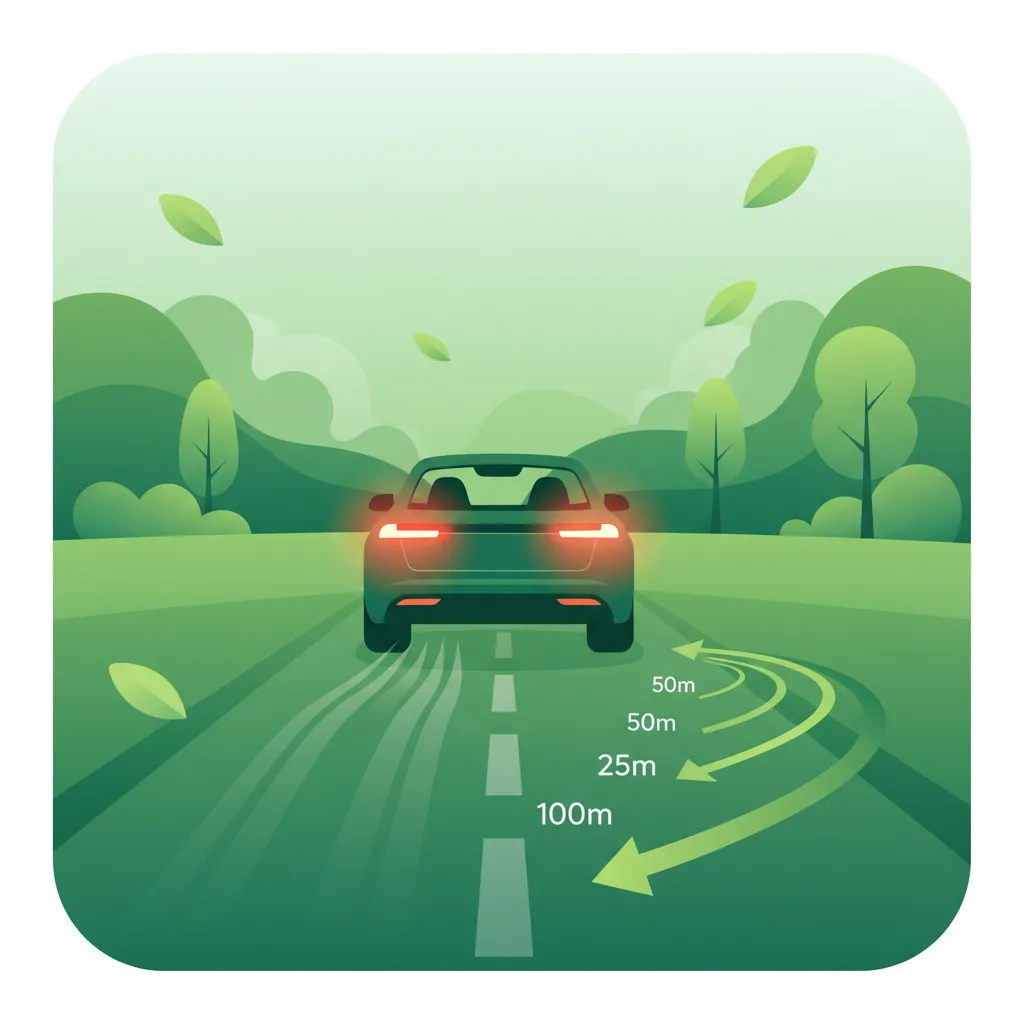
This lesson explains the components of the total stopping distance: the reaction distance (distance traveled before you start braking) and the braking distance (distance traveled while braking). You will learn the general formulas and rules of thumb for estimating these distances at different speeds. Understanding that braking distance increases exponentially with speed is a critical piece of knowledge that reinforces the importance of maintaining safe speeds and following distances.
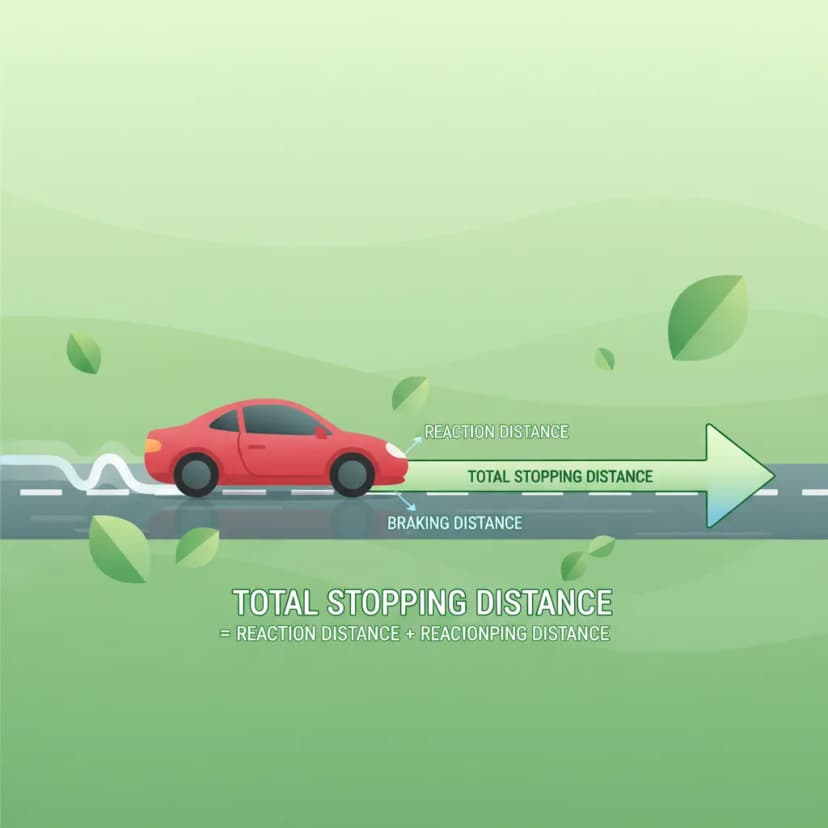
This lesson provides a theoretical understanding of the components that make up the total stopping distance. It explains how to calculate reaction distance (the distance traveled before applying the brakes) and braking distance (the distance traveled while braking). The content highlights how speed exponentially increases stopping distance and how other variables like rider alertness, road grip, and brake condition play a significant role in the final calculation.
This lesson provides a detailed breakdown of high-speed braking techniques, emphasizing the correct balance and application of the front ('voorrem') and rear ('achterrem') brakes. It explains the physics of weight transfer under braking and why the front brake provides the majority of stopping power. Techniques for progressive, smooth application to avoid overloading the front tire and losing traction are covered, ensuring riders can slow down quickly and safely from any speed.
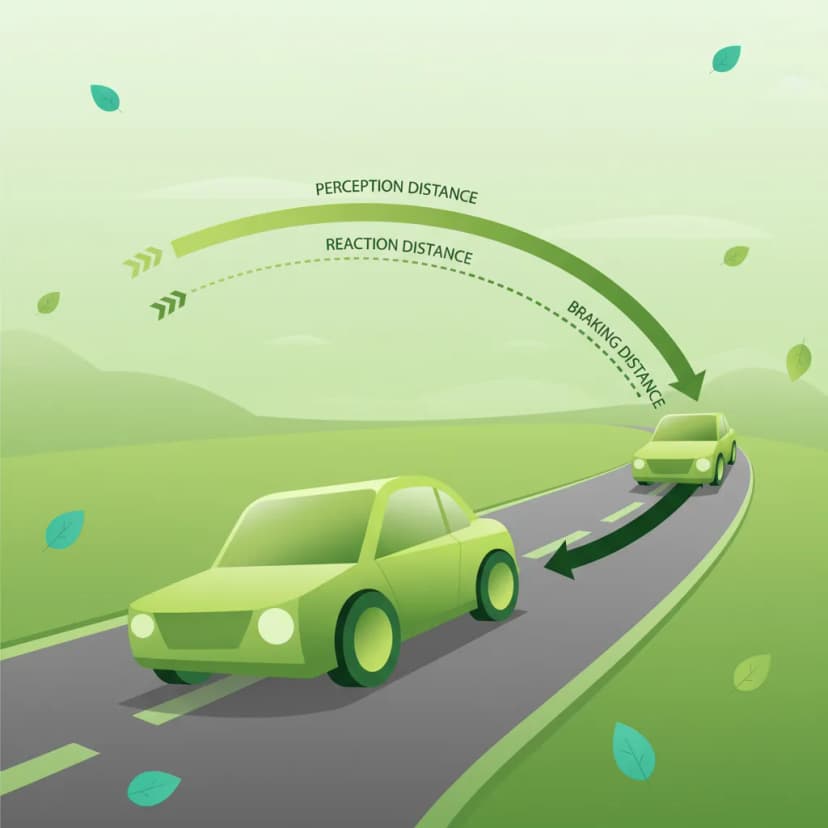
This lesson breaks down the concept of total stopping distance into its two key parts: the distance traveled during your reaction time and the distance the motorcycle travels after the brakes are applied. You will learn the formulas and rules of thumb for estimating these distances at various speeds. The content highlights how factors like rider fatigue, road surface conditions, and tyre quality can significantly increase your overall stopping distance.

This lesson teaches the principles of performing a controlled emergency stop ('noodsremmen') to achieve the shortest possible stopping distance without losing control. It details the technique of applying both brakes firmly and progressively, managing the forward weight transfer, and maintaining an upright body posture to maximize braking efficiency. The content emphasizes braking in a straight line and looking ahead to where you want to stop, not at the obstacle.
This lesson provides a detailed explanation of the two-second rule as a simple yet effective method for maintaining a safe following distance in good conditions. It breaks down the concept of total stopping distance into its two components: reaction distance (the distance traveled before applying the brakes) and braking distance (the distance traveled while braking). Understanding this calculation is fundamental for appreciating the need for a sufficient space cushion to react to sudden events ahead.
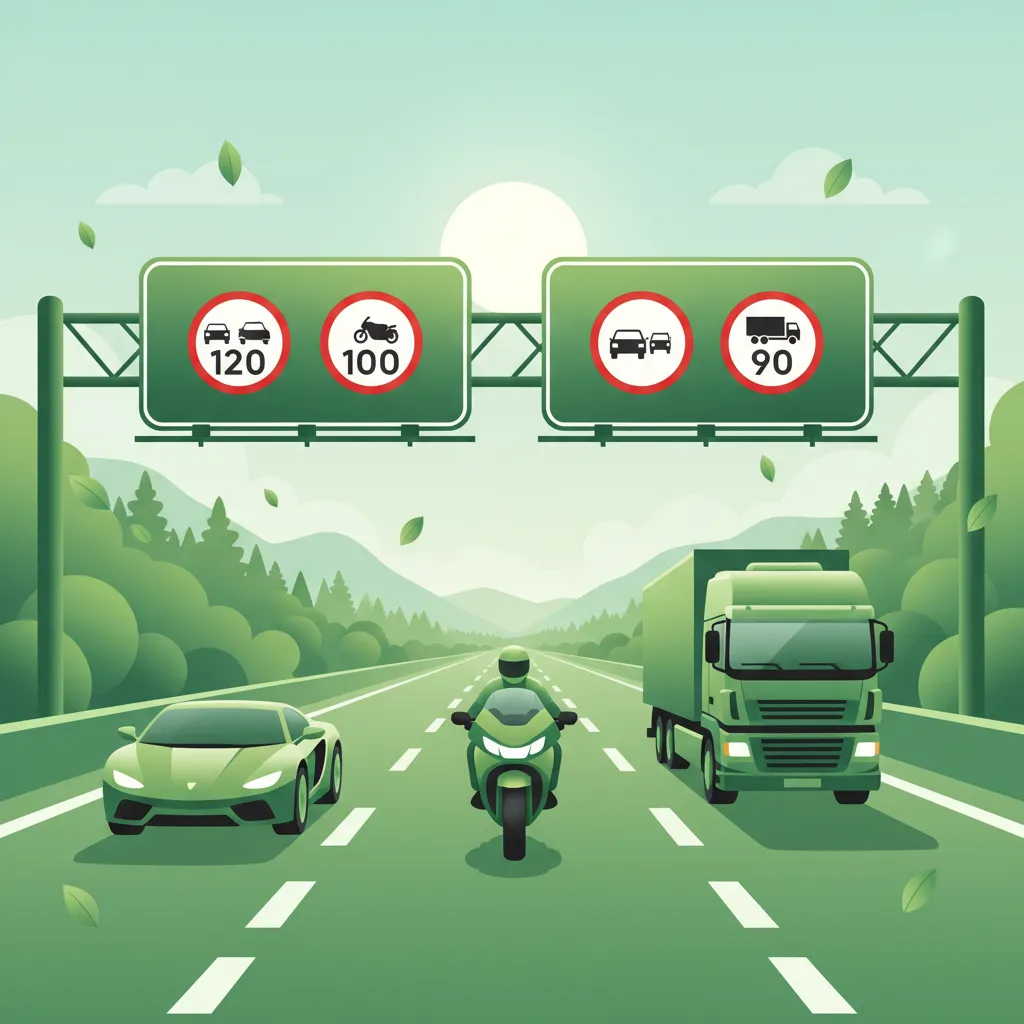
This lesson details the statutory maximum speeds for each Category AM vehicle: 25 km/h for snorfietsen, and 45 km/h for both bromfietsen and speed pedelecs on the carriageway. It explains how these limits apply within built-up areas, outside built-up areas, and on specific road types like residential zones ('woonerf'). The content covers how to interpret speed limit signs and the legal consequences of exceeding these strict limits, which is a key component of the CBR theory exam.
This lesson provides a comprehensive guide to safe and effective deceleration on a motorcycle. You will learn the principles of controlled braking, including the progressive application of both the front and rear brakes to maximize stopping power while maintaining stability. The content also explains the role of engine braking in managing speed and how the Anti-lock Braking System (ABS) helps prevent wheel lock-up during hard braking.

This lesson focuses on the physical skill of an emergency stop, building on previous braking lessons. You will learn to adopt a braced body position, keeping your arms straight and looking ahead, not down. The content details the technique of applying both brakes rapidly but progressively to the point of maximum traction, and how to trust and utilize ABS if your motorcycle is equipped with it.
This lesson teaches the procedure for executing an emergency stop in response to a sudden, extreme hazard. You will learn how to apply maximum braking pressure quickly and decisively while keeping the steering wheel straight to maintain control. The role of the Anti-lock Braking System (ABS) in preventing wheel lock-up and allowing the driver to continue steering is explained. The lesson also covers the importance of checking mirrors, if time permits, and securing the vehicle safely after the stop.
Find clear answers to common questions learners have about Speed Adaptation to Conditions. Learn how the lesson is structured, which driving theory objectives it supports, and how it fits into the overall learning path of units and curriculum progression in the Netherlands. These explanations help you understand key concepts, lesson flow, and exam focused study goals.
You must always adapt your speed to the conditions. This includes heavy rain, fog, strong winds, slippery surfaces like ice or wet leaves, poor visibility at night or dusk, and dense traffic. The posted speed limit is the maximum allowed under ideal conditions; in reality, safe speed is often lower.
Wet roads significantly increase your braking distance. The tires have less grip, meaning they take longer to slow the vehicle down. You should increase your following distance and reduce your speed considerably in wet conditions to compensate for the longer stopping time.
Yes, the CBR theory exam for category AM frequently includes questions about speed adaptation. These questions often present a scenario with specific conditions (e.g., a sharp bend with poor visibility) and ask you to choose the safest speed or action.
When traffic is dense or moving slowly, you should match the speed of the surrounding traffic, provided it is safe to do so. Riding too fast in heavy traffic increases the risk of rear-end collisions and makes it difficult to react to sudden stops by other vehicles.
Reaction distance is the distance your vehicle travels from the moment you perceive a hazard until you start braking. Braking distance is the distance your vehicle travels from the moment you apply the brakes until it stops. Both increase with speed and are further affected by conditions like road surface and tire grip.