
Riding your moped or scooter in the Netherlands means adapting to changing seasons. This lesson equips you with the knowledge of seasonal road hazards, from slippery autumn leaves to winter's black ice, and stresses the importance of regular vehicle maintenance. Understanding these factors is crucial for passing your AM theory exam and ensuring safe riding all year round.
Riding a moped or scooter on Dutch roads offers freedom, but it also demands constant vigilance, especially when facing the dynamic challenges presented by different seasons. The Dutch Driving License Theory Course for Category AM (Moped & Scooter) emphasizes that road conditions and vehicle readiness are not static; they change significantly with temperature, precipitation, foliage, and human activity throughout the year. As a rider, you must anticipate these seasonal variations, adapt your riding technique, and ensure your vehicle is mechanically prepared for the prevailing conditions to ensure safety and legal compliance.
This comprehensive lesson will equip you with the knowledge to recognize common seasonal hazards, understand their impact on your vehicle's performance and handling, and implement the necessary maintenance practices. From slippery autumn leaves to invisible black ice in winter and increased agricultural traffic in summer, awareness and preparedness are your best defenses against unforeseen risks.
Each season introduces its own set of environmental factors that directly influence the friction between your tyres and the road surface, affecting braking distance, vehicle stability, and overall handling. A crucial concept to grasp is the coefficient of friction (μ), which describes the grip level between your tyres and the road. A lower coefficient means less grip, longer stopping distances, and reduced stability, making identical riding techniques unsafe across seasons.
Autumn, with its picturesque falling leaves, unfortunately also presents significant hazards for moped and scooter riders. Accumulated wet leaves on the carriageway create a low-friction film that can be as treacherous as ice when compacted. This is particularly true on bends, at intersections, and in shaded areas where moisture persists longer.
Freshly fallen leaves might still offer some moderate grip, but once they become wet and compressed by traffic, they form a glossy, slick surface with a dramatically reduced coefficient of friction (μ often as low as 0.15-0.2). This can lead to a sudden and unexpected loss of traction during cornering or braking. Riders often misunderstand that even seemingly dry leaves can become slick when wet or when a thin film of moisture is present underneath. Always reduce your speed, increase your following distance, and use gentle, progressive braking and steering inputs when navigating roads covered in autumn leaves.
Winter brings some of the most challenging road conditions, with black ice being arguably the most dangerous. Black ice is a transparent, thin film of ice that forms on road surfaces, often invisible to the naked eye. It commonly develops on bridges, overpasses, and shaded stretches of road, as these areas cool down faster and don't receive direct sunlight. Pavement-surface black ice can also develop after a rapid temperature drop below 0 °C, especially after thaw-freeze cycles.
Encountering black ice results in an immediate and almost complete loss of traction. Any abrupt inputs – braking, accelerating, or sharp steering – will likely cause your wheels to slip, leading to a loss of control. The Dutch Road Traffic Act (RVV 1990) Article 5 mandates driving with due care and attention, taking into account road conditions. This rule is especially critical in winter. Always assume that if the temperature is around freezing, especially after precipitation or in shaded areas, black ice could be present. Riders should reduce speed significantly, maintain ample following distance, and avoid sudden movements.
Beyond black ice, frost and snow accumulation further reduce grip and can obscure road markings and hazards. Visibility is often compromised by fog, mist, and reduced daylight hours, making it harder for other road users to see you.
Summer on Dutch rural roads often means an increased presence of slow-moving agricultural traffic. Tractors, harvesters, and other large farm machinery frequently travel between fields, particularly during planting and harvest periods. These vehicles are often wider than a standard lane, have large turning radii, and may travel at speeds as low as 20 km/h.
This increased agricultural traffic reduces overtaking opportunities, causes unpredictable speed changes, and requires extended observation. The Dutch Road Traffic Act (RVV 1990) Article 12.3 requires yielding to slower traffic where overtaking is unsafe. Always be patient, check your blind spots thoroughly, and ensure a clear view of oncoming traffic before attempting to overtake. Be aware that these vehicles may also leave mud and debris on the road, further reducing your tyre's grip.
High summer temperatures also affect your vehicle. Air contracts when cold and expands when warm; tyre pressure therefore rises in summer and drops in winter. This phenomenon, known as thermal expansion, requires regular tyre pressure checks to ensure optimal grip and prevent premature wear.
Proactive maintenance is key to mitigating seasonal risks, preventing premature wear, and fulfilling your Dutch legal obligations. Ignoring seasonal checks can lead to accidents, costly repairs, or even fines.
Tyre pressure is not a "set-and-forget" value. It is directly affected by ambient temperature. As the temperature drops in winter, the air inside your tyres contracts, causing pressure to decrease. Conversely, in summer, rising temperatures cause the air to expand, increasing pressure. Maintaining the correct tyre pressure is vital for optimal grip, stability, and tyre longevity. Under-inflated tyres increase rolling resistance, heat build-up, and wear, while over-inflated tyres reduce the contact patch, increasing the risk of slip and uneven wear.
You should check and adjust your tyre pressure at least monthly, and even more frequently when temperatures swing by more than 10 °C. Always refer to your moped or scooter's manufacturer recommendations, usually found in the owner's manual or on a sticker near the tyre valve. Always measure pressure when the tyres are cold (e.g., first thing in the morning before a ride).
When adjusting tyre pressure for winter, it's generally advisable to maintain the manufacturer's recommended pressure or even slightly higher (e.g., +0.1 to +0.2 bar) to compensate for the colder ambient temperature.
For liquid-cooled mopeds and scooters, the antifreeze and coolant system is critical, especially before winter. Antifreeze, typically a mixture of ethylene glycol and water, lowers the freezing point of the coolant to prevent it from freezing solid in sub-zero temperatures. Freezing coolant can cause severe damage, such as cracking the engine block or radiator. It also raises the boiling point, preventing overheating in warmer conditions, and contains corrosion inhibitors to protect internal engine components.
Before winter, it is crucial to verify the antifreeze concentration (aiming for at least 30% ethylene glycol for Dutch winters) using a refractometer. Also, visually inspect all hoses and connections for leaks or signs of deterioration. If your coolant is old or its concentration is unknown, consider a flush and refill. Post-winter, some riders opt for a flush to remove accumulated residues and replenish with fresh coolant, though this is often done as part of broader periodic maintenance.
Dutch roads are frequently salted during winter to combat ice and snow. While effective for traction, road salt (sodium chloride) is highly corrosive. It accelerates the oxidation of metal components, including your scooter's frame, suspension, brake lines, and even electrical connectors. Neglecting to remove this salt can lead to premature wear, reduced brake efficiency, or even electrical faults.
After winter, particularly if you've ridden on salted roads, a thorough post-winter wash is essential. This cleaning should focus on the undercarriage, wheel wells, brake components, and accessible electrical connections. A high-pressure rinse is effective for the chassis, followed by targeted cleaning of brake calipers and battery terminals. Using a mild, de-icing compatible cleaning agent is recommended. After washing, ensure all components are properly dried to prevent immediate re-corrosion, and consider applying protective coatings to exposed metal parts.
For both electric and petrol mopeds/scooters, battery performance significantly degrades in cold weather. Electrochemical reactions within the battery slow down as temperatures drop, reducing the available voltage and overall capacity. This is particularly critical for electric mopeds and scooters, where range loss can be substantial and potentially leave you stranded. Even for petrol vehicles, a cold battery might struggle to provide enough power to start the engine.
To mitigate this, consider storing your battery indoors if removable, or keeping your scooter in a heated garage. If this isn't possible, an insulated cover for the battery can help. For electric scooters, manage your state-of-charge (SOC) carefully; avoiding full discharge in sub-zero temperatures can prevent excessive internal resistance and potential capacity loss. It's often recommended to maintain a charge level between 30% and 80% when storing in freezing conditions. Always verify your battery's health and ensure it can reliably power all required lights and systems.
Reduced visibility is a common factor across all seasons, from autumn fog and winter snow to summer glare and low sun angles. Proper selection and use of lighting, along with appropriate rider accessories, are crucial for your safety and to be seen by other road users.
Adhering to legal requirements for vehicle maintenance is not only about avoiding fines but primarily about ensuring safety for yourself and others on the road.
The Algemene Periodieke Keuring (APK) is the mandatory periodic vehicle inspection in the Netherlands. It checks safety-critical components such as brakes, lights, steering, tyres, exhaust, and overall vehicle integrity. For mopeds over 45cc, the APK is required annually, while for those 45cc and below, it's biennial. Failure to have an up-to-date APK can result in fines and the prohibition from road use. While the APK ensures a minimum safety standard, it does not replace the need for regular seasonal maintenance.
Riding with an expired APK can lead to a significant fine and may invalidate your insurance in the event of an accident.
Your riding approach must adapt to varying conditions.
Understanding these terms will solidify your grasp of seasonal challenges:
Preparing for and adapting to seasonal road conditions is a fundamental aspect of safe moped and scooter riding in the Netherlands. By understanding the physics of grip, the effects of temperature, and your legal obligations, you can significantly reduce risks.
Key Takeaways:
Your decision-making process should always involve assessing current weather and road conditions, adjusting your speed and following distance, verifying your vehicle's readiness, and applying smooth, controlled inputs. This knowledge builds directly upon your understanding of vehicle control, environmental influences, safety checks, and legal responsibilities, preparing you for advanced hazard perception and defensive riding strategies.
Lesson content overview
Explore all units and lessons included in this driving theory course.
Explore search topics learners often look for when studying Seasonal Road Conditions and Maintenance Awareness. These topics reflect common questions about road rules, driving situations, safety guidance, and lesson level theory preparation for learners in the Netherlands.
Browse additional driving theory lessons that cover connected traffic rules, road signs, and common driving situations related to this topic. Improve your understanding of how different rules interact across everyday traffic scenarios.
Explore detailed explanations of seasonal road hazards like black ice and wet leaves, and understand essential vehicle maintenance strategies to ensure safety on Dutch roads throughout the year. Learn how to prepare your moped for changing weather conditions and comply with traffic laws.
This lesson provides practical advice for driving in challenging weather. You will learn about the risk of aquaplaning in heavy rain and how to react, as well as how to manage the effects of strong crosswinds. The curriculum covers winter driving, explaining the danger of black ice, the benefits of winter tires, and techniques for avoiding and correcting a skid. A key focus is on adjusting driving style: increasing following distances, reducing speed, and making gentle steering and braking inputs.
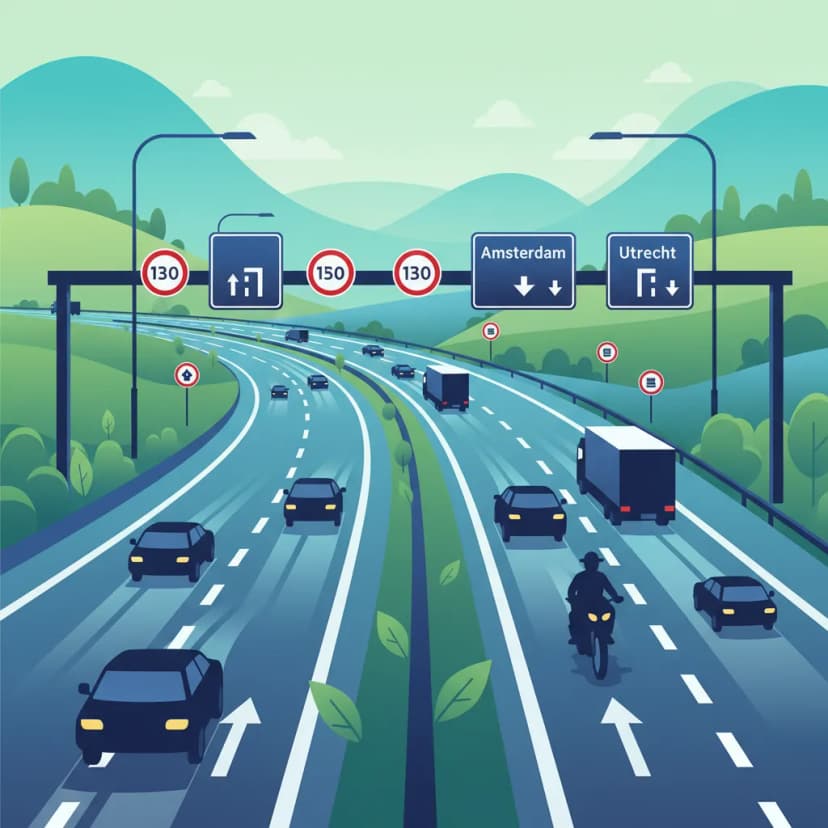
This lesson details the specific regulations for driving on Dutch motorways, identifiable by the G1 sign. You will learn the correct procedure for joining the flow of traffic using the acceleration lane and for leaving via the deceleration lane. The curriculum reinforces the 'keep right unless overtaking' rule for lane discipline. It also explains that stopping is strictly forbidden, and the hard shoulder (vluchtstrook) may only be used for genuine emergencies.
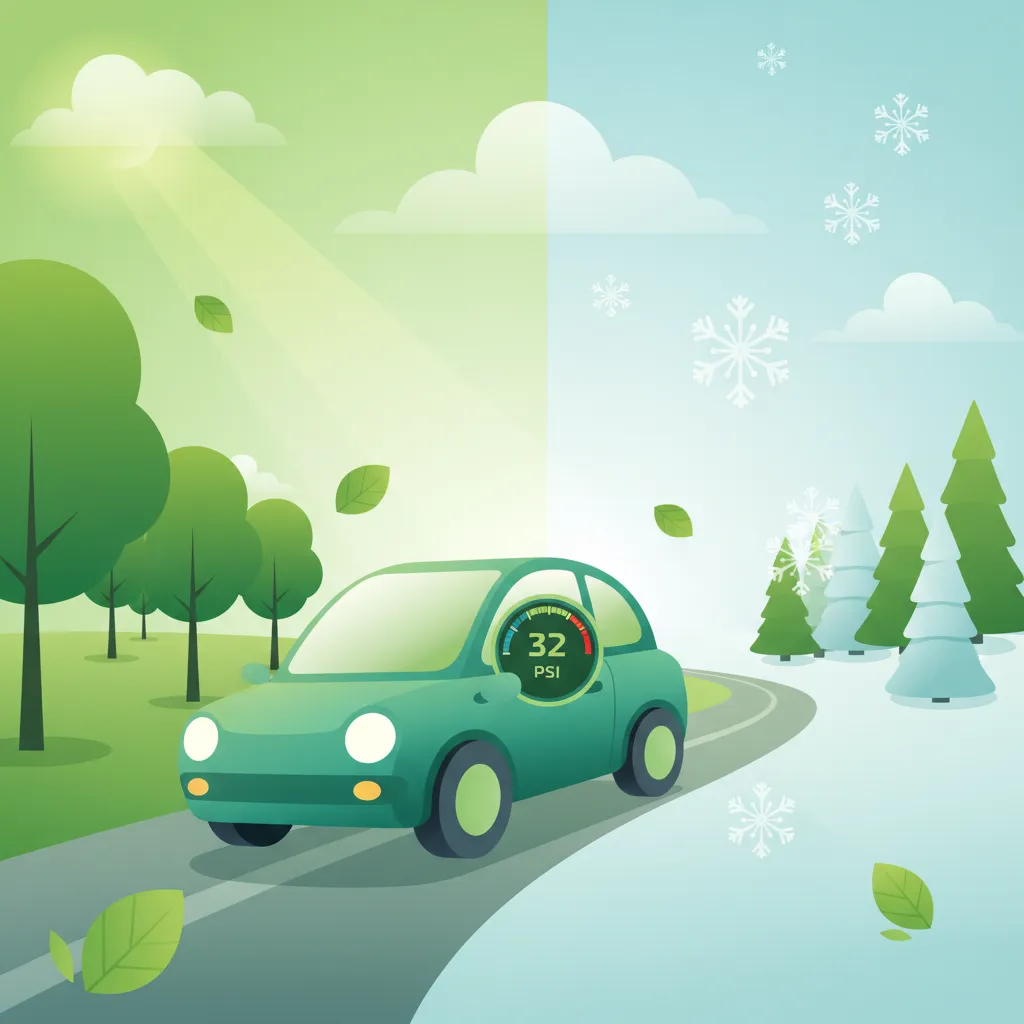
This lesson details the critical role that tires play in motorcycle safety, as they are the only connection to the road. It explains the importance of selecting the right type of tire for the season and expected riding conditions. The content provides a guide on how to perform regular pre-ride checks, including inspecting for correct inflation pressure, checking tread depth, and looking for any signs of damage or wear.
This lesson emphasizes the critical importance of adapting your speed to prevailing conditions, which may require driving slower than the legal limit. You will learn how factors like rain, fog, snow, and darkness significantly increase braking distances and reduce visibility. The curriculum explains the dangers of aquaplaning on wet roads and black ice in winter. The core principle taught is that a safe driver always adjusts their speed to ensure they can stop within the distance they can see to be clear.
This lesson focuses on the use of specialized lights for specific situations. You will learn the strict conditions under which fog lights may be used: the rear fog light is only permitted when visibility from fog or snow is less than 50 meters, and not in rain. The lesson also explains the correct use of hazard warning lights, which are intended to warn other drivers of a stationary obstruction (like a breakdown or the tail end of a sudden traffic jam) or while being towed.
This lesson covers the full range of lights and signals required on a vehicle for visibility and communication. You will learn about the mandatory requirements for headlights, taillights, brake lights, indicators, and reflectors. The curriculum emphasizes the driver's legal responsibility to ensure all lights are clean and functional before every journey. The correct use and function of the horn as an audible warning device in case of imminent danger are also explained.
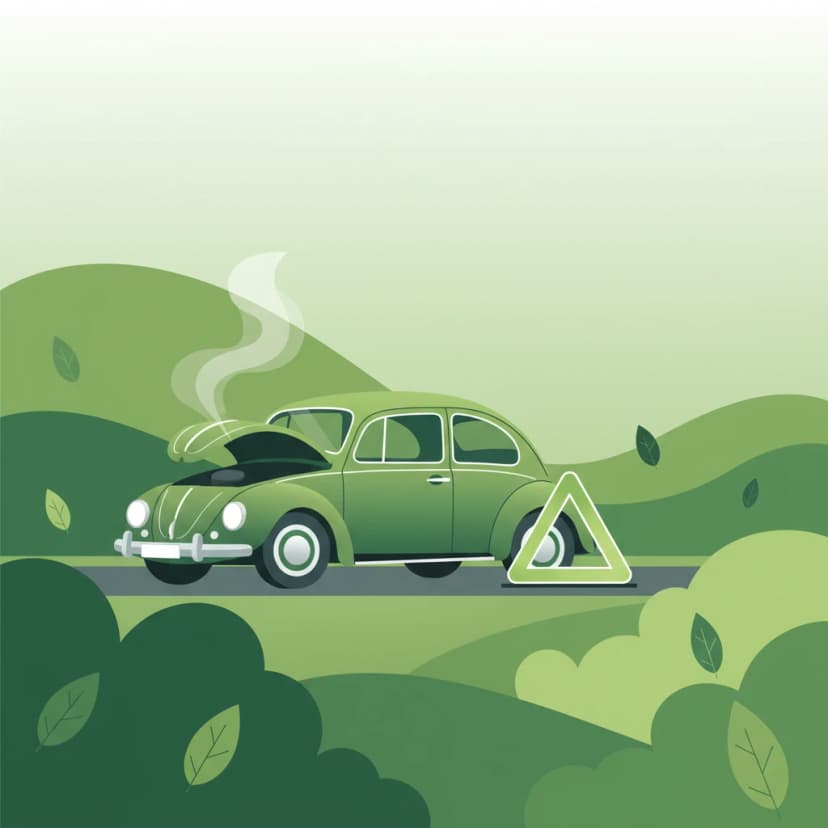
This lesson provides a clear action plan for when your car breaks down. You will learn to pull over to a safe location, preferably the hard shoulder on a motorway, and immediately activate your hazard warning lights. The curriculum explains the legal requirement to place a warning triangle a suitable distance behind the vehicle (if safe to do so) and the strong recommendation to wear a high-visibility jacket. Crucially, it instructs that all occupants should exit the vehicle on the safe side and wait behind the guardrail for assistance.

Riding on two wheels requires special care on surfaces with reduced grip. This lesson teaches you how to handle challenging conditions like rain, ice, wet leaves, or tram tracks. Key principles include reducing speed significantly, making all control inputs (braking, accelerating, steering) much more smoothly and gradually, and increasing your following distance to allow for much longer stopping distances. Recognizing potentially slippery areas is a critical part of proactive hazard perception.
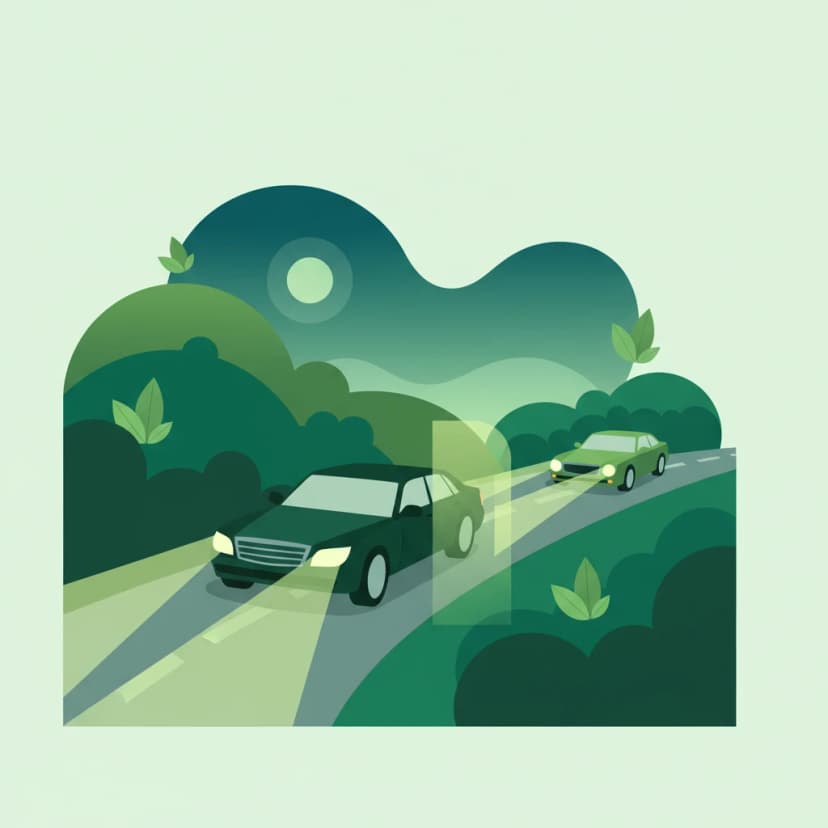
This lesson details the functions of the various lights on a car and the legal requirements for their use. You will learn the difference between dipped beams (dimlicht), which are the standard headlights for night driving and poor visibility, and main beams (grootlicht), which can only be used when they won't dazzle other road users. The content also covers the use of sidelights (stadslicht) for parking and the automatic function of Daytime Running Lights (DRLs). Correct usage is vital for visibility and avoiding blinding other drivers.
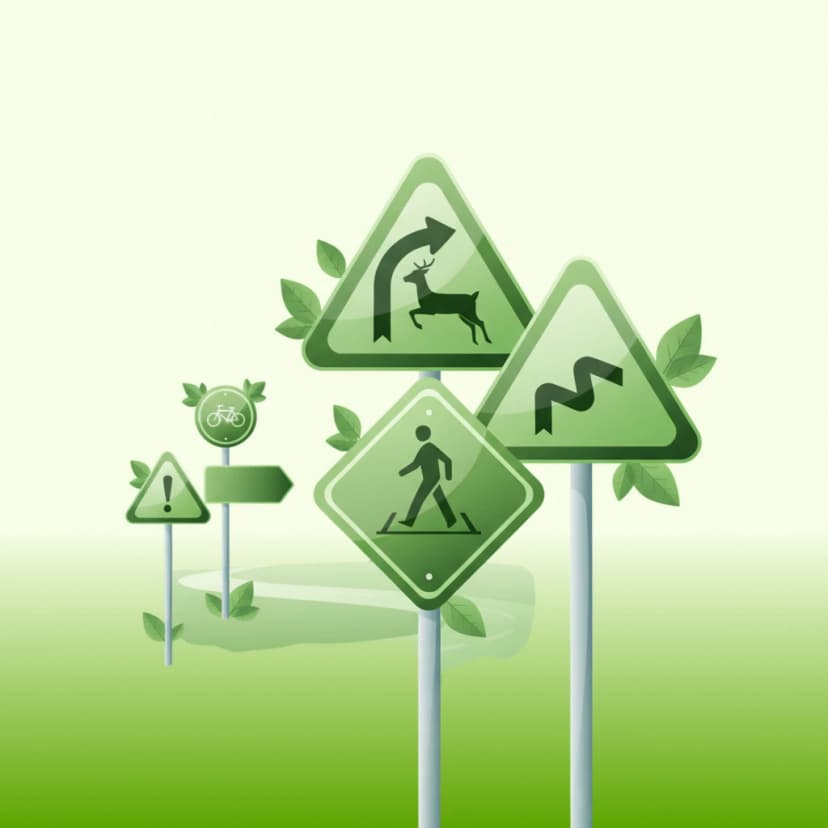
This lesson introduces warning signs, which are designed to alert drivers to potential dangers or changes in road layout ahead. You will learn to interpret the triangular-shaped signs that indicate hazards such as sharp curves, slippery road surfaces (J27), or upcoming road works (J8). The curriculum explains how these signs help in anticipating risks and adjusting driving behavior accordingly, such as reducing speed or increasing alertness. A thorough understanding of warning signs is vital for proactive and defensive driving in various environments.
Understand the legal implications of seasonal road conditions in the Netherlands. This lesson covers your obligations under the RVV 1990, focusing on how weather and seasonal changes impact safe riding practices and vehicle readiness, including APK requirements.
This lesson provides practical advice for driving in challenging weather. You will learn about the risk of aquaplaning in heavy rain and how to react, as well as how to manage the effects of strong crosswinds. The curriculum covers winter driving, explaining the danger of black ice, the benefits of winter tires, and techniques for avoiding and correcting a skid. A key focus is on adjusting driving style: increasing following distances, reducing speed, and making gentle steering and braking inputs.
This lesson emphasizes the critical importance of adapting your speed to prevailing conditions, which may require driving slower than the legal limit. You will learn how factors like rain, fog, snow, and darkness significantly increase braking distances and reduce visibility. The curriculum explains the dangers of aquaplaning on wet roads and black ice in winter. The core principle taught is that a safe driver always adjusts their speed to ensure they can stop within the distance they can see to be clear.
Riding on two wheels requires special care on surfaces with reduced grip. This lesson teaches you how to handle challenging conditions like rain, ice, wet leaves, or tram tracks. Key principles include reducing speed significantly, making all control inputs (braking, accelerating, steering) much more smoothly and gradually, and increasing your following distance to allow for much longer stopping distances. Recognizing potentially slippery areas is a critical part of proactive hazard perception.
This lesson focuses on the use of specialized lights for specific situations. You will learn the strict conditions under which fog lights may be used: the rear fog light is only permitted when visibility from fog or snow is less than 50 meters, and not in rain. The lesson also explains the correct use of hazard warning lights, which are intended to warn other drivers of a stationary obstruction (like a breakdown or the tail end of a sudden traffic jam) or while being towed.
This lesson covers the full range of lights and signals required on a vehicle for visibility and communication. You will learn about the mandatory requirements for headlights, taillights, brake lights, indicators, and reflectors. The curriculum emphasizes the driver's legal responsibility to ensure all lights are clean and functional before every journey. The correct use and function of the horn as an audible warning device in case of imminent danger are also explained.
This lesson details the functions of the various lights on a car and the legal requirements for their use. You will learn the difference between dipped beams (dimlicht), which are the standard headlights for night driving and poor visibility, and main beams (grootlicht), which can only be used when they won't dazzle other road users. The content also covers the use of sidelights (stadslicht) for parking and the automatic function of Daytime Running Lights (DRLs). Correct usage is vital for visibility and avoiding blinding other drivers.
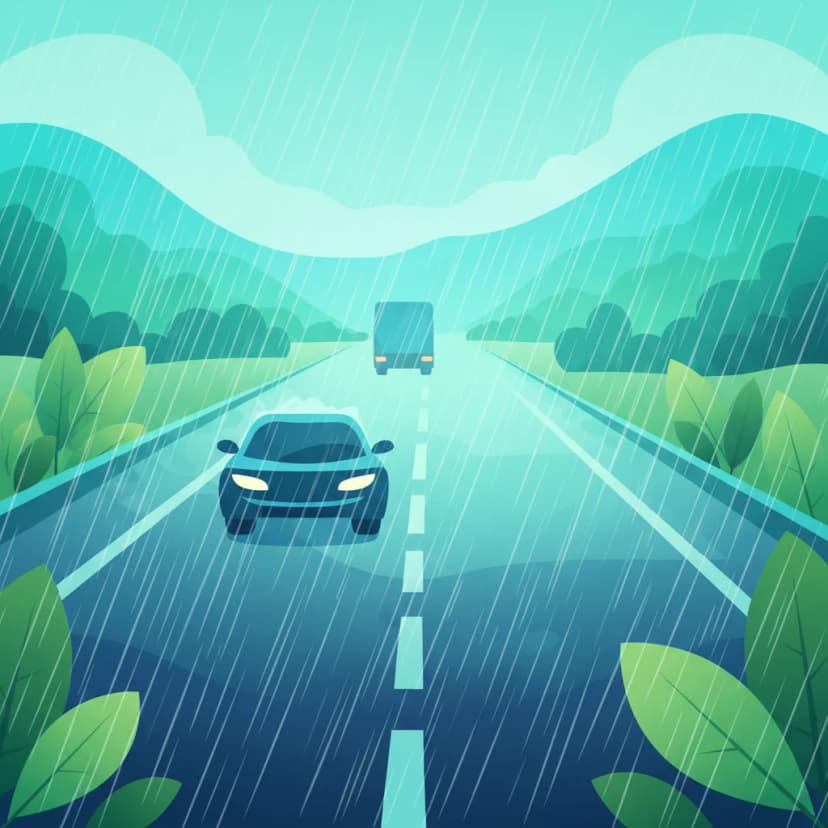
This lesson explains why the standard two-second rule is insufficient in adverse conditions and requires extension. It details how factors like rain, fog, and darkness reduce both visibility and tire grip, thereby significantly increasing total stopping distance. The content provides practical guidelines, such as extending the following gap to four seconds or more in the wet, to ensure the rider always has enough time and space to stop safely, regardless of the conditions.
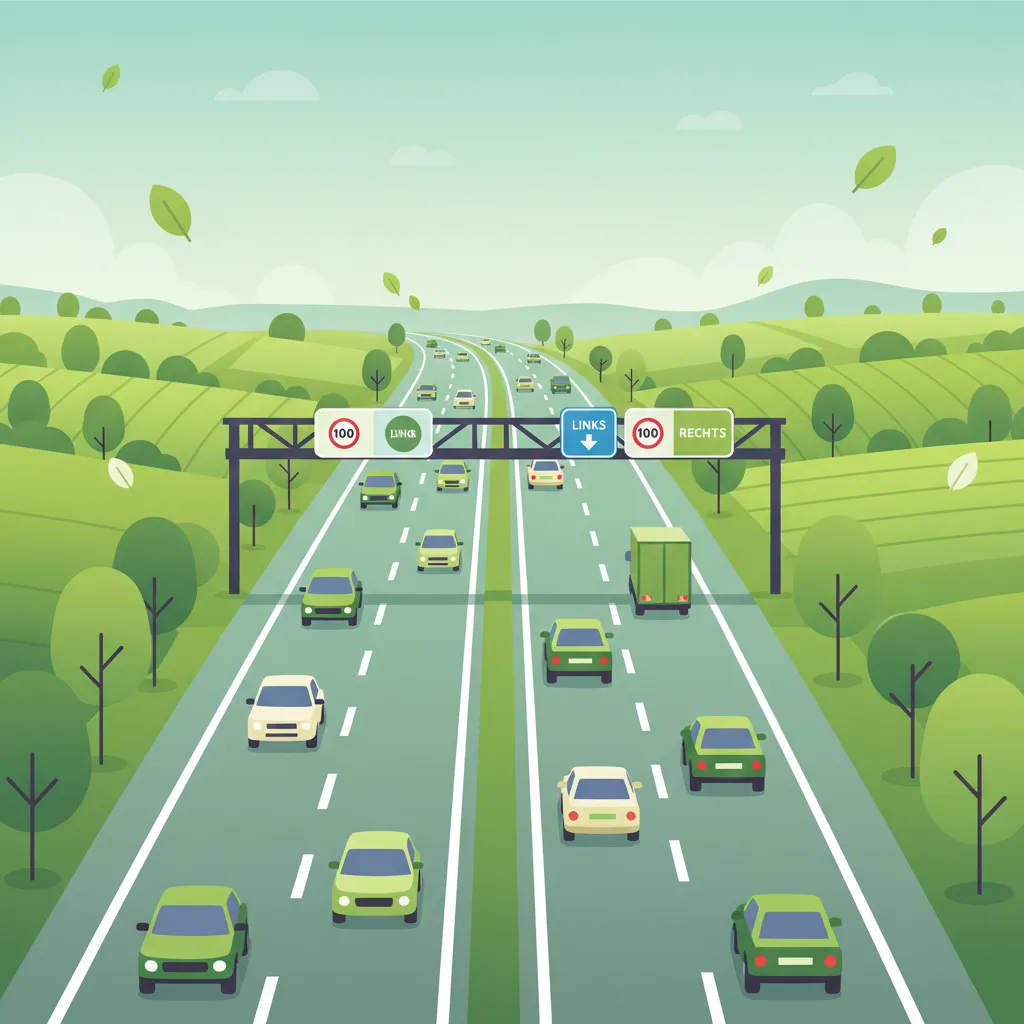
This lesson covers the specific articles of the Dutch Road Traffic Act that apply to motorways, with a primary focus on the strict rule of keeping to the rightmost available lane unless overtaking. It explains the legal and safety reasons for only passing on the left and discusses the correct positioning within a lane for maximum visibility and safety. The content also addresses the nuances of lane usage during heavy congestion, ensuring riders comply with the law and contribute to smooth traffic flow.
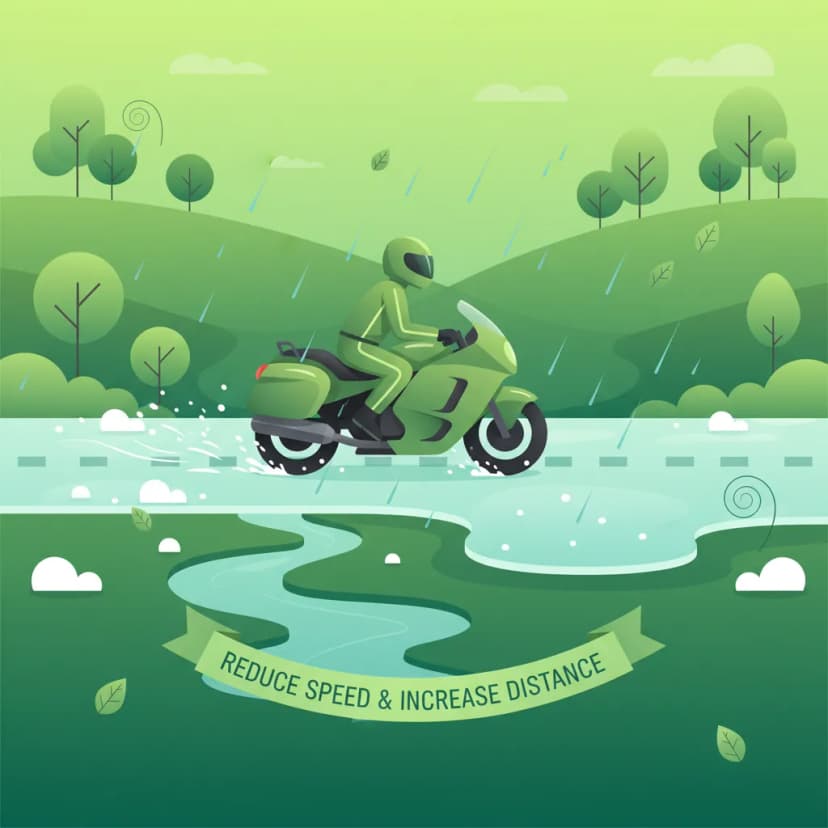
This lesson provides survival strategies for riding in the most challenging weather conditions, including heavy rain, snow, and potential ice. It emphasizes the importance of mental preparation, drastically reduced speeds, and hyper-smooth inputs for throttle, brakes, and steering. The content also covers identifying high-risk areas for 'black ice,' such as bridges and shaded spots, and the critical role of appropriate waterproof and insulated gear in preventing hypothermia and maintaining concentration.
This lesson details the specific regulations for driving on Dutch motorways, identifiable by the G1 sign. You will learn the correct procedure for joining the flow of traffic using the acceleration lane and for leaving via the deceleration lane. The curriculum reinforces the 'keep right unless overtaking' rule for lane discipline. It also explains that stopping is strictly forbidden, and the hard shoulder (vluchtstrook) may only be used for genuine emergencies.
Find clear answers to common questions learners have about Seasonal Road Conditions and Maintenance Awareness. Learn how the lesson is structured, which driving theory objectives it supports, and how it fits into the overall learning path of units and curriculum progression in the Netherlands. These explanations help you understand key concepts, lesson flow, and exam focused study goals.
Yes, wet autumn leaves can be extremely slippery, significantly reducing tire grip and making braking and cornering hazardous. They can accumulate on the road surface, creating a slick layer similar to ice, especially when damp. It's crucial to treat them with extreme caution, reduce speed, and increase following distance.
Black ice is clear ice that forms on the road surface, often unseen. For mopeds and scooters, it poses a severe risk because there's virtually no grip. Hitting black ice can cause an immediate loss of control, leading to a skid or fall. It's most common during cold, clear mornings after temperatures drop below freezing.
Road salt used in winter is highly corrosive. If not washed off your vehicle, it can damage metal parts, including the frame, brakes, and electrical components. This corrosion can compromise the vehicle's integrity and safety over time. Regular washing, especially after winter, is essential for AM vehicle longevity and roadworthiness.
Before winter, check your antifreeze level to prevent engine freezing, ensure your battery is in good condition as cold weather affects performance, verify that your tires have adequate tread for grip on potentially damp or cold surfaces, and test your lights and brakes thoroughly. Consider using winter-specific tires if you ride frequently in very cold or icy conditions.
During summer harvest seasons, you may encounter increased agricultural traffic like tractors and combines on rural roads. These vehicles are often slow-moving, wide, and may leave debris such as mud, gravel, or crop residue on the road, reducing traction. Be aware of their presence, maintain a safe distance, and be cautious of unexpected road contamination.