
This lesson delves into the critical concept of stopping distances for A1 motorcycle riders in the Netherlands. Understanding how speed, rider condition, and road surface affect how quickly you can stop is vital for both the CBR theory exam and safe everyday riding. We'll break down reaction distance and braking distance to give you a clear picture of safe following distances.
Mastering the calculation of stopping distances is a cornerstone of safe motorcycle riding and crucial for passing your Dutch A1 motorcycle theory exam. This comprehensive lesson delves into the theoretical foundations, practical implications, and legal requirements related to how quickly your motorcycle can come to a complete stop. By understanding the factors that influence stopping distance, you can make informed decisions on the road, enhance your hazard perception, and ensure compliance with Dutch traffic regulations.
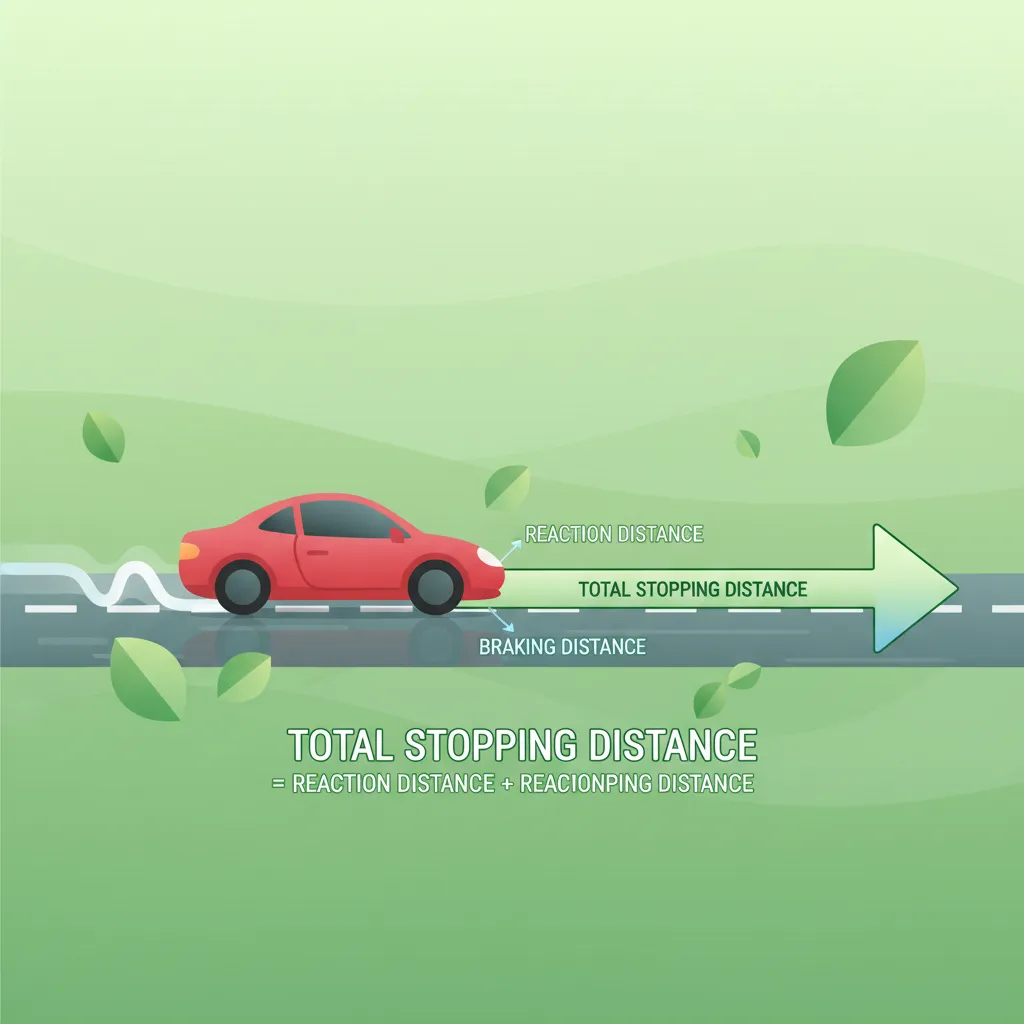
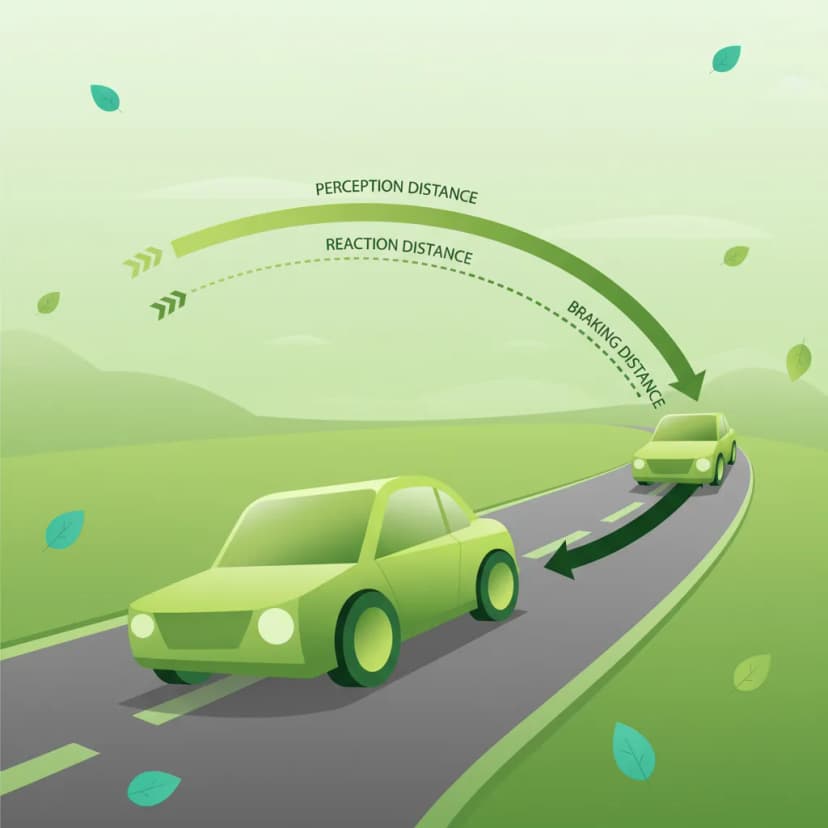
When you need to stop your motorcycle, the total distance traveled is comprised of two distinct phases: the reaction distance and the braking distance. Understanding these two components separately is vital, as different factors influence each one. The sum of these two distances gives you the Total Stopping Distance (TSD).
Reaction distance is the distance your motorcycle travels from the moment you perceive a hazard until you actually begin to apply the brakes. This period accounts for human factors like perception, mental processing, and physical response. It's the time it takes for your brain to register danger, decide to act, and for your body to move your hand or foot to the brake lever/pedal.
The formula for calculating reaction distance is straightforward:
Even a slight increase in your PRT can dramatically increase your reaction distance, especially at higher speeds. For instance, at 60 km/h (approximately 16.7 m/s), a 1.0-second PRT results in 16.7 metres of reaction distance. If your PRT extends to 1.5 seconds due to fatigue, you would travel over 25 metres before even touching the brakes.
Example: If you are traveling at 50 km/h (approx. 13.9 m/s) and your PRT is 1.0 second, your reaction distance will be 13.9 meters.
Braking distance is the physical distance your motorcycle covers from the instant you apply the brakes until it comes to a complete stop. Unlike reaction distance, which is primarily influenced by human factors, braking distance is governed by the laws of physics and the physical characteristics of the motorcycle and its environment.
The general formula for braking distance involves speed, the coefficient of friction, and gravitational acceleration.
Common Misunderstanding: Many new riders assume stopping distance has a linear relationship with speed. However, braking distance is quadratic, meaning small speed increases lead to disproportionately large increases in the distance required to stop.
The Total Stopping Distance (TSD) is simply the sum of the reaction distance and the braking distance. This is the absolute minimum distance your motorcycle needs to stop safely after you first detect a hazard.
Calculating your TSD for various speeds and conditions allows you to establish a safe following distance, a critical skill for the Dutch A1 motorcycle theory exam and everyday riding. For example, if your reaction distance is 15 metres and your braking distance is 25 metres, your TSD is 40 metres. This means you need at least 40 metres of clear space in front of you to stop safely.
Several critical factors directly influence your motorcycle's stopping performance. Understanding how each of these variables affects reaction distance, braking distance, and ultimately, your total stopping distance, is essential for safe riding in the Netherlands.
As highlighted earlier, speed is the single most influential factor in total stopping distance, particularly for braking distance. Because kinetic energy (the energy of motion) increases with the square of speed, so does the distance required to dissipate that energy through braking.
This exponential relationship underscores why speed limits are crucial and why even minor increases above them can lead to drastically longer stopping distances, significantly increasing accident risk. Even if your reaction time remains constant, the added kinetic energy from higher speed demands much more road to stop.
The coefficient of friction (µ) quantifies the amount of grip between your tyres and the road. This value is paramount for determining braking distance.
Riders must constantly assess road conditions and adjust their speed and following distance accordingly. Failing to account for reduced grip is a common cause of accidents, especially in adverse weather.
Your Perception-Reaction Time (PRT) is a personal variable, but it's critically important for calculating reaction distance.
Minimizing Your Reaction Time: Stay alert, avoid distractions, ensure you are well-rested, and never ride under the influence. Regular hazard perception training can also help you identify and react to dangers more quickly.
The incline or decline of the road, known as road gradient (θ), also affects your braking distance by altering the effective gravitational force acting on your motorcycle.
While Dutch roads are generally flat, sections like bridges, overpasses, or specific routes can have noticeable gradients. Riders must anticipate these changes and adjust their speed and following distance accordingly, particularly when going downhill.
The overall mass of your motorcycle, including yourself, a passenger, and any luggage, also plays a role in stopping distance.
Overloading: Exceeding the manufacturer's maximum load limits not only increases braking distance but can also negatively affect handling, stability, and tyre performance, creating a dangerous situation.
Dutch traffic law, primarily the Rijkswegenverkeersreglement (RVV) 1990, contains several articles that implicitly or explicitly relate to safe stopping distances. Adherence to these regulations is mandatory for all road users, including A1 motorcyclists.
Article 6.3 states that "a driver must keep a distance that enables safe stopping under normal conditions." This foundational rule ensures that you maintain enough space in front of your motorcycle to react and brake safely if the vehicle ahead slows or stops suddenly. While it doesn't specify an exact distance in metres, it implies that your following distance must always be greater than or equal to your calculated Total Stopping Distance (TSD) for the prevailing conditions.
Article 30 specifies that "load must not exceed the limits prescribed by the manufacturer." As discussed, overloading a motorcycle increases its mass and therefore its braking distance. Exceeding these limits is not only illegal but also severely compromises your ability to stop safely and maintain control.
While not directly about stopping distance, Article 6.2 implicitly supports the principles discussed by stating that "drivers must exercise due care and attention." Failure to react promptly to hazards due to distraction, fatigue, or negligence, which would lead to an extended PRT and therefore a longer reaction distance, could be considered a violation of this general duty of care.
Misjudging stopping distances is a significant contributor to road accidents. Be aware of these common pitfalls:
Let's explore how stopping distance calculations apply to various riding situations. These examples illustrate the importance of adapting your riding behavior to different contexts.
Understanding the theory of stopping distances is a critical step in becoming a safe and responsible motorcyclist in the Netherlands. Continue to practice hazard perception and integrate these calculations into your daily riding mindset. The more you anticipate and adapt, the safer you will be.
Lesson content overview
Explore all units and lessons included in this driving theory course.
Explore search topics learners often look for when studying Calculation of Stopping Distances. These topics reflect common questions about road rules, driving situations, safety guidance, and lesson level theory preparation for learners in the Netherlands.
Browse additional driving theory lessons that cover connected traffic rules, road signs, and common driving situations related to this topic. Improve your understanding of how different rules interact across everyday traffic scenarios.
Explore how speed, road conditions, rider alertness, and vehicle load significantly impact motorcycle stopping distances. Understand the physics behind reaction and braking distances for safe Dutch road navigation.
This lesson breaks down the concept of total stopping distance into its two key parts: the distance traveled during your reaction time and the distance the motorcycle travels after the brakes are applied. You will learn the formulas and rules of thumb for estimating these distances at various speeds. The content highlights how factors like rider fatigue, road surface conditions, and tyre quality can significantly increase your overall stopping distance.

This lesson provides a detailed explanation of the two-second rule as a simple yet effective method for maintaining a safe following distance in good conditions. It breaks down the concept of total stopping distance into its two components: reaction distance (the distance traveled before applying the brakes) and braking distance (the distance traveled while braking). Understanding this calculation is fundamental for appreciating the need for a sufficient space cushion to react to sudden events ahead.

This lesson reinforces the critical relationship between adverse conditions, reduced traction, and massively increased stopping distances. It provides a clear framework for how much riders need to increase their following distance and reduce their overall speed to maintain a safe margin for error. The curriculum teaches riders to constantly reassess their speed based on visual feedback from the road surface and the level of visibility, ensuring they can always stop within the distance they can clearly see.
This lesson explains why the standard two-second rule is insufficient in adverse conditions and requires extension. It details how factors like rain, fog, and darkness reduce both visibility and tire grip, thereby significantly increasing total stopping distance. The content provides practical guidelines, such as extending the following gap to four seconds or more in the wet, to ensure the rider always has enough time and space to stop safely, regardless of the conditions.
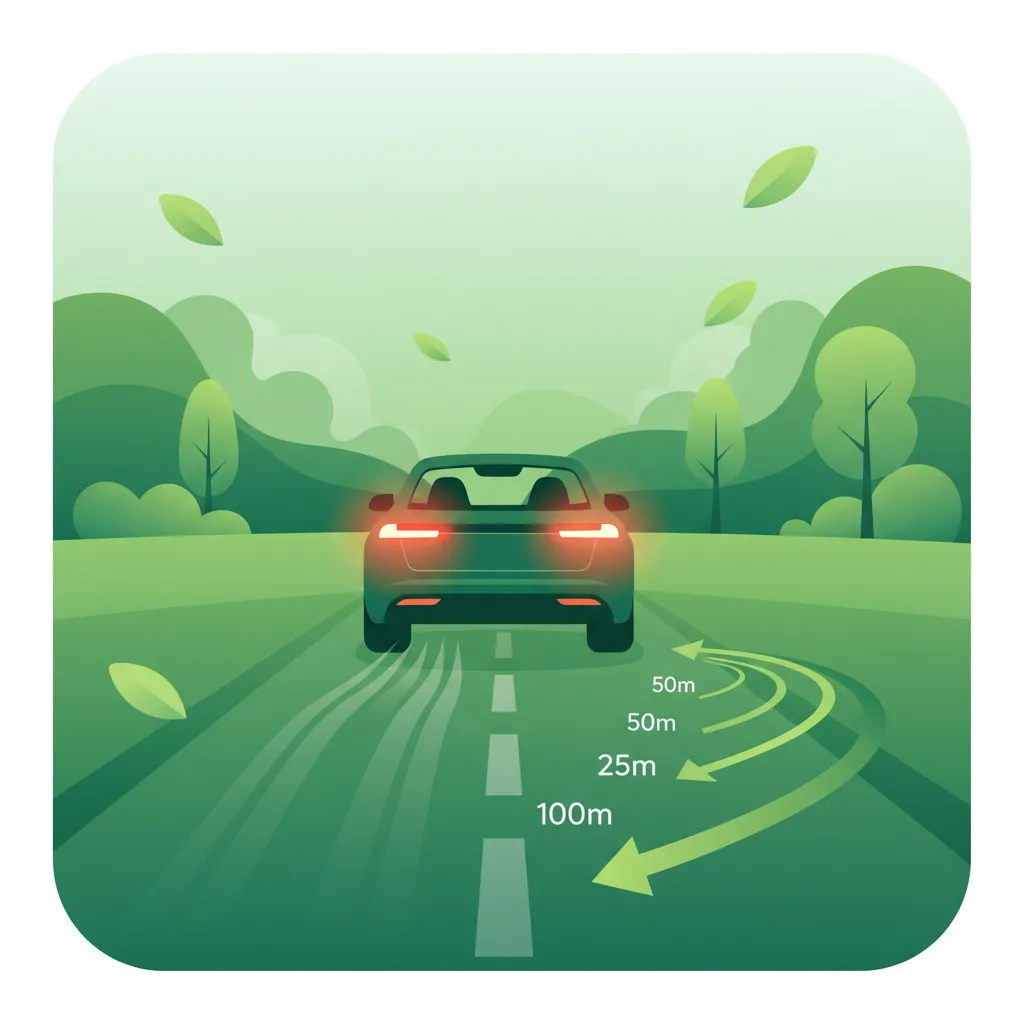
This lesson explains the components of the total stopping distance: the reaction distance (distance traveled before you start braking) and the braking distance (distance traveled while braking). You will learn the general formulas and rules of thumb for estimating these distances at different speeds. Understanding that braking distance increases exponentially with speed is a critical piece of knowledge that reinforces the importance of maintaining safe speeds and following distances.

This lesson focuses on the crucial safety practice of maintaining an adequate following distance to the vehicle ahead. It explains the 'two-second rule' as a minimum baseline and emphasizes the need to increase this gap to three or four seconds in adverse conditions like rain or poor visibility. For a motorcyclist, this 'space cushion' is a critical buffer that provides the necessary time and space to react to sudden hazards or stop safely.

This lesson revisits the concept of following distance, emphasizing its heightened importance in the high-speed motorway environment. It explains how increased speeds dramatically lengthen both reaction and braking distances, making a minimum two-to-three-second gap absolutely critical for safety. The content also stresses the importance of maintaining a space cushion to the sides, creating potential escape routes in case of sudden incidents in adjacent lanes.
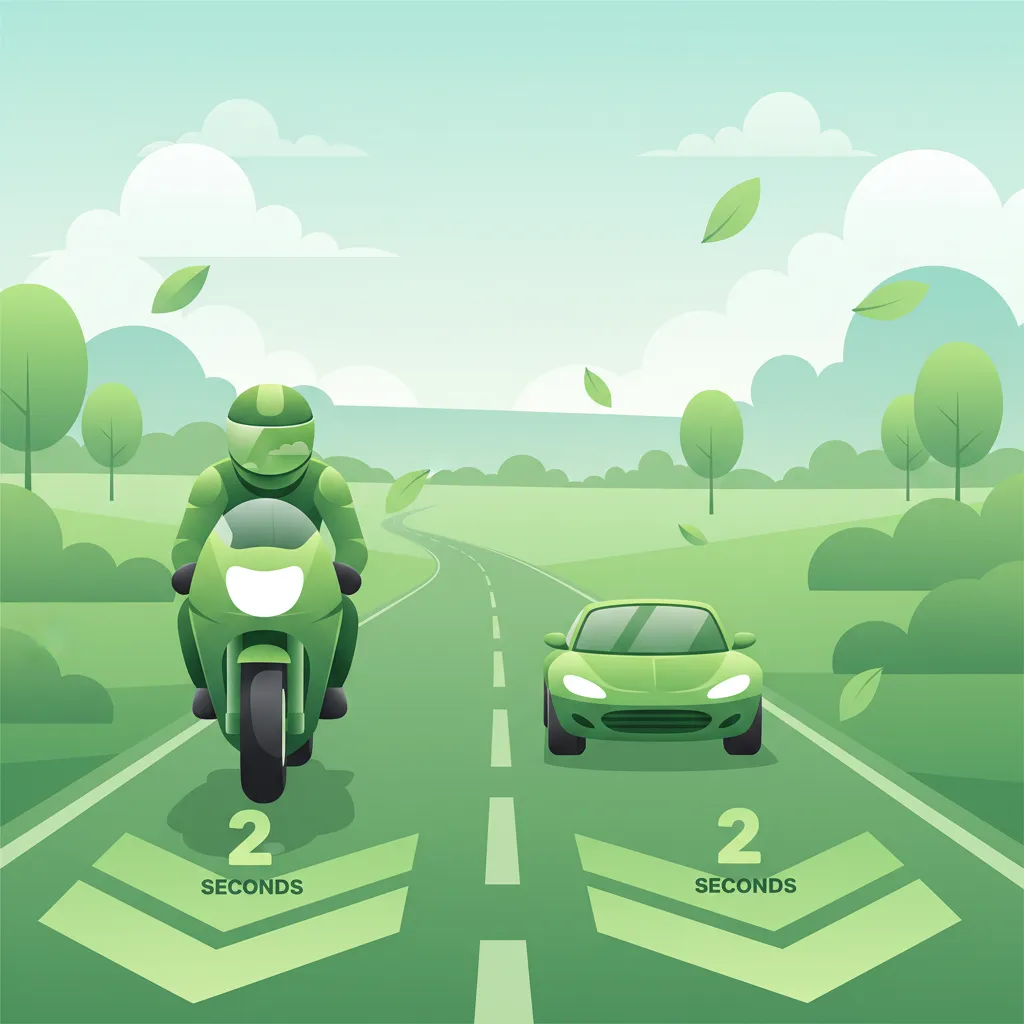
This lesson explains the two-second rule, a simple and effective technique for ensuring you have enough time to react and stop safely. You will learn how to use a fixed object on the roadside to measure the time gap between your motorcycle and the vehicle ahead. The content emphasizes why motorcyclists may need to extend this gap to three or more seconds in poor weather, at high speeds, or in heavy traffic.

This lesson provides a comprehensive guide to safe and effective deceleration on a motorcycle. You will learn the principles of controlled braking, including the progressive application of both the front and rear brakes to maximize stopping power while maintaining stability. The content also explains the role of engine braking in managing speed and how the Anti-lock Braking System (ABS) helps prevent wheel lock-up during hard braking.
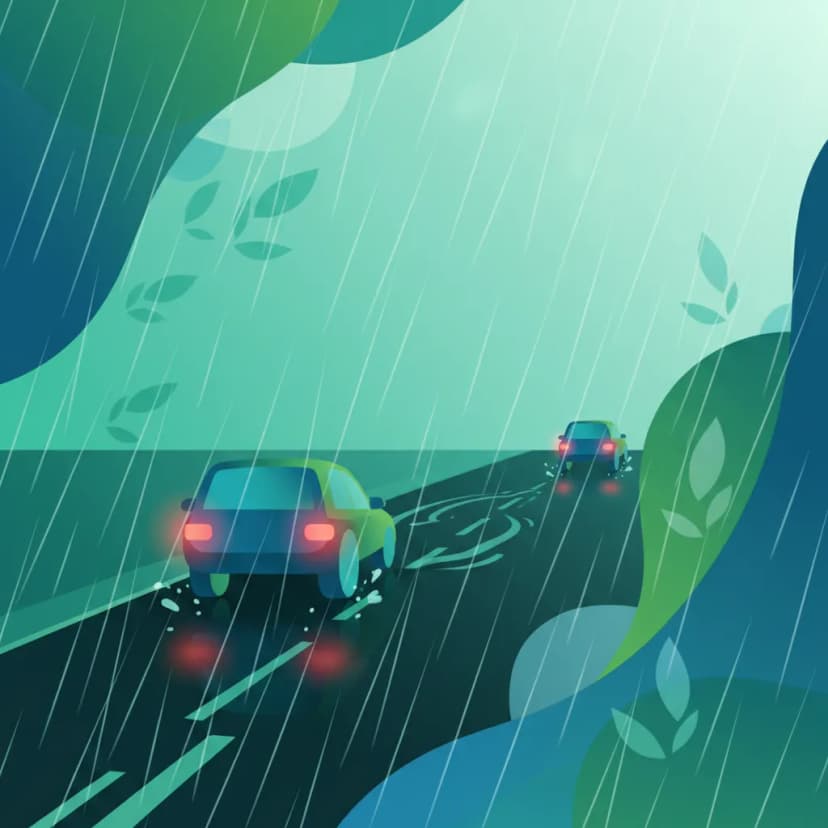
This lesson focuses on the crucial safety strategy of adjusting your riding for adverse conditions. You will learn that on wet roads, your braking distance can double, necessitating a much larger following distance (e.g., a four-second gap or more). The content covers the risks of reduced visibility in fog and at night, and the destabilizing effects of strong crosswinds, explaining how a greater space cushion provides the time and space needed to react safely.
Apply stopping distance theory to practical riding situations including wet roads, downhill gradients, and urban traffic. Learn how to adjust speed and distance for safety and RVV 1990 compliance.
This lesson provides a detailed explanation of the two-second rule as a simple yet effective method for maintaining a safe following distance in good conditions. It breaks down the concept of total stopping distance into its two components: reaction distance (the distance traveled before applying the brakes) and braking distance (the distance traveled while braking). Understanding this calculation is fundamental for appreciating the need for a sufficient space cushion to react to sudden events ahead.
This lesson breaks down the concept of total stopping distance into its two key parts: the distance traveled during your reaction time and the distance the motorcycle travels after the brakes are applied. You will learn the formulas and rules of thumb for estimating these distances at various speeds. The content highlights how factors like rider fatigue, road surface conditions, and tyre quality can significantly increase your overall stopping distance.
This lesson reinforces the critical relationship between adverse conditions, reduced traction, and massively increased stopping distances. It provides a clear framework for how much riders need to increase their following distance and reduce their overall speed to maintain a safe margin for error. The curriculum teaches riders to constantly reassess their speed based on visual feedback from the road surface and the level of visibility, ensuring they can always stop within the distance they can clearly see.
This lesson explains why the standard two-second rule is insufficient in adverse conditions and requires extension. It details how factors like rain, fog, and darkness reduce both visibility and tire grip, thereby significantly increasing total stopping distance. The content provides practical guidelines, such as extending the following gap to four seconds or more in the wet, to ensure the rider always has enough time and space to stop safely, regardless of the conditions.
This lesson focuses on the crucial safety practice of maintaining an adequate following distance to the vehicle ahead. It explains the 'two-second rule' as a minimum baseline and emphasizes the need to increase this gap to three or four seconds in adverse conditions like rain or poor visibility. For a motorcyclist, this 'space cushion' is a critical buffer that provides the necessary time and space to react to sudden hazards or stop safely.
This lesson revisits the concept of following distance, emphasizing its heightened importance in the high-speed motorway environment. It explains how increased speeds dramatically lengthen both reaction and braking distances, making a minimum two-to-three-second gap absolutely critical for safety. The content also stresses the importance of maintaining a space cushion to the sides, creating potential escape routes in case of sudden incidents in adjacent lanes.

This lesson clarifies the specific Dutch regulations concerning stopping and parking for motorcycles, including designated parking bays and rules for parking on pavements. It also covers the mandatory procedures for safely navigating tunnels, such as required lighting, lane discipline, and actions to take during a breakdown or emergency. By understanding these rules, riders can avoid fines and navigate these specific traffic situations with confidence.
This lesson explains the two-second rule, a simple and effective technique for ensuring you have enough time to react and stop safely. You will learn how to use a fixed object on the roadside to measure the time gap between your motorcycle and the vehicle ahead. The content emphasizes why motorcyclists may need to extend this gap to three or more seconds in poor weather, at high speeds, or in heavy traffic.

This lesson focuses on the legal requirements and safe practices for riding near pedestrian crossings ('zebrapaden') and designated school zones. It details the absolute obligation to yield to pedestrians on or about to use a crossing and the need for significantly reduced speeds and heightened vigilance in areas with children. The content underscores the importance of anticipation and being prepared for unpredictable movements from vulnerable road users to prevent serious incidents.
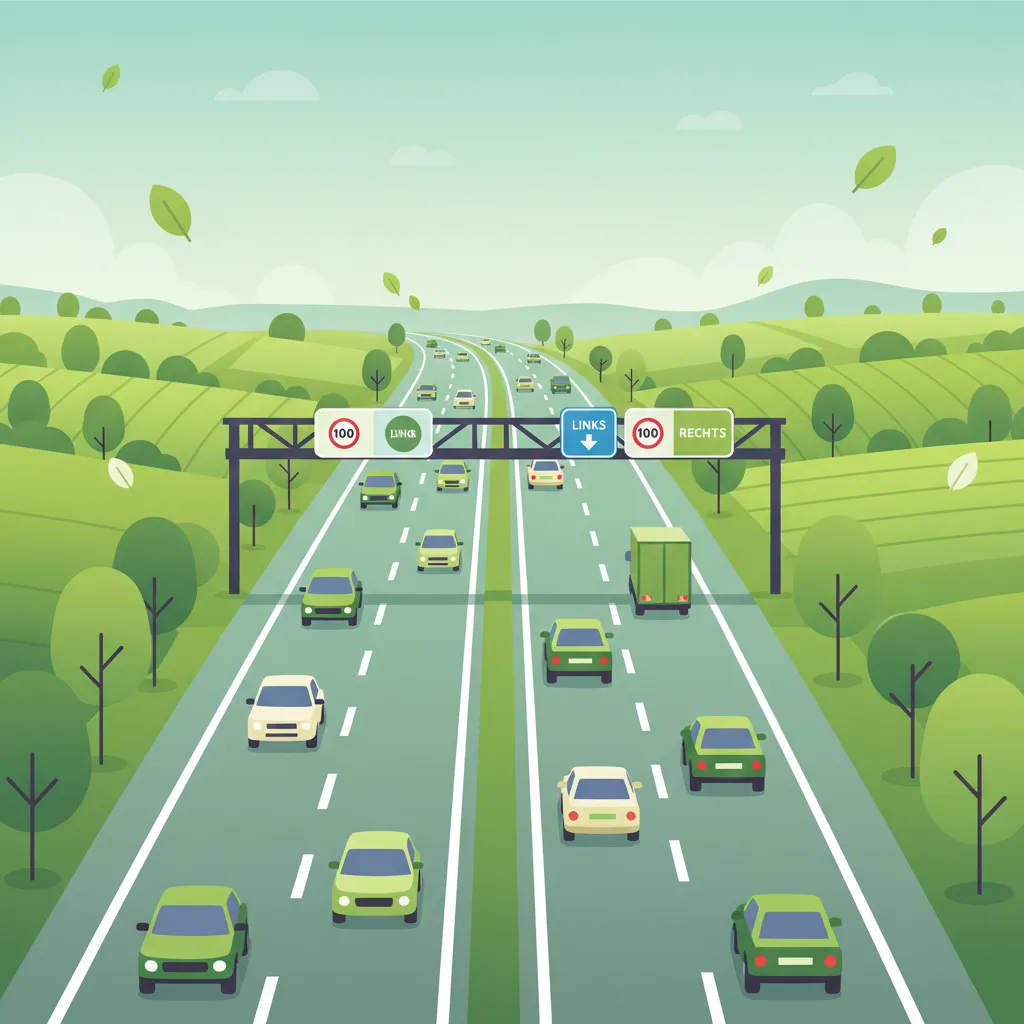
This lesson covers the specific articles of the Dutch Road Traffic Act that apply to motorways, with a primary focus on the strict rule of keeping to the rightmost available lane unless overtaking. It explains the legal and safety reasons for only passing on the left and discusses the correct positioning within a lane for maximum visibility and safety. The content also addresses the nuances of lane usage during heavy congestion, ensuring riders comply with the law and contribute to smooth traffic flow.
Find clear answers to common questions learners have about Calculation of Stopping Distances. Learn how the lesson is structured, which driving theory objectives it supports, and how it fits into the overall learning path of units and curriculum progression in the Netherlands. These explanations help you understand key concepts, lesson flow, and exam focused study goals.
Reaction distance is the distance your motorcycle travels from the moment you perceive a hazard to the moment you physically start braking. Braking distance is the distance your motorcycle covers from when you apply the brakes until it comes to a complete stop. Total stopping distance is the sum of these two.
Speed has a significant, non-linear effect. Your reaction distance increases in direct proportion to your speed. However, your braking distance increases with the square of your speed, meaning doubling your speed quadruples your braking distance. This is why maintaining appropriate speed is crucial for safety.
Several factors are critical: rider condition (alertness, fatigue, impairment), tire condition and pressure, brake system condition, road surface grip (dry, wet, icy, gravel), and the motorcycle's weight (including passenger and luggage). All these elements must be considered for safe stopping.
The CBR exam doesn't typically ask for precise calculations but tests your understanding of the principles. You’ll need to know how speed, road conditions, and rider factors affect stopping distances and how to apply this to maintain safe following distances. This lesson provides that foundational knowledge.
While this lesson is theoretical, on the road, use the two-second rule (or longer in adverse conditions) as a guideline. Mentally note when the vehicle in front passes a fixed point and count two seconds to see if you'd reach that same point. Adjust your following distance based on speed and road conditions.