
Welcome to the A1 motorcycle theory lesson on Hazard Perception at Varying Speeds. This module is crucial for understanding 'gevaarherkenning' – the ability to anticipate and react to hazards, a key part of the Dutch CBR theory exam. You'll learn how your speed directly influences your field of vision and reaction time, preparing you for complex traffic situations.

Welcome to this crucial lesson within your Dutch A1 Motorcycle Theory course. Hazard perception, known in Dutch as gevaarherkenning, is a fundamental skill for every motorcyclist and a vital component of the CBR theory exam. This lesson will equip you with the knowledge to actively identify, interpret, and react to potential dangers on the road, ensuring you can make proactive decisions rather than merely reactive ones. Mastering this skill significantly reduces your risk of accidents and contributes to a safer riding experience for yourself and others.
As an A1 motorcyclist, you operate a nimble yet vulnerable vehicle on the road. Your ability to perceive hazards swiftly and accurately is paramount for your safety and the safety of those around you. This section introduces the core principles behind effective hazard perception.
The Dutch CBR theory exam places significant emphasis on gevaarherkenning. This isn't just about memorizing rules; it's about demonstrating an understanding of how to apply them in dynamic, real-world traffic situations. A strong grasp of hazard perception ensures you can navigate complex scenarios, anticipate potential conflicts, and make timely, safe decisions. This knowledge translates directly into practical riding skills, making you a more competent and responsible rider.
The relationship between your speed, your field of vision, and the time you have to react is central to hazard perception. As a motorcyclist increases speed, two critical and interconnected effects occur:
Understanding these effects is the first step towards mitigating their risks. You must learn to actively compensate for these physiological limitations through effective riding techniques and speed management.
To counter the challenges posed by speed, motorcyclists rely on several core principles. These principles form the bedrock of safe and anticipatory riding.
The Perception-Reaction-Braking (PRB) cycle is a sequential process that every rider undergoes when encountering a hazard. It defines the time and distance needed to safely avoid a collision:
Each stage requires time and distance, and an effective PRB cycle is paramount for guaranteeing sufficient time to stop or evade safely. This cycle directly influences required following distances and appropriate speed limits for specific road and traffic conditions.
The Speed-Dependent Field of Vision (SDFV) describes how your visual acuity and peripheral awareness diminish as your speed increases. At higher speeds, your brain processes more information from directly ahead, leading to:
This phenomenon necessitates more focused and systematic scanning, and earlier identification of hazards, especially at higher speeds. It highlights why relying solely on what's directly in front of you is dangerous.
A Safe Following Distance (SFD) is the longitudinal gap you maintain between your motorcycle and the vehicle ahead. Its primary purpose is to provide adequate time for the entire PRB cycle, preventing rear-end collisions and allowing you to react safely to any sudden actions by the vehicle in front. The SFD should not be a fixed physical distance (like a specific number of metres) but rather a time-based measure, typically a minimum of 2 seconds under ideal conditions. This time-based approach ensures that the physical distance automatically adjusts to your current speed.
To compensate for the natural limitations of the SDFV, particularly at higher speeds, a motorcyclist must employ a systematic scanning rate (SR). This involves continuously moving your gaze to acquire new visual information from various areas of the road environment. A consistent scanning pattern ensures that no critical area remains unobserved for longer than your acceptable PRT window, enabling you to detect hazards early, even those outside your immediate central vision.
Anticipatory riding is a proactive approach to safety. Instead of merely reacting to events as they unfold, you actively assess the probable actions of other traffic participants based on observable cues. This involves:
This approach effectively extends your PRB window by giving you more time to process information and initiate a response. It shifts you from being a reactive rider to a proactive one, significantly reducing the element of surprise.
Let's explore the individual components of hazard perception in greater detail, providing practical implications and considerations for A1 motorcyclists.
Perception-Reaction Time (PRT) is the time elapsed from when a hazard first becomes visible to the moment you initiate a physical response. It's not instantaneous and varies based on several factors:
For motorcyclists, an average PRT is often estimated between 0.7 and 1.5 seconds. To put this into perspective: at 80 km/h (approximately 22 metres per second), a 1.5-second PRT means your motorcycle will travel 33 metres before you even begin to take any action. This crucial distance is often underestimated by new riders. Dutch law (RVV Art. 2) mandates riders to avoid creating dangerous situations, which inherently requires considering your PRT.
Braking Distance (BD) is the distance your motorcycle travels from the moment you initiate braking until it comes to a complete stop. Unlike PRT, which is largely human-dependent, BD is governed by physics and influenced by:
The total stopping distance is the sum of your perception-reaction distance and your braking distance. Under RVV Art. 22, the functional use of both front and rear brakes is mandatory, as it optimizes your stopping capability.
The narrowing of your visual field at speed is a natural physiological response. To counteract this:
While no specific RVV article dictates how your peripheral vision works, RVV Art. 5 imposes a duty of care to adapt your speed to road visibility, which includes your personal visual limitations at speed.
A systematic scanning technique is vital for comprehensive hazard detection. The "5-second scan" is a recommended pattern for A1 motorcyclists, ensuring continuous awareness of your surroundings. This cycle should be repeated every 5 seconds under normal conditions and even more frequently in complex environments.
Scan Far Ahead (2 seconds): Look 12-15 seconds down the road for overall traffic flow, potential obstacles, and road conditions. This helps identify hazards before they enter your immediate zone.
Scan Near (1 second): Check the area directly in front of your motorcycle (3-6 seconds ahead) for immediate hazards like potholes, debris, or sudden braking by the vehicle ahead.
Scan Left and Right (1 second): Quickly sweep your eyes across intersections, driveways, and adjacent lanes for lateral hazards (e.g., vehicles pulling out, pedestrians, cyclists).
Check Mirrors (1 second): Glance at your rear-view mirrors to assess traffic behind you, including approaching vehicles and your escape routes.
This continuous process, required by CBR practical test guidelines, prevents critical areas from remaining unobserved, compensating for your narrowed field of vision at speed.
Anticipatory riding moves you from a reactive stance to a proactive one. It's about using observational cues to predict the likely actions of other road users, allowing you to create a safety margin.
Identify Cues: Look for brake lights, turn signals, vehicles slowing down, drivers turning their heads (shoulder checks), vehicles drifting within their lane, and even pedestrians or cyclists looking towards the road.
Model Intent: Based on these cues, estimate what the other road user is likely to do next. For example, a car slowing down and indicating left at an intersection is likely to turn.
Build a Decision Buffer: Adjust your speed, lane position, or prepare to brake/swerve before the predicted conflict point arises. This gives you extra time to react if your prediction is correct, or to adjust if it's incorrect.
For example, observing a delivery van parked by the roadside with its hazard lights on should prompt you to anticipate a door opening, a person emerging, or the vehicle suddenly pulling away. RVV Art. 2, obliging road users to avoid dangerous situations, strongly supports this proactive mindset.
Understanding the nature of a hazard helps you prioritize your scanning and response.
It's important to remember that a static hazard can quickly become a dynamic one. A parked car, for instance, becomes a dynamic hazard if its driver suddenly opens a door or pulls out into traffic without warning.
The Speed-Adjusted Safe Following Distance (SASFD) is the most effective way to ensure you maintain an adequate gap for your PRB cycle. It's calculated as a time interval, typically a minimum of 2 seconds for motorcycles under good conditions, which scales with your speed.
The formula is: Where:
Practical Meaning:
This method inherently accounts for the quadratic increase in braking distance with speed. The CBR requires maintaining an "adequate distance" (RVV Art. 5), reinforcing the importance of this time-based approach. Never rely on fixed distance rules like "one bike length" without adjusting for speed, as this is a common misunderstanding and a dangerous practice.
Dutch traffic legislation, primarily the Reglement Verkeersregels en Verkeerstekens 1990 (RVV 1990), codifies many aspects of hazard perception and safe riding. As an A1 motorcyclist, you are bound by these rules, which form the legal framework for safe road participation in the Netherlands.
A road user must not behave in such a way that danger is caused on the road, or that traffic is hindered or can be hindered.
This fundamental article places a broad duty of care on all road users, including A1 motorcyclists. It implicitly requires you to adapt your speed and riding style to the conditions, ensuring that your PRB cycle can accommodate any foreseeable hazards. Choosing an excessive speed that limits your perception and reaction time is a direct violation of this article, as it inherently creates a dangerous situation.
A driver must keep sufficient distance from the vehicle in front to be able to stop in time if that vehicle slows down or stops.
This article directly mandates the maintenance of a safe following distance. It reinforces the importance of the Speed-Adjusted Safe Following Distance (SASFD) concept. The "sufficient distance" must be greater in adverse conditions (e.g., wet roads, poor visibility) to compensate for extended braking distances and reduced visibility.
Both the front and rear brakes of a motor vehicle must be functional and used when necessary.
For motorcycles, using both front and rear brakes is critical for achieving optimal stopping distances. Relying solely on one brake (e.g., only the rear brake) can lead to significantly longer stopping distances, instability, and potential loss of control. In situations where hazard perception time is limited, the ability to execute an efficient emergency stop using both brakes is paramount.
Road users must obey traffic signs, traffic lights, and traffic controllers.
When roadworks or other temporary restrictions are in place, specific signage (e.g., reduced speed limits, lane closures, warning signs for loose gravel) is used to alert drivers to changes in the road environment. Obeying these signs is mandatory and crucial for safety. These signs provide external cues that compensate for potentially reduced perception or altered conditions, especially at higher speeds where changes might be difficult to detect early.
Drivers must yield to pedestrians on pedestrian crossings and to cyclists and moped riders on cycle paths or cycle lanes when turning.
This article highlights specific right-of-way rules, particularly concerning vulnerable road users like pedestrians and cyclists. When your hazard perception identifies these users, you must be prepared to give way, even if it means reducing your speed significantly or stopping. Vulnerable users often have limited warning time and are at higher risk in a collision, making it a legal and ethical duty for motorcyclists to exercise extra caution.
Effective hazard perception is not static; it constantly adapts to changing environmental and traffic conditions. Your ability to adjust your speed, following distance, and scanning techniques based on context is a hallmark of a skilled motorcyclist.
Wet roads drastically reduce the tyre-road friction coefficient. This means:
Adaptations:
Night riding presents unique challenges due to limited visibility:
Adaptations:
Urban environments are characterized by high traffic density, frequent intersections, and numerous vulnerable road users.
Adaptations:
While motorways (snelwegen) often have higher speed limits and fewer immediate hazards, the consequences of misjudging speed are severe.
Adaptations:
Carrying a passenger or heavy luggage significantly alters your motorcycle's dynamics:
Adaptations:
Any weather condition that reduces visibility directly impacts your ability to perceive hazards.
Adaptations:
Vulnerable road users (VRUs) – pedestrians, cyclists, children, and animals – pose unique challenges.
Adaptations:
Road surface changes can significantly affect your motorcycle's grip and stability, directly impacting your PRB cycle.
Adaptations:
The presence of emergency vehicles (police, ambulance, fire brigade) with flashing lights and sirens requires immediate and decisive hazard perception.
Adaptations:
A mechanical defect on your motorcycle (e.g., faulty headlight, worn tyres, reduced brake effectiveness) reduces your ability to perceive hazards or react safely.
Adaptations:
Being aware of common hazard perception mistakes can help you proactively avoid them:
Safety on a motorcycle isn't just about rules; it's rooted in understanding human physiology and physics:
Dutch traffic statistics highlight the importance of these insights: CBR data often shows that a significant percentage of motorcycle accidents involve inappropriate speed relative to the perceived hazard distance, reinforcing the need for continuous awareness and adaptation.
Here are key terms from this lesson that are essential for your understanding and your CBR exam:
Mastering hazard perception, or gevaarherkenning, is an ongoing process that begins with understanding the fundamental principles laid out in this lesson. By internalizing the Perception-Reaction-Braking cycle, recognizing the impact of speed on your field of vision, and consistently applying systematic scanning and anticipatory riding techniques, you enhance your safety margins and become a more skilled and responsible motorcyclist.
Always remember that your speed choice is paramount. It dictates the time you have to react, the distance you need to stop, and the breadth of your visual awareness. Adapt your speed and riding behaviour to every condition – be it weather, traffic density, road surface, or visibility – and you will be well on your way to navigating the roads safely and confidently as an A1 motorcyclist in the Netherlands.
Lesson content overview
Explore all units and lessons included in this driving theory course.
Explore search topics learners often look for when studying Hazard Perception at Varying Speeds. These topics reflect common questions about road rules, driving situations, safety guidance, and lesson level theory preparation for learners in the Netherlands.
Browse additional driving theory lessons that cover connected traffic rules, road signs, and common driving situations related to this topic. Improve your understanding of how different rules interact across everyday traffic scenarios.
Understand the critical relationship between motorcycle speed, visual field contraction, and reaction time. Learn how these factors influence hazard perception for the Dutch CBR theory exam.

This lesson reinforces the critical relationship between adverse conditions, reduced traction, and massively increased stopping distances. It provides a clear framework for how much riders need to increase their following distance and reduce their overall speed to maintain a safe margin for error. The curriculum teaches riders to constantly reassess their speed based on visual feedback from the road surface and the level of visibility, ensuring they can always stop within the distance they can clearly see.
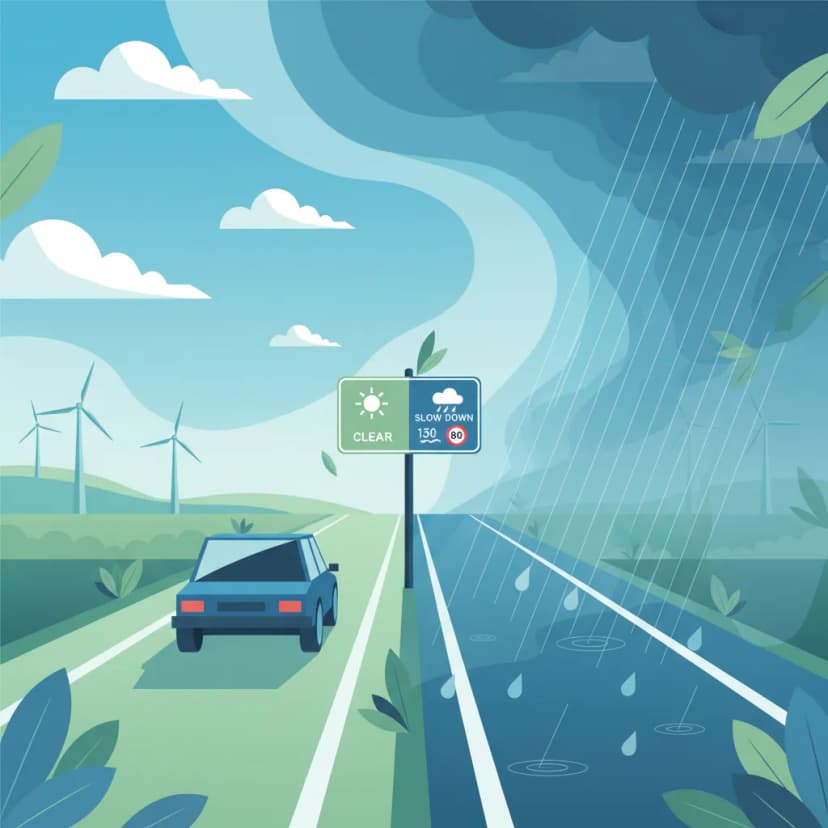
The posted speed limit is a maximum, not a target. This lesson teaches the crucial skill of adapting your speed to prevailing conditions. You will learn how to assess factors like traffic density, poor weather (rain, fog), limited visibility (at night), and slippery road surfaces. Adjusting your speed downwards in these situations provides you with more time to react to hazards and significantly reduces the risk of losing control or being involved in a collision.

Your ability to react quickly to danger depends on your reaction time, which is affected by alertness, fatigue, and distractions. This lesson explores these factors and teaches proactive hazard perception skills. You will learn how to scan the road ahead, identify potential risks early (e.g., a child near the road, a car waiting to pull out), and predict the actions of other road users. This anticipatory mindset is more effective than simply reacting to events as they happen.

This lesson focuses on the unique demands of riding at sustained high speeds on motorways ('snelwegen'). It covers essential topics such as strict lane discipline, safe overtaking procedures, and maintaining a greater following distance to compensate for higher reaction and braking times. The content also addresses the physical and mental challenges, including managing wind blast, increased noise levels, and maintaining heightened situational awareness over long distances to combat fatigue.

This lesson teaches the crucial skill of assessing road surfaces and adjusting speed accordingly to maintain maximum traction. It covers a variety of hazardous conditions, including wet asphalt, loose gravel, oil patches, metal manhole covers, and painted road markings, all of which can significantly reduce grip. Riders will learn to constantly scan the road ahead, identify potential traction-reducing surfaces, and proactively manage their speed to prevent slides and loss of control.

This lesson addresses the dual challenge of poor visibility: being able to see the road ahead and ensuring other road users can see you. It covers techniques for riding in fog and heavy rain, such as using appropriate lights and reducing speed to match sight distance. The lesson also discusses practical issues like helmet visor fogging and the importance of wearing high-visibility or reflective clothing to enhance conspicuity in low-light conditions.
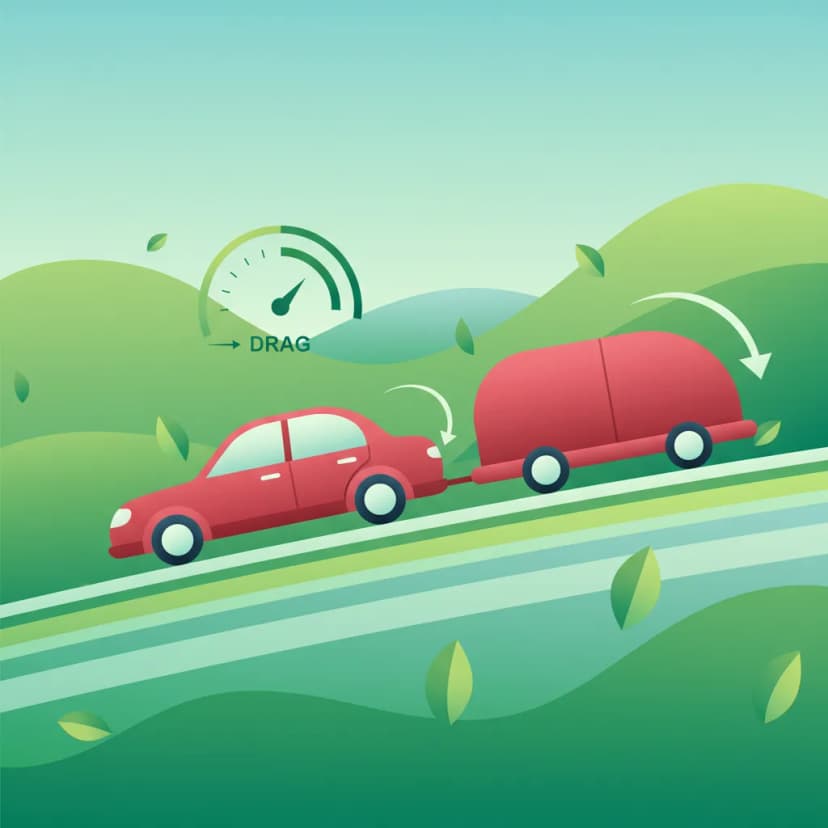
This lesson examines how adding weight, such as a pillion passenger or luggage, and changes in aerodynamics affect a motorcycle's performance and stability at speed. It explains the impact on acceleration, braking distances, and cornering ability due to a higher center of gravity and increased mass. Riders will learn how to adjust their speed and control inputs to safely manage the altered handling characteristics, especially when riding in windy conditions or at high motorway speeds.

This lesson explains why the standard two-second rule is insufficient in adverse conditions and requires extension. It details how factors like rain, fog, and darkness reduce both visibility and tire grip, thereby significantly increasing total stopping distance. The content provides practical guidelines, such as extending the following gap to four seconds or more in the wet, to ensure the rider always has enough time and space to stop safely, regardless of the conditions.

This lesson explains how to respond to variable speed limits shown on overhead electronic signs, which are used to manage traffic flow in real-time. You will learn why these limits are adjusted for factors like congestion, accidents, or bad weather, and the legal requirement to obey them. The content focuses on the importance of anticipatory riding, scanning far ahead for these signs to allow for smooth and safe speed adjustments.
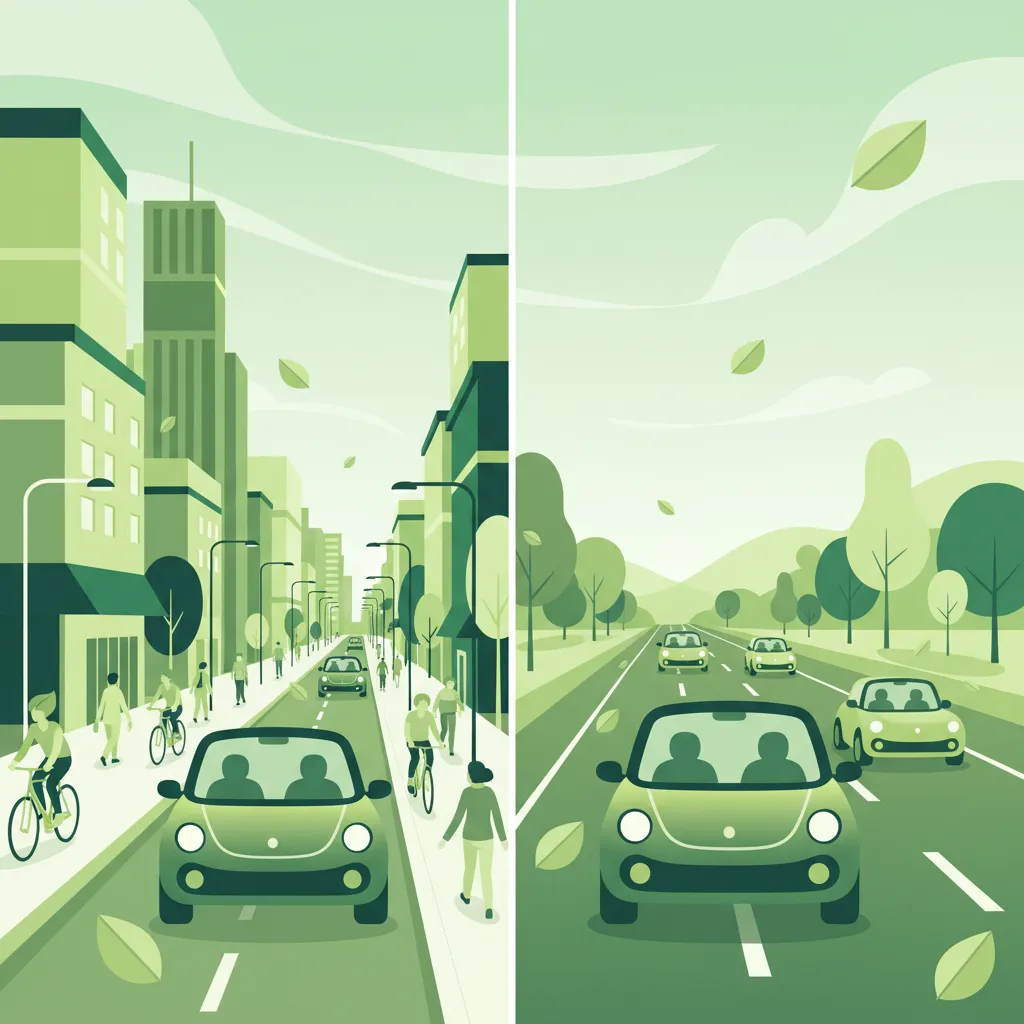
This lesson compares the different skills and awareness levels required for riding in dense urban environments versus high-speed express environments. It discusses managing frequent hazards like intersections and vulnerable road users in the city, contrasted with the need for high-speed stability, smooth lane changes, and managing merging traffic on motorways. Understanding how to adapt riding style is key to navigating these distinct settings safely.
Explore advanced scanning techniques and proactive riding strategies to improve hazard identification and anticipation for A1 motorcyclists. Essential knowledge for safe navigation and the CBR theory test.

This lesson teaches you to be a proactive rather than a reactive rider by developing superior hazard perception skills. You will learn to scan your environment constantly—near, far, and to the sides—and to identify potential risks, such as a car waiting to turn or a pedestrian looking to cross. The content focuses on asking 'what if?' to predict the actions of others and position yourself for safety in advance.

This lesson focuses on training the brain to become a more effective hazard detection system. It introduces psychological techniques like 'commentary riding,' where the rider verbalizes all perceived hazards and their planned responses, which enhances focus and processing. The practice of constantly running 'what-if' scenarios helps to pre-plan reactions to potential events, reducing the time it takes to respond if a real hazard materializes, turning anticipation into a deeply ingrained habit.

This lesson introduces the Dutch concept of 'voorspellend rijgedrag,' or anticipatory riding, a proactive approach to safety. It teaches motorcyclists how to look beyond the immediate vehicle in front and scan for clues that predict the actions of other road users, such as turn signals, wheel direction, and driver head movement. By anticipating potential conflicts before they happen, riders can position themselves to avoid danger and ensure a smoother, safer journey through complex traffic.
Your ability to react quickly to danger depends on your reaction time, which is affected by alertness, fatigue, and distractions. This lesson explores these factors and teaches proactive hazard perception skills. You will learn how to scan the road ahead, identify potential risks early (e.g., a child near the road, a car waiting to pull out), and predict the actions of other road users. This anticipatory mindset is more effective than simply reacting to events as they happen.

How you perceive risk directly influences your riding behavior. This lesson encourages you to honestly assess your own attitude towards risk, highlighting the dangers of overconfidence, especially in new riders. It teaches you to move beyond simply seeing hazards to actively anticipating them. By asking 'what if?' questions (e.g., 'What if that car pulls out?'), you can mentally prepare for potential dangers and create a safer space cushion around yourself at all times.

This lesson details the interpretation of Dutch warning signs, which alert riders to potential dangers and changing road conditions. You will study signs indicating sharp curves, road narrowing (BORD 30), and temporary hazards like road works (BORD 36), learning to adjust speed and road position proactively. The content emphasizes how the A2 motorcycle's characteristics require earlier hazard recognition and response compared to other vehicles for maintaining control.

This lesson introduces riders to formal risk assessment models, such as the 'Identify, Predict, Decide, Execute' (IPDE) framework, to structure their thinking in dynamic traffic situations. This provides a systematic mental checklist for constantly scanning the environment, identifying potential threats, predicting their likely outcomes, deciding on a safe course of action, and executing it smoothly. Using such a model helps to ensure that no critical information is missed, even under pressure.

This lesson focuses on the unique and densely packed hazards found in urban traffic environments. It teaches riders to develop a systematic scanning pattern to identify potential risks from multiple sources simultaneously, such as pedestrians stepping off curbs, car doors opening unexpectedly, and buses pulling out. The content also emphasizes the importance of managing speed and always having an 'escape route' planned in case a hazard suddenly materializes in the complex city landscape.

This lesson synthesizes many of the course's concepts into the overarching philosophy of advanced defensive riding ('verdedigend rijden'). It defines this as a proactive mindset where the rider constantly scans for potential hazards, anticipates the worst-case scenario from other road users, and positions themselves to have time and space to react. This approach moves beyond simply following the rules to actively managing the environment to ensure personal safety at all times.

Defensive riding means riding to prevent collisions, despite the actions of others or the conditions around you. This lesson teaches the core principles of this proactive safety strategy. Key techniques include managing the space cushion around your vehicle, positioning yourself in your lane for maximum visibility, constantly planning an escape route, and communicating your intentions clearly to other road users. This mindset acknowledges your vulnerability and empowers you to take control of your own safety.
Find clear answers to common questions learners have about Hazard Perception at Varying Speeds. Learn how the lesson is structured, which driving theory objectives it supports, and how it fits into the overall learning path of units and curriculum progression in the Netherlands. These explanations help you understand key concepts, lesson flow, and exam focused study goals.
As your speed increases, your peripheral vision narrows significantly. This is because your eyes need more time to process the rapidly changing scenery. Consequently, you're less likely to notice hazards developing to the sides, such as a car pulling out or a pedestrian stepping into the road.
'Gevaarherkenning' is a crucial part of the CBR theory exam that tests your ability to recognise potential dangers and choose the correct action. The questions present scenarios, and you must quickly identify the hazard and select the appropriate response, often related to speed and distance management.
At higher speeds, you have less time to react if another road user makes an unexpected move. Anticipating actions, like a car potentially turning without signalling or a pedestrian stepping out, allows you to adjust your speed or position proactively, significantly reducing the chance of a collision. This is vital for A1 motorcycle safety.
Yes, the CBR theory exam frequently includes questions that combine speed management with hazard perception. You'll be shown images or short videos of traffic situations and asked to identify hazards and decide the safest course of action, often considering your speed and the distance to potential dangers.
Practise by actively scanning the road ahead and to the sides whenever you ride or review scenarios. Think about what could go wrong at your current speed and plan your response. Use the practice tests in this app, focusing on the 'gevaarherkenning' sections to familiarise yourself with exam-style questions related to speed.