
This lesson focuses on 'voorspellend rijgedrag', a crucial skill for Category A motorcyclists in the Netherlands. Understanding how to anticipate the actions of other road users will significantly enhance your safety and confidence, preparing you for both the CBR theory exam and complex real-world traffic situations.

As a motorcyclist in the Netherlands, mastering the concept of voorspellend rijgedrag, or anticipatory riding, is fundamental to your safety and a crucial component of the Dutch CBR Category A motorcycle theory exam. This proactive approach involves continuously scanning your surroundings, interpreting subtle cues, and predicting the actions of other road users long before they materialize. By anticipating potential conflicts, you create more time to react, expand your safety margins, and ensure a smoother, more secure journey through the complexities of Dutch traffic.
This lesson delves into the principles, techniques, and legal context of anticipatory riding, equipping you with the mental models and observational skills necessary to ride defensively and confidently on all types of roads.
Voorspellend rijgedrag is more than just reacting quickly; it's about actively seeking information and making informed predictions about what might happen next on the road. Instead of waiting for a hazard to become imminent, anticipatory riders constantly analyze the traffic environment to infer the intentions of other drivers, cyclists, and pedestrians. This foresight allows for controlled, smooth adjustments to speed and lane position, significantly reducing the likelihood of sudden braking or evasive maneuvers that can compromise motorcycle stability.
The underlying logic for this approach is multi-faceted. Firstly, it enhances safety by providing an extended window for corrective actions, whether that involves gentle braking, a slight lane adjustment, or a complete change of plan. Secondly, due to the inherent dynamics of motorcycles – their sensitivity to speed, lean angle, and limited traction compared to cars – early anticipation prevents sudden inputs that could lead to loss of control. Finally, Dutch traffic legislation, specifically RVV 1990 art. 6-5, implicitly expects road users to operate with due regard for others, a standard directly met by anticipatory behavior. This makes it a legal expectation, not just a recommendation, for the "reasonable rider" (de redelijke bestuurder).
Effective voorspellend rijgedrag is built upon several interconnected principles that guide a motorcyclist's perception and decision-making process.
Constant and active scanning of the entire traffic environment is paramount. This means repeatedly checking the roadway far ahead, to the sides, and behind you, without fixating on any single object for too long. By systematically shifting your gaze, you prevent "tunnel vision" and ensure that emerging hazards, even those in your peripheral view, are detected early. Disciplined head-turns and proper mirror adjustment are essential habits for this principle.
This principle involves forming a mental hypothesis about another road user’s likely next maneuver based on a combination of observable explicit and implicit cues. For instance, a vehicle with its right turn signal activated and its wheels angled slightly to the right at an intersection strongly suggests an imminent right turn. Developing this skill allows you to choose proactive responses, such as adjusting your speed or lane position, rather than reacting suddenly to an unexpected event. This probabilistic reasoning improves with experience, reducing the need for emergency braking.
When uncertainty about another road user's intentions arises, or when conditions are less than ideal (e.g., wet roads, heavy traffic), the anticipatory rider deliberately expands their margin of safety. This involves adjusting your speed, altering your lane position, or increasing your following distance to create an extra buffer of time and space. This proactive adjustment compensates for limited reaction time and the potential misinterpretation of cues, providing a crucial safety net.
Not all traffic situations demand equal levels of attention. Situational prioritization means assigning higher attention and greater anticipatory depth to high-risk scenarios. For example, complex intersections with multiple turning lanes, areas with a high density of vulnerable road users like pedestrians and cyclists, or heavy, fast-moving traffic on a motorway all require an intensified scanning pattern and a more cautious approach. This optimizes your cognitive resources, allowing you to focus on the most critical threats.
To put voorspellend rijgedrag into practice, motorcyclists employ a range of specific techniques that enhance their ability to read the road ahead.
Visual cue recognition is the ability to identify observable signals that indicate another road user’s intended movement. These cues can be explicit or implicit.
Explicit signals are direct and legally mandated indications of intent. The most common are turn indicators and brake lights. In the Netherlands, RVV 1990 art. 8-1 mandates that turn indicators must be activated at least 3 seconds before initiating a turn or lane change. Failure to signal, or signaling too late, is a traffic violation and a significant hazard. Hand signals, though less common in modern vehicles, can also be used and recognized. Always confirm a signal is legitimate; sometimes, a turn signal is left on inadvertently.
Implicit signals are more subtle but equally crucial. These include:
Misunderstandings often arise from assuming a vehicle will continue straight if its indicators are off, or by ignoring these more subtle implicit cues. An example of effective anticipation is seeing a car with its right turn signal on and its front wheels angled to the right at a junction, leading you to predict an imminent right turn and adjust your speed and position accordingly.
Time-to-Collision (TTC) is a mental calculation or instinctive estimate of the time remaining before your motorcycle and another moving object would intersect if current speeds and trajectories remain constant. This is a critical skill for deciding whether to brake, maintain speed, or maneuver.
TTC can consider either the relative speed between your motorcycle and the other vehicle or assume both maintain their current absolute speed. While not a formal legal rule, the concept of TTC is embedded in guidelines like the two-second rule for following distance (covered in Lesson 5.1). Over-reliance on visual distance without accounting for speed differentials is a common misunderstanding. For instance, if you're traveling at 60 km/h and following a car at 50 km/h, 30 meters ahead, your relative speed is 10 km/h (approx. 2.8 m/s). This yields a TTC of around 10 seconds, indicating a safe distance. However, if the car suddenly brakes, this TTC rapidly decreases.
A spatial buffer zone is the protective space you maintain around your motorcycle. This zone accounts for your vehicle's size, your braking distance, and your reaction time. Unlike cars, motorcycles require larger buffers due to their smaller visual profile, different braking characteristics, and vulnerability.
RVV 1990 art. 10 requires a safe following distance, although no fixed value is given; the two-second rule serves as a widely accepted guideline. A common error is assuming car-sized buffers are adequate for motorcycles, which is rarely the case. For example, on a wet urban road, maintaining at least a three-second gap to the vehicle ahead provides a significantly increased safety margin.
Anticipatory lane positioning involves choosing a position within your lane that maximizes your ability to see hazards, be seen by other road users, and have clear escape routes.
Adjust your lane position dynamically. For instance, when approaching an intersection, moving slightly to the left within your lane can provide a clearer view of vehicles turning right across your path, giving you crucial seconds to react. Conversely, moving slightly right can offer better visibility of traffic merging from the left.
A systematic pattern of head turns combined with regular mirror checks is essential for comprehensive situational awareness. This strategy ensures you cover all areas around your motorcycle, including blind spots that peripheral vision alone cannot catch.
RVV 1990 art. 8-4 mandates that mirrors must be adjusted to provide an adequate view for safe driving. Relying solely on mirrors without shoulder checks is a common misunderstanding that can lead to collisions with vehicles in your blind spot. When overtaking, for example, a rider should glance left before, during, and after the overtake, and check their right-hand mirror before returning to the original lane.
The "Lifesaver" Check: Before changing lanes or making a turn, always perform a quick, deliberate head turn (a "lifesaver") to check your blind spot. Mirrors alone are insufficient.
Predictive conflict zones are areas where the trajectories of two or more road users are likely to intersect within a short time horizon, creating a potential collision point. These can be static or dynamic.
When approaching these zones, an anticipatory rider preemptively adjusts their speed, lane position, and level of readiness. RVV 1990 outlines priority rules at intersections (Lesson 3), but anticipatory riders go beyond these rules by assuming others might not follow them. A common misunderstanding is treating all conflict zones equally; uncontrolled junctions, for instance, demand far greater caution than those with clear right-of-way signage. For example, approaching a roundabout, an anticipatory rider slows down significantly, entering the conflict zone only after confirming a safe gap in the circulating traffic.
Anticipatory riding is deeply integrated into Dutch traffic regulations and accepted best practices for safe road use.
| Regulation | Rule Statement | Applicability | Legal Status | Rationale |
|---|---|---|---|---|
| RVV 1990 art. 6-5 | All road users must drive with due regard for other users and anticipate their actions. | All traffic situations, especially maneuvers. | Mandatory | Ensures proactive safety, prevents collisions, and defines reasonable behavior. |
| RVV 1990 art. 8-1 | Turn indicators must be switched on at least 3 seconds before starting a turn or lane change. | All vehicles performing a turn or merge. | Mandatory | Provides surrounding road users with ample advance warning of your intentions. |
| RVV 1990 art. 8-4 | Mirrors must provide an adequate view for safe driving; riders must adjust mirrors before starting the journey. | All motorized vehicles, including motorcycles. | Mandatory | Essential for early detection of rearward hazards and maintaining awareness. |
| RVV 1990 art. 3-2 | All motorcyclists must wear an approved helmet at all times when riding. | All riding situations. | Mandatory | Reduces head injury risk and helps maintain a stable head position for scanning. |
Beyond mandatory laws, several widely endorsed guidelines complement anticipatory riding:
The principles of voorspellend rijgedrag remain constant, but their application must adapt to varying environmental and traffic conditions.
The relationship between anticipatory riding and safety is direct and profound.
Following Anticipatory Principles: Leads to an extended reaction time, which in turn allows for smoother braking or maneuvering. This ultimately results in a lower collision probability. From a physical perspective, more time allows for gradual deceleration, reducing peak braking force and maintaining stability. Legally, it significantly reduces the likelihood of traffic violations. Psychologically, it lowers stress, enhances confidence, and makes riding a more enjoyable experience.
Neglecting Anticipation: Leads to a reduced Time-to-Collision (TTC), forcing abrupt braking or swerving. This dramatically increases the severity of a crash if one occurs. Physically, sudden deceleration can cause a loss of rear-wheel traction, especially on wet or slippery surfaces. Legally, it increases your likelihood of being found at fault in an accident. Psychologically, the heightened surprise and startle response can lead to impaired judgment and increased error rates.
Misinterpreting Cues: Incorrectly reading visual cues, such as assuming a car's wheels are straight when they are slightly tilted, can lead to misjudging a conflict zone. This might result in an inappropriate speed or position, leading to a near-miss or even a collision due to unexpected lane encroachment.
Proper use of mirrors and consistent shoulder checks directly translates to comprehensive blind spot coverage, enabling the early detection of fast-approaching vehicles and leading to significantly safer lane changes.
Understanding voorspellend rijgedrag is best solidified through practical application in various scenarios.
Setting: A narrow city street in the Netherlands. It's raining, reducing visibility to approximately 30 meters. A cyclist is approaching from your right, and the car directly ahead of you is signaling a left turn.
Correct Anticipatory Behavior: You observe the car's left turn signal and notice its front wheels subtly angled to the left. Recognizing the wet conditions, you immediately reduce your speed significantly and begin increasing your following distance to the car ahead to at least three seconds. You perform a systematic head-turn scan, checking your left-hand mirror for the approaching cyclist, and reposition your motorcycle slightly to the left within your lane to gain a better line of sight for both the turning car and the crossing cyclist. You prepare to yield to the cyclist, assuming they might not see you or misjudge your speed.
Incorrect Behavior: You maintain your speed, focusing only on the brake lights of the car directly in front. You miss the approaching cyclist entirely, and when the car turns left, you have to brake abruptly on the wet surface, risking a skid and a potential collision with the cyclist.
Explanation: Anticipating both the car's turn and the cyclist's potential crossing, especially in reduced visibility, provides crucial time to adjust your speed and lane position, preventing a dangerous multi-vehicle conflict.
Setting: You are riding on a motorway at 110 km/h in clear daylight. A merging lane is ahead, and a large truck is accelerating to enter the motorway from the ramp.
Correct Anticipatory Behavior: You observe the truck’s acceleration, its wheel angle, and its increasing proximity to your lane. You mentally estimate the Time-to-Collision (TTC) if you were to maintain your current speed. Recognizing the truck's merging intent, you proactively move to the right-hand lane (if safe and available) well in advance, and gently reduce your speed to 100 km/h, creating a substantial 4-second buffer around you and the truck.
Incorrect Behavior: You stay in your current lane, assuming the truck will yield or merge behind you. You do not adjust your speed. The truck merges aggressively, forcing you to perform an emergency brake or swerve at high speed, risking instability and collision.
Explanation: Early anticipation of the truck’s merging maneuver and creating a buffer zone prevents sudden, high-speed evasive actions, ensuring a smoother and safer merge for all.
Setting: You are riding down a quiet residential street. A child is playing near a zebra crossing ahead, and the driver of the car in front of you is not signaling any turn, with their wheels appearing straight.
Correct Anticipatory Behavior: Despite the car’s lack of a signal and seemingly straight path, you note the child’s posture and proximity to the crossing, recognizing their potential for unpredictable movement. You anticipate the child might dart into the road at any moment. You immediately reduce your speed to a walking pace, cover your brakes, and prepare to stop, making eye contact with the child if possible. You expand your longitudinal and lateral buffer zones significantly.
Incorrect Behavior: You assume the car ahead will continue straight and that the child will wait. You maintain your normal speed. Suddenly, the child runs onto the road from behind a parked car, forcing you to brake sharply and potentially losing control or hitting the child.
Explanation: Prioritizing the vulnerability of children and anticipating their unpredictable behavior, even without explicit cues, allows you to take preemptive action and avoid a collision.
To ensure you fully integrate voorspellend rijgedrag into your riding, consider this checklist:
voorspellend rijgedrag provides the essential foundation for more advanced riding techniques, high-speed control, emergency braking, and crash avoidance strategies.Lesson content overview
Explore all units and lessons included in this driving theory course.
Explore search topics learners often look for when studying Anticipating Vehicle Behavior (voorspellend rijgedrag). These topics reflect common questions about road rules, driving situations, safety guidance, and lesson level theory preparation for learners in the Netherlands.
Browse additional driving theory lessons that cover connected traffic rules, road signs, and common driving situations related to this topic. Improve your understanding of how different rules interact across everyday traffic scenarios.
Expand your understanding of 'voorspellend rijgedrag' with advanced methods for predicting other road users' actions. Learn to interpret subtle cues and manage complex traffic situations for enhanced motorcycle safety in the Netherlands.
This lesson teaches you to be a proactive rather than a reactive rider by developing superior hazard perception skills. You will learn to scan your environment constantly—near, far, and to the sides—and to identify potential risks, such as a car waiting to turn or a pedestrian looking to cross. The content focuses on asking 'what if?' to predict the actions of others and position yourself for safety in advance.
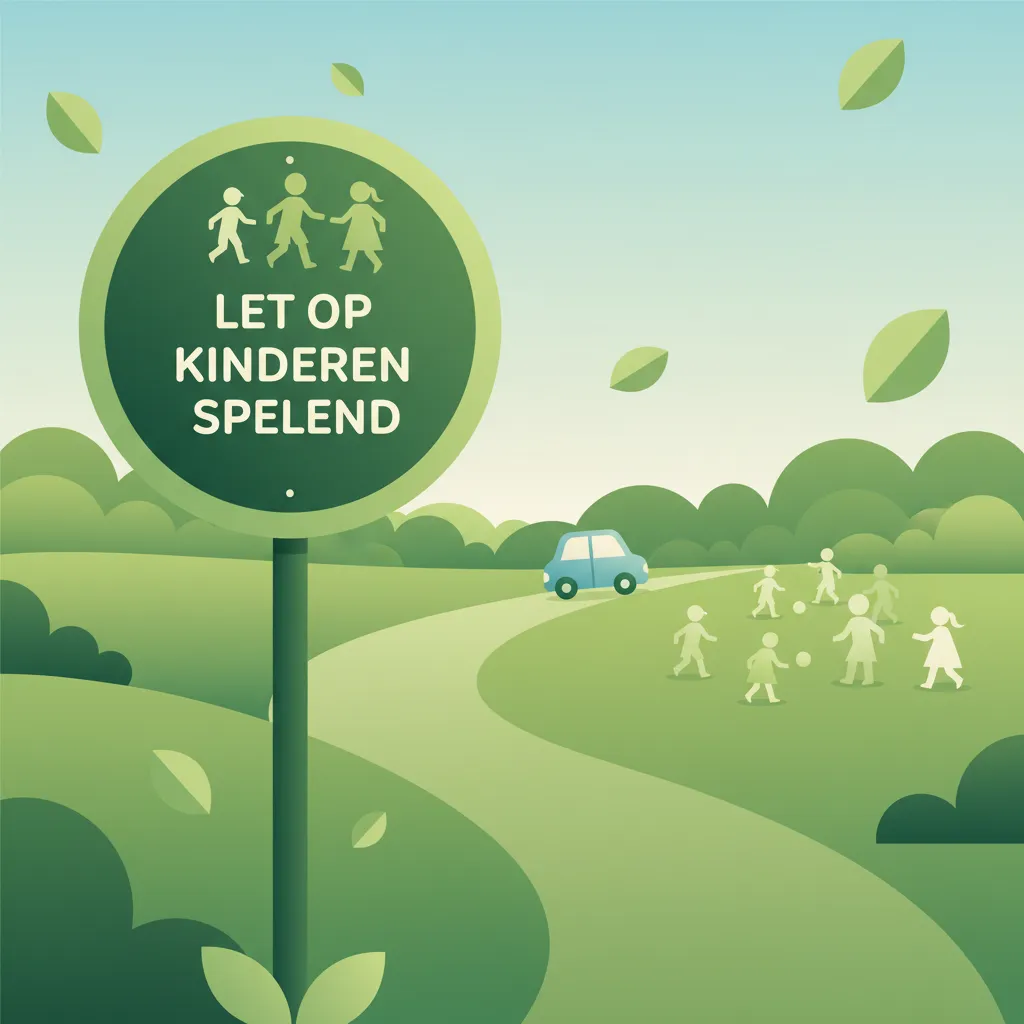
This lesson details the interpretation of Dutch warning signs, which alert riders to potential dangers and changing road conditions. You will study signs indicating sharp curves, road narrowing (BORD 30), and temporary hazards like road works (BORD 36), learning to adjust speed and road position proactively. The content emphasizes how the A2 motorcycle's characteristics require earlier hazard recognition and response compared to other vehicles for maintaining control.

This lesson focuses on the unique and densely packed hazards found in urban traffic environments. It teaches riders to develop a systematic scanning pattern to identify potential risks from multiple sources simultaneously, such as pedestrians stepping off curbs, car doors opening unexpectedly, and buses pulling out. The content also emphasizes the importance of managing speed and always having an 'escape route' planned in case a hazard suddenly materializes in the complex city landscape.
This lesson prepares you for the unique dangers of high-speed highway riding. You will learn to scan for and navigate road hazards like debris, potholes, and slippery steel expansion joints on bridges. The content also addresses the powerful air turbulence created by large trucks that can upset a motorcycle's stability and the mental challenge of maintaining focus on long, monotonous stretches of road.

This lesson focuses on training the brain to become a more effective hazard detection system. It introduces psychological techniques like 'commentary riding,' where the rider verbalizes all perceived hazards and their planned responses, which enhances focus and processing. The practice of constantly running 'what-if' scenarios helps to pre-plan reactions to potential events, reducing the time it takes to respond if a real hazard materializes, turning anticipation into a deeply ingrained habit.

Defensive riding means riding to prevent collisions, despite the actions of others or the conditions around you. This lesson teaches the core principles of this proactive safety strategy. Key techniques include managing the space cushion around your vehicle, positioning yourself in your lane for maximum visibility, constantly planning an escape route, and communicating your intentions clearly to other road users. This mindset acknowledges your vulnerability and empowers you to take control of your own safety.

This lesson synthesizes many of the course's concepts into the overarching philosophy of advanced defensive riding ('verdedigend rijden'). It defines this as a proactive mindset where the rider constantly scans for potential hazards, anticipates the worst-case scenario from other road users, and positions themselves to have time and space to react. This approach moves beyond simply following the rules to actively managing the environment to ensure personal safety at all times.
This lesson transitions hazard perception skills to the high-speed environment of motorways and tunnels. It covers specific risks such as vehicles merging at different speeds, sudden braking and congestion ahead, road debris, and the aerodynamic effects of crosswinds and large trucks. The curriculum also addresses the challenges of riding in tunnels, including changes in light and surface conditions, and the importance of identifying emergency exits and procedures in case of an incident.

This lesson provides a detailed framework for how motorcyclists must safely and legally interact with diverse road users, including cars, trucks, cyclists, and pedestrians. It covers the required communication signals, anticipatory behaviors, and specific positioning techniques necessary to coexist in complex traffic environments like urban centers and shared spaces. Emphasis is placed on legal expectations and practical methods that actively reduce collision risk and promote smooth traffic flow.
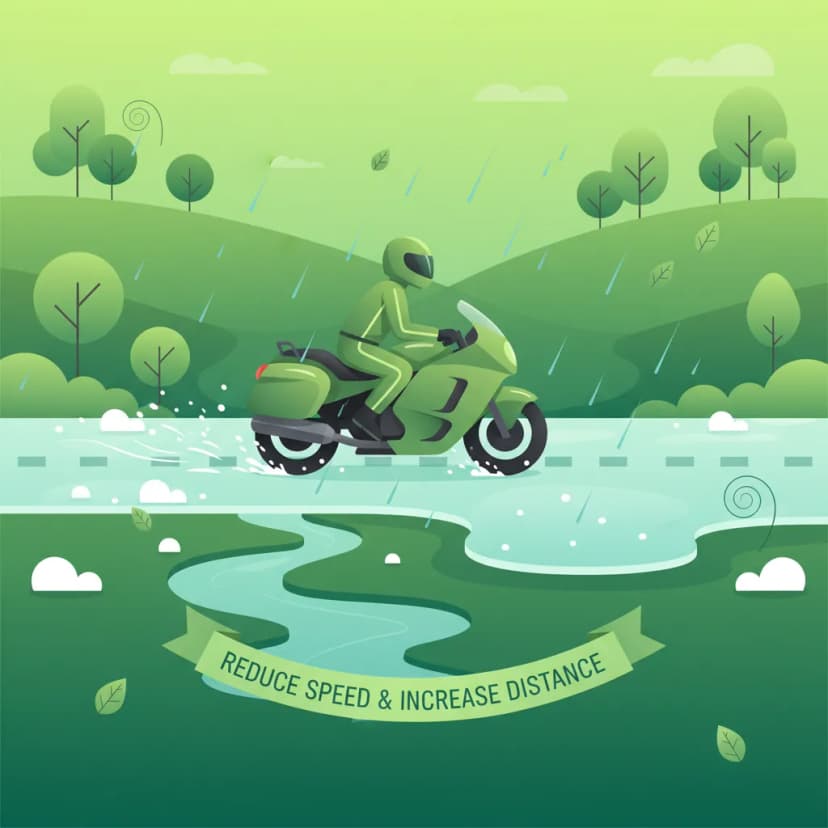
This lesson provides survival strategies for riding in the most challenging weather conditions, including heavy rain, snow, and potential ice. It emphasizes the importance of mental preparation, drastically reduced speeds, and hyper-smooth inputs for throttle, brakes, and steering. The content also covers identifying high-risk areas for 'black ice,' such as bridges and shaded spots, and the critical role of appropriate waterproof and insulated gear in preventing hypothermia and maintaining concentration.
Analyze practical driving scenarios to master 'voorspellend rijgedrag' on Dutch roads. Understand how to interpret visual cues and make predictive decisions in urban, highway, and adverse conditions to improve motorcycle safety.
This lesson teaches you to be a proactive rather than a reactive rider by developing superior hazard perception skills. You will learn to scan your environment constantly—near, far, and to the sides—and to identify potential risks, such as a car waiting to turn or a pedestrian looking to cross. The content focuses on asking 'what if?' to predict the actions of others and position yourself for safety in advance.
This lesson synthesizes many of the course's concepts into the overarching philosophy of advanced defensive riding ('verdedigend rijden'). It defines this as a proactive mindset where the rider constantly scans for potential hazards, anticipates the worst-case scenario from other road users, and positions themselves to have time and space to react. This approach moves beyond simply following the rules to actively managing the environment to ensure personal safety at all times.

This lesson focuses on the unique demands of riding at sustained high speeds on motorways ('snelwegen'). It covers essential topics such as strict lane discipline, safe overtaking procedures, and maintaining a greater following distance to compensate for higher reaction and braking times. The content also addresses the physical and mental challenges, including managing wind blast, increased noise levels, and maintaining heightened situational awareness over long distances to combat fatigue.
This lesson details the interpretation of Dutch warning signs, which alert riders to potential dangers and changing road conditions. You will study signs indicating sharp curves, road narrowing (BORD 30), and temporary hazards like road works (BORD 36), learning to adjust speed and road position proactively. The content emphasizes how the A2 motorcycle's characteristics require earlier hazard recognition and response compared to other vehicles for maintaining control.
This lesson focuses on training the brain to become a more effective hazard detection system. It introduces psychological techniques like 'commentary riding,' where the rider verbalizes all perceived hazards and their planned responses, which enhances focus and processing. The practice of constantly running 'what-if' scenarios helps to pre-plan reactions to potential events, reducing the time it takes to respond if a real hazard materializes, turning anticipation into a deeply ingrained habit.
This lesson provides survival strategies for riding in the most challenging weather conditions, including heavy rain, snow, and potential ice. It emphasizes the importance of mental preparation, drastically reduced speeds, and hyper-smooth inputs for throttle, brakes, and steering. The content also covers identifying high-risk areas for 'black ice,' such as bridges and shaded spots, and the critical role of appropriate waterproof and insulated gear in preventing hypothermia and maintaining concentration.
This lesson focuses on the unique and densely packed hazards found in urban traffic environments. It teaches riders to develop a systematic scanning pattern to identify potential risks from multiple sources simultaneously, such as pedestrians stepping off curbs, car doors opening unexpectedly, and buses pulling out. The content also emphasizes the importance of managing speed and always having an 'escape route' planned in case a hazard suddenly materializes in the complex city landscape.
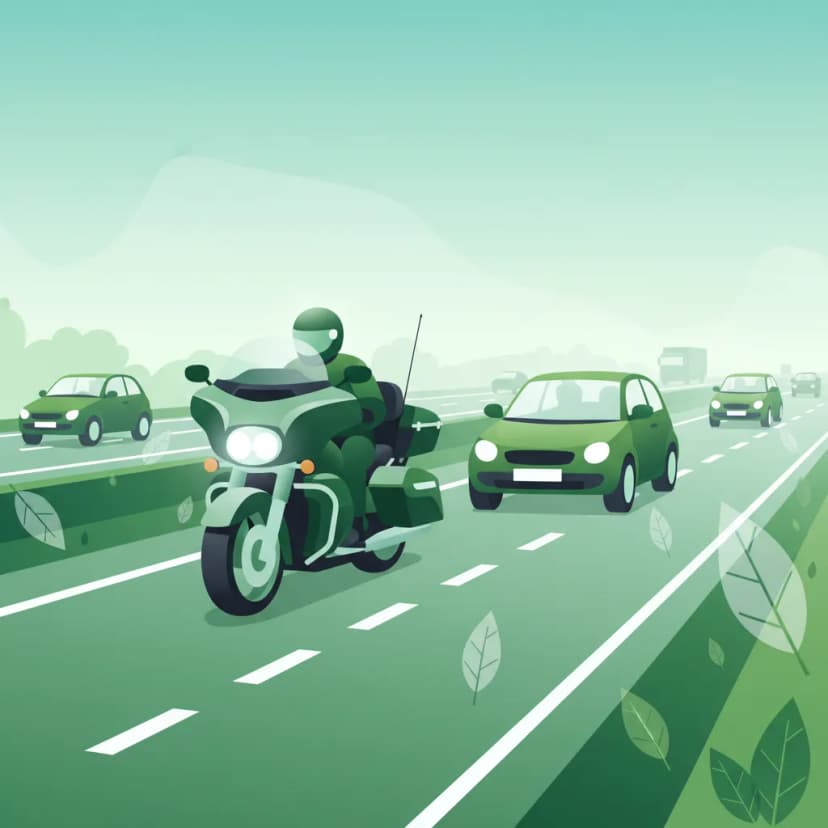
This lesson details the systematic process for safely overtaking on a multi-lane motorway, leveraging the acceleration capabilities of a Category A motorcycle. It covers the 'mirror, signal, maneuver' sequence, with a strong emphasis on the critical shoulder check to clear the blind spot before moving out. The content also discusses how to judge closing speeds, ensure adequate space before returning to the lane, and how to handle situations involving multiple lanes and slower-moving heavy vehicles.
This lesson prepares you for the unique dangers of high-speed highway riding. You will learn to scan for and navigate road hazards like debris, potholes, and slippery steel expansion joints on bridges. The content also addresses the powerful air turbulence created by large trucks that can upset a motorcycle's stability and the mental challenge of maintaining focus on long, monotonous stretches of road.
This lesson provides a detailed framework for how motorcyclists must safely and legally interact with diverse road users, including cars, trucks, cyclists, and pedestrians. It covers the required communication signals, anticipatory behaviors, and specific positioning techniques necessary to coexist in complex traffic environments like urban centers and shared spaces. Emphasis is placed on legal expectations and practical methods that actively reduce collision risk and promote smooth traffic flow.
Find clear answers to common questions learners have about Anticipating Vehicle Behavior (voorspellend rijgedrag). Learn how the lesson is structured, which driving theory objectives it supports, and how it fits into the overall learning path of units and curriculum progression in the Netherlands. These explanations help you understand key concepts, lesson flow, and exam focused study goals.
'Voorspellend rijgedrag' translates to anticipatory or predictive riding. It's a proactive safety technique where a motorcyclist actively scans for and interprets cues from other road users to predict their future actions, allowing the rider to react safely before a situation becomes critical.
Look for subtle clues like a vehicle's indicator lights, the direction of its front wheels, the driver's head position, or any slight movement suggesting an impending change in direction or speed. Also, observe how other vehicles interact with traffic signals, other cars, and pedestrians to gauge their likely next move.
While related, they are distinct. Maintaining a safe following distance is about having enough space to stop safely. Anticipating vehicle behaviour is about actively predicting what other road users *will do*, allowing you to position yourself advantageously or take evasive action, often in conjunction with maintaining that safe distance.
The CBR exam, particularly the hazard perception part, tests your ability to identify developing hazards. Understanding 'voorspellend rijgedrag' means you can recognise early warning signs in scenarios, which directly translates to correctly identifying and responding to hazards in exam simulations and multiple-choice questions.
Prioritise vehicles that pose the most immediate risk or are in a position to conflict with your path. This includes vehicles at junctions, those about to change lanes, or those showing erratic behaviour. Pay extra attention to larger vehicles, as their actions can have a more significant impact.