
This lesson synthesizes key concepts into the philosophy of advanced defensive riding ('verdedigend rijden'), crucial for Category A motorcyclists in the Netherlands. Building on previous units, it focuses on a proactive mindset to anticipate hazards and manage risks effectively, preparing you for complex traffic situations and the CBR theory exam.

Navigating the roads on a motorcycle offers an unparalleled sense of freedom, but it also demands a heightened level of awareness and skill. This lesson introduces the critical philosophy of advanced defensive riding, known in Dutch as verdedigend rijden. It transcends basic adherence to traffic laws, fostering a proactive mindset essential for Category A motorcycle riders in the Netherlands. This approach is paramount for managing the inherent risks of motorcycling, especially given the speed, maneuverability, and exposure associated with high-performance machines.
Advanced defensive riding is not merely about reacting to hazards; it's about continuously scanning the environment, anticipating potential dangers, and strategically positioning yourself to ensure ample time and space for a safe response. This strategy operationalises the legal duty enshrined in Dutch traffic law (RVV 1990, Article 5, Section 2), which obliges every road user to act "as safely as possible." By embracing these concepts, motorcyclists can significantly reduce their risk of accidents, enhancing both personal safety and overall road harmony.
Advanced defensive riding for motorcyclists is a dynamic and continuous mental process. Its core aim is to integrate vigilant observation, shrewd prediction, and intelligent positioning to maintain a tactical safety buffer around the rider at all times. This proactive strategy goes beyond simply obeying traffic rules; it's about actively managing your environment and mitigating risks that others might overlook or create.
The safety logic underpinning verdedigend rijden dictates that by consistently anticipating the worst-case actions of other road users, a rider can preserve sufficient reaction time—typically around 1.5 seconds—and adequate stopping distance (SSD) to avoid collisions. This preparedness is crucial, particularly when facing adverse conditions or unexpected events. This lesson will elaborate on the key principles and practical applications of this essential riding philosophy, drawing upon insights from risk psychology and situational awareness, as discussed in previous modules of the Dutch Motorcycle Theory curriculum.
Advanced defensive riding is built upon a set of interconnected principles that guide a motorcyclist's decisions and actions on the road. Mastering these principles transforms a rider from a passive participant into an active manager of their safety.
Continuous scanning is the foundational element of defensive riding. It involves a systematic, 360-degree visual sweep of your surroundings, executed consistently every 2 to 3 seconds. This includes not just the road ahead but also your peripheral vision and frequent checks of your rear-view mirrors. The purpose is to detect emerging hazards as early as possible, effectively countering the risk of tunnel vision that can occur when focusing solely on the immediate path.
This comprehensive scanning technique enables you to adjust your line of travel, speed, and lane positioning well before a potential hazard becomes an imminent threat. Without continuous scanning, a rider might miss critical cues, such as a pedestrian stepping off a curb, a vehicle changing lanes abruptly, or a patch of gravel on the road surface. It's about gathering maximum information to inform your next decision.
Risk anticipation is the mental process of predicting the likely hazardous actions of other road users. This involves mentally modeling the "worst-case scenario" for every interaction, rather than assuming others will behave perfectly or lawfully. For example, instead of assuming a car at an intersection will yield as required, a defensive rider anticipates it might pull out unexpectedly.
This principle is designed to offset optimistic biases—the common human tendency to underestimate risk. By always preparing for the least favourable outcome, a rider can proactively increase their safety margin in terms of both time and space. This might involve reducing speed earlier, preparing to brake, or adjusting lane position to create an escape route. It’s about building a mental buffer that allows you to react effectively when your predictions, unfortunately, come true.
Strategic positioning refers to the deliberate placement of your motorcycle within your lane to maximise your visibility to other road users, enhance your view of the road ahead, and create potential escape routes. It also aims to minimise your exposure to the blind spots of larger vehicles.
A common example in the Netherlands is "left-hand lane riding" (rijden op de linker rijstrook) in certain contexts. By positioning slightly to the left within your lane on a two-lane road, you become more visible to oncoming traffic and to vehicles behind you preparing to overtake. This position also often provides a clearer view of the road ahead, allowing you to spot hazards sooner, and offers a path to the shoulder or a safer area if immediate evasion is necessary. The optimal lane position changes dynamically with the traffic situation and road conditions; it is rarely about staying rigidly in the centre.
Time-space buffer management is about maintaining a dynamic safety margin—both temporal (in seconds) and spatial (in meters)—between your motorcycle and surrounding road users. This buffer is not static; it must be continuously adjusted based on your speed, current road conditions, visibility, and your own riding capabilities.
For instance, while a 2-second following distance might be adequate in dry, ideal conditions, adverse weather like rain or fog necessitates extending this buffer to 3 or even 4 seconds. This increased gap guarantees sufficient distance for your perception-reaction time and the vehicle's braking distance. Effective buffer management directly influences your speed choices, how closely you follow other vehicles, and your decisions regarding lane changes or overtakes.
Threat prioritisation involves assessing identified hazards and ordering them by their immediacy, probability, and potential severity. Since a rider cannot simultaneously react to every potential threat, this principle helps manage cognitive load by focusing attention and resources on the most dangerous and immediate risks.
For example, encountering a car braking sharply ahead of you is an immediate, high-severity threat that demands your primary attention. A cyclist approaching from the side, while also a hazard, would typically be prioritised secondary to the imminent front-end collision risk. This hierarchical assessment guides your immediate actions, ensuring you address the most critical threats first (e.g., brake before steering, or steer before accelerating) to maximise safety and control.
Riding a motorcycle, especially in challenging conditions or heavy traffic, can be mentally demanding and stressful. Psychological resilience refers to your capacity to maintain optimal mental performance under stress, fatigue, or emotional arousal. This involves employing techniques such as controlled breathing, mental rehearsal of scenarios, and positive self-talk to prevent a deterioration in your decision-making abilities.
Resilience is not about eliminating stress but about effectively managing it. A rider who has just experienced a near-miss might pull over, take a few deep breaths, and mentally review the incident before safely continuing their journey. This ability to recover and maintain composure ensures consistent defensive behaviour throughout your ride, regardless of external pressures.
Adhering to Dutch traffic legislation (RVV 1990) forms the legal framework for safe riding. Advanced defensive riding operationalises these rules by guiding how a motorcyclist applies them proactively.
The following articles from the RVV 1990 are particularly relevant to defensive riding principles:
Additionally, while not legally binding, recommendations from bodies like CROW (Centrum voor Regelgeving en Onderzoek in de Grond-, Water- en Wegenbouw en de Verkeerstechniek) provide valuable guidance. For instance, CROW guidance often recommends increasing stopping distance by approximately 30% on wet surfaces due to reduced tire grip. A defensive rider incorporates such recommendations into their buffer management.
Even experienced riders can fall into common traps that compromise defensive riding principles. Recognizing these patterns and actively correcting them is vital for continuous improvement and accident prevention.
| Violation / Edge Case | Why It’s Wrong | Correct Behaviour | Possible Consequence |
|---|---|---|---|
| Following too closely in rain (e.g., 2-second gap instead of 3-second) | Underestimates increased stopping distance on wet surfaces; insufficient reaction time. | Extend temporal gap to at least 3 seconds on wet surfaces; reduce speed. | Rear-end collision; legal liability under RVV 1990 Art. 5 § 3. |
| Neglecting rear-view mirrors and shoulder check before lane change | Creates dangerous blind-spot risk; leads to abrupt maneuvers. | Perform mirror check + quick shoulder glance at least 1 second before and during a lane change. | Side-collision with an overtaking vehicle; traffic violation. |
| Riding in the exact centre of a lane on a multi-lane highway | Reduces visibility to cars in adjacent lanes; increases exposure to blind spots; limits escape routes. | Ride in a lane position that maximises visibility and escape options, often slightly left of centre (within legal limits) or left-hand lane when overtaking. | Near-miss or collision with an overtaking vehicle or merging traffic. |
| Using high-beams in traffic or towards oncoming vehicles | Glare can temporarily blind other drivers, increasing their crash risk. | Switch to dipped beam when another vehicle is within 150 meters or when following closely. | Potential liability for causing or contributing to an accident. |
| Failure to signal lane change in congested traffic | Other road users cannot anticipate your movement, leading to confusion and conflict. | Activate your indicator at least 50 meters before changing lane and keep it on until the maneuver is complete. | Side-collision or traffic violation fine (RVV 1990 Art. 18). |
| Rider fatigue after prolonged continuous riding (e.g., >2 hours) | Cognitive slowdown, delayed reaction times, reduced scanning frequency, increased error probability. | Take a 5-10 minute break every 1.5-2 hours; hydrate, stretch, and reassess your mental state. | Missed hazard detection, reduced ability to react, potential crash. |
| Assuming all cyclists/pedestrians will obey traffic lights/rules | Over-optimistic bias; vulnerable road users may sometimes disregard rules, especially in urban areas. | Anticipate potential red-light running or unexpected movements; maintain a buffer at intersections and crossing points. | Collision at intersection or crossing, especially with vulnerable users. |
| Sudden, hard braking without assessing rear traffic | Can cause a chain-reaction rear-end collision, particularly for the vehicle behind you. | Check mirrors before braking; if possible, decelerate progressively while signaling intent with brake light. | Rear-end collision by following vehicle. |
| Riding with headlights off during heavy fog or reduced visibility | Significantly reduces your visibility to other road users, making your motorcycle virtually invisible. | Keep low-beam on; use fog lights if equipped and visibility is severely impaired (RVV 1990 Art. 31). | Collision due to being unseen by other traffic. |
| Carrying excessive or improperly secured load | Alters motorcycle's centre of gravity, handling, and braking distance. | Verify load limits in your owner's manual; distribute weight evenly and securely; adjust speed and buffer accordingly. | Loss of control, unstable handling, increased crash risk. |
Effective defensive riding is not static; it requires constant adaptation to changing environmental factors and traffic scenarios. Conditions like weather, light, road type, vehicle state, and interactions with vulnerable road users all demand specific adjustments to your riding strategy.
Every action a motorcyclist takes (or fails to take) has immediate and downstream consequences. Understanding these cause-and-effect relationships is fundamental to grasping why defensive riding principles are so critical.
| Action (Cause) | Immediate Effect | Downstream Outcome |
|---|---|---|
| Maintaining adequate time-space buffer | Sufficient distance for perception-reaction-braking (PRB). | Avoidance of collisions even if hazards materialise unexpectedly; reduced need for emergency manoeuvres. |
| Neglecting rear scanning | Loss of awareness of vehicles approaching from behind or in adjacent lanes. | Sudden lane intrusion by another vehicle; potential side-collision during a lane change. |
| Using high-beam in traffic at night | Glare from your headlights temporarily impairs the vision of oncoming or preceding drivers. | Increased risk of head-on collisions, rear-end collisions, or other drivers veering off course due to temporary blindness. |
| Riding on the left-hand lane on a highway (when appropriate) | Higher visibility to overtaking vehicles; more space to manoeuvre; better view of the road ahead. | Reduced likelihood of being trapped in another vehicle's blind spot; safer and smoother overtaking. |
| Skipping a shoulder check before a lane change | Unawareness of a fast-approaching vehicle or another motorcycle in your blind spot. | Collision when changing lanes; legal penalty for unsafe lane change (RVV 1990 Art. 30). |
| Riding fatigued or under stress | Slower reaction times, reduced scanning frequency, impaired judgment. | Missed hazard detection, delayed response to critical situations, higher probability of a crash. |
| Adapting speed to road surface (e.g., slowing on wet road) | Shorter stopping distance relative to the reduced grip of the wet surface. | Ability to stop safely and maintain control if a preceding vehicle brakes suddenly or an obstacle appears. |
| Ignoring observable cues (e.g., driver looking at phone) | Fails to mentally prepare for the potential erratic actions of a distracted driver. | Late reaction to sudden braking or lane deviation by the distracted driver, leading to a potential rear-end collision. |
| Activating turn signals well in advance | Clearly communicates your intended manoeuvre to other road users. | Gives other drivers time to anticipate and adjust their speed/position, reducing conflict and collision risk (RVV 1990 Art. 18). |
Advanced defensive riding is not a standalone skill; it is the synthesis of many foundational concepts introduced earlier in the Dutch Motorcycle Theory curriculum. Its effectiveness relies heavily on a solid understanding of these prerequisite topics.
This lesson builds upon:
This comprehensive approach to verdedigend rijden prepares learners for future topics, particularly those involving continuous skill maintenance, reflective practice, and advanced tactical riding strategies.
Understanding the specific vocabulary associated with advanced defensive riding ensures clarity and precision in discussing motorcycle safety.
Understanding defensive riding is best solidified through practical application and scenario analysis. These examples illustrate how the core principles come together in real-world situations.
Setting: A two-lane city street with a 30 km/h speed limit, light rain, moderate traffic. A cyclist is approaching from the right at an upcoming cross-traffic signal that has just turned green for the rider.
Correct Defensive Behavior: The rider continuously scans ahead, checking mirrors and peripheral vision. They observe the light changing to green but also notice the cyclist approaching the intersection, potentially intending to cross against the light or having difficulty stopping in the rain. Anticipating a worst-case scenario (the cyclist might not stop), the rider slows down to 20 km/h, extends their time-space buffer to at least 3 seconds, and prepares to cover their brakes. Before turning right, the rider signals well in advance, makes eye contact (if possible) with the cyclist, and yields, allowing the cyclist to pass safely. Only once the path is clear does the rider proceed with the turn, maintaining a vigilant scan.
Why Correct: This approach exemplifies continuous scanning, risk anticipation (of the cyclist's potential actions), time-space buffer management (increased distance due to rain and potential conflict), and strategic positioning (preparing to yield). It complies with RVV 1990 Article 5, Section 2 (acting as safely as possible) and prioritises vulnerable road user safety.
Setting: A four-lane motorway with a 100 km/h speed limit, light traffic. The motorcyclist is in the second-from-left lane, and a heavy truck is in the middle lane. The rider decides to overtake the truck.
Correct Defensive Behavior: The rider first performs a thorough 360-degree scan, checking mirrors and a quick shoulder check to confirm the leftmost lane is clear both ahead and behind. They activate their left turn signal well in advance (at least 50 meters), move smoothly into the leftmost lane, ensuring they maintain a sufficient 3-second time-space buffer to the truck’s front and rear. They accelerate smoothly past the truck, staying out of its blind spots. Once the truck is clearly visible in their right-hand mirror and a safe distance ahead, they signal right, check mirrors and shoulder, and move back into the second-from-left lane, deactivating the signal.
Why Correct: This demonstrates strategic positioning (moving to the optimal lane for visibility), time-space buffer management (maintaining safe distances), continuous scanning (mirror and shoulder checks), and legal compliance (RVV 1990 Article 18 for signalling and Article 30 for mirror use).
Setting: A rural road with a 70 km/h speed limit. It's night, dense fog significantly reduces visibility, and the rider has their headlights on dipped beam. Suddenly, a stationary vehicle with hazard lights appears ahead.
Correct Defensive Behavior: Upon entering the fog, the rider would have already reduced their speed significantly, potentially to 40-50 km/h, and increased their temporal buffer to 4 seconds or more. They would be using their dipped beam and fog lights (if available). When the stationary vehicle becomes visible, the rider immediately reduces speed further, prepares to brake gently, and increases scanning of the road ahead for any other obstacles or debris. They scan the edges of the road for an escape route, if necessary, and carefully navigate around the hazard, ensuring they maintain maximum visibility of the road and any other potential threats.
Why Correct: This illustrates extreme buffer management, speed adaptation for conditions, continuous scanning, and threat prioritisation. The reduced speed and increased buffer provide critical time to react to the almost invisible stationary vehicle and other obscured hazards.
Setting: After a continuous 2-hour ride covering 180 km, the rider is feeling the onset of fatigue and mild wind conditions. They are approaching a series of sharp bends on a winding road.
Correct Defensive Behavior: Recognising the signs of fatigue (reduced concentration, slower reactions), the rider makes a conscious decision to pull over at the next safe lay-by or service station. They dismount, hydrate, perform some light stretching exercises, and take a 10-15 minute break to refresh their mental state. They re-evaluate their fitness to continue riding. Once refreshed, they resume their journey with a reduced speed for the upcoming bends and an increased scanning frequency, particularly focusing on corner entry and exit points.
Why Correct: This highlights psychological resilience and self-awareness. Recognizing and acting upon the effects of fatigue prevents a significant deterioration in decision-making and reaction times, directly mitigating the risk of misjudging curves or missing hazards in a demanding section of the road. It ensures compliance with the spirit of RVV 1990 Art. 5 § 2 by actively managing personal factors impacting safety.
Understanding the scientific and psychological reasoning behind defensive riding principles enhances their application and reinforces their importance.
Advanced defensive riding, or verdedigend rijden, is the cornerstone of motorcycle safety in the Netherlands, integrating a comprehensive set of cognitive, perceptual, and tactical skills. It moves beyond passive rule-following to active, proactive risk management, continuously safeguarding the rider.
The legal foundations for this approach are deeply embedded in Dutch traffic law, particularly RVV 1990 Article 5, Sections 2 and 3, which obligate every road user to act "as safely as possible" and maintain a "safe distance."
The core behaviours of advanced defensive riding can be summarised as follows:
Conditional adjustments are vital; increase your buffers and scanning frequency when faced with rain, fog, night riding, heavy loads, or when interacting with vulnerable road users. Understanding the cause-effect chain reinforces that proper defensive actions directly lead to sufficient reaction time, enabling successful hazard avoidance, and ultimately reducing crash risk while ensuring legal compliance.
This lesson depends on your prior understanding of hazard perception, safe following distances, emergency braking techniques, the impact of cognitive biases and stress on riding, and methods for situational risk assessment. By mastering these advanced defensive riding concepts, you lay a robust foundation for continuous learning, reflective practice, and the development of even more advanced tactical riding skills throughout your journey as a Category A motorcyclist.
Lesson content overview
Explore all units and lessons included in this driving theory course.
Explore search topics learners often look for when studying Advanced Defensive Riding Concepts (verdedigend rijden). These topics reflect common questions about road rules, driving situations, safety guidance, and lesson level theory preparation for learners in the Netherlands.
Browse additional driving theory lessons that cover connected traffic rules, road signs, and common driving situations related to this topic. Improve your understanding of how different rules interact across everyday traffic scenarios.
Learn about frequent errors made in advanced defensive riding (verdedigend rijden) and how to avoid them. This lesson focuses on practical application and common pitfalls to enhance your motorcycle safety strategy in Dutch traffic.

This lesson explains that where you ride in your lane is a critical safety choice. You will learn to avoid lingering in the blind spots ('dode hoek') of cars and trucks, and how to position yourself to be clearly visible in their mirrors. The content teaches you to constantly adjust your lane position to create a space cushion and ensure you always have a planned escape path in case of an emergency.

Defensive riding means riding to prevent collisions, despite the actions of others or the conditions around you. This lesson teaches the core principles of this proactive safety strategy. Key techniques include managing the space cushion around your vehicle, positioning yourself in your lane for maximum visibility, constantly planning an escape route, and communicating your intentions clearly to other road users. This mindset acknowledges your vulnerability and empowers you to take control of your own safety.

This lesson introduces the Dutch concept of 'voorspellend rijgedrag,' or anticipatory riding, a proactive approach to safety. It teaches motorcyclists how to look beyond the immediate vehicle in front and scan for clues that predict the actions of other road users, such as turn signals, wheel direction, and driver head movement. By anticipating potential conflicts before they happen, riders can position themselves to avoid danger and ensure a smoother, safer journey through complex traffic.
This lesson teaches you to be a proactive rather than a reactive rider by developing superior hazard perception skills. You will learn to scan your environment constantly—near, far, and to the sides—and to identify potential risks, such as a car waiting to turn or a pedestrian looking to cross. The content focuses on asking 'what if?' to predict the actions of others and position yourself for safety in advance.

This lesson explains the concept of strategic lane positioning, moving beyond simply staying in the center of the lane. It details how to select a position—typically in the left or right wheel track of cars—to be more visible in other drivers' mirrors, avoid the slippery center strip, and maintain a space cushion. The content emphasizes constantly adjusting position based on traffic, road conditions, and potential hazards.

This lesson provides critical instruction on managing blind spots ('dode hoek') to prevent collisions, particularly during lane changes. It covers the correct setup and use of mirrors, but stresses their limitations and the absolute necessity of the 'lifesaver' shoulder check before any lateral movement. Furthermore, it teaches riders how to be aware of the large blind spots around cars and especially trucks, and how to position themselves on the road to remain visible to other drivers at all times.

This lesson equips riders with cognitive strategies for managing ambiguous or conflicting traffic situations where priority rules may be misinterpreted by other road users. It focuses on the principles of defensive riding, such as making eye contact, using clear signals, and being prepared to yield the right-of-way to avoid a collision. The content teaches how to resolve uncertainty safely by prioritizing hazard avoidance over asserting one's legal right-of-way, a critical skill for motorcyclist survival.

This lesson focuses on the unique and densely packed hazards found in urban traffic environments. It teaches riders to develop a systematic scanning pattern to identify potential risks from multiple sources simultaneously, such as pedestrians stepping off curbs, car doors opening unexpectedly, and buses pulling out. The content also emphasizes the importance of managing speed and always having an 'escape route' planned in case a hazard suddenly materializes in the complex city landscape.

This lesson focuses on training the brain to become a more effective hazard detection system. It introduces psychological techniques like 'commentary riding,' where the rider verbalizes all perceived hazards and their planned responses, which enhances focus and processing. The practice of constantly running 'what-if' scenarios helps to pre-plan reactions to potential events, reducing the time it takes to respond if a real hazard materializes, turning anticipation into a deeply ingrained habit.

This lesson details the interpretation of Dutch warning signs, which alert riders to potential dangers and changing road conditions. You will study signs indicating sharp curves, road narrowing (BORD 30), and temporary hazards like road works (BORD 36), learning to adjust speed and road position proactively. The content emphasizes how the A2 motorcycle's characteristics require earlier hazard recognition and response compared to other vehicles for maintaining control.
Explore practical scenarios demonstrating advanced defensive riding (verdedigend rijden) in various Dutch traffic situations. Understand how to apply proactive hazard perception and safety principles in real-time driving challenges.
This lesson teaches you to be a proactive rather than a reactive rider by developing superior hazard perception skills. You will learn to scan your environment constantly—near, far, and to the sides—and to identify potential risks, such as a car waiting to turn or a pedestrian looking to cross. The content focuses on asking 'what if?' to predict the actions of others and position yourself for safety in advance.
This lesson focuses on the unique and densely packed hazards found in urban traffic environments. It teaches riders to develop a systematic scanning pattern to identify potential risks from multiple sources simultaneously, such as pedestrians stepping off curbs, car doors opening unexpectedly, and buses pulling out. The content also emphasizes the importance of managing speed and always having an 'escape route' planned in case a hazard suddenly materializes in the complex city landscape.
This lesson equips riders with cognitive strategies for managing ambiguous or conflicting traffic situations where priority rules may be misinterpreted by other road users. It focuses on the principles of defensive riding, such as making eye contact, using clear signals, and being prepared to yield the right-of-way to avoid a collision. The content teaches how to resolve uncertainty safely by prioritizing hazard avoidance over asserting one's legal right-of-way, a critical skill for motorcyclist survival.
This lesson focuses on training the brain to become a more effective hazard detection system. It introduces psychological techniques like 'commentary riding,' where the rider verbalizes all perceived hazards and their planned responses, which enhances focus and processing. The practice of constantly running 'what-if' scenarios helps to pre-plan reactions to potential events, reducing the time it takes to respond if a real hazard materializes, turning anticipation into a deeply ingrained habit.

This lesson introduces riders to formal risk assessment models, such as the 'Identify, Predict, Decide, Execute' (IPDE) framework, to structure their thinking in dynamic traffic situations. This provides a systematic mental checklist for constantly scanning the environment, identifying potential threats, predicting their likely outcomes, deciding on a safe course of action, and executing it smoothly. Using such a model helps to ensure that no critical information is missed, even under pressure.
This lesson provides critical instruction on managing blind spots ('dode hoek') to prevent collisions, particularly during lane changes. It covers the correct setup and use of mirrors, but stresses their limitations and the absolute necessity of the 'lifesaver' shoulder check before any lateral movement. Furthermore, it teaches riders how to be aware of the large blind spots around cars and especially trucks, and how to position themselves on the road to remain visible to other drivers at all times.

This lesson provides a detailed framework for how motorcyclists must safely and legally interact with diverse road users, including cars, trucks, cyclists, and pedestrians. It covers the required communication signals, anticipatory behaviors, and specific positioning techniques necessary to coexist in complex traffic environments like urban centers and shared spaces. Emphasis is placed on legal expectations and practical methods that actively reduce collision risk and promote smooth traffic flow.
Defensive riding means riding to prevent collisions, despite the actions of others or the conditions around you. This lesson teaches the core principles of this proactive safety strategy. Key techniques include managing the space cushion around your vehicle, positioning yourself in your lane for maximum visibility, constantly planning an escape route, and communicating your intentions clearly to other road users. This mindset acknowledges your vulnerability and empowers you to take control of your own safety.
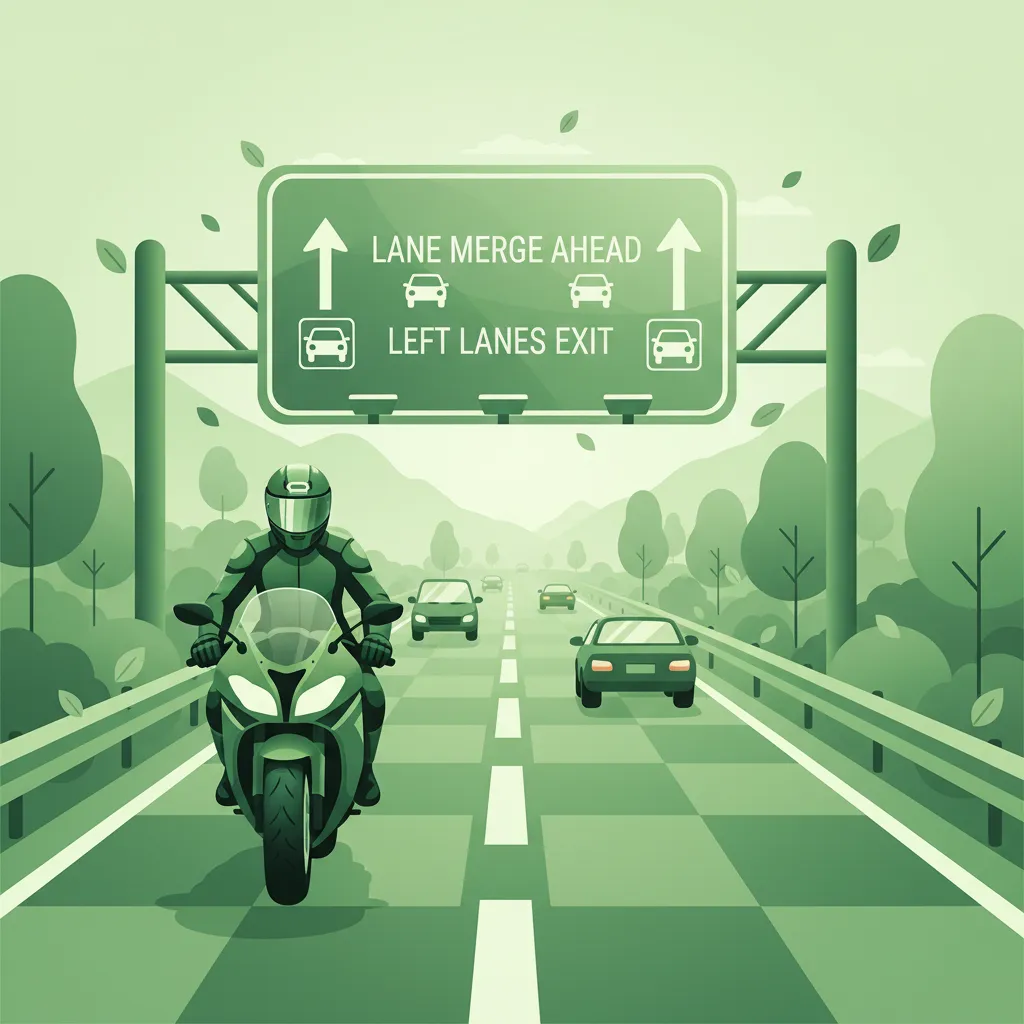
This lesson prepares you for the unique dangers of high-speed highway riding. You will learn to scan for and navigate road hazards like debris, potholes, and slippery steel expansion joints on bridges. The content also addresses the powerful air turbulence created by large trucks that can upset a motorcycle's stability and the mental challenge of maintaining focus on long, monotonous stretches of road.
This lesson introduces the Dutch concept of 'voorspellend rijgedrag,' or anticipatory riding, a proactive approach to safety. It teaches motorcyclists how to look beyond the immediate vehicle in front and scan for clues that predict the actions of other road users, such as turn signals, wheel direction, and driver head movement. By anticipating potential conflicts before they happen, riders can position themselves to avoid danger and ensure a smoother, safer journey through complex traffic.
Find clear answers to common questions learners have about Advanced Defensive Riding Concepts (verdedigend rijden). Learn how the lesson is structured, which driving theory objectives it supports, and how it fits into the overall learning path of units and curriculum progression in the Netherlands. These explanations help you understand key concepts, lesson flow, and exam focused study goals.
Basic defensive riding focuses on following rules and maintaining safe distances. Advanced defensive riding ('verdedigend rijden') emphasizes a proactive mindset: actively scanning, anticipating the worst from others, and positioning yourself to control risks, even when others are unpredictable. It's about managing the entire riding environment, not just reacting to it.
The CBR exam increasingly tests your ability to assess situations and make safe decisions. Advanced defensive riding concepts, like anticipating hazards and managing space, directly translate to answering scenario-based questions correctly and demonstrating a thorough understanding of safe riding practices beyond just memorizing rules.
It means assuming other road users might make mistakes. For example, when approaching an intersection, anticipate that a car might turn without signalling or pull out unexpectedly. This mental preparation allows you to be ready to react, rather than being surprised and caught off guard.
Consciously practice scanning far ahead, checking mirrors frequently, and observing the behaviour of other road users. Always look for an escape route or a safe place to manoeuvre. Think about what could go wrong and how you would react *before* it happens. This becomes second nature with consistent practice.
Yes, but the application differs. In the city, it involves anticipating pedestrians, cyclists, and unexpected vehicle movements. On the highway, it focuses more on managing higher speeds, maintaining large safety margins, anticipating lane changes, and being aware of vehicles in your blind spots.