
To ride safely and pass your Category A motorcycle theory exam, you need a systematic approach to unpredictable traffic. This lesson introduces advanced risk assessment models, like the IPDE framework, designed to help you constantly scan, predict, decide, and act, ensuring you're always prepared for the unexpected on Dutch roads.

Riding a motorcycle safely demands constant vigilance and quick, accurate decision-making. Dynamic traffic environments present an ever-changing array of hazards, requiring riders to go beyond basic observation. This lesson introduces formal risk assessment models, providing a structured mental framework to systematically perceive, analyze, and react to potential threats. Mastering these models is essential for all Category A motorcycle theory learners to enhance safety and demonstrate compliance with Dutch traffic regulations.
Situational risk assessment is the continuous cognitive process by which a motorcyclist identifies, interprets, and responds to cues in their environment. It involves estimating the likelihood and severity of potential hazards and selecting the safest course of action. For Dutch Motorcycle Theory, this systematic approach is vital not only for personal safety but also for understanding and fulfilling the legal obligations of a road user.
A structured framework reduces the chance of overlooking critical information, especially under pressure. By internalizing these models, riders can improve their reaction times and align their behavior with both Dutch traffic law and established safety research. This lesson assumes a foundational understanding of basic traffic laws, such as priority rules and safe following distances, as well as familiarity with hazard perception and advanced riding techniques. It also builds upon insights into human factors like cognitive load and attention, which influence decision-making on the road.
Situational risk assessment breaks down complex traffic scenes into manageable steps. This structured thinking helps riders anticipate events, understand vehicle dynamics, and act proactively. Dutch traffic legislation, particularly Article 3 of the RVV 1990, requires road users to act "with due regard for safety," which implies a level of foresight and careful consideration. Adopting formal risk assessment models helps demonstrate this compliance. This lesson connects directly to advanced defensive riding concepts and psychological strategies for hazard anticipation, reinforcing earlier modules on hazard perception and priority rules.
The Identify-Predict-Decide-Execute (IPDE) framework is a widely recognized four-step mental model designed to guide riders through the entire perception-decision-action cycle in traffic. It ensures that no critical information is missed and helps align a rider's actions with their cognitive limits. IPDE forms the cornerstone of proactive defensive riding, dictating a logical order for shifting attention and processing information.
Identify is the systematic visual and auditory scanning process used to detect all relevant traffic participants, road features, and environmental cues. This continuous observation involves both static identification (e.g., signage, road markings, surface conditions) and dynamic identification (e.g., moving vehicles, vulnerable road users, ongoing overtaking maneuvers).
In practice, this means constantly moving your eyes between the immediate path ahead and the far-field view, scanning for approaching traffic or potential threats. It also includes actively listening for horns, engine sounds, or other auditory warnings. Dutch law, specifically Article 3, Section 2 of the RVV 1990, imposes an "observance" duty, requiring riders to monitor traffic and adapt their speed accordingly. A common misunderstanding is assuming that identification ends after the initial glance; effective identification requires continuous updates, including peripheral vision. For example, spotting a cyclist emerging from a blind corner 150 meters ahead while cruising at 80 km/h is a critical identification. This step is closely related to the "Perception" level of Situational Awareness and the general principles of Hazard Perception.
Predict involves estimating the future trajectories, speeds, and intentions of identified elements based on physics and observed behavioral cues. This step has two main subcategories: kinematic prediction, which uses factors like speed, distance, and road curvature, and behavioral prediction, which interprets driver intent from signals like turn indicators or lane positioning.
A rider must anticipate, for instance, that a car braking hard will decelerate within a specific distance or that a pedestrian might suddenly step onto the road. Dutch traffic law's duty of care (Article 3, RVV 1990) explicitly requires road users to anticipate the reasonable actions of others, necessitating this predictive capability. Over-reliance on "right-of-way" assumptions or underestimating the acceleration capabilities of other vehicles are common misunderstandings here. A practical example is calculating that a truck traveling at 60 km/h will require approximately 45 meters to stop, prompting the rider to increase their following distance. This step is linked to the "Orient" stage of the OODA Loop and the "Probability" aspect of a Risk Matrix.
Decide is the process of selecting the optimal response based on predicted outcomes and available safety margins. Decisions can be passive, such as maintaining course and monitoring a situation, or active and evasive, like adjusting speed, changing lanes, or braking.
The rider chooses to decelerate early, for example, rather than braking abruptly when a vehicle ahead signals a lane change. In the Netherlands, motorcyclists must ensure that their minimum braking distance does not exceed their safe following distance, adhering to national guidelines. Delaying decisions until the "last moment" is a common error, often leading to panic braking or swerving. An example includes deciding to take a wider lane at a roundabout to safely navigate past a fast-approaching bus on the inner lane. This step is a core part of both the IPDE and OODA Loop frameworks.
Execute is the physical act of carrying out the chosen action with appropriate motorcycle control techniques, including braking, throttle control, and body positioning. This involves both smooth execution, such as progressive brake pressure and appropriate body lean, and emergency execution, which might involve hard braking, threshold braking, or a rapid swerve.
Practically, this means applying both front and rear brakes progressively to achieve the shortest stopping distance without locking a wheel. Dutch law, such as Article 35 of the RVV 1990, mandates that riders must not endanger others while executing maneuvers. A common misunderstanding is relying solely on the rear brake in emergencies, which significantly increases stopping distances. Executing a "double-lean" to avoid a sudden obstacle while maintaining traction is an advanced example of this step. It heavily relies on advanced riding techniques and is influenced by human factors like stress and fatigue.
The OODA Loop (Observe-Orient-Decide-Act) is a continuous decision cycle originating from military strategy, highly adaptable for road users. It complements the IPDE framework by explicitly adding an "Orient" stage. This stage involves contextualizing observations by building a mental model based on traffic flow, weather conditions, road type, and past experience.
The cycle starts with Observe (similar to IPDE's Identify), then moves to Orient, where the rider frames observations within a broader context. For example, observing a cyclist, then orienting by recalling that cyclists often hug the right side of the road and may behave unpredictably. Based on this orientation, the rider Decides on a response (e.g., staying left) and then Acts by adjusting lane position. The OODA Loop aligns with the legal expectation of "anticipating the behavior of other road users." Skipping the Orient stage can lead to decisions based on incomplete context. For instance, in heavy rain, orienting to reduced road grip drastically changes the decision from overtaking to safely remaining behind the lead vehicle.
A Risk Matrix is a two-dimensional mental grid that maps the probability (likelihood) of a hazard occurring against its severity (potential harm or impact). It provides a quick mental gauge to prioritize which hazards require immediate action versus those that need continuous monitoring.
Riders can mentally assign qualitative ratings such as "Rare," "Unlikely," "Possible," "Likely," or "Certain" for probability, and "Minor," "Moderate," "Serious," "Critical," or "Catastrophic" for severity. This helps classify scenarios as high-risk (e.g., Likely × Critical), medium-risk (Possible × Moderate), or low-risk (Unlikely × Minor). While no specific Dutch legal text mandates a risk matrix, it strongly supports compliance with the "reasonable precaution" standards. A common pitfall is treating the matrix as a rigid formula, ignoring dynamic contexts like changing road surfaces. For example, a parked truck with lights off on a dark rural road at night might be classified as "Unlikely" to cause a collision if spotted early, but the "Severity" would be "Serious." The rider, therefore, rates it as a medium-risk scenario, prompting a reduction in speed and increased distance.
Situational awareness refers to the hierarchical stages of understanding the environment:
These levels mirror the cognitive psychology of decision-making and clarify where breakdowns in risk assessment often occur.
The Safety Margin refers to the temporal and spatial gap a rider maintains to permit safe reaction and braking. It is often expressed as a time-to-collision (e.g., 2 seconds following distance) plus an additional buffer. This concept is directly linked to the Dutch legal duty to keep a "reasonable distance" from other vehicles.
Maintaining an adequate safety margin directly influences the threshold for switching from monitoring a situation to actively deciding and executing a maneuver. A larger safety margin provides more time for the IPDE steps to unfold, significantly reducing the likelihood of last-minute, emergency actions. It is a critical component for safe operation, especially given the human perception limits and the dynamics of motorcycle braking.
Effective situational risk assessment is not just about personal safety; it's fundamental to legal compliance in the Netherlands. Several articles of the Reglement Verkeersregels en Verkeerstekens 1990 (RVV 1990) and other guidelines are directly supported by these proactive mental models.
Article 3, RVV 1990 – Duty of Care: This article applies continuously to all road users and is mandatory. It requires riders to act with reasonable foresight and to avoid endangering or impeding others unnecessarily. Maintaining a safety margin that allows for at least 2 seconds of reaction time in urban traffic is a correct application, demonstrating this duty. Incorrect behavior would be following a bus at a very short distance, ignoring the possibility of a sudden stop.
Article 35, RVV 1990 – Prohibition of Dangerous Maneuvers: This mandatory rule applies to actions like overtaking, lane changes, and sudden braking. It prevents any actions that create unnecessary risk. A rider who signals well before a lane change, checks all mirrors, and executes the maneuver smoothly is complying. Swerving abruptly around a parked car without signaling or checking surroundings is a violation.
Regulation on Minimum Safe Following Distance (CVO 2.1-2014): While an industry guideline rather than a strict law, this recommendation for motorcyclists on all road types, especially in adverse conditions, is crucial. It provides a quantifiable safety margin based on speed and road conditions. For instance, at 80 km/h on a wet highway, a rider should maintain at least 30 meters (approximately 2 seconds) distance. Following only 10 meters behind a car at 80 km/h on a wet road is an unsafe and incorrect practice.
Rule on Use of High-Beam Headlights: This mandatory rule applies to night driving when no oncoming traffic is within 150 meters. It ensures adequate illumination without dazzling other road users. A rider correctly switches to high-beam on a dark rural road with no oncoming traffic but immediately switches to low-beam when approaching an oncoming car within 150 meters. Keeping high-beam on while an oncoming vehicle is within this range is incorrect and dangerous.
Rule on Mandatory Observation at Intersections (Stop / Give-Way signs): This mandatory rule applies to all intersections with stop or give-way signs. It requires a complete stop (at a Stop sign) or yielding (at a Give-Way sign) and a thorough assessment of the situation before proceeding. A rider correctly stops fully, scans all directions, and proceeds only when safe. Slowing down but not stopping at a stop sign, or proceeding without a full scan at a give-way sign, is a violation.
Rule on Riding with Proper Vision Aids: This mandatory rule states that all riders must wear helmets with visors or eye protection meeting NEN-EN 1078 standards, ensuring adequate vision in all conditions. A rider wears an approved helmet with a clean visor and ensures it's clear during rain. Riding with a cracked or dirty visor that impairs vision is unsafe and non-compliant.
Even experienced riders can fall prey to common errors in situational risk assessment. Understanding these pitfalls helps to avoid them:
Effective situational risk assessment is highly dynamic and must adapt to changing environmental and traffic conditions.
Understanding the cause-and-effect relationships within situational risk assessment highlights its importance:
This lesson on Situational Risk Assessment Models is a cornerstone for advanced riding, building heavily on previous knowledge and setting the stage for future learning.
Concept Dependencies for Enhanced Riding:
This lesson provides the mental scaffolding for Lesson 12.6 – Psychological Strategies for Hazard Anticipation, where learners delve into mental rehearsal techniques based on the IPDE framework.
Applying these models in real-world scenarios helps solidify understanding.
Beyond the models, certain principles underpin effective risk assessment:
Situational risk assessment is not merely a theoretical concept; it is a vital mental workflow that organizes perception, inference, decision-making, and action into a repeatable cycle for every motorcycle ride. The core frameworks, primarily IPDE (Identify-Predict-Decide-Execute), complemented by the OODA Loop (Observe-Orient-Decide-Act) for contextual orientation and the Risk Matrix for hazard prioritization, provide a robust toolkit for riders.
By consistently practicing the four operational steps—comprehensively identifying all elements, accurately predicting future states, decisively choosing the safest response, and smoothly executing the maneuver—riders can significantly enhance their safety. Supporting concepts like maintaining an adequate safety margin, understanding situational awareness levels, managing cognitive load, and prioritizing vulnerable road users are integral to this process.
This approach is deeply integrated with Dutch traffic law, helping riders fulfill their duty of care (RVV 1990 Article 3) and avoid dangerous maneuvers (Article 35), while adhering to recommended safe following distance guidelines. Furthermore, adapting these models to conditional variations—such as changing weather, light, road type, vehicle load, and the presence of vulnerable road users—ensures that risk assessment remains effective in diverse environments. Correct application of these models leads to adequate reaction time and safe outcomes, whereas omissions or misapplications directly increase collision risk and potential legal liability. Mastering these models is a continuous journey that builds on foundational riding skills and prepares riders for advanced psychological strategies for hazard anticipation and lifelong skill maintenance.
Lesson content overview
Explore all units and lessons included in this driving theory course.
Explore search topics learners often look for when studying Situational Risk Assessment Models. These topics reflect common questions about road rules, driving situations, safety guidance, and lesson level theory preparation for learners in the Netherlands.
Browse additional driving theory lessons that cover connected traffic rules, road signs, and common driving situations related to this topic. Improve your understanding of how different rules interact across everyday traffic scenarios.
Compare the IPDE and OODA loop frameworks for situational risk assessment. Understand how these structured mental models help riders anticipate hazards and make safer decisions in Dutch traffic.

This lesson synthesizes many of the course's concepts into the overarching philosophy of advanced defensive riding ('verdedigend rijden'). It defines this as a proactive mindset where the rider constantly scans for potential hazards, anticipates the worst-case scenario from other road users, and positions themselves to have time and space to react. This approach moves beyond simply following the rules to actively managing the environment to ensure personal safety at all times.

This lesson provides a structured methodology for assessing the safety and legality of an overtaking maneuver, particularly on two-lane roads. It teaches riders how to accurately judge the speed and distance of oncoming traffic, calculate the time and space needed to complete the pass safely, and check for hidden hazards. This systematic risk assessment process helps eliminate guesswork and ensures that every decision to overtake is a well-informed and safe one.

This lesson introduces the Dutch concept of 'voorspellend rijgedrag,' or anticipatory riding, a proactive approach to safety. It teaches motorcyclists how to look beyond the immediate vehicle in front and scan for clues that predict the actions of other road users, such as turn signals, wheel direction, and driver head movement. By anticipating potential conflicts before they happen, riders can position themselves to avoid danger and ensure a smoother, safer journey through complex traffic.

Defensive riding means riding to prevent collisions, despite the actions of others or the conditions around you. This lesson teaches the core principles of this proactive safety strategy. Key techniques include managing the space cushion around your vehicle, positioning yourself in your lane for maximum visibility, constantly planning an escape route, and communicating your intentions clearly to other road users. This mindset acknowledges your vulnerability and empowers you to take control of your own safety.

This lesson focuses on training the brain to become a more effective hazard detection system. It introduces psychological techniques like 'commentary riding,' where the rider verbalizes all perceived hazards and their planned responses, which enhances focus and processing. The practice of constantly running 'what-if' scenarios helps to pre-plan reactions to potential events, reducing the time it takes to respond if a real hazard materializes, turning anticipation into a deeply ingrained habit.

This lesson delves into the psychological aspects of motorcycling, exploring how factors like attitude, emotion, and fatigue can influence decision-making and risk-taking. It encourages self-awareness, helping riders recognize states like overconfidence or distraction that can lead to poor choices. The ultimate goal is to foster a mature, defensive mindset focused on risk mitigation and making safe, responsible decisions on every ride.

This lesson explains that where you ride in your lane is a critical safety choice. You will learn to avoid lingering in the blind spots ('dode hoek') of cars and trucks, and how to position yourself to be clearly visible in their mirrors. The content teaches you to constantly adjust your lane position to create a space cushion and ensure you always have a planned escape path in case of an emergency.

How you perceive risk directly influences your riding behavior. This lesson encourages you to honestly assess your own attitude towards risk, highlighting the dangers of overconfidence, especially in new riders. It teaches you to move beyond simply seeing hazards to actively anticipating them. By asking 'what if?' questions (e.g., 'What if that car pulls out?'), you can mentally prepare for potential dangers and create a safer space cushion around yourself at all times.

Your ability to react quickly to danger depends on your reaction time, which is affected by alertness, fatigue, and distractions. This lesson explores these factors and teaches proactive hazard perception skills. You will learn how to scan the road ahead, identify potential risks early (e.g., a child near the road, a car waiting to pull out), and predict the actions of other road users. This anticipatory mindset is more effective than simply reacting to events as they happen.

This lesson equips riders with strategies for dealing with aggressive driving or 'road rage' from other road users. It teaches techniques for de-escalation, which primarily involve not engaging with the aggressor, creating space, and letting the other vehicle pass. The core principle is to prioritize personal safety over ego, recognizing that winning a confrontation on the road is never as important as arriving safely at your destination.
Apply situational risk assessment models like IPDE to common Dutch motorcycle riding scenarios. Learn to identify, predict, decide, and execute responses in various traffic and weather conditions.

This lesson focuses on the unique and densely packed hazards found in urban traffic environments. It teaches riders to develop a systematic scanning pattern to identify potential risks from multiple sources simultaneously, such as pedestrians stepping off curbs, car doors opening unexpectedly, and buses pulling out. The content also emphasizes the importance of managing speed and always having an 'escape route' planned in case a hazard suddenly materializes in the complex city landscape.

This lesson transitions hazard perception skills to the high-speed environment of motorways and tunnels. It covers specific risks such as vehicles merging at different speeds, sudden braking and congestion ahead, road debris, and the aerodynamic effects of crosswinds and large trucks. The curriculum also addresses the challenges of riding in tunnels, including changes in light and surface conditions, and the importance of identifying emergency exits and procedures in case of an incident.
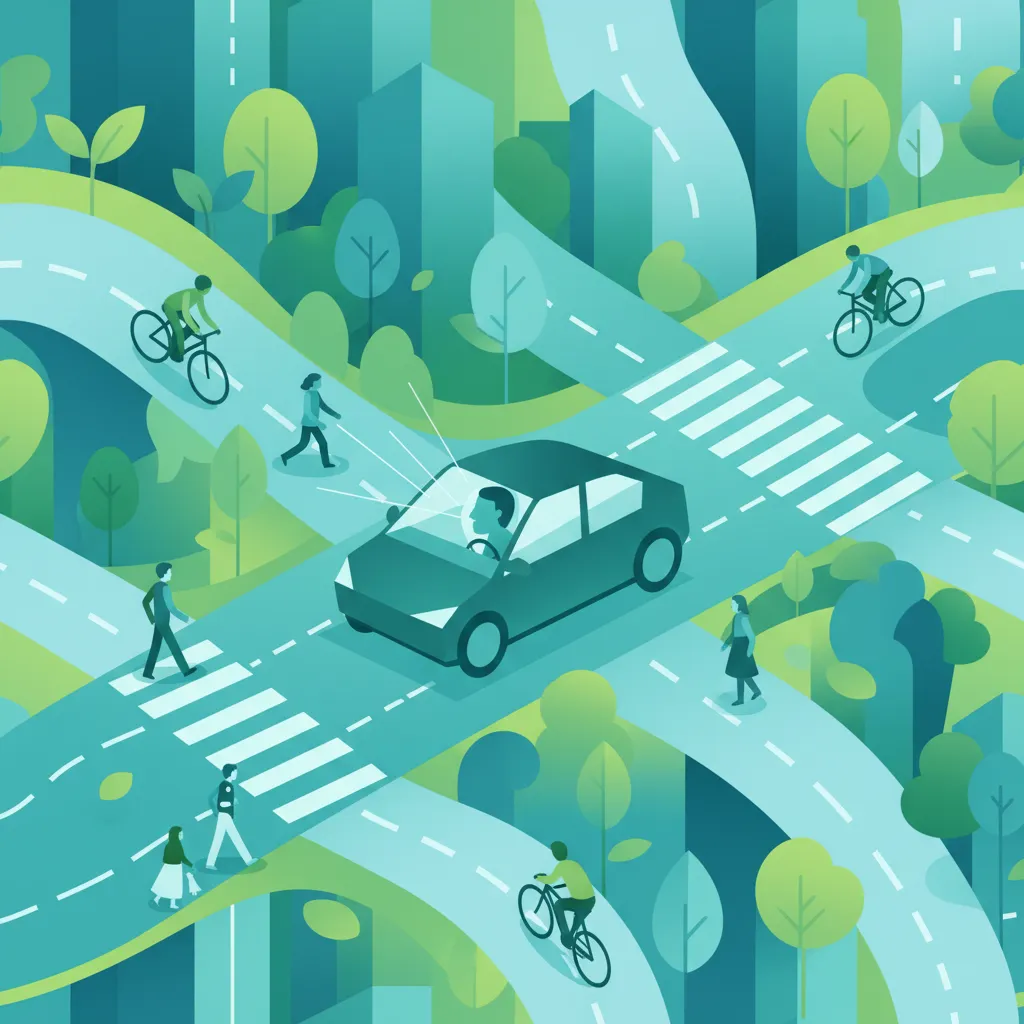
This lesson teaches you to be a proactive rather than a reactive rider by developing superior hazard perception skills. You will learn to scan your environment constantly—near, far, and to the sides—and to identify potential risks, such as a car waiting to turn or a pedestrian looking to cross. The content focuses on asking 'what if?' to predict the actions of others and position yourself for safety in advance.

This lesson focuses on hazard perception ('gevaarherkenning'), a critical section of the CBR exam. It explains how increasing speed reduces a rider's field of vision and shortens the time available to identify, process, and react to potential dangers. The content explores techniques for actively scanning the road ahead and anticipating the actions of other road users to make safe, proactive decisions rather than reactive ones.
How you perceive risk directly influences your riding behavior. This lesson encourages you to honestly assess your own attitude towards risk, highlighting the dangers of overconfidence, especially in new riders. It teaches you to move beyond simply seeing hazards to actively anticipating them. By asking 'what if?' questions (e.g., 'What if that car pulls out?'), you can mentally prepare for potential dangers and create a safer space cushion around yourself at all times.
This lesson introduces the Dutch concept of 'voorspellend rijgedrag,' or anticipatory riding, a proactive approach to safety. It teaches motorcyclists how to look beyond the immediate vehicle in front and scan for clues that predict the actions of other road users, such as turn signals, wheel direction, and driver head movement. By anticipating potential conflicts before they happen, riders can position themselves to avoid danger and ensure a smoother, safer journey through complex traffic.
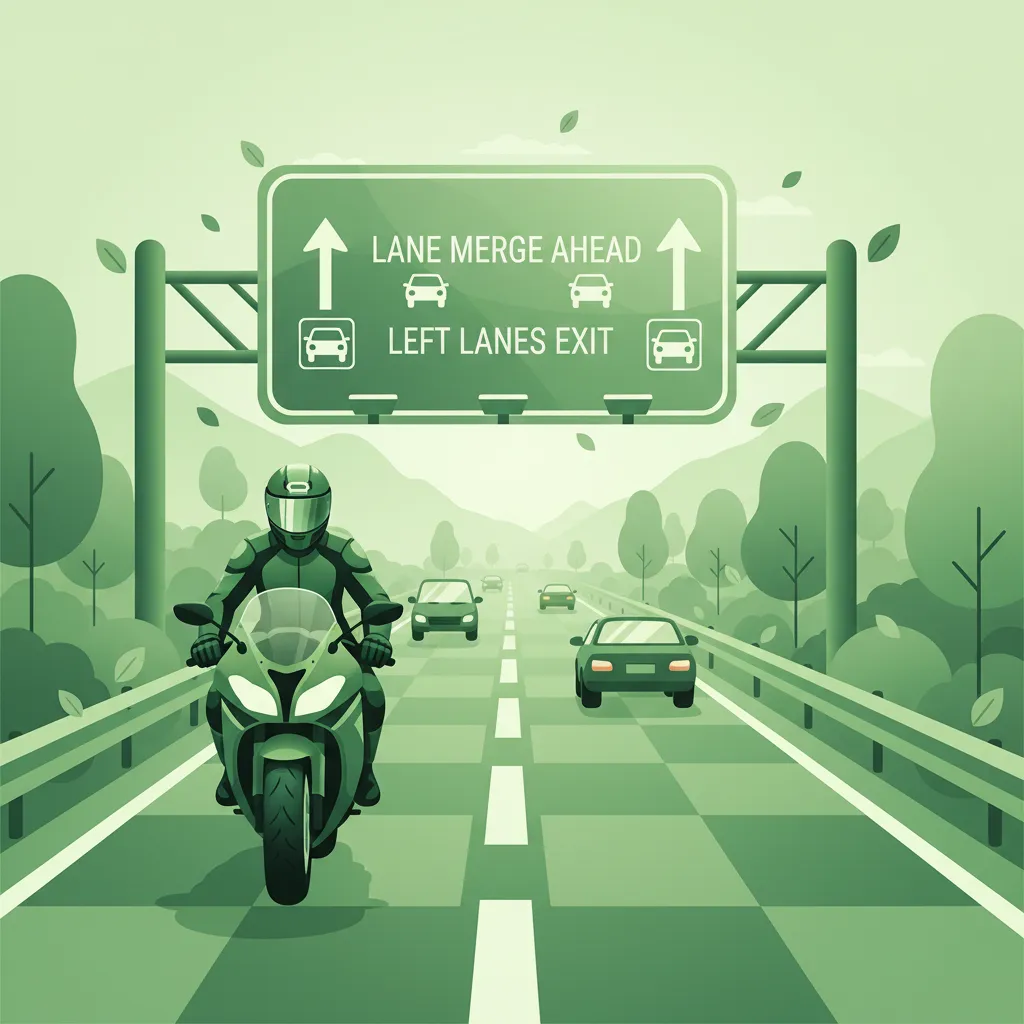
This lesson prepares you for the unique dangers of high-speed highway riding. You will learn to scan for and navigate road hazards like debris, potholes, and slippery steel expansion joints on bridges. The content also addresses the powerful air turbulence created by large trucks that can upset a motorcycle's stability and the mental challenge of maintaining focus on long, monotonous stretches of road.
This lesson provides a structured methodology for assessing the safety and legality of an overtaking maneuver, particularly on two-lane roads. It teaches riders how to accurately judge the speed and distance of oncoming traffic, calculate the time and space needed to complete the pass safely, and check for hidden hazards. This systematic risk assessment process helps eliminate guesswork and ensures that every decision to overtake is a well-informed and safe one.
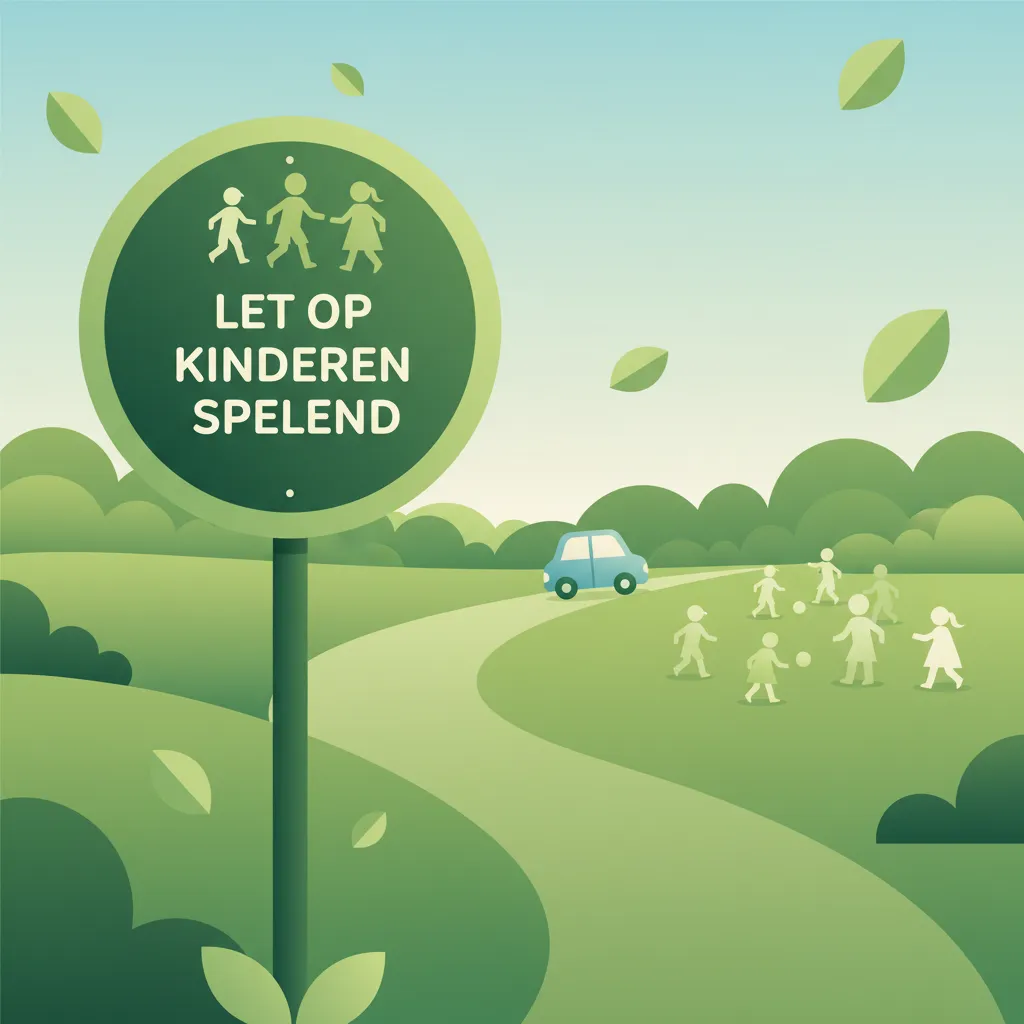
This lesson details the interpretation of Dutch warning signs, which alert riders to potential dangers and changing road conditions. You will study signs indicating sharp curves, road narrowing (BORD 30), and temporary hazards like road works (BORD 36), learning to adjust speed and road position proactively. The content emphasizes how the A2 motorcycle's characteristics require earlier hazard recognition and response compared to other vehicles for maintaining control.
This lesson focuses on training the brain to become a more effective hazard detection system. It introduces psychological techniques like 'commentary riding,' where the rider verbalizes all perceived hazards and their planned responses, which enhances focus and processing. The practice of constantly running 'what-if' scenarios helps to pre-plan reactions to potential events, reducing the time it takes to respond if a real hazard materializes, turning anticipation into a deeply ingrained habit.
Find clear answers to common questions learners have about Situational Risk Assessment Models. Learn how the lesson is structured, which driving theory objectives it supports, and how it fits into the overall learning path of units and curriculum progression in the Netherlands. These explanations help you understand key concepts, lesson flow, and exam focused study goals.
The IPDE model is a systematic approach to riding safely, consisting of four steps: Identify potential hazards, Predict what might happen next, Decide on the best course of action, and Execute that action. It's a continuous mental process to manage risks effectively on the road.
The CBR theory exam often includes questions about hazard perception and decision-making in complex traffic scenarios. Understanding and applying the IPDE model will help you correctly interpret these situations and choose the safest, most appropriate answer, demonstrating your understanding of risk management.
While IPDE is a core concept in advanced rider training, its principles are fundamental for all riders. Learning it early helps build a strong foundation for safe riding and effective hazard management, making it valuable for learners of all levels preparing for their Category A license.
To practice prediction, constantly observe the behaviour of other road users: look at their body language, the direction their wheels are pointing, their speed, and their indicators. Anticipate common actions like lane changes, braking, or turning, and always have a plan for what to do if they do something unexpected.
Common mistakes include underestimating speeds, failing to see hazards until too late, assuming other drivers will yield, becoming distracted, or relying too much on habit rather than active assessment. The IPDE model helps combat these by providing a structured, conscious process.