
This lesson explores the critical human factors of stress and fatigue, explaining their profound negative impact on your motorcycle riding decisions. As part of the 'Human Factors, Risk Psychology and Defensive Riding' unit, understanding these elements is vital for passing your Dutch CBR Category A theory exam and ensuring your long-term safety on the road. You'll learn essential self-assessment techniques to ensure you're always fit to ride.
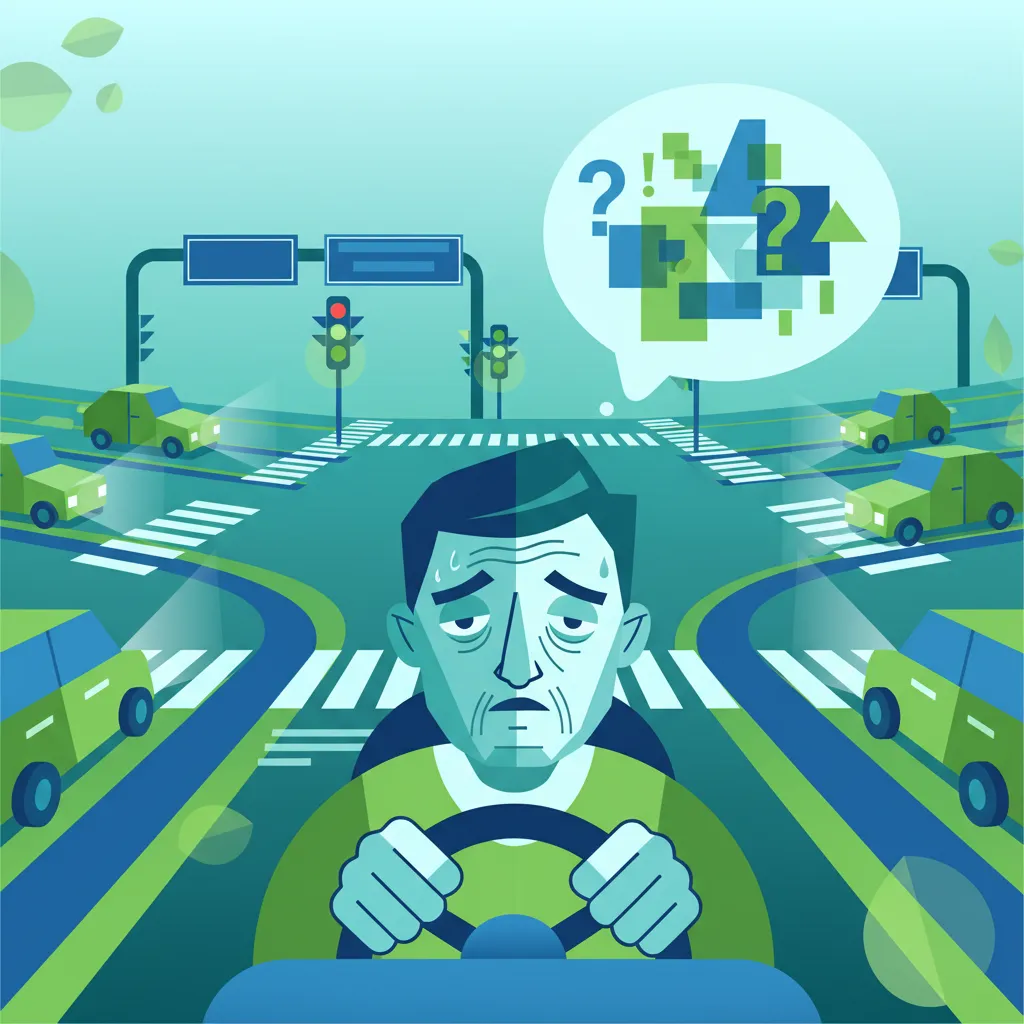
Operating a motorcycle demands unwavering focus, quick reflexes, and sound judgment. However, human factors like stress and fatigue can severely compromise these critical abilities, turning an otherwise safe ride into a hazardous situation. This lesson delves into the profound impact of psychological stress and physical fatigue on a motorcyclist's cognitive functions, explaining how these states can narrow attention, slow reaction times, distort risk perception, and lead to irritable or irrational decision-making on the road. Understanding these impairments is not only crucial for personal safety but also for compliance with Dutch traffic law and for excelling in your Dutch Motorcycle Theory – Category A Comprehensive Preparation.
Motorcycle riding is a dynamic activity requiring continuous processing of complex environmental information and rapid decision-making. Unlike enclosed vehicles, motorcyclists are more exposed to the elements and other road users, demanding an even higher level of situational awareness. Human factors, such as a rider's mental and physical state, are therefore paramount. When a rider is stressed or fatigued, their ability to accurately perceive risks, react promptly, and make appropriate choices is significantly diminished, directly increasing the likelihood of accidents. This lesson builds upon foundational knowledge of cognitive biases affecting riders, demonstrating how stress and fatigue can amplify these biases, making safe riding more challenging.
To understand their impact, it's essential to first define psychological stress and physical fatigue in the context of riding. While often used interchangeably, they represent distinct states with overlapping consequences.
Psychological stress is a mental and physiological reaction to perceived demands or threats that exceed an individual's coping resources. For a motorcyclist, this can manifest in various forms:
When a rider experiences stress, their mental state can become agitated. For example, a rider receiving an urgent phone call while attempting to navigate a busy roundabout might experience a heightened startle response, leading to abrupt braking or an erratic lane change. Dutch law, specifically Article 2 of the Wegenverkeerswet (Road Traffic Act), implicitly addresses this by requiring all road users to be in a condition that does not impair safe operation.
Physical fatigue is a cumulative reduction in mental and physical performance resulting from prolonged wakefulness, insufficient sleep, or sustained physical exertion. It affects both the body's strength and the mind's alertness.
Consider a rider who has been on a four-hour journey without a proper break. Their grip on the handlebars might become less precise, and their ability to quickly respond to a sudden traffic change could be severely compromised. It is a common misconception that caffeine can entirely reverse fatigue; while it may mask symptoms, it does not restore full cognitive performance. Just like stress, operating a motorcycle while significantly fatigued can be considered negligent under Dutch law.
The most dangerous aspect of stress and fatigue is their detrimental effect on cognitive functions vital for safe riding. These impairments can manifest in several critical ways.
Attention narrowing, often referred to as tunnel vision, describes a reduction in the spatial breadth of visual and cognitive focus. Under stress or fatigue, a rider's attention tends to concentrate solely on the immediate central view, leading to neglect of peripheral information.
This phenomenon directly increases collision risk. A rider in heavy rain, for example, might become so focused on the wet road surface and maintaining grip that they fail to observe a flashing pedestrian crossing sign or the brake lights of a distant vehicle. While no specific Dutch regulation addresses "tunnel vision," the general "duty of care" implicitly requires riders to maintain comprehensive situational awareness.
Reaction time degradation is the increase in the interval between perceiving a stimulus (e.g., a brake light, a turning vehicle) and initiating a motor response (e.g., applying brakes, steering). Stress and fatigue significantly prolong this critical period.
For a fatigued rider, an average reaction time might increase from a healthy 0.4 seconds to 0.75 seconds or more. This seemingly small difference can have profound implications for stopping distance. At 80 km/h, a 0.35-second delay adds approximately 7.8 metres to the distance travelled before braking even begins. This extended stopping distance makes critical braking situations much riskier and overtaking decisions far more hazardous. While Dutch law doesn't legislate specific minimum stopping distances for motorcycles, it expects riders to be able to stop safely under normal conditions, an expectation that becomes impossible to meet with degraded reaction times.
Decision fatigue refers to the deterioration in the quality of decisions after an extended period of making many successive choices. Motorcycling, especially in complex environments like urban traffic or on long journeys, involves a continuous stream of decisions: speed adjustments, lane positioning, gear changes, hazard assessments, and right-of-way judgments.
After navigating numerous intersections, roundabouts, and overtakes, a rider experiencing decision fatigue may start to rely more on habitual, potentially unsafe actions or simplifications (heuristics) rather than objective assessment. For example, they might default to assuming a gap is "big enough" rather than accurately gauging distances and speeds, potentially leading to violations of right-of-way rules (e.g., RVV 1990 §10). This underscores why regular breaks are essential, especially on long rides, to allow the cognitive system to reset.
Risk perception distortion is an altered evaluation of the severity and probability of hazards under conditions of stress or fatigue. Both states can lead riders to either underestimate danger or overestimate their own capabilities, fostering a dangerous sense of overconfidence.
Under stress, the "fight-or-flight" response can sometimes manifest as increased aggression or a willingness to take greater risks. A stressed rider might be more inclined to take unsafe gaps in traffic or exceed speed limits. Fatigue, on the other hand, can dull the senses and reduce the ability to accurately process threat cues, leading a rider to simply not register a hazard as significant or to believe they have more time to react than they truly do. This distortion can lead to increased willingness to ride in hazardous ways, directly contravening the requirement to ride at a speed safe for prevailing conditions (RVV 1990 §16).
The Dutch legal framework places a clear responsibility on every road user to be in a suitable condition to operate a vehicle safely.
"Anyone who drives a vehicle shall do so only if his/her physical and mental condition allows safe operation."
This fundamental article from the Wegenverkeerswet (Road Traffic Act) is the legal anchor for addressing impairment due to stress and fatigue. It is a broad, mandatory rule applicable to all road users and vehicle types in the Netherlands. The rationale is clear: to prevent individuals from operating vehicles when their capabilities are compromised, thereby increasing crash risk.
Operating a motorcycle while significantly stressed or fatigued can be considered negligent and can lead to prosecution, especially if it results in an accident. This law does not explicitly mention "stress" or "fatigue," but these human factors clearly fall under the umbrella of a "physical and mental condition" that can impair safe operation.
Beyond WG art. 2, several articles within the Reglement Verkeersregels en Verkeerstekens 1990 (RVV 1990 - Regulations on Traffic Rules and Traffic Signs) become more challenging to comply with when a rider is stressed or fatigued:
These regulations highlight the importance of self-awareness and responsible decision-making before and during every ride.
Given the subtle and insidious nature of stress and fatigue, self-assessment competence is arguably the most crucial skill a motorcyclist can develop. This is the rider's ability to accurately gauge their own current stress and fatigue levels and to make an informed decision about whether to ride, postpone, or take mitigating actions.
Before even starting the engine, a rider should perform a mental (or even physical) checklist:
If the answers to these questions indicate significant impairment, the correct behavior is to delay or cancel the ride. For example, a rider deciding to postpone a planned trip after only five hours of sleep the previous night demonstrates strong self-assessment competence.
Fatigue can set in gradually, making it difficult to detect its onset. Riders must be attuned to the early warning signs while on the road:
Ignoring early warning signs like persistent yawning or involuntary eye-closure is highly dangerous. These are critical signals that performance is already compromised and a break is urgently needed.
If these symptoms appear, the correct action is to pull over safely at the next suitable spot, take a break, or consider alternative transportation. Continuing to ride under such conditions is negligent and significantly increases crash risk.
Fortunately, there are many practical strategies riders can employ to reduce or counteract the impact of stress and fatigue. These strategies should be integrated into ride planning and execution.
Consider using caffeine as a short-term alertness aid, but always combine it with scheduled breaks. Caffeine masks symptoms; it doesn't eliminate the underlying fatigue debt.
The effects of stress and fatigue are not constant; they are significantly modulated by various external and internal conditions. Riders must understand these contextual variations to make appropriate adjustments.
| Condition | Effect on Stress/Fatigue Impact | Reasoning |
|---|---|---|
| Adverse Weather (rain, wind, low visibility) | Heightens mental workload; faster onset of fatigue. | Rider must process more visual information, maintain stability against wind, and adapt to reduced visibility, all of which increase cognitive and physical effort. |
| Night Riding (Circadian Low-Alertness Period) | Circadian dip reduces alertness; visual perception degraded. | Lower contrast, increased glare from headlights, and the body's natural sleep cycle (typically 00:00-06:00) combine to significantly reduce vigilance and increase drowsiness. |
| High-Speed Roads (Motorways) | Requires sustained concentration; fatigue reduces lane-keeping stability. | While seemingly less complex than urban areas, motorways demand continuous, high-level concentration for extended periods, leading to mental fatigue and potentially dangerous lane drift with degraded reaction times. |
| Urban Congestion | Frequent stop-go increases acute stress and decision frequency. | Constant assessment of surrounding traffic, frequent braking and accelerating, and numerous right-of-way decisions lead to rapid decision fatigue and heightened acute stress. |
| Heavy Load / Passenger | Increases muscular effort, accelerates physical fatigue. | Additional weight and inertia demand more physical effort for steering, braking, and maintaining balance, accelerating muscular fatigue. |
| Interaction with Vulnerable Road Users | Stress amplifies risk-taking; fatigue can cause missed peripheral cues. | The need for heightened awareness around cyclists and pedestrians adds cognitive load. Stress can lead to impulsive decisions, while fatigue compromises the crucial peripheral detection of these road users. |
| Long Continuous Ride (>2 hours) | Fatigue builds gradually; risk of micro-sleeps rises. | Without breaks, the human brain's arousal regulation declines, leading to a steady decrease in performance and an increased risk of brief, involuntary sleep episodes. |
| Time Pressure (running late) | Elevates acute stress; leads to tunnel vision and aggressive manoeuvres. | The psychological pressure to reach a destination quickly triggers a "fight-or-flight" response, impairing smooth, defensive riding and encouraging risky behavior. |
| Sleep Debt (≤5 hours previous night) | Baseline fatigue raises reaction times by ~15-20%. | Insufficient sleep fundamentally impairs both vigilance and executive function, making a rider start their journey already compromised. |
| Medication/Substance Use (e.g., antihistamines, alcohol) | Can amplify fatigue or impair cognitive processing. | Pharmacological effects can directly induce drowsiness or interact negatively with the body's stress response, further impairing judgment and reaction time. |
These variations mean that a rider who is slightly tired might be able to manage a short, familiar route in good weather, but that same level of fatigue could be disastrous on a long night ride through heavy rain. The responsible rider always adjusts their plans and behavior according to these conditions.
Let's examine how stress and fatigue play out in real-world riding situations.
Stress (both acute and chronic) and fatigue (mental, muscular, and circadian) are significant human factors that severely compromise a motorcyclist's ability to ride safely. These impairments lead to critical deficiencies such as attention narrowing, elongated reaction times, decision fatigue, and distorted risk perception.
The "fit to drive" requirement enshrined in Wegenverkeerswet Article 2 legally obliges all Dutch road users, including motorcyclists, to assess their own physical and mental fitness before and during every journey. Self-assessment competence is therefore paramount: knowing when to postpone a ride, take a break, or adjust riding behavior is not merely good practice but a legal and ethical imperative.
Effective mitigation strategies, including adequate sleep, regular breaks, proper hydration, and proactive stress management, are indispensable tools for reducing accident risk. Furthermore, understanding how conditional factors like adverse weather, night riding, urban congestion, or heavy loads amplify the effects of stress and fatigue allows riders to make informed, situation-specific adjustments to their speed, following distance, and overall approach.
By internalizing these principles and consistently applying them, motorcyclists can significantly enhance their safety, comply with Dutch traffic law, and enjoy the roads responsibly.
Lesson content overview
Explore all units and lessons included in this driving theory course.
Explore search topics learners often look for when studying Stress, Fatigue, and Their Impact on Decision-Making. These topics reflect common questions about road rules, driving situations, safety guidance, and lesson level theory preparation for learners in the Netherlands.
Browse additional driving theory lessons that cover connected traffic rules, road signs, and common driving situations related to this topic. Improve your understanding of how different rules interact across everyday traffic scenarios.
Understand the critical effects of psychological stress and physical fatigue on a rider's cognitive functions, reaction times, and judgment. Essential theory for safe riding in the Netherlands.
Fatigue and stress are major contributors to rider error and accidents. This lesson explains how physical tiredness and mental stress can slow your reaction time, impair your decision-making abilities, and lead to poor judgment on the road. You will learn to identify the early warning signs of fatigue and the importance of taking regular rest breaks on long journeys. The lesson also provides techniques for managing stress to ensure you are in a fit state to ride safely.

This lesson explains that fatigue is a major contributor to single-vehicle motorcycle accidents. You will learn to recognize its subtle symptoms, such as slow reaction times, poor judgment, and difficulty concentrating. The content provides essential strategies for prevention and management, including planning for regular rest stops, staying hydrated, and knowing when to stop riding for the day.

This lesson explores the psychological factors that underpin safe riding, focusing on the concept of cognitive load—the amount of mental effort required to process information. It explains how fatigue, stress, and distractions can overload a rider's capacity to process information, leading to a loss of situational awareness and poor decisions. The content provides strategies for managing mental resources, maintaining focus, and ensuring that the rider's brain is always ahead of the motorcycle.

This lesson delves into the psychological aspects of motorcycling, exploring how factors like attitude, emotion, and fatigue can influence decision-making and risk-taking. It encourages self-awareness, helping riders recognize states like overconfidence or distraction that can lead to poor choices. The ultimate goal is to foster a mature, defensive mindset focused on risk mitigation and making safe, responsible decisions on every ride.

This lesson addresses the significant dangers of rider fatigue, which are amplified during night riding. It explains the physiological effects of tiredness on reaction time, decision-making, and vision. Strategies for managing fatigue are presented, including the importance of proper pre-ride rest, taking regular breaks, staying hydrated, and recognizing the early warning signs of drowsiness to know when it is essential to stop riding and rest.

This lesson explores how subconscious mental shortcuts, or cognitive biases, can negatively impact a rider's risk perception ('risicoperceptie') and lead to poor decisions. It discusses common examples like 'optimism bias' (the belief that accidents happen to others) and overconfidence, explaining how these psychological traps can cause riders to underestimate risks. Developing an awareness of these biases is the first step toward consciously overriding them and making more rational, safer choices.
This lesson prepares you for the unique dangers of high-speed highway riding. You will learn to scan for and navigate road hazards like debris, potholes, and slippery steel expansion joints on bridges. The content also addresses the powerful air turbulence created by large trucks that can upset a motorcycle's stability and the mental challenge of maintaining focus on long, monotonous stretches of road.

This lesson focuses on the importance of proper rider posture and ergonomics for maintaining control, comfort, and alertness. It explains how to achieve a relaxed but engaged posture, with appropriate bend in the arms and legs, to absorb bumps and react quickly. A correct ergonomic setup reduces physical fatigue on longer rides, which is crucial for sustaining concentration and ensuring safe operation of the motorcycle over time.

This lesson covers the critical topic of impaired riding, detailing the legal blood alcohol limits for drivers in the Netherlands. It explains how alcohol, illegal drugs, and even some legal medications drastically impair judgment, coordination, and reaction time, making riding a motorcycle extremely dangerous. The severe legal penalties, including fines, license suspension, and imprisonment, are also clearly outlined.

This lesson delves into the mental side of safe riding. You will explore how a rider's emotional state, attitude, and level of experience can influence their perception of risk. The content addresses the common pitfall of overconfidence, especially among newer riders, and the importance of resisting peer pressure to ride beyond your skill level, emphasizing a mature and responsible approach to risk management.
Explore the Dutch legal requirement (WG Art. 2) to be fit to ride and learn essential self-assessment techniques for recognizing stress and fatigue symptoms. Crucial theory for the CBR A exam.
This lesson explains that fatigue is a major contributor to single-vehicle motorcycle accidents. You will learn to recognize its subtle symptoms, such as slow reaction times, poor judgment, and difficulty concentrating. The content provides essential strategies for prevention and management, including planning for regular rest stops, staying hydrated, and knowing when to stop riding for the day.
This lesson addresses the significant dangers of rider fatigue, which are amplified during night riding. It explains the physiological effects of tiredness on reaction time, decision-making, and vision. Strategies for managing fatigue are presented, including the importance of proper pre-ride rest, taking regular breaks, staying hydrated, and recognizing the early warning signs of drowsiness to know when it is essential to stop riding and rest.
This lesson delves into the psychological aspects of motorcycling, exploring how factors like attitude, emotion, and fatigue can influence decision-making and risk-taking. It encourages self-awareness, helping riders recognize states like overconfidence or distraction that can lead to poor choices. The ultimate goal is to foster a mature, defensive mindset focused on risk mitigation and making safe, responsible decisions on every ride.
Fatigue and stress are major contributors to rider error and accidents. This lesson explains how physical tiredness and mental stress can slow your reaction time, impair your decision-making abilities, and lead to poor judgment on the road. You will learn to identify the early warning signs of fatigue and the importance of taking regular rest breaks on long journeys. The lesson also provides techniques for managing stress to ensure you are in a fit state to ride safely.
This lesson prepares you for the unique dangers of high-speed highway riding. You will learn to scan for and navigate road hazards like debris, potholes, and slippery steel expansion joints on bridges. The content also addresses the powerful air turbulence created by large trucks that can upset a motorcycle's stability and the mental challenge of maintaining focus on long, monotonous stretches of road.

This lesson focuses on the unique demands of riding at sustained high speeds on motorways ('snelwegen'). It covers essential topics such as strict lane discipline, safe overtaking procedures, and maintaining a greater following distance to compensate for higher reaction and braking times. The content also addresses the physical and mental challenges, including managing wind blast, increased noise levels, and maintaining heightened situational awareness over long distances to combat fatigue.

This lesson examines the statutory duties imposed on motorcyclists, with a strong emphasis on the 'duty of care' (zorgplicht) and the conditions under which legal liability arises after a traffic incident. It clarifies the relationship between personal responsibility, mandatory insurance coverage, and the legal expectation for proactive risk mitigation to prevent accidents. The content also analyzes scenarios to illustrate how liability is typically determined within Dutch traffic jurisprudence, preparing riders for their legal responsibilities.

This lesson provides a definitive list of the documents a motorcyclist must carry at all times when riding in the Netherlands. It specifies the requirement for a valid driving license ('rijbewijs') for the correct category, the vehicle registration card ('kentekenbewijs'), and proof of valid third-party liability insurance ('verzekeringsbewijs'). The content clarifies that failure to produce these documents during a police check can result in significant fines and legal complications.

This lesson details the interpretation of Dutch warning signs, which alert riders to potential dangers and changing road conditions. You will study signs indicating sharp curves, road narrowing (BORD 30), and temporary hazards like road works (BORD 36), learning to adjust speed and road position proactively. The content emphasizes how the A2 motorcycle's characteristics require earlier hazard recognition and response compared to other vehicles for maintaining control.
This lesson focuses on the importance of proper rider posture and ergonomics for maintaining control, comfort, and alertness. It explains how to achieve a relaxed but engaged posture, with appropriate bend in the arms and legs, to absorb bumps and react quickly. A correct ergonomic setup reduces physical fatigue on longer rides, which is crucial for sustaining concentration and ensuring safe operation of the motorcycle over time.
Find clear answers to common questions learners have about Stress, Fatigue, and Their Impact on Decision-Making. Learn how the lesson is structured, which driving theory objectives it supports, and how it fits into the overall learning path of units and curriculum progression in the Netherlands. These explanations help you understand key concepts, lesson flow, and exam focused study goals.
Recognize symptoms like heavy eyelids, yawning, difficulty concentrating, or slow reactions. It's crucial to be honest with yourself. If you're questioning your fitness, it's often a sign to rest or postpone your ride. Your ability to make split-second decisions is paramount for a Category A motorcycle.
Both acute (sudden, intense) and chronic (long-term, low-level) stress can be detrimental. Acute stress might come from an argument or urgent deadline, while chronic stress can stem from ongoing work or personal issues. Both narrow your attention and increase impulsivity, critical for complex Category A riding.
While there isn't a specific 'fatigue law' like for alcohol, Dutch law (and CBR standards) expects riders to always be in a condition to safely operate their vehicle. Riding while clearly impaired by stress or fatigue can lead to charges of dangerous driving or negligence if an incident occurs, impacting your licence and insurance for Category A.
CBR questions often present scenarios where a rider is tired or distracted and asks what the safest course of action is, or what risks are present. They test your judgment on recognizing impairment and choosing responsible actions, emphasizing that a rider's mental state is a critical safety factor for Category A.